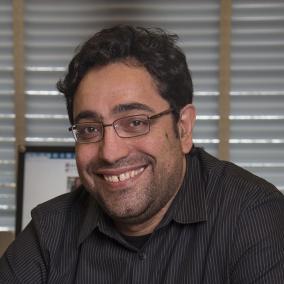
Nicholas Mattei is an Associate Professor of Computer Science at Tulane University and Co-Director of the Tulane Center for Community Engaged AI. He holds a Ph.D. from the University of Kentucky (2012) and researches artificial intelligence, machine learning, and decision-making systems. His work combines theory, data, and experiments to develop algorithms supporting individual and group decision-making. Dr. Mattei's research spans AI ethics, fairness in algorithms, computational social choice, and preference learning. He has published over 100 academic articles and received multiple grants from organizations including Google, IBM, and the National Science Foundation, including a 2024 NSF CAREER Award. He co-authored 'Computing and Technology Ethics: Engaging Through Science Fiction' from MIT Press. Prior to joining Tulane, he held research positions at IBM Research, Data61/CSIRO, and NASA Ames Research Center. His teaching portfolio includes courses on Discrete Mathematics, Data Science, Artificial Intelligence, and Multi-agent Systems.
Prof. Dr. Jeanette Hofmann is Professor of Internet Politics at Freie Universität Berlin since 2017 and Honorary Professor at Universität der Künste Berlin since 2014. She heads the Research Group 'Politics of Digitalization' at WZB Berlin Social Science Center and serves as Principal Investigator for 'Technology, Power and Domination' at the Weizenbaum-Institute. Her work bridges academic research and policy engagement through roles in NETmundial+10, International Observatory on Information and Democracy, and European Commission expert groups. Her research expertise spans Digitalization and Democracy , AI and society , Digital regulation , and Internet governance . Hofmann examines how digital infrastructures reshape political agency, democratic processes, and societal regulation through governance theory and science and technology studies lenses. Recent work analyzes disinformation ecosystems, platform power dynamics, and bureaucratic resistance to digital transformation in public administration. Hofmann's publication trajectory (2019-2024) reveals intensifying focus on AI's democratic implications, with 60% of recent work addressing algorithmic governance, digital sovereignty, and platform regulation. Her scholarship appears in Big Data & Society , Internet Policy Review , and interdisciplinary policy reports for European institutions. Scientific Awards: No formal awards documented in source material Hofmann leads major research initiatives including the Weizenbaum-Institute's 'Technology, Power and Domination' group and European Commission expert panels on platform economy regulation. Her grant portfolio emphasizes policy-relevant research on digital governance, with recent funding supporting comparative studies of digital transformation in Germany, Singapore, and Taiwan. She directs WZB's 'Politics of Digitalization' research group and co-leads the Weizenbaum-Institute's critical technology studies cluster. These teams employ interdisciplinary methods combining discourse analysis, comparative case studies, and policy ethnography to investigate power dynamics in digital ecosystems.
Stéphanie Novak is a Full Professor at the Department of Comparative Linguistic and Cultural Studies, Ca' Foscari University of Venice. Her research focuses on European institutions, transparency, accountability, collective decision-making, and international negotiations. She has published extensively in journals like the Journal of Common Market Studies and Global Policy, and co-edited a volume with Jon Elster on majority decisions. Current Assignments: Member of the Steering Committee of the Ca' Foscari International College; Delegate for Internationalization Research Interests include: EU institutional transparency and accountability Collective decision-making and consensus Intergovernmental relations and crises Legislative process conflict-resolution International negotiation dynamics Democratic compromise in supranational contexts Her 2023-2024 publications analyze transparency dilemmas, consensus fragility, and digital policy interoperability. Earlier works (2005-2020) examine voting norms, institutional hypocrisy, and EU global representation. Scientific Awards: Dalloz-Bibliothèque de thèses prize (doctoral thesis) Editorial Involvement: Associate Editor, Journal of European Policies (since 2017) Editorial Board, La Fabrique du Politique (since 2018) Former Board Member, La Vie des Idées (2009-2021) Grants & Projects: POLiN Project (2023-2025): Interoperability in EU digital health policies Universalism and Right of Man Project (2023-2026): Late Enlightenment political conditions Observatoire des Institutions Européennes (2014-2021): EU institutions and transparency
James D. Long is a Professor of Political Science at the University of Washington and co-founder of the Political Economy Forum. He holds affiliations with multiple institutions including the Center for Statistics and the Social Sciences (CSSS) and the Technology and Social Change Group (TASCHA). His research focuses on electoral integrity, political violence, and ICT applications in development, particularly in sub-Saharan Africa and South Asia. He has observed elections in over a dozen countries and led field experiments on voter behavior and anti-corruption strategies. Long’s work is funded by USAID, NSF, and others. Education: PhD in Political Science, UC San Diego (2012) MSc in African Politics (Merit), SOAS, University of London (2004) BA in International Relations & History, College of William & Mary (2003) Research Interests: Elections in developing democracies, electoral fraud, technology for governance, insurgency impacts, and poverty reduction. His methods combine field experiments, ethnography, and election forensics. Recent Work: Examines ICT-driven citizen engagement platforms to improve governance and service delivery in developing nations. His 2020 ACM award-winning research addresses wildlife conservancy community relations via technology. Awards: ACM Best Paper Award (2020) Fulbright Scholar (2008-2009) Harvard Academy Fellowship (2012-2016) Advising & Grants: Supervises PhD students in comparative politics and development. Secured grants totaling over $1.5M for projects on electoral integrity and anti-corruption. Hosts the podcast 'Neither Free Nor Fair?' on global election security. Teaching: Courses include Global Crime/Corruption, African Political Economy, and Comparative Politics. Served as Associate Chair of the Department of Political Science.
Gary W. Cox is the William Bennett Munro Professor of Political Science at Stanford University. He specializes in American Politics, Comparative Politics, and Political Methodology, with a focus on electoral systems, legislative behavior, and historical political economy. His work examines how institutional frameworks shape political competition, representation, and governance across historical and comparative contexts. Education: Ph.D. in Social Science, California Institute of Technology (1982) B.S. in History, California Institute of Technology (1978) Research Interests: Cox investigates the interplay between electoral institutions and political outcomes, including the effects of proportional representation on voter mobilization, the historical evolution of legislative power, and the political economy of suffrage reform. His research combines quantitative and historical methods to analyze topics like party systems, legislative agendas, and the long-term impacts of constitutional design. Key Contributions: Cox’s seminal works include The Efficient Secret (1983), Legislative Leviathan (1999), and Marketing Sovereign Promises (2016), which have won multiple awards. His recent articles address gender representation in parliamentary systems, the role of warfare in state formation, and the strategic dynamics of electoral teams. Awards & Honors: Guggenheim Fellow Elected to the American Academy of Arts and Sciences (1996) Elected to the National Academy of Sciences (2005) Recipient of major prizes including the Samuel H. Beer Dissertation Prize (1983) and the George H. Hallett Award (2003, 2007) Advising & Grants: Cox has advised numerous graduate students and has secured grants for research on electoral reform, legislative agendas, and historical political economy. His work often bridges theoretical and empirical analyses of political institutions. Labs/Teams: While no specific lab is named, Cox collaborates widely on projects analyzing legislative behavior and electoral systems through interdisciplinary teams.
Alexander Russell is a Professor of Computer Science and Mathematics at the University of Connecticut, serving as Director of Graduate Affairs in the School of Computing and Director of the UConn Voting Technology Research Lab. He holds a Ph.D. in Mathematics and an S.M. in Computer Science from MIT, alongside dual B.A. degrees in Mathematics and Computer Science from Cornell University. His research focuses on cryptographic protocols, blockchain security, quantum computing, algorithms, and election auditing. Key areas include consensus algorithms, complexity-theoretic cryptography, and applied cryptography in voting systems. Recent work emphasizes low-variance risk-limiting audits and adaptive security mechanisms for blockchains. Notable contributions span provably secure blockchain protocols (e.g., Ouroboros), election integrity methods, and smartphone-based depression prediction models. His articles address topics like settlement bounds in longest-chain consensus, Byzantine-resilient gossip protocols, and energy-efficient neighbor discovery in mobile networks. Russell advises on interdisciplinary projects at the Voting Technology Research Center and collaborates on grants involving quantum-resistant cryptography and healthcare analytics. His work bridges theoretical computer science with practical applications in secure systems and public infrastructure.
Sandra González-Bailón is the Carolyn Marvin Professor of Communication at the University of Pennsylvania's Annenberg School for Communication and holds a secondary appointment in Sociology. As Director of the Center for Information Networks and Democracy (CIND), her research examines how communication networks shape information exposure, with implications for political engagement, mobilization dynamics, and news consumption patterns. Her methodological work bridges computational social science and political communication. Education M.S. from University of Oxford (2004) Ph.D. from University of Oxford (2007) Research Focus González-Bailón's research program investigates the intersection of technology and society, with emphasis on how digital networks transform political communication. Key areas include: Information diffusion : Studies how content spreads through social platforms during elections and crises Algorithmic curation : Examines how platform algorithms shape ideological segregation and exposure diversity Network dynamics : Maps communication patterns in online collective action and protest movements Her empirical work employs computational methods to analyze digital trace data at scale. Publication Trends Recent publications demonstrate sustained focus on social media's impact during democratic processes, particularly the 2020 U.S. election. Key thematic threads include: misinformation diffusion patterns, asymmetric polarization in news exposure, experimental analysis of platform deactivation effects, and methodological innovations in computational social science. Notable contributions appear in Science , Nature , and PNAS . Center Leadership As founding director of CIND, González-Bailón oversees research examining how digital technologies impact democratic resilience, with projects spanning misinformation analysis, network mapping of political discourse, and policy interventions for platform governance.
Muhamet Yildiz is a Professor of Economics at the Massachusetts Institute of Technology (MIT), affiliated with the Department of Economics within the School of Humanities, Arts, and Social Sciences. His research focuses on Economic Theory, Game Theory, and Microeconomics, with significant contributions to strategic communication, bargaining, and higher-order uncertainty. He teaches advanced courses such as Microeconomics III, Game Theory, and Advanced Topics in Game Theory. Yildiz’s research explores foundational questions in economic theory, including how communication, beliefs, and strategic interactions shape outcomes in uncertain environments. His work has addressed topics like the fragility of Bayesian learning, reputation dynamics in repeated games, and the implications of optimism in bargaining scenarios. Key contributions include analyses of global games, common belief foundations, and the impact of information structures. He has published extensively in top journals such as Econometrica , Journal of Economic Theory , and Review of Economic Studies . His recent work includes studies on equilibrium shifts in crises and the theoretical underpinnings of communication with unknown perspectives. Yildiz advises on graduate and advanced undergraduate courses, maintaining a strong commitment to academic mentorship. His office is located in E52-522, and his assistant is Kim Scantlebury.
Tiffany D. Barnes is a Professor in the Department of Government at the University of Texas at Austin. She holds a PhD from Rice University and specializes in Comparative Politics with a focus on gender and politics, Latin American politics, and political leadership. Her research examines institutional influences on political behavior through quantitative and qualitative methods. Education: PhD, Rice University Her work has secured over $600,000 in grants and includes authorship of four books: Gendering Legislative Behavior , Working Class Inclusion , The Representational Consequences of Electronic Voting Reform , and Women, Politics, and Power . She co-edits the Elements in Gender & Politics series for Cambridge University Press and serves as editor at the British Journal of Political Science . Scientific awards include the Emerging Scholar Award (2018), Early Career Award (2017), Alan Rosenthal Prize (2017), and Richard F. Fenno, Jr. Prize (2024). She founded The Empirical Study of Gender Research Network (EGEN) and has held prestigious fellowships at Notre Dame and Tulane.
James Hampshire is a Professor of Politics at the University of Sussex's School of Law, Politics and Sociology. He holds a BA in Modern History from the University of Oxford (1997), an MA in Political Philosophy from the University of York, and a D.Phil in Politics from Oxford (2002). His career includes positions as Research Fellow at Oxford's Department of Social Policy and Social Work and ESRC Postdoctoral Fellow in Oxford's Department of Politics and International Relations before joining Sussex in 2004. Hampshire's research examines the politics and governance of international migration, focusing on tensions between representative democracy, constitutionalism, capitalism, and nationhood in liberal states. His current project explores the political economy of migration, capitalism and inequality. He serves as Deputy Editor of the Journal of Ethnic and Migration Studies. His publications demonstrate consistent focus on immigration policy mechanisms in liberal democracies, especially the UK and EU contexts. Key themes include Brexit impacts, political economy of migration, EU governance structures, and discursive institutionalism. Recent work examines investor migration trends and post-Brexit policy transformations. Hampshire has secured multiple research grants including: CEASEVAL - Evaluation of Common European Asylum System (EU, 2017-2019) RDF8: Post-Referendum data collection (Sussex, 2017-2018) TEMPER project on temporary migration (EU FP7, 2014-2018) Citizens' Resilience in Times of Crisis (AHRC, 2012-2013) Migration to Europe in the digital age (Volkswagen Foundation, 2009-2012) He has supervised eight PhD students to completion on topics spanning UK immigration policy, EU-Turkish relations, border controls, and citizenship studies. He currently teaches undergraduate modules in Modern Political Thought and Immigration and the Liberal State, plus a postgraduate course on Managing Migration: Law, Governance and Politics.
Associate Professor Fengling Han is affiliated with RMIT University's School of Computing Technologies in Melbourne, Australia. He holds the rank of Associate Professor since January 2022. His research focuses on complex networks, industrial electronics, AI/machine learning, and network security. Notable contributions include steganography frameworks for healthcare data, sliding mode control for energy systems, and blockchain applications in surveillance and voting systems. His work spans interdisciplinary areas such as renewable energy integration, battery management systems, and privacy-preserving recommendation systems. He has supervised numerous projects, including AI-driven chatbots, medical imaging watermarking, and peer-to-peer energy trading systems. Han's service roles include conference reviewing and committee memberships in international conferences like IEEE and ISMST. Research Interests: His expertise spans electrical engineering, control systems, and AI applications. Key areas include battery management, cybersecurity, and smart manufacturing. Recent projects emphasize Industry 5.0 technologies, blockchain for data integrity, and deep learning for steganalysis. Teaching and Supervision: Teaches network security, data communication, and IT infrastructure. Current supervision includes AI-powered business modeling, medical imaging tampering detection, and renewable energy sharing systems. Over 14 research projects are documented, reflecting his interdisciplinary impact. Awards and Recognition: While specific awards are not listed, his extensive publications (over 150 outputs) and high citation counts (e.g., 119 citations for the Industry 5.0 survey) highlight his scholarly contributions.
Gavin Schwarz is a Professor and Head of School at the School of Management and Governance within the UNSW Business School . He specializes in organizational change , organizational failure and inertia , and the dynamics of virtual teams , with a focus on how organizations fail during change processes and how to develop applied strategies for change management . His work spans diverse sectors including healthcare, technology, and education, with publications in leading journals such as Academy of Management Learning and Education and Administrative Science Quarterly . Education : PhD in Management (University of Queensland), MPhil (Hons) in Management (University of Auckland), BA in Management and English (University of Auckland). Grants : 2020 Brock University grant for "University communication in times of COVID-19" , 2020 UNSW Medicine grant for "Translation and change: Embedding effective change management in health" , and earlier Australian Research Council and Gordon J. Samuels Fellowship awards. His research explores the development of knowledge in organizational theories , with an emphasis on collective responses to change , HR management during crises , and technology strategy . He has contributed to understanding organizational communication , team innovation , and structural inertia . His 15 most recent publications cover topics from AI’s role in organizational change to pandemic-driven research adaptation, with keywords spanning management science , behavioral economics , and digital transformation . Scientific Awards 2021-2023 : Outstanding Reviewer Awards (Academy of Management Review) 2017-2020 : Best Reviewer Awards (Journal of Organizational Behavior) 2019, 2013, 2011 : Best Paper Finalist/Awardee (Academy of Management divisions) 2007, 2006 : Editorial Board Excellence (Academy of Management Journal) and Gordon J. Samuels Fellowship As an active supervisor in organizational change and HR development , his work supports healthcare innovation and digital transformation. He serves as Editor-in-Chief for the Journal of Applied Behavioral Science and is on the editorial boards of Academy of Management Review , Journal of Management , and Journal of Organizational Behavior . Contact: g.schwarz@unsw.edu.au
Thomas Pepinsky holds the prestigious Walter F. LaFeber Professorship of Government and Public Policy at Cornell University, where he is a faculty member in the Department of Government within the College of Arts and Sciences. He additionally serves as a Nonresident Senior Fellow at the Brookings Institution, bridging academic research with policy engagement. His academic career, which began at Cornell in 2008 after earning his Ph.D. from Yale University, has established him as a leading scholar in comparative politics with deep regional expertise in Southeast Asia. Professor Pepinsky's research examines the complex interactions between political and economic systems globally, with particular attention to democratic backsliding in Southeast Asia and Europe, the evolution of social categories like ethnicity in the Malay world, and methodological approaches to social science explanation. His work consistently connects theoretical political science with empirical analysis of real-world political phenomena, often employing innovative methodological frameworks to understand complex political dynamics across different contexts. His scholarly output demonstrates a clear trajectory from foundational work on Southeast Asian politics to increasingly comparative analyses examining democratic erosion, electoral behavior during political transitions, historical persistence of political attitudes, and the intersection of social categories with political economy. Recent publications reveal growing attention to contemporary crises including refugee flows, pandemic politics, and the challenges to democratic institutions worldwide. Among his significant professional activities, Dr. Pepinsky serves as editor of the Journal of East Asian Studies and is a co-founder and Executive Board member of the Southeast Asia Research Group (SEAREG). He also contributes to the Association for Analytical Learning about Islam and Muslim Societies (AALIMS) and the International Political Economy Society (IPES), reflecting his interdisciplinary approach. At Cornell, he actively participates in the Southeast Asia Program (SEAP) and teaches courses including Introduction to Comparative Government and Politics, Southeast Asian Politics at both undergraduate and graduate levels, and independent study opportunities. His international scholarly engagement is evident through visiting appointments at institutions including Amsterdam, the Australian National University, Freiburg, Griffith University, the Hertie School, and the National University of Singapore.
Miklos Z. Racz is an Assistant Professor at Northwestern University with a joint appointment in the Department of Computer Science and the Department of Statistics and Data Science. He is affiliated with the IDEAL Institute. Previously, he was an Assistant Professor at Princeton University (ORFE Department) and a postdoc at Microsoft Research. His research focuses on probability, statistics, computer science, and information theory, with emphasis on combinatorial statistics, discrete probability, and applied probability. Key interests include statistical inference on random discrete structures like random graphs, community detection, latent geometry inference, and DNA data storage. He has advised numerous PhD and undergraduate students. Education: PhD in Statistics (UC Berkeley, 2015), MS in Computer Science (UC Berkeley), MS in Mathematics (Budapest University of Technology and Economics). Research interests span random graph theory, network analysis, information cascades, and computational biology. He teaches courses like Mathematical Foundations of Computer Science and Probability for Statistical Inference. His work has been published in top venues like Annals of Applied Probability, NeurIPS, and IEEE journals. Notable contributions include breakthroughs in graph matching algorithms for stochastic block models, community recovery, and DNA synthesis optimization. His research has practical applications in data storage and network science.
Professor Sara B Hobolt holds the Sutherland Chair in European Institutions at the London School of Economics and Political Science (LSE), leading the Department of Government. A Fellow of the British Academy, she specializes in EU politics, electoral behavior, referendums, and public opinion. Her research bridges comparative politics and European integration, with a focus on Brexit, far-right politics, and democratic polarization. She previously held positions at the University of Oxford and the University of Michigan before joining LSE. Her key research areas include the dynamics of European elections, the impact of referendums on democratic accountability, and the rise of challenger parties. She leads the European Election Studies (EES), an EU-wide research initiative analyzing voters, parties, and media in European Parliament elections. Her work has been recognized with awards including the Best Book Prize from the European Union Studies Association (2010). Recent research explores authoritarianism in democracies, the youth gender gap in far-right support, and the effects of partisan polarization. She has published extensively on Brexit’s political consequences, including identity formation and post-referendum public emotions. Her articles frequently address climate change as a wedge issue and the role of echo chambers in amplifying political divides. Award highlights include the British Academy Fellowship and multiple book awards. Her research has informed policy debates on EU governance, electoral systems, and democratic resilience. She advises on public service delivery impacts on populism and leads studies on digital microtargeting in political campaigns.