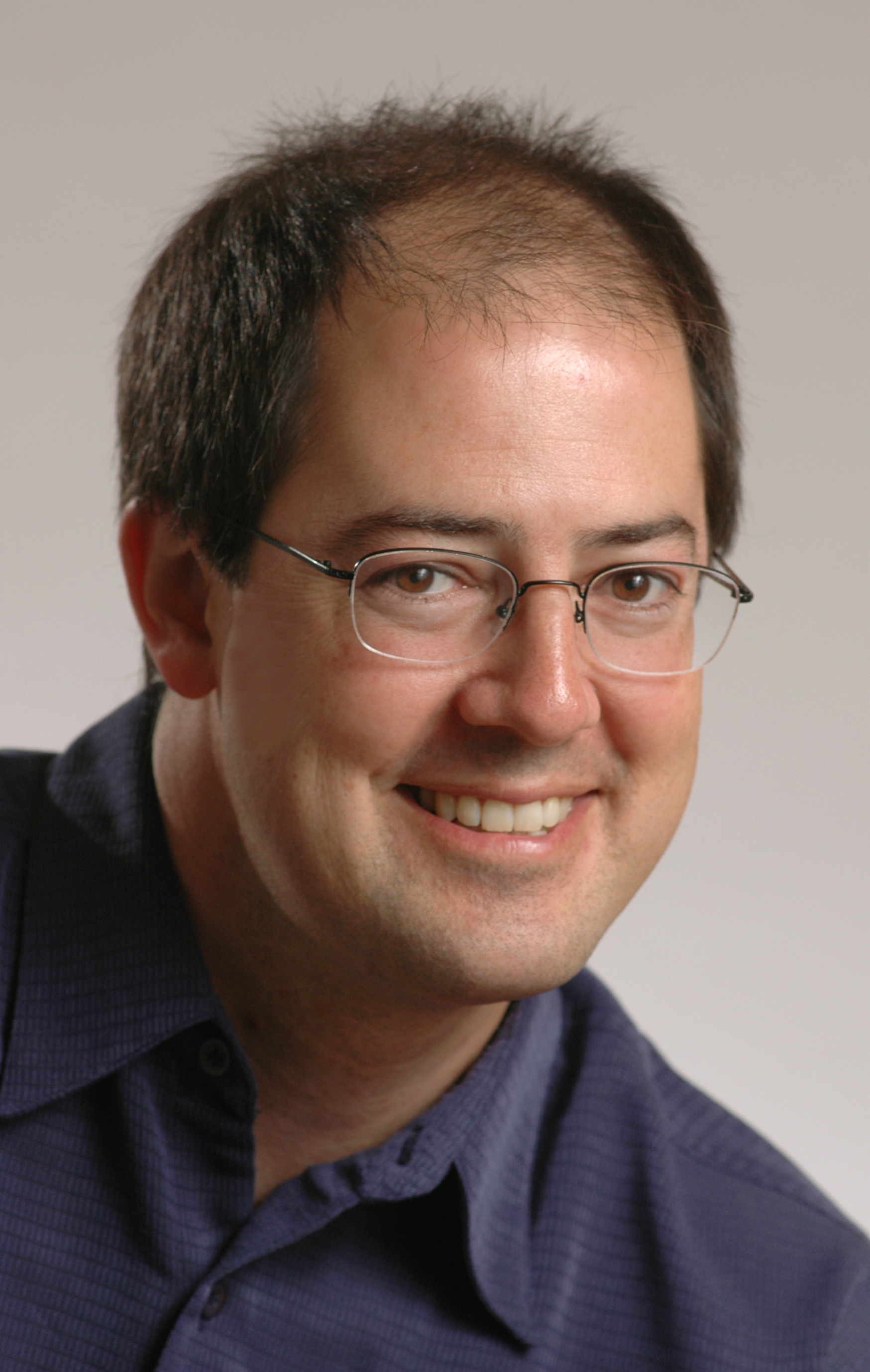
Kristofer Pister is a Professor in the Department of Electrical Engineering and Computer Sciences at the University of California, Berkeley. He co-directs the Berkeley Sensor and Actuator Center (BSAC) and the Ubiquitous Swarm Lab. His career spans groundbreaking innovations in Micro/Nano Electro Mechanical Systems (MEMS), Control Systems, and Low-Power Circuits, with a focus on Smart Dust and synthetic insects. Education: Ph.D. and M.S. in EECS from UC Berkeley (1992, 1989); B.A. in Applied Physics from UC San Diego (1986). His research areas include MEMS , Control Systems , Robotics , and Integrated Circuits , with recent work on self-powered micro-sensors, crystal-free radios, and interplanetary swarm networks. Key awards include the ISA Albert F. Sperry Founder Award (2009) , Alexander Schwarzkopf Prize (2006) , and the NSF CAREER Award (1996) . He has authored numerous influential publications in wireless sensor networks and microrobotics. His lab, Ubiquitous Swarm Lab , explores distributed robotics and swarm intelligence. Pister emphasizes open collaboration in research, ethical conduct in academia, and efficient resource utilization for graduate students.
Prof. Bryan Ford leads the Decentralized/Distributed Systems (DEDIS) lab at EPFL. He focuses on secure decentralized systems, including blockchain technology, privacy, and systems security. He earned his Ph.D. from MIT and held faculty positions at Yale University and EPFL. His work spans distributed consensus protocols, peer-to-peer networking, and privacy-preserving systems. Key projects include QuePaxa (timeout-free consensus), UIA (global connectivity for mobile devices), and MedCo (secure healthcare data sharing). He advises numerous PhD students and contributes to open-source projects like Bitcoin collective signing and privacy networks like Riffle. Education: Ph.D., MIT; Postdoctoral work at Yale Research interests include blockchain scalability, consensus algorithms, and cryptographic privacy. His lab develops systems like TRIP for coercion-resistant voting and F3B to mitigate blockchain front-running. His work on NAT traversal and peer-to-peer protocols (e.g., STUN/ICE) remains foundational in network architecture. He emphasizes practical, auditable security solutions such as CertiKOS and atomic cross-chain transactions (Atom). Notable contributions: CoSi (collective signing), OmniLedger (sharded blockchain), and privacy-preserving protocols like PURBs (Protected Unsealable Recursive Boxes). His lab collaborates with Swiss Post to audit e-voting systems and designs democratic cryptocurrencies like PoPCoin.
Jens Groth is an Honorary Professor at the Department of Computer Science, University College London (UCL), and serves as Chief Scientist at Nexus. His primary research focuses on cryptography, with an emphasis on cryptographic protocols, zero-knowledge proofs, and privacy-preserving technologies. Groth has contributed significantly to advancements in digital signatures, homomorphic encryption, and secure multi-party computation. He holds a leadership role as Program Chair for the 15th IMA International Conference on Cryptography and Coding (2015) and has been a key figure in shaping modern cryptographic standards. His work often bridges theoretical foundations with practical implementations, emphasizing efficiency and security. Groth's research interests include but are not limited to: cryptographic protocol design, lattice-based cryptography, and the application of zero-knowledge proofs in real-world systems such as blockchain and voting systems. His publications span venues like CRYPTO, EUROCRYPT, and ASIACRYPT, reflecting his impact on the field. Notably, he advocates for open access to research and has contributed to strategies ensuring conferences adopt de facto open-access policies. His current focus at Nexus centers on verifiable computation and distributed cryptographic systems.
Aggelos Kiayias FRSE is Chair in Cyber Security and Privacy and Director of the Blockchain Technology Laboratory at the University of Edinburgh. He is also Chief Scientist at blockchain technology company Input Output. His academic work spans over two decades with more than 200 publications in cryptography, blockchain, and security. Dr. Kiayias received his Ph.D. from the City University of New York and was an undergraduate at the University of Athens Mathematics department. His research focuses on computer security, privacy, applied cryptography, and foundations of cryptography with particular emphasis on blockchain technologies, distributed systems, e-voting, secure multiparty protocols, and identity management. His recent work demonstrates continued innovation across multiple dimensions of blockchain technology, with publications spanning theoretical foundations, practical implementations, economic modeling, and privacy-preserving techniques. The research output shows strong emphasis on security analysis, consensus protocols, transaction processing, and economic incentives within decentralized systems. His work bridges theoretical cryptography with real-world blockchain applications. Among his notable recognitions are an ERC Starting Grant, Marie Curie fellowship, NSF Career Award, Fulbright Fellowship, election as Fellow of the Royal Society of Edinburgh in 2021, and the BCS Lovelace Medal in 2024. He has served as program chair for major conferences including the Cryptographers' Track of RSA (2011), Financial Cryptography (2017), Real World Crypto Symposium (2020), and Public-Key Cryptography Conference (2020), and as general chair of Eurocrypt 2013. Professor Kiayias has supervised over 20 PhD students, many of whom have gone on to academic positions at institutions including Imperial College, Stanford University, Royal Holloway University London, University of Glasgow, University of Sydney, and Virginia Commonwealth University. His current advisees include Yu Shen, Amirreza Sarencheh, and Christina Ovezik with expected graduations between 2025-2026. He leads the Blockchain Technology Laboratory at the University of Edinburgh and is involved in several major blockchain research projects including Panoramix and Fentec. His research has received significant funding from the European Union (Horizon 2020, ERC), UK research councils (EPSRC), US agencies (NSF, DHS, NIST), and Greek research bodies.
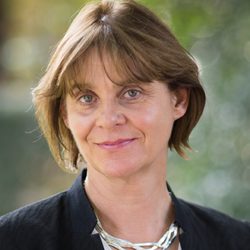
Sarah Harper is the Clore Professor of Gerontology at the University of Oxford and Director of the Oxford Institute of Population Ageing. She was appointed a CBE in 2018 for services to Demography and serves as Chair of HelpAge International. Professor Harper has held numerous influential positions including serving on the Prime Minister's Council for Science and Technology and as Director of the Royal Institution of Great Britain. Her educational background includes an MA from Cambridge and a DPhil from Oxford. Prior to her academic career, she trained with the BBC as a News and Current Affairs Reporter and Producer. She subsequently held academic positions at the University of London and the University of Chicago before returning to Oxford to found the Oxford Institute of Population Ageing. Professor Harper's research focuses on demographic change, particularly the implications of falling fertility and increasing life expectancy. Her work examines life course factors in healthy ageing, social and economic drivers of health and well-being, with emphasis on life transitions. She has conducted significant research on eldercare in China, fertility patterns in sub-Saharan Africa (revealing that ideal family size remains high despite girls' education), and demographic changes in Vietnam and Myanmar affecting agricultural production and food security. Her publication record demonstrates consistent focus on global demographic trends, with recent work increasingly addressing the intersection of population change with environmental challenges. She has authored influential books including 'How Population Change Will Transform Our World' (Oxford University Press, 2016) and is working on a new book for Cambridge University Press on Population and Environmental Change. Scientific Awards and Honors CBE (Commander of the Order of the British Empire) in 2018 for services to Demography Royal Society for Public Health: Arts and Health Research Award (2011) Fellow of the Academy of Medical Sciences Fellow of the Royal Anthropology Institute Professor Harper has supervised numerous PhD students across diverse topics from biodiversity conservation in Southeast Asia to intergenerational solidarity in Turkey. Her advisory work extends globally, having served on the Scientific Advisory Board of Natural England, the Royal Society's Working Group on Population and Environment, and as an advisor to governments including the UK, Malaysia, Singapore, and the European Commission. She has received research funding from organizations including the US National Institutes of Health, which supported the founding of the Oxford Institute of Population Ageing. As Director of the Oxford Institute of Population Ageing, Professor Harper leads a multidisciplinary team examining demographic trends and their societal implications. The Institute serves as a hub for international collaboration on ageing research, working with organizations including Population Europe and the International Association of Research Universities. She also serves as founding editor of the Journal of Population Ageing and editor of the Handbook of Ageing and Public Policy.
Andrew Green serves as Professor and Metcalf Chair in Environmental Law at the University of Toronto Faculty of Law, where he teaches environmental law, climate change law, administrative law, natural resources law, judicial decision-making, and international trade. His scholarly contributions span multiple legal domains with particular emphasis on the intersection of environmental regulation and administrative governance. Green's research interests encompass Environmental Law , Administrative Law , Climate Change Policy , Judicial Decision-Making , and International Trade Law . His empirical approach to legal scholarship has produced significant insights into how judges make decisions, particularly in administrative contexts, and how trade rules interact with domestic environmental regulations. His work often bridges theoretical legal analysis with practical policy implications. His recent publications reveal a strong focus on Canadian climate policy implementation, judicial behavior in high courts, and the evolving standards of review in administrative law. The research demonstrates increasing interdisciplinary integration, incorporating machine learning approaches to analyze judicial decisions and examining the systemic challenges in environmental governance. His scholarship consistently addresses the tension between regulatory effectiveness and legal accountability. Metcalf Chair in Environmental Law Past co-President of the Society for Empirical Legal Studies Past President of the Canadian Law and Economics Association Former Associate Dean at the Faculty of Law Chair of the University of Toronto Academic Appeals Committee (2009-2018) Before joining the Faculty of Law, Green practiced environmental law in Toronto for six years, handling both litigation (including prosecutions, administrative appeals, and civil actions) and transactional work. His practical experience informs his scholarly work on regulatory design and implementation. His research has influenced policy discussions on climate change, securities regulation, and administrative law reform in Canada.
Laura Albert is a Professor of Industrial & Systems Engineering at the University of Wisconsin-Madison and former David H. Gustafson Department Chair (2021-24). She serves as a Fellow of AAAS and IISE, and previously held the INFORMS presidency. Her research focuses on optimizing public-sector systems, with applications in critical infrastructure protection, emergency response, and cybersecurity. She advocates for public engagement through op-eds and blogs like 'Punk Rock Operations Research.' Education: PhD in Industrial Engineering, University of Illinois at Urbana-Champaign (2006) MS in Industrial Engineering, University of Illinois at Urbana-Champaign (2001) BS in Industrial Engineering, University of Illinois at Urbana-Champaign (2000) Research Interests: Dr. Albert’s work bridges operations research and public policy, addressing challenges in emergency medical services, voting system security, law enforcement strategies, and opioid treatment diversion programs. She employs mathematical optimization, game theory, and stochastic modeling to design resilient systems. Awards: INFORMS Impact Prize (2018) NSF CAREER Award (2011) Fulbright Award (2020) AAAS Fellow (2020) Advising & Grants: While explicit student names aren’t listed, her research has been supported by grants from the NSF, Army Research Office, and other agencies. She advises on interdisciplinary projects involving public health, cybersecurity, and disaster management. Labs/Teams: Engaged in collaborative efforts across the College of Engineering, including affiliations with the Electrical & Computer Engineering department. Leads initiatives on resilient infrastructure and emergency response systems.
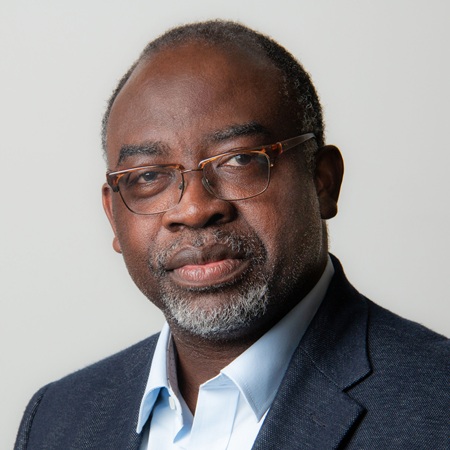
Dr. Adegboyega Ojo is a Professor at the School of Public Policy and Administration (SPPA), Carleton University , holding the prestigious Canada Research Chair (Tier 1) in Governance and Artificial Intelligence since 2014. His work bridges digital government , AI governance , and smart city development , with a focus on public sector innovation and policy analytics . Research Interests Smart Cities and Urban Digital Infrastructure Open Government Data and Transparency Blockchain Applications in Public Administration AI Ethics and Algorithmic Governance Electronic Participation and Citizen Engagement Publication Trends : His research emphasizes interdisciplinary approaches to digital governance, often involving data-driven policy analysis , smart city frameworks , and open data platform design . Collaborations span institutions in Ireland, Poland, and the U.S., with citations exceeding 5,200. Scientific Awards : Canada Research Chair in Governance and AI (Tier 1) Labs & Teams : Collaborates with the Insight Centre for Data Analytics (Ireland), Delft University of Technology , and United Nations University on projects like OpenGovIntelligence and BOLD (Big and Open Linked Data).
Marcel Lubbers is a Professor of Interdisciplinary Social Science: Relations between groups and cultures at Utrecht University's Faculty of Social and Behavioural Sciences. He leads the European Research Centre on Migration and Ethnic Relations (ERCOMER) and serves as a board member of the Interuniversity Center for Social Science Theory and Methodology (ICS). As associate editor of the European Sociological Review (ESR), he significantly influences academic discourse in migration and political sociology. His work represents Utrecht University in the focus area Migration and Societal Change, connecting research with broader societal implications. Professor Lubbers' research program centers on migration's societal impacts, particularly examining how immigration influences nationalism, Euroscepticism, and voting behavior. His work adopts both macro-level perspectives on societal cohesion and micro-level analyses of immigrant integration processes. Recent publications reveal his focus on political extremism, interethnic relations, and the psychological mechanisms behind public attitudes toward migration. His methodology combines large-scale survey analysis, comparative European studies, and longitudinal approaches to track attitude changes over time. Lubbers' scholarly output shows consistent engagement with contemporary political challenges, including analyses of radical right voting patterns, the workplace as a setting for interethnic contact, and the impact of national nostalgia on political attitudes. His research demonstrates methodological sophistication through meta-analyses, mixed-methods approaches, and innovative survey designs like the Dutch Parliamentary Election Study and Dutch Ethnic Minority Election Study. Through web publications on platforms like Stukroodvlees.nl and contributions to the Migration Advisory Council, Lubbers actively bridges academic research and public policy debates. His work provides evidence-based insights on migration policy, electoral behavior, and societal integration that inform both scholarly and policy discussions in the Netherlands and beyond.
Julia Cagé is a Full Professor of Economics at Sciences Po Paris since 2024, having joined the Department of Economics in 2014 and receiving tenure in 2021. She is affiliated with the Laboratory for Interdisciplinary Evaluation of Public Policies (LIEPP), the Centre for Economic Policy Research (CEPR) where she leads the CEPR Research and Policy Network on 'Media Plurality,' and the CESifo Research Network. Her research spans political economy, media economics, and economic history with a focus on democracy, information economics, and political participation. Cagé's research interests center on the intersection of media, politics, and economics, particularly examining how media structures influence democratic processes, political participation, and information provision. Her work combines historical analysis with contemporary economic methods to understand the relationship between media markets, campaign finance, and political representation. She has pioneered research on media ownership models, the economics of digital journalism, and the long-term effects of historical institutions on contemporary political behavior. Her publications reveal a consistent focus on the economics of information and democracy, with particular attention to media markets, campaign finance, and electoral systems. Her work spans both theoretical and empirical approaches, often using historical data to inform contemporary policy questions. The research demonstrates increasing interdisciplinary integration, connecting economics with political science, history, and media studies to address fundamental questions about democratic representation and information markets. European Research Council Starting Grant (2021) for the PARTICIPATE project Best Young French Economist Award (ex aequo) by Le Cercle des économistes and Le Monde (2023) Yrjö Jahnsson Award (2025) Special Jury Prize for Best Book on Media (2016) Prix Pétrarque de l'essai by Le Monde and France Culture (2019) Cagé has supervised numerous PhD students and early-career researchers through her ERC grant and other research projects. She has secured substantial funding including the European Research Council Starting Grant and McCourt Institute grants in 2022 and 2023. Her research group at LIEPP has produced influential policy recommendations on media pluralism and democratic representation. She has also been involved in practical applications of her research through her board membership at Agence France Presse (2015-2022) and her policy engagement with French and European institutions. Cagé leads the PARTICIPATE research project funded by the ERC, which studies campaign finance, information, and political influence using individual-level data and computer science tools. Her work connects with broader research initiatives at Sciences Po focused on democratic innovation and the political economy of information. She frequently collaborates with interdisciplinary teams including economists, political scientists, historians, and computer scientists to address complex questions about democracy in the digital age.
Dr. Caglar Ezikoglu is a Lecturer in International Relations at the School of Social Science and Humanities, University of Wolverhampton (FABSS). He holds a PhD in International Politics (Aberystwyth, 2019) and an MA in European Politics (Sussex, 2013). His academic journey spans institutions including Leeds Beckett University (Visiting Lecturer, 2023-2025), University of Birmingham (Teaching & Research Fellow, 2023-2025), and Cankiri Karatekin University (Lecturer, 2019-2023). Education: PhD, International Politics, Aberystwyth University (2014-2019) MA, European Politics, University of Sussex (2012-2013) MA, Political Science, Ankara University (2009-2012) BA, Political Science, Ankara University (2005-2009) Ezikoğlu’s research synthesizes populism , authoritarianism , and political behavior with a regional focus on Turkey , the Middle East , and comparative historical studies (e.g., Ancient Rome). His work interrogates themes such as democratic erosion , religious freedom , and media’s role in political hegemony . Recent publications (2024-2025) bridge political theory , comparative case studies , and public policy analysis , often critiquing authoritarian trends in Turkey and beyond. His upcoming book compares Catonism in Rome to Erdogan’s populism , while a 2024 article in Intellectual Discourse examines economic voting behavior collapse in Turkey. Scientific Awards: Nominated for BISA Early Career Excellence Teaching Prize (2024) Nominated for PSA Sir Bernard Crick Teaching Prize (2024) Awarded British Academy’s GLOBAL TALENT VISA (Exceptional Promise, 2025) Received a Turkey Fellowship (2023-2024) Awarded BISA Conference Bursaries (2015-2017) He serves as Co-Convenor for the PSA International Relations Specialist Group and Editor for Open Theology (Web of Science Q1). As a Country Expert for V-Dem (2021-2025) and Senior Commissioning Editor for E-International Relations (2017-2020), he contributes to global academic networks.
Jonathan L. Rogers is a Professor in the Accounting Department at Leeds School of Business, University of Colorado Boulder. He maintains his office in Koelbel Building, room 433, and can be contacted at jonathan.rogers@colorado.edu or by phone at 303-735-6620. Dr. Rogers received dual bachelor's degrees from the University of Texas in 1996: one in Business Administration with a focus in finance, and another in Economics with a minor in accounting. He earned his PhD in Accounting from the Wharton School of the University of Pennsylvania in 2005. He is also a certified management accountant and certified in financial management, though both certifications are currently inactive. Dr. Rogers' research focuses on voluntary disclosure, market microstructure, multinational firms, insider trading, and stock return volatility . His work has been published in all three top accounting journals (Journal of Accounting Research, Journal of Accounting and Economics, The Accounting Review) and has received significant attention from major media outlets including The Wall Street Journal, The New York Times, Financial Times, Fortune, Reuters, Bloomberg TV, and CNBC. His research has also been cited by members of Congress. His recent publications span a diverse range of topics from accounting and finance to meteorology and healthcare, reflecting interdisciplinary collaborations. Major themes in his work include financial disclosure practices, market microstructure, insider trading, and the dissemination of financial information. His research on SEC dissemination in high-frequency trading environments has been particularly influential in both academic and regulatory circles. 2015 EKS&H Faculty Fellowship 2015 RAST Conference Best Paper Award 2011 Fama-Miller Center Research Grant 2010 William Ladany Faculty Scholar 2009 Ernest R. Wish Award 2009 Initiative on Global Markets Research Grant 2003 Deloitte Foundation Doctoral Fellowship European Accounting Association's 2003 Doctoral Colloquium Fellowship 2001 Geewax, Terker & Company Prize for Investment Research Dr. Rogers serves on the editorial board of the Journal of Accounting Research and works as an ad hoc reviewer for the Journal of Finance, the Accounting Review, the Journal of Accounting and Economics, the Review of Accounting Studies, Contemporary Accounting Research, American Accounting Association Midyear, and the Annual and FARS section meetings. His research has been supported by numerous grants including those from the Fama-Miller Center, Initiative on Global Markets, and the Deloitte Foundation. While specific information about his laboratory or research team is not provided in the available text, his extensive publication record and editorial roles suggest he likely collaborates with multiple researchers and potentially supervises graduate students in accounting research.
James D. Long is a Professor of Political Science at the University of Washington and co-founder of the Political Economy Forum. He holds affiliations with multiple institutions including the Center for Statistics and the Social Sciences (CSSS) and the Technology and Social Change Group (TASCHA). His research focuses on electoral integrity, political violence, and ICT applications in development, particularly in sub-Saharan Africa and South Asia. He has observed elections in over a dozen countries and led field experiments on voter behavior and anti-corruption strategies. Long’s work is funded by USAID, NSF, and others. Education: PhD in Political Science, UC San Diego (2012) MSc in African Politics (Merit), SOAS, University of London (2004) BA in International Relations & History, College of William & Mary (2003) Research Interests: Elections in developing democracies, electoral fraud, technology for governance, insurgency impacts, and poverty reduction. His methods combine field experiments, ethnography, and election forensics. Recent Work: Examines ICT-driven citizen engagement platforms to improve governance and service delivery in developing nations. His 2020 ACM award-winning research addresses wildlife conservancy community relations via technology. Awards: ACM Best Paper Award (2020) Fulbright Scholar (2008-2009) Harvard Academy Fellowship (2012-2016) Advising & Grants: Supervises PhD students in comparative politics and development. Secured grants totaling over $1.5M for projects on electoral integrity and anti-corruption. Hosts the podcast 'Neither Free Nor Fair?' on global election security. Teaching: Courses include Global Crime/Corruption, African Political Economy, and Comparative Politics. Served as Associate Chair of the Department of Political Science.
Gary W. Cox is the William Bennett Munro Professor of Political Science at Stanford University. He specializes in American Politics, Comparative Politics, and Political Methodology, with a focus on electoral systems, legislative behavior, and historical political economy. His work examines how institutional frameworks shape political competition, representation, and governance across historical and comparative contexts. Education: Ph.D. in Social Science, California Institute of Technology (1982) B.S. in History, California Institute of Technology (1978) Research Interests: Cox investigates the interplay between electoral institutions and political outcomes, including the effects of proportional representation on voter mobilization, the historical evolution of legislative power, and the political economy of suffrage reform. His research combines quantitative and historical methods to analyze topics like party systems, legislative agendas, and the long-term impacts of constitutional design. Key Contributions: Cox’s seminal works include The Efficient Secret (1983), Legislative Leviathan (1999), and Marketing Sovereign Promises (2016), which have won multiple awards. His recent articles address gender representation in parliamentary systems, the role of warfare in state formation, and the strategic dynamics of electoral teams. Awards & Honors: Guggenheim Fellow Elected to the American Academy of Arts and Sciences (1996) Elected to the National Academy of Sciences (2005) Recipient of major prizes including the Samuel H. Beer Dissertation Prize (1983) and the George H. Hallett Award (2003, 2007) Advising & Grants: Cox has advised numerous graduate students and has secured grants for research on electoral reform, legislative agendas, and historical political economy. His work often bridges theoretical and empirical analyses of political institutions. Labs/Teams: While no specific lab is named, Cox collaborates widely on projects analyzing legislative behavior and electoral systems through interdisciplinary teams.
Alexander Russell is a Professor of Computer Science and Mathematics at the University of Connecticut, serving as Director of Graduate Affairs in the School of Computing and Director of the UConn Voting Technology Research Lab. He holds a Ph.D. in Mathematics and an S.M. in Computer Science from MIT, alongside dual B.A. degrees in Mathematics and Computer Science from Cornell University. His research focuses on cryptographic protocols, blockchain security, quantum computing, algorithms, and election auditing. Key areas include consensus algorithms, complexity-theoretic cryptography, and applied cryptography in voting systems. Recent work emphasizes low-variance risk-limiting audits and adaptive security mechanisms for blockchains. Notable contributions span provably secure blockchain protocols (e.g., Ouroboros), election integrity methods, and smartphone-based depression prediction models. His articles address topics like settlement bounds in longest-chain consensus, Byzantine-resilient gossip protocols, and energy-efficient neighbor discovery in mobile networks. Russell advises on interdisciplinary projects at the Voting Technology Research Center and collaborates on grants involving quantum-resistant cryptography and healthcare analytics. His work bridges theoretical computer science with practical applications in secure systems and public infrastructure.