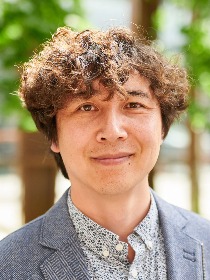
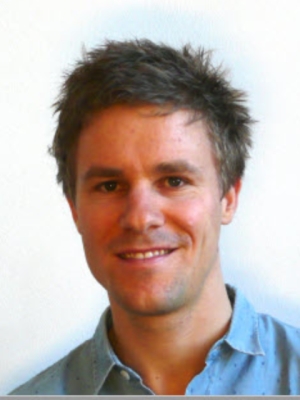
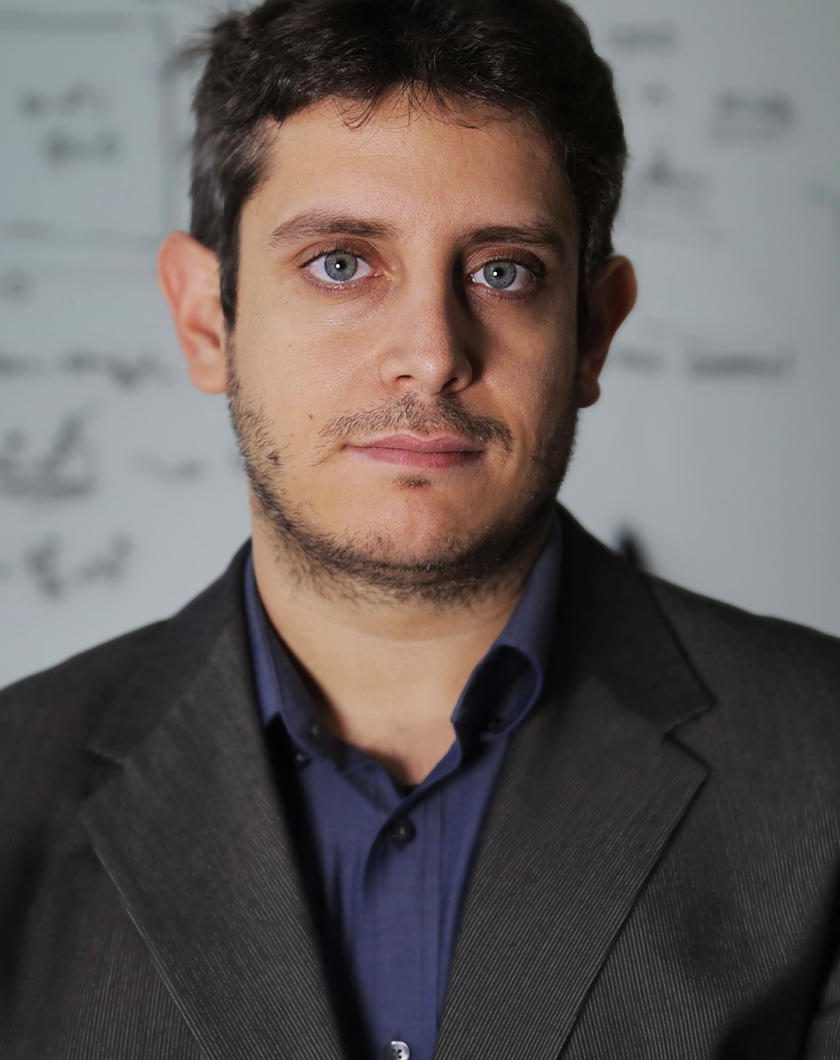
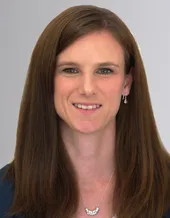
Prof. Dr. Stefan Luther is a Max Planck Research Group leader (W2, tenured since 2013) at the Max Planck Institute for Dynamics and Self-Organization, Göttingen, and an Honorarprofessor at the Faculty of Physics, University of Göttingen. He holds adjunct roles as Adjunct Associate Professor at Cornell University (2009–2012) and Northeastern University (2016–2018), and serves as DZHK-Professor at the Institute of Pharmacology and Toxicology, University Medical Center Göttingen. His research focuses on nonlinear spatiotemporal dynamics in excitable biological media, particularly cardiac arrhythmias. He pioneered 4D imaging of heart function and developed algorithms for optogenetic and electrical control of arrhythmias. Translational efforts span basic research to preclinical and clinical studies. Education includes a Diplom in Physics (1997) and PhD (2000) from Georg-August-University, Göttingen. Postdoctoral training followed at the University of Twente (2001–2004) and Cornell University’s LASSP (2004–2006). His lab, the Biomedical Physics group, explores electromechanical coupling in cardiac systems and develops novel therapeutic approaches. Collaborations include work on computational modeling, uncertainty quantification in dynamical systems, and fluid dynamics of multiphase flows.
Prof. Dr. Kai Cieliebak is a Professor of Mathematics at the University of Augsburg, where he holds the Chair of Analysis and Geometry within the Institute of Mathematics under the Faculty of Mathematics, Natural Sciences, and Materials Engineering. He has been at Augsburg University since 2012, following a professorship at Ludwig-Maximilians-Universität München from 2001-2012. His research group includes several researchers and postdocs working on symplectic geometry and related fields. Dr. Cieliebak earned his Diplom in mathematics summa cum laude from Ruhruniversität Bochum in 1992, with thesis on "Pseudo-holomorphe Kurven und periodische Orbits auf Cotangential Bündeln" under advisor H. Hofer. He completed his PhD in mathematics at ETH Zürich in 1996, with thesis "Symplectic boundaries: closed characteristics and action spectra," also advised by H. Hofer. His academic journey included positions at Harvard University, Stanford University, and research at IBM Zürich before his professorships in Munich and Augsburg. Prof. Cieliebak's research focuses on symplectic and contact geometry , with significant contributions to understanding symplectic manifolds, Lagrangian and Legendrian knots, Stein manifolds, and string topology. His work in Hamiltonian dynamics explores variational methods, periodic orbits, and celestial mechanics problems, particularly the restricted three-body problem. In global analysis , he investigates solution spaces of elliptic PDEs and symplectic field theory. His approach often bridges differential geometry, topology, and dynamical systems, with applications to mathematical physics. Over the past decade, Prof. Cieliebak's publications reveal a consistent focus on symplectic homology, Floer theory, and their applications to geometric problems. His work shows increasing integration of algebraic structures with geometric methods, particularly in cyclic homology and string topology. Recent research demonstrates strong collaboration with Urs Frauenfelder on celestial mechanics problems, applying symplectic techniques to the restricted three-body problem and related orbital dynamics. Prof. Cieliebak has secured significant research funding throughout his career, including multiple DFG grants under project codes CI 45/1 through CI 45/12, NSF grants, and participation in European Science Foundation networking programs. His most notable grants include "Foundations of Symplectic Field Theory" (2009-2015) and the current "Rabinowitz Floer Homology" project (since 2023), both in collaboration with U. Frauenfelder. He has mentored numerous researchers and maintains an active research group at Augsburg University, including postdocs and collaborators working on symplectic geometry problems. His team includes researchers such as Dr. Filip Broćić, Zhen Gao, Dr. Hanna Häußler, Emilia Konrad, Shuaipeng Liu, Dominik Meidert, Dr. Airi Takeuchi, Dr. Evgeny Volkov, Milan Zerbin, and PD Dr. Lei Zhao. Prof. Cieliebak has also organized numerous workshops on symplectic geometry, including the annual "Symplectic Field Theory" workshop series.
Christiana Mavroyiakoumou is a Courant Instructor/Assistant Professor at the Courant Institute of Mathematical Sciences, New York University. She specializes in fluid dynamics and fluid-structure interactions, with a focus on vortex dynamics, membrane flutter, and bio-inspired systems. Her research integrates modeling, numerical simulations, and experimental insights to study phenomena such as bird flock formations and fish swimming hydrodynamics. Mavroyiakoumou holds a Ph.D. from the University of Michigan (2022), an M.Sc. from the University of Oxford (2017), and a B.Sc. from Imperial College London (2016). Education: PhD in Applied & Interdisciplinary Mathematics, University of Michigan (2017–2022) MSc in Mathematical Modeling and Scientific Computing, University of Oxford (2016–2017) BSc in Mathematics, Imperial College London (2013–2016) Her research interests span fluid-structure interactions, vortex dynamics, and collective locomotion. She investigates how fluid flows mediate interactions between bodies, such as the aerodynamics of bird formations and the hydrodynamics of flapping foils. Her work bridges theoretical models with experimental observations, contributing to both fundamental science and bio-inspired engineering. Mavroyiakoumou has received prestigious awards including the Joseph B. Keller Fellowship (NYU), Peter Smereka Award (U-M), and ProQuest Distinguished Dissertation (U-M). She actively engages in academic service, organizing conferences and mentoring students. Her teaching experience includes courses on mathematical modeling, differential equations, and algebra at NYU and the University of Michigan. Key Research Themes: Flow-mediated collective behavior and instability mechanisms Vortex wake interactions and their role in locomotion Membrane dynamics in inviscid and viscous flows She collaborates with experimentalists like Leif Ristroph and Jun Zhang at NYU's Applied Math Lab, focusing on experimental validation of theoretical models. Her recent work explores self-amplifying waves in bird formations and the aerodynamic origins of flight coordination.
Steven B Bradlow is a Professor of Mathematics at the University of Illinois at Urbana-Champaign, specializing in differential geometry, gauge theory, and Higgs bundles. His work focuses on moduli spaces, geometric structures, and surface group representations. He holds a PhD from the University of Chicago (1988). Research Interests: Bradlow’s research explores advanced topics including Higgs bundles, moduli space properties, Lie group actions, and Teichmüller theory. His work bridges algebraic geometry, differential geometry, and mathematical physics, with applications to non-Abelian monopoles, spectral curves, and geometric analysis. Publications: His recent work emphasizes Cayley correspondences, Teichmüller spaces, and exotic components of SO(p,q) representations. These studies highlight his expertise in unifying geometric and algebraic perspectives. Awards: AMS Fellow (2018), Fulbright Specialist Award (2014) Collaborations: Bradlow collaborates internationally, particularly with researchers like Oscar García-Prada and Peter Gothen, advancing Higgs bundle theory and geometric representation varieties. His editorials and conference contributions further cement his role as a leader in the field.
Thomas Yizhao Hou is the Charles Lee Powell Professor of Applied and Computational Mathematics at the California Institute of Technology, where he has served as a faculty member since 1998 and as Executive Officer of Applied and Computational Mathematics from 2000-2006. His research spans fundamental mathematical problems with significant implications for fluid dynamics and computational science. Hou received his B.S. in Mathematics from South China University of Technology in 1982, followed by an M.S. in 1985 and Ph.D. in 1987 from UCLA under the supervision of Prof. Bjorn Engquist. His academic journey includes positions at the Courant Institute and the Institute for Advanced Study before joining Caltech. Hou's research focuses on multiscale analysis and computation, interfacial problems, stochastic PDEs and uncertainty quantification, and the Millennium Problem concerning global regularity of 3D incompressible Euler and Navier-Stokes equations. His work on adaptive data analysis has led to significant methodological innovations. His research is characterized by the integration of rigorous mathematical analysis with computational approaches to tackle problems that have resisted traditional methods. His recent publications reveal a consistent focus on singularity formation in fluid equations, particularly the Euler and Navier-Stokes equations, with increasing sophistication in analyzing potential blowup scenarios. His work spans theoretical analysis, numerical verification, and the development of innovative mathematical frameworks for multiscale problems. Member of the National Academy of Sciences (2024) William Benter Prize in Applied Mathematics (2024) SIAM Ralph E. Kleinman Prize (2023) SIAM Outstanding Paper Prize (2018) Fellow of the American Mathematical Society (2012) Fellow of the American Academy of Arts and Sciences (2011) Hou has served in significant editorial roles including Founding Editor-in-Chief of the SIAM Journal on Multiscale Modeling and Simulation and Co-Editor-in-Chief of Research in Mathematical Sciences. His professional service includes membership on the SIAM Council and leadership roles at the Institute of Mathematics and its Applications. His research has been supported by numerous grants focusing on multiscale modeling, fluid dynamics, and computational mathematics.
Peter Schroeder is the Shaler Arthur Hanisch Professor of Computer Science and Applied and Computational Mathematics at the California Institute of Technology (Caltech). He holds a B.S. from the Technical University of Berlin (1987), M.S. from MIT (1990), M.A. and Ph.D. from Princeton University (1992–1994). His academic roles at Caltech include Assistant Professor (1995–1998), Associate Professor (1998–2001), Professor (2001–2013), and Hanisch Professor since 2013. He served as Division Deputy Chair (2012–2015) and Acting Director of the Center for Advanced Computing Research (2013–2014). Schroeder’s research focuses on numerical algorithms for computer graphics, geometric modeling, and physical simulation. His work emphasizes Discrete Differential Geometry, rebuilding classical differential geometry for computational applications. Key areas include cloth deformation, fluid dynamics, and vortex simulations. Notable contributions include 'Schrödinger’s smoke' and fluid visualization techniques using Clebsch maps. His publications span ACM Transactions on Graphics and address topics like constrained Willmore surfaces, filament-based plasma models, and shape reconstruction from metrics. He has received the ACM Fellowship and Best Paper in Geometry Processing Award. His research often bridges computational mathematics with artistic and engineering challenges, such as simulating ink chandeliers and solar flares. Schroeder’s academic leadership includes co-founding the ACM SIGGRAPH Academy and mentoring students like James R. McLaughlin and Yanke Song, both recipients of the Henry Ford II Scholar Award.
David Burton is a Senior Lecturer in the Department of Mechanical & Aerospace Engineering at Monash University, Faculty of Engineering. He leads the Monash Wind Tunnel Research Platform (MWTRP), a major research facility supporting experimental and applied aerodynamics research across multiple industries. Research Interests: His expertise lies in experimental fluid dynamics, with a focus on wind engineering, industrial aerodynamics, and aero-acoustics. Key areas include building, vehicle, and sports aerodynamics, flow control, and the impact of wind storms and cyclones. He integrates experimental testing with numerical simulation, particularly in complex bluff body flows and sustainable engineering design. The recent publication trends reflect a strong emphasis on postcritical flow over rough and multiple cylinders, aerodynamic modeling in sports (especially cycling), and real-world applications such as freight train aerodynamics and cyclone resilience. His work combines rigorous experimentation with practical engineering solutions. Scientific Awards: No specific awards mentioned in the provided text. Advising and Grants: David Burton is accepting PhD students and actively supervises research projects. He has served as Primary Chief Investigator on significant research grants, including 'Wind and Water Loading of Flags in Cyclones' (2021–2022) and 'Wind Comfort Simulation and New Engineering Design Process' (2022–2023), demonstrating sustained external funding and project leadership. Labs and Teams: He manages the Monash Wind Tunnel Research Platform (MWTRP), an ISO9001-accredited facility featuring the largest wind tunnel of its type in the Southern Hemisphere. The platform includes CNC machining, rapid prototyping, and a multidisciplinary team of postgraduate students, designers, technical officers, and postdoctoral researchers, supporting collaborations across automotive, defense, construction, UAVs, wind energy, and sports sectors.
Buyung Kosasih is a Professor in the School of Mechanical, Materials, Mechatronic and Biomedical Engineering at the University of Wollongong. He has held this position since 2000 and focuses on teaching and research in mechanical engineering, including Machine Dynamics, Finite Element Methods, and Renewable Energy Technology. His research spans fluid dynamics in industrial processes, renewable energy systems, and aqueous lubrication. Key projects include 3D-printed surfboard fin optimization and steel coating dynamics. Research interests emphasize experimental and computational fluid dynamics, particularly in renewable energy turbines and tribological systems. Notable awards include the 2013 Outstanding Contribution to Teaching and Learning Award. He has supervised numerous students and led over 20 funded projects, including ARC grants for steel innovation and renewable energy. Collaborative work includes the Steel Research Hub and HVAC/cool roof efficiency studies.
Ming Cao is a Full Professor at the University of Groningen (Netherlands), holding positions in the Department of Discrete Technology and Production Automation, the Engineering and Technology Institute Groningen, and serving as Chair of the Jantina Tammes School of Digital Society, Technology and AI. His academic roles include Director of the Jantina Tammes School and membership in prestigious organizations such as the International Federation of Automatic Control (IFAC) and the European Commission’s DG CNECT. Cao’s research focuses on multi-agent systems, autonomous robotics, complex networks, and cooperative control, with applications in robotics, epidemic modeling, and biomimetic sensors. Education: PostDoc in Mechanical Engineering from Princeton University (2008), PhD in Electrical Engineering from Yale University (2007). Research Interests: Multi-agent systems, distributed decision-making, cooperative control, robotic teams, seal whisker-inspired flow sensing, and privacy-preserving control systems. Recent Trends in Articles: Recent work emphasizes co-evolutionary dynamics in social-technical systems, privacy in control systems, and biomimetic robotics. Key topics include feedback mechanisms in cooperation, hypergraph-based epidemic models, and seal whisker mechanics for underwater sensing. Awards: European Control Award (2016), Manfred Thoma Medal (2017), ERC Grant (2012). Grants: Vidi Grant from NWO (2015) for agent coordination research. Labs/Teams: Jan C. Willems Center for Systems and Control, Research Center for Data Science and Systems Complexity (DSSC). Active in editorial roles for journals like Artificial Life and Robotics and the SIAM Journal on Control and Optimization .
Dr. Dominik Büeler is a Researcher at ETH Zurich's Institute for Atmospheric and Climate Science and staff member of the Center for Climate Systems Modeling (C2SM). His work bridges atmospheric dynamics with practical climate services, focusing on subseasonal prediction systems and their societal applications in Europe. Research Focus: Büeler's work centers on subseasonal-to-seasonal prediction, with emphasis on weather regime dynamics, extratropical cyclone behavior, and stratosphere-troposphere interactions. His research integrates large ensemble modeling, forecast verification, and climate impact assessment, particularly for European weather extremes. Recent projects examine heatwave mortality prediction, energy meteorology applications, and the role of moist processes in atmospheric blocking. Analysis of his publication record since 2021 reveals consistent advancement in subseasonal forecasting methodology, with growing emphasis on societal applications including public health (heat-related mortality) and energy sectors. His work increasingly connects fundamental atmospheric processes with operational forecasting systems, leveraging collaborations through the Subseasonal-to-Seasonal Prediction Project. Affiliations: Center for Climate Systems Modeling (C2SM) - Core Research Staff ETH Zurich Institute for Atmospheric and Climate Science MeteoSwiss Collaborator (Energy Meteorology) Büeler contributes to multidisciplinary teams developing climate services, with recent work supporting Swiss operational forecasting systems. His research group within C2SM focuses on improving subseasonal predictability through advanced diagnostics of model biases and atmospheric processes.
Niladri Banerjee is a Senior Lecturer in the Department of Physics at Imperial College London, serving as Research Representative of the Matter Community in Physics. His research focuses on atomic-precision growth of materials, advanced electronic and magnetic characterisation, and modelling to develop emergent quantum phases in low-dimensional systems including thin films and van der Waals materials. Education PhD, University of Cambridge Postdoctoral Research Associate, University of Cambridge Junior Research Fellow, Wolfson College, Cambridge Research Interests His work spans critical areas in quantum technology development: Quantum Materials: Engineering emergent quantum phases through atomic-precision synthesis of low-dimensional materials. Spintronics: Investigating spin-orbit coupling effects and triplet supercurrents in superconducting hybrid structures. Superconductivity: Developing superconducting switches, diodes, and proximity-effect devices for quantum computing. Nanomaterials: Characterising thin films and van der Waals heterostructures for next-generation electronic applications. Recent Publications His 2021-2025 publications demonstrate sustained leadership in superconducting spintronics and topological quantum materials. Key contributions include realising de Gennes' superconducting switch, roadmap development for quantum technologies, and flux-pinning mediated superconducting diodes. His work consistently bridges experimental synthesis with theoretical modelling to address challenges in quantum computing and neuromorphic technologies. Scientific Awards No scientific awards were mentioned in the provided materials. Advising and Grants Details regarding student advising and research grants were not specified in the available information. Labs and Teams As an active member of Imperial's Matter Community in Physics, Dr. Banerjee collaborates on advanced characterisation techniques and quantum device engineering, focusing on spin-orbit coupled materials and topological phenomena for quantum technology applications.
Parviz Moin holds the Franklin P. and Caroline M. Johnson Professorship in Stanford University's School of Engineering. As founding director of the Center for Turbulence Research (CTR)—a NASA-Stanford consortium established in 1987—he has pioneered computational methods for turbulence physics, including direct numerical simulation and Large Eddy Simulation (LES) techniques. CTR serves as an international hub for turbulence studies across engineering, mathematics, and physics disciplines. Moin's research encompasses computational physics of turbulent flows, with emphasis on boundary layer control, hypersonic aerodynamics, propulsion systems, and aircraft icing. His recent work advances high-fidelity simulations for aerospace applications, particularly developing wall models for LES that accurately capture separation phenomena under complex pressure gradients and Reynolds number effects. Recent publications demonstrate extensive applications of LES to aircraft design challenges, including transonic buffet prediction, high-lift configuration analysis, and icing aerodynamics. Investigations consistently address fundamental turbulence physics while developing practical computational tools for aerospace engineering, with particular focus on hypersonic boundary layers, flow separation mechanisms, and conjugate heat transfer in iced environments.
Themistoklis Sapsis is a Professor in the Department of Mechanical Engineering at the Massachusetts Institute of Technology (MIT), where he also holds an affiliation with the MIT Institute for Data, Systems, and Society. He earned his Ph.D. in Mechanical Engineering from MIT in 2011 and previously served as an Assistant Research Scientist at NYU’s Courant Institute of Mathematical Sciences. His research focuses on developing analytical, computational, and data-driven methods to predict and quantify extreme events in high-dimensional nonlinear systems, such as turbulent fluid flows and mechanical systems. Key areas include probabilistic modeling of climate extremes, machine learning for climate simulation corrections, and uncertainty quantification in complex dynamical systems. Recent work emphasizes applications in ocean engineering (e.g., vortex-induced vibrations, wave energy systems) and environmental science (e.g., spatially resolved climate extremes, bias correction in Earth system models). His methodologies combine stochastic emulators, Bayesian experimental design, and neural networks to address challenges in data sparsity and model fidelity. Notable contributions include frameworks for correcting coarse-scale climate simulations using machine learning, real-time ocean temperature reconstruction from satellite data, and data-driven modeling of hydrodynamic interactions in marine risers. His research bridges theoretical developments with practical applications in energy systems, structural monitoring, and autonomous systems. Prof. Sapsis collaborates with interdisciplinary teams and has contributed to initiatives such as FIRSTLING-DIGIMAR (a marine riser digital twin) and multi-fidelity frameworks for autonomous seakeeping. His work is supported by grants focused on advancing machine learning in scientific modeling and extreme event prediction.
Jeffrey Guasto , Associate Professor at Tufts University, holds joint appointments in the School of Engineering (Mechanical Engineering) and School of Arts and Sciences (Physics & Astronomy). His work bridges engineering, physics, and biology to study transport properties in complex systems. Ph.D., Engineering (2009), Brown University Sc.M., Engineering (2004), Brown University Dual B.S. in Physics and Mechanical Engineering (2003), Lehigh University Research Interests focus on: Biophysics : Flagellar mechanics, chemotaxis, cell-fluid interactions Soft Matter : Active suspensions, colloids, viscoelastic materials Microfluidics : Device design for cell motility studies and gradient generation Environmental Transport : Microbial ecology in porous systems Scientific Trends from his 77+ publications show emphasis on microscale fluid dynamics, bacterial transport mechanisms, and viscoelastic flow instabilities. His 2024 Nature Microbiology work reveals phage-infected bacteria driving marine chemotaxis, while 2023 PNAS research explores stress topology in viscoelastic flows. Scientific Awards : NSF CAREER Award (2016) for cell dispersal mechanisms Collaborative NSF grants (2015-2023) Advising includes mentoring 15+ students and postdocs. His grants portfolio features 9+ awards, notably NSF grants for viral-microbe interactions (2018) and flagellar mechanics (2020). Labs & Teams : Leads the Guasto Laboratory at Tufts, integrating microfluidics and high-speed imaging for studying microbial transport, while collaborating with MIT, Harvard, and international institutions.
Kaye Morgan is a Research Fellow at Monash University's School of Physics within the Faculty of Science. She holds a Hans Fischer Fellowship at the Technische Universität München (TUM), hosted by Prof. Franz Pfeiffer. Her research focuses on phase contrast X-ray imaging (PCXI), particularly its application in biomedical research and translation to compact imaging systems for clinical use. Educated at Monash University, she earned her PhD in 2011, followed by a Discovery Early Career Researcher Award (2012–2015) from the Australian Research Council. She is also a Veski Victorian Postgraduate Research Fellow, combining her roles at Monash with visits to TUM supported by her Hans Fischer Fellowship. Her research interests include developing PCXI methods for non-invasive imaging of soft tissues, such as lung and airway dynamics, and optimizing imaging techniques to minimize radiation exposure. Key projects include assessing cystic fibrosis treatments via airway surface hydration analysis and improving X-ray source accessibility for clinical applications. Notable achievements include pioneering single-grid phase imaging techniques and contributing to high-speed imaging of biological dynamics. Her work has been recognized with awards like the 2014 Tall Poppy Young Scientist Award and the 2011 Australian Synchrotron Thesis Medal. Morgan collaborates across disciplines, working with biomedical researchers to advance imaging technologies for respiratory health. Her publications span journals like Scientific Reports, Optics Letters, and the American Journal of Respiratory and Critical Care Medicine.