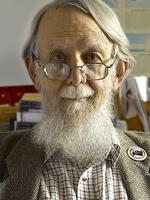
Professor Michael Edgeworth McIntyre is a Professor in the Department of Applied Mathematics and Theoretical Physics (DAMTP) at the University of Cambridge. His primary research focuses on atmospheric dynamics, fluid mechanics, and climate science, with contributions to geophysical fluid dynamics, wave dynamics, and astrophysics. He is affiliated with the Astrophysics and Atmosphere-Ocean Dynamics research groups within DAMTP. While specific educational background details are not provided, his academic career is centered at the University of Cambridge. His work spans theoretical and applied aspects of fluid dynamics, including gravity wave parameterization, stratosphere-troposphere interactions, and interdisciplinary approaches to climate science. His publications emphasize understanding complex atmospheric phenomena, such as climate uncertainties, wave-vortex interactions, and the mathematical foundations of fluid dynamics. Notable contributions include studies on potential vorticity conservation and the dynamics of musical instruments, showcasing his interdisciplinary reach. McIntyre’s research has advanced methodologies in climate modeling, particularly through simplified spectral parameterizations for general circulation models. He actively engages with the broader scientific community through his research groups and collaborations, though specific grants or advising details are not detailed here.
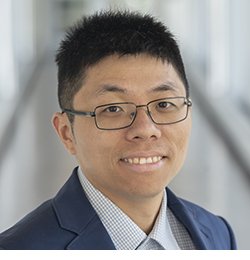
Likun Zhang is an Associate Professor in the Department of Physics and Astronomy at the University of Mississippi and a Senior Scientist I at the National Center for Physical Acoustics. He bridges physical acoustics and fluid dynamics through multidisciplinary research. Education: B.S. in Acoustics (Nanjing University, 2003), M.S. in Physics/Acoustics (WSU & Nanjing University), Ph.D. in Physics (WSU, 2012) Editorial Roles: Associate Editor for Ultrasonics , Associate/Coordinating Editor for The Journal of Acoustical Society of America His research focuses on: Ocean physics: Surface/internal wave dynamics, underwater acoustics, climate modeling via data science Microscale fluid physics: Behavior in microgravity, fluid control for space applications Acoustofluidics: Contactless manipulation of particles/cells, bioprinting, tissue engineering Recent work trends include: Acoustic vortex beams and orbital angular momentum Wave scattering in complex media Seismic oceanography for climate studies Acoustic tractor beams and contactless transport Metasurface engineering for sound control Microscale fluid manipulation Scientific accolades include: R. Bruce Lindsay Award (2021) Frederick V. Hunt Fellowship (2013-14) Outstanding Teaching Assistant (2009) He leads a collaborative research group at the National Center for Physical Acoustics, supported by grants from NOAA, NASA, NSF, ONR, and the Gulf Research Program. His lab trains students in theoretical modeling, numerical simulations, and experimental acoustics/fluid dynamics.
Chen Shen is Assistant Professor in the Mechanical Engineering Department at Rowan University's Henry M. Rowan College of Engineering. His research focuses on functional materials and structures for controlling wave propagation, with particular emphasis on acoustic metamaterials, phononic crystals, and acoustofluidics. His work develops novel structures for applications in sensing, acoustics, and healthcare. Shen's research explores wave manipulation through metamaterials and metasurfaces, acoustofluidic particle control, and mechanical design optimization. His lab employs inverse design strategies including machine learning and topology optimization to enhance functional materials. Recent publications demonstrate consistent innovation in acoustic wave control, metamaterial design, and practical applications. These works advance capabilities in sound manipulation, structural health monitoring, and microfluidic technologies. Shen has received the NSF CAREER Award, PIERS Young Scientist Award, and EPL Distinguished Referee recognition. He leads multiple funded projects including NSF-supported research on tunable surface acoustic wave devices. The Functional Materials and Structures Laboratory develops acoustofluidic technologies for biomedical applications and structural monitoring systems for renewable energy infrastructure.
Professor Andrey Miroshnichenko is a leading researcher at UNSW Canberra , specializing in Nanophotonics , Metamaterials , and Nonlinear Optics . A UNSW Scientia Fellow since 2017 and Highly Cited Researcher (Web of Science, 2019-2023), his work bridges fundamental physics and applied technologies for smart optical devices. His research interests focus on resonant light-matter interactions in nanoscale systems, including: Bound states in the continuum (BICs) for ultra-efficient photonics Exciton-photon coupling in 2D materials Topological polarization singularities Nonlinear optical responses in metasurfaces Thermal radiation control via photonic crystals Recent publications highlight trends in: 2D photodetector materials (e.g., Mo2C/SiC, TaC/SiC heterostructures) Active tuning of toroidal and anapole resonances Monte Carlo optimization for medical imaging systems Non-Hermitian acoustic resonators Scientific awards include: Australian Postdoctoral Fellowship (2007) Future Fellowship (Australian Research Council, 2011) UNSW Scientia Fellowship (2017) Web of Science Highly Cited Researcher (2019-2023)
Jacques Andrieu is a researcher at the Laboratory of Fluid Mechanics and Acoustics (LMFA - UMR 5509) affiliated with École Normale Supérieure de Lyon (ENS Lyon). His work focuses on aeroacoustics and compressible flow dynamics , particularly in rotating machinery and environmental flow contexts. Key research areas include: nonlinear acoustic wave propagation , multiphase flow instabilities , and active flow noise control He utilizes advanced experimental techniques such as PIV/PLIF , phase Doppler anemometry , and digital holography Collaborates with international institutions on industrial fluid dynamics applications for Michelin, Renault, and TOTAL Technical Expertise : Developed urban air quality model (SIRANE) for environmental impact analysis Co-inventor of tire groove velocity measurement patent (Michelin partnership) Specializes in high-turbulence environments and complex boundary flows
Marcelo H. Kobayashi is a Professor in the Department of Mechanical Engineering at the University of Hawaii at Manoa . He holds dual PhDs in Mechanical Engineering (1994) and Mathematics (2003) from the Technical University of Lisbon/IST, Portugal. His research spans Computational Fluid Dynamics (CFD) , Fluid Mechanics , and Multidisciplinary Design Optimization (MDO) , integrating advanced numerical methods and genetic algorithms to solve complex engineering problems in aerospace, biomechanics, and defense applications. CFD: Stream function methods, finite volume schemes for Navier-Stokes equations, and Padé approximations. Fluid Mechanics: Stokes flows, particle dynamics in rotating systems, and acoustic wave propagation in shear layers. MDO: Hybrid genetic programming for metamaterials, cellular division optimization for control surfaces, and bio-inspired designs for micro aerial vehicles. His recent publications reflect the application of evolutionary algorithms , topological optimization , and aeroelastic modeling to challenges in air vehicle design , thermal management , and biological systems . He has led projects funded by AFOSR , NSF , and US Army , including grants for tsunami debris impact analysis and nanosat thermal control systems. As Director of the Hawaii Open Supercomputing Center , he contributes to computational research infrastructure. His teaching includes graduate courses in Computational Fluid Dynamics , Numerical Methods , and Advanced Aerodynamics .
Zhen GAO is an Associate Professor in the Department of Electronic and Electrical Engineering at Southern University of Science and Technology (SUSTech), where he has been employed since April 2021. He received his PhD in Applied Physics from Nanyang Technological University, Singapore (2013-2018), following his Master's (2009-2012) and Bachelor's (2005-2009) degrees in Electrical Engineering from Zhejiang University. His educational background includes: PhD in Applied Physics, Nanyang Technological University (2013-2018) Master's in Electronics Science and Technology, Zhejiang University (2009-2012) Bachelor's in Electronic Information Engineering, Zhejiang University (2005-2009) Professor GAO's research focuses on cutting-edge areas in photonics and topological physics. His work spans multiple disciplines including electromagnetic wave theory, quantum phenomena in photonic systems, and novel material applications. He has established himself as a leading researcher in topological photonics, with significant contributions to the understanding of three-dimensional photonic topological insulators and Chern insulators. His research group, the Topological Physics Lab, actively investigates the intersection of topology, photonics, and condensed matter physics, pushing the boundaries of what's possible in wave manipulation and control. Analysis of his recent publications reveals a strong focus on three-dimensional topological systems across multiple physical platforms (photonic, acoustic, electronic). His work demonstrates a progression from fundamental theoretical concepts to experimental realizations, with increasing complexity from 2D to 3D systems. The research spans multiple disciplines including condensed matter physics, optics, acoustics, and electrical engineering, reflecting the interdisciplinary nature of modern topological physics research. His scientific achievements have been recognized through numerous prestigious awards: National Distinguished Youth Expert in 2020 Ten Major Advances in Chinese Optics in 2019 Top 10 Social Influential Events in Chinese Optical Field in 2019 Chinese Government Award for Outstanding Self-financed Student Award in 2016 National-level Talent in Shenzhen 2022 Asian International Conference on Communications and Photonics Young Scientist Award 2023 International Symposium on Electromagnetic Waves and Optics Young Scientist Award 2023 Global Optoelectronics Conference Young Scientist Award Professor GAO has secured significant research funding through various channels, including the National Natural Science Foundation of China Youth Project, General Project, International (Regional) Cooperation and Exchange Project, and the National Distinguished Expert Project of the Organization Department of the CPC Central Committee. He actively mentors students and researchers through his Topological Physics Lab, which recruits postdoctoral fellows, PhD students, Master's students, and interns with backgrounds in optics, physics, electronics, and communications. The Topological Physics Lab, located in Room 707 of the South Tower of Engineering Building at SUSTech, serves as a hub for interdisciplinary research at the intersection of topology, photonics, and condensed matter physics. The lab maintains strong collaborations with research groups both within China and internationally, particularly with institutions in Singapore.
Debopam Das is a Professor in the Department of Aerospace Engineering at Indian Institute of Technology Kanpur. His academic career includes significant contributions to fluid dynamics research with expertise in theoretical and experimental approaches. Research Interests: Theoretical and Experimental Fluid Dynamics Aero acoustics Instability & transition Vortex Dynamics and Unsteady Aerodynamics Dr. Das's research primarily focuses on vortex dynamics and compressible flows, with particular emphasis on vortex ring behavior and interactions. His work bridges theoretical analysis with experimental validation, contributing significantly to understanding complex fluid phenomena. Recent publications demonstrate continued focus on vortex dynamics with applications ranging from fundamental fluid mechanics to bio-inspired flight aerodynamics and aeroacoustic noise generation. Education: PhD, Indian Institute Science, Bangalore, 1998 M.E., Indian Institute Science, Bangalore, 1992 B.E., Bengal Engineering College, Shibpur, Calcutta University, 1990
Professor Yutaka OTA is a distinguished faculty member at Waseda University's School of Fundamental Science and Engineering, Department of Applied Mechanics and Aerospace Engineering. With a Doctor of Engineering degree from Waseda University, he has established himself as a leading expert in fluid machinery and turbomachinery research. His academic career spans several decades with significant contributions to compressor technology and fluid dynamics. Professor OTA's research primarily focuses on fluid machinery, numerical fluid dynamics, aerodynamic noise, and unsteady aerodynamics. His work has particular emphasis on centrifugal and axial compressors, investigating phenomena such as rotating stall, surge, vortex dynamics, and noise generation mechanisms. His research integrates experimental approaches with computational fluid dynamics to address complex flow phenomena in turbomachinery systems. His 15 most recent publications demonstrate a consistent research trajectory centered on compressor performance, flow instability, and noise reduction. The articles reveal a progression from fundamental flow visualization studies to practical applications in compressor design optimization. Key themes include vortex control techniques, diffuser design modifications, and understanding the complex interplay between surge and rotating stall phenomena in both centrifugal and axial compressors. Best Visualization Award of ASV2011 ASME Aerospace Division Best Paper Award (2002) Japan Society of Mechanical Engineers Award Research Encouragement Award (1990) Professor OTA has secured multiple research grants from the Japan Society for the Promotion of Science, including projects on shock tube experiments for compressor stall analysis and active control techniques. His work has practical implications for gas turbine design, compressor stability enhancement, and noise reduction in fluid machinery systems. He has supervised numerous graduate students and maintains active collaborations with industry partners in the turbomachinery field. His laboratory focuses on advanced flow measurement techniques and computational modeling of complex fluid phenomena in rotating machinery.
Evaggelos Kaselouris is an Assistant Professor at the Hellenic Mediterranean University's Department of Music Technology and Acoustics and a Researcher at the Institute of Plasma Physics and Lasers (IPPL). His affiliations include prior roles as a PostDoc at IPPL (2016–2023) and a Scientific Collaborator at the Technological Educational Institute of Crete (2011–2016). He holds a PhD from the Technical University of Crete and a degree in Applied Physics and Mathematics from the National Technical University of Athens. Dr. Kaselouris's research integrates multiphysics simulations across applied physics, plasma dynamics, and vibro-acoustics. Key areas include: Laser-generated acoustic waves and their applications in material characterization and musical instrument analysis. Finite element modeling of thermo-mechanical processes in laser machining and plasma instabilities. Development of crystalline undulators for narrowband gamma-ray radiation and optically shaped gas targets for ion acceleration. His computational work employs FEM/BEM to simulate phenomena ranging from nanostructured surface modifications to violin bridge dynamics. Recent studies emphasize laser-based interferometry for instrument diagnostics and ultrafast photoacoustic transduction in thin films. He actively collaborates on European projects (e.g., TECHNO-CLS) and contributes to the ESFRI infrastructure HiPER. No awards or supervised students are documented, but his lab leverages IPPL's high-power laser systems and advanced simulation tools for experimental validation.
Dr. Eyup KOÇAK is an Assistant Professor in the Department of Mechanical Engineering at Çankaya University's College of Engineering. He has progressed through academic ranks at Çankaya since 2018, starting as a Research Assistant before becoming a Lecturer (2023) and current Assistant Professor (2024). Education: Doctorate: Mechanical Engineering, Çankaya University, Graduate School of Natural and Applied Sciences (2018) Master's: Mechanical Engineering, Gazi University, Graduate School of Natural and Applied Sciences (2015-2018) Bachelor's: Mechanical Engineering, Gazi University, Faculty of Engineering (2009-2014) Research Focus: Dr. KOÇAK's expertise spans fluid mechanics, computational fluid dynamics (CFD), heat transfer, and micro-electro-mechanical systems (MEMS). His interdisciplinary approach integrates numerical simulations with machine learning techniques to solve complex thermo-fluid problems, particularly in energy systems, aeroacoustics, and thermal management applications. Publication Trends: Recent publications (2019-2024) demonstrate a strong focus on machine learning applications in thermal-fluid dynamics, including predictive modeling of nanofluid behavior, optimization of heat transfer surfaces, and aeroacoustic noise reduction. Over 70% of his journal publications appear in SCI-indexed venues, reflecting consistent research output in high-impact areas. Projects & Advising: Currently advising one Master's candidate researching aircraft wing icing mechanisms Contributor to 4 national research projects including porous material cooling studies (2021), biomimetic wing analysis (2021), and Francis turbine design (2015-2016)