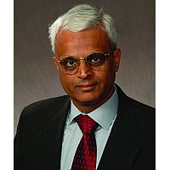
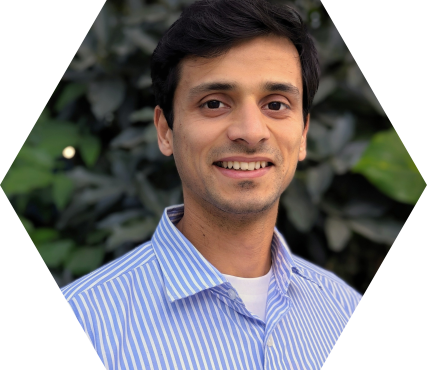
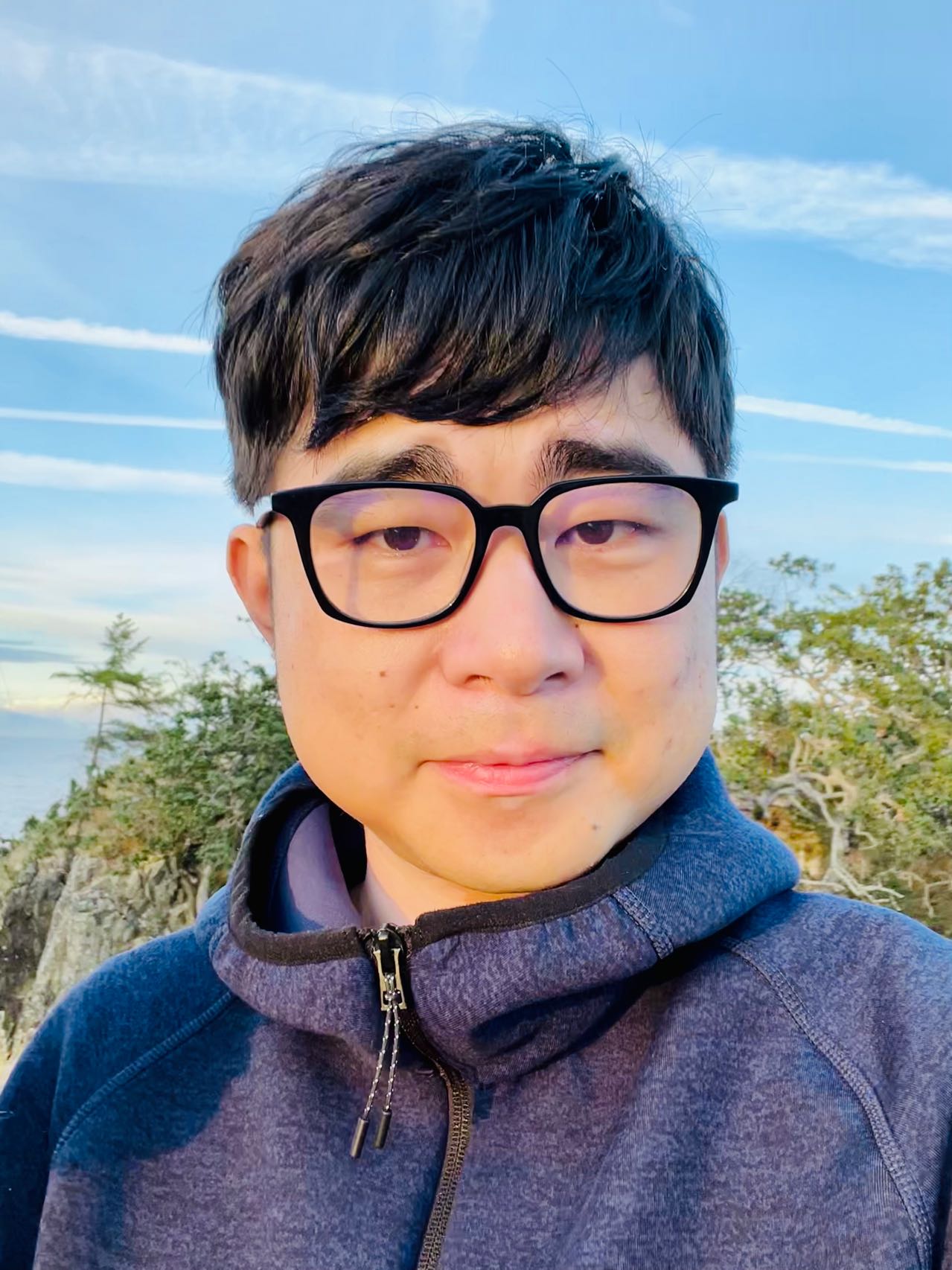
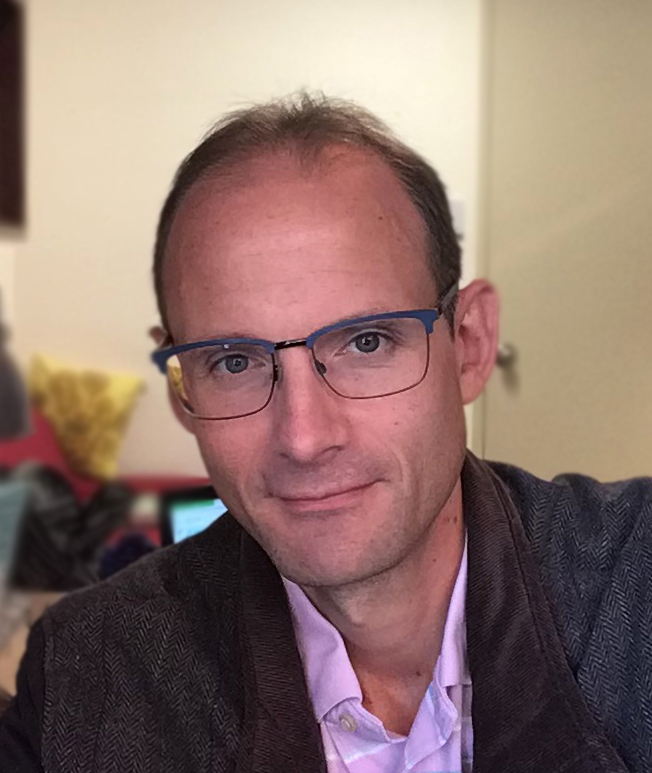
N.K. Anand is a Distinguished Professor of Mechanical Engineering at Texas A&M University, holding the James J. Cain III Regents Professorship. He leads research in advanced computational methods and thermal-hydraulic systems, with affiliations to Multidisciplinary Engineering and Nuclear Engineering programs. His work focuses on physics-informed machine learning, finite volume methods, and aerosol transport in nuclear reactor contexts. Education: PhD (Mechanical Engineering, Purdue University, 1983), M.S. (Kansas State University, 1979), and B.E. (Bangalore University, 1978). Awards include the ASME James Harry Potter Gold Medal (2020) and multiple teaching/administrative excellence awards from Texas A&M. Research emphasizes fluid dynamics modeling (e.g., PINNs for periodic flows, turbulent deposition studies), heat pipe systems, and nuclear reactor thermal-hydraulics. His Versatile Test Reactor (VTR) contributions include cartridge loop designs and aerosol transport experiments. Active in high-temperature reactor safety, with facilities studying pebble beds, helical coil exchangers, and HTGR upper plenum dynamics. Publications span physics-informed ML applications, finite volume techniques, and nuclear thermal systems. Grants supported development of advanced CFD tools and reactor safety infrastructure. His lab collaborates on international nuclear energy projects and emerging AI-driven simulation methodologies.
Professor Tongming Zhou is a faculty member in the Department of Civil, Environmental and Mining Engineering at the School of Engineering, The University of Western Australia (UWA) . He serves as Director of the UWA Boundary Layer Wind Tunnel Laboratory and Program Chair for Civil Engineering , contributing to both academic leadership and industrial applications. His work bridges fundamental fluid mechanics with practical engineering challenges. Education : PhD in Fluid Mechanics from The University of Newcastle (1999) Teaching : Coordinates core units like CIVL2551, CIVL5551, and CIVL4402/CIVL3402 Hydraulics, emphasizing real-world application and industry collaboration Research Interests focus on: Suppression of vortex shedding and vortex-induced vibrations (VIV) in cylindrical structures Enhancement of VIV and galloping for renewable energy harvesting Wave resonance in floating LNG facilities Sloshing dynamics in tanks with Newtonian/non-Newtonian fluids Wind tunnel testing for industrial wind load analysis Recent Research Trends show interdisciplinary work combining experimental and numerical fluid dynamics, with applications to offshore engineering, maritime safety, and energy systems. His projects explore VIV in flexible risers, gas leakage effects on pipelines, and triboelectric nanogenerators for wind energy. Grants : ARC Grant (2019-2021): Development of novel inerter-based dampers ARC Grant (2013-2015): Local Scour below Offshore Pipelines ARC Grant (2011-2015): Vortex & Force Characteristics of Inclined Cylinders UWA Grant (2008): Control of Vortex Shedding with Helical Strakes Facilities Leadership : Upgraded UWA’s Boundary Layer Wind Tunnel , Hydraulic Laboratory Water Flume , and 6DOF Hexapod motion platform , acquiring advanced equipment like PIV systems and high-precision load cells.
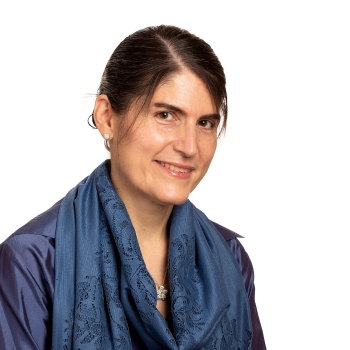
Christiana Mavroyiakoumou is a Courant Instructor/Assistant Professor at the Courant Institute of Mathematical Sciences, New York University. She specializes in fluid dynamics and fluid-structure interactions, with a focus on vortex dynamics, membrane flutter, and bio-inspired systems. Her research integrates modeling, numerical simulations, and experimental insights to study phenomena such as bird flock formations and fish swimming hydrodynamics. Mavroyiakoumou holds a Ph.D. from the University of Michigan (2022), an M.Sc. from the University of Oxford (2017), and a B.Sc. from Imperial College London (2016). Education: PhD in Applied & Interdisciplinary Mathematics, University of Michigan (2017–2022) MSc in Mathematical Modeling and Scientific Computing, University of Oxford (2016–2017) BSc in Mathematics, Imperial College London (2013–2016) Her research interests span fluid-structure interactions, vortex dynamics, and collective locomotion. She investigates how fluid flows mediate interactions between bodies, such as the aerodynamics of bird formations and the hydrodynamics of flapping foils. Her work bridges theoretical models with experimental observations, contributing to both fundamental science and bio-inspired engineering. Mavroyiakoumou has received prestigious awards including the Joseph B. Keller Fellowship (NYU), Peter Smereka Award (U-M), and ProQuest Distinguished Dissertation (U-M). She actively engages in academic service, organizing conferences and mentoring students. Her teaching experience includes courses on mathematical modeling, differential equations, and algebra at NYU and the University of Michigan. Key Research Themes: Flow-mediated collective behavior and instability mechanisms Vortex wake interactions and their role in locomotion Membrane dynamics in inviscid and viscous flows She collaborates with experimentalists like Leif Ristroph and Jun Zhang at NYU's Applied Math Lab, focusing on experimental validation of theoretical models. Her recent work explores self-amplifying waves in bird formations and the aerodynamic origins of flight coordination.
David Burton is a Senior Lecturer in the Department of Mechanical & Aerospace Engineering at Monash University, Faculty of Engineering. He leads the Monash Wind Tunnel Research Platform (MWTRP), a major research facility supporting experimental and applied aerodynamics research across multiple industries. Research Interests: His expertise lies in experimental fluid dynamics, with a focus on wind engineering, industrial aerodynamics, and aero-acoustics. Key areas include building, vehicle, and sports aerodynamics, flow control, and the impact of wind storms and cyclones. He integrates experimental testing with numerical simulation, particularly in complex bluff body flows and sustainable engineering design. The recent publication trends reflect a strong emphasis on postcritical flow over rough and multiple cylinders, aerodynamic modeling in sports (especially cycling), and real-world applications such as freight train aerodynamics and cyclone resilience. His work combines rigorous experimentation with practical engineering solutions. Scientific Awards: No specific awards mentioned in the provided text. Advising and Grants: David Burton is accepting PhD students and actively supervises research projects. He has served as Primary Chief Investigator on significant research grants, including 'Wind and Water Loading of Flags in Cyclones' (2021–2022) and 'Wind Comfort Simulation and New Engineering Design Process' (2022–2023), demonstrating sustained external funding and project leadership. Labs and Teams: He manages the Monash Wind Tunnel Research Platform (MWTRP), an ISO9001-accredited facility featuring the largest wind tunnel of its type in the Southern Hemisphere. The platform includes CNC machining, rapid prototyping, and a multidisciplinary team of postgraduate students, designers, technical officers, and postdoctoral researchers, supporting collaborations across automotive, defense, construction, UAVs, wind energy, and sports sectors.
Buyung Kosasih is a Professor in the School of Mechanical, Materials, Mechatronic and Biomedical Engineering at the University of Wollongong. He has held this position since 2000 and focuses on teaching and research in mechanical engineering, including Machine Dynamics, Finite Element Methods, and Renewable Energy Technology. His research spans fluid dynamics in industrial processes, renewable energy systems, and aqueous lubrication. Key projects include 3D-printed surfboard fin optimization and steel coating dynamics. Research interests emphasize experimental and computational fluid dynamics, particularly in renewable energy turbines and tribological systems. Notable awards include the 2013 Outstanding Contribution to Teaching and Learning Award. He has supervised numerous students and led over 20 funded projects, including ARC grants for steel innovation and renewable energy. Collaborative work includes the Steel Research Hub and HVAC/cool roof efficiency studies.
Dr. Joshua Brinkerhoff is an Associate Professor in Mechanical Engineering at the University of British Columbia Okanagan Campus. He serves as the Associate Director for Research & Industrial Partnerships in the School of Engineering and leads the UBC-Okanagan Computational Fluid Dynamics Laboratory. His research spans computational fluid dynamics, turbomachinery, multiphase flows, hydrogen safety, wind energy, and biofluid mechanics. He teaches courses in mechanics of materials, alternative energy systems, turbulence, computational fluid dynamics, and aircraft design. PhD, Aerospace Engineering (Carleton University, Ottawa, ON) BEng, Aerospace Engineering (Carleton University) Dr. Brinkerhoff’s research interests include: Computational Fluid Dynamics (CFD) for laminar-to-turbulent transition and instability analysis Wind energy systems and turbine aerodynamics Hydrogen storage and safety protocols for transportation Biofluid mechanics for respiratory diseases and aneurysm modeling Multiphase flows in industrial and environmental contexts His publications focus on CFD simulations for: Aerosol dispersion and mitigation in indoor environments Wind farm interactions and atmospheric gravity waves Cavitation and phase transitions in cryogenic and LNG systems Heat transfer optimization in industrial and thermal systems Instability dynamics in buoyancy-driven and swept flows Turbulent structures in fluidized beds and reactors Dr. Brinkerhoff has no listed scientific awards in the provided data but has extensive contributions to renewable energy, hydrogen safety, and medical fluid dynamics. His laboratory develops open-source tools like TOSCA for large-eddy simulations and investigates practical applications in urban air quality, dental aerosol control, and turbine wake modeling.
Abhijit Sarkar is a Professor in the Department of Civil and Environmental Engineering at Carleton University, Ottawa. His work centers on computational dynamics and probabilistic modeling, with office MC 3076 in the Minto Centre for Advanced Studies in Engineering and contact details including phone (613) 520-2600 x6320 and email abhijit_sarkar@carleton.ca . Education: D.Phil. from University of Oxford M.Sc. from Indian Institute of Science (IISc) B.E. from Calcutta University Professional Engineer (P.Eng.) designation His research drives innovation in uncertainty quantification for complex engineering systems. Core interests include dynamics of nonlinear structures, probabilistic mechanics for stochastic finite element methods, and Bayesian inference frameworks for parameter estimation. He pioneers scalable high-performance computing solvers for large-scale systems and sparse learning algorithms to address overfitting in statistical modeling. Recent publications (2022-2024) reveal three dominant trends: (1) Bayesian model calibration for stochastic compartmental systems applied to epidemiology and aerospace, (2) domain decomposition techniques for scalable uncertainty quantification in stochastic PDEs, and (3) sparse learning methods for nonlinear aerodynamic encoding. Key applications span wind turbine vibration analysis, flutter margin prediction, MEMS resonator optimization, and geospatial pandemic modeling. Scientific awards: No awards, fellowships, or medals listed in the source material Graduate supervision includes 6 current students (Ajay Kumar, John Clarabut, Nastaran Dabiran, Sakhi Mittal, Michael Pantano, Brandon Robinson) and 18 graduated students across 17 years (2006-2023). His research leverages high-performance computing for projects in structural dynamics, aeroelasticity, and computational epidemiology, frequently co-supervised with Dominique Poirel and Chris Pettit. Notable grants focus on wind tunnel validation for nonlinear systems and pandemic spread modeling. Based in the Minto Centre for Advanced Studies in Engineering, his computational mechanics group develops algorithms for stochastic dynamics using Carleton University's high-performance computing infrastructure. Collaborations span aerospace engineering (flutter analysis), civil infrastructure (seismic wave propagation), and public health (Covid-19 modeling).
Dr. Edouard Boujo is a Scientist and Lecturer at the Swiss Federal Institute of Technology Lausanne (EPFL) , affiliated with the School of Engineering (STI) and working in the Institute of Mechanical Engineering (IGM) and Laboratory of Fluid Mechanics and Instabilities (LFMI) . He also teaches in the SGM-ENS department of the School of Engineering. Scientist at EPFL STI IGM LFMI Lecturer at EPFL STI-SGM SGM-ENS His research focuses on Fluid Dynamics with expertise in Flow Stability , Flow Control , Aeroacoustics , Thermoacoustics , Fluid-Structure Interaction , and Coating Flow Dynamics . He employs advanced mathematical modeling and computational methods to study complex fluid behaviors. Recent publications highlight his work on stochastic modeling of fluid instabilities, adjoint-based optimization of flow systems, and nonlinear dynamics of coating flows. His 15 most recent papers cover topics ranging from symmetry-breaking bifurcations to spin coating optimization and noise-induced transitions in fluid systems. Dr. Boujo actively collaborates with institutions across Europe and New Zealand, mentoring PhD student Atharva Lagwankar . He has received research funding from the Swiss National Science Foundation for two PhD theses and contributes to major fluid dynamics conferences like the European Fluid Dynamics Conference and APS Division of Fluid Dynamics meetings. His laboratory work at LFMI involves experimental and computational studies of fluid instabilities, with applications in aerospace, mechanical engineering, and industrial coating processes. He develops adjoint-based control methods for optimizing flow systems and reducing drag in various fluid configurations.
Karthik Menon serves as an Assistant Professor with a joint appointment in the Woodruff School at Georgia Institute of Technology and the Coulter Department of Biomedical Engineering. His research integrates fluid mechanics, computational modeling, and data-driven methodologies to address critical challenges in healthcare, renewable energy, and bio-inspired engineering systems. His academic credentials include: Ph.D. in Mechanical Engineering, Johns Hopkins University (2021) M.S. in Mechanical Engineering, Johns Hopkins University (2019) B.E. in Mechanical Engineering, Birla Institute of Technology and Science, Pilani, India (2015) Menon's research program centers on three interconnected domains: cardiovascular flows for personalized treatment of heart disease, fluid-structure interactions in biological systems like heart valves and bio-mimetic robots, and vortex-dominated flows for renewable energy applications. His approach combines high-fidelity computational modeling with machine learning to uncover fundamental physics and develop clinical solutions, such as cardiovascular digital twins for non-invasive risk assessment. Current projects focus on patient-specific hemodynamics using CT imaging and uncertainty quantification to improve surgical planning. Analysis of his 15 most recent publications (2023-2025) reveals a dominant focus on advancing multi-fidelity computational frameworks for cardiovascular applications. Key trends include Bayesian uncertainty quantification, zero-dimensional solver development, and integration of clinical imaging data to create predictive digital twins. His work bridges fluid dynamics with clinical cardiology, targeting improved outcomes in coronary artery disease and Kawasaki-related complications through physics-informed machine learning. Menon's scholarly contributions have been recognized through competitive awards: WCCM-PANACM 2024 Travel Award, U.S. Association for Computational Mechanics (2024) Future Faculty Symposium Travel Award, Society of Engineering Science Conference (2023) Mark O. Robbins Prize in High-performance Computing, Johns Hopkins University (2021) Corrsin-Kovasznay Outstanding Paper Award, Johns Hopkins University (2020) Prosperetti Travel Award, Johns Hopkins University (2017) Mechanical Engineering Departmental Fellowship, Johns Hopkins University (2016) As principal investigator of the ComBiNE Fluid Dynamics Lab, Menon mentors graduate students in developing computational tools for fluid-structure interaction problems. His collaborative projects with cardiologists at Stanford and Emory hospitals translate engineering principles into clinical applications for cardiovascular disease management. Current grant activities focus on NSF and NIH-funded initiatives for uncertainty-aware cardiovascular modeling and bio-inspired flow energy harvesting. The ComBiNE Fluid Dynamics Lab operates as an interdisciplinary hub where engineers, clinicians, and data scientists collaborate on fluid mechanics challenges. Current lab initiatives include developing real-time hemodynamic simulators for surgical planning, creating reduced-order models for cardiac device optimization, and investigating vortex dynamics in fish schooling for underwater vehicle design. The lab maintains strong partnerships with Children's Healthcare of Atlanta and the Parker H. Petit Institute for Bioengineering and Bioscience.
Bo Zhu is an Assistant Professor in the School of Interactive Computing at Georgia Institute of Technology. His research focuses on computational approaches for complex physical systems, including fluid dynamics, topology optimization, and robotics control. He holds a Ph.D. from Stanford University and completed postdoctoral research at MIT CSAIL. He has been recognized with the NSF Career Award (2022) and multiple best paper awards at SIGGRAPH conferences. Education: B.E.-M.S., Software Engineering, Shanghai Jiao Tong University Ph.D., Computer Science, Stanford University Postdoc, EECS, MIT Research Interests: Develops numerical algorithms and machine learning techniques to simulate fluidic systems, soft materials, and multi-scale phenomena. His work emphasizes vorticity preservation, real-time simulation, and physics-based AI integration. Key Contributions: Pioneered Particle Flow Map (PFM) methods for fluid simulation, developed open-source libraries like SimpleX and PFM Hub, and contributed to projects like Genesis physics engine. Over 50 peer-reviewed publications in top venues (SIGGRAPH, NeurIPS, IEEE TVCG). Awards: NSF Career Award (2022) Best Paper Honorable Mention (SIGGRAPH 2025) Best Paper Award (SIGGRAPH Asia 2024) Grants & Projects: Leads NSF-funded research on Physical AI Design, collaborating with Sandia National Labs on real-time CFD solvers. Active in open-source software development for computational physics and graphics.
Leif Ristroph is an Assistant Professor of Mathematics at the Courant Institute of Mathematical Sciences , New York University . His research bridges experimental physics and applied mathematics , focusing on fluid-structure interactions in both biological and geophysical contexts. Key research areas include: Biophysical Flows : Aerodynamics of insect flight ( Applied Mathematics Laboratory ), hydrodynamics of fish schooling, and flow-sensing mechanisms via the fish lateral line system Geophysical Flows : Shape evolution during erosion, dissolution patterns in fluid flows, and bubble formation dynamics Recent publications (2019-2015) explore: Flow interactions in flapping swimmers and hovering systems Evolutionary optimization of wing shapes and self-sculpting processes Stability mechanisms in tandem flapping and insect flight His work has been featured in major media outlets like Nature , New York Times , and ScienceDaily . Ristroph's lab at NYU's Applied Mathematics Laboratory combines physical experiments, computational models, and theoretical analysis to study complex fluid-structure interactions.
Nicolas Riviere is a Professor at INSA Lyon in the Department of Mechanical Engineering, working within the Laboratory of Fluid Mechanics and Acoustics (LMFA - UMR 5509). He is part of the "Fluides complexes et transferts" (Complex Fluids and Transfers) group and the Environment team. His teaching activities primarily focus on fluid mechanics at the Mechanical Engineering Department of INSA Lyon, covering: General balances (mass, momentum, energy) Aerodynamics Compressible flows Numerical simulation of flows Free surface hydraulics Prof. Riviere's research centers on free surface hydrodynamics, with applications to natural and industrial risks. His work takes an experimental approach, utilizing the laboratory's channel facilities, particularly the channel intersection installation. His research spans river floods with compound beds, urban flooding, sanitation networks, torrential flows, and flow-obstacle interactions. He has developed a strong interdisciplinary focus, co-leading the "Baignades en Rivières Urbaines" studio with Oldrich Navratil from University Lyon 2 and the EVS Laboratory. His publication record demonstrates consistent contributions to the fields of fluid mechanics and environmental hydraulics, with recent work focusing on open-channel flows, urban flooding phenomena, vegetation-flow interactions, and experimental techniques for studying complex hydraulic phenomena. His research often bridges theoretical fluid mechanics with practical environmental applications. Prof. Riviere has received recognition for his work in environmental fluid mechanics, with numerous publications in high-impact journals in hydraulic engineering and fluid mechanics. He has supervised multiple PhD students and research projects related to environmental fluid mechanics and has collaborated with various institutions on interdisciplinary research projects addressing water-related challenges. The laboratory where he works, LMFA, provides extensive experimental facilities including wind tunnels, hydrodynamic channels, and advanced measurement techniques such as PIV (Particle Image Velocimetry), LDV (Laser Doppler Velocimetry), and other state-of-the-art instrumentation for fluid flow analysis.
Tim Colonius is the Frank and Ora Lee Marble Professor of Mechanical Engineering and Medical Engineering and holds the Cecil and Sally Drinkward Leadership Chair at the California Institute of Technology. He has been affiliated with Caltech since 1994 and currently serves as Executive Officer for Mechanical and Civil Engineering . Colonius earned his B.S. from the University of Michigan (Ann Arbor), and both his M.S. and Ph.D. from Stanford University. Research Interests: His work focuses on fluid dynamics (global instabilities, cavitation, aerodynamic sound), flow control (closed-loop control, reduced-order modeling), and biomedical applications (shock waves, lithotripsy, ultrasound). He also develops advanced numerical methods for interface capturing, immersed-boundary techniques, and high-order accuracy. Scientific Contributions: Recent publications highlight his research in multiphase flows, vortex ring collisions, turbulent jet analysis, GPU-accelerated simulations, and biomedical applications. His group uses computational and data-driven approaches to study turbulence, instabilities, and flow optimization. Scientific Awards: AIAA Aeroacoustics Award Fellow of the Acoustical Society of America Fellow of the American Physical Society (APS) NSF and DoD research grants
M. Laura Beninati is an Associate Professor of Mechanical Engineering at Bucknell University. She holds dual B.S. degrees in Architectural and Civil Engineering from Drexel University (1994), M.S. in Civil and Mechanical Engineering from Drexel (1997), and a Ph.D. in Mechanical Engineering from the University of Iowa (2004). Her research focuses on environmental fluid mechanics, sediment transport, turbulence dynamics, and experimental fluid mechanics instrumentation. She teaches courses in fluid mechanics, thermodynamics, and engineering experimentation. Awards: Lindback Grant (2007), Swanson Research Fellow (2005-2007), Amelia Earhart Scholarship (2002-2003) Her experimental studies emphasize vortex dynamics and turbulence interactions in fluid flows, with applications to environmental and aerospace engineering. Research methodologies include advanced fluid dynamics instrumentation and computational modeling.
Silas Alben is a Professor in the Department of Mathematics at the University of Michigan, affiliated with the College of Literature, Science, and the Arts. His research focuses on applied mathematics and mathematical biology, particularly fluid-structure interactions in biological systems. He employs computational simulations and laboratory experiments to study fundamental physics of flexible bodies in fluids. Research interests include biomechanics of swimming organisms, vortex dynamics in fluid-structure interactions, and thermal transport optimization. His work bridges mathematical modeling with experimental validation to understand complex physical phenomena. Publications demonstrate strong focus on fluid dynamics applications, including vortex-enhanced heat transfer, membrane flutter dynamics, and bio-inspired locomotion. Recurring themes include optimization of fluid-structure systems, vortex wake interactions, and computational methods for aeroelastic problems.