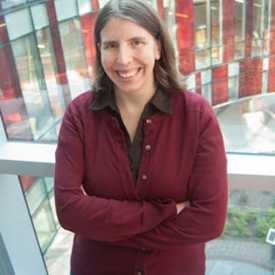
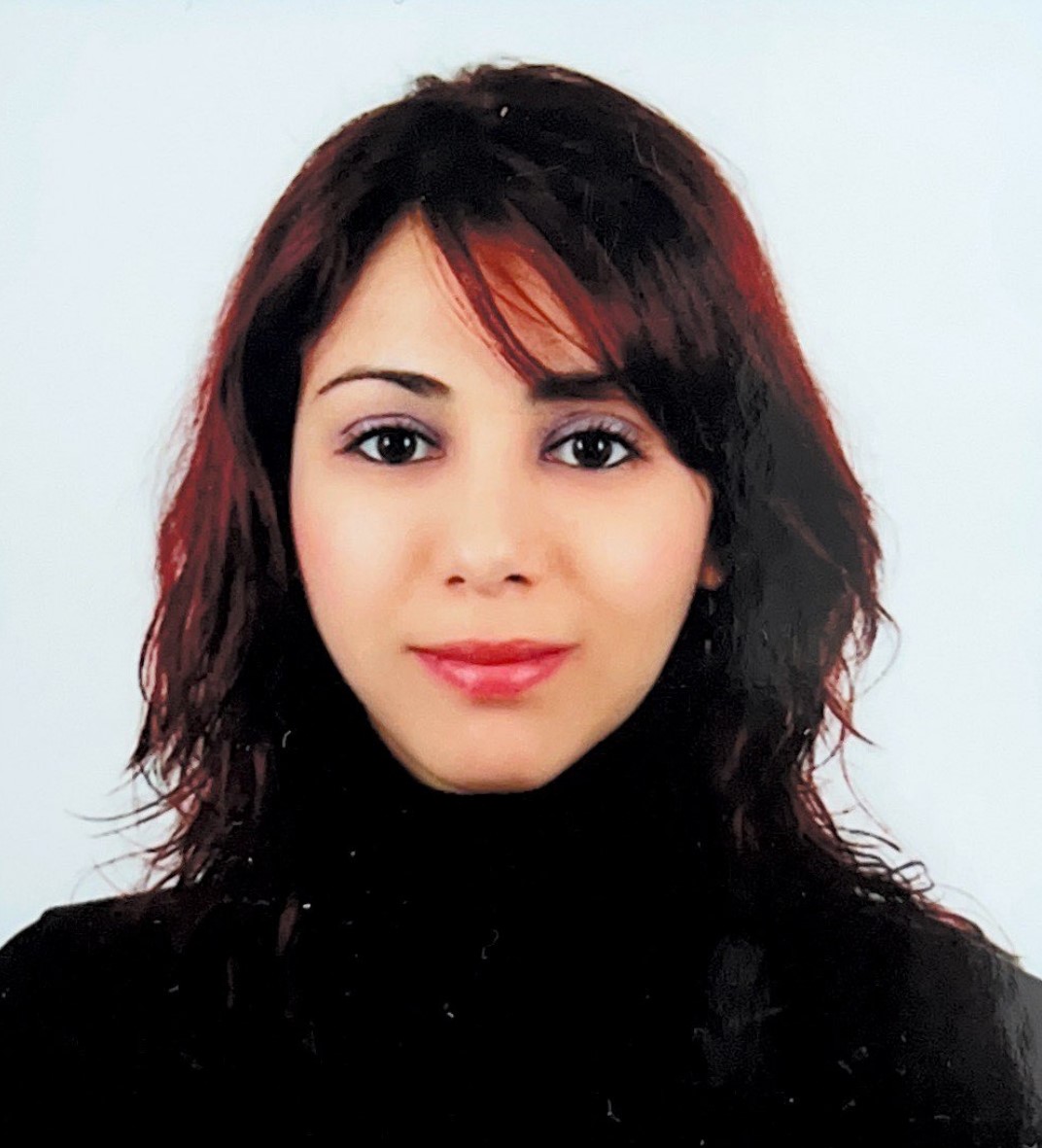
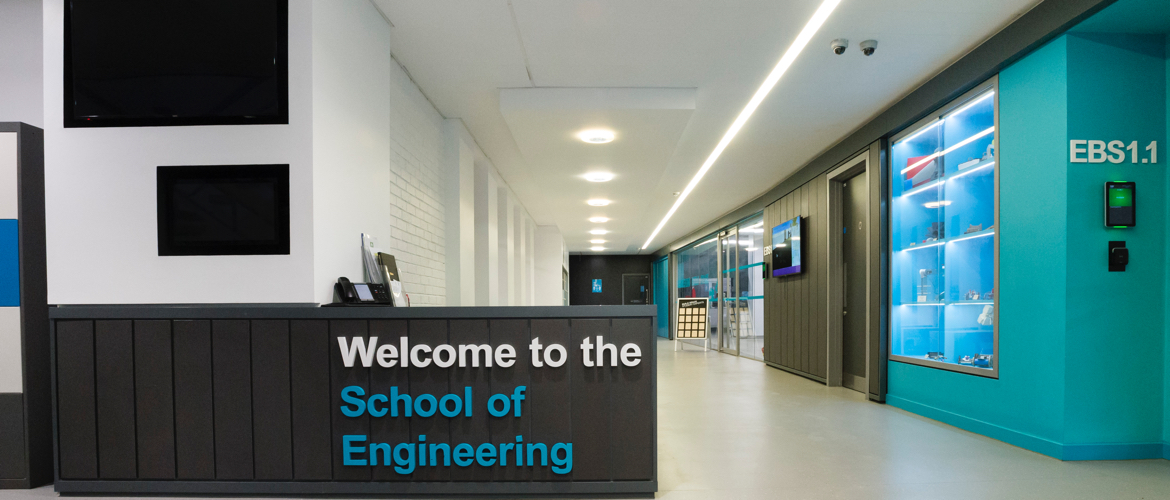
Scott David Kelly is a Professor of Mechanical Engineering and Engineering Science at the University of North Carolina at Charlotte (UNC Charlotte), affiliated with the William States Lee College of Engineering. He holds an Honors Faculty position until June 2026. His research focuses on geometric mechanics, nonlinear dynamics, and control systems, particularly in bio-inspired robotics and fluid dynamics. Kelly earned his B.S. from Cornell University (1991), M.S. and Ph.D. from Caltech (1992, 1998), followed by a postdoc at Caltech and industry experience at Entelos before joining UNC Charlotte in 2007. Education: B.S., Mechanical & Aerospace Engineering, Cornell University, 1991 M.S., Mechanical Engineering, California Institute of Technology, 1992 Ph.D., Mechanical Engineering, California Institute of Technology, 1998 Research interests include differential geometric methods in mechanics, bio-inspired robotic locomotion, and nonlinear control systems. His work often explores energy-efficient systems inspired by nature, such as aquatic propulsion via vortex shedding and multi-vehicle coordination. Recent publications span topics like inertial particle transport in fluids and HIV prevalence modeling. Teaching involves courses on mechanical engineering and applied mathematics. He contributes to labs and teams focused on fluid dynamics and robotics. Contact details include email addresses and his office at Duke Centennial Hall.
Fabrice LEMOULT is an Associate Professor at Institut Langevin , ESPCI Paris - PSL University. His research focuses on experimental wave physics in complex media, particularly metamaterials, acoustics, and soft matter mechanics. Research Highlights : Wavefront shaping, Dirac cone manipulation, time-reversal applications, and subwavelength acoustic/elastic wave control. Key Collaborations : Mathias Fink, Geoffroy Lerosey, Sébastien Popoff, Claire Prada. Recent Work Trends : Studies on elastic wave dynamics in soft materials (2024), acoustic metasurfaces for noise isolation (2024), and microwave metamaterials for topological effects (2024). Earlier works explore superlensing (2015), phononic crystals (2016), and nonreciprocal wave propagation (2017). Advising & Outreach : Mentored 11 doctoral/postdoctoral researchers, including Samuel Croquette and Simon Yves. Advocates for frugal science and public engagement via platforms like @FabLemoult on scicomm.xyz .
Nicholas Bingham serves as Assistant Professor of Physics and Astronomy at the University of Maine with a joint appointment in the Department of Physics and Astronomy and the Frontiers Institute for Research in Sensor Technologies (FIRST). His research focuses on nanoscale materials and phase transitions in thin films for sensor applications. His educational background includes: Ph.D. in Physics from University of South Florida (2013) M.S. in Physics from Colorado State University (2008) B.S. in Physics from Colorado Mesa University (2005) Professor Bingham's research spans nanoscale materials , surface physics of thin films , and structural/magnetic/electronic phase transitions . His group investigates quantum materials using synchrotron radiation techniques, with current projects examining collective magnetic phenomena in nanomagnets, strain-modulated metal-insulator transitions, and interfacial phases. His work bridges fundamental condensed matter physics with sensor development. Publications from 2017-2022 reveal consistent focus on magnetic nanostructures and phase transitions in oxide thin films . Key themes include artificial spin ice systems, vortex dynamics in bulk magnets, VO 2 metal-insulator transitions, and strain-engineered magnetism in heterostructures, demonstrating strong integration of experimental condensed matter physics with sensing applications. His scientific recognition includes: NRC Fellowship at Naval Research Laboratory ETH-Zurich and Paul Scherrer Institute Postdoctoral Fellowship Professor Bingham leads a research group conducting experiments on thin film materials for sensing applications. His team utilizes synchrotron radiation facilities and advanced magnetic imaging techniques, supported by fellowship funding and institutional resources to investigate nanomagnetism and phase transition dynamics. He operates within the Frontiers Institute for Research in Sensor Technologies (FIRST) in the Engineering Science Research Building, where his laboratory focuses on quantum materials characterization and sensor development through collaborative projects with national laboratories.
Ashoke De is a Professor and Dean of Academic Affairs at the Department of Aerospace Engineering, Indian Institute of Technology Kanpur. He holds a joint appointment in the Sustainable Energy Engineering department and has served as Air Vice Marshal Harjinder Singh Chair of Excellence. PhD in Mechanical Engineering (2009), Louisiana State University Postdoctoral Scholar, Technical University of Delft (2010) Research Engineer, GE Global Research (2010-2011) Research Focus: Specializing in high-speed flows, turbulence modeling, and fluid-structure interaction, his work spans: Supersonic/hypersonic flow dynamics Multiphase combustion and spray modeling Hybrid RANS/LES turbulence modeling Flow-acoustics coupling Energy harvesting systems Lattice Boltzmann methods Publication Trends: Recent work investigates supersonic cavity flows, wind turbine optimization, spray combustion in vitiated coflow, and double-wedge hypersonic configurations. His team applies advanced CFD techniques to aerospace propulsion and sustainable energy systems, with emphasis on shock-wave interactions and vortex-induced vibrations. Awards & Honors: ASME Fellow RAeS Fellow AvHumboldt Fellow AIAA Associate Fellow DAAD Fellowship IEI Young Engineer's Award (Aerospace) Early Career Research Award (DST) P K Kelkar Young Research Fellowship Fellow, West Bengal Academy of Science Academic Leadership: Serves as Associate Editor (IJ Energy for Clean Environment) and Editorial Board Member (Computational Thermal Sciences). Leads large-scale initiatives in turbulent flow modeling and directs research projects from ISRO, ARDB, DST, DRDO, BRNS, and Pratt & Whitney Canada.
Surendra P Singh is a University Professor of Physics at the University of Arkansas , holding appointments in the J. William Fulbright College of Arts & Sciences . Since joining the faculty in 1982 he has served twice as Chair of the Department of Physics (1995–2002 and 2005–2011) and was promoted through the ranks from Assistant to University Professor. Education Ph.D. in Physics (Quantum Optics), University of Rochester, 1982 – Dissertation under Prof. Leonard Mandel M.Sc. in Physics (1st Class, Rank II), Banaras Hindu University, 1975 B.Sc. in Physics (Hons), Chemistry & Mathematics (1st Class, Chancellor’s Gold Medal), Banaras Hindu University, 1973 Research Interests Professor Singh’s research straddles experimental and theoretical quantum optics, laser physics, and nonlinear optics. He has conducted pioneering work on quantum and classical noise in lasers, nonlinear and quantum optical phenomena, and is currently expanding into applications of optical techniques for studying nanoparticles and biopolymers. His recent work explores orbital-angular-momentum-carrying beams, graphene optomechanics, fluctuation-induced transport, and novel polarization states of light. He actively investigates light–matter interactions, geometric (Pancharatnam–Berry) phases, and relativistic spin–orbit coupling effects, bridging fundamental physics with emergent applications in sensing, energy harvesting, and biophotonics. Publication Trends Over the past decade Singh’s articles reveal a clear trajectory from foundational quantum-optics studies toward interdisciplinary applications: high-precision photodetection statistics, energy harvesting from 2D materials, thermal management in nonlinear optics, and exploitation of structured light for advanced imaging and metrology. The corpus demonstrates a seamless integration of rigorous theoretical constructs with state-of-the-art experimental demonstrations. Scientific Honors & Awards Fellow, American Physical Society (2003) Hyer Award – Outstanding Mentor, APS Texas Section (2018) Outstanding Referee, American Physical Society Journals (2015) Dexter Prize – Outstanding Graduate Thesis, University of Rochester (1982) Chancellor’s Gold Medal, Banaras Hindu University (1973) Honorary Visiting Professor, IIT Madras (Spring 2019 & 2022) Visiting Fellow, JILA, University of Colorado (1989–90) Teaching & Mentoring Professor Singh has taught an extensive range of graduate and undergraduate courses including Mathematical Methods in Physics, Quantum Mechanics I & II, Advanced Electromagnetic Theory, Laser Physics, Applied Nonlinear Optics, Quantum Optics, Statistical Mechanics, and introductory physics sequences. His mentorship has been recognized with the Hyer Award, underscoring his commitment to student success. Laboratories & Teams While no formal laboratory name is provided, Singh leads an active research group within the Department of Physics at the University of Arkansas, focusing on experimental and theoretical quantum optics laboratories equipped with state-of-the-art laser systems, single-photon detection apparatus, and facilities for 2D-material characterization.
Gretchen Campbell is an Adjunct Professor at the University of Maryland and Co-Director of the Joint Quantum Institute (JQI). Her research focuses on ultracold atomic gases, particularly Bose-Einstein condensates (BECs) and their applications in studying quantum fluids and superfluidity. She leads experiments on atom circuits and ultracold strontium systems, exploring analogs of superconducting electronics and cosmological phenomena. Key projects include persistent currents in superfluid rings, Rayleigh-Taylor instabilities in quantum fluids, and grating magneto-optical trapping techniques. Her work bridges quantum simulation, condensed matter physics, and precision measurement. Recent advancements include the creation of sodium BECs in hybrid traps and strontium BECs for quantum simulation. She has pioneered atomtronic devices, such as superfluid SQUID analogs, and used expanding BECs to model cosmic phenomena like Hubble friction. Campbell also holds an appointment as Associate Vice President overseeing UMD’s quantum initiatives, reflecting her leadership in quantum science education and research. Research Groups: JQI, RQS (Quantum Simulation Group) Labs: Sodium Atom Circuits Lab, Ultracold Strontium Experiment Her team includes graduate students and postdocs working on topics like quantum control systems, narrow-line spectroscopy, and experimental instrumentation. Notable contributions include the development of programmable systems for atomic physics and ultra-low noise drivers for precision experiments.
Kali Wilson is a Senior Lecturer and Royal Society University Research Fellow at the University of Strathclyde's Department of Physics within the Faculty of Science. She leads the Experimental Quantum Optics and Photonics Group, focusing on quantum fluid dynamics using ultracold atoms and photon superfluids. Her research spans quantum turbulence, many-body quantum systems, and superfluid dynamics. Wilson bridges experimental techniques from atomic physics, nonlinear optics, and imaging communities to study fundamental phenomena like vortex dynamics in Bose-Einstein condensates and photon droplet formation. Her work with Cs-Yb quantum mixtures enables exploration of beyond mean-field physics. Analysis of her publications reveals a consistent focus on quantum fluid phenomena across both atomic and photonic systems. Her research demonstrates strong interdisciplinary connections between condensed matter physics, quantum optics, and fluid dynamics, with growing emphasis on quantum simulation platforms using ultracold atomic mixtures. Scientific Awards: Royal Society University Research Fellowship (2021) Chancellor’s Fellowship at University of Strathclyde (2021) US Department of Energy Office of Science Graduate Research Fellowship (2010) As Principal Investigator on two major projects including 'Vortex Rings, Knots, and Kelvin Waves' (2024-2026) and 'Probing emergence in ultracold quantum mixtures' (2021-2025), Wilson secures significant research funding from the Royal Society. Her experimental groups at Strathclyde develop cutting-edge apparatus for quantum mixture studies, building on her expertise in ultracold atom and photon fluid experiments established during prior positions at Durham, Heriot-Watt/Glasgow, and Arizona. Wilson directs the Experimental Quantum Optics and Photonics Group which operates advanced laser cooling systems and quantum simulation platforms. Her team develops novel techniques for manipulating superfluid circulation and studying quantum turbulence analogues in both atomic and photonic systems.
Dr. Esin Sarıoğlu is an Associate Professor at Gaziantep University's Faculty of Fine Arts, Department of Textile and Fashion Design. Previously, she served in the Faculty of Engineering, Department of Textile Engineering. Her research focuses on sustainable textile technologies, yarn and fabric engineering, and fashion design innovation. Education: Doctorate (2010-2015): Çukurova University, Institute of Science and Technology, Textile Engineering Master's (2006-2009): Gaziantep University, Institute of Science, Textile Engineering Bachelor's (1999-2004): Gaziantep University, Faculty of Engineering, Textile Engineering Dr. Sarıoğlu specializes in textile engineering with emphasis on sustainable practices. Her research spans yarn technology, fabric performance, recycled materials, and denim innovation. She has made significant contributions to understanding the properties of core-spun yarns, recycled polyester applications, and the effects of fiber blends on textile performance. Her work bridges traditional textile engineering with contemporary fashion design needs. Analysis of her 15 most recent publications reveals a strong focus on sustainable textile solutions, particularly in recycling technologies and performance optimization of blended fabrics. Her research demonstrates expertise in denim technology, core-spun yarns, and the application of recycled materials in textile production. Scientific Awards: RIETER AWARD 2014 (Commercial/Private) Dr. Sarıoğlu has supervised five Master's theses between 2023-2024, focusing on innovative textile applications including 3D additive designs, recycled fiber composites, and medical textiles. She has led multiple research projects funded by Kalkınma Bakanlığı, YÖK, and TÜBİTAK, addressing topics from carpet technology to sustainable textile production. She actively participates in artistic exhibitions and has curated fashion-related art shows, demonstrating the integration of her technical textile knowledge with artistic expression in the Faculty of Fine Arts setting.
Gordon Robb is a Senior Lecturer in Physics at the University of Strathclyde, specializing in quantum optics and ultracold matter. His Computational Nonlinear & Quantum Optics group researches light-matter interactions in Bose-Einstein condensates and quantum light sources. Research areas include: Optomechanical self-organization Quantum free electron lasers Structured light applications Ultracold atomic systems Develops educational tools including interactive physics simulations for schools. Research contributions span theoretical and computational studies of quantum collective dynamics and novel light sources.
Professor Vittorio Penna holds the position of Full Professor at the Department of Applied Science and Technology (DISAT), Politecnico di Torino. His professional journey includes roles as a researcher since 1991 and scientific coordinator for national projects like PRIN MIUR. He has been a visiting scholar at institutions such as Los Alamos National Laboratory, ICTP Trieste, and The Open University. Education: Laurea (M.Sc. equivalent) in Physics from Torino University (1983), PhD in Physics (1989). Professional milestones include post-doctoral research grants and international collaborations. He has supervised 12 doctoral theses and contributes to teaching advanced physics courses like Quantum Mechanics and Statistical Mechanics. Research focuses on theoretical physics of matter, including quantum phase transitions in Bose-Hubbard models, dynamics of massive vortices in superfluids, and coherent states applications. Key areas span bosonic mixtures, superconductivity, and ultra-cold atoms. His work addresses phenomena like Josephson effects, dynamical instabilities, and entanglement in mesoscopic systems. Awards include Outstanding Referee accolades from APS (2011) and IOP (2021, 2023). He serves on editorial boards and has coordinated research networks on quantum collective phenomena and coherent fluids. His publications (119+) explore topics from vortex dynamics to quantum simulators, emphasizing interdisciplinary connections between theory and experiment. Current roles include membership in the Doctoral Board of Physics at Politecnico di Torino and leadership in research groups like Nanophysics and Quantum Systems (DISAT). His projects often involve mesoscopic arrays, binary condensates, and topological materials, reflecting a sustained focus on cutting-edge quantum physics.
Alex Zanotti is an Associate Professor of Fluid Dynamics at the Department of Aerospace Science and Technology of Politecnico di Milano, where he also earned his M.Sc. and Ph.D. in Aerospace Engineering and Rotary Wing Aircraft, respectively. He leads key research and teaching initiatives in experimental and computational aerodynamics, serving as Scientific Coordinator of the Aerodynamics Laboratory and Deputy Head of the Scientific Council of the Politecnico di Milano Wind Tunnel. Ph.D. in Rotary Wing Aircraft, Politecnico di Milano (2012) M.Sc. in Aerospace Engineering, Politecnico di Milano (2006) His research focuses on the fluid dynamics of Advanced Air Mobility (AAM) vehicles , particularly eVTOLs, with emphasis on interactional aerodynamics and aeroacoustics . He investigates phenomena such as propeller-propeller, propeller-wing, blade-vortex interactions, and vortex ring state across the flight envelope. His work integrates wind tunnel experiments with mid-fidelity simulations using DUST, a vortex-particle-method based solver he coordinates. The recent articles reflect a consistent trend in multi-propeller aerodynamic interactions , noise prediction , and validation of computational tools against experimental data. Topics span from fundamental vortex dynamics to applied urban air mobility vehicle design, with strong emphasis on performance, safety, and regulatory compliance . The integration of simulation and testing is a hallmark of his research approach. Scientific Roles and Leadership: Scientific Coordinator, Aerodynamics Laboratory, Politecnico di Milano Deputy Head, Scientific Council, Politecnico di Milano Wind Tunnel Scientific Coordinator, DUST mid-fidelity aerodynamic solver Instructor, Experimental Fluid Dynamics and Aerodynamics of Transport Vehicles (M.Sc. Aeronautical Engineering) While no formal awards or student names are mentioned, his leadership in lab operations, software development, and advanced teaching suggests an active supervisory role in graduate research. His work supports the development of next-generation urban air mobility systems through rigorous aerodynamic and acoustic analysis. He is involved in advanced research infrastructure and is likely engaged in national and international collaborations related to AAM certification and design. His future work may focus on scaling simulation capabilities, integrating machine learning for flow prediction, and expanding experimental databases for regulatory frameworks.
Susanne Friederike Viefers is a Professor and former Head of the Department of Physics at the University of Oslo (2013-2020). Her research spans quantum effects in low-dimensional systems topological phases anyons cold atom quantum hall analogues physics education research . Key academic roles include: Professor (2007-present) Associate Professor (2003-2007) Visiting Professor at Stockholm University (2008) . She has led two NFR/FRIPRO projects (2007-2017) and served on multiple academic boards including the Norwegian Academy of Sciences and Letters. Her 2017 Reviews of Modern Physics article on Quantum Hall hierarchies and 2008 Journal of Physics: Condensed Matter review on topological phases in cold atoms reflect her expertise. Current strategic work focuses on developing quantum technology initiatives at Oslo Science City. Scientific awards include member of the Norwegian Academy of Sciences and Letters EU Quantum Flagship representative NORDITA board member (2007-2019) .
Sergei Sazhin is Professor of Thermal Physics at the University of Brighton's School of Architecture, Technology and Engineering. His research focuses on numerical and asymptotic modeling of fluid dynamics, heat/mass transfer, and combustion processes in fuel sprays, with particular expertise in droplet heating and evaporation phenomena. Education includes a PhD in 'Modelling of natural radioemissions in the Earth's magnetosphere' from St. Petersburg State University (1977), Master's degree from the same institution (1972), and additional qualifications from University of Brighton (1997) and University of Sheffield (1992). Research interests span thermal physics, spray modeling, droplet evaporation, combustion processes in Diesel and gasoline systems, and multi-component fuel droplet behavior. His work combines theoretical modeling with experimental validation to advance energy efficiency in combustion systems. Recent publications demonstrate ongoing work in advanced droplet dynamics modeling, with articles focusing on bi-component droplet behavior, micro-explosion phenomena, and surface-droplet interactions. This research has applications in automotive engineering and renewable energy systems. Significant projects include 'Heating and evaporation of droplets with nano-particles' (Royal Society funded), 'Investigation of vortex ring-like structures in internal combustion engines' (EPSRC), and 'Modelling of sprays for medical and automotive applications' (Royal Society).
John O. Dabiri is the Centennial Professor of Aeronautics and Mechanical Engineering at the California Institute of Technology (Caltech). He holds dual appointments in the Division of Engineering and Applied Science. His academic journey includes a B.S. from Princeton University (2001), and M.S. and Ph.D. from Caltech (2003, 2005). He has served as a faculty member at Caltech since 2005, advancing through ranks from Assistant to Centennial Professor. He also served as Dean of Undergraduate Students at Caltech (2014–2016) and held a professorship at Stanford University (2015–2019). His research focuses on fluid mechanics, bio-inspired engineering, and renewable energy. Key areas include biological fluid dynamics in oceans, next-generation wind energy systems, and experimental methods. Notable contributions include developing biohybrid robotic jellyfish for ocean exploration and improving wind farm efficiency through unsteady flow dynamics. Dr. Dabiri has received prestigious awards such as the National Medal of Science (2025), Alan T. Waterman Award (2020), and MacArthur Fellowship (2010). He leads major grants, including projects on biohybrid robotics and wind energy optimization. His work spans interdisciplinary collaborations, bridging engineering, biology, and environmental science. Advising over 30 students and postdocs, Dabiri’s lab has produced leaders in academia and industry. Ongoing projects include visual anemometry, vortex ring propulsion, and ethical biohybrid systems. He actively contributes to national policy through roles on the President’s Council of Advisors on Science and Technology and the Secretary of Energy Advisory Board.
Yongmann Chung is an Associate Professor at the School of Engineering, University of Warwick. His research focuses on Computational Fluid Dynamics (CFD), turbulence modeling, and flow control with applications in aerospace engineering and electrochemistry. He specializes in Large Eddy Simulation (LES) and Direct Numerical Simulation (DNS) of complex flows, including micro-fluid dynamics in electrochemical systems and drag reduction strategies. His work spans unsteady turbulent flows, heat transfer, and aerodynamic phenomena in systems like flying cars and quadcopters. Teaching interests include fluid mechanics (ES2A7), computational fluid dynamics (ES440), and scientific computing (MA5P9). Recent publications explore battery health prediction using graph neural networks, vortex ring state analysis, and computational models for droplet dispersion in public spaces. Chung’s research also addresses industrial challenges such as cavitation erosion monitoring and turbulent flow control via Lorentz force actuation. Office hours are Fridays 10 am–12 pm during term time. He advises projects and grants in fluid dynamics and thermal engineering, with a focus on both fundamental turbulence research and applied energy systems. His work extends to bio-inspired design, exemplified by studies on dolphin kick swimmers, and environmental health modeling for airborne disease transmission.