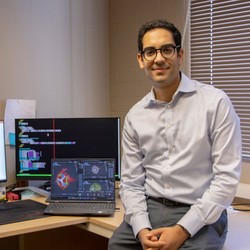
Dr Leok Lee is a Lecturer in the School of Electrical and Mechanical Engineering at the University of Adelaide . He is also an active member of the Centre for Energy Technology , contributing to cutting-edge research in renewable energy systems. Research Interests: Renewable energy systems, with a focus on solar thermal energy and energy storage. System integration and optimisation of complex transient energy systems. Computational fluid dynamics (CFD) and experimental design for energy applications. Decarbonisation of heavy industry through clean energy technologies. His research spans from fundamental studies in heat transfer and fluid mechanics to applied engineering solutions for decarbonising industrial processes. He has led and contributed to projects funded by ARENA and HILT CRC, targeting the integration of concentrated solar thermal energy into industrial applications such as the Bayer Alumina process. Supervision & Mentorship: Dr Lee is eligible to supervise Masters and PhD students and actively mentors undergraduate, Masters, and PhD candidates. He encourages prospective students to contact him via email to discuss research opportunities. Contact: Email: leok.lee@adelaide.edu.au Location: Room 3, Engineering South, North Terrace Campus
Prof. Erdem Günay is a full Professor in the Department of Energy Systems Engineering at Istanbul Bilgi University, where he has been serving since 2013, rising through the academic ranks. He holds a Ph.D. in Chemical Engineering from Bogazici University, where he also completed his B.S. and M.S. degrees, and conducted postdoctoral research. His academic journey reflects a deep commitment to energy systems and sustainable technologies. B.S. in Chemical Engineering, Bogazici University, 2002 M.S. in Chemical Engineering, Bogazici University, 2005 Ph.D. in Chemical Engineering, Bogazici University, 2012 Postdoctoral Research Associate, Catalyst Design and Reaction Engineering Laboratory, Bogazici University, 2013 Prof. Günay’s research centers on the integration of machine learning and artificial intelligence with energy systems engineering. His work spans renewable energy (solar, wind, bioenergy), hydrogen production, CO₂ utilization, fuel cells, and energy demand forecasting. He employs advanced data mining, neural networks, and explainable AI to model, simulate, and optimize complex energy processes, contributing significantly to sustainable energy solutions. His interdisciplinary approach bridges chemical engineering, environmental science, and computational modeling. His recent publications demonstrate a strong trend in applying machine learning to sustainable bioenergy, catalysis, and environmental management. From optimizing biochar production to forecasting global temperature anomalies and enhancing microbial fuel cells, his research leverages AI to address pressing energy and environmental challenges. The articles reflect a consistent focus on sustainability, efficiency, and innovation in energy technologies, with a growing emphasis on explainability and real-world applicability of AI models. Prof. Günay has not been mentioned to have received any specific scientific awards, but his extensive publication record in high-impact journals indicates strong recognition in his field. He has advised several Master’s students, including Muaaz Jnani, Duru Akalın, and co-advised Ahmet Coşgun and Meltem Baysal. He actively supervises senior design projects in areas such as biogas production, biodiesel from shea butter, pyrolysis, and solar desalination, fostering hands-on learning and innovation among students. While no external grants are explicitly mentioned, his research output suggests active involvement in funded projects. His teaching portfolio includes core courses such as Thermodynamics, Fluid Mechanics, Fuels and Combustion, and Energy Systems Modeling and Simulation. Although specific lab or research team names are not provided, his frequent collaborations with researchers like Ramazan Yıldırım, N. Alper Tapan, and Ahmet Coşgun suggest active participation in a research group focused on AI-driven energy and catalysis research at Istanbul Bilgi University.
Jonathan Poggie is a Professor in the School of Aeronautics and Astronautics at Purdue University's College of Engineering, where he has been a faculty member since 2015. He previously spent over two decades at the Air Force Research Laboratory. His research group conducts high-fidelity simulations in hypersonic aerodynamics, turbulence, and plasma-based flow control, supported by major grants from DoD, DoE, AFOSR, and ONR. Ph.D., Mechanical and Aerospace Engineering, Princeton University, 1995 M.S.E., Mechanical and Aerospace Engineering, Princeton University, 1991 B.S., Mechanical Engineering, University of Rhode Island, 1988 Prof. Poggie's research focuses on high-speed fluid dynamics , particularly hypersonic flows , compressible turbulence , laminar-turbulent transition , and shock-wave/boundary-layer interactions . His group also investigates plasma-based flow control using electrical discharges. His work combines computational, experimental, and theoretical approaches to address challenges in aerospace vehicle design, especially for defense and space applications. The articles reflect a strong focus on computational fluid dynamics of high-speed flows, with particular emphasis on shock unsteadiness , boundary layer transition , and plasma actuation . The research spans from fundamental fluid mechanics to applied aerospace engineering, with increasing recent interest in military conflict modeling using fluid dynamics analogies. C. T. Sun Excellence in Research Award, 2023 University Faculty Scholar, 2023-2028 Outstanding Graduate Faculty Mentor Award, 2021 Elmer F. Bruhn Teaching Award, 2019 W. A. Gustafson Teaching Award, 2018 ASME Fellow, 2007 AIAA Associate Fellow, 2004 Prof. Poggie has advised 6 PhD students and 18 MS students at Purdue as of 2025. His research has been supported by multiple large-scale grants, including three DoD Frontier Projects and a DoE INCITE Award , providing supercomputing resources for high-fidelity simulations. He collaborates with researchers at The Ohio State University, Notre Dame, and various national laboratories. His group has developed novel approaches to operational mapping for military conflict analysis, creating continuous flow models of battlefield dynamics. The team has also secured two patents in hypersonic technology, one for inlet design and another for a hypersonic test facility. His research group investigates geometric imperfections in hypersonic vehicles (steps, gaps, roughness), laminar-turbulent transition prediction, and separation unsteadiness in shock-wave interactions. They use advanced computational methods like DDES and DNS, supported by massive computing allocations. The group has produced significant work on sidewall confinement effects , wall roughness , and gap flows in hypersonic configurations.
Dr. Mehdi Jafarian is a Senior Lecturer in the School of Chemical Engineering at the University of Adelaide . His work focuses on hydrogen production , CO2 capture , solar thermal energy , and chemical looping combustion . Key research areas include: Solar thermal integration in industrial processes Hydrogen generation via methane pyrolysis CO2 sequestration technologies Advanced water treatment systems Thermochemical energy storage Research Trends : Recent publications emphasize hydrogen production optimization , PFAS removal , and molten metal reactor systems . Sub-fields span flash reactor modeling , hydrodynamic cavitation , and membrane-free electrolysis . Contact : mehdi.jafarian@adelaide.edu.au
Dr. Tim Lau is a Program Director and Research Degree Supervisor at the University of South Australia's STEM College (UniSA STEM). He is available for media commentary and specializes in fluid dynamics, mechanical engineering, and renewable energy systems. Research Interests : Dr. Lau's work focuses on particle-laden flows, turbulence modeling, vortex dynamics, and solar thermal technologies. His studies explore particle behavior under radiation, flow dispersion in confined environments, and energy efficiency in residential and industrial systems. Publication Trends : His recent articles emphasize experimental and computational analyses of fluid-particle interactions, with applications in hydrogen combustion, solar receivers, and heat exchangers. Key methodologies include laser diagnostics and numerical simulations.
Herbert Steinrück is an Associate Professor at Vienna University of Technology (TU Wien) since 1997, with multiple affiliations across the university's engineering departments. His primary appointments include the Institute of Fluid Mechanics and Heat Transfer (E307), Institute for Analysis and Scientific Computing (E322), and Institute of Engineering Design and Product Development (E101). He leads research in the Computational Fluid Mechanics research area (E322-02). Steinrück completed his Dipl.-Ing. in Mathematics at TU Wien in 1983, followed by his Dr. techn. degree between 1983-1985. He served as a Research Assistant from 1983-1989 at the Institute of Fluid Mechanics and Heat Transfer, then worked as a University Assistant from 1992-1997 before achieving Habilitation in 1991. His international experience includes a Visiting Scientist position at IBM Thomas Watson Research Center in 1989-1990. His research focuses on Computational Fluid Dynamics, Wave Dynamics, and Combustion Engineering . Steinrück's work spans rotary and gravity waves in cylindrical containers, flame propagation in confined spaces, dust explosions, and flow-induced vibrations. His approach combines experimental validation with asymptotic analysis and numerical simulation, particularly examining stability characteristics and excitation mechanisms in complex fluid systems. Recent work shows increasing focus on multiphysics problems involving fluid-structure interaction. Analysis of his 15 most recent publications reveals consistent work in wave dynamics (particularly rotary waves in cylindrical containers), with expanding applications to combustion phenomena and structural interactions. His research demonstrates strong continuity in fundamental fluid mechanics while adapting to address practical engineering challenges in compressor design, explosion safety, and aeroelasticity. Steinrück has mentored numerous graduate students through thesis supervision, with documented advisees working on topics including hydroelastic gear lubrication, circulating condensate films, dental air turbines, and flow-induced vibrations in U-beams. His collaborative work extends to conference organization, including editing proceedings for the EFRC Conference series.
Paul Strykowski serves as the George W. Taylor Distinguished Professor in the Department of Mechanical Engineering at the University of Minnesota, where his research centers on fundamental fluid dynamics phenomena with applications in propulsion and combustion systems. His core research domains include: Fluid Dynamics and Turbulent Flow Mechanisms Active Flow Control and Stability Theory Combustion Dynamics and Propulsion Systems Specializing in spatio-temporal stability analysis, multi-phase turbulent flows, and the effects of compressibility/density on flow control, his work bridges theoretical modeling with experimental validation in complex fluid environments. Analysis of his publication history (2005-2016) reveals consistent focus on jet flow instabilities, shear layer control, and combustion optimization. Key methodological themes include counterflow techniques for thrust vectoring, microjet-based active control in combustors, and stability analysis of low-density jets—demonstrating interdisciplinary integration of fluid mechanics, thermodynamics, and control theory. Dr. Strykowski's contributions advance critical technologies in gas turbine propulsion, where his investigations into flame anchoring, vortex suppression, and heat release control directly address industry challenges in combustion efficiency and emissions reduction.
Alex Rashkovan is a Visiting Assistant Professor in the Department of Engineering Physics at McMaster University. His academic work focuses on computational fluid dynamics (CFD), nuclear reactor thermal hydraulics, and heat transfer, with a strong emphasis on modeling fluid behavior in reactor containment systems and experimental validation of CFD simulations. His research spans turbulent jet dynamics, stratified layer erosion, mixed convection, and vortex analysis, as evidenced by publications in journals such as Nuclear Engineering and Design , Physics of Fluids , and Progress in Nuclear Energy . Key trends in his scholarly activity include the optimization of gas-coolant channels, scaling considerations for reactor experiments, and the thermal and fluid dynamic analysis of complex geometries like wavy walls and rotating containers. His work often bridges numerical simulations with empirical validation to enhance reactor safety and efficiency.
Christophe Bailly is the Director of the Laboratory of Fluid Mechanics and Acoustics (LMFA UMR5509) and a Professor at École Centrale de Lyon, France. His career spans academic roles at École Centrale Paris (1995-2006) and École Nationale Supérieure des Techniques Avancées (2001-2020), alongside membership in the Institut Universitaire de France since 2007. He specializes in turbulence, aeroacoustics, sound propagation, and high-resolution numerical methods. His research focuses on jet noise , ducted flow acoustics , and advanced diagnostic techniques like Interferometric Rayleigh Scattering. He has co-authored over 120 peer-reviewed articles and a textbook on turbulence with Geneviève Comte-Bellot. Notable scientific awards include the Yves Rocard Prize (1996), Alexandre Joannidès Prize (2001), Air & Space Academy Medal (2016), CEAS Aeroacoustics Award (2020), and the French Medal (2023). He serves as Associate Editor for the AIAA Journal and Advisory Editor for Flow, Turbulence and Combustion .
Prashant Singh is an Assistant Professor in the Department of Mechanical Engineering at Mississippi State University, where he also serves as the Assistant Director of the Industrial Assessment Center. His research is centered on advanced thermal systems, particularly in heat transfer enhancement, electronics cooling, and gas turbine internal cooling technologies. He holds a Ph.D. in Mechanical Engineering from Virginia Tech, an M.S. from Arizona State University, and a B.Tech. from the National Institute of Technology, Rourkela, India. Research Interests: His work spans Heat Transfer Enhancement , Porous Media Flows , Advanced Electronics Cooling , Thermal Interface Materials , and Thermal Energy Conversion and Storage . He employs both experimental and numerical methods to investigate thermal performance in rotating and stationary environments, with a focus on turbomachinery and compact cooling systems. The recent publications reflect a strong trend in jet impingement cooling , serpentine cooling channels , metal foams , and rotational heat transfer effects . These studies are critical for improving efficiency and reliability in gas turbines and high-power electronics. The keywords across these works include Mechanical Engineering, Thermal Engineering, Fluid Dynamics, and Materials Science, with subfields such as Coriolis force mitigation, micro-roughness, and transient thermography. Scientific Awards: Warren M. Rohsenow Award 2017 (ASME IMECE) YETEP Award 2018 and 2017 (ASME IGTI) IGTI Travel Award 2016 New Horizon Fellowship (2015–16) Darryl E. Metzger Memorial Fellowship (2013–14) Outstanding Reviewer, International Journal of Heat and Mass Transfer Advising and Grants: While specific student names are not listed, his graduate research assistant roles and current faculty position indicate active mentorship of graduate students. He has secured recognition through competitive fellowships and awards, suggesting strong grant-writing ability and research impact. His collaborations with Dr. S.V. Ekkad and others indicate team-based research in high-pressure thermal environments. Labs and Teams: He is affiliated with the Industrial Assessment Center and conducts experimental thermal research involving transient liquid crystal thermography, jet impingement rigs, and rotating heat transfer facilities. His work often involves interdisciplinary teams focused on energy systems, advanced manufacturing, and sustainable thermal management.
Nathan Tichenor is a Research Associate Professor in the Department of Aerospace Engineering at Texas A&M University. He also serves as Chief Research Officer at the Bush Combat Development Complex and Director of Hypersonic Facilities there. His research focuses on high-speed aerodynamics, novel flow control strategies, advanced diagnostic development, and wind tunnel design, with expertise in computational fluid dynamics (CFD). He holds a PhD, MS, and BS in Aerospace Engineering from Texas A&M University, completed in 2010, 2007, and 2005 respectively. His work spans experimental and numerical studies of hypersonic boundary layers, shock wave interactions, and flow control techniques using laser-based methods and plasma discharges. Notable contributions include studies on cylinder-induced shock interactions, cycloidal rotor blade dynamics, and thermal transport in high-speed flows. He has led projects involving shape-memory alloy actuators for wind tunnel models and developed novel methods for flow tagging and imaging in hypersonic regimes. Recent publications highlight advancements in boundary layer instability measurements, dual-mode energy deposition control systems, and antenna optimization for hypersonic flows. His research emphasizes practical applications of fluid dynamics principles in defense and aerospace engineering contexts.
Devesh Ranjan is the Grainger Dean of the College of Engineering at the University of Wisconsin-Madison, appointed in June 2025. He oversees one of the nation's top engineering institutions with 8 departments, 220 faculty, and $120M+ annual research expenditures. Previously, he was Professor and School Chair at Georgia Tech (2014-2025) and held faculty roles at Texas A&M University (2009-2014). His research centers on fluid dynamics, turbulent mixing, and energy systems in extreme environments. Education: Ph.D. in Mechanical Engineering, University of Wisconsin-Madison (2007) M.S. in Mechanical Engineering, University of Wisconsin-Madison (2005) B.E. in Mechanical Engineering, National Institute of Technology-Trichy, India (2003) Research Focus: Ranjan's interdisciplinary work explores power conversion, supersonic/hypersonic flows, hydrodynamic instabilities, and granular thermal energy transport. His lab employs advanced experimental diagnostics and numerical modeling to study turbulence, mixing phenomena, and renewable energy applications. Publications: Recent articles (2023-2025) emphasize turbulent flow analysis, granular dynamics for solar storage, Rayleigh-Taylor instabilities, and supercritical fluid behavior. Methodologies combine high-fidelity simulations with cutting-edge experimental techniques like multi-tracer PLIF and shock tube studies. Awards & Honors: 2023: ASME Gustus L. Larson Memorial Award, USG Executive Leadership Fellow 2021: Inaugural Ring Family Chair (Georgia Tech) 2020: Diversity & Inclusion Fellow 2019: NAE Global Grand Challenges Summit Invitee 2018: Provost Teaching Fellow, Markstein Paper Award 2016: DOE Early Career Award, NAE Frontiers Symposium 2013: NSF CAREER, AFOSR Young Investigator Fellow: ASME, Governor’s Teaching Fellows Leadership: Mentored award-winning students (e.g., 2016 Best M.S. Thesis advisor) and secured major grants including DOE/NSF awards. Directed interdisciplinary initiatives at Georgia Tech spanning pediatric tech, brain imaging, and advanced manufacturing.
Ashwani K. Gupta is a Distinguished University Professor in the Department of Mechanical Engineering at the University of Maryland, College Park. He holds additional affiliations as Professor at the Institute of Physical Science and Technology and Affiliate Professor in the Department of Aerospace Engineering . Ph.D. (1973), D.Sc. (1986, 2013) 45+ years in combustion engineering Director of Combustion Laboratory His research spans combustion science , biofuels , high-temperature air combustion , and environmental energy systems . Key areas include distributed combustion, sulfur chemistry, CO2 utilization, and waste-to-energy conversion. His recent publications focus on thermal barrier coatings , catalytic gasification , and machine learning combustion analysis . Scientific accolades include: Fellow: AIAA, ASME, SAE, AAAS, RAeS Honorary Doctorates: University of Wisconsin-Milwaukee (2014), King Mongkut’s University (2014), University of Derby (2015) BEST PAPER AWARDS: 7 AIAA, 3 ASME ASME Soichiro Honda Medal (2018) His work on biomass-plastic synergy and supercritical CO2 extraction demonstrates practical applications in energy recovery and sustainable chemical production.
Mohamed Houssem Kasbaoui is an Assistant Professor in the Department of Mechanical and Aerospace Engineering at Arizona State University's School for Engineering of Matter, Transport and Energy. His research focuses on Computational Fluid Dynamics and Multiphase Flow simulations, with expertise in particle-laden flows, immersed boundary methods, and high-fidelity numerical tools. PhD, Aerospace Engineering (Cornell University, 2017) MSc, Aerospace Engineering (Cornell University, 2015) MSc, Theoretical Physics (Université Paris-Sud, 2014) Diplôme d'Ingénieur (Ecole Centrale Paris, 2013) BSc, Theoretical Physics (Université Paris-Sud, 2011) His work spans particle-resolved DNS , turbulent flow modulation , and environmental applications like microplastic transport in riverbeds. He leads the Kasbaoui Research Group , developing open-source tools like LEAP for CFD simulations. Recent publications highlight expertise in: Vortex dynamics in dusty flows Drag reduction mechanisms Immersed boundary modeling Microplastic trapping in sediment Swirling flow simulations Scale-separated combustion modeling Awarded the 2021 ACS Petroleum Research Fund Doctoral Investigator Award , his group actively seeks students with skills in Applied Mathematics and Parallel Programming . Research spans NSF-funded projects on Environmental Microplastics and Planetary Dust Clouds .
Riccardo Bonazza is a Professor in the Department of Mechanical Engineering at the University of Wisconsin-Madison, affiliated with the College of Engineering and the Nuclear Engineering & Engineering Physics program. His research focuses on experimental investigations of impulsive fluid flows, shock-interface interactions, and shock-driven mixing phenomena with applications in inertial confinement fusion, combustion systems, and aerospace engineering. Bonazza holds a PhD (1992) and MS (1985) from Caltech, and a Laurea in Mechanical Engineering (1983 cum laude) from Università di Ancona. His experimental work uses advanced techniques like planar Mie scattering, laser-induced fluorescence (PLIF), and particle image velocimetry (PIV) in the Wisconsin Shock Tube Laboratory. Key research areas include Richtmyer-Meshkov instability dynamics, shock-accelerated vortex rings, and reactive shock flows. His studies explore both detrimental mixing effects in fusion applications and beneficial mixing enhancement in supersonic combustion systems. Recent experiments involve shock-bubble interactions, reshock phenomena, and turbulent mixing quantification. Notable awards include the 2016 Leaders in Engineering & Diversity Scholar Award and 2011 Outstanding Instructor Award. His 2023 work includes novel bovine thermodynamic models and advanced shock tube diagnostics. Bonazza teaches courses in aerodynamics, gas dynamics, rocket propulsion, and independent research supervision. Key facilities: Wisconsin Shock Tube Laboratory. Active collaborations include CFD validation, laser diagnostics development, and multi-phase flow studies.