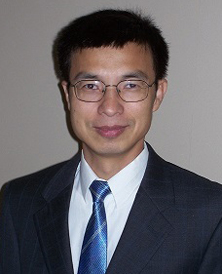
Professor Yufeng Yao is a Professor in Aerospace Engineering at the School of Engineering , University of the West of England (UWE Bristol). He leads the Engineering Modelling and Simulation (EMS) research group and specializes in high-fidelity flow physics simulations (DNS, LES) and industry-standard turbulent flow modeling (RANS, URANS). His research spans Turbulent wake dynamics Shock-wave/boundary-layer interactions Morphing winglet design Turbine blade cooling Supersonic combustion with applications in aerospace, automotive, and built environment systems. Recent publications highlight his work in aerodynamic optimization (e.g., morphing aerofoils, microjet inlets) alongside unexpected interdisciplinary contributions in biomedical genetics (e.g., miRNA polymorphism in cervical cancer, lipid metabolism in ferroptosis). This diversity reflects collaborations across fields.
Professor Jenny leads the Jenny Research Group at ETH Zürich, specializing in turbulent reactive flows, rarefied gas kinetics, and biomedical fluid dynamics. Her work bridges fundamental research with industrial applications in energy systems and fluid mechanics. Develops advanced turbulence models (TDDM, hybrid LES/RANS) for multi-scale flows Pioneers data assimilation frameworks for RANS simulations using adjoint methods Advances particle-based stochastic algorithms for fractured porous media transport Her recent publications emphasize adaptive time integration techniques, probabilistic modeling of non-linear transport phenomena, and optimized simulation tools for hydrogen storage systems. The group's methodological innovations focus on reducing computational costs while maintaining physical accuracy through novel regularization strategies. Key applications include combustion device optimization, high-pressure tank filling analysis, and fractured reservoir simulations. Current projects integrate machine learning with traditional CFD methods to address challenges in droplet clustering, flame surface density propagation, and supersonic spray dynamics. The research framework spans from direct numerical simulations of fundamental flow physics to industrial-scale hybrid modeling implementations.
Ricardo Camarero is an Associate Professor in the Department of Mechanical Engineering at Polytechnique Montréal. With a B.Eng., M.Eng., and Ph.D. from McGill University, he has established himself as a leading researcher in computational fluid dynamics and numerical methods for mechanical engineering applications. His research interests span geometric modeling, combustion and reactive flows, numerical simulation of fluid flows, aerodynamics using numerical methods, and turbomachinery design. Professor Camarero's work primarily focuses on developing and applying advanced computational techniques to solve complex engineering problems, particularly in the areas of fluid-structure interaction, high-voltage circuit breaker design, and turbomachinery flow analysis. With 166 publications spanning several decades, his research output demonstrates consistent contributions to the field of computational fluid dynamics. His recent work (2021-2024) shows continued activity in immersed boundary methods, mesh generation techniques, and applications to electrical engineering problems, indicating an active and productive research program. Professor Camarero has supervised 20 PhD students and 15 Master's students, reflecting his significant contribution to graduate education. His teaching responsibilities include courses in numerical methods and fluid mechanics, directly supporting his research areas. His research has strong practical applications, particularly in the electrical engineering sector where his work on circuit breaker design, arc extinction, and alternative insulating gases provides valuable insights for industry. The interdisciplinary nature of his work bridges mechanical engineering, electrical engineering, and computational mathematics.
Benedetta Giulia Franzelli is a CNRS Researcher (Chargée de recherche) at the EM2C laboratory , affiliated with CentraleSupélec and Université Paris-Saclay . She holds a Visiting Researcher position at the CRECK Modeling Group, Politecnico di Milano . Her research focuses on nanoparticle production in turbulent flames , combining theoretical , experimental , and numerical approaches to address challenges in soot formation, flame synthesis of metal oxides, and combustion modeling. PhD in Energy and Transfer, CERFACS/INPT Toulouse (2011) Postdoctoral Fellow, Stanford University (2013-2014) Master in Numerical Fluid Dynamics, Politecnico di Milano (2007) Her work spans combustion science , turbulent reactive flows , and nanoparticle synthesis , with recent studies on TiO₂ nanoparticle characterization , soot-LII diagnostics , and LES modeling of swirled flames . She coordinates the European Cost action Cyber's Young Researcher and Gender Balance committee and chairs the 2024 Bernard Lewis Fellowship committee. Scientific Awards : ERC Starting Grant (SOTUF project, 2017-2023) CNRS Bronze Medal (2018) Zonta International Amelia Earhart Fellowship (2009-2010) Prix Aerospace Valley (2012) Bernard Lewis Fellowship (2014)
Antoine Renaud is an Associate Professor at CentraleSupélec, affiliated with the EM2C Laboratory (Eiffel Building, Office EB.115). His research focuses on experimental combustion, particularly in aeronautics and energy production, with expertise in flame stabilization, combustion instabilities, and alternative fuels. Teaching: Deputy Head of the Aerospace and Transportation track, teaching aerodynamics, fluid mechanics, and experimental methods across all curriculum levels Research: Experimental methods for transient combustion phenomena, hydrogen and sustainable aviation fuels, swirling flows, and acoustic instability control Recent publications (2025–2024) highlight his work on: Hydrogen combustion dynamics and lean blowout limits Plasma-assisted and cross-flow injection techniques Thermo-acoustic instabilities in annular/swirl combustors NOx emissions and stabilization of low-NOx hydrogen flames Dynamic Mode Decomposition (DMD) and precessing vortex core (PVC) analysis Acoustic energy conservation models for combustion systems His collaborative work spans institutions like Technische Universität Darmstadt and involves advanced diagnostics (OH-PLIF, PTV, LES modeling).
Dr. Xianchang Li serves as Professor in the Department of Mechanical Engineering at Lamar University, where he leads research in computational thermal-fluid sciences. His work bridges fundamental heat transfer and combustion principles with critical environmental applications. Ph.D. in Mechanical Engineering, Clemson University (1999) M.S. in Thermal Engineering, Tsinghua University B.S. in Thermal Engineering, Tsinghua University Dr. Li's research focuses on three interconnected domains: gas turbine thermal management (notably backward-injection film cooling and mist-assisted techniques), industrial flare emissions optimization, and hydrodynamic water quality modeling. His gas turbine work has demonstrated up to 40% more uniform cooling coverage through innovative backward injection methods, while his flare research develops high-fidelity CFD models to simultaneously minimize black carbon and VOC emissions. The water quality modeling investigates urban stormwater systems using wireless sensor networks and hydrodynamic simulations to improve sustainability. His publication record shows consistent output in top journals like Journal of Heat Transfer , ASCE Journal of Irrigation and Drainage Engineering , and Journal of the Air & Waste Management Association , with recent work emphasizing emission reduction and sustainable water management. Lamar University Merit Award (2009) Dr. Li maintains active collaborations with Chemical Engineering (Drs. Chen and Lou), Civil Engineering (Drs. Lin and Qian), and Chemistry (Dr. Martin) faculty at Lamar University. His research group has secured funding from NSF, TCEQ, and industry partners to support 25+ graduate students across thermal-fluid, combustion, and environmental projects. Current students investigate ammonia co-firing emissions, earth pipe heat transfer, and spray cooling optimization. The research group operates advanced CFD simulation capabilities and experimental facilities for thermal-fluid investigations, with recent projects including gas turbine combustor LES modeling, mercury flux chamber design, and solar chimney ventilation systems.
Professor Naian Liu serves as Director and Professor at the State Key Laboratory of Fire Science (SKLFS) at the University of Science and Technology of China (USTC), where he also leads the Division of Wildland and Urban Fires. Having earned his PhD in thermo-physics from USTC in 2000, he progressed from lecturer to associate professor in 2004, and to full professor in 2007 before becoming Director in 2019. His international experience includes visiting scholar positions at the University of Tokyo and Hong Kong Polytechnic University. Professor Liu's research focuses on Wildland Fire Dynamics, Decomposition and Combustibility of Forest Fuels, Extreme Fire Behaviors including fire whirls and spot fires, and Wildland-Urban Interface Fire. His work has established fundamental understanding of thermal decomposition of forest fuels and dynamical behaviors of extreme fire phenomena. The research demonstrates strong interdisciplinary connections between combustion science, fluid dynamics, and wildfire management. His publication record shows consistent output in high-impact journals including Proceedings of the Combustion Institute, Combustion and Flame, and Fire Safety Journal, with recent work emphasizing fire whirl dynamics, firebrand behavior, and smoldering-to-flaming transitions. Professor Liu has authored over 140 publications with significant citation impact in the fire science community. National Science and Technology Progress Award (First-class) National Liangxi Forestry Science and Technology Progress Award (Second-class) Lu Jia Xi Youth Excellence Prize of Chinese Academy of Sciences Excellent Paper Award at 9th Asia-Oceania Symposium on Fire Science Recipient of New Century Talents Supporting Program Professor Liu has successfully advised numerous students and researchers while leading major research initiatives including the National Basic Research Program of China ('973' Program) and multiple National Natural Science Foundation projects. His leadership extends to international collaborations with institutions including NIST, Russian Academy of Science, and University of Tokyo. He currently serves as Executive Organizing Committee Chair for major international fire science symposia and holds editorial positions with leading fire science journals.