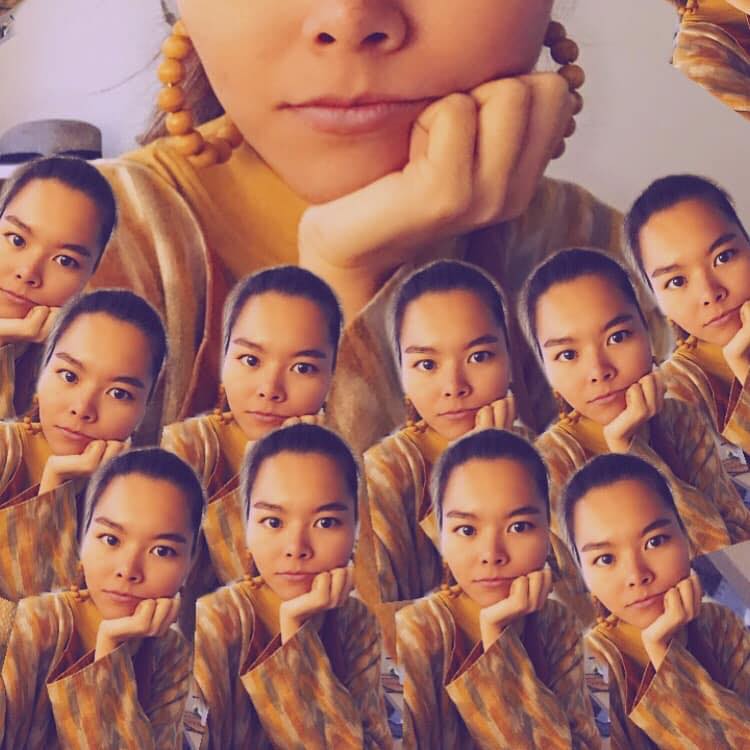
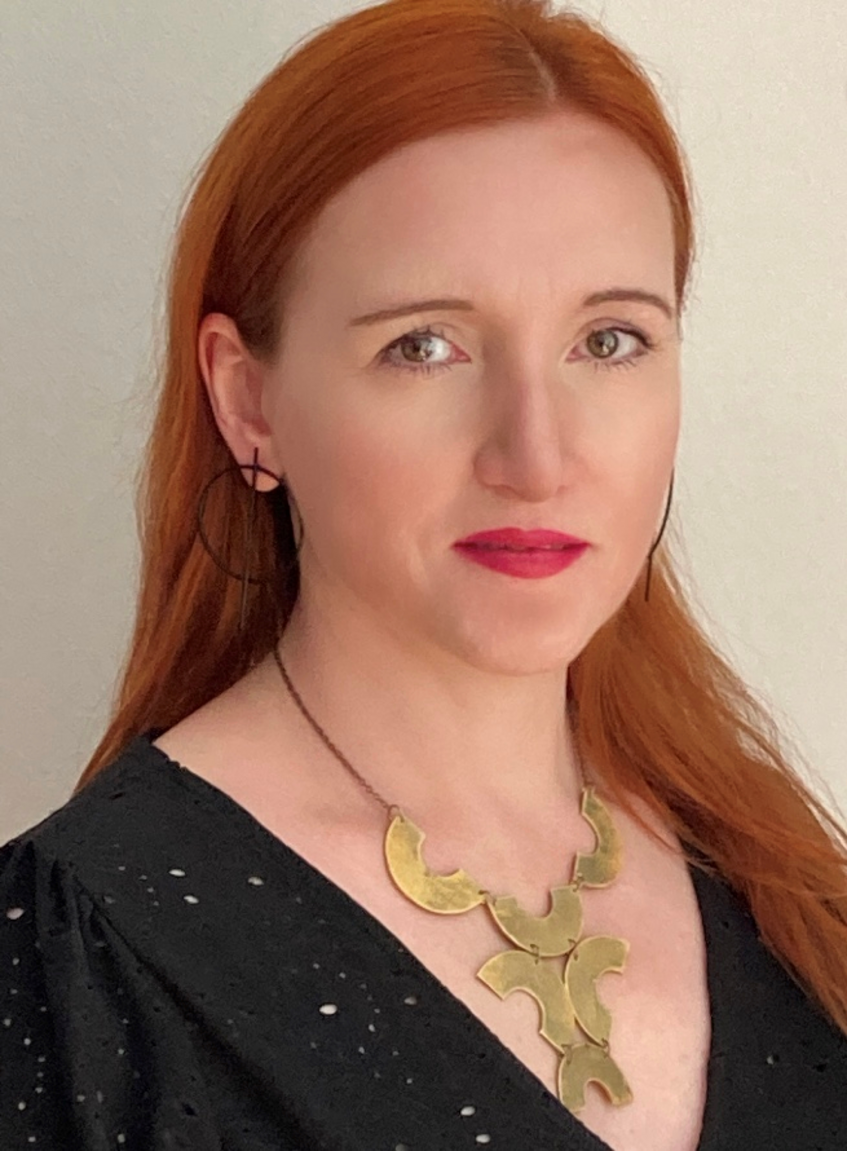
Professor Crystal Abidin is a prominent digital anthropologist and ethnographer specializing in influencer cultures, social media pop cultures, and internet fame dynamics. She holds a Professorship at Curtin University's School of Media, Creative Arts and Social Inquiry, alongside roles as Director of the Influencer Ethnography Research Lab and Deputy Director of the Korea Research Centre. Her research spans 100+ publications, 12 special issues, and 6 authored/edited books, with a focus on Asia Pacific contexts. Key roles include: ARC DECRA Fellow (2019-2024) Editor-in-Chief of Media International Australia Founder of TikTok Cultures Research Network Associate Investigator at the Centre of Excellence for the Digital Child Her research interests emphasize: Influencer labor and platform governance Cross-cultural digital practices Activism and identity expression online Children's media engagement Notable awards include WA Young Tall Poppy Science Award (2022), Forbes 30 Under 30 Asia (2018), and Pacific Standard's Top Thinkers Under 30 (2016). Her work frequently addresses: Ethical concerns in influencer marketing Platform-specific content creation Racial and gender dynamics in social media Global-local interplay in digital cultures Current initiatives include advancing TikTok cultures research and co-editing interdisciplinary volumes on influencer marketing and digital child safety.
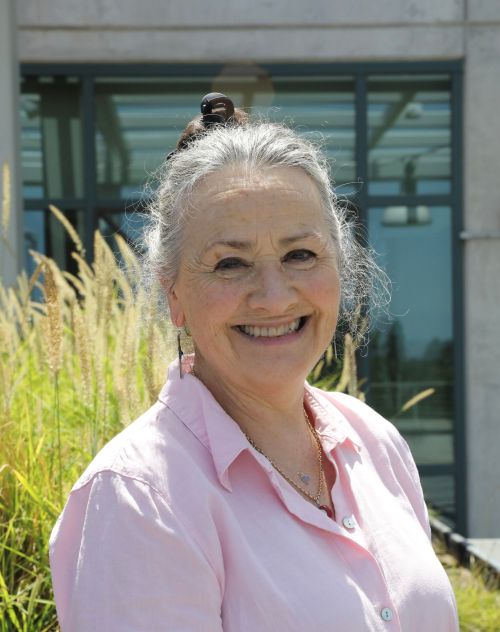
Wendy Salmond is a Professor of Art at Chapman University, holding the Martha Weidlein Masters Professorship in Art within the Wilkinson College of Arts, Humanities, and Social Sciences. She specializes in Russian and Soviet art, design, icons, architecture, the Romanov Family, and Russian Revolutionary Culture. Dr. Salmond received her academic training with a BA (Hons I) in Russian Language and Literature from the University of Otago in New Zealand (1978), followed by an MA in Slavic Languages and Literatures (1983) and a PhD in Art History (1989), both from the University of Texas at Austin. Professor Salmond is a renowned scholar of Russian and early Soviet art, architecture, and design, with particular expertise in exploring the intersection of diverse cultural traditions in Russia and the formation of national identity. Her research spans the Arts and Crafts movement, Art Nouveau, and Russian modernism, with a current focus on transformations in the perception and function of icons in Russia, from objects of devotion to works of art. She has made significant contributions to the study of Russian icons through extensive writing, lecturing, and curatorial work, including serving as a visiting curator at Hillwood Museum and Gardens and guest curator for exhibitions at Hillwood and The New York Public Library. Analysis of Professor Salmond's recent publications reveals a consistent focus on Russian religious and secular art, particularly icons and their evolving cultural significance. Her work spans historical periods from Imperial Russia through the Soviet era, with particular attention to the intersection of religious tradition and modern artistic movements. The 2020 publication 'Eternity in Low Earth Orbit: Icons on the International Space Station' demonstrates her innovative approach, examining how Russian Orthodox icons have been incorporated into the International Space Station as sacred objects, connecting terrestrial religious traditions with space exploration. Among her notable honors, Professor Salmond holds the Martha Weidlein Masters Professorship in Art at Chapman University. She has also been recognized through invitations to curate major exhibitions and edit significant scholarly volumes on Russian art. Professor Salmond teaches courses on European modernism, graphic design history, gender and Western art, art history methods, and Russian art, design, and visual culture of the Imperial and early Soviet era. Her teaching emphasizes close visual analysis, sustained discussion, and the development of research skills. As a prolific translator of texts on Russian art and culture, she has edited volumes on Sergei Konenkov, the Bolshevik sales of Russian art in the 1920s and 1930s, and the reception of Art Nouveau in Russia. Her scholarly work extends beyond traditional academic boundaries through her active engagement with museum curation and public scholarship, creating bridges between academic research and public understanding of Russian art and culture.
Luca Somigli is a Professor at the University of Toronto, holding the Emilio Goggio Chair in Italian Studies. His research focuses on European and Italian modernism, avant-garde movements, futurism, detective fiction, genre literature, and comics. Born in Florence, he earned a Laurea from the Università degli Studi di Firenze and a PhD in Comparative Literature from SUNY Stony Brook. Educational Background: PhD, State University of New York at Stony Brook Laurea, Università degli Studi di Firenze Luca's scholarship explores tensions between modernism and postmodernism, colonial narratives in Italian crime fiction, and the intersection of visual narratives with cultural themes. His recent publications include co-edited volumes on futurism and modernism, alongside articles analyzing authors like Marinetti, Pirandello, and Camilleri. Key research trends include: Colonialism in Italian historical fiction Symbolist and avant-garde artistic movements Visual storytelling in comics and film The legacy of fascist ideology in literature Scientific awards highlight his contributions: the 2019 Visiting Scholar at Université de Haute-Alsace and the 2003 American Association for Italian Studies Book Award. Luca has co-authored works with scholars like Federico Luisetti and Eleonora Conti, and his conference presentations address neomodernist novels and modernist historiography. He serves as Chair of the Department of Italian Studies (2021-present) and previously as Associate Chair – Graduate (2020-2021).
Ben Bollig is a Professor of Latin American Literature and Film at the University of Oxford, where he is also a Fellow and Tutor in Spanish at St Catherine's College and Associate Lecturer in Spanish at St John's College. He holds a First Class BA in Hispanic Studies from the University of Nottingham, followed by an MA and PhD from King's College London (2004). Research focuses on contemporary Latin American literature and film, particularly Argentine poetry Editor of the Journal of Latin American Cultural Studies Co-editor of Latin American Cultural Studies: A Reader (Routledge, 2017, pbk 2019) Key Research Themes : Comparative Literature, Film Studies, Translation Studies, Poetics of Resistance, and Postcolonial Studies. His work explores intersections between poetry and cinema, cultural identity, and political dimensions of artistic practice in Latin America. Publications include books on Argentine marginal poetry, cinematic adaptation of verse, and edited volumes of resistance literature. He coordinates the Poetics of Resistance project with Dr. Cornelia Graebner (Lancaster University) and contributes translations to journals like Calque and El extremo sur: Confines.
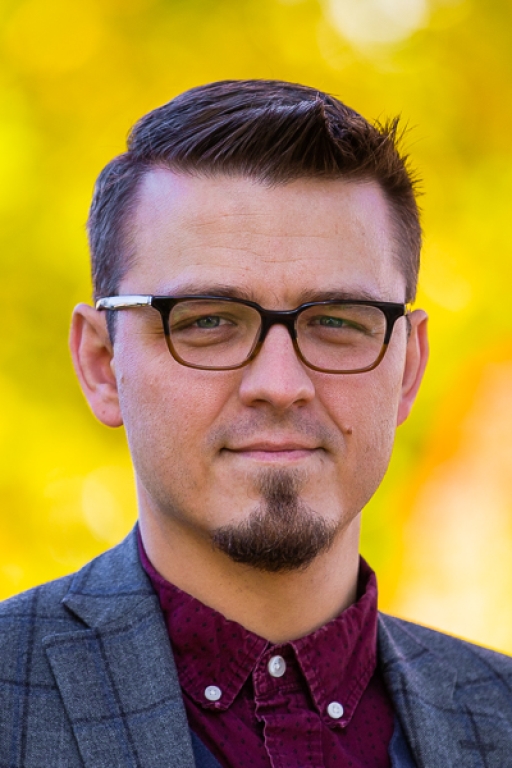
Wojciech Jarosz is an Associate Professor of Computer Science at Dartmouth College, affiliated with the College of Engineering and Computer Science. His research focuses on computer graphics, particularly light transport simulation, rendering algorithms, and digital fabrication. He co-founded the Visual Computing Lab and previously led the rendering group at Disney Research Zürich. Jarosz holds a Ph.D. and M.S. from UC San Diego and a B.S. from the University of Illinois Urbana-Champaign. His educational background includes studies in computer science and engineering, with a strong emphasis on graphics and rendering. Research interests span light transport simulation, Monte Carlo methods, appearance capture, and fabrication. Notable achievements include the Eurographics Young Researcher Award (2013) and the NSF CAREER Award (2019). Jarosz's work integrates theoretical rigor with practical applications, such as real-time rendering techniques and volumetric light transport. His lab develops tools for artistic authoring, including intuitive metaphors for volumetric lighting in animated films. Recent projects explore wave-optics BSDF models, optical heterodyne rendering, and unifying radiative transfer models. Key awards include the SIGGRAPH 2024 Best Paper Award and Neukom Institute prizes. His teaching includes courses on rendering algorithms, computer graphics, and computational photography. Jarosz collaborates with industry (e.g., Disney, NVIDIA) and advocates for diversity in computer graphics research.
Terese Løvås serves as Vice Dean of Research and Innovation at the Faculty of Engineering, Norwegian University of Science and Technology (NTNU), where she leads strategic development of research and innovation activities. She concurrently holds the position of Professor of Combustion and Thermodynamics within the Department of Energy and Process Engineering. Her leadership responsibilities include oversight of Centers of Excellence, Horizon Europe projects, and PhD researcher training. Her research focuses on combustion engineering and alternative fuel technologies , particularly investigating ammonia and hydrogen combustion for zero-emission engines, biomass gasification processes, and reactive multiphase flow modeling. She heads the Engine Lab at NTNU and teaches Thermodynamics, Heat, and Combustion courses. Her work bridges theoretical modeling with experimental validation in sustainable energy systems. Løvås actively contributes to major research initiatives including LowEmission (SFI center), ACTIVATE (ammonia-powered agricultural vehicles), AMAZE (ammonia zero-emission), and CAHEMA (marine ammonia/hydrogen engines). Her publications reveal strong trends in ammonia combustion chemistry , emissions reduction , and advanced computational modeling for sustainable fuel systems, with increasing focus on nitrogen oxide formation mechanisms and dual-fuel strategies. Member of the Board of Directors, Combustion Institute (2022–present) Joint Editor, Proceedings of the Combustion Institute (2019–present) Alumni Fellow in Engineering, Churchill College, Cambridge University As Vice Dean, she manages NTNU's Research and Innovation Committee and represents the faculty in NTNU's Research and Innovation Committee. She supervises multiple PhD candidates and leads international collaborations through projects funded by the Norwegian Research Council, Nordic Energy Research, and EU programs. Her laboratory work focuses on optical engine diagnostics and advanced combustion testing. Løvås maintains active industry engagement through her leadership in the ComKin Research Group and membership in the Institute of Physics and Scandinavian-Nordic Section of the Combustion Institute. Her current work emphasizes practical implementation of ammonia-fueled engine technologies for marine and agricultural applications.
Edward Andò is a Principal Scientist and Lecturer at École Polytechnique Fédérale de Lausanne (EPFL) , with affiliations to the IMAGING group and the College of Engineering (ENAC) . His work bridges software development, experimental geomechanics, and educational initiatives in image analysis. Principal Scientist, IMAGING-GE (EPFL) Lecturer, Sciences et Génie Civil (SGC-ENS) Lecturer, Enseignement à la Défense (EDEE-ENS) Research Interests Andò specializes in 3D image analysis , with a focus on X-ray tomography , digital volume correlation (DVC) , and micromechanical modeling of granular materials. His work addresses geomechanical failure mechanisms, soil dynamics, and open-source software tools like SPAM for practical material analysis. Publication Trends His recent articles (2025–2023) emphasize X-ray tomography for studying granular deformation , rock failure , medical imaging , and soft particle compaction . Topics span geomechanics, computational modeling, and software development for experimental validation. Labs and Teams Andò contributes to the IMAGING group at EPFL, where he co-develops the SPAM (Software for Practical Analysis of Materials) . His teaching includes courses like Fundamentals of Image Analysis and Quantitative Imaging for Engineers , which integrate hands-on training with theoretical frameworks.
Prof. Dr. Laura Bieger is a professor of American Studies at Ruhr University Bochum (Germany), specializing in literary theory, critical theory, and cultural history. She holds a Magister from Freie Universität Berlin and a Dr. Phil. from FU Berlin (2006), followed by a Habilitation in 2013. Previously, she held professorships at the Albert-Ludwigs-Universität Freiburg (2014–2017) and the Rijksuniversiteit Groningen (2017–2022). Her research explores the relationship between aesthetics, politics, and social practices in U.S. cultural history, with a focus on public space, literary engagement, and democracy. Education: Magister in American Studies, History, and Philosophy, Freie Universität Berlin Dr. Phil., Freie Universität Berlin (2006) Habilitation (Venia Legendi in Americanistik), Freie Universität Berlin (2013) Positions: Professorin für amerikanische Literatur und Kultur, Albert-Ludwigs-Universität Freiburg (2014–2017) Professorin für American Studies, Political Culture and Theory, Rijksuniversiteit Groningen (2017–2022) Universitätsprofessorin American Studies, Ruhr-Universität Bochum (since 2022) Her work bridges literary analysis with interdisciplinary inquiries into space, democracy, and cultural practices. Key publications include Ästhetik der Immersion (2007), Belonging and Narrative (2018), and the forthcoming Reading for Democracy (2024). She has been a research fellow at Harvard University, NYU, and UC Berkeley. Current projects examine literature’s role in fostering democratic engagement and rethinking humanist concepts in American art. Laura Bieger’s research emphasizes praxeological approaches, treating literature as a social practice shaped by networks of actors and institutions. Her work on public intellectuals, cultural fields, and transnational American Studies highlights intersections between aesthetics, politics, and societal change. Collaborative projects include edited volumes on Richard Wright, spatial narratives, and the humanist imagination in American art.
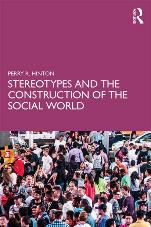
Perry Hinton is a Professor (Teaching Focused) in the Centre for Applied Linguistics at the University of Warwick, part of the Faculty of Social Sciences. He contributes to the interdisciplinary degree in Language, Culture and Communication, drawing on his expertise in psychology and cultural studies. University: University of Warwick School: Faculty of Social Sciences Department: Centre for Applied Linguistics Academic Rank: Professor Email: P.R.Hinton@warwick.ac.uk His research centers on the psychology of interpersonal perception, especially the interplay between cognition and culture. Key areas include stereotyping as a cognitive and cultural phenomenon and Western (particularly British) interpretations of Japanese culture, including media portrayals and anime. He also has a strong commitment to statistical education, having authored multiple textbooks on SPSS and data analysis. The recent publications reflect a consistent focus on cultural psychology, intercultural communication, and social representation. Themes include the construction of identity, media influence, cultural stereotypes, and cognitive biases in person perception. His work often takes a multidisciplinary approach, integrating insights from psychology, linguistics, and media studies. Perry Hinton has authored and co-authored several influential books in his field, particularly on stereotypes and statistical methods. While no formal scientific awards are listed, his sustained publication record in peer-reviewed journals and with major academic publishers (Routledge, Bloomsbury, Palgrave) indicates significant scholarly recognition. He has supervised or co-edited collaborative works, such as the 2023 volume on intercultural relations, suggesting advisory and mentoring roles. His career path includes positions at five British universities, progressing from lecturer to Head of Department, with extensive experience teaching psychology across disciplines including linguistics, education, and media studies. He joined Warwick's Centre for Applied Linguistics at the inception of its Language, Culture and Communication program in 2014. Hinton works within a multidisciplinary academic environment, contributing to a research culture that bridges psychology and applied linguistics. His collaborations, particularly with Troy McConachy, suggest active participation in intercultural research teams and scholarly networks focused on global communication and cultural understanding.
Lara C. W. Blanchard is the Luce Professor of East Asian Art and Lloyd Wright Professor in Conservative Studies at Hobart and William Smith Colleges, where she has been a faculty member since 2001. She holds a Ph.D. in Art History from the University of Michigan and specializes in Chinese pictorial arts from the Song dynasty to the present. Her interdisciplinary research integrates art history, gender studies, and literary analysis. Her education includes: Ph.D., Art History, University of Michigan (2001) M.A., Art History, University of Michigan (1992) B.A., Art History and Mathematics, College of William & Mary (1988) Her research focuses on gender in Chinese art, particularly women as artists and patrons, text-image relationships, and the construction of gendered subjectivity in painting and poetry. She examines how visual culture reflects and constructs ideals of femininity and masculinity, especially during the Song dynasty. Her work often bridges art historical analysis with literary and philosophical contexts, emphasizing interdisciplinary approaches. Her recent publications and lectures reveal a strong trend in analyzing emotional interiority, political allegory, and gendered representation in East Asian visual culture. She frequently explores how poetic themes are visualized in painting and how female subjectivity is constructed across historical periods. Her scientific awards include: 2020 Joseph Levenson Pre-1900 Book Prize (China) 2016 Franklin R. Buchanan Prize for Asia Curriculum Materials 2020 Faculty Prize for Scholarship, HWS Lloyd Wright Professorship in Conservative Studies (2018–) Lara Blanchard has been actively involved in mentoring through curriculum development, textbook authorship, and graduate advising. She has received multiple research grants from Hobart and William Smith Colleges and external foundations such as the Freeman Foundation. Her collaborative projects, such as the textbook Asian Art , demonstrate her commitment to pedagogy and accessible scholarship. She is affiliated with several academic organizations, including the Association for Asian Studies, College Art Association, and Cornell University’s East Asia Program as an Associate in Research. She has delivered lectures at institutions like Stanford, Princeton, and the University of Kansas, and has participated in panels and symposia on gender, Buddhism, and visual culture in Asia.
Sabine Süsstrunk is a Full Professor and Director of the Images and Visual Representation Laboratory (IVRL) at EPFL's School of Computer and Communication Sciences. She holds a BS in Scientific Photography from ETH Zürich, MS from Rochester Institute of Technology, and PhD from University of East Anglia. Her career includes positions at Hewlett-Packard Labs and Corbis Corporation. Her research explores computational imaging, computational photography, color processing, computer vision, and image quality. Key interests include near-infrared applications, multispectral imaging, and computational aesthetics. Her work bridges hardware and software solutions for imaging challenges. Publications demonstrate consistent focus on advancing generative models (diffusion models, neural cellular automata), 3D reconstruction (NeRF variants), and media integrity (DeepFake detection). Recent trends show increased emphasis on 3D vision, robustness in generative AI, and video analysis. Awards & Honors: IS&T/SPIE Electronic Imaging Scientist of the Year (2013) Raymond C. Bowman Teaching Award (2018) EPFL AGEPoly IC Polysphere Award (2020) 8 Best Paper/Demo Awards Fellowships: IEEE, IS&T, ELLIS, AIIA She leads the IVRL lab and advises PhD candidates while serving as President of the Swiss Science Council. Research is supported through competitive grants and industry collaborations.
Prof. Rossella Ferrari holds a professorship in Chinese Studies at the Department of East Asian Studies, University of Vienna. Her research explores performance cultures across the Chinese-speaking world, with a focus on avant-garde theatre, transnational networks, and postsocialist transformations. Key contributions include the concept of 'pop avant-garde' and 'Xiqu 2.0,' examining how classical performance interacts with digital media. She co-edited Asian City Crossings (2021) and authored Transnational Chinese Theatres (2020). Current projects investigate 'performing postsocialism' and intercultural collaborations. Her work bridges disciplines like architecture, visual arts, and film, emphasizing methodologies rooted in Asian perspectives to challenge Eurocentric paradigms. Recent studies analyze pandemic impacts on transnational theatre networks and the role of cities as analytical frameworks. Collaborations with groups like Hong Kong's Zuni Icosahedron highlight her focus on boundary-crossing performance practices. Publications span monographs, edited volumes, and peer-reviewed articles addressing topics such as Brechtian influences in China, intertextuality in global performance, and avant-garde adaptations of classical works like Mudan Ting . Her research underscores the socio-political dimensions of artistic expression in East Asia, particularly in contested historical contexts.
Emanuele Lugli is an Assistant Professor in the Department of Art and Art History at Stanford University, where he teaches courses on Renaissance and Medieval art. He holds a Ph.D. from the Institute of Fine Arts, New York University, an M.A. from the Warburg Institute, University of London, and a B.A. from Università degli studi di Bologna. His educational background: Ph.D., Institute of Fine Arts, New York University M.A., Warburg Institute, University of London B.A., Università degli studi di Bologna Lugli's research centers on the cultural history of Italy from the 14th to 17th centuries, with a focus on the interplay between art, science, and society. He is particularly known for his trilogy on the history of measurement, which examines how standards were created and used in medieval and Renaissance communities. Additionally, his work on hair and bodily minutiae in Renaissance Florence explores the connections between physical appearance and cultural ideals of beauty and desire. His publications form a cohesive narrative that investigates the material foundations of cultural practices. The measurement trilogy establishes how quantification shaped social and artistic norms, while his studies on knots and desire reveal the intimate relationship between bodily practices and cultural values. Current projects extend this inquiry into portraiture and the phenomenon of 'love at first sight,' with a focus on the Italian painter Lavinia Fontana. No scientific awards or fellowships are mentioned in the provided materials. Information about graduate students and research grants is not specified in the available sources. Lugli does not appear to be affiliated with any formal research laboratory or team, though he collaborates on interdisciplinary projects as evidenced by his co-edited volume To Scale .
Andrea Prosperetti is a Full Professor at the University of Twente's Physics of Fluids department within the MESA+ Institute. His research focuses on multiphase flow dynamics, bubble behavior, and fluid mechanics, contributing to Sustainable Development Goals through advanced fluid dynamics studies. He has published extensively with over 224 research outputs and 70 h-index. Key research areas include fluid instabilities, interfacial phenomena, and numerical simulations of complex flows. Recent work explores particle-resolved convection, Taylor bubble dynamics, and hydraulic jumps on conical surfaces. His collaborations span international institutions, emphasizing computational modeling and experimental validation. Prosperetti has delivered numerous presentations on particulate flow simulations and fluid dynamics, and has held editorial and committee roles in organizations like the Institute for Cavitation Research and Deutsche Forschungsgemeinschaft (DFG).
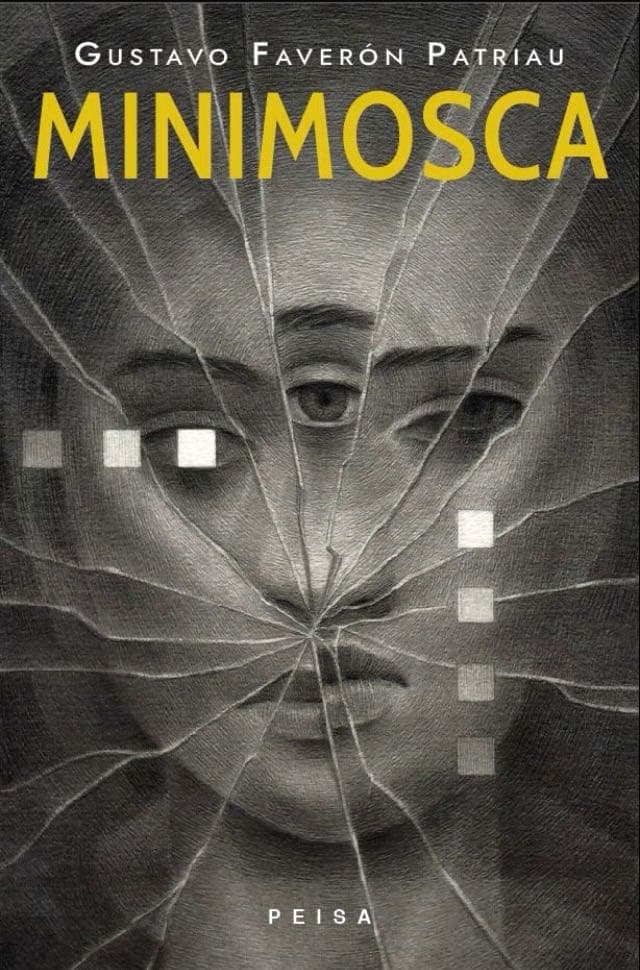
Gustavo Faverón Patriau is Professor and Chair of the Department of Romance Languages and Literatures at Bowdoin College, with affiliations in Latin American, Caribbean, and Latinx Studies and Hispanic Studies. He holds a PhD from Cornell University and has held visiting positions at Stanford University, Middlebury College, and Universidad Cayetano Heredia. His academic work centers on Latin American contemporary literature and political history, with a focus on the limits of visual and linguistic representation, the portrayal of mental illness in narrative, and the writings of Jorge Luis Borges. His research spans literary theory, cultural criticism, and journalistic inquiry, often bridging scholarly and public intellectual spheres. His recent publications reveal a consistent engagement with themes of abjection, memory, trauma, and the philosophical dimensions of narrative. He frequently analyzes canonical and marginal texts through interdisciplinary lenses, drawing on philosophy, visual culture, and historiography. His scholarship often intersects with his creative work, which includes novels and editorial projects that explore similar intellectual terrain. Among his scientific awards and recognitions are being a finalist for the III Vargas Llosa Biennial Novel Prize, receiving accolades from Letras Corsarias and Rockdelux, and being recognized by the Spanish newspaper ABC for his blog Puente Aéreo as one of the most influential in the Hispanic world. He has served on the board of Diacritics , directed literary journals such as Dissidences , La Vaca Multicolor , Somos , and Visto & Bueno , and co-edited major volumes like Bolaño salvaje and Toda la sangre . He regularly presents at international literary festivals and academic conferences, and has conducted numerous interviews and media appearances across Latin America and Europe. His creative and scholarly work has been translated into ten languages, underscoring his transnational impact. He continues to publish prolifically in both academic and literary venues, maintaining a dynamic presence in contemporary Hispanic intellectual life.