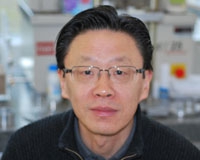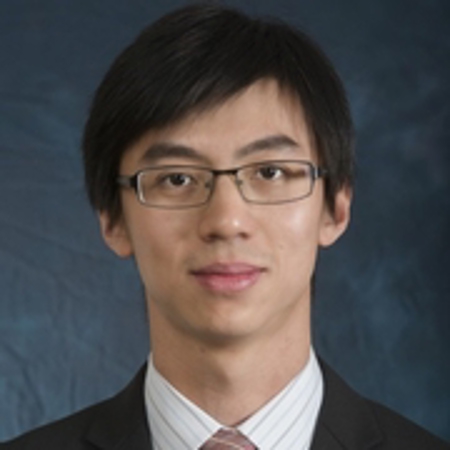
Songqiao Weiمشاهده پروفایل
دانشیار
- Seismology
- Geophysics
- Subduction Zones
- +۴ مورد دیگر
Songqiao Wei serves as Associate Professor in both the Department of Earth & Environmental Sciences and the Department of Computational Mathematics, Science and Engineering at Michigan State University, conducting research at the intersection of seismology and computational geophysics with focus on subduction zone dynamics and Earth's deep interior. Education: Ph.D. in Earth and Planetary Sciences, Washington University in St. Louis (2016) M.A. in Earth and Planetary Sciences, Washington University in St. Louis (2012) M.S. in Geophysics, Peking University (2010) B.S. in Geophysics, Peking University (2007) Dr. Wei's research spans Seismology , Geophysics , and Tectonics , with core expertise in subduction zone processes , mantle transition zone structures , and seismic attenuation methodology . He integrates field deployment of seismic instruments with advanced computational analysis to investigate mantle discontinuities, melt/volatiles distribution, and intermediate-depth seismicity, particularly in the Tonga-Lau system and Alaska Peninsula regions. His work bridges observational seismology with geodynamic modeling to unravel complex mantle processes. Analysis of his 15 most recent publications reveals dominant research themes in subduction zone tomography (60% of works), seismic attenuation applications (25%), and machine learning integration (15%), with strong regional focus on Alaska (45%) and Tonga (35%). The publications demonstrate methodological evolution toward transdimensional Bayesian approaches and deep learning techniques for earthquake detection and structural imaging. Scientific Awards: Green Scholar Postdoctoral Fellowship, Scripps Institution of Oceanography (2016-2017) Dr. Wei's research program emphasizes field-based data acquisition through temporary seismic deployments, particularly in subduction zone settings. While specific grant details and student advisement records aren't documented in the provided materials, his active field work and computational research indicate ongoing project funding for instrumentation and data analysis. His dual departmental appointments reflect the interdisciplinary nature of his work combining geophysical observation with advanced computational methods. He maintains active involvement in seismic field campaigns for data collection and leads computational research groups focused on developing novel tomographic and machine learning approaches for seismic data analysis, with particular emphasis on subduction zone environments and deep Earth structure.