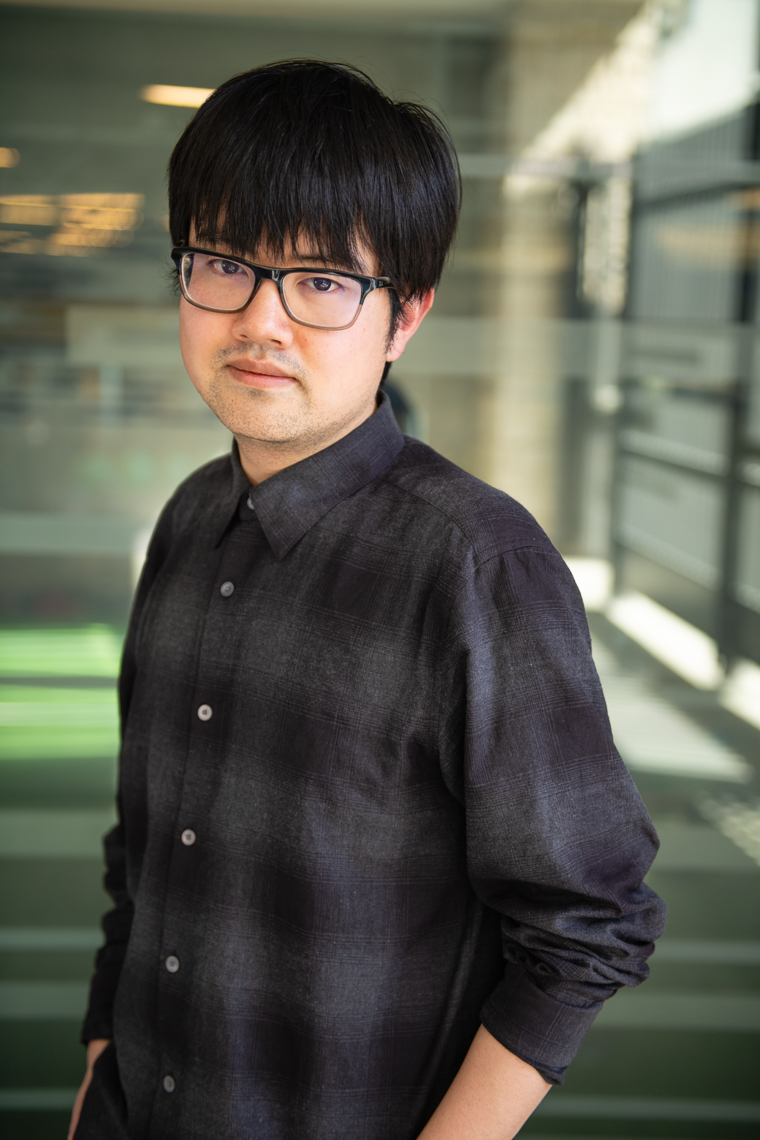
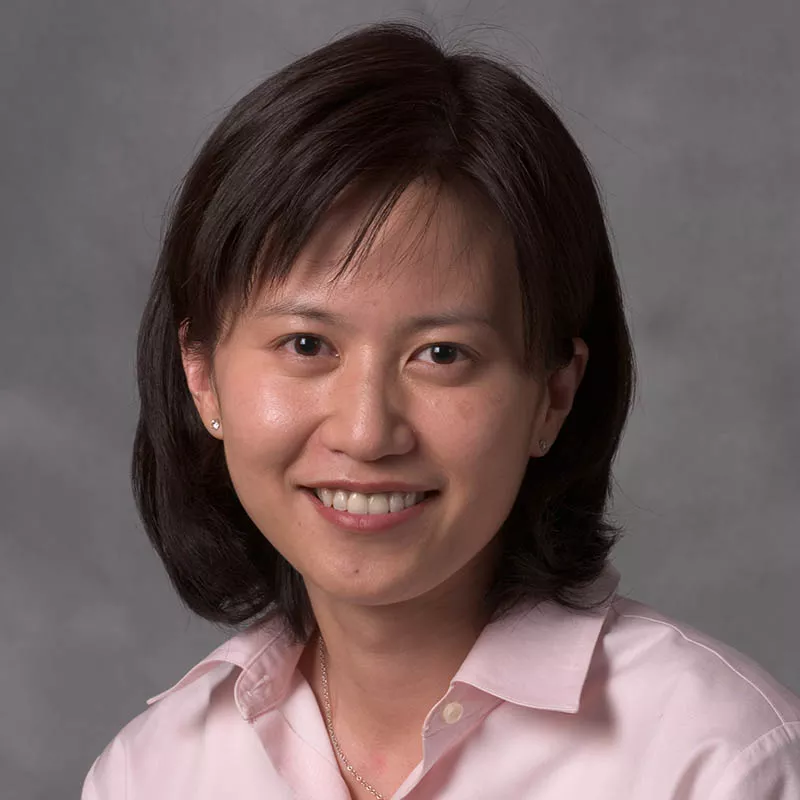
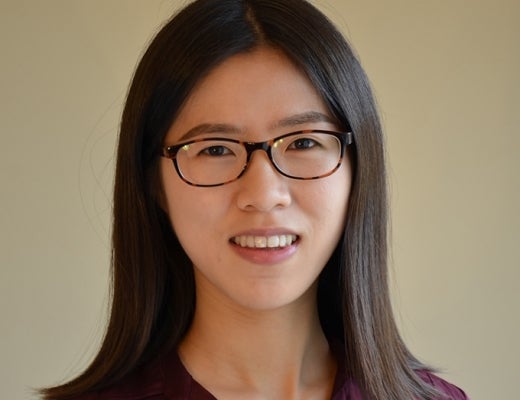
Chen Lian is an Assistant Professor in the Department of Economics at UC Berkeley. Holding a PhD from MIT, their research bridges macroeconomics, behavioral economics, and finance, with a focus on bounded rationality, monetary theory, and macro-finance interactions. Education: PhD in Economics, MIT Chen’s work explores how incomplete information and behavioral biases shape macroeconomic outcomes. Key themes include inflation effects on households, fiscal-monetary policy interactions, and financial stress dynamics. They employ heterogeneous-agent models and analyze how micro-level shocks propagate through the economy. Their publications and working papers address topics like credit cycles, demand shock propagation, and the psychological underpinnings of economic decisions. Papers such as Low Interest Rates and Risk Taking (2019) and Confidence and the Propagation of Demand Shocks (2022) highlight their interdisciplinary approach.
Babak Falsafi is a Full Professor at the School of Computer and Communication Sciences (IC) at EPFL, leading the Parallel Systems Architecture Laboratory (PARSA). He is a renowned expert in computer architecture, datacenter systems, and cloud-native server design. His research focuses on post-Moore era computing, emphasizing heterogeneous architectures, energy efficiency, and scalable IT infrastructure. Falsafi is the founder of EcoCloud, an EC-sponsored industrial-academic consortium investigating sustainable information technology. He holds ACM and IEEE fellowships, a Sloan Research Fellowship, and has contributed to major projects like Optimus Prime (data transformation acceleration), AstriFlash (flash-based online service systems), and Midgard (virtual memory re-design). His work spans hardware-software co-design, memory systems, and security. Falsafi advises numerous PhD students and collaborates with industry partners such as Google and Cavium. Key achievements include pioneering scalable multiprocessor architectures, snoop filters in IBM BlueGene, and spatial memory streaming in ARM cores. His lab develops open-source tools like QFlex for server simulation. He frequently presents at top conferences (HPCA, ISCA, MICRO) and chairs workshops on post-Moore infrastructure. Teaching roles include leading courses in computer architecture and parallel systems across multiple EPFL departments (SIN, EDIC, SSC, SMA). His work addresses datacenter challenges like the 'data tax' and mitigating latency through specialized accelerators.
Suzanne S. Lee is an Associate Professor of Finance at the Scheller College of Business, Georgia Institute of Technology, where she has been a faculty member since 2005. She also serves as the Ph.D. Coordinator, playing a key role in graduate education and research training. Her educational background is highly quantitative and interdisciplinary: Ph.D., University of Chicago MBA, University of Chicago M.S. in Statistics, University of Chicago Dr. Lee's research lies at the intersection of asset pricing and financial econometrics, with a strong focus on jump processes, market microstructure, and derivative markets. She investigates how sudden price movements (jumps) impact asset returns, risk, and information flow in financial markets. Her work extends to cryptocurrency, currency markets, and carry trade strategies, combining theoretical rigor with empirical validation using high-frequency data. The analysis of her recent publications (2008–2024) reveals a consistent and influential research program centered on detecting and modeling jumps in financial time series. Her work spans equity, currency, and cryptocurrency markets, often employing advanced nonparametric and econometric techniques. A recurring theme is the role of jumps in pricing anomalies, risk measurement, and market efficiency, with increasing attention to digital assets in recent years. Dr. Lee is actively engaged in the academic community through editorial service: Associate Editor, Journal of Banking and Finance Associate Editor, Asia-Pacific Journal of Financial Studies She has presented her research at premier conferences such as the American Finance Association, European Finance Association, Econometric Society, and Society for Financial Econometrics. Her publications appear in the most prestigious journals in finance and econometrics, including the Journal of Finance , Review of Financial Studies , Journal of Financial Economics , and Journal of Econometrics . While specific grant details are not listed, her sustained publication record in top journals indicates significant research funding and academic impact. She advises Ph.D. students through her role as Ph.D. Coordinator, though individual advisees are not named in the text. Dr. Lee's work contributes to both theoretical and applied finance, improving our understanding of market dynamics, risk modeling, and asset pricing under extreme events. Her research has practical implications for risk management, trading strategies, and financial regulation.
Joy Arulraj is an Associate Professor in the School of Computer Science within the College of Computing at Georgia Institute of Technology. His research focuses on data systems, machine learning, and database systems, with a particular emphasis on video analytics and adaptive query processing. He leads the Data Systems and Analytics Group and is developing the EVA AI-Relational Data System. Dr. Arulraj's research interests span data systems, machine learning, database systems, video analytics, and adaptive query processing. His work centers on developing systems that efficiently process complex queries, particularly for video analytics and machine learning workloads. He has made significant contributions to GPU database systems, non-volatile memory database management, and adaptive query processing techniques. His research often bridges the gap between theoretical database principles and practical implementations for modern hardware architectures. His recent publications show a strong trend toward video analytics systems, adaptive query processing for machine learning workloads, and GPU-accelerated database systems. The EVA system represents a major focus of his recent work, providing end-to-end exploratory video analytics capabilities. His research also addresses fundamental database concepts like buffer management, query optimization, and storage management, adapting these principles for modern hardware and application requirements. Dr. Arulraj has advised numerous graduate students including Pramod Chunduri, Gaurav Tarkok Kakkar, Jiashen Cao, and Sayan Sinha. His graduated students have gone on to work at companies like ServiceNow, Meta Research, and the Korean Army. He actively teaches database system courses at Georgia Tech, including Database System Implementation (CS 4420/6422) and Advanced Database System Implementation (CS 4423/6423), where students build database systems from scratch using C++ and the BuzzDB framework. He maintains an active research program with consistent publication output across top database and systems conferences. His work spans from theoretical database principles to practical system implementations, with a recent emphasis on video analytics, machine learning integration with database systems, and leveraging modern hardware like GPUs and non-volatile memory for database applications.
Dmitri Strukov is a Professor at the University of California, Santa Barbara in the Department of Electrical and Computer Engineering. His work spans material science, electrical engineering, and computer science, focusing on novel computing paradigms using emerging memory devices. Education: PhD in Electrical and Computer Engineering from SUNY Stony Brook, MS in Applied Physics and Mathematics from Moscow Institute of Physics and Technology. Research Interests include neuromorphic computing , non-volatile memory applications , and mixed-signal circuits for machine learning and hardware security. His group develops memristive crossbar arrays and 3D NAND flash for energy-efficient systems. Scientific Leadership features Fellow of IEEE and Distinguished Lecturer roles. His work has been recognized with best paper awards at ASPLOS’19 and Computing Frontiers’13. Students: Mentored PhD graduates in neurocomputing, security, and memristor design including Z. Fahimi, S. Larimian, M.R. Mahmoodi, and X. Guo. Grants: Funded by AFOSR, ARO, DARPA, NSF, and industry leaders like Google and Samsung. Labs: Utilizes UCSB’s nanofabrication center and advanced tools for memristor characterization.
Ricardo Caballero is the Ford International Professor of Economics at the Massachusetts Institute of Technology's School of Humanities, Arts, and Social Sciences, where he previously served as Chairman of the Economics Department from 2008 to 2011. A leading scholar in macroeconomics and financial economics, his research focuses on safe assets, monetary policy, financial crises, and international economics. His research interests center on the macroeconomic implications of financial frictions, with particular emphasis on safe asset shortages, risk premium dynamics, and monetary policy transmission mechanisms. Caballero's work has pioneered the risk-centric approach to macroeconomics, explaining phenomena such as the Wall Street/Main Street disconnect, global imbalances, and the collapse of interest rates through the lens of safe asset scarcity and risk intolerance. His research bridges theoretical modeling with empirical analysis of financial crises and policy interventions. Caballero's recent publications demonstrate a consistent focus on financial conditions indexing, monetary policy frameworks, and the interaction between financial markets and the real economy. His work increasingly examines how central banks can target financial conditions directly and how risk premia evolve during crises, with applications to pandemic-era economic policy and zero lower bound environments. 2002 Frisch Medal of the Econometric Society Smith Breeden Prize by the American Finance Association Journal of Finance 2014 Brattle Group Prize 2022 Banque de France-TSE Senior Prize in Monetary Economics and Finance Elected Fellow of the Econometric Society (1998) Elected Fellow of the American Academy of Arts and Sciences (2010) As an NBER Research Associate and frequent policy advisor, Caballero has influenced central bank thinking globally through his work on financial stability, monetary policy frameworks, and global imbalances. His research has informed policy discussions at the Federal Reserve, IMF, and multiple central banks regarding crisis management, safe asset creation, and the appropriate monetary response to financial shocks. Caballero maintains active collaborations with major financial institutions and central banks worldwide, translating theoretical insights into practical policy frameworks.
Konstantinos Drakos is a Professor at the Department of Accounting and Finance, Athens University of Economics and Business (AUEB). Previously, he served as Assistant Professor at AUEB (2009–2012), Assistant Professor at the University of Patras (2003–2008), and Lecturer at the University of Essex (2001–2002). He holds a PhD in Economics from the University of Essex, preceded by an MSc and undergraduate studies in Economics at the University of Athens. His research focuses on Applied Financial Economics and the Economics of Security, with recent work analyzing hedge fund leverage, geopolitical risk impacts, cryptocurrency markets, and green banking. Teaching responsibilities include Macroeconomic Theory, Finance for Banking, and Risk Management at both undergraduate and postgraduate levels. Drakos' publications span over two decades, addressing topics such as terrorism's economic effects, bank lending behavior, and investment under uncertainty. His recent articles (2022–2025) emphasize cryptocurrency dynamics, geopolitical risk interactions, and financial stability in green banking. Notable themes include market volatility, capital allocation under uncertainty, and policy responses to systemic risks. No scientific awards are listed in the provided materials. His research has explored structural shifts in financial risk, macroeconomic sentiment, and cross-market linkages following major global events like 9/11 and the 2008 crisis. Drakos has advised on policy-related topics related to financial markets and regulatory frameworks, though specific grants or lab affiliations are not detailed here.
Christian Wolf is an Assistant Professor at the Massachusetts Institute of Technology (MIT) Department of Economics and a Faculty Research Fellow at the National Bureau of Economic Research (NBER). His work bridges macroeconomics, monetary economics, and econometric methodology. Research Interests: Wolf specializes in macroeconomics and monetary policy , with a focus on econometric techniques like structural vector autoregressions (VARs) and local projections . His research explores policy counterfactuals, heterogeneous-agent models, and fiscal-monetary interactions. Recent Publications: His work spans topics such as equivalence between fiscal and monetary tools in HANK models, robust identification in VARs, and the interplay between inequality and macroeconomic dynamics. Articles appear in journals like Econometrica , Journal of Political Economy , and American Economic Review . Awards: Faculty Research Fellow, NBER Contact: ckwolf@mit.edu | Office: E52-554, MIT
Gary Rochelle is the Carol and Henry Groppe Professor in Chemical Engineering and a faculty member at the University of Texas at Austin . His research focuses on developing fundamental insights into kinetic and mass transfer phenomena in aqueous technologies for air pollution control and acid gas treating, particularly for carbon dioxide and mercury removal. Education: Ph.D. in Chemical Engineering from UC Berkeley (1977), M.S./B.S. from MIT (1971) His work addresses critical challenges in CO2 capture using amine scrubbing, including process design optimization, solvent degradation mitigation, and pilot plant validation. Recent studies emphasize energy efficiency, oxidation inhibition, and environmental impacts such as amine aerosol emissions. The Texas Carbon Management Program , which he contributes to, aims to improve amine scrubbing technologies for retrofitting power plants and enabling geological sequestration or enhanced oil recovery. His group has validated concentrated aqueous piperazine (PZ) with an advanced flash stripper as the most efficient open-literature system.
Peter K. Kitanidis is a Professor in the Department of Civil and Environmental Engineering and the Institute for Computational and Mathematical Engineering at Stanford University . His research focuses on groundwater flow , hydrologic forecasting , and stochastic inverse modeling , with applications to pollutant remediation and CO₂ storage monitoring . Education : Diploma, National Technical University of Athens (1974) M.S., MIT (1976) Ph.D., MIT (1978) Research Interests : Groundwater modeling and contaminant transport Hydraulic tomography and aquifer characterization Stochastic methods for uncertainty quantification Bioremediation and enhanced in-situ pollutant decay Dilution and mixing processes in heterogeneous media Real-time river flow forecasting Scientific Awards : L.G. Straub Award (1979) W.L. Huber Research Prize (1994) ISI Highly Cited Researcher (2001) AGU Hydrologic Sciences Award (2011) ASCE Pioneers in Groundwater Lecturer (2011) Advising and Grants : Advised 20+ PhD and MS students (1978–2018) Principal investigator on NSF, EPA, and DOE-funded projects Developed software for groundwater data analysis and CO₂ monitoring Contributed to bioremediation protocols and hydraulic tomography algorithms Labs and Teams : Kitanidis Laboratory for groundwater crisis solutions Collaborated with Oak Ridge National Laboratory and Stanford Hydrogeology Group Mentored postdocs (2000–2017) in reactive transport and inverse modeling
Na Du is an Assistant Professor in the Department of Informatics and Networked Systems at the University of Pittsburgh's School of Computing and Information. She holds a PhD in Industrial & Operations Engineering from the University of Michigan (2021) and a Graduate Certificate in Data Science. Her research focuses on human factors in smart cities, human-centered computing, and user experience design. She is affiliated with the Intelligent Systems Program, Pitt Cyber, and the Center for Governance and Markets. Education: PhD in Industrial & Operations Engineering (University of Michigan, 2021); Undergraduate in Psychology (Zhejiang University). Research emphasizes explainable AI, human-AI teaming, and smart technologies. Recent grants include funding from Honda Research Institute and Pitt Cyber Accelerator for projects on emotions in Human-AI interaction and Metaverse privacy awareness. Her work has been recognized with awards like the HFES Best Paper Award and the IOE Outstanding Student Award. Advising includes PhD students and researchers in human factors and UX design. The HAT Lab under her leadership explores interdisciplinary challenges in human-computer interaction and smart systems.
Jordi Galí is a Professor at the Department of Economics and Business at Universitat Pompeu Fabra (UPF), a Senior Researcher at the Center for Research in International Economics (CREI), and a Research Professor at the Barcelona School of Economics (BSE). He holds a PhD from MIT and has played a central role in shaping modern macroeconomic theory, particularly the New Keynesian framework used by central banks worldwide. Education: PhD in Economics, Massachusetts Institute of Technology (MIT), 1989 Master in International Management, ESADE, 1985 Bachelor in Economics, Universitat Pompeu Fabra, 1994 His research focuses on macroeconomic theory, monetary economics, and macroeconometrics. He is best known for his work on the New Keynesian Phillips Curve, optimal monetary policy rules, and the role of technology and expectations in business cycles. His influential book, Monetary Policy, Inflation and the Business Cycle , is a standard reference in graduate programs globally. The most recent articles highlight a continued focus on critical issues in modern macroeconomics: the implications of a low natural rate of interest (r*), the effectiveness of monetary policy at the zero lower bound, the role of wage and price flexibility, and the interaction between fiscal and monetary policy. His work increasingly integrates heterogeneity, financial frictions, and experimental methods, reflecting the evolving frontiers of the field. Scientific Awards: BBVA Foundation Frontiers of Knowledge Award (2025) Yrjo Jahnsson Award (2005) Premi Rei Jaume I d'Economia (2004) Premio Nacional de Investigación “Pascual Madoz” (2022) Three ERC Advanced Grants Foreign Honorary Member, American Economic Association (2020) Galí has advised numerous central banks, including the ECB, Federal Reserve, and Banque de France. He has held leadership roles as President of the European Economic Association (2012), co-editor of the Journal of the European Economic Association , and co-director of the CEPR International Macroeconomics Programme. He is a Research Fellow at CEPR, a Research Associate at NBER, and a Fellow of the Econometric Society. He has also been actively involved in public policy debates in Spain and Europe, particularly on issues of productivity, labor market reform, and fiscal policy. His research program continues to explore the design of stabilization policies in open and currency union economies.
Dr. Chandranath Adak is an Assistant Professor at the Department of Computer Science and Engineering, Indian Institute of Technology Patna (IIT Patna), and concurrently serves as a Visiting Fellow at the School of Computer Science, University of Technology Sydney (UTS), Australia. He holds a Ph.D. in Analytics from UTS (2019) and previously served as an Assistant Professor at Indian Institute of Information Technology Lucknow (IIITL) and the Centre for Data Science at JIS Institute of Advanced Studies, Kolkata. Education: Ph.D. (Analytics), University of Technology Sydney (2019) M.Tech., Computer Science and Engineering, University of Kalyani (2014) B.Tech., Computer Science and Engineering, West Bengal University of Technology (2012) Research Interests: His work spans Computer Vision, Deep Learning, Reinforcement Learning, Document Image Analysis, and AI-driven solutions for healthcare, forensics, and industrial automation. He has pioneered methods in biomarker detection using electrochemical sensors combined with ML models, handwriting analysis for educational and forensic applications, and anomaly detection in industrial systems. His research bridges theoretical advances with real-world applications, such as medical diagnostics and quality control systems. Publications: His recent work includes innovations in biosensor-based medical diagnostics, handwriting evaluation systems, and transformer networks for historical document analysis. These contributions reflect a focus on interdisciplinary applications of AI across healthcare, cultural heritage preservation, and industrial automation. Awards: Start-up Research Grant, SERB, India (2022) Dr. Kalam Doctoral Scholarship, UTS (2018) IEEE CIS Graduate Student Research Grant (2017) Senior Member, IEEE (2024) Teaching & Supervision: Taught courses at UTS including 'Introduction to Data Analytics' and supervised research in machine learning and computer vision. His mentorship emphasizes hands-on experience with AI tools and real-world problem-solving. Labs & Teams: Engaged in collaborative projects at UTS's CIBCI Centre and Griffith University's IIIS, focusing on computational intelligence and sensor-driven AI systems.
Philippe Mueller is a Professor of Finance at Warwick Business School (University of Warwick) and a leading researcher in macro-finance, international finance, and asset pricing. He previously held positions at the London School of Economics (2008–2017) and earned his PhD from Columbia University. His research focuses on factors driving asset prices, foreign exchange markets, corporate credit, and central bank policies. Mueller has published in top journals such as the Journal of Finance and Journal of Financial Economics , and his work on corporate bond pricing won the Fama-DFA Prize (2023). Education: PhD in Finance and Economics, Columbia University, 2008 MBF, Master of Science in Banking and Finance, Université de Lausanne, 2002 lic. rer. pol., Universität Bern, 1999 Research Interests: His primary research areas include asset pricing, financial econometrics, and international finance with a focus on fixed income markets, corporate credit provision, and monetary policy impacts. Recent work examines intraday foreign exchange patterns, central bank swap lines, and volatility dynamics in fixed income and currency markets. Teaching & Grants: Mueller teaches advanced courses in asset pricing and fixed income at Warwick. He has secured grants from the BA/Leverhulme Trust, BIS Research Fellowship, and INQUIRE Europe. His work is supported by collaborations with institutions like the Swiss National Bank and ECB. Awards & Recognition: Fama-DFA Prize for best asset pricing paper (2023) BIS Research Fellowship (2025–2027) Walter Wasserfallen Prize (2000) Professional Activities: He serves on programme committees for major finance conferences (EFA, WFA) and referees for top journals including Journal of Political Economy and Econometrica .
Alexandre RUBESAM is an Associate Professor at IÉSEG School of Management (France), specializing in Finance with a focus on asset pricing, financial econometrics, and quantitative trading. He holds a Ph.D. in Finance from Cass Business School (UK), an MSc in Statistics from the State University of Campinas (Brazil), and a Bachelor in Statistics from the same university. Education: Ph.D., Finance, Cass Business School, UK (2008) MSc., Statistics, State University of Campinas, Brazil (2004) Bachelor, Statistics, State University of Campinas, Brazil (2001) His research interests span behavioral finance, risk management, machine learning applications in finance, and portfolio optimization. Notably, he explores topics like market herding during crises, volatility forecasting, and the low-beta anomaly through behavioral lenses. Prof. Rubesam has authored influential papers on information transmission in financial markets, risk parity strategies, and the efficacy of linear models in volatility prediction. His work bridges theoretical finance with practical applications, such as developing machine learning-based portfolio construction methods for emerging markets. Awards: 2007 Dimitris N. Chorafas Foundation Prize 2006 Best Paper Award, Cass Business School His professional roles include Chief Risk Officer at Itaú-Unibanco (2013–2017) and Quantitative Researcher/Trader at Principia Capital Management (2009–2011). He is a member of LEM (Laboratory of Economics and Management) and teaches courses on financial programming, risk management, and portfolio analysis.