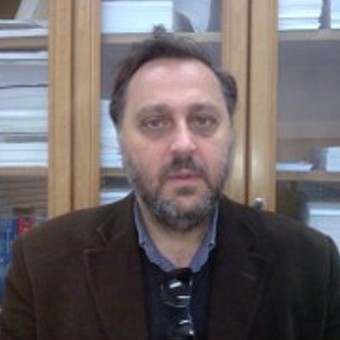
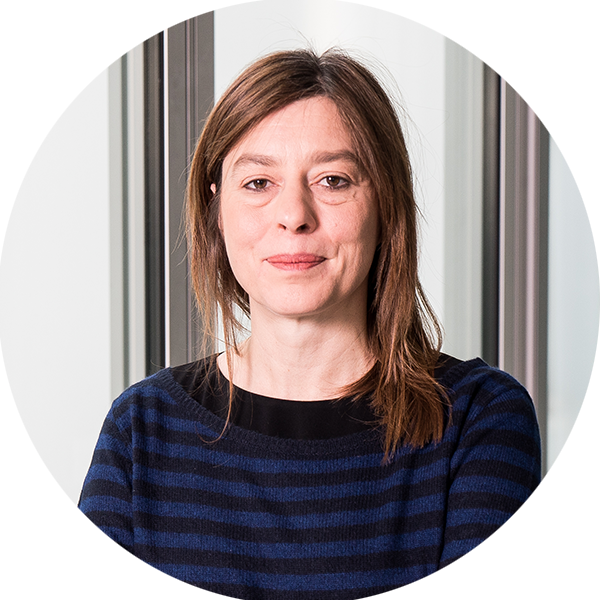
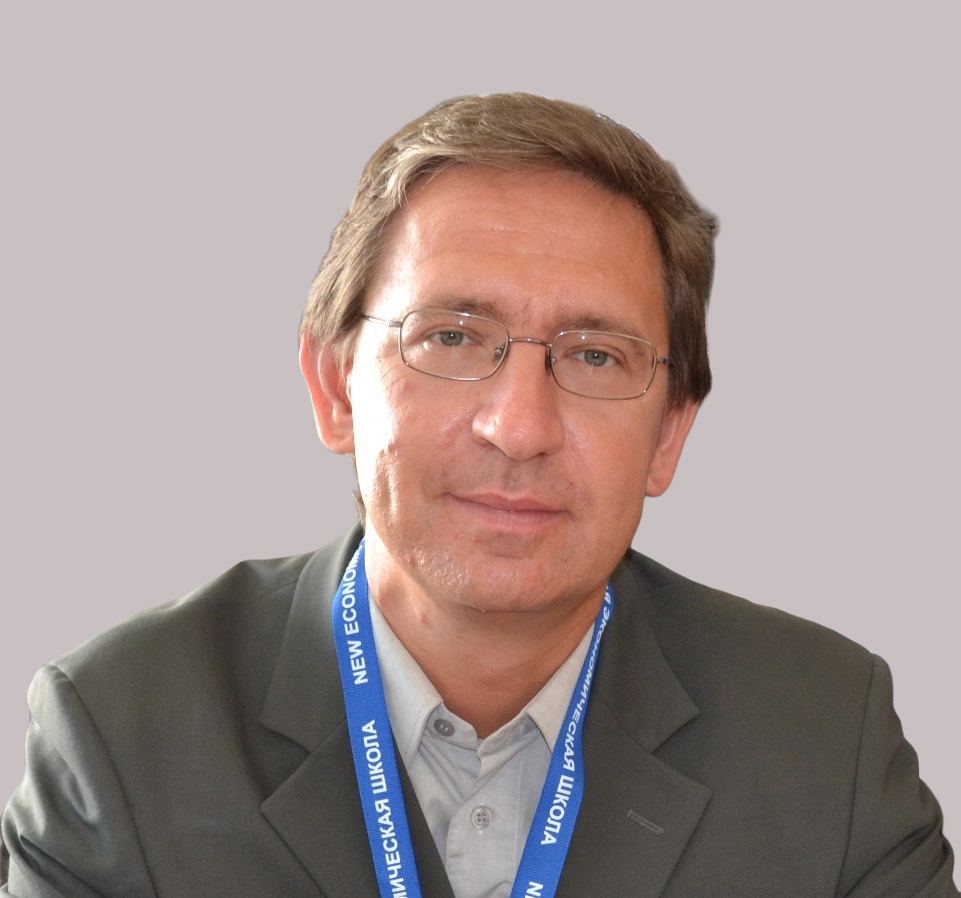
Simeon Papadopoulos is an Associate Professor at the Department of Accounting and Finance, University of Macedonia. His expertise lies in Banking, Corporate Finance, and Financial Markets, with a focus on Stock Markets and Risk Management. B.A. Economics, University of Macedonia (1987) M.A. Economics, Concordia University (1989) Ph.D. Banking and Finance, Bangor University (1996) His research explores capital structure theories (Trade-off vs. Pecking Order), banking efficiency, precious metals volatility, and financial stability in emerging markets. Publications span peer-reviewed journals and conferences, emphasizing cross-border comparative studies in banking systems. Teaching includes courses on Bank Management, Corporate Finance, and Financial Markets for both undergraduate and postgraduate programs. He has supervised doctoral theses and mentored students in financial research.
Dr. Naoum Vasilios Christos serves as an Assistant Professor in the Department of Maritime Studies at the University of Piraeus, focusing on financial accounting within the shipping context, strategic management, and cost behavior. His research bridges corporate finance with maritime industry challenges, including ESG (Environmental, Social, Governance) impacts on investment decisions and asymmetric cost dynamics. University: University of Piraeus School: School of Shipping and Industry Department: Department of Maritime Studies Email: vcnaoum@unipi.gr His research spans Financial Accounting , Shipping Economics , and Strategic Cost Management , with recent work on green regulation effects on cost stickiness and ESG reputational risks. Key trends in his publications include empirical analyses of maritime firms, asymmetric cost behavior, and corporate governance under uncertainty. Notable contributions include studies on dividend dynamics in shipping, audit quality impacts on organization capital, and SG&A cost stickiness linked to strategy. His work is published in international journals, with the department recognized for global leadership in areas like mobile authoring tools and user modeling.
Evangelos Ioannidis is an Associate Professor at the Department of Statistics, School of Informatics and Statistics, Athens University of Economics and Business. Born in 1962, he holds a Mathematics PhD from the University of Heidelberg (1993) and has served in his current department since 1999, progressing from Lecturer (1999) to Assistant Professor (2007) and Associate Professor (2023). His expertise spans spectral analysis of time series , cointegration methods , and bootstrap applications in economic data analysis, with additional focus on Official Statistics and sampling techniques . University of Heidelberg: MMath (1987), PhD (1993) Researcher, University of Heidelberg (1987-1991) Visiting Researcher, University of Orsay, Paris Sud (1992-1993) OECD, Paris (1994-1998) National Institute of Labour (1999) His scientific contributions focus on time series econometrics, VAR model spectra, and R&D expenditure analysis. Recent work includes non-parametric spectral estimation and risk-based sampling methodology. He has collaborated with Eurostat on statistical projects (2012-2014). Current affiliations include the Athens University of Economics and Business , where he teaches and conducts research on economic time series analysis and statistical methods.
Theodoros D. Bratis is an Assistant Professor in Applied Macroeconomics at the Department of Business Administration and Management of the Athens University of Economics and Business (AUEB). He is affiliated with the School of Business Administration at AUEB, one of Greece's leading economic and business institutions. Dr. Bratis holds the following educational qualifications: BA in Economics from the University of Piraeus (2004) Master's degree in Financial Analysis for Executives from the University of Piraeus (2011) PhD in Monetary Policy and International Financial Markets from the Athens University of Economics and Business (2015) His research focuses on Macroeconomics, Monetary and Fiscal Policy, International Economics, Financial Stability, International Financial Markets, Applied Econometrics (with emphasis on Time Series Models), and Banking. His work primarily examines financial markets, sovereign risk, monetary policy transmission, and systemic risk within the European context, particularly during crisis periods such as the EMU debt crisis. Dr. Bratis has published extensively in recognized international scientific journals including the Journal of Financial Stability, Oxford Economic Papers, and Journal of International Financial Markets Institutions and Money. His publication record demonstrates a consistent focus on European financial markets, with particular attention to the Eurozone crisis period and its aftermath. His notable contributions include work on: Sovereign credit and geopolitical risks Monetary policy expectations and sovereign risk dynamics Systemic risk and financial stability during the Eurozone debt crisis Contagion effects in Eurozone bank and sovereign credit markets Impact of financial transaction taxes on market volatility Dr. Bratis serves as a reviewer for international scientific journals and has been a member of the Eastern Finance Association Conference Committee. He has also participated in Greek research programs, contributing to the national research landscape.
Kerem Yavuz Arslanlı is an Associate Professor at Istanbul Technical University's Faculty of Architecture, Department of Urban and Regional Planning. He has held various academic roles since 2002, including Deputy Head of Department (2020-2022) and Education Coordinator. His international collaborations include positions at the University of Alicante, Cass Business School, and institutions in Switzerland, Germany, and Romania. Education: PhD in Urban and Regional Planning from Istanbul Technical University (2004), MA in Real Estate Development (2001) Research interests span Urban Economics , Disaster Risk Management , Real Estate Finance , and Post-Disaster Reconstruction . His work focuses on seismic risk scenarios , impact chain analysis , and low-carbon real estate investments , often leveraging spatial statistics and social big data . Recent publication trends highlight applications of impact chains for systemic risk assessment, tokenization in real estate, and sustainability factors in consumer behavior. His 2025 Journal of Risk Research paper addresses Istanbul's seismic risk modeling, while 2024 works explore post-earthquake housing affordability and low-carbon investments . Scientific awards include: 1st Prize, Meles Stream National Urban Design Competition (2020) AREUEA Doctoral Session Prize (2009) Advising encompasses 18 theses on topics like real estate tokenization , smart contracts , and post-disaster urban planning . He has led projects including Energy Demand Modeling for Post-Disaster Settlements and Impact Chain Analysis of Kahramanmaraş Earthquakes .
Antonella Trigari is a Full Professor of Economics at Bocconi University and serves as Director of the MSc in Economic and Social Sciences (ESS). She holds prestigious research affiliations with the European Economic Association (EEA), Center for Economic Policy Research (CEPR), Innocenzo Gasparini Institute for Economic Research (IGIER), and Baffi Carefin Centre. Full Professor of Economics Director, MSc in Economic and Social Sciences Research Fellow (EEA, CEPR, IGIER, Baffi Carefin) Member, Euro Area Business Cycle Dating Committee Her research focuses on labor economics, macroeconomic policy, and productivity dynamics. Recent work examines utilization-adjusted TFP growth in Europe, unemployment benefit extensions, and financial market interactions with labor markets. Key publication areas include: Business cycle analysis Employment fluctuations Economic policy evaluation Financial market-labor market linkages Productivity measurement Scientific awards include: Excellence in Research Award (Bocconi University, 2023) Her publications appear in top-tier journals like the Journal of Financial Economics, Journal of Monetary Economics, and Journal of Political Economy. She previously served as Associate Editor for the Journal of Monetary Economics.
Professor Victoria C. Smith is a leading volcanologist at the School of Archaeology, University of Oxford. Her research focuses on tephrochronology, using volcanic ash layers to date and correlate sedimentary and archaeological records. She manages Oxford's electron microprobe facilities and cryptotephra laboratory, supporting global research on explosive volcanism. Research Interests : Volcanology, tephrostratigraphy, magmatic processes, and paleoenvironmental reconstruction. Geographic Focus : Italy, Mexico, Japan, Azores, Canary Islands, Ethiopian Rift, Antarctica. Her recent publications highlight collaborations in geochronology, magma evolution modeling, and tephra applications in synchronizing climate-human records. She supervises MSc and doctoral students in Archaeological Science, focusing on volcanic ash as chronological tools.
Skrobotov Anton Andreevich is a Professor at the Faculty of Economic Sciences and Director of the Center for Big Data in Economics and Finance at the National Research University Higher School of Economics (HSE). With 15 years of scientific and teaching experience, he joined HSE in 2024 and focuses on econometrics, financial econometrics, and non-stationary time series analysis. His research emphasizes robust statistical methods. Education: Doctor of Economics (2024) Candidate of Economic Sciences (2018), Saint Petersburg University Master's degree in Economics (2013), Russian Presidential Academy of National Economy and Public Administration (RANEPA) Skrobotov specializes in econometrics, time series analysis, and robust testing. His recent publications address financial bubbles, volatility clustering, and structural shifts in economic data. Scientific incentives: High Professional Potential Group (HSE Personnel Reserve) Category 'New Teachers' (2025) He has led courses in Econometrics at RANEPA and HSE, and secured multiple grants from the Russian Science Foundation and Russian Foundation for Basic Research. His work involves collaborations with institutions like the Gaidar Institute and Saint Petersburg State University.
Stanislav Anatolyev serves as Full Professor of Economics at the New Economic School (NES) since 2009 and holds an Associate Professor position at CERGE-EI in Prague. Affiliated with NES since 2000, he teaches advanced econometrics courses including Econometrics 3, Applied Time Series Econometrics, and Selected Chapters in Econometrics. Education PhD in Economics, University of Wisconsin-Madison (2000) MSc in Economics, New Economic School (1995) Specialist Diploma in Applied Mathematics, Moscow Institute of Physics and Technology (1992) Research Focus : Professor Anatolyev's work centers on econometric theory with expertise in method of moments, time series modeling, and high-dimensional data analysis. His contributions span theoretical developments in factor models, volatility estimation, and instrumental variables methods, alongside practical applications in financial econometrics and portfolio optimization. He maintains active research collaborations across international institutions. Publication Trends : Recent work demonstrates increasing emphasis on ultra-high-dimensional econometrics, with significant contributions to copula-based portfolio allocation, many-instrument regressions, and financial market belief updating mechanisms. His publications bridge theoretical rigor with empirical applications, frequently appearing in top econometrics journals including Journal of Econometrics and Econometric Theory. Awards Econometric Theory Multa Scripsit Award (2022) for exceptional scholarly output Academic Leadership : As founding Editor-in-Chief of the Russian-language journal Quantile since 2006, he has fostered econometric research dissemination in Eastern Europe. His co-authored textbook Methods for Estimation and Inference in Modern Econometrics serves as a key reference in graduate econometrics education. Professional Activities : Regularly presents at international conferences and serves as referee for leading econometrics journals, maintaining active engagement with the global econometrics community through seminar presentations and collaborative research projects.
Volkert Paulsen is a Senior Lecturer at the Institute of Mathematical Stochastics at the University of Münster. His career spans institutions including the University of Kiel, where he completed his Habilitation (2000), Dissertation (1994), and Diplomarbeit (1989). He has taught extensively in Financial Mathematics , Stochastic Analysis , and Mathematical Statistics , supervising over 50 Bachelor, Master, and Diploma theses on topics such as risk modeling, portfolio optimization, and derivative valuation. Research Interests: Paulsen's work focuses on Financial Mathematics (continuous-time models, American options, unit-linked insurance), Stochastic Analysis (optimal stopping, martingale methods), and Risk Modeling (credit risk, extreme value statistics). His publications include foundational studies on nonlinear observation costs in optimal stopping problems and stochastic approaches to portfolio management. Scientific Contributions: His research spans journal articles in Stochastic Processes and their Applications and Journal of Applied Probability , with recent seminar topics covering Lévy Processes , Copula Modeling , and Stochastic Volatility . He employs R for statistical applications and integrates mathematical theory with practical finance and insurance contexts. Contact: Email: Volkert.Paulsen@uni-muenster.de Room: 130.010, Orléans-Ring 10, 48149 Münster Phone: +49 251 83-33771
Snehamoy Chatterjee serves as Associate Professor and Witte Family Endowed Faculty Fellow in the Department of Geological and Mining Engineering and Sciences at Michigan Technological University. His expertise spans ore reserve estimation, mine planning optimization, and AI-driven safety systems, with significant contributions to remote sensing applications in mining and geological hazard assessment. Chatterjee earned his PhD in Mining Engineering from the Indian Institute of Technology Kharagpur, followed by postdoctoral research at the University of Alaska Fairbanks and the COSMO Stochastic Mine Planning Laboratory at McGill University. His academic journey includes prior faculty positions at India's National Institute of Technology. His research program integrates cutting-edge artificial intelligence with geospatial technologies to solve critical challenges in mining safety and resource management. Key focus areas include: Generative AI frameworks for real-time mining hazard prediction Hyperspectral and InSAR remote sensing for mineral exploration Deep learning applications in geophysical inversion Stochastic optimization of mine planning under uncertainty Machine learning-driven landslide and earthquake hazard mapping Chatterjee's 15 most recent publications (2023-2024) reveal a pronounced shift toward AI-geospatial fusion , with 60% of works applying deep learning to satellite imagery for hazard monitoring. His team's research spans three critical domains: mining safety systems (33%), geological hazard prediction (47%), and resource optimization (20%), demonstrating strong interdisciplinary collaboration across environmental science and engineering disciplines. Professional recognition includes: Editor's Best Reviewer Award 2014 from Mathematical Geosciences Journal APCOM Young Professional Award 2015 at the 37th APCOM conference Chatterjee actively mentors graduate students and leads multiple federally funded research initiatives focused on mine safety innovation and critical mineral exploration. His professional service includes editorial responsibilities for Mining, Metallurgy & Exploration and committee roles in major international conferences through IAMG, SME, and AGU. Current projects emphasize generative AI applications for predictive safety analytics and hyperspectral remote sensing for critical mineral discovery. His research extends through collaborations with the COSMO Laboratory network and industry partners across North America, India, and Australia, with recent fieldwork focusing on Alaskan platinum deposits and Indian coal reserves.
Ralitsa Petkova is an associate professor of banking and finance at the Weatherhead School of Management, Case Western Reserve University , where she has taught since 2014. She holds the Deborah and David Daberko Faculty Fellowship and previously taught at Purdue, Texas A&M, UT Austin, and CWRU. Education PhD in Finance, University of Rochester (2003) Master of Science in Applied Economics, University of Rochester (2001) Bachelor of Arts, Hamilton College (1998) Research Interests Petkova’s work lies at the intersection of empirical asset pricing, behavioral finance, and risk management. She investigates stock-return anomalies, momentum strategies, volatility effects, and hedge-fund performance . Recent projects explore extrapolative beliefs in Bitcoin markets and absolute-strength momentum signals , bridging traditional factor models with contemporary asset classes. Research Output & Trends Her publications (2005–2023) chart a clear arc from foundational factor-model tests to cutting-edge cryptocurrency research. Early papers dissect the Fama-French factors and value–growth risk differentials, while later work pivots to momentum timing, hedge-fund skill, and Bitcoin mispricing, reflecting both methodological rigor and topical agility. Scientific Awards & Honors Deborah and David Daberko Faculty Fellowship Weatherhead Research Funding Award (2005) Weatherhead Summer Research Award (2004) Olin Fellowship, University of Rochester (2001) Intramural Grant, Case Western Reserve University (2021) Teaching & Service She teaches Financial Modeling and Investment Strategies in the MSM-Finance program, maintaining an open-door policy by appointment.
Peter Ritchken is a Professor of Banking & Finance at the Weatherhead School of Management, Case Western Reserve University, where he holds the Mario J. Gabelli Distinguished Professorship in Finance. He joined the faculty in 1981 after completing his PhD at Case Western Reserve University and has established himself as a leading scholar in finance, particularly in derivatives, risk management, and fixed income markets. His research interests span several key areas in finance: Fixed Income and Term Structure Models Risk Management in Financial Markets Contingent Claims Valuation Real Options Risk Management in Supply Chains Credit Risk Management Capital Structure Ritchken's scholarly work focuses on understanding price determination in capital markets, risk management strategies for firms across various dimensions (market risk, interest rate risk, credit risk, and operational risk), and the rationale for derivative usage. His research employs sophisticated mathematical finance techniques to address practical financial problems, with applications in banking regulation and supply chain management. He has developed influential models for pricing interest rate claims, implementing stochastic volatility option models, and solving real option problems. His publications appear in top finance journals including the Review of Financial Studies, Management Science, Journal of Finance, and Mathematical Finance. His recent work has increasingly focused on the intersection of operations management and finance, particularly examining how supply chain dynamics interact with financial decision-making. Ritchken has received significant recognition for his contributions: 2014 University Research Award, Weatherhead School of Management Weatherhead Excellence in Teaching Award, 2011 As an educator, Ritchken has made substantial contributions to finance education. He is the founder and director of the Weatherhead School of Management Master of Science in Management-Finance (MSM-Finance) program. He teaches across multiple programs including the MBA, executive MBA, MSM-Finance, and PhD of Finance and Operations Research. His courses cover Risk Management, Derivatives, Fixed Income, Mortgage and Credit Markets, Mathematical Finance, Investment Management, Real Options, and Quantitative Finance. He has also conducted executive education programs worldwide, including in the United States, Europe, Asia, and Australia. Ritchken serves as a research scholar for the Research Department at the Federal Reserve Bank in Cleveland and acts as Faculty Advisor for GARP (Global Association of Risk Professionals). He has consulted with large investment banks and brokerage firms, bridging academic research with practical industry applications.
Shinji Kimura is a Professor at Waseda University's Faculty of Science and Engineering, specializing in VLSI design and electronic systems. He holds a Doctor of Engineering from Kyoto University and has been with Waseda since 2002, previously serving as Associate Professor at Nara Institute of Science and Technology (1993–2002) and Assistant Professor at Kobe University (1985–1993). Kimura's research spans low-power circuit design , approximate computing , FPGA optimization , video coding (HEVC) , and hardware acceleration for AI . His work focuses on energy-efficient architectures for applications like neural networks, computer vision, and ultra-high-definition video processing. Recent publications emphasize hardware-efficient multipliers, neural network compression, and 3D-stacked memory systems. Awards include the LSI IP Design Award (2000, 1999) and the Information Processing Society of Japan Encouragement Award (1993). He leads projects on HEVC encoding/decoding, non-volatile memory optimization, and 3D integrated circuits, with VLSI implementations achieving real-time 8K video processing.
Giovanna Zanotti is a Lecturer at the University of Bergamo, currently serving as Director of the School of Higher Education and former Director of the Department of Economic, Management, and Quantitative Methods (2018–2024) and Department of Management (2020–2024). She collaborates with SDA Bocconi in teaching risk management and derivatives courses and holds leadership roles at ACEPI (Italian Association for Certificates and Investment Products). Her institutional affiliations include advisory roles at Anima Holding, Anima SGR, and past board memberships at major Italian banks. 2006: International Teachers Program, IMD Lausanne 2001: Ph.D. in Business Administration and Management, Bocconi University 1997: Bachelor's in Economics and Social Sciences, Bocconi University Her research focuses on risk management in firms and financial intermediaries, structured financial products , and emotional/psychological factors in financial decision-making. She has published extensively on commodity markets, behavioral finance, derivatives, and corporate finance, with a recent emphasis on structured products and market psychology. In 2024 alone, her work examines agricultural commodity stickiness , investment certificate pricing , and product innovation . Earlier studies (2023–2011) span disposition effects , social networking , housing market bubbles , and founder-family influence on hedging strategies. As Scientific Director of ACEPI, she shapes industry standards for investment products. Her teaching portfolio includes advanced courses on derivatives , structured finance , and corporate banking at the University of Bergamo and SDA Bocconi.