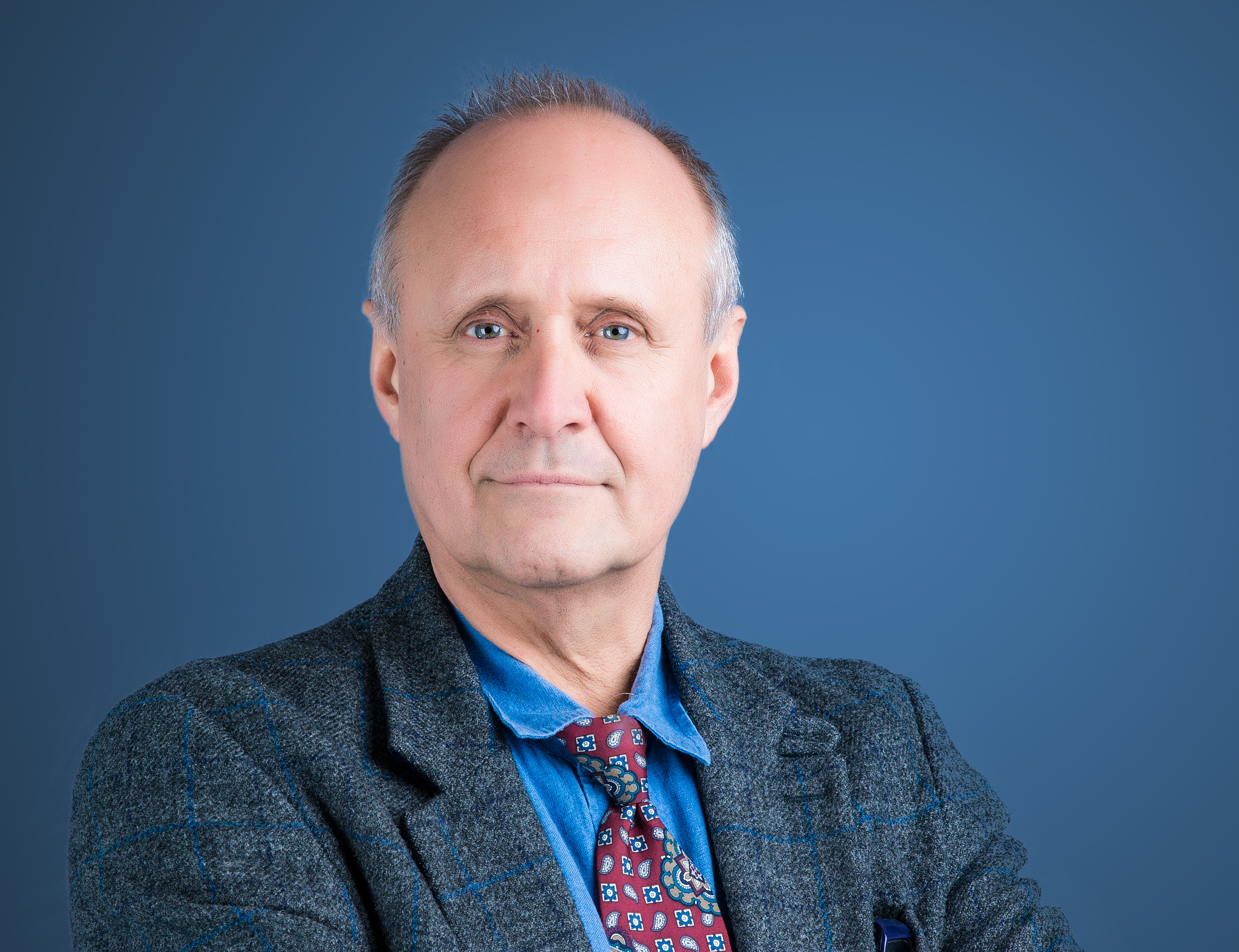
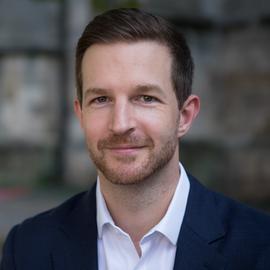
Ke Xu is an Assistant Professor at the Department of Finance, Faculty of Business and Economics, University of Victoria. His research bridges finance, econometrics, and cryptocurrency, focusing on market microstructure, high-frequency trading, and price discovery mechanisms. He has extensively studied Bitcoin ETFs, fractional cointegration models, and machine learning applications in financial markets. Key Research Areas: Market Microstructure High-Frequency Trading Cryptocurrency Dynamics Price Discovery Machine Learning in Finance Financial Econometrics Article Trends: Xu’s work spans empirical analyses of Bitcoin ETFs, volatility modeling (e.g., affine GARCH), and algorithmic trading strategies. His recent papers explore mini flash crashes using machine learning, regulatory impacts on market quality, and sustainable crypto portfolios.
Oliver Linton is the Chair of the Faculty and Professor of Political Economy at the University of Cambridge's Faculty of Economics. He coordinates the Empirical Analysis of Financial Markets theme at the Janeway Institute and holds a position at Trinity College. His research primarily focuses on econometric theory and empirical finance , with applications in market microstructure, asset pricing, and volatility modeling. His research interests span: Development of novel econometric methods for high-dimensional and dynamic data Analysis of financial market behavior, including liquidity and trading patterns Applications in policy-relevant contexts such as quantitative easing and pandemic forecasting Linton's recent publications demonstrate a strong focus on: Advanced time-series methodologies (e.g., GARCH, nonparametric regression) Financial market microstructure and high-frequency trading Economic impact analysis of major events (e.g., Brexit, COVID-19) He has received prestigious awards including: Humboldt Research Award (2015) Thousand Talents Plan recognition from Renmin University of China (2016) Linton actively advises doctoral students, with current supervisees including Xinyi Su, Zhaocheng Zhang, and Kilian Bachmair. He secured significant funding such as the European Commission FP7 grant for Nonparametric and Semiparametric Methods in Economics and Finance (2011–2014).
Prof. Vladimir Spokoiny is a leading figure in stochastic algorithms and nonparametric statistics at the Weierstrass Institute for Applied Analysis and Stochastics (WIAS) and Humboldt University of Berlin . His work bridges mathematical statistics with practical applications in finance, medicine, and machine learning. Born in 1959 in Moscow, USSR PhD from Lomonosov Moscow State University (1988) Habilitation from Humboldt University (1996) Head of WIAS research group since 2000 Professor at Humboldt University since 2002 Spokoiny's research focuses on adaptive nonparametric methods, high-dimensional data analysis, and statistical finance. His innovations in local homogeneity testing and propagation-separation methods have advanced volatility modeling, image analysis, and manifold learning. He employs Bayesian optimization frameworks and stochastic control techniques for financial instrument pricing. Recent scientific contributions include generalized bootstrap procedures for Bures-Wasserstein barycenters (2024), dimension-free Laplace approximation bounds (2023), and structure-adaptive manifold estimation (2022). His 19+ PhD students and editorial roles in top journals like The Annals of Statistics demonstrate sustained academic impact. International Statistical Institute member American Statistical Association fellow Institute of Mathematical Statistics member Bernoulli Society member
Cristi A. Gleason is a Professor of Accounting at the Tippie College of Business, University of Iowa, holding the prestigious Carlson-KPMG Research Professorship. As Editor of The Accounting Review , she shapes scholarly discourse in the field. Her 20-year academic career spans roles at the University of Arizona and leadership as Department Executive Officer (2020-2024). PhD in Management, Cornell University MS in Business and Public Administration, Cornell University MAC in Accounting, Brigham Young University BS in Accounting, Brigham Young University Professor Gleason's research focuses on corporate financial reporting , particularly income tax disclosures , analyst forecasts , and corporate governance . Her work examines how firms strategize around unrecognized tax benefits , interim reporting , and the information environment created by analyst interactions. Over 20 publications in top journals explore these intersections, emphasizing regulatory impacts like FIN 48 and strategic board composition. Recent research trends include: Worker representation effects on corporate tax behavior Accuracy of tax expense estimation frameworks Contagion risks in accounting restatements Construct validity in accounting measurement Post-Reg FD selective disclosure mechanisms Political economy of accounting standard adoption Scientific Recognition : American Tax Association Manuscript Award (2007) Public Interest Section AAA Best Paper (2020) Recipient of multiple teaching honors, including the Gilbert P. Maynard Award (2013, 2017) and Dean's Teaching Award (2006), she mentors doctoral students through her PhD seminar while maintaining editorial service on Contemporary Accounting Research (2010-2021).
Ankush Agarwal is an Associate Professor in the Department of Statistical and Actuarial Sciences at the University of Western Ontario. His research focuses on mathematical finance, financial statistics, and Monte Carlo methods, with applications to risk management and derivatives pricing. He supervises PhD students in quantitative finance and has taught courses on Monte Carlo methods and advanced financial modeling at Western University. Education: PhD in Mathematics from Tata Institute of Fundamental Research (2015) Research interests span regime-switching models, longevity risk hedging, stochastic differential equations, and rare event simulation. His work combines theoretical probability with computational techniques for financial applications. Recent publications include studies on McKean-Vlasov SDEs, implied Sharpe ratio estimation, and optimal portfolio strategies under stochastic volatility. These works demonstrate his expertise in stochastic processes and financial engineering. Supervision: Current PhD advisees include Ying Liao, Buchun Wang, and Shuya Zhang at the University of Glasgow. Former advisees include Yongjie Wang and Yihan Zou.
Ralph Luetticke is a Professor of Economics at the University of Tübingen, affiliated with the Centre for Economic Policy Research and the Stone Centre on Wealth Concentration at University College London. His research focuses on fiscal/monetary policy, business cycles, and computational methods, emphasizing household heterogeneity. Key contributions include analyzing liquidity channels of fiscal policy, military multipliers, and unconventional policy shocks. Recent work explores military spending multipliers, endogenous gridpoint methods for distributional dynamics, and the distributional impacts of monetary policy. His 2023 ERC Starting Grant ('AIRMAC') supports research into aggregate uncertainty in business cycles. Teaching includes advanced macroeconomics courses at UCL and Tübingen, emphasizing HANK models and policy analysis. Scientific awards include the ERC Starting Grant (2023). Research tools developed include the BASE for HANK toolbox (Julia) and open-source codes for heterogeneous agent modeling. His work bridges theoretical macroeconomics with empirical policy analysis, addressing modern challenges like inequality and pandemic stimulus effectiveness.
David S. Matteson is a Professor and Associate Department Chair in the Department of Statistics and Data Science at Cornell University. He holds affiliations with the Bowers College of Computing and Information Science, the ILR School, the Center for Applied Mathematics, and the Program in Financial Engineering. His research focuses on developing statistical and machine learning methodologies for complex systems, with applications in finance, environmental science, healthcare, and nanotechnology. He received his PhD in Statistics from the University of Chicago and a BSB in Finance, Mathematics, and Statistics from the University of Minnesota. His awards include the NSF CAREER Award (2015), SUNY Chancellor’s Award (2022), and Fellowships from the Institute of Mathematical Statistics and American Statistical Association (2024). Research interests span theoretical methods like changepoint analysis, high-dimensional time series, and functional data, alongside applied domains such as systemic risk, climate change, and medical imaging. He leads major NSF-funded initiatives including the PRISM Institute for Trans-domain Systemic Risk and the TRIPODS Greater Data Science Cooperative Institute (GDSC). Editorial Roles: Founding Editor-in-Chief of Data Science in Science , Associate Editor for Journal of Econometrics , and former editor for multiple statistical journals. Leadership: Chair of the ASA’s Business and Economic Statistics Section (2024), Director of the National Institute of Statistical Sciences (NISS). Grants: PI/Co-PI on NSF and USAID projects addressing systemic risk, energy systems, and poverty estimation.
Prof. Melanie Schienle is a Professor and Chair of Statistical Methods and Econometrics at the Department of Economics and Management, Karlsruhe Institute of Technology (KIT). She also holds a professorship in the Department of Mathematics at KIT since 2021. Her expertise spans statistical methods, econometrics, financial risk analysis, and forecasting. She leads the HKMetrics Network and the RespiNow Hub for respiratory disease forecasting. She serves as a Senior Fellow at the Rimini Center for Economic Analysis (RCEA), a steering committee member of the German Economic Association, and a member of the University Research Council at KIT. Education: Ph.D. (Dr. rer. pol.) in Economics from Mannheim University (2008), summa cum laude; Diploma in Mathematics (University of Karlsruhe, 2003) with a minor in theoretical physics. She has held academic positions at Leibniz University Hannover (2012–2015) and Humboldt University of Berlin (2008–2012). Research interests focus on financial networks, systemic risk, time series analysis, and machine learning applications in economics. She co-leads projects on nowcasting and forecasting, including collaborative efforts during the pandemic to predict hospitalizations. Her work integrates advanced statistical techniques with real-world policy implications. Prof. Schienle is an Associate Editor for the International Journal of Forecasting and Journal of Time Series Analysis . She has authored over 50 peer-reviewed publications and contributed to high-impact journals like Nature Communications and Journal of Business & Economic Statistics . She leads the Institute of Statistics at KIT and chairs the MathSEE initiative for interdisciplinary mathematical applications.
Arya Mazumdar is a tenured Professor of Data Science and Computer Science at the Halıcıoğlu Data Science Institute (HDSI) , part of the School of Computing, Information and Data Sciences at the University of California San Diego (UCSD). He also holds affiliations with the Computer Science and Engineering and Electrical and Computer Engineering departments at UCSD. Previously, he was an Assistant and Associate Professor at the University of Massachusetts Amherst (2015–2021), and held a postdoctoral position at MIT (2011–2012). He is an IEEE Distinguished Lecturer (2023–2024) and recipient of the NSF CAREER Award (2015–2020). Education : PhD in 2011 from the University of Maryland, College Park (advisor: Alexander Barg) Postdoctoral scholar at MIT (2011–2012, advisor: Greg Wornell) Internships at IBM Almaden (2010) and HP Labs (2008) Research Interests : Focus on algorithmic and statistical aspects of machine learning, error-correcting codes, optimization, signal processing, and distributed systems. Key areas include clustering algorithms, compressed sensing, federated learning, and information-theoretic foundations of data science. He has contributed to theoretical guarantees for learning mixtures, distributed optimization, and robust coding schemes. Recent Articles Trends : Recent work emphasizes distributed optimization (e.g., vqSGD, Byzantine-resilient algorithms), sparse recovery in high-dimensional models, and theoretical foundations of learning (e.g., support recovery, parameter estimation). His research bridges information theory and machine learning, with applications in storage systems and large-scale data processing. Awards & Roles : 2020 EURASIP JASP Best Paper Award Co-PI and co-leader of the NSF AI Institute for Learning-Enabled Optimization at Scale Editorships: IEEE Transactions on Information Theory and Foundations and Trends in Communications Grants & Labs : Leads the EnCORE Institute as UCSD Site Lead, focusing on theoretical perspectives of large language models and computational-statistical gaps. Active in organizing workshops on topics like LLMs, clustering, and distributed optimization. His research is funded by NSF and industry collaborations. Teaching : Courses include Algorithms for Data Science , Probability and Statistics for Data Science , and Coding Theory , emphasizing foundational theory and scalable methods.
Isaac Gross is a Senior Lecturer in the Department of Economics at Monash University, Faculty of Business and Economics. He holds a PhD and is actively involved in research, teaching, and policy advisory roles. His work bridges academic theory and real-world economic policy, particularly in macroeconomic and monetary domains. His research interests center on macroeconomics , monetary policy , DSGE modeling , and commodity price dynamics . He employs advanced quantitative methods to analyze policy effectiveness and economic stability, with a regional focus on Australia and global commodity markets. The recent articles highlight a consistent focus on nonlinear modeling of macroeconomic systems, optimal policy design , and structural analysis of monetary and resource sectors . His work combines theoretical rigor with empirical validation, often using large-scale models like MARTIN for policy simulation. Scientific Awards: Best Paper at the Melbourne Institute Macroeconomic Policy Meeting (2018) Dean's Citations for Outstanding Contribution to Student Learning (2021) Advising and Grants: Isaac Gross served as the Primary Chief Investigator on the 2022 research project Estimating Optimal Policy Rules for Australian Monetary Policy with MARTIN . While formal student advising is not listed, his Dean’s Citation underscores significant contributions to student learning. He has also contributed to educational initiatives such as continuing education in macroeconometrics. Labs, Teams, and Collaborations: He collaborates with prominent economists including Andrew Leigh and J. Hansen. His work involves external engagement with key institutions such as the Reserve Bank of Australia and the Standing Committee on Economics, indicating integration into national policy networks.
Miguel Leon-Ledesma is a Professor of Economics at the Department of Economics , University of Exeter Business School , joining in September 2024. Previously, he held a Professorship at the University of Kent . A macroeconomist, he specializes in Economic Growth , International Economics , and Business Cycles , with affiliations as Research Fellow at the Centre for Economic Policy Research (CEPR) and Fellow at the National Institute for Economic and Social Research (NIESR). He has advised international organizations like the European Central Bank and Asian Development Bank and serves as a committee member and trustee for the UK's Money Macro and Finance Society (MMF) . Research Interests : His work bridges macroeconomic theory and empirical analysis , focusing on growth volatility, trade dynamics, labor share trends, and structural transformation. He explores how monetary policy interacts with labor markets, the role of technology frontiers in productivity, and the impact of import elasticities and network effects on development. Article Trends : His recent publications and working papers emphasize growth convergence , DSGE model innovations , factor substitution in production, and trade-policy linkages , reflecting a thematic focus on macroeconomic stability, structural change, and globalization's economic implications. Scientific Awards : Research Fellow, Centre for Economic Policy Research (CEPR) Fellow, National Institute for Economic and Social Research (NIESR) Grants & Projects : Funded by the Leverhulme Trust , Nuffield Foundation , and ESRC , his work includes projects on pensions and health economics, oil shocks' network amplification, and UK firm creation during the pandemic. Labs & Teams : Collaborates with international researchers (e.g., Mathan Satchi, Laura Puzzello) and contributes to policy-oriented networks like the Money Macro and Finance Society , integrating academic research with institutional policy advice.
Eunchun Park serves as an Assistant Professor in the Department of Agricultural Economics and Agribusiness at the University of Arkansas, concurrently holding the position of Director of the Experiment Station (DREX). A specialist in Bayesian spatial statistics and econometrics, his research focuses on agricultural risk analysis with particular emphasis on crop insurance mechanisms and financial commodity markets. His methodological expertise addresses critical data scarcity challenges in federal crop insurance premium calculations through advanced spatial modeling techniques. Dr. Park's academic foundation includes: Ph.D. in Agricultural Economics from Oklahoma State University (2017) M.S. in Food and Resource Economics from Korea University (2013) B.S. in Food and Resource Economics from Korea University (2010) His research program centers on extreme price and yield risk quantification in agricultural commodities, employing sophisticated Bayesian modeling frameworks to overcome data limitations in spatial risk assessment. Current work develops innovative approaches for measuring catastrophic risks in crop production systems and refining insurance rating structures through spatial smoothing of yield densities. This research bridges theoretical econometric advances with practical applications for risk management tools used by farmers and policymakers. Analysis of Dr. Park's recent publications reveals a consistent trajectory in spatial risk modeling for agricultural insurance systems, with increasing focus on prevented planting coverage factors, commodity market volatility around information releases, and climate-related production risks. His work demonstrates methodological progression from theoretical Bayesian frameworks toward actionable risk assessment tools, particularly through the application of kriging techniques to non-normal yield distributions and extreme event modeling. Dr. Park's scholarly contributions have been recognized through: Outstanding Contribution to Applied Risk Analysis Award (2020) from the Agricultural and Applied Economics Association Outstanding Graduate Student Paper Award (2018) from the Agricultural and Applied Economics Association Outstanding Doctoral Dissertation Award (2018) from the Southern Agricultural Economics Association While specific details of current advisees and grant funding are not provided in available materials, his active publication record in top agricultural economics journals suggests an ongoing mentorship role for graduate students and potential involvement in externally funded research initiatives related to agricultural risk management. His work on spatial smoothing techniques and extreme risk modeling likely informs collaborative projects with agricultural extension services and federal risk management agencies. No specific laboratory facilities or dedicated research teams are mentioned in the available documentation, though his methodological expertise suggests collaboration with spatial statistics and agricultural risk modeling groups within the university's research infrastructure.
Philipp Otto is a Professor of Statistics and Data Science at the University of Glasgow. Previously, he was a Reader in Statistics and Data Analytics (2023–2024) and held a Junior Professorship in Big Geospatial Data at Leibniz University Hannover (2018–2023). He earned his PhD in Statistics (summa cum laude) from European University Viadrina in 2016 and a B.Sc. in International Economics, with study visits to Saint Petersburg State University. His research focuses on spatial and spatiotemporal statistics, environmetrics, network modeling, and machine learning applications. Education: PhD in Statistics (2016), European University Viadrina, Frankfurt (Oder) B.Sc. in International Economics (with study visits to Saint Petersburg) Research Interests: Philipp’s work centers on spatial statistics, spatiotemporal volatility modeling, environmental data analysis, and network processes. He develops statistical methods for geo-referenced and network data, with applications in climatology, finance, and environmental risk assessment. His contributions include advancements in GARCH models, spatiotemporal clustering detection, and statistical process monitoring for AI systems. Grants & Projects: He has secured €1,038,847 in research grants, leading projects on historical map time series analysis, agricultural air quality impacts, and high-dimensional spatial dependence structures. Industry collaborations include survival analysis for building information models. Awards: 2017 Fellowship to attend the Lindau Nobel Laureate Meeting (Economic Sciences) 2017 Best Presentation Award (Data Science, Statistics, and Visualisation) Teaching: He teaches statistics and data science across disciplines, including economics, engineering, and mathematics, at both undergraduate and postgraduate levels. Professional Activities: Editorial Boards: Environmetrics (2021), AStA Advances in Statistical Analysis (2020) Member of German Statistical Society (Treasurer, 2013)
Prof. Dr. Martin Spindler is a Professor for Statistics at the Department of Statistics with Application in Business Administration, University of Hamburg Business School. His research bridges Econometrics, Statistics, and Machine Learning, focusing on high-dimensional methods, causal inference, and applications in finance, insurance, and health economics. Current position since 2016 Visiting Professor at University Mannheim (2016), Boston College (2015), and MIT (2015, 2013-2014) Senior Researcher at Max Planck Society (2012-2016) Education: PhD in Economics, University of Munich (2012) Master in Mathematics and Economics, University of Munich (2008) and Regensburg (2003) B.A. in Mathematics, University of Regensburg (2005) His methodological work includes L2Boosting for treatment effect estimation, double machine learning frameworks, and nonparametric approaches for asymmetric information. Applications span from fraud detection in claims management to pandemic shielding strategies and financial forecasting. Research Trends: Recent publications emphasize high-dimensional statistical methods, causal machine learning, and interdisciplinary applications. Key tools include double machine learning, attention networks, and transformation models. Collaborations: Active partnerships with institutions like MIT, Boston College, and Max Planck Society, alongside contributions to open-source software (e.g., DoubleML, hdm package).
Fima Klebaner is Professor in the School of Mathematics at Monash University and Director of the Centre for Modelling of Stochastic Systems. His research spans stochastic processes, financial mathematics, and population biology, with emphasis on limit theorems, branching processes, and diffusion models. Current projects include ARC-funded work on stochastic population dynamics and financial derivatives pricing. Key research areas: 1) Population-dependent stochastic systems; 2) Large deviation principles; 3) Financial mathematics (Dupire formula, volatility); 4) Approximation methods for complex processes. Recent publications (2018-2025) show balanced focus on theoretical probability (45%) and applied modeling (55%), particularly in ecology and finance. Article analysis reveals advanced methodologies in: 1) Stochastic calculus applications (33% of recent works); 2) Limit theorems for interacting systems (27%); 3) Financial mathematics innovations (20%). Theoretical contributions frequently interface with biological and financial applications.