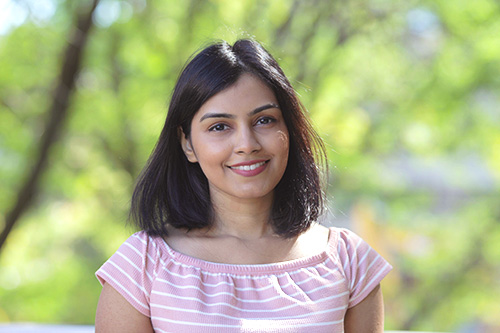
Dr. Michael Vermeuel is an Assistant Professor in the Department of Earth, Atmospheric, and Planetary Sciences at Purdue University. He leads the AIR CheM (Atmospheric Interdisciplinary Research in Chemistry and Meteorology) group, focusing on reactive atmospheric gases impacting air quality, climate, and ecosystems. His work combines field observations, chemical transport modeling, and laboratory studies. Education: PhD in Chemistry (2021), University of Wisconsin – Madison MS in Chemistry (2017), University of Wisconsin – Madison BS in Chemistry (2015), The College of New Jersey Research Interests: Dr. Vermeuel’s group investigates the sources and fates of atmospheric chemicals using advanced techniques such as chemical ionization mass spectrometry and micrometeorological flux measurements. Key areas include ozone deposition dynamics, VOC cycling in forests, and marine-abiotic VOC sources. His work bridges laboratory experiments, field campaigns (e.g., FROG-NY, FluCS), and model development to address environmental challenges. Awards: AGU James R. Holton Award (2024) His lab emphasizes interdisciplinary collaboration, with projects addressing urban pollution, wildfire impacts, and climate feedbacks. Current research includes the Fluxes of Reactive Organic Gases in New York (FROG-NY) and the Flux Closure Study (FluCS) at Manitou Experimental Forest.
Ming Zeng is a Senior Lecturer in Financial Economics at the University of Gothenburg, affiliated with the Department of Economics and the Centre for Finance. He holds a Ph.D. in Economics from Singapore Management University (2018), a Master’s in Financial Engineering from ESSEC Business School (2012), and a Bachelor’s in Applied Mathematics from Beijing University of Aeronautics and Astronautics (2011). Education Ph.D. in Economics, Singapore Management University (2018) Master of Financial Engineering, ESSEC Business School (2012) Bachelor of Applied Mathematics, Beijing University of Aeronautics and Astronautics (2011) Research Interests His research focuses on Empirical Asset Pricing , International Finance , and Financial Econometrics . Key themes include currency carry trades, political cycles in asset markets, inflation risk, and the dynamics of real exchange rates. He explores topics like sovereign credit risk, firm efficiency, and term structure models of equity and bond yields, often linking macroeconomic factors to financial market outcomes. Teaching He teaches courses in Financial Markets and Asset Pricing , International Finance , Financial Econometrics , and Macroeconomics , integrating theoretical frameworks with practical applications in quantitative finance. Research Trends Zeng’s work emphasizes global financial markets and political economy effects , with recent studies analyzing presidential cycles, inflation ambiguity, and policy uncertainty. His methodologies bridge empirical finance with macroeconomic theory, addressing questions of market efficiency and risk pricing. Labs/Teams He contributes to the Centre for Finance at the University of Gothenburg, fostering interdisciplinary research in financial economics and econometric modeling.
James Archsmith is an Assistant Professor in the Department of Agricultural and Resource Economics at the University of Maryland, College Park. He specializes in energy and environmental economics, focusing on regulatory policies in electricity generation, automobile standards, and electric vehicle adoption. His work emphasizes designing cost-effective environmental strategies through applied econometric analysis. PhD in Agricultural and Resource Economics, University of California, Davis (2018) MA in Economics, University of Michigan, Ann Arbor (2011) BS in Natural Resources and Environment, University of Michigan, Ann Arbor (1999) Research interests include evaluating environmental regulations' economic impacts, consumer behavior under policy interventions, and the lifecycle sustainability of emerging technologies. Notable studies examine gasoline price uncertainty effects on automobile markets and hydroelectric generation constraints' spillover costs. His work bridges theoretical models and real-world regulatory challenges. Publications span energy policy design, consumer decision-making under uncertainty, and environmental compliance costs. Recent trends focus on electric vehicle adoption barriers and emissions reduction strategies in transportation sectors. His research often highlights trade-offs between environmental goals and economic efficiency. No scientific awards listed. Advising and grants sections remain unreported in available texts. No lab affiliations specified.
Maria Christina Mariani is a Professor and Department Chair in the Department of Mathematical Sciences at the University of Texas at El Paso (UTEP). Her interdisciplinary research bridges mathematics with applications in public health, geophysics, physics, and finance, with a focus on developing novel mathematical models for complex data analysis. Dr. Mariani earned her Ph.D. in Mathematics from the University of Buenos Aires in 1992, where she received an Outstanding dissertation award. She also holds an M.S. in Physics (1996) and an M.S. in Mathematics (1987), both from the University of Buenos Aires with highest honors. Her research interests span Applied Mathematics, Nonlinear partial differential equations, Stochastic differential equations, Machine Learning techniques, Mathematical Finance, Mathematical Physics, and Numerical Methods. She has developed mathematical models for medical data analysis (particularly breast cancer, heart disease, and prostate cancer), seismic and explosive data, and financial markets. Her work emphasizes the development of mathematical models to enhance understanding of medical data and extreme events in various phenomena. Dr. Mariani's recent research focuses on applying machine learning and stochastic models to complex data sets across multiple domains. Her work demonstrates consistent innovation in developing novel algorithms for medical diagnosis and prognosis, analyzing seismic data, and modeling financial markets using Levy processes, Ornstein-Uhlenbeck models, and wavelet techniques. She has mentored numerous students throughout her career, including PhD candidates, MS students, and post-doctoral researchers, demonstrating her commitment to academic development and knowledge transfer. Dr. Mariani has served as Department Chair and holds the Shigeko K. Chan Distinguished Professor title in Mathematical Sciences, reflecting her significant contributions to the field and institution.
Shin'ichiro Matsuo is a Research Professor of Computer Science at Georgetown University specializing in blockchain security and cryptography. He co-directs the CyberSMART research center, leading multidisciplinary research in technology, economy, law, and regulation. Matsuo serves as co-chair of Blockchain Governance Initiative Network (BGIN) and founded BSafe.network, an international research test network for blockchain technology with 27 participating universities. His academic contributions include leadership in ISO TC307 security standardization and previous roles as head of Japanese national body for cryptographic techniques. Research Interests: Blockchain governance and security Cryptographic protocols and applications Privacy-enhancing digital trust systems Smart contract mechanisms Digital currency interoperability Awards & Recognition: Program Chair for IEEE ICBC 2022 and Scaling Bitcoin 2018 Leader of ISO TC307 Blockchain Security Standardization Editorial Board Member for IEEE Transactions on Dependable and Secure Computing Professional Activities: Founder of CELLOS Consortium for cryptographic protocol security Steering Committee Member for Security Standardization Research Technical Advisor to Japanese government on cryptographic technology
Fan Yao is an Associate Professor in the Department of Electrical and Computer Engineering at the University of Central Florida's College of Engineering and Computer Science. She received her Ph.D. in Computer Engineering from The George Washington University in 2018 and currently leads the Computer Architecture and Systems Research (CASR) lab. Her research focuses on the intersection of computer architecture, security, and machine learning, with particular emphasis on hardware-based security vulnerabilities and defenses. Dr. Yao's research interests span computer architecture, hardware and system security, AI security, energy-efficient computing, and cloud computing. Her work addresses critical security challenges in modern computing systems, particularly focusing on microarchitecture attacks, hardware-based model tampering in deep learning systems, and information leakage threats in emerging non-volatile memory systems. She has developed innovative defense mechanisms against cache timing channels, branch predictor vulnerabilities, and GPU-based side channels. Her recent publications demonstrate a strong focus on AI security (particularly Deep Neural Network vulnerabilities), hardware security (including cache and branch predictor attacks), and secure memory architectures. The research shows an evolution from traditional computer architecture topics toward the security implications of AI hardware and emerging memory technologies, with increasing emphasis on practical attacks and defenses in real-world systems. NSF GW I-Corps Site Grant Award, 2018 Best Dissertation Award, GWU, 2018 The Norris & Betty Hekimian Engineering Endowment Fellowship, GWU, 2017 Top Picks in Hardware and Embedded Security, 2019 NSF CAREER project award, 2024 Dr. Yao currently leads multiple NSF-funded research projects including 'Understanding and Taming Deterministic Model Bit Flip Attacks in Deep Neural Networks' (NSF SaTC, 2020-2023), 'Towards Secure-By-Design Integration of Emerging Non-Volatile Memory in Future System' (NSF CNS, 2020-2023), and 'Architecting Secure-by-Design Memristor-Based Memories' (NSF CNS, 2019-2022). She has successfully mentored numerous PhD students, many of whom appear as first authors on top-tier conference publications, demonstrating her commitment to graduate education and research mentorship. As the leader of the CASR lab, Dr. Yao oversees a vibrant research group focused on building secure-by-design, efficient, and advanced future systems through novel techniques spanning hardware, computer architecture, and systems. The lab actively publishes at top computer architecture and security conferences including ISCA, MICRO, HPCA, IEEE S&P, and USENIX Security, with multiple papers accepted to these venues annually. The group has developed several influential tools and frameworks for security analysis, including proof-of-concept code for BranchSpec exploits that has been widely cited in the hardware security community.
Jixing Li is an Assistant Professor at the Martin Tuchman School of Management, New Jersey Institute of Technology. His teaching includes courses on Financial Markets, Blockchain Technology, and Corporate Finance. Research interests focus on financial systems, market behaviors, and emerging technologies in finance. Key areas include blockchain applications in business, market microstructure, and the economic impact of financial innovations. Awards and grants information is not detailed in available materials. Current teaching responsibilities and institutional service roles are not specified in the source text.
Francesc Moll Echeto is an Associate Professor at the Universitat Politècnica de Catalunya (UPC), affiliated with the Departament d'Enginyeria Electrònica and the Escola Tècnica Superior d'Enginyeria de Telecomunicació de Barcelona. He leads the HIPICS research group focused on high-performance integrated circuits and systems design. His expertise spans energy harvesting, low-power electronics, process variability management, and secure circuit design. He coordinates the Doctorat en Enginyeria Electrònica program and has coordinated EU-funded projects like the European Processor Initiative (EPI). Education: M.S. in Physics, Universitat de les Illes Balears, 1991 Ph.D. in Electronic Engineering, Universitat Politècnica de Catalunya, 1995 Research Focus: His work addresses energy-efficient computing, including: - Design of circuits tolerant to manufacturing variability - Energy harvesting from mechanical and RF sources - Secure hardware countermeasures against side-channel attacks - RISC-V architecture implementations in advanced technologies - Edge computing and autonomous sensor systems Grants & Collaborations: Coordinator of R&D projects like 'ARQUITECTURA DE COMPUTADORES DE ALTAS PRESTACIONES' (PID2023-146511NB-I00) Part of the Barcelona Zettascale Lab consortium Collaborations with Barcelona Supercomputing Center and industry partners Awards: HiPEAC Paper Award (2023, 2024) for innovations in vector processing and DNN acceleration Labs/Teams: Leads the HIPICS group and the EFRICS subgroup, collaborating on EU-funded initiatives like the European Processor Initiative. Active in open-source silicon projects (e.g., Sargantana RISC-V processor).
Olaf Weber is a Professor and CIBC Chair in Sustainable Finance at the Schulich School of Business, York University . He also serves as a Senior Fellow at CIGI and Adjunct Professor at the School of Environment, Enterprise and Development (SEED), University of Waterloo . His research focuses on the intersection of finance, sustainability, and policy, particularly addressing how financial institutions can advance sustainable development goals (SDGs), manage climate risks, and integrate ESG principles into investment strategies. He is the Director of the Centre of Excellence in Responsible Business at Schulich. Key research areas include sustainable finance regulation , ESG performance measurement , transition finance , and green bond markets . Weber critiques Canada’s lag in sustainable finance leadership, emphasizing the need for stronger policy alignment between financial activities and climate goals. His work highlights challenges such as fossil fuel financing by Canadian banks and proposes solutions like public-private partnerships and stricter sustainability criteria for investments. He advises on climate stress testing , carbon pricing mechanisms , and the role of institutional investors in driving sustainable transitions. Weber’s interdisciplinary approach combines finance, environmental science, and policy to address global sustainability challenges. His research has been applied to sectors like renewable energy, water management, and microfinance.
David Simon is an Associate Professor of Economics at the University of Connecticut, affiliated with the College of Liberal Arts and Sciences and the Department of Economics since 2013. He holds a Ph.D. in Economics from the University of California Davis (2013), an M.A. from the University of North Carolina Greensboro (2008), and a B.A. from Guilford College (2003). He is also a Research Associate at the National Bureau of Economic Research (NBER) in the Program on Children and Families. His research focuses on the Economics of Families and Children, including topics like child health, intergenerational human capital formation, and policy evaluation. He has published extensively on topics such as the Earned Income Tax Credit (EITC)’s impact on infant health, child welfare policy, and the effects of environmental factors like pollution on academic performance. Dr. Simon has been recognized with the AEJ Policy Best Paper Award (2018) and the Grillo Family Award for Excellence in Research (2016). His work bridges labor economics, health economics, and public policy, emphasizing applied econometric methods. He teaches courses in Intermediate Microeconomics and Health Economics at UConn. Key Appointments: Faculty Research Fellow, NBER (2017–present) Teaching: Intermediate Microeconomics, Health Economics Lab/Team Affiliations: Collaborates with NBER researchers on child welfare and policy projects
Dr. Laura Russo is an Assistant Professor in the Department of Ecology and Evolutionary Biology at the University of Tennessee, Knoxville. She joined in 2020 after completing a Marie Curie Sklodowska Fellowship at Trinity College Dublin, Ireland, and prior postdoctoral research at Cornell University, Penn State University, and the University of Queensland. Her academic journey includes a B.A. in Biology from Oberlin College and a Ph.D. in Ecology from Pennsylvania State University. Dr. Russo’s research focuses on pollination ecology, network theory, and invasion biology. Key questions in her lab explore win-win scenarios for conservation and agriculture, plant-pollinator interaction networks, and managing species interactions in complex ecosystems. She investigates how environmental factors like fertilizers, herbicides, and climate change affect pollinator behavior and community dynamics. Her work bridges theoretical and applied ecology, with studies on floral resource quality, pollinator preference, and the ecological impacts of invasive species. Notable projects include optimizing powerline vegetation management for pollinator diversity and assessing agricultural practices’ effects on pollinator health. She has published extensively in high-impact journals like PLoS ONE , Oecologia , and Agriculture, Ecosystems and Environment . Dr. Russo teaches ecological modeling and field courses, emphasizing hands-on research. Her lab collaborates internationally, with fieldwork in diverse ecosystems from Kenya to Ireland. Current opportunities are available for students and postdocs interested in pollination networks, invasion ecology, or agroecology. Her research has been supported by grants from USDA NIFA, NSF DMS, and the Marie Curie program. She advises on pollinator-friendly agricultural policies and collaborates with conservation organizations to translate ecological findings into practical solutions.
Rosen Valchev is an Associate Professor of Economics at Boston College, affiliated with the Morrissey College of Arts and Sciences. He holds a Ph.D. from Duke University. His research focuses on Macroeconomics, International Finance, and Financial Economics, with emphasis on exchange rate dynamics, business cycle analysis, and global economic systems. Education: B.S./B.A. (Duquesne University), M.A. and Ph.D. (Duke University) Teaches ECON3372 and ECON8872 International Finance courses Key research interests include the durability of the dollar in global trade, risk-driven business cycles, and information asymmetry in financial markets. His work examines topics like currency internationalization, bounded rationality in decision-making, and pricing rigidities under uncertainty. Recent projects explore how geopolitical shifts and economic policies affect international monetary systems. Selected publications include studies on risky business cycles, dollar dominance in trade finance, and the disconnect in exchange rate theories. He contributes to the NBER and maintains an active presence in academic working paper series.
Shreya Singh serves as a Lecturer in the Department of Rhetoric, Politics, and Culture at the University of Wisconsin–Madison, holding an MA in Communication and Media from the University of Northern Iowa (2021) and a BA in Journalism and Mass Communication (Honors) from the University of Calcutta (2016). Her pre-graduate career included journalism internships, advertising agency work, and social media marketing. Education: MA, Communication and Media, University of Northern Iowa, 2021 (Thesis: 1977 Indian textbook dispute analysis) BA (Honors), Journalism and Mass Communication, University of Calcutta, 2016 Her research critically examines postcolonial rhetorical landscapes through Indian nationalism, transnational feminism, and neocolonial challenges. She investigates how Western communication theories require reconfiguration to address postcolonial identity formation and public argumentation, particularly in South Asian contexts. Her methodological approach combines historical analysis with contemporary political critique. Recent publications reveal consistent focus on socio-political tensions: the 2024 article analyzes Dobbs decision impacts on academic freedom and pedagogy, while the 2021 work deconstructs India's 'beef debate' as a nexus of religious identity, historical trauma, and state power. Both studies demonstrate her signature intersectional approach to rhetoric in volatile political climates. Awards: No scientific awards documented in source materials. Advising & Grants: No student advisees or research grants specified in available information. Her professional trajectory suggests emerging scholarly independence following graduate training. Research Environment: Office-based work in Vilas Hall without documented laboratory or team affiliations, indicating independent scholarship within humanities traditions.
Gitanjali Kolhatkar is an Assistant Professor in the Department of Engineering Physics at McMaster University and holds a Canada Research Chair in Bioinspired Smart Materials (Tier 2). She is also an Associate Member of the McMaster School of Biomedical Engineering. Her research focuses on developing smart materials for neuromorphic computing, leveraging ferroelectric materials to mimic synaptic functions while optimizing energy efficiency. Key techniques include microwave-assisted hydrothermal synthesis, magnetron sputtering, and advanced characterization methods like aSNOM and AFM-IR. Education: BSc and MSc in Physics, University of Ottawa (2008, 2010) PhD in Electrical Engineering, University of Sherbrooke (2014) Postdoctoral Fellowship, Institut National de la Recherche Scientifique (2015-2019) Alexander von Humboldt Fellow, University of Kiel, Germany (2019-2022) Research Interests: Neuromorphic materials, piezoelectric/ferroelectric systems, III-V semiconductors, thin films, photovoltaics, and smart sensors. Her work bridges material nanostructure and macroscopic properties to enable applications like artificial synapses, energy harvesters, and tactile sensors. Scientific Awards: Alexander von Humboldt Post-doctoral Fellowship Canada Research Chair (Tier 2) Invited Professorship at Munich University of Applied Sciences Teaching & Labs: Instructs courses in semiconductor devices (ENGPHYS 3PN4) and manufacturing (ENGPHYS 4Z04). Her lab (JHE A318/A313) focuses on interdisciplinary materials research. Current projects emphasize neuromorphic systems and bio-inspired smart materials.
Stephen E. Spear is a Professor of Economics at the Tepper School of Business, Carnegie Mellon University, since 1982. He holds a Ph.D. in Economics from the University of Pennsylvania and a BA in English Literature from Beloit College. His research focuses on economic theory, including rational expectations, overlapping generations models, and dynamic economic systems. He has contributed to top journals such as Econometrica and Journal of Political Economy . Affiliations: Tepper School of Business (Carnegie Mellon University), Fellow of the Society for Economic Measurement, and Associate Editor of Macroeconomic Dynamics . Education: Ph.D. in Economics, University of Pennsylvania, 1982 B.A. in English Literature, Beloit College, 1974 His research interests span macroeconomic theory, optimal growth models, and market dynamics. Notable work includes studies on price stickiness, managerial compensation, and sunspot equilibria. He has received prestigious fellowships and authored influential books like Overlapping Generations Methods, Models and Morphology . Teaching: Spear teaches courses such as Microeconomics I, Political Economy, and Dynamic Competitive Analysis. His courses emphasize theoretical frameworks and applied economic models. Awards: Fellow, Society for the Advancement of Economic Theory (2017) Fellow, Society for Economic Measurement (2012) Labs/Teams: Spear collaborates on interdisciplinary research in macroeconomic dynamics and computational economics. His work bridges theoretical models with empirical applications.