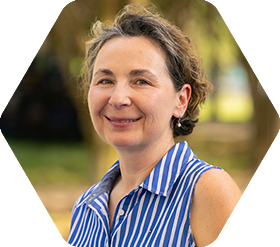
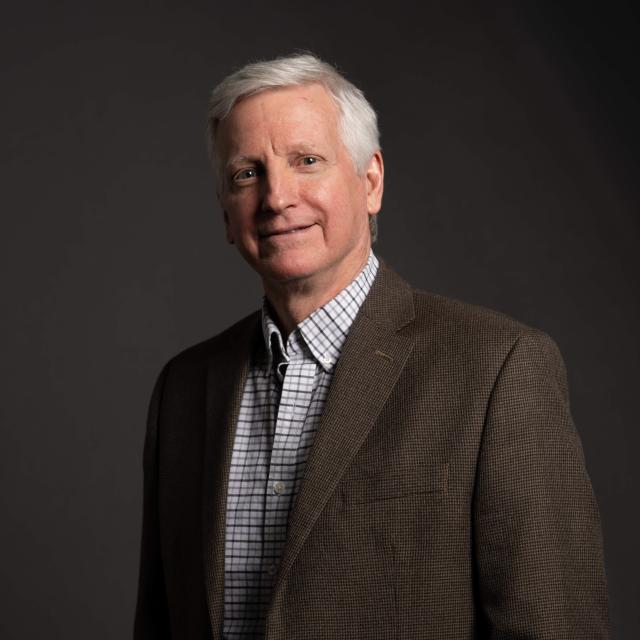
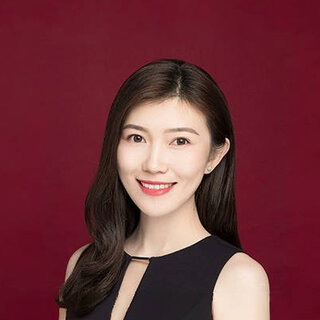
Dr. Polina Maciejczyk is a Professor of Chemistry in the Department of Chemistry and Biochemistry at Eckerd College. She holds a Ph.D. in Chemistry from the University of Maryland and a B.S. in Chemistry from Rowan University. Her research specializes in atmospheric chemistry and air pollution health effects, with emphasis on: Source apportionment of particulate matter (PM2.5/PM10) Health impacts of metals in ambient particles Cardiovascular and inflammatory responses to pollution Statistical modeling of pollution sources Global air quality in urban environments including Beijing and Jeddah Her publications (2002-2022) demonstrate consistent focus on pollution toxicology, with recent work examining fossil fuel combustion metals. Research employs: Chemical speciation via X-ray fluorescence Mobile air monitoring systems Biometric telemetry in murine models Cellular response analysis
Gray Bebout is a Professor in the Department of Earth and Environmental Sciences at Lehigh University, where he has been a faculty member since 1991 and recently served as Department Chair from 2019-2024. His academic journey includes a B.S. and M.A. in Geology from the University of Texas at Austin, a Ph.D. in Geology from UCLA (1989), and postdoctoral work at the Carnegie Institution of Washington (1989-1991). Dr. Bebout's research focuses on volatile cycling in Earth's systems, particularly nitrogen and carbon cycling in subduction zones. His work spans field studies in the Italian/French Alps and New Zealand's Hikurangi margin, laboratory analyses of rock samples, and collaborative research on Mars analog materials with institutions in Japan. His research laboratory in Lehigh's STEPS building houses a gas-source isotope-ratio mass spectrometer for analyzing small amounts of CO 2 , N 2 , and O 2 . His research interests include Stable Isotope Geochemistry, Petrology, Solid Earth processes, Astrobiology, and the biogeochemical cycling of nitrogen. Current projects investigate slow, non-anthropogenic cycling of volatiles at subduction zones and the study of Mars analog materials, particularly analyzing altered volcanic glasses for nitrogen concentrations and isotope compositions. Dr. Bebout teaches courses across the geology curriculum including mineralogy, petrology, and geochemistry at both undergraduate and graduate levels. His current teaching includes EES 131 (Introduction to Rocks and Minerals), EES 471 (Stable Isotope Chemistry), and specialized courses on critical minerals and the practice of science. 2018 Fellow, Mineralogical Society of America As an advisor, Dr. Bebout supervises undergraduate and graduate research through EES 293 (Supervised Internship) and EES 393 (Supervised Research) programs. His research has been supported by field work in multiple international locations and collaborations with institutions in New Zealand, Japan, and Italy. He maintains an active laboratory program analyzing volatile elements in geological materials and has contributed significantly to understanding how volatiles cycle through Earth's crust and mantle. Dr. Bebout's research group investigates the metamorphic pathways affecting volatile flux among Earth's major reservoirs (atmosphere, hydrosphere, biosphere, and lithosphere), with particular emphasis on nitrogen behavior as a tracer of biogeochemical cycling on Earth and potentially beyond.
Ana Luiza Spadano Albuquerque is a Full Professor at the Geology and Geophysics Department of Fluminense Federal University in Brazil. Her research specializes in Paleoceanography and Paleoclimatology , with a geographic focus on the South Atlantic region and Brazilian sedimentary basins. Her work investigates climate-ocean interactions through geological time, utilizing geochemical proxies in marine sediments to reconstruct past environmental conditions. Key themes include oceanic anoxic events, mercury deposition cycles, deglacial climate feedbacks, and river discharge dynamics. She employs interdisciplinary approaches combining field data, isotopic analysis, and climate modeling. Recent publications (2022) demonstrate a consistent focus on South Atlantic climate archives, particularly concerning glacial-interglacial transitions, carbon cycle perturbations, and anthropogenic impacts on marine systems. Research methodologies emphasize sediment geochemistry, paleothermometry, and multi-proxy validation.
Natasha Barrett serves as a Guest Researcher in the Department of Geosciences and Natural Resource Management at the University of Copenhagen, specializing in geological research within the Geology section. Her work bridges terrestrial and planetary sciences through advanced analytical techniques and field-based investigations. Her research focuses on petrology and geochemistry of mantle-derived rocks, with significant contributions to understanding ultra-depleted mantle peridotites, boninitic melt relationships, and ophiolite complexes. She extends this expertise to planetary geology , particularly lunar science, where she investigates polar geology for Artemis mission planning, Shackleton crater formation, and resource accessibility at the lunar south pole. Methodologically, she employs LA-ICP-MS for trace element analysis and SIMS for isotope studies, establishing robust analytical frameworks for mantle and crustal materials. Analysis of her publication record (2017-2023) reveals a strategic progression from terrestrial mantle studies toward lunar applications, with increasing emphasis on mission-critical planetary science. Her work consistently appears in high-impact journals like the Journal of Petrology and Planetary Science Journal, demonstrating interdisciplinary integration of petrological fieldwork, geochemical analysis, and numerical modeling. Collaborations span international institutions including NASA-affiliated researchers and Japanese geological teams, highlighting her role in global scientific networks addressing fundamental questions in Earth and planetary evolution.
Dr. Lucian Pintilie serves as the Scientific Director at the National Institute of Materials Physics (NIMP), where he leads the Laboratory of Complex Heterostructures and Multifunctional Materials. He has held the position of Senior Researcher rank 1 since 2001, establishing himself as a prominent figure in materials science research in Romania. His work bridges fundamental physics with practical applications in electronic devices and energy technologies. Dr. Pintilie earned his License and Master at the Faculty of Physics, University of Bucharest, graduating in 1984. He later completed his PhD in Physics at the Institute of Atomic Physics in 1995. His academic foundation in physics has served as the bedrock for his extensive research career focusing on advanced materials. Dr. Pintilie's research centers on ferroelectric materials, thin films and heterostructures , with special emphasis on infrared detectors (particularly pyroelectric detectors) and non-volatile ferroelectric memories . His work explores the fundamental properties of materials at the nanoscale while developing practical applications. He has made significant contributions to understanding how grain size affects dielectric and ferroelectric behavior in ceramic materials, and has pioneered research on CZTSe thin films for solar cell applications. His recent work shows increasing focus on novel ferroelectric devices for neuromorphic computing and energy-efficient electronics. Analysis of Dr. Pintilie's publication record reveals a strong trajectory in materials science with emphasis on ferroelectric phenomena. His work spans fundamental investigations of material properties to applied device development. Recent publications show growing interest in hafnium-zirconium oxide systems, novel memristive devices, and advanced characterization techniques like soft-X-ray ARPES. The research demonstrates consistent innovation in understanding interface effects, polarization dynamics, and grain size influences on functional properties. Dr. Pintilie's scientific achievements have been recognized with prestigious awards including the Romanian Academy award in 2009 and the ANCS Award in 2010 . These honors reflect the national significance of his contributions to materials science and physics research in Romania. As Scientific Director, Dr. Pintilie has secured substantial research funding through multiple competitive projects including TEXMAV (2018-2022), CONTROL (2018-2022), MATI2IT (2016-2021), and an H2020 project on Energy Efficient Embedded Non-Volatile Memory (2018-2021). His leadership has fostered collaborative research across institutions and disciplines, advancing Romania's position in advanced materials research. His work has resulted in numerous patents related to ferroelectric devices and infrared detection technologies. Dr. Pintilie directs the Laboratory of Complex Heterostructures and Multifunctional Materials, which serves as a hub for cutting-edge research in functional materials. The laboratory focuses on epitaxial growth of oxide materials, advanced characterization techniques, and development of novel electronic and energy harvesting devices. Under his leadership, the lab has established strong collaborations with international research institutions and has become a center of excellence for ferroelectric and multiferroic materials research in Eastern Europe.
Ina Țurcan is a Researcher at the University of Agricultural Sciences and Veterinary Medicine from Iasi, Faculty of Horticulture, Department of Exact Sciences, specializing in advanced materials and biosensing technologies. Her work bridges agricultural engineering with cutting-edge electrical characterization techniques. Her primary research domains include: Materials Science Dielectrophoresis Impedance Spectroscopy Ceramic Composites Biosensors Nanomaterials Dr. Țurcan's investigations focus on the development of multifunctional ceramic composites (particularly barium titanate-based systems), electrical property analysis of composite materials via impedance spectroscopy, and dielectrophoretic manipulation of biological cells/nanoparticles using interdigitated microelectrodes. Her recent publications reveal a strong trend toward medical diagnostics applications, particularly in cancer cell detection and gas sensing using MXene-based technologies, with significant contributions to understanding material microstructure-property relationships. She has actively participated in six major research initiatives: MX-VOC (2022-2024): Developing MXene-based chemiresistors for volatile organic compound detection POCU/993/6/13/153322 (UAIC Iași): Postdoctoral researcher for doctoral student training programs uBioDEP (2022-2023): Dielectrophoretic manipulation of biological cells using printed microelectrodes PlasmaPack (2020-2022): Plasma treatment for food packaging materials uCellDetect (2018-2020): Microfluidic platform for circulating tumor cell detection FerroScale (2017-2019): Fundamental research on barium titanate ferroelectrics Dr. Țurcan's laboratory work centers on the preparation of magnetoelectric ceramic composites, metallic nanoparticle synthesis (Ag), impedance spectroscopy, and dielectrophoresis techniques, with membership in the Romanian Physical Society since 2024 driving her interdisciplinary collaborations.
Prof. GUO Meiyu serves as an Assistant Professor at Hong Kong Baptist University, where she is affiliated with the Department of Geography and a member of the Smart Society Lab. Her research bridges energy systems and environmental sustainability, with particular focus on China's unconventional energy development and carbon neutrality pathways. Her academic credentials include: Ph.D. from The Chinese University of Hong Kong Visiting Research Fellowship at Harvard University's School of Engineering and Applied Science M.Ec. from Renmin University of China B.Sc. from Renmin University of China Dr. Guo's research centers on shale gas development and its environmental implications, examining water resource impacts , carbon market mechanisms , and policy frameworks for sustainable energy transitions. Her work integrates engineering analysis with economic modeling to address critical gaps in China's energy-environment nexus, particularly regarding unconventional resource extraction and decarbonization strategies. Analysis of her recent publications reveals three dominant research trajectories: (1) technical optimization of shale gas operations with environmental safeguards, (2) carbon market development and certification systems, and (3) spatial analysis of energy-land interactions. Her interdisciplinary approach combines geospatial techniques, policy analysis, and environmental economics to tackle complex sustainability challenges in rapidly industrializing regions. Dr. Guo has not listed any major scientific awards in the provided information. She actively mentors graduate researchers through multiple externally funded projects: Principal Investigator for RGC's Early Career Scheme (2025-2027) on Xinjiang shale water impacts Lead on Guangdong Natural Science Fund project for low-carbon shale technologies PI for HKBU's carbon credit certification initiative Multiple grants from National Natural Science Foundation of China As a core member of the Smart Society Lab, Dr. Guo contributes to interdisciplinary research on sustainable urban systems, focusing on energy-water-land interactions in China's rapidly developing regions through integrated geospatial and policy analysis frameworks.
Masaaki Tanaka serves as Associate Professor in the Department of Physics Engineering at Keio University's Faculty of Science and Engineering, where he investigates fundamental magnetic phenomena with applications in next-generation spintronic devices. His work bridges condensed matter physics and materials engineering through experimental studies of nanoscale magnetic structures. His academic foundation includes: Bachelor's/Master's equivalent: Faculty of Science and Engineering, Department of Physics, Keio University (2002) Doctorate: Graduate School of Science and Engineering, School of Fundamental Science and Technology, Keio University (2007) Professor Tanaka's research spans Magnetism , Superconductivity , and Strongly Correlated Systems , with specialized focus on skyrmions , magnetic domain dynamics , and oxide-based spin transport . He pioneers techniques for controlling perpendicular magnetic anisotropy in cobalt ferrite and hematite thin films, enabling novel spin-filtering mechanisms. His group develops materials for magnetic memory applications through precise doping and interfacial engineering. Analysis of his 2019-2024 publications reveals three dominant trends: (1) Topological spin textures (skyrmions/bubble domains) in nanowires, (2) Perpendicular anisotropy engineering in conductive ferrites, and (3) Advanced characterization via spin Hall magnetoresistance and synchrotron techniques. These intersect condensed matter theory, materials synthesis, and device physics to advance non-volatile memory technologies. His scientific recognition includes: Magnetic Society of Japan Distinguished Paper Award (2005) Tohoku University Institute for Materials Research Best Award (2014) Magnetic Society of Japan Contribution Award (2022) As Principal Investigator, he directs multiple competitive grants including JSPS KAKENHI projects on skyrmion dynamics (2020-2023) and current-driven domain walls (2015-2018), plus external funding from Sumitomo Electric Group (2024-2026) for hematite-based memory research. He actively serves the academic community as Planning Committee member of The Magnetic Society of Japan (2023-present), following prior roles as General Affairs Director (2016-2022). His research operates within Keio University's Material Function Field, collaborating with Tohoku University's Institute for Materials Research on oxide heterostructures. Current projects focus on barium ferrite spin-filtering barriers and conductivity optimization in cobalt ferrite for high-efficiency spin injection devices.
Poul Erik Jensen is a Professor in plant based food biochemistry at the Department of Food Science, University of Copenhagen, with over 25 years of experience in research and education. He serves as group leader for the research group 'Plant based foods and biochemistry' and has held various academic positions at the university since 1998. His educational background includes a Ph.D. (1993) and M.Sc. (cand.agro) (1989). He previously served as Head of Section for Molecular Plant Biology (2007-2019) and Head of Copenhagen Plant Science Centre (2013-2019). Jensen's research focuses on plant biochemistry, molecular biology, and biotechnology with five primary areas: structure and functionalization of plant seed storage proteins; microalgae for protein and lipid production; metabolic engineering of photosynthetic organisms for flavor, color, and taste compounds; redox enzymes driven by light; and synthetic biology in food science. His work bridges fundamental plant science with practical food applications. His recent publications (2024-2025) demonstrate a strong focus on plant-based food systems, with particular emphasis on pea protein applications, metabolic engineering in cyanobacteria, photosynthesis research, and consumer acceptance of novel food sources like microalgae. These works span food chemistry, biophysics, synthetic biology, and plant physiology journals. Professor Jensen has been active in academic service with 33 recorded activities including 20 lectures and oral contributions, 6 external teaching activities, and various committee memberships. His teaching portfolio includes 'Plants for foods - processing and functionality' (MSc), 'Biochemistry 1' (BSc), and 'Fundamentals of Beer Brewing and Wine Making' (MSc). He leads research connecting plant biochemistry with food technology, particularly focusing on sustainable protein sources and innovative food systems through both traditional plant science and cutting-edge synthetic biology approaches.
Linru Fang is a Postdoctoral Researcher at the Centre for Star and Planet Formation within the Globe Institute at the University of Copenhagen, specializing in planetary formation processes and geochemical analysis of extraterrestrial materials. The research center focuses on interdisciplinary investigations of star and planet formation mechanisms through cosmochemical and astrophysical approaches. Research interests center on volatile element depletion in planetary bodies, with specific expertise in lunar interior geochemistry and carbonaceous meteorite analysis. Dr. Fang employs advanced mass spectrometry and computational modeling to investigate how impact events and thermal processes shaped the chemical evolution of the Moon and early solar system bodies. Key methodologies include isotopic ratio analysis and experimental simulation of high-temperature sublimation processes. Recent publications reveal consistent patterns in volatile depletion mechanisms across different planetary materials, demonstrating how impact-induced sublimation drives compositional changes in both lunar interiors and carbonaceous meteorites. This work establishes critical links between impact dynamics and chemical fractionation during planetary accretion. The Centre for Star and Planet Formation maintains active collaborations with international space agencies and meteorite research facilities, providing Dr. Fang access to cutting-edge analytical instrumentation and rare extraterrestrial samples for ongoing investigations into solar system formation.
Jakob Skou Pedersen is an external researcher affiliated with the Faculty of Health and Medical Sciences at the University of Copenhagen. His work spans evolutionary biology, genomics, and bioinformatics, with significant contributions to understanding human evolutionary constraints, regulatory RNA structures, and ancient human genomes. His research interests focus on computational approaches to evolutionary genomics, including the identification of functional elements in genomes through comparative analysis across multiple species. He has made notable contributions to understanding protein-coding sequences under selection for overlapping functions, regulatory RNA structures, and the evolutionary constraints across mammalian genomes. Analysis of his publication record reveals a strong emphasis on interdisciplinary research combining computational biology with evolutionary genomics. His work frequently appears in high-impact journals including Nature, Cell, and Genome Research, demonstrating expertise in both theoretical modeling and empirical genomic analysis. A significant portion of his research involves large-scale comparative genomic studies across multiple species. His collaborative network is extensive, with co-authorship on major genomic projects involving international research teams. His work on the ancient Palaeo-Eskimo genome represents a notable contribution to paleogenetics and human evolutionary studies.
Björn Nordlund is an Adjunct Senior Lecturer and Docent at Karolinska Institutet, affiliated with the Department of Women's and Children's Health, Division of Clinical Paediatrics. He serves as the Research Group Leader for the Prevention of asthma and allergy (PANDA) research group, focusing on early-life and digital intervention strategies for asthma and allergy prevention. His primary research interests encompass pediatric allergology, asthma prevention strategies, digital health applications for respiratory diseases, and early intervention approaches. Nordlund has developed several innovative projects including PreventADALL (a Nordic birth cohort study investigating early food introduction and skin care to prevent allergies), ADVERT (using home spirometry for asthma diagnosis), AI-assisted asthma prevention systems, and the APPETITE study (an app-based medical device for inhalation technique training). His recent publications demonstrate expertise in AI applications for asthma prediction, early intervention strategies for allergy prevention, and digital health tools for respiratory disease management. His research often involves large-scale multicenter studies across Scandinavia with significant clinical implications for childhood respiratory health. Grants from the Asthma and Allergy Association's Research Fund Project funding from ALF Medicine and HMT, Region Stockholm Swedish Heart-Lung Foundation support Vinnova – Medtech4Health funding Collaboration with The Jerring Foundation Nordlund actively supervises graduate students at master's and PhD levels while teaching clinical immunology and digital healthcare of respiratory diseases. His work bridges clinical practice with technological innovation, particularly through his founding of the Home Spirometry System 'AsthmaTuner,' which was ranked as the best digital technology for asthma in Europe in 2023 by the Federation of Allergy and Airway diseases patient organisations.
Pradeep Kurup is a Distinguished University Professor in the Department of Civil and Environmental Engineering at the Francis College of Engineering, University of Massachusetts Lowell. With over 25 years of academic experience, he has established himself as a leading researcher in geotechnical engineering with particular expertise in site characterization, novel sensing technologies, and computational modeling approaches for geoenvironmental applications. Education: Ph.D. in Civil and Environmental Engineering (1993), Louisiana State University M.Tech. in Civil Engineering (1987), Indian Institute of Technology - Madras, India B.Tech. in Civil Engineering (1985), University of Kerala, India Professor Kurup's research spans multiple domains within geotechnical engineering, with particular emphasis on multi-sensor data fusion, site characterization & monitoring, application of novel sensing technology to geotechnical & geo-environmental engineering. His work integrates advanced experimental techniques with computational approaches including finite element modeling and artificial neural networks. His research has evolved from traditional geotechnical methods toward innovative sensing technologies for environmental monitoring and hazard detection. Analysis of his recent publications reveals a strong trend toward interdisciplinary research combining geotechnical engineering with chemical sensing, machine learning, and nanotechnology. His work increasingly focuses on developing electronic nose and tongue technologies for environmental monitoring, explosives detection, and heavy metal characterization, while maintaining strong connections to traditional geotechnical applications. Selected Awards: University Professor (2014) - University of Massachusetts Lowell Diplomat Geotechnical Engineering (D.GE) (2012) - Academy of Geo-Professionals CAREER Award (1999) - National Science Foundation Departmental Teaching Award (2002) - UMass Lowell Member - Chi Epsilon Civil Engineering Honor Society Professor Kurup has secured substantial research funding from the National Science Foundation, Federal Highway Administration, Environmental Protection Agency, and other agencies, totaling millions of dollars over his career. His grant portfolio includes multiple NSF CAREER awards and REU (Research Experience for Undergraduates) supplements, demonstrating his commitment to both research and education. He has mentored numerous undergraduate and graduate students through these research programs, fostering the next generation of engineers. His laboratory work focuses on developing innovative sensing technologies including the Electronic Nose Cone Penetrometer (ENCPT) for geoenvironmental site characterization, modular integrated cone penetrometers, and portable air samplers for detecting toxic chemicals and explosives. His research group collaborates extensively with industry partners and international institutions to translate laboratory innovations into field applications.