Didier Meuwly is a Full Professor of Forensic Biometrics at the University of Twente (since 2013) and Principal Scientist at the Netherlands Forensic Institute (NFI). His work focuses on automating and validating probabilistic evaluation of forensic evidence, particularly biometric traces. He has contributed to international standards via ISO Technical Committee 272 and served as Associate Editor for Forensic Science International . PhD in Forensic Speaker Recognition (University of Lausanne, 2000) Research spans forensic biometrics, likelihood ratios, AI validation, and gait/body analysis from surveillance footage. Recent work addresses ISO standards (21043), forensic AI explainability, and multimodal evidence evaluation. His publications emphasize empirical validation and statistical rigor. Key awards include: ENFSI Distinguished Forensic Scientist Award (2022) University of Lausanne Law Faculty Prize (2002) Active in global forensic networks, he chairs the ENFSI R&D Committee and collaborates across disciplines on digital evidence, biometric security, and forensic methodology.
Fiona Jane Dowling is a Professor of Pedagogy at the Department of Sport and Social Sciences , Norwegian School of Sport Sciences . With a background in physical education, qualitative research, and social justice, she has contributed extensively to teacher education and sport sociology through research, teaching, and scholarly publications. Education: PhD in Physical Education Teacher Life Histories, Norwegian School of Sport Sciences (1998) MSc, Loughborough University (1989) Research Interests: Dowling’s research spans physical education pedagogy , narrative inquiry , gender and race in sport , and teacher professional development . She explores how identity, equity, and inclusion are shaped within educational and sporting contexts, with a particular focus on marginalized groups such as ethnic minorities, refugees, and women in sport. Her work often employs qualitative methodologies , especially narrative inquiry , to give voice to teachers, students, and families. She has examined how discourses around race, gender, and inclusion are constructed and enacted in policy and practice, particularly in physical education and youth sport. Recent Publications Trends: Dowling’s recent publications focus on children’s rights in sport , ethnic inclusion in sport policy , and qualitative research in sport studies . Her scholarly output reflects a consistent engagement with critical social issues in education and sport, using discourse analysis and narrative methods to interrogate systemic inequities and advocate for transformative pedagogies. Scientific Contributions: Co-editor of the book Equity and Difference in Physical Education, Youth Sport and Health: A Narrative Approach (Routledge, 2012) Contributor to multiple international handbooks and edited volumes on physical education and sport pedagogy Published over 50 peer-reviewed articles and book chapters Teaching and Supervision: Dowling teaches courses in sport sociology , pedagogy , physical activity and health , research methodology , and qualitative methods . She has supervised numerous master’s and doctoral students and is actively involved in curriculum development and teacher training programs. Current Projects: International study on teacher educators’ and teachers’ perspectives on whiteness, race, and anti-racism in physical education and sport (funded by the British Academy) Investigation of sport and physical activity provision for unaccompanied minor asylum seekers Contact: Email: fionajd@nih.no Phone: +47 23 26 24 16 Mobile: +47 92 40 43 32
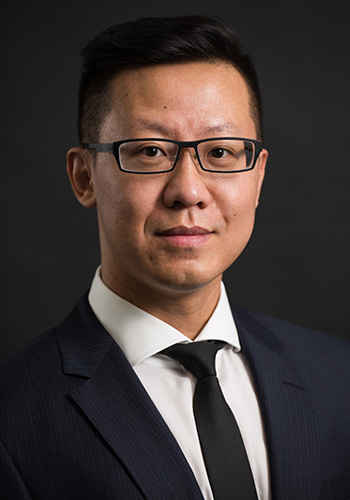
Nina Huang is a Professor in the Business Technology Department at the Miami Herbert Business School, University of Miami. Her research spans the intersection of information systems, digital platforms, and human behavior in online environments. Her primary research interests include Human-AI Interaction, Online Education and Knowledge Exchange, Online Matching Platforms, Online Healthcare, Future of Work, Social Media Analytics, Digital Commerce, and Online Content Platforms. Dr. Huang employs experimental methods to investigate how digital design features impact user behavior across various online contexts including dating platforms, labor markets, e-commerce, and healthcare systems. Analysis of Dr. Huang's recent publications reveals a strong focus on human-centered design of digital platforms, with particular attention to temporal cues in online learning, privacy-enhancing designs in social platforms, AI implementation in customer service, and information disclosure mechanisms in matching markets. Her work consistently combines rigorous experimental methodologies with practical implications for platform design. Dr. Huang's research has been published in top-tier information systems and operations management journals including Information Systems Research, MIS Quarterly, and Production and Operations Management. Her work demonstrates a pattern of impactful field experiments conducted in partnership with real-world platforms across multiple industries.
Allen Hsiao MD, FAAP, FAMIA is Professor of Pediatrics, Biomedical Informatics and Data Science, and Emergency Medicine at Yale School of Medicine. He serves as Chief Health Information Officer (CHIO) for Yale School of Medicine and Yale New Haven Health System, and as Vice Chair of Clinical Systems in Biomedical Informatics & Data Science. BA in Biomedical Ethics and MD from Brown University Pediatrics residency at Yale-New Haven Children's Hospital Fellowships in Pediatric Emergency Medicine and Medical Informatics at Yale His research focuses on leveraging health information technology to improve care delivery, with emphasis on electronic health records, clinical decision support, natural language processing, and AI applications. He actively explores how informatics can optimize systems, improve transitions of care, and advance health equity through diverse clinical trial participation. His work spans pediatric emergency medicine, gastroenterology, child abuse detection, and opioid safety. Dr. Hsiao's recent publications demonstrate leadership in AI-augmented clinical decision support, EHR-based machine learning models, and pandemic response infrastructure. His team has developed innovative tools for child abuse identification, gastrointestinal bleeding risk prediction, and collaborative research data platforms. 56 Hospital and Health System CMIOs and CNIOs to Know (Becker's Healthcare, 2023) Healthcare Diversity Leader Award (National Diversity Council, 2023) 48 CMIOs and CNIOs to Know (Becker's Hospital Review, 2022) Norman J. Siegel Faculty Award (Yale School of Medicine, 2022) As principal investigator and co-investigator on NIH and AHRQ-funded grants, he examines health information technology's impact on healthcare quality. He co-directs Yale's CTSA Informatics Core, working with Yale Center for Clinical Investigations to equip researchers with EHR (Epic) and clinical trials management (OnCore) tools. His leadership extends to national committees including American Academy of Pediatrics, HIMSS, and Children's Hospitals Association.
Madelyn Rose Sanfilippo is an Assistant Professor in the School of Information Sciences at the University of Illinois Urbana-Champaign. She holds a PhD in Information Science from Indiana University and has held postdoctoral fellowships at New York University's Information Law Institute and Princeton University's Center for Information Technology Policy. Her research focuses on governance in sociotechnical systems, evaluating technology governance outcomes, social inequality in technology experiences, information law and policy, privacy, data platforms, personalization, and social informatics. She employs mixed-methods approaches, including computational social science and institutional analysis, to study participation, legitimacy, and alignment of sociotechnical governance with public interests. Governing Knowledge Commons Privacy in Sociotechnical Systems Equity in Technology Policy Implementation Disaster Informatics Her recent publications examine misinformation governance, privacy in smart cities, and crisis informatics. She has received the Public Voices Fellowship and OpEd Alumni Project recognition. Sanfilippo is a Faculty Affiliate at multiple research centers and co-PI of the Workshop on Governing Knowledge Commons. Honors & Awards Public Voices Fellow, 2023-2024 OpEd Alumni Project, 2024-2025 She advises students in courses like Social Aspects of Information Technology and Independent Study, contributing to the development of future scholars in information sciences.
Urs Hengartner is an Associate Professor at the Department of Computer Science, University of Waterloo. His research focuses on information privacy, computer and network security with emphasis on smartphones, IoT, and machine learning-based authentication systems. He holds a Ph.D. (2005) and M.Sc. (2003) from Carnegie Mellon University, and a Diploma from ETH Zürich (1997). His work spans Adaptive security attacks on ML systems Implicit user authentication frameworks Privacy-preserving technologies for location and genomic data Secure authentication systems resilient to voice/spoofing attacks Recent publication trends show a strong focus on adversarial attack detection (e.g., watermarking evasion, diffusion model attacks) and context-aware authentication systems . His frameworks like MRAAC and SHRIMPS address multi-stage authentication challenges in mobile ecosystems. Key contributions include frameworks for evaluating multi-user authentication systems (SHRIMPS), risk-aware access control (MRAAC), and novel defense strategies against collaborative robot traffic fingerprinting. His work bridges security mechanisms with user-centric design principles.
Dr. Mirzet Šeho is a Senior Lecturer at the School of Business, Monash University Malaysia, where he contributes significantly to teaching, research, and academic leadership. With nearly fifteen years of combined industry and academic experience, he has established himself as a leading voice in Islamic finance, fintech, and financial economics. He plays a pivotal role in developing innovative fintech curricula that blend academic rigor with real-world industry insights. PhD in Islamic Finance, International Centre for Education in Islamic Finance (2018) Dr. Šeho's research centers on Islamic finance and banking, corporate finance, financial economics, and fintech. His work explores critical issues such as the stability of dual-banking systems, the impact of interest rates on Islamic financial instruments, and the role of finance in energy justice and sustainable development. He actively investigates how diversification strategies influence bank risk and returns, particularly in mixed financial environments. His recent publications, primarily from 2020 to 2024, reflect a strong trend toward empirical and policy-relevant research in Islamic and conventional banking systems. These works frequently appear in high-impact journals such as the Pacific Basin Finance Journal and International Review of Finance , with a methodological emphasis on econometric modeling, including GMM techniques. The interdisciplinary nature of his research is evident in contributions linking finance with energy justice and sustainable development goals. Dr. Šeho has been honored with three major scientific awards: Best Paper Award by the Journal of Muamalat and Islamic Finance Research (2016) Pacific-Basin Finance Journal Best Paper Award (2018) Pacific-Basin Finance Journal Best Paper Award (2019) He is actively involved in academic advising, currently accepting PhD students, and has contributed to research grants and projects through collaborative international research. His academic service includes peer review for journals like Applied Finance Letters and Journal of International Financial Markets, Institutions and Money , editorial responsibilities, and participation in major conferences such as the 14th Financial Markets and Corporate Governance Conference 2024, where he served as both speaker and session chair. Dr. Šeho is affiliated with research networks focusing on Islamic finance and fintech, collaborating with scholars from Malaysia, Bosnia and Herzegovina, and beyond. His work is disseminated not only in scholarly outlets but also through press and media features, demonstrating his commitment to public engagement and policy impact.
Prof. Dr. rer. pol. Bernd Frick is a full Professor of Economics at the University of Paderborn , Faculty of Business Administration and Economics, where he heads the Department of Economics – Institute Department 1: Management. Active and born in 1959, he is based in Paderborn, Germany, and his research spans Organizational Economics , Corporate Governance , Personnel Economics , Law & Economics , and Sports & Cultural Economics . Education & Academic Focus: Although specific degrees are not listed, his title "Dr. rer. pol." (Doctor of Economics and Social Sciences) indicates advanced training in economics. His work integrates microeconomic theory with empirical analysis, focusing on labor markets, firm governance, and the economics of professional sports. Research Interests: Organizational Economics & Theory of the Firm: Analyzing internal labor markets, co-determination, and governance structures. Personnel Economics & Labor Policy: Examining incentive systems, wage determination, and employment practices. Sports Economics: Extensive studies on player remuneration, coaching careers, doping, and the economic impact of regulations like the Bosman ruling. Law & Economics: Evaluating the economic effects of legal frameworks, including disability employment laws and co-determination statutes. Cultural Economics: Investigating art markets, reputation, and value creation in creative industries. Publication Trends: Over 100 peer-reviewed articles and monographs reveal a consistent focus on empirical sports economics (e.g., Bundesliga performance, marathon incentives), labor market institutions (works councils, co-determination), and governance issues. Recent work explores gender competitiveness in athletics and the longevity of coaching careers under performance pressure. Scientific Awards & Honors: While no major named awards are listed, his extensive publication record, editorship of academic volumes (e.g., Economics of Grassroots Sports ), and frequent policy-oriented commentary establish him as a leading voice in applied economics. Advising & Grants: Details on specific doctoral students or funded projects are not provided, but his role as editor, co-author with international scholars (e.g., Robert Simmons, Joachim Prinz), and policy consultant (e.g., Federal Ministry of Labour) imply active supervision and grant involvement. Labs & Teams: While no dedicated lab is mentioned, his institutional affiliation with the Institute Department 1: Management suggests collaboration within a multidisciplinary team of economists and management scholars at Paderborn.
Dr. Markus Ellmer is affiliated with the University of Salzburg's Faculty of Law, Business and Economics, within the Department of Business (Human Resource Management). As a Lecturer, his work bridges academic research and practical applications in digital HRM tools and user research at TeamEcho. His teaching focuses on qualitative research methods and digital HRM, including courses like 'Basics and Methods of Empirical Research' (since 2018) and 'HRM and Digital Technology' (since 2021). His research explores socio-technical dynamics of digital HR platforms, platform worker voice mechanisms, and the impact of data-driven HR analytics on organizational credibility. Key themes include digital participation, epistemic alignment in HR practices, and global mobility in multinational employer branding. Notable research contributions address platform labor policies in Europe, affordance-based analyses of e-HRM systems, and the governance of human computation labor on platforms like Amazon Mechanical Turk. His work critically examines the interplay between technology design, organizational performance, and worker welfare in digital labor markets. Ellmer has published extensively on crowdwork, HR analytics credibility, and digital voice mechanisms, with a focus on socio-technical systems and epistemological dimensions of digital HR practices. He actively contributes to debates on improving platform work conditions and rethinking traditional HRM frameworks in the digital era.
Dr ASM Kayes serves as Senior Lecturer in Cybersecurity and Cyber Curriculum Lead at La Trobe University's Department of Computer Science and Information Technology, where he shapes cybersecurity education programs including Master's, Bachelor's, and Double Degrees. His academic journey began with a PhD from Swinburne University of Technology in 2015, followed by postdoctoral research at La Trobe before joining as Lecturer in 2019 and promotion to Senior Lecturer in 2022. His research spans critical cybersecurity domains including data security, privacy preservation, context-aware access control, malware/ransomware defense, and IoT/fog/cloud security leveraging AI/ML techniques. Dr Kayes has established himself as a leading voice in blockchain security frameworks, privacy policy analysis, and cyber incident response through publications in top-tier venues like ACM Computing Surveys, IEEE Internet of Things Journal, and Computers & Security. His recent publications reveal a strong trajectory toward integrating AI with traditional security frameworks, particularly in blockchain risk assessment (2025), cross-domain access control (2025), and IoT behavior prediction (2024). The research demonstrates consistent focus on practical security solutions addressing ransomware mitigation, privacy breaches, and emerging threats in decentralized systems. Over $880,000 secured as Chief Investigator for cybersecurity projects Australian Government Department of Social Services grant (2023-2026) for cyberbullying prevention AustCyber research funds with industry partners (2020-2023) SmartSat CRC and ASCRIN PhD scholarship grants (2021) Dr Kayes has successfully supervised 5 PhD candidates to completion and currently mentors 5 doctoral students across diverse topics including AI-driven threat hunting, satellite network security, and blockchain risk frameworks. His collaborative network spans UK, USA, Europe, and Asia, with active industry partnerships through Westpac, BHP, and Quantum Victoria. He serves on editorial boards for leading cybersecurity journals and has examined HDR dissertations globally, reflecting his significant standing in the academic community.
Rachel Johnson is a Lecturer in Film Studies at the School of Languages, Cultures and Societies, University of Leeds. Her research and teaching focus on film institutions, particularly film festivals, exhibition, curation, and cinephilia, with a strong commitment to decolonial and critical theoretical frameworks. She actively collaborates with local and international film organizations, including Leeds International Film Festival and Festival Films Femmes Afrique. Educational Background: PhD in Film Studies, University of Leeds MA in European Culture and Thought: Culture, University College London BA in English Literature and Italian, University of Leeds Her research explores cinematic justice, African cinemas, migration cinema, and Italian cinema through decolonial lenses such as pluriversality and the colonial matrix of power. She is particularly interested in how film institutions like festivals and archives value, share, and mobilize cinema, often challenging dominant hierarchies and canons. Her recent work emphasizes marginalized perspectives in cinephilia and co-curation as a decolonial practice. Her publications reveal a consistent trajectory in analyzing ideological structures within European A-list film festivals, especially regarding the representation of migration and Italian cinema. She has developed a method of ideology critique rooted in Lacanian and Žižekian theory, examining festival apparatuses, paratexts, and film texts to uncover power dynamics. Her work spans monographs, peer-reviewed articles, policy reports, and public writing, reflecting a commitment to both scholarly and public engagement. Scientific Contributions and Recognition: Author of Film Festivals, Ideology and Italian Art Cinema (Amsterdam University Press, 2023) Co-investigator on Canada Research Council-funded project Decolonizing Film Festival Research in a Post-Pandemic World Co-founder of the New Voices in Cinephilia network with Professor Stephanie Dennison Active member of NECS, BAFTSS, and IAMHIST Rachel Johnson supervises PhD students on topics including Pan-African film history, puzzle films, and decolonial cinema, and mentors practice-based research in videographic criticism and podcast documentaries. She is deeply involved in public film culture as co-director of Leeds Cineforum and collaborator with Hyde Park Picture House. Her grants and collaborative projects reflect a strong commitment to social justice, institutional critique, and empowering marginalized voices in global film culture. Research Labs and Teams: Centre for World Cinemas and Digital Cultures, University of Leeds New Voices in Cinephilia network (co-founded) Italian Cinemas/Italian Histories project (collaborator) Practice Research SIG, BAFTSS
Dr. Miao Pan is an Associate Professor in the Department of Electrical and Computer Engineering at the Cullen College of Engineering, University of Houston. He directs the PAN Lab (panlab.ece.uh.edu) focusing on wireless networking, security, and IoT applications. His educational background includes a B.S. in Electrical Engineering from Dalian University of Technology (2004), M.S. from Beijing University of Posts and Telecommunications (2007), and Ph.D. from the University of Florida (2012). Dr. Pan's research spans privacy-preserving deep learning, wireless networking, machine learning applications in communications, underwater systems, and cognitive radio networks. His interdisciplinary approach combines theoretical foundations with practical implementations in emerging technologies. Recent publications demonstrate strong focus on federated learning optimizations, wireless sensing innovations, and security mechanisms for next-generation systems. Key trends include energy-efficient mobile AI, robust authentication methods, and adaptive underwater networking solutions. Honors include: NSF CAREER Award (2014) 5 IEEE Best Paper Awards (2015-2019) University of Florida Graduate Fellowship (2007) He leads multiple federally funded projects and advises graduate researchers in wireless systems and security. The PAN Lab collaborates with industry partners to translate research into practical solutions for IoT and 5G/6G networks.
Patricia Elaine Perkins is a Professor at the Faculty of Environmental and Urban Change, York University, where she conducts research and teaches in ecological economics, climate justice, and community-based environmental governance. Her interdisciplinary work integrates feminist theory, political ecology, and participatory research methods to address global inequities in the context of climate change and sustainability transitions. Her educational background includes a PhD and MA in Economics from the University of Toronto, and a BA in Public and International Affairs from Princeton University. This strong foundation underpins her critical approach to mainstream economic paradigms and her advocacy for alternative, justice-oriented frameworks. Perkins' research interests center on climate justice, feminist ecological economics, commons governance, and community economic development . She explores how local communities, particularly in the Global South, can lead equitable responses to climate change through participatory models. Her focus on gender, care, and intersectionality brings vital perspectives to environmental decision-making processes. Her recent publications reflect a strong thematic trend toward decentralized governance, social movements, and systemic alternatives to growth-oriented economies . Articles and books examine degrowth, climate activism, and the integration of plural knowledge systems in environmental management, especially in Brazil, Canada, and Africa. She emphasizes community-led solutions and the ethical dimensions of sustainability. REDI (Respect, Equity, Diversity, Inclusion) training certificate – Centre for Human Rights, Equity, and Inclusion, York University Perkins has secured significant research funding from SSHRC, IDRC, and the New Frontiers in Research Fund for projects on post-pandemic recovery, ethical data management, and community-based climate resilience. She actively mentors students and collaborates internationally, contributing to global policy through her role as a Lead Author for the IPCC Sixth Assessment Report. Her work bridges academic research, community engagement, and public policy advocacy. She leads research teams and community-university partnerships focused on the Jane and Finch neighborhood, Brazil, and African watersheds. These labs and collaborative networks emphasize participatory action research, ethical data practices, and capacity building in marginalized communities.
Prof. Dr. Carolin Wienrich is a Professor of Psychology of Intelligent Interactive Systems at Julius-Maximilians-University Würzburg, Faculty of Human Sciences, and Co-director of XR HUB Würzburg since 2020. Her work bridges psychology, virtual reality, and human-computer interaction to understand human experiences in digital environments. Her educational background includes: 2010: Psychology Degree from Martin Luther University Halle/Wittenberg 2015: Interdisciplinary PhD from TU Berlin | Faculty of Traffic and Machine Systems Prof. Wienrich's research explores psychological aspects of presence, embodiment, and social interaction in XR systems. She investigates how device characteristics affect user experience, with applications ranging from workplace collaboration to therapeutic interventions. Her systematic review on psychological ownership of virtual objects has provided foundational insights into how users form emotional connections with digital assets. She has made significant contributions to understanding avatar embodiment effects on body image and self-esteem, as well as the impact of immersion levels on social presence and task performance. Analysis of her recent publications reveals several key research trends: Investigating cross-device collaboration and asymmetric interaction in virtual environments Exploring psychological ownership of virtual objects and environments Developing VR applications for therapeutic interventions in mental health Studying human-AI interaction dynamics in spatial computing environments Examining privacy, safety, and harassment issues in social VR Developing training approaches to improve user competence with intelligent systems Her notable awards include: 2020 Research Prize of the Faculty of Human Sciences (JMU Würzburg) 2019 Prize for Good Teaching Bavaria (Free State of Bavaria) 2018 Best Impact German Institute for Virtual Reality Best Poster award at IEEE VRW 2025 IDEATExR Best Paper award at IEEE VRW 2025 Prof. Wienrich actively engages with policy makers and the public, having presented to the Federal Commissioner for Data Protection and Information Security, participated in discussions at the German Ethics Council, and demonstrated her research to members of the German parliament. Her presentations cover critical topics such as the psychological consequences of the metaverse and human-centered AI interaction in virtual environments. As Co-director of XR HUB Würzburg, she leads an interdisciplinary initiative that connects researchers across psychology, computer science, and medicine to advance XR technologies and applications. The hub serves as a central platform for academic research, industry collaboration, and public engagement with extended reality technologies.
Prashant Shenoy is a Distinguished Professor and Associate Dean in the College of Information and Computer Sciences at the University of Massachusetts Amherst. He has been on the faculty since 1998 and heads the Laboratory for Advanced Systems Software while directing the Center for Smart and Connected Society. His research focuses on systems issues for distributed systems ranging from large server clusters to networks of small sensors. Shenoy received his PhD in Computer Science from the University of Texas at Austin in 1998, following an MS from the same institution in 1994. He earned his BTech in Computer Science and Engineering from the Indian Institute of Technology, Bombay in 1993. His academic progression at UMass Amherst has been from Assistant Professor (1998-2004) to Associate Professor (2004-2009) to Professor (2009-2020) to Distinguished Professor (2020-present). His primary research interests include distributed systems, networking, cloud and edge computing, mobile computing and Internet of Things, and energy and sustainability. Over the past decade, his work has increasingly focused on computational decarbonization, as evidenced by his recent $12 million NSF Expedition award in this area. His research group maintains several important resources including the UMass Trace Repository, UMass CS Weather Station, BenchLab, and Smart* Dataset. Shenoy's publications reflect a progression from foundational distributed systems work to increasingly sustainability-focused research. His recent work centers on carbon-aware computing, energy optimization, and computational decarbonization across various computing domains including cloud, edge, and IoT systems. ACM Fellow (2019) AAAS Fellow (2018) IEEE Fellow (2013) ACM Sigmetrics Test of Time Award (2016) NSF Career Award recipient Conti Research Fellowship recipient Lilly Foundation Teaching Fellow As an educator, Shenoy has consistently taught Distributed and Operating Systems (Compsci 677) and has mentored numerous PhD students who have received awards and gone on to successful careers. He serves as the founding Chair of the ACM Special Interest Group on Energy (SIGEnergy) and has organized numerous conferences including serving as PC chairs for the ACM Symposium on Edge Computing in 2025. His research has secured significant funding, including a recent $12 million NSF Expedition in Computational Decarbonization awarded in May 2024. Shenoy leads the Laboratory for Advanced Systems Software at UMass Amherst and directs the Center for Smart and Connected Society. He serves on editorial boards of several journals including ACM Transactions on IOT (TIOT), ACM Modeling and Performance Evaluation of Computing Systems (TOMPECS), and ACM Transactions on the Web (TWEB).