Amélia Veigaمشاهده پروفایل
دانشیار
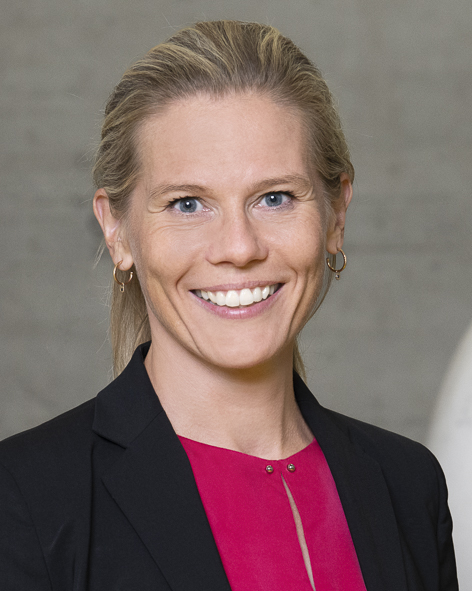
Amélia Veiga is an Associate Professor at the Faculty of Psychology and Educational Sciences, University of Porto, and a researcher at the Centre for Research and Intervention in Education (CIIE). She also collaborates with the Centre for Research in Higher Education Policies (CIPES) and has held leadership roles including co-coordination of the Strategic Research Area on Higher Education, Innovation and Diversity, and vice-dean at FPCEUP since 2022. Her academic qualifications include: PhD in Educational Sciences, Faculty of Psychology and Educational Sciences, University of Porto (2010) MSc in Educational Sciences, Faculty of Psychology and Educational Sciences, University of Porto (2003) Bachelor’s in International Relations, Faculdade Fernando Pessos, Porto (1997) Her research centers on higher education policy, governance, European integration, and inclusion. She investigates the Bologna Process, differentiated integration, quality assurance, and social inclusion in education. Her work emphasizes institutional autonomy, policy convergence, and the impact of European governance on national systems. She has led and participated in numerous EU-funded and national research projects, contributing to both theoretical and policy-relevant knowledge. Her recent publications reveal a strong focus on European higher education governance, the implications of Brexit, cybersecurity education policy, and inclusive pedagogies. The research spans qualitative policy analysis, comparative studies, and institutional case studies, reflecting a multidisciplinary and international approach. Her scientific contributions have been supported by grants from: Fundação para a Ciência e a Tecnologia (FCT) European Commission Gabinete Nacional de Segurança Nationaal Agentschap Erasmus+ Onderwijs & Training She has advised multiple research projects and supervised students, fostering early-career researchers through the Group of Educational Policy Analysis (GAPE) at CIIE. She has also led international collaborative initiatives such as the European Universities – Critical Futures Project. Her research is conducted primarily within the CIIE and involves collaboration with international networks and institutions across Europe and Latin America, especially in projects related to academic recognition and mobility.