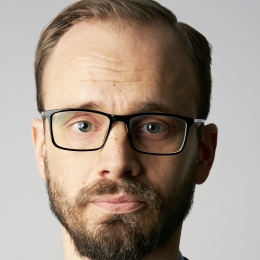
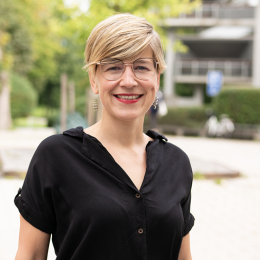
Karl Gustafsson is a Professor at Stockholm University within the Department of Economic History and International Relations. His work bridges security studies , collective memory , and digital research methods in international relations. Current Role: Professor of International Relations, Stockholm University Previous Positions: Post-Doc at Lund University, Researcher at Swedish Institute of International Affairs Visiting Appointments: University of Tokyo, Osaka University, Keio University, Academia Sinica, Nordic Institute of Asian Studies Research Focus: Karl specializes in memory politics , ontological security , and anxiety-driven international dynamics , particularly in Sino-Japanese relations and digital platforms . His studies explore how historical narratives and online memory construction influence state identity and policy. Awards & Grants: Recipient of the Wang Gungwu Prize (2014) and Stockholm University Association’s award (2011). Holds Swedish Research Council and Marianne & Marcus Wallenberg Foundation grants for projects on apologies in international politics and digital memory in East Asia . Publications: His work appears in journals such as International Studies Quarterly , European Journal of International Relations , and Memory Studies , addressing topics like narrative power in East Asia, anxiety’s role in policy change , and digital humanities applications in IR.
Jens Edlund is a Professor at KTH Royal Institute of Technology's Division of Speech, Music and Hearing. His research focuses on speech technology, dialogue systems, prosody, and evolutionary phonetics. He has contributed to foundational work on speech synthesis, conversational interaction, and multimodal corpora like the D64 corpus. Key projects include the MonAMI Reminder system and analysis of primate vocalizations to understand speech evolution. Edlund has collaborated extensively with global researchers, producing over 150 peer-reviewed works. His work integrates computational methods with linguistic and biological insights, emphasizing human-like dialogue systems and cross-species vocal analysis. Education: Ph.D. in Speech Technology (2011, KTH) Grants: Multiple EU and Swedish Research Council grants for speech technology and interdisciplinary studies Research labs include the KTH Speech, Music and Hearing Lab and collaborations with institutions like Max Planck Institute for Evolutionary Anthropology. Current work explores evolutionary origins of speech biomechanics and AI-driven speech synthesis evaluation.
Danica Kragic is a Professor of Computer Science at the School of Electrical Engineering and Computer Science at the Royal Institute of Technology (KTH) in Stockholm, Sweden. She serves as the Director of the Centre for Autonomous Systems and leads the Robotics, Perception and Learning Lab at KTH. Her research focuses on advancing robotics capabilities through computer vision and machine learning approaches. MSc in Mechanical Engineering from the Technical University of Rijeka, Croatia (1995) PhD in Computer Science from KTH (2001) Professor Kragic's research primarily centers on robotics, computer vision, and machine learning, with particular emphasis on robotic manipulation, grasp planning, and human-robot interaction. Her work bridges theoretical foundations with practical applications, exploring how robots can understand and interact with objects in complex environments. She investigates how visual and tactile sensing can be integrated to improve robotic perception and manipulation capabilities, with applications ranging from industrial automation to assistive robotics. Her recent publications demonstrate a strong focus on advanced grasp planning techniques, tactile sensing for manipulation, and mathematical representations for robotic control. Kragic's research shows increasing integration of machine learning approaches with traditional robotics frameworks, particularly in the areas of grasp synthesis, object recognition, and human-robot collaboration. Her work spans theoretical contributions in mathematical representations of grasps to practical implementations of robotic systems capable of adapting to novel objects and situations. 2007 IEEE Robotics and Automation Society Early Academic Career Award IEEE Fellow ERC Starting Grant (2012) Member of The Royal Swedish Academy of Sciences Member of The Royal Swedish Academy of Engineering Sciences Honorary Doctorate from Lappeenranta University of Technology Professor Kragic's research has been supported by major funding bodies including the EU, Knut and Alice Wallenberg Foundation, Swedish Foundation for Strategic Research, and Swedish Research Council. While specific student names aren't listed in the provided information, her publication record suggests extensive mentorship of PhD students and postdoctoral researchers in robotics and computer vision. Her lab, the Robotics, Perception and Learning Lab, serves as a hub for interdisciplinary research connecting computer science, engineering, and cognitive science perspectives on robotic systems. As Director of the Centre for Autonomous Systems at KTH, Kragic oversees a major research initiative focused on advancing autonomous technologies. Her Robotics, Perception and Learning Lab brings together researchers working on visual perception, machine learning, and robotic manipulation, with particular emphasis on developing systems that can understand and interact with objects in unstructured environments. The lab's work spans theoretical foundations of robotic manipulation to practical implementations of systems capable of learning from experience.
Nicholas Wiltsher is an Associate Professor at the Department of Philosophy; Aesthetics at Uppsala University since 2019. His research focuses on aesthetics, philosophy of mind, and race/gender studies, exploring topics like imagination's role in art, gender norms in aesthetics, and electronic dance music's philosophical dimensions. He holds a PhD from the University of Miami and has held academic roles at institutions including Antwerp, Auburn, Porto Alegre, and Leeds. Education: PhD in Philosophy from the University of Miami. Previous affiliations include universities in Antwerp, Auburn, Porto Alegre, and Leeds. Research interests include: the interplay between art and imagination, aesthetic norms and gender, expression theory, philosophy of race and gender, and electronic dance music aesthetics. He critiques traditional disciplinary boundaries in aesthetics and advocates for interdisciplinary approaches. His recent publications (2023–2025) emphasize imagination's epistemic role, the aesthetic constitution of gender identities, and critiques of additive imagination theories. Earlier work (2016–2019) addressed electronic dance music's cultural ontology and Collingwood's expression theory. Awards: No scientific awards explicitly listed. Grants and advising: No grants or student advisees explicitly mentioned in sources. Labs/Teams: No specific research groups or labs mentioned, though his work engages interdisciplinary collaborations in aesthetics and cultural philosophy.
Adam Wickberg is a researcher in the Division of History of Science, Technology and Environment at KTH Royal Institute of Technology in Stockholm. He serves as co-director of the VR Excellence Centre for Anthropocene History and deputy director of the KTH Environmental Humanities Lab . His work critically examines the intersections of digitalization, sustainability , and the Anthropocene , focusing on their social, political, and historical dimensions. He leads the research project The Mediated Planet: Claiming data for environmental SDGs and has held visiting positions at the Max Planck Institute for the History of Science in Berlin. Education : Not explicitly stated His research spans media studies, environmental history, critical data studies , and postcolonial science and technology studies . Key themes include: Digital twins and marine futures AI ethics for climate justice Colonial histories of environmental data Temporal dimensions of Anthropocene governance Environing media as epistemological tools Planetary datafication systems Recent publications explore how data infrastructures shape environmental governance and how historical media practices inform contemporary sustainability challenges. He has contributed to journals like New Media and Society , Nature , and Critical Inquiry , while engaging in public debates through op-eds in Dagens Nyheter and Aftonbladet . Teaching : Courses include Artificial Intelligence and Sustainable Development (AK122V), Environmental History (AK2210), and The Anthropocene (AK126V). Labs/Teams : Leads the Environmental Humanities Lab and collaborates with the WASP-HS Community .
Birgit Tremml-Werner is a Lecturer at Stockholm University (since 2023) and former Associate Professor at Linnaeus University. She holds a PhD from the University of Vienna (2012), focusing on early modern Manila's trade and diplomacy. Her research explores global diplomatic history beyond Eurocentrism, emphasizing Southeast Asia and colonial dynamics. Co-founder of the Global Diplomacy Network (GDN) and co-creator of Global Archives Online (GAO), she promotes accessible historical resources. Teaching spans undergraduate to doctoral levels, including courses at Stockholm University and international institutions like the University of the Philippines and Universiteit Antwerpen. She advises three PhD students and leads initiatives like the 2024 doctoral course on GAO metadata usability. Research interests include early modern diplomacy, indigenous agency in colonial contexts, and material/knowledge archives. Projects such as 'Encountering Diplomacy in Early Modern Southeast Asia' and GAO reflect her commitment to interdisciplinary and globally inclusive historiography.
Zhibo Pang is an Adjunct Professor at KTH Royal Institute of Technology's Department of Intelligent Systems (EECS) and Senior Principal Scientist at ABB Corporate Research Sweden. His work focuses on digital transformation in industry and healthcare, spanning robotics, AI, control systems, and wireless communication. He leads projects in embodied intelligence, Industry 4.0, and Healthcare 4.0, with 23 granted patents and over 120 journal papers. Education: PhD in Electronic and Computer Systems (KTH, 2013), MBA in Innovation & Growth (University of Turku, 2012). Key Roles: IEEE Technical Committee Chair, Editor of 6 IEEE journals, ABB Inventor of the Year (2016, 2018, 2021). Research Interests: Robotics safety, wireless automation, federated learning, digital twins, and IoT security. Recent Projects: Cloud-fog automation frameworks, robot skin systems for healthcare, and latency-aware industrial control. His work bridges academia and industry through cross-functional collaborations.
Cyrille Artho is an Associate Professor in the Division of Theoretical Computer Science at KTH Royal Institute of Technology, actively contributing to research in formal methods, software testing, and cybersecurity. His work spans model checking, smart contract security, and concurrent systems verification, with significant contributions to tools like Java Pathfinder and Modbat. PhD from ETH Zurich (2005) with dissertation on multi-threading fault detection Teaches Software Safety and Security, Software Engineering Fundamentals, and supervises degree projects His research focuses on developing formal techniques for safety-critical systems, particularly in blockchain security and distributed applications. Recent work emphasizes smart contract verification, anomaly detection in microservices, and trusted execution environments for secure cloud analytics. The 15 most recent publications reveal a strong trend toward blockchain security (6 articles), formal verification of distributed systems (5), and novel testing methodologies (4), with increasing integration of machine learning for vulnerability detection. As chair of the FTSCS workshop series and contributor to major conferences like ASE and ICST, Artho has significantly shaped the formal methods community. His leadership in organizing workshops demonstrates commitment to advancing safety-critical systems research. Principal investigator for C3.ai DTI Cyber Safety Cage for Networks project Develops Modbat framework for model-based API testing Active in Digital Futures research initiative at KTH
Matteo Magnani is a Professor in the Division of Computing Science at the Department of Information Technology, Uppsala University. He leads the Uppsala University Information Laboratory and is a founding member of the Uppsala University Computational Social Science Lab. His research spans network science, artificial intelligence, data science, and computational social science, with a focus on social data mining and multilayer networks. PhD in Computer Science, University of Bologna, 2006 Graduated with honours in Information Sciences, University of Bologna, 2002 Studies in Computer Science at University of Marne la Vallée and Imperial College London Matteo Magnani's research interests include social network analysis, multilayer and probabilistic networks, community detection, visual analytics, and the application of AI to digital media and climate communication. His work bridges computer science and social sciences, particularly in analyzing online discourse and digital intermediaries. He has contributed significantly to the understanding of network structures, uncertainty in networks, and the ethical dimensions of algorithmic analysis. His recent publications highlight trends in fairness in community detection, visual saliency in network layouts, emotional reactions to climate visuals online, and deep learning applications in social media. Topics frequently involve YouTube, Twitter, and online public debates, using advanced network and machine learning methods. Rotary Prize for best student of the Science Faculty Best Paper Award Funniest Presentation Award Best Poster Award Pedagogical Prize from UTN Distinguished University Teacher (Sweden) Docent title (Sweden) Magnani has supervised numerous students and collaborated widely, particularly with Luca Rossi, Alexandra Segerberg, and Davide Vega. He has secured funding from major sources including VR, H2020, STINT, and MIUR. He leads active research labs focused on information systems and computational social science, fostering interdisciplinary collaboration and innovation in network-based research.
Majed Elwardy is a Lecturer at the Department of Computer Science , Blekinge Institute of Technology , focusing on Computer Science , Virtual Reality , and Quality Assessment . He works at the Human-Centered Intelligent Realities Laboratory in Karlskrona, Sweden. Email: majed.elwardy@bth.se Phone: 0455-385801 His research investigates 360° video quality assessment in immersive environments using head-mounted displays (HMDs) , analyzing user behavior , quality perception , and subjective testing methodologies . He explores differences in standing vs. seated viewing and consistency of user feedback over time. Majed contributes to the HINTS project (Human-Centered Intelligent Realities) and has published datasets like RQA360 to advance immersive media research. His work includes studies on simulator sickness , VR experience levels , and scene exploration patterns in 360° video evaluation.
Michael Felsberg is a Professor and Head of Division at the Department of Electrical Engineering (ISY) at Linköping University, leading the Computer Vision Laboratory (CVL). His research focuses on artificial visual systems (AVS), including 3D computer vision, computational imaging, object tracking, and autonomous systems. He emphasizes HVS-inspired approaches to bridge the gap between human and machine vision capabilities. Notable achievements include over 20,000 citations (h-index 47), leadership roles in the Wallenberg AI, Autonomous Systems and Software Program (WASP), and recognition as Sweden’s top AI researcher by Vinnova. His work spans academic contributions, industry collaborations, and interdisciplinary projects like climate science applications of machine learning. Positions : WASP Executive Committee Member, WASP Area Cluster Leader for Machine Learning, and Vice-Head of Department (Electrical Engineering). Education : Extensive academic background in electrical engineering and computer vision (details not explicitly stated). Research trends in his articles reflect advancements in autonomous systems, multimodal AI, and robust vision models. His teams address challenges like object tracking, generative models for 3D simulation, and culturally diverse AI systems. Awards : Tracking Challenge Winner (OpenCV, 2015) Best Paper Awards (ICPR 2016, VISAPP 2021) Vinnova’s Highest-Ranked Swedish AI Researcher (2018) He advises numerous PhD students and oversees grants in WASP-funded initiatives. CVL collaborates on projects like disaster-response robotics and Berzelius supercomputer utilization for AI.
Brinton Seashore-Ludlow is an Associate Professor at the Department of Oncology-Pathology, Karolinska Institute (KI), where he serves as team leader in Olli Kallioniemi's research group and group leader of the biology team at Chemical Biology Consortium Sweden (CBCS), SciLifeLab's national infrastructure. PhD in Biochemistry, KTH Royal Institute of Technology (2012) MSc in Chemical Biology, California Institute of Technology (2007) BA in Biochemistry, Macalester College (2001) His research bridges precision medicine and cancer biology through: Developing ex vivo patient-derived models for drug response prediction Molecular determinants of therapeutic efficacy Integration of high-content imaging with translational studies Focus on ovarian, breast, and pediatric cancers AI-driven analysis of drug sensitivity data Recent articles demonstrate: 3D tumor spheroid platforms for drug testing Epigenetic regulators in neuroblastoma Microfluidics for high-throughput assays Cancer-stroma interactions in treatment resistance Clinical validation of precision diagnostics He co-organizes the Overview Course in Cancer Drug Discovery at KI and leads projects funded by the Swedish Childhood Cancer Foundation.
Julia Kuhlin is a Research Fellow in digital humanities at Humlab, Umeå University, leading research on Swedish Free Churches' visual communication on Instagram and religious digital creatives. Her work bridges religious studies and digital media analysis. Research focuses on: Digital religion and social media engagement Lived religion in Pentecostal communities Interreligious relations and gender aspects World Christianity with regional focus on India and Sweden Publications demonstrate consistent focus on religious adaptation to digital platforms and ethnographic studies of Christian communities. Recent work emphasizes deconstruction of religious narratives through new media formats like podcasts.
Peter Aronsson is the Rector of Linnaeus University since 2017, reappointed until 2026. He holds a professorship in History and has served as Pro Vice-Chancellor, Deputy Vice-Chancellor, and Dean of the Faculty of Arts and Humanities. His research focuses on local/regional history, democratic political culture, history education, and cultural heritage utilization. He coordinates international projects exploring national museums' roles in shaping historical narratives and has authored/co-authored over 100 publications, including books such as National Museums: Studies from around the World . He chairs the Swedish Council for Higher Education's board and sits on the transparency council for Kalmar and Kronoberg County Administrative Boards. His work emphasizes the societal relevance of cultural heritage and history education, advocating for museums as agents of democratic dialogue. Key contributions include founding the Center for Applied Heritage at Linnaeus University, which explores heritage's transformative societal potential. Education: PhD in History from Lund University (1992) Research Groups: Center for Applied Heritage, EuNaMus project Key Projects: EUNAMUS, HistCon, Nordic Spaces Leadership Roles: Vice-Chancellor (2017–present), Pro-Rector (2016–2017), Dean (2013–2015) His articles analyze historical consciousness, museum politics, and heritage management. Recent work addresses post-war Baltic cultural heritage, Nordic identity construction, and the political dimensions of historical narratives. He actively blogs on Open Science and academic governance, emphasizing universities' role in societal challenges.
Johan Eriksson is an Associate Professor and Senior Lecturer at Uppsala University's Department of Art History, serving as Head of Department and Program Manager for the Master's Program in Digital Art Studies. His work integrates traditional art historical scholarship with cutting-edge digital methodologies, focusing on cultural heritage reconstruction and virtual museum development. His research spans digital art history , visual communication , and Renaissance studies , with specialized expertise in Italian and Japanese art traditions. Eriksson pioneers digital pedagogy through projects like The Digital Seminar 2.0 , examining how virtual reconstructions of historical sites (e.g., Royal Palace Stockholm) transform art historical methodology and public engagement with cultural heritage. His scholarship reveals strong interdisciplinary connections between art history, computer science, and urban studies. Eriksson's publication trends demonstrate consistent focus on virtual museum development as both research tool and preservation strategy, with growing emphasis on cross-cultural exchange (particularly Sweden-Japan collaborations) and sustainable heritage tourism. His work bridges technical innovation with deep art historical analysis, notably in reconstructing historical display contexts and examining visual rhetoric in Renaissance courts. No scientific awards are documented in the provided materials. As Program Manager for the Master's Program in Digital Art Studies and Chair of JSPS SAC, Eriksson actively mentors graduate students while securing research funding for major projects including The Virtual Museum and Visual Communication in Early Modern Japan . His grant portfolio reflects strong institutional support for digital humanities initiatives at Uppsala University. Through leadership of JSPS SAC and project teams like Renaissance Rooms , Eriksson coordinates international research networks focused on digital reconstruction methodologies. His current initiatives emphasize collaborative development of virtual environments that integrate art historical research with immersive technologies for both scholarly and public applications.