Eivind Rudjord Hillesund is an Associate Professor in the Department of Mathematical Sciences at the University of Agder. He holds qualifications in teaching mathematics and physics from the University of Oslo's lektorprogrammet and defended his doctoral thesis in January 2021 on engineering students' use of learning resources in mathematics courses. His teaching focuses on statistics courses within GLU programs and assignments in EVU courses at UiA since 2019. Research Interests: Resource use and decision-making in undergraduate mathematics education Educational strategies for engineering students Development of tools for tracking student resource utilization Publications include studies on resource systems analysis, didactical purposes of resources, and data collection methodologies. His work emphasizes improving understanding of how students interact with learning materials in STEM fields.
Nina Lager Vestberg is a Professor of Visual Culture at the Norwegian University of Science and Technology (NTNU), affiliated with the Department of Art and Media Studies. She leads the Media, Data, Museums research group, focusing on labor, systems, and infrastructures in visual culture. Her research examines photographic technologies and digitization processes, particularly their roles in archives and cultural memory. Education Bachelor’s in Photography and Multimedia (UK) Master’s and PhD in Art History (Birkbeck, University of London) Research Interests Digitization’s impact on visual archives Photographic technologies from pre-photography to post-digital eras Labour and intermediation in visual culture Cultural memory and national imagery Teaching Media Theory and Media Culture Research Design in Film and Media Studies Visual Culture across BA and MA programs Awards & Recognition Notable for her 2023 monograph Picture Research (MIT Press) Recipient of grants and fellowships for interdisciplinary projects Outreach & Advocacy Founded campuslivet.substack.com , a Norwegian academic newsletter Public lectures on digital museums, platformization, and ecological media impacts Labs & Teams Leads the Media, Data, Museums research group at NTNU Collaborates internationally on projects like the Oxford Photo Archives initiative
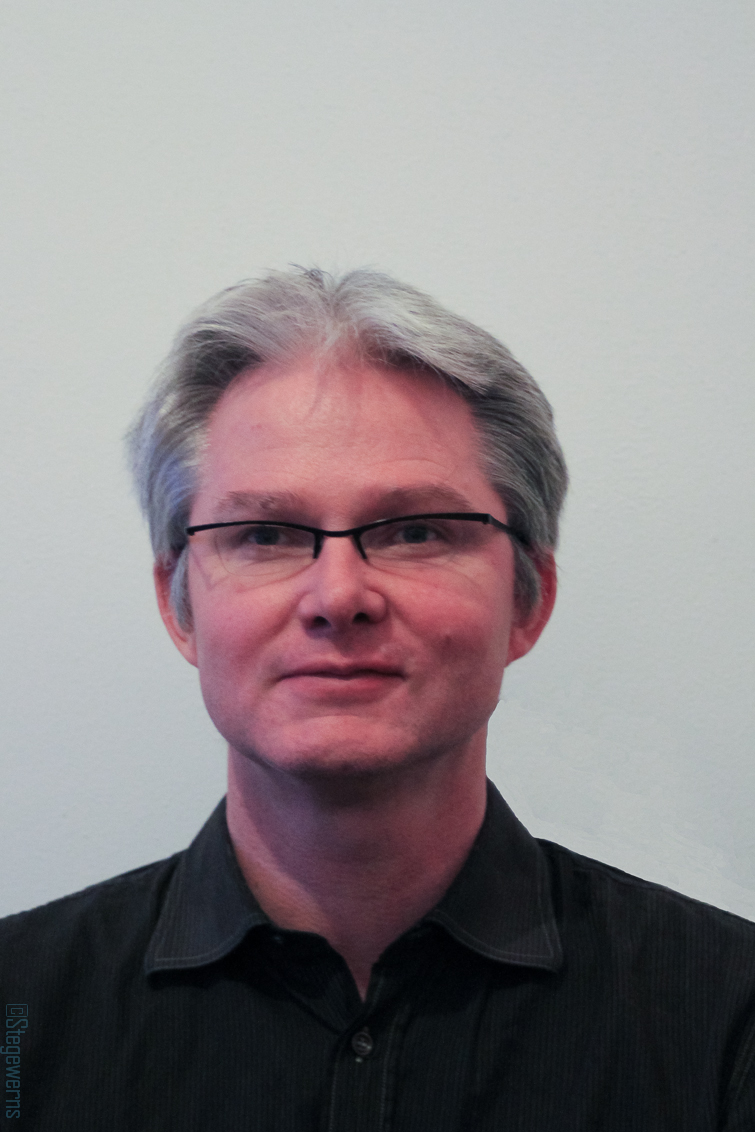
Dick Stegewerns is an Associate Professor in Japanese Studies at the University of Oslo. His research spans the political, intellectual, and diplomatic history of modern Japan, with a focus on East Asia's international relations, war memory, and cultural identity. He also explores Japanese cinema and popular culture, including sake's historical significance. Research Interests: Nationalism, regionalism, Japanese film studies, food studies, and transnational cultural perspectives. Current Projects: Monographs on Japanese self-perception, collaborative research on postwar Japanese cinema, sake globalization, and visualization of history in media. Publications cover topics like East-West civilization discourse, postwar war films, sake industry dynamics, and Hiroshima's transnational memory. His work integrates film studies, history, and cultural analysis.
Trond Waage is a Professor in the Department of Social Sciences at UiT The Arctic University of Norway , specializing in Visual Anthropology . His research focuses on migration patterns in Sub-Saharan Africa, particularly in Cameroon, the Central African Republic, and Mali, while also exploring the intersection of visual methods with ethnographic research. Active in collaborative visual research with African communities Member of the War and Peace Dynamics research group Co-founder of the Sahel on Sahel research initiative Research Interests include: Migrant integration in urban African contexts Conflict dynamics in the Sahel region Participatory visual methods for ethnographic knowledge production His recent work has examined Boko Haram's impact on youth communities and the role of collaborative filmmaking in documenting post-conflict resilience. Professor Waage frequently collaborates with researchers across institutions in Norway and Africa to explore cultural translation and visual epistemology. He serves as: Editorial contributor to the Journal of Anthropological Films Supervisor in Master of Philosophy in Visual Anthropology program Co-developer of Visual Anthropology curricula in Niger
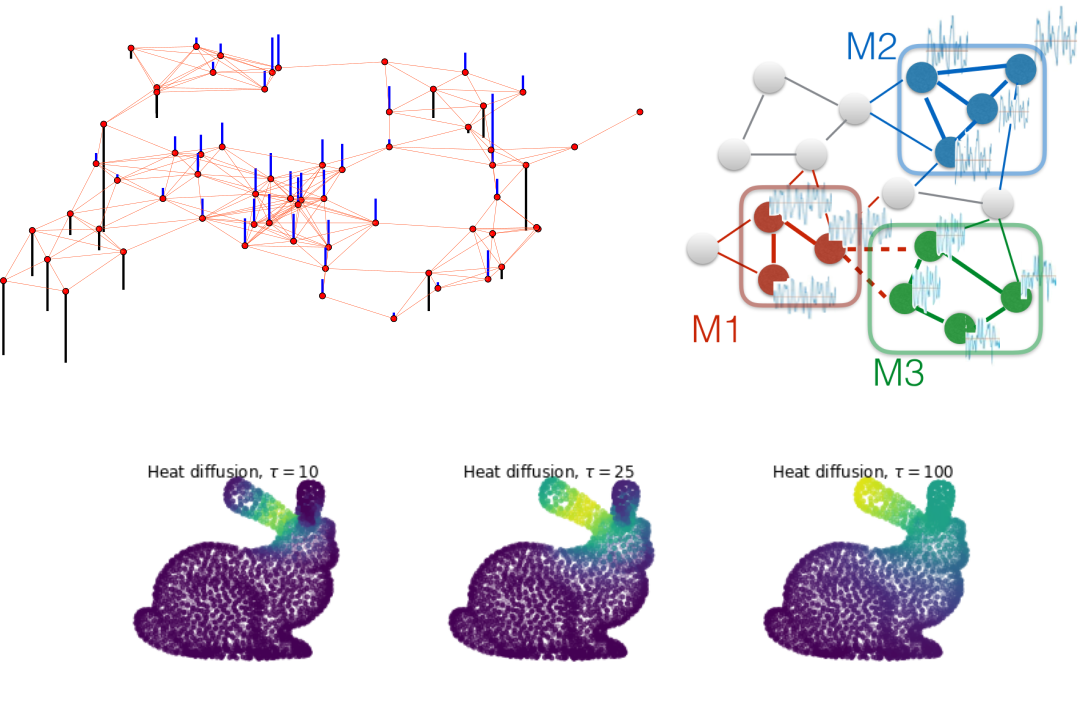
Benjamin Ricaud is an Associate Professor and Group Leader in Machine Learning at UiT The Arctic University of Norway's Department of Physics and Technology. His core affiliations include membership in the Machine Learning Group, Visual Intelligence center, and co-directorship of the Digital Technology Innovation Lab focused on Arctic-region tech startups. He also co-chairs the annual Northern Light Deep Learning conference. Ricaud's research spans: Fundamental ML : Graph signal processing, explainable AI, and generative models Applications : Microfossil classification, medical diagnostics (retinal aging), drug analysis, and climate data interpretation Emerging domains : Self-supervised learning and biological data analysis using Raman spectroscopy His recent publications (2020-2025) cluster in three domains: Graph ML methodologies (35%) Biomedical/biological applications (40%) Geoscience/climate informatics (25%) with consistent focus on interpretability and real-world data challenges. Teaching includes Image Processing (FYS-2010), Pattern Recognition (FYS-3012), and Machine Learning (FYS-2021). He leads outreach initiatives developing AI exhibits for Tromsø Science Centre.
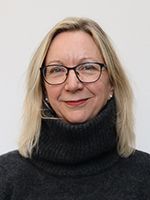
Tae Eun Kim is an Associate Professor in Maritime Safety Management at UiT The Arctic University of Norway, working within the Department of Technology and Security. Her research, teaching, and industrial collaboration focus on maritime safety and human factors, with particular expertise in maritime safety management, accident analysis, Maritime Autonomous Surface Ships (MASS), and human factors in maritime operations. Dr. Kim's research spans four interconnected domains: maritime safety management and leadership, maritime accident and casualty analysis, Maritime Autonomous Surface Ships (MASS), and human factors in maritime operations. She has developed assessment instruments like the Safety Leadership Self-Efficacy Scale (SLSES) and conducted STAMP-based causal analyses of maritime accidents. Her work on MASS addresses safety challenges in mixed navigational environments and examines leadership competencies for autonomous shipping operations. Her human factors research explores how technological advancements impact navigators' performance, crew dynamics, and safety outcomes, including gender parity issues in the maritime industry. Dr. Kim's publication record reveals a strong focus on the intersection of maritime safety, technology, and human performance. Her recent work increasingly addresses autonomous shipping technologies, with numerous publications on AI decision transparency, learning analytics in maritime simulator training, and multi-modal data analysis for nautical skill development. She has conducted systematic reviews on simulator training approaches and scenario design, contributing significantly to methodology development in maritime education and training. Her research demonstrates a clear trajectory toward integrating emerging technologies with traditional maritime safety practices as the industry transitions toward greater automation. Dr. Kim is actively involved in several significant research projects, including the i-MASTER EU Horizon Europe Research and Innovation Project, the REFRAME project, and the SPRICE project (Multidisciplinary approach for spray icing modelling). She is a member of both the Advanced Maritime Ship Operations research group and the Maritime Safety Science (MARSCI) Research Group, demonstrating her commitment to collaborative research in maritime safety science. Dr. Kim teaches several specialized courses at UiT, including SVF-3206 Safety Management and Accident Investigation, TEK-3014 Navigation Technology, MFA-2100 Maritime Digitalization, MFA-8010 Maritime HTO (Human-Technology-Organisation) and Innovation, and MFA-2018 Maritime Administration and Leadership. Her teaching portfolio reflects the interdisciplinary nature of her expertise, bridging engineering, safety science, and organizational behavior in maritime contexts.
Elisabeth Oxfeldt is a Professor of Scandinavian Literature at the University of Oslo's Faculty of Humanities, Department of Literature, Area Studies and European Languages. Specializing in Danish and Norwegian literature from the 19th to 21st centuries, she examines cultural narratives through postcolonial and orientalist frameworks with particular focus on guilt discourse in Nordic contexts. Her educational background includes a Ph.D. in Scandinavian Literature from U.C. Berkeley (2002), M.A. in Scandinavian Literature (1996), and B.A. in French Literature (1988). This interdisciplinary foundation informs her transnational approach to Nordic literary studies. Oxfeldt's research centers on Scandinavian narratives of guilt and privilege within globalization, exploring how Orientalism, postcolonialism, and (post)nationalism manifest in literature and visual media. Her work critically engages with Hans Christian Andersen adaptations, war literature, travelogues, and literary activism, revealing tensions between Nordic self-perception as egalitarian societies and historical complicity in colonial structures. She frequently analyzes word-image relationships and adaptation processes across media. Publication trends show sustained engagement with postcolonial critique since her 2005 monograph Nordic Orientalism , evolving toward contemporary analyses of activist voices and guilt narratives. Recent edited volumes address literary rights struggles (2024) and ecological perspectives in Nordic literature (2023), demonstrating expanding interdisciplinary scope while maintaining core focus on representation and power dynamics. Awards and honors: Member of Det Danske Akademi (The Danish Academy) Advising and grants information was not specified in source materials, though her leadership of major research projects suggests significant supervisory and funding acquisition activities. Teaching responsibilities include courses on Nordic literature after 1800, Norwegian world literature, and literary activism. Oxfeldt co-leads the DINO (Diversity in Nordic Literature) research group and previously participated in ECODISTURB. Her current projects include 'Scandinavian Narratives of Guilt and Privilege in an Age of Globalization' (ScanGuilt) and 'Norwegian Romantic Nationalisms' (NORN), examining historical and contemporary constructions of Scandinavian identity through literary lenses.
Festo Kayima is an Associate Professor in Chemistry Didactics at the Department of Teacher Education, Faculty of Social and Educational Sciences, Norwegian University of Science and Technology (NTNU). His research focuses on science teacher education, classroom knowledge, and pedagogical strategies in chemistry. Doctorate in Chemistry Education (2018, University of Bergen) Master’s in Science Education (2020, NTNU) Kayima’s research projects include developing science teacher trainees’ professional knowledge through reflective practice, enhancing scientific literacy, and integrating sustainability into chemistry education. He leads the Erasmus+ project STEMkey (2020–2023), emphasizing graduate attributes and key skills for educators. His recent publications (2025) with Springer explore pedagogical themes like chemical knowledge, outdoor teaching, and technology integration. These works align with broad keywords such as Science Education, Curriculum Development, and Experiential Learning, with subfields spanning digital tools, sustainability, and misconceptions in chemistry. Co-supervised Kristine Fjelldal Sunde’s thesis on teacher questioning in labs He contributes to research groups Naturfaglig Literacy i Skole og Lærerutdanning and ScienceHumanities , bridging interdisciplinary approaches in education. His teaching includes courses like Science as a School Subject (MGLU4211) and Teacher Education: Teaching Chemistry (PPU4626).
Dr. Danesh Tarapore is an Associate Professor at the University of Southampton specializing in robotics and AI. He focuses on human-robot interaction, swarm intelligence, and autonomous systems. His current research involves developing resilient robotic teams and optimizing learning algorithms for constrained environments. He supervises 6 PhD students in the iPhD MINDS and Computer Science programs. Dr. Tarapore's work bridges theoretical advancements with practical applications in autonomous navigation, multimodal dataset creation, and quality-diversity optimization. His publications span conferences like HRI and journals in robotics and AI. He collaborates with institutions like the University Hospital Southampton and the Boldrewood Innovation Campus. Research Interests: Human-robot collaboration, swarm systems, machine learning, and adaptive control Key Contributions: HRI-SENSE dataset, evolutionary subset selection algorithms, forest navigation frameworks Grants and Funding: Active projects in multi-agent systems and resilient robotics Dr. Tarapore maintains active roles in the robotics community through conference participation and interdisciplinary collaborations.
Haley De Korne is a Professor at the University of Oslo's Institute for Literature, Area Studies and European Languages within the Faculty of Humanities. Her academic work spans the intersections of linguistics, education, and anthropology, focusing on multilingual education contexts with particular attention to minoritized and indigenous languages. Dr. De Korne holds a PhD in Educational Linguistics from the University of Pennsylvania, an MA in Applied Linguistics from the University of Victoria, and a BA (Hons) in Combined Social Sciences from Durham University. Her academic journey reflects a strong foundation across multiple disciplines that inform her interdisciplinary approach to language research. PhD Educational Linguistics, University of Pennsylvania, USA MA Applied Linguistics, University of Victoria, Canada BA Hons Combined Social Sciences, Durham University, UK Her research interests focus on critical language awareness among teachers, social change imaginaries in multilingual regions, and pedagogies for language reclamation. She specializes in minoritized languages in education, multilingual education policy and pedagogy, language politics, indigenous language reclamation & revitalization, and language ideologies, with specific expertise in Isthmus Zapotec (Mexico) and Anishinaabemowin (US & Canada). Her methodological approach combines ethnography and interactional sociolinguistics within linguistic anthropology. Analysis of Dr. De Korne's recent publications reveals a consistent focus on language revitalization, particularly examining how educational contexts can support or hinder minoritized language maintenance. Her work increasingly addresses global North-South perspectives on language education, with attention to place-based pedagogy and critical language awareness. A significant thread throughout her research examines translanguaging practices and how they challenge traditional monolingual approaches to language education. Her scholarship demonstrates strong community engagement, particularly with Zapotec-speaking communities in Mexico. Dr. De Korne serves on the editorial board of Multilingua - Journal of Cross-cultural and Interlanguage Communication (2023-2025) and is an active member of the Norwegian Academy for Young Researchers (2021-2025). She also chairs the American Association of Applied Linguistics Committee for Online Education and Outreach Webinar subcommittee. Member, Norwegian Academy for Young Researchers (2021-2025) Editorial board member, Multilingua Journal (2023-2025) Chair, AAAL Committee for Online Education and Outreach (2023) Partner, Multilingualism in Transitions Research Project (2021-2025) Affiliated researcher, MultiNor Research Group At the University of Oslo, Dr. De Korne teaches courses including MULTI 4150 Project-based research in multilingualism, NOAS 4102 Additional language learning in socio-cognitive and sociocultural perspectives, and several linguistics courses on language acquisition, multilingualism, and research methods. She also leads PhD courses on communication in multilingual workplaces and revitalization of indigenous and minority languages. Her current research projects include FOSTERLANG (Indigenous language resilience), Language and culture maintenance in Wilamowice, and Linguistics and Sustainability.
Reidar Hvalvik is an Adjunct Professor at MF University College of Theology, Religion and Society, contributing as an external academic member. His work bridges theology, religious studies, and art history, focusing on early Christian contexts and interdisciplinary research. He has authored a scientific monograph (2025) and encyclopedia entries, while also publishing technical analyses of biblical texts and their intertextual connections with Greco-Roman literature and art. His research interests span Pauline studies, the New Testament’s Greco-Roman setting, reception history, and the role of art in early Christian communities. He examines topics like Jewish-Christian relations, apocryphal writings, and the theological implications of classical influences on early Christian thought. Across over 146 publications, Hvalvik’s recent articles (2021–2025) highlight trends in analyzing motifs in Christian art, reinterpreting New Testament texts through historical and cultural lenses, and exploring connections between Paul’s writings and classical traditions. No scientific awards or grants are explicitly noted in the text. While no formal advisees or lab affiliations are listed, his external role suggests collaboration with academic teams in theology and biblical studies. His contributions emphasize scholarly synthesis between textual analysis and visual/ artistic expressions of early Christian ideas.
Haakon Sundbø is a Senior Lecturer at the Department of Information and Communication Technology, University of Agder. He teaches courses such as Computer Science (DAT100), Multimedia Design (DAT104), Web Publishing (DAT110), Visual Design (DAT222), Sound Engineering (DAT228), ICT and E-learning in Vocational Subjects (PED978), and Didactic Use of Digital Tools (MM903). His academic responsibilities also include guest lecturing and supervision in ICT Project (DAT215), Photography (DAT227), Video (DAT229), Bachelor's Project (DAT303), Web and Online Knowledge (MM901), Remote Operated Vehicles (MM202), Interaction Design (MM403), and Technology for Teachers (TEKPED60). Materials, Energy and Nanotechnology (BSc, University of Oslo) Multimedia Technology and Design (BSc, University of Agder) Multimedia and Educational Technology (MSc, University of Agder) Haakon's research focuses on lifelong learning, e-learning platforms, interaction design, user experience, artificial intelligence in education, augmented reality, virtual reality, and digital competence development. He has contributed to projects like Decentralized Competence Development (DEKOMP), UiA Consense, and drone technology research at University of Agder. His recent publications analyze AI integration in teaching, digital frameworks for schools, screen usage guidelines, and collaborative learning networks. He also leads a research group on Multimedia and E-learning, emphasizing flexible digital resources and practical technology adoption in educational contexts.
Johan Schimanski is a Professor of Comparative Literature at the University of Oslo, affiliated with the Faculty of Humanities and the Department of Literature, Area Studies and European Languages. He holds a Ph.D. from the University of Oslo (1997) and has held academic positions at institutions including the University of Tromsø and the University of Eastern Finland as a visiting professor. His research focuses on borders in literature, postcolonialism, Arctic discourses, and migration narratives, with notable contributions to border aesthetics and cultural encounters. Education: Magister in Comparative Literature (University of Oslo, 1990), Ph.D. (1997). Key professional milestones include leadership roles such as Head of Research at ILOS (2017–2020) and co-leadership of the TRAUM project on author museums (2016–2019). He has authored or edited over 20 books and numerous articles, exploring themes like migration literature, Arctic studies, and the political aesthetics of borders. Research interests span borders and national identity, postcolonialism, science fiction, and literary museums. He co-leads initiatives like the Temporalities and Subjectivities workshop series (2019–2021) and serves on editorial boards for journals such as Journal of Borderlands Studies . His work bridges literary analysis with interdisciplinary approaches to contemporary global issues, emphasizing the role of aesthetics in understanding border dynamics.
Daniel Beat Müller serves as Professor at the Industrial Ecology Programme within the Department of Energy and Process Engineering at the Norwegian University of Science and Technology (NTNU), Trondheim. His office is located at Realfagbygget Gløshaugen (E4-120) with contact details daniel.mueller@ntnu.no and +4791897755. His research centers on analyzing human needs in relation to material/energy flows and environmental impacts, with two primary focus areas: (i) urban evolution and associated material flows for managing building/infrastructure stocks, and (ii) national/global metal cycles to identify supply constraint reduction strategies. His methodology integrates design, modeling, and decision-making through transdisciplinary stakeholder engagement. Müller teaches Material Flow Analysis and Systems Analysis of the Built Environment for Industrial Ecology and Civil Engineering Master's students. His research outputs demonstrate strong trends in circular cities, critical mineral management, and urban metabolism, with recent publications emphasizing building information modeling, electric vehicle battery systems, and phosphorus cycling. His work consistently addresses resource criticality within energy transition contexts. As (ad interim) chair of the International Society of Industrial Ecology’s MFA-ConAccount section, he contributes to methodological standardization. He previously served on the U.S. National Research Council’s Committee on Defense Stockpiles and remains active in Switzerland's National Research Programme 65 "New Urban Quality". Müller supervises numerous Master's and doctoral students, with thesis topics spanning lithium-ion battery recycling, building stock dynamics, and urban resource flows. His projects frequently involve industry collaboration for practical implementation of material stewardship strategies.
Aleksandra Raonic is an Associate Professor at the Norwegian University of Science and Technology (NTNU), affiliated with the Department of Architecture and Technology under the Faculty of Architecture and Design. She previously held an Associate Professorship at Xi'an Jiaotong-Liverpool University (XJTLU) in China from 2014 to 2020, where she led Year 3 architecture programs and collaborated with the University of Liverpool. Raonic is also the founder and principal architect of RAUM, an award-winning architectural studio known for research-driven design projects. Her work spans architectural education, urban design, and innovative residential/commercial projects, with a focus on sustainability and community engagement. Her research emphasizes experimental pedagogy and the integration of design practice with academic teaching. Notable projects include the Stubline Kindergarten (2017 S.ARCH Award) and the Central Greenmarket in Negotin (2019 DANS International Award). Raonic has received over 25 design and teaching awards, including the Jiangsu Province Tutor Award (2018) and the Suzhou Excellent Educator Award (2016). She has supervised numerous student projects recognized at national and international levels. Raonic’s teaching philosophy combines theoretical rigor with hands-on practice, evident in her co-authored publications like Framing Indeterminacy (2019). Her recent exhibitions, including Barnas Katedral (2023) and Work in Progress (2023), highlight her commitment to experimental design and public space innovation. She actively collaborates across institutions, such as the Threads of Innovation project with CEPT University in India (2021). Education Background: Professional journey began with early architectural competitions (e.g., 1998 student award for urban design in Pancevo). Formal training includes studies at the Städelschule in Frankfurt, influencing her experimental design ethos. Awards Overview: Over 25 awards spanning teaching excellence, design competitions, and architectural innovation, including Grand Prix (Leonardo 2005) and multiple jury-selected projects. Grants & Projects: Leads applied research initiatives like NTNU’s Threads of Innovation , focusing on space interventions and cross-cultural academic partnerships. Raonic’s architectural practice and academic roles are deeply intertwined, reflecting her belief in education as a platform for advancing architectural discourse and societal impact.