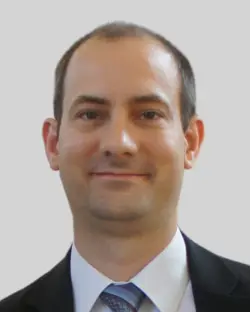
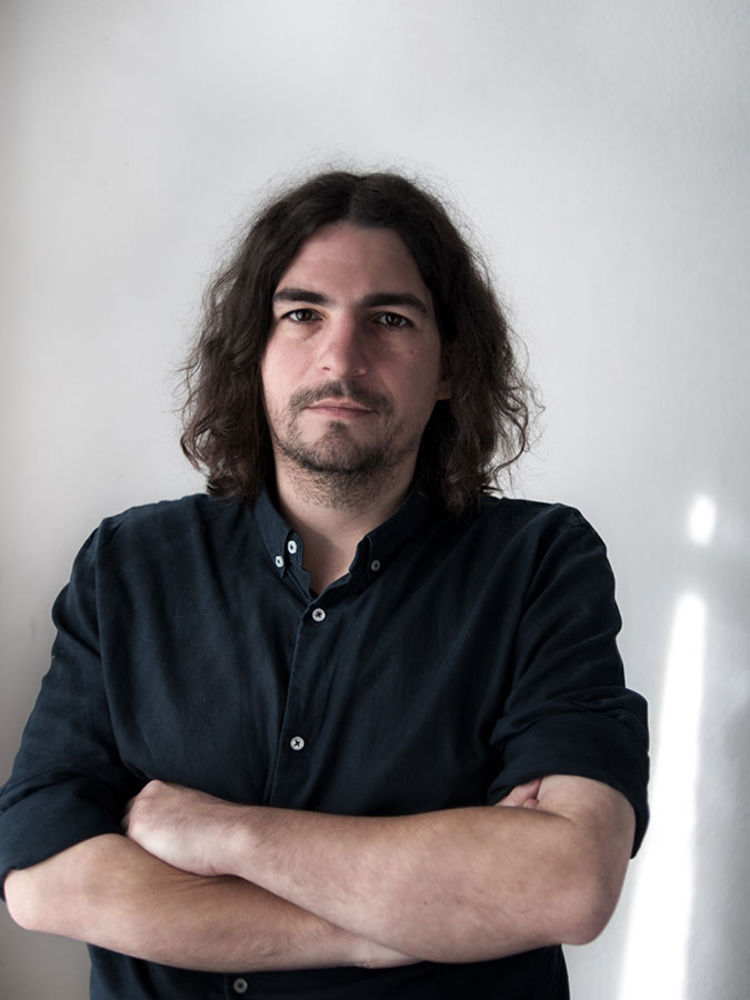
Richard Membarth is a Research Professor at Technische Hochschule Ingolstadt (THI) since 2021, specializing in System on a Chip (SoC) and Artificial Intelligence for Edge Computing . Previously, he worked as a Senior Researcher and Team Leader at the German Research Center for Artificial Intelligence (DFKI) in Saarbrücken (2014–2021), a Postdoc at the Intel Visual Computing Institute (IVCI) at Saarland University (2013–2014), and as a Research Employee at Friedrich-Alexander University Erlangen-Nürnberg (2008–2013), where he earned his PhD in Computer Science with a focus on medical imaging. Research Focus: Membarth's work bridges GPU computing compiler optimization domain-specific languages edge AI architectures His expertise in CUDA programming and high-performance systems informs his leadership in THI's AI Mobility Node (AImotion). Awards: HiPEAC Network Member Email: Richard.Membarth@thi.de
Prof. Dr. Stefan Müller holds the Professorship for Education and Socialization under Conditions of Social Inequality at Frankfurt University of Applied Sciences since 2023. His research focuses on the social legacy of National Socialism , antisemitism in educational contexts , and critical political education through dialectical reasoning. He leads two major third-party funded projects addressing antisemitism in schools and universities. 2025–2028: Consortium project 'Antisemitismus im Kontext Schule' funded by the German Federal Ministry for Family, Senior Citizens, Women and Youth 2026–2028: Mixed-methods study on university antisemitism in Hessen funded by HMWK Müller's academic contributions emphasize reflexive pedagogy , critical analysis of binary thinking , and dialectical approaches to educational challenges. His publications explore the interplay between historical memory , subjectivity formation , and emancipatory educational practices across various contexts including schools, digital spaces, and teacher training. Key editorial work in the Antisemitismus und Bildung book series Co-editor of the Gesellschaftsforschung und Kritik series As a methodologically diverse scholar , Müller combines qualitative interviews with quantitative analyses to understand educational dynamics. His recent projects focus on campus safety for Jewish communities , antisemitism in youth cultures , and interdisciplinary educational frameworks against hatred.
Johannes Schöning is a Professor of Human-Computer Interaction (HCI) at the University of St. Gallen, Switzerland. He leads a research group focused on developing novel user interfaces to empower individuals and communities in data-driven decision-making. His work spans interdisciplinary domains including geographic information science, public health, medical contexts, and space exploration. His research interests include Human-Computer Interaction, Virtual and Augmented Reality, Ubiquitous Computing, Accessibility, AI in HCI, and Sustainable HCI. He employs user-centered design and mixed methods, combining AI, computer graphics, and cognitive psychology to create disruptive, theory-grounded research. His lab publishes in top venues such as ACM CHI, MobileHCI, DIS, and journals like Nature and PLOS ONE . His recent publications reveal a strong focus on VR/AR for emotional regulation, accessibility, navigation systems, privacy, and citizen participation. Trends include the use of generative AI, eco-feedback, assistive wearables, and ethical implications of large-scale navigation technologies. Best Paper Award & Accessibility Award, Interact 2019 Best Paper Award, MobileHCI 2015 (StripeMaps) Best Presentation Award, IEEE VR 2023 Honorable Mention Awards at MobileHCI, CHI, MUM, and others Vodafone Research Advancement Award, 2012 McKinsey Business Technology Award Nominee, 2011 10 Year Impact Award 2021, MobileHCI 2011 paper He actively advises students and recruits for bachelor’s, master’s, PhD, and postdoctoral positions at the intersection of HCI, geoinformatics, and ubiquitous computing. He emphasizes creating a detox-free academic environment to focus on teaching and research excellence. His lab collaborates on interdisciplinary projects involving space missions, public health, and urban technology, often involving international teams and real-world deployments. He has contributed to discussions on research culture, academic ethics, and the future of HCI conferences.
Holger Gerhardt is a postdoctoral researcher at the Department of Economics , Institute for Applied Microeconomics , University of Bonn , and serves as Lab Manager at BonnEconLab . He is affiliated with the Center for Economics and Neuroscience (CENs) and ECONtribute: Markets & Public Policy . His research bridges economics, psychology, and neuroscience to investigate human decision-making under risk, time, and social contexts. Ph.D. in Economics , Humboldt-Universität zu Berlin (summa cum laude) Diplom-Volkswirt (M.Sc. equivalent), Humboldt-Universität zu Berlin His research focuses on experimental and behavioral economics , with strong emphasis on neuroeconomics . Key interests include risk and time preferences , loss aversion , cognitive load effects , social decision-making , and the neurochemical modulation of behavior via oxytocin . He employs experimental methodologies, including neuroimaging and pharmacological interventions, to understand the psychological and neural mechanisms behind economic choices. His recent publications (2020–2024) reveal a consistent focus on preference estimation , social discounting , emotional modulation of risk , and neurochemical influences on norm compliance . His work appears in top journals such as Review of Economic Studies , PNAS , and Frontiers in Psychology , often using innovative experimental designs, including online platforms and neuroeconomic paradigms. WWG Prize for best diploma degree (2004/05 winter term) Dr. Gerhardt advises and collaborates with interdisciplinary teams across neuroscience and economics. He has not received specific grant mentions in the provided text but leads experimental infrastructure as Lab Manager. He is actively involved in ongoing research, including recent 2024 working papers on preference parameter estimation. He is associated with the BonnEconLab, a key experimental economics laboratory supporting behavioral and neuroeconomic research at the University of Bonn.
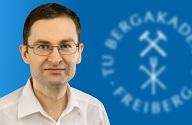
Dr. rer. nat. Gunter Semmler is a researcher at the Institute of Applied Analysis within the Faculty of Mathematics and Computer Science at Technische Universität Bergakademie Freiberg. He has been serving as a research assistant at the university since 1999, with an interlude at TU Munich from 2005 to 2008, and has continued his academic work at TU Bergakademie Freiberg since 2008. His role involves teaching courses such as Analysis 1, Analysis 3, Function Theory, and Ordinary Differential Equations, as listed in the OPAL course system. His research interests lie primarily in complex analysis, with a focus on nonlinear Riemann-Hilbert problems, interpolation theory, Blaschke products, conformal mapping, and phase visualization of complex functions. His work bridges theoretical mathematics with visual and educational applications, particularly evident in his widely recognized article on phase plots. He frequently collaborates with Prof. Elias Wegert, under whom he completed his PhD in 2001. The analysis of his publications reveals a consistent focus on the structure and behavior of complex functions, especially in boundary value problems and interpolation. His contributions span from foundational work on sine-type functions and complete interpolating sequences to innovative visual representations of meromorphic and entire functions. The keywords across his articles reflect deep engagement with Hardy spaces, Paley-Wiener theory, and the discrete Muckenhoupt condition, indicating advanced harmonic and complex analysis expertise. He has no listed scientific awards in the provided texts. However, his sustained publication record in reputable journals such as Computational Methods and Function Theory , Mathematische Nachrichten , and Notices of the American Mathematical Society underscores his scholarly impact. He is also a co-editor of the mathematical calendar Complex Beauties , highlighting his interest in mathematical aesthetics and outreach. There is no mention of students, grants, or labs in the provided information. His academic trajectory shows a dedicated research career with strong institutional affiliation and consistent contributions to complex function theory. He remains an active academic with no indication of part-time status, retirement, or emeritus position.
Prof. Dr. Britta Hartmann is Professor of Film Studies and Audiovisual Media Cultures at the University of Bonn, within the Department of Media Studies in the Faculty of Arts. She has held this position since 2015, following an acting professorship at the same institution. Her research spans documentary film, film narratology, media dramaturgy, and video activism in social media. University: University of Bonn School: Faculty of Arts Department: Department of Media Studies Academic Rank: Professor Email: britta.hartmann@uni-bonn.de Hartmann’s scholarly work centers on the theory and history of film, particularly documentary forms and audience engagement. Her research interests include text pragmatics, cognitive dramaturgy, and the aesthetics of political videos in digital environments. She has led significant research projects on video activism funded by the Volkswagen Foundation and collaborative grants with the Hebrew University of Jerusalem. Her recent publications explore topics such as TikTok activism, ethnographic documentary, and the affective strategies of political videos. The 15 most recent articles reflect a strong interdisciplinary trend, combining film theory, cognitive studies, political communication, and media ethics. They frequently address documentary ethics, identity construction, and the role of empathy in audiovisual media. Teaching Award, University of Bonn (2013) Karsten Witte Prize for best film studies essay (2013) Hartmann has supervised and collaborated with numerous scholars and is actively involved in academic publishing. She co-founded and co-edits the journal Montage AV , a leading publication in audiovisual communication theory. She has advised PhD and research projects, particularly in the context of documentary and media activism. Her work is supported by grants from major foundations and international collaborations. She is affiliated with the research group on video activism and maintains an active presence in academic networks. Her office is located at Lennéstr. 1, Bonn, and she is currently on research leave in 2025.
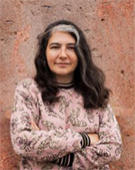
Övül Durmusoglu holds the Professorship of Fine Art/Art in Discourse, Theory and Practice of Contemporary Art at the HBK Braunschweig Institute of Fine Arts. Her position focuses on critical discourse, theoretical frameworks, and practical applications within contemporary art practices. Contact: Room 020, Building 05, HBK Braunschweig. Research Interests: Her work centers on contemporary art theory, critical discourse analysis, and interdisciplinary art practices. She explores intersections between artistic production, philosophical inquiry, and socio-political contexts. Contact Information: Email: oe.durmusoglu@hbk-bs.de Phone: +49 531 391 9347
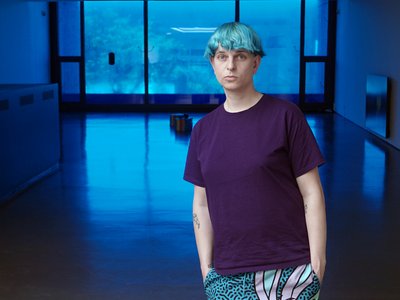
Vika Kirchenbauer is a Professor of Fine Arts / Fundamentals with a focus on Film/Video at the Braunschweig University of Art since 2022. As an artist, author, and music producer, her work has been exhibited internationally at institutions such as the Kunstverein Düsseldorf, Whitechapel Gallery (London), and Berlin International Film Festival. Kunstverein für die Rheinlande und Westfalen, Düsseldorf Kunstverein Kevin Space, Vienna Tainan Art Museum, Taiwan Whitechapel Gallery, London Kirchenbauer's research investigates intersections of violence and visibility , European religious music and colonialism , and oppression/emancipation dynamics in art. Her recent works include the video Compassion and Inconvenience (2024) and the publication Works, Scripts, Essays 2012-2022 (2022) by Mousse Publishing. Collaborators in her monographs include Oakland-based archivist Leeroy Kun Young Kang, who examines Kirchenbauer's exploration of distance/proximity in oppressive systems, and Warsaw-based philosopher Ewa Majewska, who analyzes her research on violence/non-violence. Kirchenbauer's practice spans multiple disciplines, combining visual art, written theory, and sound production through her solo music project COOL FOR YOU (active since 2015).
Florian Albrecht-Schoeck is a German artist and Researcher at the Offenbach University of Art and Design . His work bridges Photography , Artificial Intelligence , and Machine Learning , exploring themes of roots, identity, origin, and belonging within societal, political, and individual contexts . He co-teaches the Photography Fundamentals course with Prof. Martin Liebscher. Albrecht-Schoeck’s artistic practice involves analog, digital, and virtual photography . His series like Not Alone (2021/2022) and Squares (2023) analyze the medium’s evolving role in the age of AI. He integrates research into teaching , helping students navigate complex technologies through projects like No way Back: Photography without Photographs (2024/2025). He has received notable awards and scholarships , including the Brückenstipendium der Hessischen Kulturstiftung (2021) and Deutsche Börse Fotoförderpreis (2011). His works are housed in collections such as the Art Collection Deutsche Börse and the Museum für Kunst und Kulturgeschichte in Marburg . Key exhibitions include Roots Retropia Rage Repeat (2018) and Fotografie ohne Fotografie (2025). He also contributes to pedagogical projects , such as the annual ZuTaten publications and exhibitions (2024/2025).
Piotr Szczepan Kisiel is an associated researcher at the Leibniz-Institut für Raumbezogene Sozialforschung (IRS) in the Research Area Contemporary History and Archive. He previously led a BMBF-funded subproject (2021–2024) on city maps as visual media of urban transformation in Central and Eastern Europe (1939–1949) and worked at the University of Konstanz (2018–2020) on industrial heritage in Germany and Poland. Education: PhD in History, European University Institute, Florence (2016) MA in History, Jagiellonian University and University of Dundee (2007–2011) MA in Law, Jagiellonian University (2004–2009) His research focuses on urban history, industrial heritage, memory landscapes, and visual culture in Central and Eastern Europe. He explores how cities transform after conflict and industrial decline, analyzing postcards, maps, and digital platforms as sources of urban memory. His work critically examines the politics of space, nationalism, and heritage in post-industrial and post-socialist contexts. His recent publications (2022–2025) reveal a consistent engagement with themes of urban transformation, post-industrial identity, and visual representation. Articles such as 'Picturing an Industrial City' and 'Invisible Cities' highlight the use of postcards to understand urban narratives, while 'Meaning Beyond Accuracy' and 'Recovering the Past for the Future' analyze maps and reconstruction policies. His work bridges historical scholarship with spatial and cultural analysis, often focusing on cities like Łódź, Chemnitz, and Cottbus. Scientific Awards: No awards mentioned. Although no formal students are listed, his role as a subproject leader and active publication record suggests mentoring and collaboration within research teams. He has not received any explicit grant mentions in the text, but his BMBF-funded project indicates significant research funding involvement. His work appears in both peer-reviewed journals and public forums, reflecting a commitment to academic and societal engagement. He is affiliated with research teams focused on urban transformation and industrial heritage, particularly within the IRS and prior projects at the University of Konstanz. His presentations at international conferences underscore his integration into transnational academic networks in urban and heritage studies.
Jian Chen is an Associate Professor in the Department of Computer Science and Engineering at The Ohio State University. He is affiliated with the College of Engineering and the Visualization Research Center (ViSUS) at the Cluster of Excellence IntCDC in Stuttgart, Germany. Research Focus: Interactive visualization and virtual reality Collaborations: Physics, biology, and medicine Current Work: Human-machine collaboration mediated by visualization, multi-source knowledge acquisition from scholarly articles Contact: chen.8028@osu.edu
Karsten Schul is a researcher at the Institute of Exercise Training and Sport Informatics at German Sport University Cologne, specializing in Cognition in Team Sports . His work focuses on decision-making, gaze behavior, and inclusion in basketball contexts, with a strong emphasis on translating research into practical applications. Active projects include holistic referee training protocols and data-driven models for performance analysis. Recognized with multiple awards, including the Excellence in Research Award (2023). Research Trends : Recent publications highlight advancements in 3x3 basketball implementation, cognitive coaching techniques (e.g., wingwave®), and video-based training for referees. Key subfields include inclusive sports design, visual attention dynamics, and analytical tools for team sports. Scientific Awards : Excellence in Research Award (2023) Lehrpreis - Praxiskurs/Übung (2013, 2019) Wo Kicker Körbe werfen (2022)
Mitra Baratchi is an Associate Professor at the Leiden Institute of Advanced Computer Science (LIACS) , Leiden University. She leads the Spatio-temporal data Analysis and Reasoning (STAR) research group, co-leads the Automated Design of Algorithms (ADA) group, and founded the Special Interest Group on Spatio-Temporal Data Mining (SIG-SDTM) . PhD from University of Twente (Mobility Data) Master’s/Bachelor’s in Computer Engineering, Iran Research Interests focus on automated pattern extraction from spatio-temporal data across urban, environmental, and industrial domains. Key applications include: Automated Machine Learning (AutoML) for Earth Observations Time-Series Forecasting for public health (e.g., pandemic modeling) Urban Mobility Optimization with ESA, Honda, and municipalities Reliable Vehicular Communication Systems Smart Garments for Health Risk Detection Geocast Protocols for Internet-wide Communication Grant Highlights include €120K NWO-Aspasia, €2.9M Marie Skłodowska-Curie, €350K NWO-KLEIN, and €135K Center for BOLD Cities funding. She has supervised 12 PhD students and 4 current Master’s students since 2011, with notable best paper award at WWIC'16. Teaching includes Machine Learning (2020-present) and Urban Computing (2018-present) at Leiden, plus past courses in Data Visualization, Software Engineering, and Research Methods.
Dr. Ulf Vierke serves as Akademischer Oberrat (Senior Academic Councillor) at the University of Bayreuth, where he directs the Iwalewahaus and holds multiple leadership positions including Member of the Executive Committee of the Institute of African Studies (IAS) and Member of the Management Board of the Bayreuth International Graduate School of African Studies (BIGSAS). His academic career spans over two decades at the University of Bayreuth, beginning with doctoral studies in Cultural Studies completed in 2004. Dr. Vierke earned his Magister Artium in Social Anthropology, Ethnology, Islamic Studies, and Law at the University of Bayreuth in 1996, followed by his doctorate under Prof. Dr. Till Förster. His academic progression includes Research Fellow at the Iwalewahaus (2004-2009), Akademischer Rat (2009-2014), and promotion to Akademischer Oberrat in 2014. He has directed the Iwalewahaus since 2010 and coordinates the 'Revolution 3.0 – Iconography of Social Upheaval' research project. His research focuses on contemporary African art and visual culture, with regional expertise in Angola, Tanzania, and Kenya. Dr. Vierke's scholarly work examines urban art scenes, photographic practices, and material culture, particularly glass beads and commerce. His approach bridges anthropology, art history, and cultural studies to explore how visual practices reflect and shape social and political transformations in African contexts. He has made significant contributions to understanding Angolan photography, carnival practices, and postcolonial artistic expression. Dr. Vierke's publication record demonstrates a consistent engagement with revolutionary iconography, urban memory, and the transnational circulation of African art. His recent work explores how visual culture documents and influences social change, particularly in post-conflict societies. The thematic progression across his publications reveals an evolving focus from material culture studies to contemporary political visualities. As University of Bayreuth's Commissioner for Handicapped Students & Students with Chronic Illnesses since 2012 and Deputy chair of Studentenwerk Oberfranken's representative assembly since 2014, Dr. Vierke demonstrates significant institutional commitment beyond his research responsibilities. His authorization to supervise doctoral students at BIGSAS underscores his standing as a senior academic mentor in African Studies.
Andreas Oberweis is a Professor at the Karlsruhe Institute of Technology (KIT), Germany, with a distinguished career in business process management, information systems, and process modeling. His work spans interdisciplinary collaborations, focusing on integrating formal methods like Petri nets with practical applications in digital identity, privacy, and educational technology. Key research areas include Business Process Management, Information Systems, Petri Net Modeling, Semantic Web, and Process Mining. He has contributed to methodologies like MEUSec for enhancing user experience and security in digital identity wallets, and frameworks for automated assessment of modeling competencies. Publications highlight innovations in process model similarity, social network coordination, and 3D business process visualization. His recent work emphasizes user-centric security and multimodal mobility optimization. Collaborations involve institutions like KIT, University of Rome, and Queensland University of Technology, with co-authors such as Peter Loos, Ralf Reussner, and Agnes Koschmider. He has developed tools like INCOME2010 for process-oriented systems and contributed to open models for enterprise systems. Despite no explicit awards listed, his 18+ years of continuous publication in top venues (BPM, EMISA, Modellierung) underscore his academic impact.