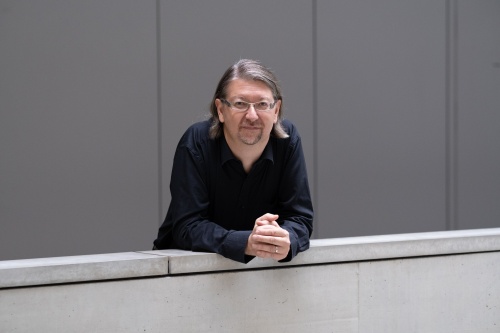
Hans Reiner Sepp is a researcher at the Centre for Theoretical Studies (CTS) of Charles University and the Academy of Sciences of the Czech Republic, and at the Institute of Philosophy and Religious Studies (ÚFaR) of the Faculty of Arts of Charles University in Prague. He serves as an advisor to the Husserl Archive in Freiburg since 1982 and holds multiple editorial roles in international phenomenological journals. His academic background includes German studies and philosophy at the University of Munich (1974-1980), a 1991 dissertation on Husserl's transcendental phenomenological reconstruction of life, and ongoing habilitation research on reality experiences in Nietzsche and Schopenhauer. His scholarly identity centers on classical phenomenology with specialized expertise in Husserl, Heidegger, Fink, and Patočka. Sepp's research explores the concept of 'world' across phenomenological traditions, phenomenological aesthetics, and intercultural philosophy. His work critically examines epoché, transcendence, gender differences, and the crisis of sciences through comparative analyses of key phenomenologists. He demonstrates particular originality in bridging Husserl's transcendental framework with Nietzschean and Schopenhauerian thought. His 1997-1999 publications reveal consistent thematic evolution: early works establish foundational analyses of Husserl's school and gender phenomenology, while later articles develop sophisticated investigations into Fink's speculative ontology, Patočka's political phenomenology, and Nietzsche's aesthetics. This trajectory shows deepening engagement with phenomenological method's boundaries across cultural and disciplinary contexts. Sepp actively shapes the field through his role as co-publisher and secretary of the Orbis Phaenomenologicus book series, secretary general of the Society for Intercultural Philosophy, and chairman of the Zen Academy in Freiburg. He organizes international colloquia while serving on editorial boards for Phainomena (Ljubljana), Recherches Husserliennes (Brussels), Phänomenologische Forschungen (Freiburg/Munich), and Escritos de Filosofia (Buenos Aires). His institutional presence extends to the Phenomenology Group (Vienna) and Nietzsche Research Community (Halle), where he contributes to defining contemporary phenomenological discourse through collaborative projects and critical editions of phenomenological texts.