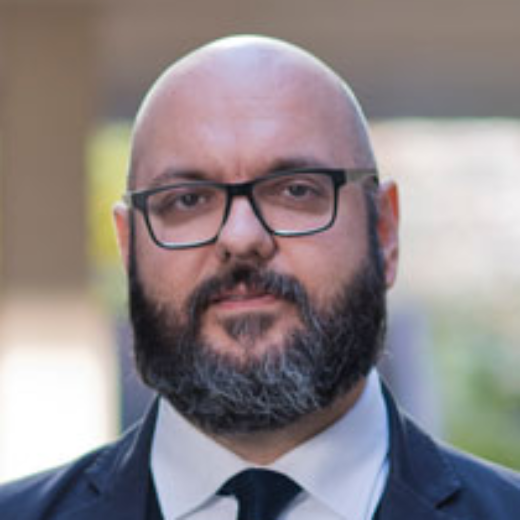
Alessandro Luigini is an Associate Professor at the Department of Educational Sciences, Faculty of Educational Sciences, Free University of Bozen-Bolzano. His academic roles include serving as Principal Investigator for projects such as VAR.HEE (2018-21) and TTC (2023-2025), and chairing international conferences like IMG2017 and EARTH2018. He founded EARTH_LAB, focusing on digital environments for education, art, and heritage. His research interests span graphic and visual sciences, digital heritage, and immersive serious games for education. He has authored over 130 publications and serves on editorial boards and committees, including the ICCD Administrative Committee and UID board. Education: PhD in Representation and Surveying of Architecture and the Environment from University 'G. d'Annunzio.' Grants: Principal Investigator for projects funded by competitive calls (VAR.HEE, B_DIGITAL, Digital_FEED, TTC). Labs/Teams: EARTH_LAB, leading interdisciplinary research in digital heritage education.
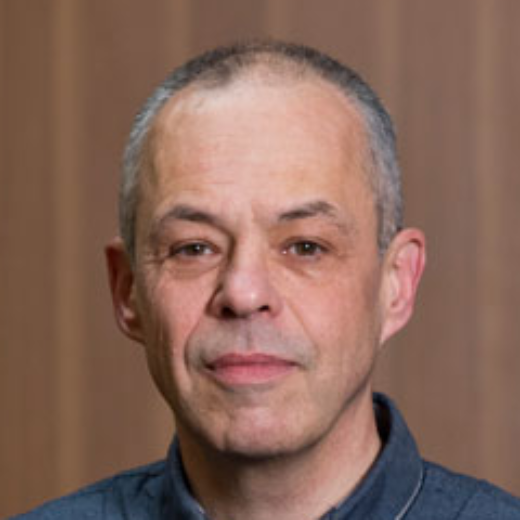
Michela Spagnuolo is a Research Director at the Italian National Research Council’s Institute of Applied Mathematics and Information Technology (CNR-IMATI-GE) since 2001. Her work bridges Computer Graphics , Geometry Processing , and Computational Topology , with applications in 3D Shape Analysis , Cultural Heritage , and Bioinformatics . Co-supervised 6 PhD theses (plus 2 ongoing) Associate Editor for journals like The Visual Computer and Computers&Graphics Chair of conferences including Shape Modeling International and EG Workshops on 3D Object Retrieval Research Interests : Focus on geometric and semantic modeling of 3D objects , computational topology for shape analysis , and structural/similarity evaluation . Her work enables advanced 3D search engines , semantic annotation , and medical imaging applications . Article Trends : Recent publications emphasize mesh quality indicators for Virtual Element Methods in engineering simulations and semantic-driven 3D model analysis for medical diagnostics and cultural heritage . Key subtopics include topological decomposition , data processing services , and multi-scale modeling . Scientific Awards : Fellow of the Eurographics Association (2014) Notable Contributions : Led projects like IQmulus (geospatial data analytics) and MultiScaleHuman (medical shape modeling). Pioneered CIDOC CRMdig for cultural heritage documentation and developed techniques for kernel computation in polyhedra .
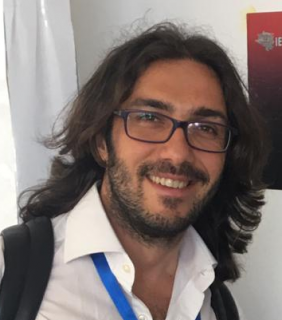
Giulia Sammartano is a Fixed-term Tenure-Track Assistant Professor at the Department of Architecture and Design (DAD) of the Polytechnic University of Turin . She is a member of the FUTURE Urban Legacy Lab (FULL) and engages in interdisciplinary research at the intersection of geomatics, cultural heritage, and sustainable architecture. Scientific Branch: Geomatics (CEAR-04/A, Area 0008 - Civil Engineering and Architecture) ERC Skills: PE8_3 (Civil Engineering), PE6_8 (Computer Graphics), SH2_12 (GIS), PE2_15 (Metrology) SDG Contributions: Quality Education, Gender Equality, Cities & Communities, Climate Action Her research interests include 3D modeling , digital cultural heritage , UAV photogrammetry , and SLAM-based mapping . She specializes in applying advanced geomatic techniques for heritage documentation, with a focus on laser scanning , point cloud processing , and HBIM (Heritage Building Information Modeling). Recent publications highlight her work on the REVHEAL and HERITALISE projects, exploring topics like masonry vault simulations , autonomous robotic surveying , and ML/DL classification of LiDAR data . She serves as Guest Editor for journals such as Remote Sensing , Sensors , and Drones . Awards: Polytechnic University of Turin Publications Award (2016, 2018) Best Poster SIFET2017 (2017) Quality of Research Activity (2016) Scientific Memberships: ICOMOS Italia (2023-) CIPA Heritage Documentation (2023-) ISPRS (2020-)
Riccardo Renzulli is a Researcher at the Department of Computer Science, University of Turin, focusing on object-centric representation learning, medical image analysis, and AI-based computer vision applications. His research emphasizes capsule networks, deep learning models for hierarchical relationships, and applications in healthcare and aerial/satellite imagery. Education: MSc and BSc in Computer Science from University of Turin (2018 and 2015). Previous research with Prof. Valentina Gliozzi explored description logics and non-monotonic reasoning. Professional experience includes a 2022 post at Aalto University (supervised by Prof. Ville Kyrki and Francesco Verdoja) and roles at Addfor and Machine Learning Reply as a deep learning scientist. Research interests span concept learning, few-shot learning, interpretability, and medical imaging. Notable work includes visual localization systems for UAVs, AI-assisted diagnosis for COVID-19 via CXR analysis, and lung nodule segmentation using DeepHealth Toolkit. He contributed to the UniToChest dataset for cancerous nodule detection. His recent publications (2022-2025) address efficient neural architectures, medical imaging applications, and 3D scene modeling. Collaborations include EIDOSLAB, with research emphasizing scalable compression, entropy-based pruning, and ensemble methods for neural networks.
Werner Nutt is a Professor at the Free University of Bozen-Bolzano , Italy, affiliated with the Faculty of Computer Science since 2005. He previously held academic positions as a Reader at Heriot-Watt University (2000-2005), Visiting Professor at Hebrew University of Jerusalem, and Research Scientist at DFKI (1992-2000). Current Role: Professor, Free University of Bozen-Bolzano Past Roles: Reader (Heriot-Watt), Visiting Professor (Hebrew University), Research Scientist (DFKI) Research Interests focus on Data Management , Knowledge Representation , and Intelligent Information Extraction , with emphasis on modeling Construction Processes and ensuring Data Quality . His work bridges Semantic Web technologies with Business Process Management , notably through the COCkPiT project (2017-present) for construction process optimization. Key Contributions include foundational work on Query Completeness in databases, SPARQL Reasoning , and Semantic Diagnostics . He has published extensively in venues like ISWC , BPM , and CIKM , with an h-index of 35 on Google Scholar. His 154+ publications span topics from Probabilistic XML to Construction Process Modeling .
Francesco Leotta is a Tenure Track Assistant Professor in the Department of Computer, Control and Management Engineering at Sapienza University of Rome, specializing in ubiquitous computing, human-computer interaction, and digital humanities with applications in smart spaces, smart manufacturing, and cultural heritage. His educational background includes a PhD in Engineering in Computer Science (2014), Master Degree in Computer Science Engineering (2010), and Bachelor Degree in Computer Science Engineering (2006), all with honors from Sapienza University of Rome. He has been qualified to practice as a Computer Science Engineer since 2010. Leotta's research pioneers 'habit mining' for learning human behaviors from unlabeled sensor data, focusing on usability for technicians through readable process models and for end users via accessible interfaces including chatbots and solutions for people with disabilities. His recent work centers on Industry 4.0, developing AI-driven digital twin architectures for industrial automation. Key projects include privately funded Rotalaser Fustella 4.0 and publicly funded initiatives FIRST and ElectroSpindle 4.0. Analysis of his 2024-2025 publications reveals strong interdisciplinary trends bridging business process management with IoT and AI, particularly in smart manufacturing maturity models, digital twin composition, and multimodal human-robot interaction. His work consistently integrates theoretical frameworks with practical industrial applications. Scientific recognition includes: Best Paper Award at IEEE International Conference on Web Services (ICWS 2019) Leotta actively contributes to research groups in Human-Computer Interaction, Data Management, and Semantic Technologies, with current projects focusing on adaptive smart manufacturing systems. His grant portfolio demonstrates successful collaboration between academic research and industrial applications in the manufacturing sector. He maintains active involvement in the computing continuum ecosystem through projects like DataCloud, addressing big data pipelines and dark data utilization in industrial contexts.
Luca Mainetti is a Full Professor in the Department of Innovation Engineering at the University of Salento, where he leads the GSA Lab (Graphics and Software Architectures Lab) and founded the Mobile and Multi-Device Applications research group. He has been a key figure in advancing software and web engineering, particularly in model-driven approaches for IoT and service-oriented systems. His research interests include: Software Engineering Web Engineering Model-Driven Engineering for middleware and IoT Service-Oriented Architectures Embedded and mobile applications His recent publications reflect a strong trend toward model-driven development of IoT systems, integration platforms like WoX, and academic entrepreneurship through spin-offs such as VidyaSoft and SofThings. These works emphasize software architecture, automation, and real-world application in domains like FinTech and CRM. Scientific recognitions include: Senior Member of the ACM Member of IEEE Luca Mainetti has supervised over ten doctoral and post-doctoral researchers and coordinated the Doctoral School in Information Engineering from 2012 to 2017. He has held leadership roles including Vice-Director of the Department of Innovation Engineering and Rector’s Representative for the Digital Agenda. He also coordinates the National Technical Committee for Digital University under MIUR, highlighting his influence in national academic ICT policy. He is actively involved in research labs and innovation initiatives, including: GSA Lab – Graphics and Software Architectures Lab (Scientific Director since 2007) IDA Lab – IDentification Automation Lab (Scientific Director, 2008–2016) Spin-off leadership in VidyaSoft and SofThings
Anna Osello is a Full Professor at the Department of Structural, Building and Geotechnical Engineering, Politecnico di Torino. She serves on the Coordinating Committee of the Politecnico University Centre for Social Affairs and is a member of the SISCON Interdepartmental Center for Infrastructure Safety. Her research focuses on Building Information Modeling (BIM), Smart Cities, Virtual and Augmented Reality (VAR), and Digital Twin technologies. She has led numerous commercial and competitive research projects, including MANAGE5.0, BDFA, and EEB, emphasizing energy efficiency and infrastructure management. Scientific Awards Learning to Teach (L2T) Open Badge National and International Patent: Method and System for Monitoring Objects in a Housing Unit by Eye Tracking Research Trends 2025: Machine Learning in BIM for Tunnel Reconstruction 2025: Integrated BIM Methodology for Bridge Monitoring 2024: Complexity Logic in Building Systems 2023: Geospatial BIM-GIS for Hydropower 2022-2024: Digital Twins for Infrastructure Management PhD Students Sabina Accogli (Urban Regional Development, 40th cycle) Elisa Stradiotto (Urban Regional Development, 40th cycle) Francesco Loddo (Civil Environmental Engineering, 39th cycle) Jacopo Fiorenza (Computer Engineering, 38th cycle) Daniela De Luca (Urban Regional Development, 35th cycle) Grants and Projects MANAGE5.0 (2022-2024, PNRR) BDFA (2020-2021, Private Foundation) CANP - La casa nel parco (2018-2020) DISLO-MAN (2016-2019, Regional Platform) Labs and Teams Lead the 'drawing TO the future' lab Collaborated with SISCON Interdepartmental Center Involved in BIM-GIS-IoT integration projects
Roberta Macaluso is a PhD student in Computer and Systems Engineering (39th cycle, 2023-2026) and an External Lecturer at the Department of Control and Computer Science (DAUIN) of the Polytechnic University of Turin. She is actively affiliated with the GRAINS research group and the VR@POLITO laboratory, contributing to extended reality initiatives. Education: Bachelor's Degree in Computer Engineering, University of Catania, graduated November 2019 Master's Degree in Computer Engineering (major: Graphics and Multimedia), Polytechnic University of Turin, graduated December 2023 Research Interests: Her work centers on Extended Reality (XR) technologies for socially engaged virtual environments, spanning Virtual Reality, Augmented Reality, and Mixed Reality applications. She investigates computer graphics and multimedia techniques to enhance user interaction in training simulations (e.g., forest fire management), social VR platforms, and healthcare rehabilitation systems, with emphasis on embodiment, therapist representation, and multi-user dynamics. Publication Trends: Her 2024-2025 publications reveal a concentrated focus on XR applications in healthcare and social contexts. Key themes include machine learning refinement for social VR animations, prosthetic limb embodiment through AR/DR exergames, and therapist representation in tele-rehabilitation. Her research bridges computer science, human-computer interaction, and practical clinical/training implementations, demonstrating consistent innovation in XR fidelity and user experience. Awards: No scientific awards documented. Advising and Grants: Supervised by Prof. Fabrizio Lamberti and Prof. Alberto Cannavò for her PhD, she previously held a scholarship under Prof. Lamberti focused on XR tools for interactive 3D visualization in multi-user platforms. Her research directly supports the development of socially engaged virtual environments and training applications. Labs and Teams: Core member of the GRAINS (GRAphics and INtelligent Systems) research group and VR@POLITO laboratory at DAUIN, where she conducts XR development and testing for forest firefighting simulations, healthcare rehabilitation, and social interaction frameworks.
Pier Luca Lanzi is a Full Professor at Politecnico di Milano, affiliated with the Department of Electronics, Information, and Bioengineering (DEIB). He leads the Artificial Intelligence and Robotics Lab (AIRLab), focusing on interdisciplinary research at the intersection of AI, robotics, and human-centric technologies. His work emphasizes applications in gaming, healthcare, and education, leveraging machine learning, evolutionary algorithms, and virtual reality. Education: Not explicitly stated in the provided texts. Affiliations: Director of the AIRLab; core member of DEIB. His research interests span artificial intelligence, multiagent systems, procedural content generation for games, serious games for rehabilitation, and AI-driven medical imaging. He explores how AI can enhance learning experiences (e.g., VR classrooms for physics and history) and improve therapeutic outcomes through interactive frameworks like the IGER system for stroke rehabilitation. Notable contributions include frameworks for automated level design in games (e.g., DOOM level generation via GANs), AI-assisted diagnostic imaging systems, and exergaming solutions for juvenile arthritis patients. His work often bridges computational intelligence with real-world applications, emphasizing human-centered design. Advising & Grants: While no specific grant details are provided, his prolific publication record suggests sustained research activity. Students and collaborators include prominent names in AI and robotics, though formal advisee名单 are not listed here. Labs/Teams: Directs the AIRLab, which develops cutting-edge technologies in AI, robotics, and human-technology interaction. Collaborates with industry and academic partners on projects ranging from VR educational tools to medical exergames.
Angelo Juliano Donato is a Research Assistant at the Department of Structural, Geotechnical and Building Engineering (DISEG) at Politecnico di Torino, where he also serves as an external lecturer and teaching assistant. He is actively involved in the Master of Science program in Building Engineering, contributing as a course collaborator for 'Knowledge of the built heritage in the era of climate change' since the 2023/24 academic year. His research focuses on the integration of digital technologies in sustainable engineering, particularly through the application of Digital Twin and Cognitive Digital Twin concepts in the context of climate neutrality and Industry 5.0. His work bridges structural engineering with digital innovation and environmental sustainability. The recent publications highlight a strong trend toward leveraging digital twins for sustainable industrial transformation and enhanced data visualization in engineering contexts. These works emphasize interdisciplinary approaches combining built heritage, digital modeling, and climate resilience. Scientific Awards No scientific awards mentioned in the provided text. Advising and Grants Currently serving as a course collaborator in the Master of Science program in Building Engineering. No information available on grants or formal student advising. Labs, Teams, and Research Groups Active member of research initiatives within the Department of Structural, Geotechnical and Building Engineering (DISEG) at Politecnico di Torino, focusing on digital twin applications and sustainable built environments.
Lia Morra is a fixed-term Researcher at the Department of Control and Computer Science (DAUIN) at the Polytechnic University of Turin, where she is also a member of the SmartData@PoliTO – Big Data and Data Science Laboratory. She is actively involved in research, teaching, and editorial roles, focusing on artificial intelligence and its applications in vision and data science. She teaches in the College of Computer, Film and Mechatronics Engineering and the College of Management and Production Engineering. Research Interests: Her work centers on artificial intelligence, deep learning, image analysis, and neural-symbolic integration. She applies these techniques to medical imaging, satellite data, autonomous systems, and human-computer interaction. Her research bridges symbolic reasoning with neural networks, emphasizing explainability, robustness, and real-world deployment. Publication Trends: Her recent publications (2023–2025) show a strong focus on neuro-symbolic AI, explainable models, medical imaging, and efficient deep learning. She frequently publishes in top-tier journals and conferences such as Medical Image Analysis , IEEE ACCESS , and IJCNN, with applications in healthcare, autonomous driving, and privacy-preserving AI. Scientific Awards and Recognition: Open badge RIMINI SCHOOL 2025 “SUCCESSFULLY PARTICIPATE IN CALLS FOR RESEARCH FUNDING” Learning to Teach (L2T) Advising and Grants: She supervises multiple PhD students in Computer and Systems Engineering, including Pietro Basci, Rosario Milazzo, Alessandro Sebastian Russo, and Luca Piano. She is the Scientific Responsible for several research projects, including EU-funded CAMOUFLAGE and multiple commercial contracts on AI for medical imaging, satellite data, and digital transformation. She also serves on editorial boards for Frontiers in Medical Engineering and IEEE Consumer Electronics Magazine . Labs and Teams: She is a core member of the GRAINS (GRAphics and INtelligent Systems) research group at DAUIN, focusing on intelligent systems, computer vision, and data science.
Chiara Vernizzi is a Full Professor in the Department of Engineering and Architecture at the University of Parma, where she has held academic positions since 2002, progressing from Researcher to Associate Professor (2010) and Full Professor (2018). She is actively involved in teaching, research, and leadership, currently serving as Coordinator of the Architecture Unit (2021–2024) and Deputy President of the Master’s Degree Course in Sustainable Architecture and Cities. PhD in 'Design and Survey of the Building Heritage' (1999) Graduated in Architecture, Politecnico di Milano (1991, 100/100) Her research focuses on Architectural and Urban Design, Surveying, and Digital Representation, particularly in historical contexts. She investigates methods for representing cities, computer-aided rendering of historical architecture, and modern graphic representation of architectural projects. Her work integrates advanced technologies like 3D laser scanning and BIM for heritage documentation and urban analysis. Her recent publications reflect a strong trend in urban survey, digital modeling, heritage conservation, and post-disaster reconstruction. Themes include BIM applications (eBIM project), representation in urban planning, and interdisciplinary drawing methodologies. The research spans from Renaissance architecture to contemporary sustainable city design. Scientific Responsible, eBIM Project (POR_FESR Emilia Romagna, 2018) Member, Scientific Technical Committee of Italian Design Union (UID) Editorial Committee Member, 'design' magazine (UID) Rector’s Delegate for Orientation, University of Parma Member, PhD Teaching Staff in Civil Engineering and Architecture Prof. Vernizzi has supervised numerous PhD theses and participated in major research grants, including PRIN and international collaborations. She has led multiple third-mission projects with municipalities and cultural institutions, focusing on urban regeneration, post-earthquake reconstruction, and digital documentation of heritage sites. Her work bridges academia and public policy. She leads and participates in research teams and labs focused on architectural survey, digital representation, and sustainable urban development. These include collaborations with the Interdepartmental Center for Energy and the Environment (CIDEA), Superintendence for Architectural Heritage, and international partners such as the University of Ferrara and ERASMUS+ programs.
Vincenzo Armandi is a Research Fellow at the University of Bologna, affiliated with both the Department of the Arts and the Department of Computer Science and Engineering. His work bridges computer science and applied technology, focusing on augmented reality (AR), IoT systems, and interdisciplinary applications. Research interests include: - 3D modeling integration in extended reality platforms - AI-driven AR systems for wine recognition and fitness assistance - Mixed reality collaboration tools for industrial environments - User-centric IoT service composition via visual programming interfaces Recent publications (2021-2025) demonstrate a focus on: • AR/VR applications in cultural, health, and manufacturing contexts • IoT infrastructure design with end-user programmability • User experience evaluation in digital musical experiences No scientific awards or grants are explicitly mentioned. Advising information is unavailable.
Hossein Azari is a researcher in the Department of Computing Science at the University of Alberta, focusing on advanced 3D interaction methods. His work addresses the challenges of transitioning from 2D to stereoscopic 3D environments, particularly through the development of the Stereo 3D Cursor (S3D-Cursor) for precise 3D object manipulation. Research Areas: Computer Graphics, Human-Computer Interaction, 3D Visualization, Stereoscopic Displays, Virtual Reality, and 3D User Interfaces. In his 2010 publication, Azari introduced a novel approach to implementing a stereo 3D mouse cursor, enabling users to interact with 3D objects via disparity control. The study demonstrated the technique’s effectiveness in enhancing depth perception and user satisfaction, validated through experiments with QSplatMV software and user evaluations on tasks like 3D lung model contouring. The theoretical contributions include mathematical models for stereo cursor accuracy, analysis of depth resolution limitations in stereoscopic systems, and proposed virtual enhancements (e.g., auto-disparity adjustment, target size scaling) to improve performance. Applications span 3D games, medical imaging, and autostereoscopic displays, with future work emphasizing accuracy improvements and advanced UI tools.