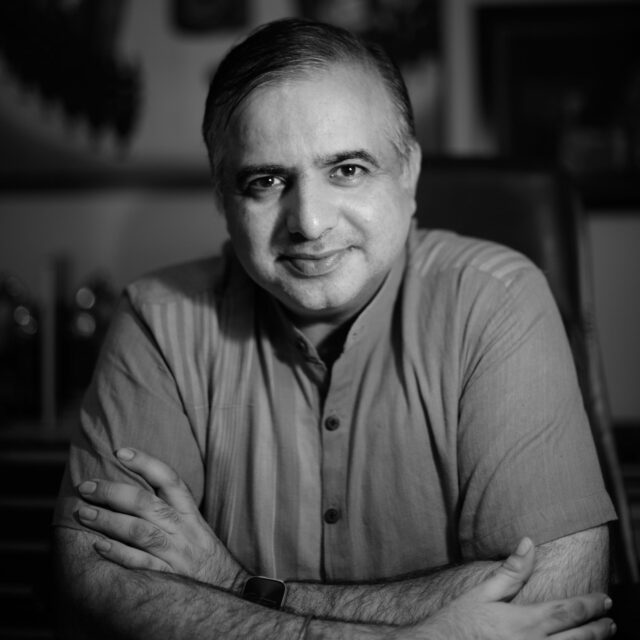
Prof. Gaurav Raheja is a Professor at the Department of Architecture & Planning, IIT Roorkee, and Co-coordinator of the Design Innovation Centre. He holds joint faculty positions at the Centre for Transportation Systems and is Professor-in-charge of Inclusion and Accessibility Services. His academic journey includes a PhD (2008) and M.Arch (2002) from IIT Roorkee, and a B.Arch from PTU Jalandhar (2000). His research focuses on universal design, inclusive mobility, urban sustainability, and accessibility for marginalized groups such as persons with disabilities, children, and the elderly. He leads the Laboratory of Inclusive Design (LID) and advises India’s government on accessibility policies. Notable awards include the Mphasis Universal Design Award (2010) and DAAD Research Ambassadorship (2018–2022). He has authored over 50 publications, including books on universal design and accessibility. His recent work explores children’s independent mobility in urban areas, inclusive urban futures, and accessibility in pilgrimage towns. He collaborates with global institutions like TU Berlin and TU Dresden through DAAD-funded programs. His teaching spans courses on universal design, architectural theory, and sustainable urban planning.
Dr. Oscar Meruvia-Pastor is a faculty member in the Department of Computer Science at Memorial University of Newfoundland, within the Faculty of Science. He holds a B.Sc. from ITESM-Monterrey, Mexico, an M.Sc. from the University of Alberta, and a Ph.D. from Otto-von-Guericke Universität Magdeburg, Germany. His research focuses on interactive 3D graphics, non-photorealistic rendering, and biomedical visualization, with applications in telepresence systems, augmented reality (AR), and virtual reality (VR). He has developed tools like OMARC for respiratory condition training and GeNET for gene co-expression network analysis. Dr. Meruvia-Pastor has supervised numerous graduate students and contributed to over 50 publications. His work includes evaluating stereo correspondence methods in AR, robot arm manipulation via depth sensors, and smartphone integration in immersive VR. He has been recognized with awards such as the Best HCI Poster at Graphics Interface 2014 and a semi-finalist poster at SIGGRAPH 2015. He teaches courses in computer science, including computer graphics, multimedia development, and introductory science modules. His research lab focuses on 3D telepresence, medical visualization, and human-centered VR/AR solutions. His academic contributions span software tools for medical imaging analysis, interactive visualization systems, and educational technologies. He actively collaborates with health professionals to advance telemedicine and remote procedural training through AR platforms. His work bridges computer graphics with real-world applications in healthcare, education, and environmental advocacy.
Tom Boellstorff is a Professor of Anthropology at the University of California, Irvine. He holds a Ph.D. from Stanford University (2000). His research focuses on digital anthropology, virtual worlds, queer theory, and the intersection of technology with cultural practices. Boellstorff is known for pioneering ethnographic studies in virtual environments like Second Life and has explored topics such as Indonesian LGBTQ+ communities, disability in digital spaces, and the cultural history of early video games like Intellivision. His work spans theoretical frameworks for understanding digital cultures, methodological innovations in virtual ethnography, and critical analyses of technology’s role in shaping identity, politics, and social structures. Boellstorff’s interdisciplinary approach integrates cultural theory, media studies, and queer studies to examine how digital platforms mediate human experience. Recent publications emphasize the anthropology of emerging technologies (e.g., metaverse studies), historical analyses of video game platforms, and the sociopolitical implications of digital exclusion. His documentary work, including Virtual Cultures in Pandemic Times , extends his ethnographic focus into visual media.
Associate Professor Mahsa Baktashmotlagh is an ARC Future Fellow at the School of Electrical Engineering and Computer Science, University of Queensland. Her research focuses on machine learning techniques applied to visual data analysis, biomedical data (e.g., antibacterial activity prediction), and cybersecurity. She holds a PhD from the University of Queensland (2014) and has contributed to over 50 peer-reviewed publications. Her research interests include domain adaptation, deep learning, and robust generalization across domains. Notable contributions include the development of DI-NIDS (a domain-invariant network intrusion detection system) and advancements in open-set domain adaptation. Her work bridges theoretical machine learning with practical applications in healthcare and computer vision. Education: PhD in Machine Learning, The University of Queensland (2014) Awards: ARC Future Fellowship (202X) Research Themes: Domain Adaptation, Cybersecurity, Biomedical AI Her recent work explores challenges in cross-domain generalization, adversarial machine learning, and scalable 3D object detection. She is actively involved in supervising graduate students and collaborates on interdisciplinary projects involving robotics and medical imaging.
Valery Kiryukhin is a Distinguished Professor in the Department of Physics and Astronomy at Rutgers University, where he also serves as a Member of the Graduate Faculty. His research focuses on electronic, structural, and magnetic properties of novel materials, particularly in strongly-correlated systems, quantum magnetism, and multiferroics. He leads the Rutgers Center for Emergent Materials (RCEM), emphasizing collaborations to explore spin liquids, frustrated magnets, and materials with self-organized nanostructures using advanced neutron and x-ray scattering techniques. His experimental work combines campus-based facilities with national labs like Brookhaven National Laboratory and NIST, offering students unique exposure to cutting-edge scattering facilities and crystal growth. Key areas include magnetoelectric coupling, spin-phonon interactions, and domain dynamics in antiferromagnetic materials. His group has pioneered visualization methods for antiferromagnetic domains, as seen in recent publications. Kiryukhin has received prestigious awards including the Friedrich Wilhelm Bessel Research Award, NSF CAREER Award, and Alfred P. Sloan Fellowship. He is a Fellow of the American Physical Society (2014) and co-recipient of a W. M. Keck Foundation grant. His research bridges fundamental condensed matter physics with applications in quantum information technologies. Awards: Donald H. Jacob’s Chair in Applied Physics, Alexander von Humboldt Bessel Award, NSF CAREER Award Grants: W. M. Keck Foundation Award (2014), DOE and NSF projects Collaborations: RCEM, Brookhaven National Lab, NIST His lab provides advanced training in scattering techniques, crystallography, and interdisciplinary collaborations, shaping the next generation of materials physicists.
Mark D. Gross is a Professor of Computer Science and Director of the ATLAS Institute at the University of Colorado Boulder, where he leads an interdisciplinary hub for creativity and invention. His academic journey began at MIT with BS and PhD degrees, followed by faculty roles at Carnegie Mellon University (2004-2013), University of Washington Seattle (1999-2004), and CU-Boulder (1990-1999, 2014-present). As co-founder of Modular Robotics Incorporated and Blank Slate Systems LLC, he bridges academia and entrepreneurship. Education: BS and PhD in Computer Science from MIT Gross’ research spans design methods, modular robotics, computational design tools, and tangible interaction. He pioneered sketch recognition software like 'The Electronic Cocktail Napkin' and explores physical computing through projects such as shape-changing interfaces, interactive construction kits, and augmented reality systems. His work integrates IoT, digital fabrication, and educational technology. Recent publications highlight innovations in AR/VR collaboration, shape-changing robotics, and interactive fabrication. Key themes include climate communication through data physicalization, AI-driven creative systems, and soft robotics for dynamic interfaces. Despite no explicit awards listed, his career demonstrates sustained impact through ACM conference leadership (Creativity and Cognition 2009, TEI 2011) and industry partnerships. Gross’ prior industry experience includes positions at Atari Cambridge Research and Logo Computer Systems. His lab at ATLAS fosters radical creativity through projects like PaperMech, DynaBlock, and WearAir, emphasizing hands-on learning and cross-disciplinary experimentation.
Dr. Christopher Morton is an Associate Professor in the Department of Mechanical Engineering at McMaster University, specializing in fluid-structure interaction, UAV technology, and energy systems. His research focuses on aerodynamics, flow control, and sustainable energy solutions, with applications in aerospace and environmental engineering. Education background includes a BASc in Mechatronics Engineering (University of Waterloo, 2008), MASc (2010), and Ph.D. (2014) in Mechanical Engineering from the same institution. His work bridges experimental and computational methods, particularly in flow estimation and control using advanced diagnostics like PIV and spectral analysis. His research interests span vortex-induced vibrations (VIV), unsteady aerodynamics, and energy harvesting through fluid-structure interactions. Recent publications highlight innovations in flow field reconstruction, sensor-based monitoring, and turbulence control. His work has been recognized through awards such as the Departmental Research Excellence Award (2021-2022) and multiple teaching accolades, reflecting his dedication to both research and education. Dr. Morton currently teaches MECH ENG 4FM3 (Advanced Instrumentation for Thermo-Fluids) and MECH ENG 723 (Flow Induced Vibrations), emphasizing hands-on experimental techniques and theoretical analysis. He actively supervises graduate students and collaborates with industry partners like Atlantis Research Labs and Plains Midstream Canada. Key Research Clusters: Advanced Materials & Manufacturing, Digital & Smart Systems, Energy, and Environment. Teaching Excellence: Awarded “Professor of the Year” multiple times and recognized for outstanding teaching performance.
David R. Williams is the William G. Allyn Professor of Medical Optics at the University of Rochester's Institute of Optics. He holds joint appointments in Ophthalmology, Biomedical Engineering, and Brain & Cognitive Sciences. His research focuses on advancing retinal imaging techniques, particularly using adaptive optics, to study vision mechanisms and disorders. Williams directs the Center for Visual Science, an interdisciplinary initiative with over 40 faculty members. Education: B.S. from Denison University (1975), Ph.D. from University of California, San Diego (1979), postdoctoral fellowship at Bell Labs (1980). Research Interests: Adaptive optics for high-resolution retinal imaging Retinal physiology and photoreceptor function Optogenetic therapies for vision restoration Pathological mechanisms in macular diseases Publications Highlight: His work spans foundational studies in retinal ganglion cells, optogenetic therapies, and innovations in adaptive optics systems. Recent trends focus on in vivo imaging of photoreceptors and neural activity restoration. Scientific Awards: Champalimaud Vision Award (2012) National Academy of Sciences Membership (2014) David F. Weeks Award (2020) Advising & Grants: As director of the Center for Visual Science, he oversees interdisciplinary grants and mentorship in vision science. His lab collaborates with leading institutions globally to advance translational research in ophthalmology and neurobiology. Labs/Teams: Core leader of the Center for Visual Science, with teams specializing in adaptive optics, retinal imaging, and optogenetic therapies.
Inigo Flores Ituarte is a Research Professor at Tampere University's Faculty of Engineering and Natural Sciences, affiliated with the Automation Technology and Mechanical Engineering department. He leads the Digital Design and Manufacturing (D2M) research lab, focusing on sustainable manufacturing and twin-transition strategies integrating digital and green technologies. His work emphasizes optimization-driven design, additive manufacturing innovations, and AI-driven expert systems to enhance energy efficiency and reduce environmental impacts. Key research pillars include: Pillar 1: Twin-transition in Engineering Design and Manufacturing Processes, addressing sustainable manufacturing and intelligent systems Pillar 2: Development of open D2M systems and Process-Structure-Property-Performance (PSPP) linkages in advanced materials His research explores multi-disciplinary optimization combining model-based simulations and data-driven techniques. Notable contributions include generative AI integration in CAD systems, cognitive manufacturing systems, and cost-effective process monitoring using CNN-based methods. Inigo's work emphasizes environmental sustainability, with a focus on reducing manufacturing's energy consumption (54% of global use) and CO2 emissions. He advocates for interconnected material systems, smart manufacturing processes, and AI-assisted decision-making to achieve cognitive intelligence in industrial operations. His D2M lab's overarching goal is to maximize product/process performance while improving cost-effectiveness and minimizing environmental footprints. Recent projects include railway bogie demonstrators via multi-material deposition and sensor systems leveraging IoT and ChatGPT integration.
Claire O'Brien is a Senior Lecturer in Computer Animation at Teesside University, affiliated with the Department of Digital Arts and Animation within the School of Computing, Engineering & Digital Technologies. She serves as Course Leader for the MA Animation program and coordinates Animex Screen, the international student film festival linked to the annual Animex event. Her academic journey includes roles at Northumbria University and South Tyneside College before returning to Teesside in 2022. Education: Bachelor of Fine Art (Painting and Printmaking), University of East London, 1997 Post-Graduate Diploma in Arts Management, Northumbria University, 2000 Master of Computer Animation, Teesside University, 2005 Postgraduate Certificate in Teaching and Learning in Higher Education (PgCTLHE), Teesside University, 2024 Fellow of Advance Higher Education (FHEA), awarded November 2024 Claire's research focuses on Animation Studies , Immersive Technologies (AR/VR/MR) for education, healthcare, and industrial training, Full-dome 360 filmmaking , and pedagogical innovation in digital arts. Her recent work explores how animated visualizations in film convey complex information through interfaces like HUDs and holograms, and how animation functions in public and cultural spaces such as cruise ships and heritage exhibitions. Her recent publications from 2023–2024 demonstrate a consistent engagement with animation as a tool for communication, cultural storytelling, and technological critique. Themes include representational vehicles, folklore in digital art, and the integration of generative AI in creative processes, particularly in health awareness contexts like menopause support. Scientific Awards and Recognitions: Fellow of Advance Higher Education (FHEA), 2024 Postgraduate Certificate in Teaching and Learning in Higher Education, Teesside University, 2024 Claire leads the MenopauseXR project funded by Innovate UK (2024–2025), which investigates the use of Generative AI and Extended Reality to support menopause awareness and education. She has no listed formal students, but her role as course leader and lecturer implies significant student mentorship. Her enterprise activity includes participation in the XR Stories XR Accelerator in 2024, focusing on commercializing mobile augmented reality research. Claire is actively involved in Animex , a major animation and games festival, where she coordinates Animex Screen. She also collaborates with cultural institutions such as the National Trust , having contributed animation and prints to the exhibition "Washington: Fact, Fiction and Folklore." Her work bridges academia, creative practice, and public engagement.
Professor Jason Dykes is a leading figure in the field of information and geovisualization at City, University of London, where he holds the position of Professor in the Department of Computer Science and co-directs the giCentre , a renowned research centre in visualization. He is affiliated with the School of Mathematics, Computer Science and Engineering and maintains an active research and teaching profile. His academic journey includes a PhD in Geography from the University of Leicester and extensive leadership in both research and education. Education: PhD in Geography, University of Leicester, 2000 MSc in Geographic Information Systems, University of Leicester, 1991 BA/MA in Geography, University of Oxford, 1989 Jason Dykes' research is centered on designing visual methods and tools for exploring, analyzing, and presenting information, with a strong emphasis on geographic data. His work integrates cartography, information visualization, GIScience, and human-computer interaction , leading to the development of innovative techniques such as geowigs, ODmaps, BallotMaps, and AttributeSignatures. He has published extensively in top-tier journals like IEEE Transactions on Visualization & Computer Graphics, with over 20 papers in the last decade, and co-authored the seminal book Exploring Geovisualization (2005). His research is supported by major funders including EPSRC and the EU, with projects like RAMP VIS (Covid-19 response) and VALCRI (criminal intelligence). The most recent articles highlight a consistent trend in applied and human-centered visualization , focusing on responsive design, education, pandemic modeling, and novel visual metaphors for complex data. His work increasingly emphasizes methodological rigor, design exposition, and the role of visualization in interdisciplinary and emergency contexts. Scientific Awards and Recognition: National Teaching Fellow, Higher Education Academy (2005) Best Paper Awards at GIS Research UK (consecutive years) Honorable Mentions, IEEE InfoVis (2009, 2010, 2016, 2018) Security Innovation Commercialisation Award (EU, 2022) Research Supervisor of the Year, City Student Union (2020) Innovations in Teaching Award and multiple teaching grants at City Jason Dykes has supervised eight PhD students to completion and advised many others, including notable researchers like Roger Beecham, Sarah Goodwin, and Susanne Bleisch. His teaching includes modules such as Visualizing Society and Data Presentation. He has received significant grant funding from UK research councils and the EU for projects like DIVA, VALCRI, and RAMP VIS. His service to the community includes leadership roles in IEEE VIS, ICA Commission on GeoVisualization, and editorial positions at IEEE TVCG and the Journal of Visualization and Interaction. He leads the giCentre , a dynamic research group that fosters innovation in visualization, and has been instrumental in establishing the field’s educational and methodological foundations through participation in Dagstuhl seminars and publications on visualization pedagogy.
Dr. Radu Jianu is a Lecturer in the Department of Computer Science at City, University of London , where he has been a faculty member since 2016. He is affiliated with the giCentre , a leading research group in information visualization. He earned his PhD and MSc in Computer Science from Brown University, USA, and a Diploma in Engineering from the Polytechnic University of Timisoara, Romania. His academic career includes a previous role as Assistant Professor at Florida International University (2012–2016). His research focuses on Data Visualisation, Visual Analytics, and Human-Computer Interaction . He conducts interdisciplinary collaborations with domains such as biology, food policy, and energy decarbonisation, aiming to develop interactive visual tools that enhance data understanding and decision-making. His methodological approach includes user studies, eye-tracking, and the design of novel visualization techniques. Dr. Jianu teaches Programming in Java and Cognition and Technologies , and he coordinates the Programming Bootcamp. He also holds administrative responsibilities as the Progression and Support Director in the Computer Science Department and is a member of its Executive Committee (ExCo). His recent publications reflect a growing interest in LLM-assisted visual analytics, gaze-aware systems, and collaborative human-AI analytical frameworks . He has published in top venues such as IEEE TVCG, CHI, EuroVis, and Nature Immunology, with several best paper awards. His work on the RAMPVIS project highlights his contributions to visualization in public health emergencies. Scientific Awards: Best Paper Award, Symposium on Graph Drawing (2018) Best Short Paper Award, EuroVis (2020) Advising and Grants: Dr. Jianu supervises multiple PhD and MSc students, including Dany Laksono (Energy Decarbonisation) and Maeve Hutchinson (NLP-mediated Visualization). His students have co-authored high-impact, award-winning papers. He has been involved in funded research initiatives such as RAMPVIS, which received support from UKRI/EPSRC for developing visual analytics infrastructure during the COVID-19 pandemic. Labs and Teams: He is an active member of the giCentre at City, University of London, a hub for visualization research. He also collaborates with interdisciplinary teams in epidemiology, immunology, and computer science, contributing to large-scale projects like the Immunological Genome Project and RAMPVIS.
Malvina Nissim is a leading researcher in computational linguistics and NLP at the University of Groningen's Department of Artificial Intelligence, with a focus on multilingual modeling, bias mitigation, and human evaluation frameworks. Key Contributions : Developed CALAMITA (Italian LLM benchmark), IT5 models for Italian language processing, and ReproHum framework for NLP evaluation reproducibility Research Pillars : Multilingual reasoning consistency, perspective-based text analysis, and figurative language modeling Her work spans activation steering techniques, cross-lingual transfer learning, and the creation of specialized language resources like the EurekaRebus dataset and MAGPIE idiom corpus. She pioneered methods for gender bias measurement in BERT and developed the SocioFillmore tool for perspective visualization. Recent publications explore model uncertainty as MCQ difficulty proxy, Italian headline generation benchmarks, and multilingual multi-figurative language detection. She actively participates in teaching initiatives like the "NLP with Bracelets" workshop for Italian high school students. Scientific Awards : ACL Best Paper Award (2025) EMNLP Outstanding Reviewer (2023) EVALITA Leadership Recognition (2024) She advises PhD students in model bias analysis and has contributed to the development of the Dutch Abusive Language Corpus (DALC) and the ReproNLP reproducibility framework. Her collaborations span institutions in Italy, Netherlands, and international NLP communities.
Josh Pasek is a Professor of Communication & Media and Political Science at the University of Michigan, with additional affiliations as a Research Professor at the Center for Political Studies (Institute for Social Research) and Core Faculty at the Michigan Institute for Data Science. His research focuses on the intersection of political communication, survey methodology, and data science, particularly examining how new media and psychological processes shape political attitudes, public opinion, and measurement accuracy. Co-author of Words That Matter and Democracy Amid Crises Maintainer of R packages anesrake and weights Key research areas include: Political Communication Survey Methodology Media Psychology Social Media Data Electoral Behavior Ballot Design His recent publications address topics such as: Vaccine hesitancy and information environments Phubbing and trust dynamics Supreme Court legitimacy post-Dobbs Partisan polarization during the pandemic Climate change perception and partisanship Measurement error in surveys He has collaborated with institutions like the Annenberg Public Policy Center, Georgetown University, and the Pew Research Center, and serves on the AAPOR Task Force for 2024 Pre-Election Polls.
Hans-Georg Mueller is a Professor in the Department of Statistics at the University of California, Davis. His research spans multiple domains of modern statistical methodology, with groundbreaking contributions to functional data analysis, metric statistics, and nonparametric inference for random objects. Key research areas include Fréchet regression, distributional data analysis, network regression, and optimal transport Applications span longitudinal growth studies, brain development, aging and longevity, plant genomics Research Interests : He has pioneered methods for analyzing complex data structures such as functional data, manifold-valued data, and random objects. His work on the PACE approach for longitudinal data has become foundational in the field. Recent Publications demonstrate strong trends in Fréchet analysis, metric statistics, and distributional data modeling, with applications in both biomedical and environmental domains. Books and Edited Works : Author of the foundational monograph Nonparametric Regression Analysis for Longitudinal Data (1988), and co-editor of influential volumes including Change-point Problems (1994) and Mathematical Modeling in Experimental Nutrition (1998).