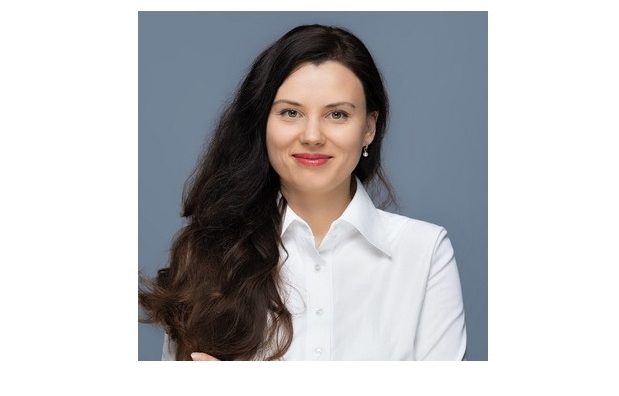
Katažyna Bogdzevič is a Professor at Mykolas Romeris University (MRU) Law School, specializing in Private International Law , European Law , Human Rights , and Environmental Law . She leads the MRU Human Rights LAB and contributes to the Environmental Management Research LAB, focusing on legal frameworks for ecosystem services, climate change mitigation, and stakeholder engagement. Key Research Themes: Integration of Private International Law with Environmental Law , analysis of legal conflicts in nature-based solutions, and name rights under international human rights conventions. Policy Engagement: Serves as advisor to Lithuania's Minister of Justice Ewelina Dobrowolska , emphasizing knowledge transfer to legislative and judicial practices. Email: roffice@mruni.eu
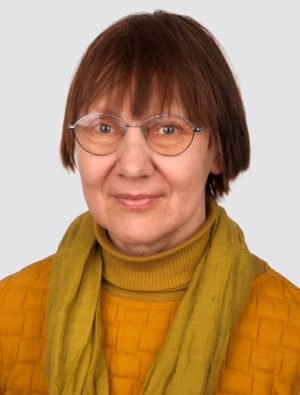
Professor Diana Strakšienė holds a position at the Institute of Education, Vilnius University Šiauliai Academy. She specializes in inclusive arts/music education, teacher training, and music therapy. Her academic journey includes a doctoral degree in Social Sciences (Education) from Šiauliai University, alongside qualifications in music pedagogy and piano teaching. Education: Doctoral degree in Social Sciences (Education), Šiauliai University Music teacher and concertmaster qualification (equivalent to bachelor’s/master’s), Lithuanian State Conservatory Piano teacher qualification, Šiauliai Music College Research Interests: Her work focuses on inclusive education through arts, teacher training strategies, assessment methodologies, and music therapy integration. She emphasizes non-formal musical activities and the role of music in fostering inclusive school cultures. Key Projects: She led the Erasmus+ project ALIISA2020 and contributed to international initiatives like INTERPROF. Her research spans multicultural perspectives in art education and teacher collaboration. Awards: 2018: Award for scientific/pedagogical contributions from R. Baškienė 2015: Award for pedagogical excellence from A. Pitrėnienė Grants & Advising: Managed projects like the "Tęsk" initiative and coordinated the Promotion of Students’ Scientific Activities (ESF-funded). Supervises doctoral, master’s, and bachelor’s theses. Labs/Teams: Editor-in-chief of the Journal of Young Scientists and member of international editorial boards in music science and teacher education.
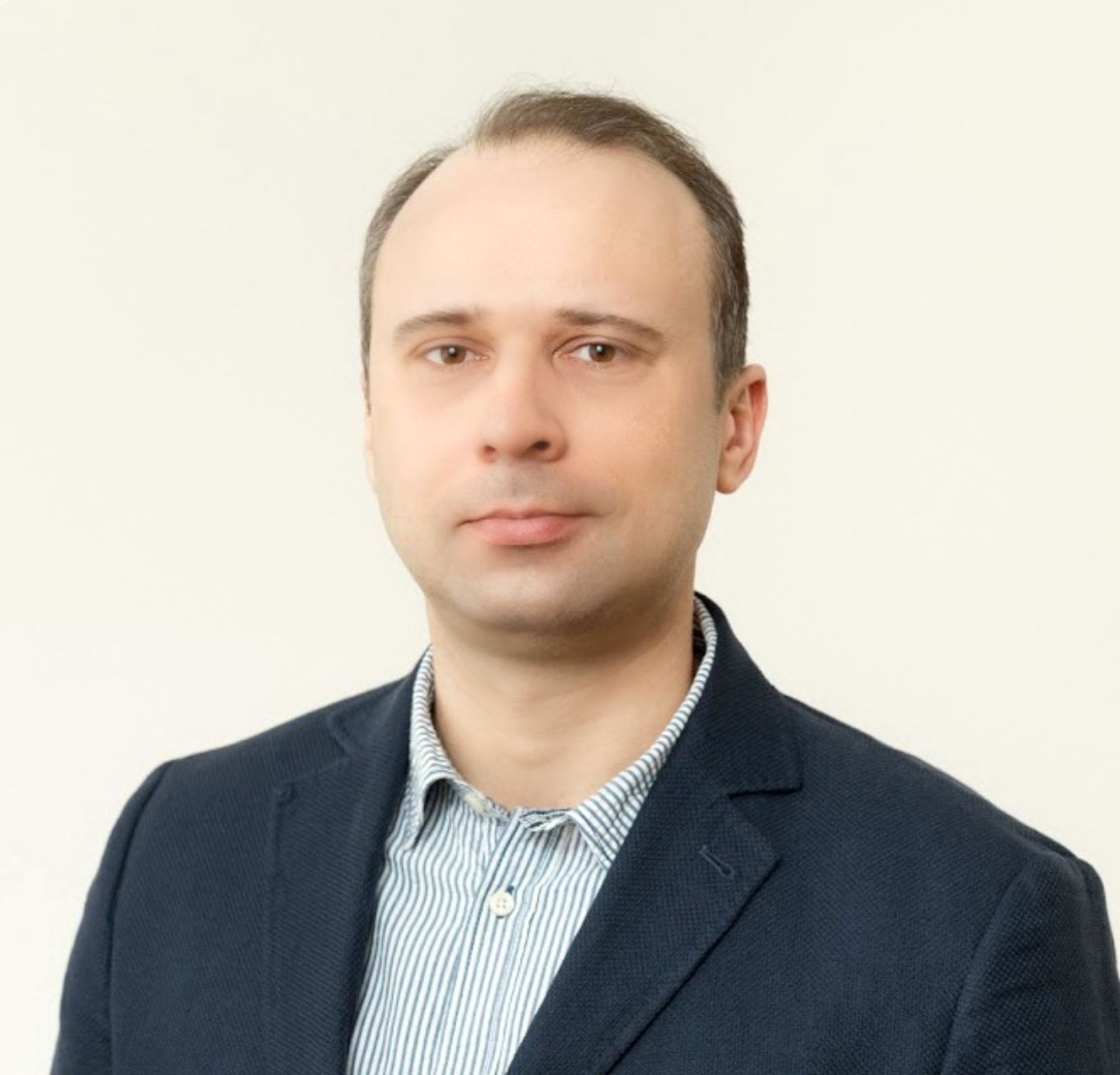
Viktor Medvedev is an Associate Professor and Senior Researcher at Vilnius University's Institute of Data Science and Digital Technologies, where he serves as Project Lead Researcher in the Blockchain and Quantum Technologies Group. His work focuses on the intersection of machine learning, data visualization, and cybersecurity applications. Dr. Medvedev earned his Doctor of Science in Computer Science Engineering in 2007 from Vilnius Gediminas Technical University and the Institute of Mathematics and Informatics. His doctoral research centered on 'Research on the application of feedforward neural networks for multidimensional data visualization,' establishing the foundation for his continued work in data analysis and visualization techniques. His research interests span machine learning , deep learning , data visualization , and cybersecurity applications . Specifically, he has made significant contributions to keystroke dynamics authentication , behavioral biometrics , dimensionality reduction techniques , and medical data analysis . His work often bridges theoretical computer science with practical applications in security and healthcare domains. Dr. Medvedev's publication record demonstrates a consistent trajectory of research excellence, with recent work focusing on advanced authentication systems using deep learning, pancreatic cancer detection through machine learning, and innovative approaches to data visualization. His research shows a clear evolution from foundational work in neural networks for data visualization to contemporary applications in cybersecurity and medical diagnostics. ICAISC'06 - Best Presentation Award (The 8th International Conference on Artificial Intelligence and Soft Computing) ICANNGA 2007 - Best Young Researcher Paper Award in Neural Networks DAMSS 2021, 2022, 2023 - Best Poster Awards As a Project Lead Researcher in the Blockchain and Quantum Technologies Group, Dr. Medvedev oversees research initiatives that combine cutting-edge technologies with practical applications. His work in cybersecurity has particular relevance to critical infrastructure protection, where insider threat detection using behavioral biometrics represents a significant contribution to the field.
Prof. Dr. (HP) Saulius Gudas is an Affiliated Professor in the Cybersocial Systems Engineering Group of the Institute of Data Science and Digital Technologies at Vilnius University . His office is located at Akademijos St. 4, room 603, Vilnius, Lithuania. Education & Background: While explicit degrees are not listed in the provided source, his long-standing professorship and extensive publication record spanning over a decade indicate advanced doctoral training and senior academic status. Research Interests: Prof. Gudas focuses on the intersection of software engineering, enterprise modelling, and knowledge-based systems . Core themes include: Causal knowledge modelling to enhance agile enterprise application development. Model-driven approaches for ensuring business-IT alignment. Deep knowledge-based evaluation and interoperability of enterprise applications. Quality modelling of web services and financial process mining. Publication Trends: Across the most recent works (2017–2024), a clear trajectory emerges from foundational enterprise modelling and interoperability assessment toward leveraging causal models and data analytics to improve agile development processes, service quality, and financial anomaly detection. Doctoral Supervision & Training: Prof. Gudas has successfully supervised the following PhD projects: Andrius Valatavičius – “Assessment of application program interoperability using autonomous computing technologies” (defended 2019). Mindaugas Jusis – “Research on synchronization methods for autonomous port loading processes” (2016–2020). Karolis Noreika – “Evaluation of the application development process using an improved Agile project management method” (2019–2023). Laboratory & Team Involvement: As a senior member of the Cybersocial Systems Engineering Group, he contributes to interdisciplinary projects that integrate software engineering methodologies with socio-technical system analysis within the larger Institute of Data Science and Digital Technologies.
Vida Malienė is a Visiting Professor at the Department of Land Use Planning and Geomatics, Faculty of Water and Land Management, Vytautas Magnus University Agriculture Academy. She contributes to the Bioeconomy Research Institute since 2023 and participated in international collaborations with Liverpool John Moores University. European Academy of Land Use and Development (Executive Board Member) International Council for Research and Innovation in Building and Construction (CIB) European Group of Operational Research Chartered Property Valuer Her research spans real estate markets , urban regeneration , land management economics , and application of multi-criteria evaluation methods . She specializes in sustainable housing , land consolidation , and affordable housing policies , with focus on Baltic and European contexts. Key publication trends include land use planning (63% of work), environmental engineering (58%), civil engineering (47%), and management sciences (13%). Recent articles explore bio-economy applications , agricultural land transformation , and value capture mechanisms across Europe. She holds a PhD in Technological Sciences (2000) and has authored over 100 publications, including 50+ peer-reviewed journal articles, 3 monographs, 20+ book chapters, and editorials. Her work is cited 2949 times (2023 metrics), with h-index-23 and i10-index-36. Languages: Lithuanian (native) English (fluent) German (fluent) Russian (fluent)
Albina Kepalaitė is an Associate Professor at the Institute of Education, Vilnius University Šiaulių Akademija (VU ŠA). Her research focuses on social sciences, psychology, and educology, with a particular emphasis on adaptation theories, stress management, and professional development. She has held academic roles including Head of the Department of Psychology at Šiauliai Pedagogical Institute (1987–1997) and has been affiliated with Vytautas Magnus University (VMU) and Šiauliai University. Her educational background includes a degree in psychology from Vilnius University (1972–1977). Education: Bachelor's in Psychology, Vilnius University, Historical Faculty (1972–1977) Research Interests: Dr. Kepalaitė investigates stress coping strategies in vulnerable populations, professional well-being of educators, and developmental psychology. Her work integrates Adlerian role theory and explores social inclusion, family dynamics in autism spectrum disorder (ASD), and cross-cultural studies in Baltic regions. She has contributed to projects such as POZCOPING (2017–2020) under the EU Interreg program and studies on library accessibility for individuals with reading challenges (2021). Recent Publications Trends: Her recent work emphasizes stress in educational and familial contexts, including analyses of stressors among teachers, mothers of children with ASD, and socially vulnerable youth. Cross-cultural comparisons and policy-oriented solutions feature prominently in her collaborative research. Grants & Collaborations: Key projects include developing social psychological support services (POZCOPING) and investigating information accessibility for visually impaired individuals. These efforts highlight her commitment to applied research with societal impact. Labs & Teams: Active within the Institute of Education’s research groups, Dr. Kepalaitė collaborates on interdisciplinary teams addressing educational and psychological challenges in Lithuania and beyond.
Roles & Affiliation: Professor at the Regional Development Institute of Šiauliai Academy (Vilnius University). Previously served as Professor and Head of the Department of Electronics at Šiauliai University. Specializes in Computer Science, Environmental Science, and Biometrics, with a focus on airborne pollen recognition, deep neural networks, and bioaerosol monitoring. Doctorate in Electrical and Electronic Engineering from Kaunas University of Technology (1999). Research Interests: Combines computer vision and machine learning to advance automated pollen classification, allergen forecasting, and health impact analysis. Explores applications of AI in environmental monitoring, biometrics, and medical diagnostics. Publications: Over 50 peer-reviewed articles, with recent work emphasizing real-time pollen detection systems, health correlations of airborne allergens, and automated bioaerosol monitoring. Key projects include EU-funded initiatives on synergistic effects of pollen and air quality, and real-time pollen forecasting. Grants & Projects: Led EU FP6 projects (COGAIN, MICOLE) on eye-tracking technology for disabled users. Active in Lithuania’s Research Council and EU Structural Funds projects focusing on pollen and environmental health. Labs & Teams: Collaborates with interdisciplinary teams in Šiauliai Academy’s Department of Electronics and bioaerosol research groups. Part of international networks like ISCA and IEEE, contributing to standards in eye-tracking and environmental monitoring.
Kristina Ancutienė is an Associate Professor at the Faculty of Mechanical Engineering and Design, Kaunas University of Technology (KTU), holding a Doctor of Technology degree. With over 15 years of university experience and 4 years of practical work as a clothing designer using CAD systems like 'Lectra' and 'Gerber Technology', she specializes in computer-aided clothing design, digital fashion technologies, virtual primating, and 3D visualization. Her research focuses on assessing clothing comfort and quality via 3D virtual primating technologies and analyzing how textile materials' mechanical properties influence these aspects. She actively explores the integration of VR, AR, XR, and AI in fashion design and education. Research Group: Materials Engineering Department: Production Engineering Department
Assoc. Prof. Ieva Bilbokaitė-Skiauterienė is an academic and researcher at Vilnius University Siauliai Academy, holding positions as an Associate Professor and Senior Researcher. She specializes in education and social sciences, focusing on intercultural education, STEAM pedagogy, teacher professional development, and inclusive education. Her career spans roles from lecturer to project coordinator, with significant contributions to higher education integration and quality improvement initiatives. She earned her PhD in social science and education and has been actively involved in policy analysis, curriculum development, and international collaborations. Education: PhD in Social Science and Education. Research Interests: Intercultural education, STEAM education, teacher professional development, networking in schools, educational quality, curriculum design, and reading/writing disorders. She emphasizes sustainable education, inclusive practices, and global competencies in her work. Projects: Led projects like 'KURK: Creative, Unique, Caring Generation' and 'Optimization of the Network of Higher Education Institutions,' focusing on merging Siauliai University with Vilnius University. She also coordinated initiatives to integrate innovative methodologies into pedagogical programs and enhance internationalization strategies. Editorial Roles: Deputy Chief Editor of 'Young Scientists' and member of the editorial board for 'EdTech Journal.' She contributes to academic publications on education and social sciences.
Saulius Bagdonas is a Professor and Senior Researcher at the Laser Research Center (LRC) within Vilnius University's Faculty of Physics. His research spans the interdisciplinary fields of physics and biophysics with a focus on light-matter interactions in biological systems. Professor Bagdonas's primary research interests include: Photophysics and photochemistry of tetrapyrrolic compounds in model and biological systems Fluorescence diagnostics Photosensitized therapy Quantum dots applications in biomedicine Spectroscopic techniques for biomedical analysis His work bridges fundamental physical principles with practical applications in medical diagnostics and therapy, particularly in the development of light-based approaches for disease treatment. Analysis of Professor Bagdonas's recent publications reveals a strong focus on quantum dots, porphyrin compounds, and their biomedical applications. His research demonstrates expertise in spectroscopic techniques and fluorescence imaging, with applications spanning nanomedicine to photodynamic therapy for rheumatoid arthritis. The interdisciplinary nature of his work connects physics, chemistry, biology, and medicine, reflecting the growing importance of cross-disciplinary approaches in modern scientific research. Professor Bagdonas has supervised three defended doctoral theses and one postdoctoral research internship, in addition to mentoring numerous Bachelor's and Master's students since 2001. He has led research projects including "In vitro model of photosensitized therapy for rheumatoid arthritis" funded by the Lithuanian Science Council (2010-2011), and has delivered international invited talks such as "Luminescent nanoparticles for cellular imaging and theranostics" at Photonics North in Quebec, Canada (2019). At Vilnius University, Professor Bagdonas teaches courses including "Biophysical nanotechnologies", "Physics of molecules and membranes", "Introduction into biophysical technologies", and "Biophysics" for undergraduate students, as well as "Biophotonics" and "Photobiology" for graduate students. He serves on the committee of the Master study program "Nature and Chemical Physics" and the Biophysics Doctoral studies committee. Since 2018, he has been an expert for the Research Council of Lithuania, and since 2020, for the Lithuanian Project Management Association and the Centre for Quality Assessment in Higher Education.
Assoc. Prof. Dr. Gintautas Tamulevičius serves as Director of the Institute of Data Science and Digital Technologies at Vilnius University. His primary affiliation is with the Image and Signal Analysis Group, where he contributes as a Senior Researcher and Chief Researcher in projects. Doctor of Science in Technology (2008) Pedagogical Title: Associate Professor (2014, Vilnius Gediminas Technical University) Active in IEEE Computer Society and Signal Processing Society Dr. Tamulevičius specializes in speech signal processing, with research spanning three core domains: Speech Modeling : Autoregressive/linear prediction, nonlinear fractal modeling, non-parametric approaches Recognition Systems : Deep learning-based methods, Hidden Markov models, Wave-U-Net architectures Quality Assessment : Voice phonation evaluation, vocal fold condition analysis using acoustic methods His publication trends show strong focus on: Deep learning applications for speech processing 2D feature space analysis for recognition tasks Fractal dimension-based emotion classification Language preservation through technological development Human-centered AI applications Biomedical signal processing As an educator, he has taught: Digital Signal Processing (VGTU 2012–present) Speech Signal Processing (VGTU 2008–present) Data Visualization (VGTU 2015) User Interface Design (VU 2018–present) Audio Signal Processing (VU 2020–present) His editorial contributions include reviewing for: Informatica IEEE Access Neurocomputing Baltic Journal of Modern Computing Nonlinear Analysis: Modeling and Control IEEE Journal of Biomedical and Health Informatics International Journal of Applied Mathematics and Computer Sciences He has supervised doctoral research including: Daniel Zakševski (2023–2027): Deep learning models for speech enhancement Monika Danilovaitė (2020–2026): Voice quality assessment methods Tatjana Liogienė (2012–2016): Multistage speech emotion classification
Dr. Rasa Karbauskaitė is a Researcher at the Cognitive Computing Group within Vilnius University's Institute of Data Science and Digital Technologies . She holds a Doctor of Computer Science degree (2010) and specializes in multidimensional data visualization, dimensionality reduction, and intrinsic dimension estimation. Her work combines geometric and statistical methods to analyze high-dimensional datasets. PhD: Computer Science (2010), focusing on local structure preservation in multidimensional data visualization Advanced Training: B2.1 English language course (2016) Research interests include: Fractal dimension analysis for speech emotion classification Manifold learning and topological preservation Optimization of maximum likelihood estimators for dimensionality reduction Geodesic distance applications in data structure analysis Nonlinear data projection algorithms Scientific contributions show a focus on Developing visualization quality assessment frameworks Advancing dimensionality reduction techniques Fractal-based feature selection for emotion recognition Comparative analysis of intrinsic dimension estimation methods Parameter optimization in manifold learning algorithms Awards : Lithuanian Academy of Sciences Young Scientists' Research Prize (2011) Professional Roles : Managing Editor of the Informatica journal Participant in international conferences like Data Analysis Methods for Program Systems (2011-2015) Contributor to IEEE proceedings and specialized workshops
Dr. Gerda Ana Melnik-Leroy serves as Senior Researcher at Vilnius University's Institute of Data Science and Digital Technologies, specializing in the Cognitive Computing Group. Her interdisciplinary work bridges cognitive science, linguistics, and data analytics with significant contributions to understanding human factors in decision-making and language processing. Her academic credentials include: Doctorate in Cognitive Sciences (2019) PhD studies at École Normale Supérieure's Laboratory of Cognitive Science and Psycholinguistics, Paris (2016-2019) Master of Cognitive Science (cognitive psychology major) from École Normale Supérieure, Paris (2014-2016) Melnik-Leroy's research examines cognitive biases in data visualization, second language phonetic acquisition, and synthetic speech perception mechanisms. She investigates how exponential growth misinterpretation affects decision-making and explores perceptual differences between congenitally blind and sighted individuals in speech processing contexts. Her methodological approach combines behavioral experiments with computational modeling to address real-world cognitive challenges. Analysis of her 15 most recent publications (2019-2025) reveals two dominant research trajectories: (1) Cognitive bias mitigation in data visualization, particularly regarding exponential growth misinterpretation and graph design optimization, and (2) Cross-modal speech processing, including L2 phonetic training efficacy and synthetic speech evaluation across diverse user populations. These streams demonstrate consistent integration of cognitive theory with practical data science applications. Within the Cognitive Computing Group, Melnik-Leroy contributes to interdisciplinary collaborations that advance human-centered computing. Her experimental work informs both theoretical models of cognition and applied solutions for educational technology and accessible human-computer interfaces, maintaining active research output through university-affiliated projects at Akademijos St. 4, Vilnius.
Gediminas Navickas is a Lecturer at Vilnius University's Institute of Data Science and Digital Technologies (DMSTI) within the Faculty of Mathematics and Informatics, specializing in the Image and Signal Analysis Group. His work bridges academic research with practical applications in Lithuanian language technologies. His primary research focuses on automatic Lithuanian speech recognition, speech signal processing, speech synthesis methods and algorithms, and speech synthesis quality assessment. Navickas has made significant contributions to developing speech technologies specifically for the Lithuanian language, addressing the challenges of resource scarcity compared to more widely spoken languages. His work demonstrates strong interdisciplinary connections between computer science, linguistics, and cognitive science. Navickas's publication record reveals a consistent trajectory of innovation in speech technology, with recent work emphasizing cognitive approaches to evaluating synthetic speech, particularly examining differences in perception between blind and sighted users. His research has evolved from foundational work on neural network architectures for speech synthesis to comprehensive studies on speech corpus development and accessibility applications. He has been instrumental in major EU-funded projects including the LIEPA series (2013-present), which have developed comprehensive speech recognition and synthesis systems for Lithuanian. These projects have produced practical applications ranging from educational robots to voice-controlled mobile services and assistive technologies for the visually impaired. Member of Lithuanian Computer Society (LIKS) Council Member of IEEE organization Active participant in COST actions including UniDive and Multi3Generation Navickas regularly engages with the public through media appearances on LRT radio and television, where he explains complex speech technology concepts to general audiences. His science communication efforts demonstrate a commitment to making technical research accessible and relevant to Lithuanian society.