J. Andrew Deman is an Associate Professor in the Teaching Stream at the University of Waterloo, affiliated with the Faculty of Arts. His research spans Graphic Narrative, Comics, Manga, Anime , and Professional Communications , with a focus on gender, sexuality, and cultural representation. PhD in English from the University of Waterloo MA and HBA from Lakehead University Deman’s research interrogates gender subversion in superhero comics (e.g., X-Men ), healing manga (iyashikei), and LGBTQ+ representation in youth-oriented media. His work bridges academic scholarship with public engagement through the SSHRC-funded Sequential Scholars project and a podcast on Sexuality and Gender in Manga . Key publications include The Claremont Run: Subverting Gender in the X-Men (Eisner Award, 2024) and analyses of Julie Doucet, Phoebe Gloeckner, and Superman. His awards include multiple SSHRC grants, the Warren G. Ober Award for Teaching, and the Eisner Award. SSHRC IDG (2025-2029) SSHRC IDRG (2018-2020) Jack Gray Graduate Fellowship (2006) Eisner Award (2024) Deman’s teaching prioritizes safety, inclusion, and critical engagement with emerging texts. He is currently finalizing a manuscript on BDSM in Chris Claremont’s X-Men titled The Claremont Kink .
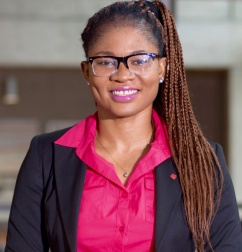
Rita Orji is a Full Professor at the Faculty of Computer Science, Dalhousie University, where she holds the Canada Research Chair in Persuasive Technology and is an NSERC Arthur B. McDonald Fellow. She leads the Persuasive Computing Lab and is actively involved in the Human-Computer Interaction (HCI), Visualization and Graphics research cluster. Her research focuses on Human-Computer Interaction, Persuasive Technology, Games for Change, and Digital Health, with an emphasis on designing user-centered interactive systems for behavior change, particularly in health and wellness domains. Her work targets underserved populations through HCI for Development (HCI4D) and applies AI, machine learning, and gamification to promote healthy eating, physical activity, mental health, and smoking cessation. Dr. Orji has received numerous scientific awards and recognitions, including being appointed to the Royal Society of Canada, named among the Top 100 Leading Nigerian Women, and recognized as one of the Top 100 Black Women to Watch in Canada. She is a Vanier Scholar and Banting Postdoctoral Fellow, reflecting her academic excellence. Canada Research Chair in Persuasive Technology NSERC Arthur B. McDonald Fellow Appointed to the Royal Society of Canada (2020) Top 100 Leading Nigerian Women (2021) LinkedIn Top Influencer - Africa Top Voice (2020) Research Excellence Award, Dalhousie University (2019) She has supervised a vast number of students at all levels, including PhD, Master’s, and undergraduate researchers, many of whom have worked on persuasive apps for mental health, AI-driven coaching, gamified interventions, and health equity. Her lab is well-funded, notably by an NSERC Discovery Grant, and she has delivered keynotes at major international conferences such as ISRII and AfriCHI. Dr. Orji directs the Persuasive Computing Lab, a vibrant research group that includes postdoctoral fellows, PhD and Master’s students, and research interns, all working on interdisciplinary projects at the intersection of computing, psychology, and public health.
Ken Wong is an Associate Professor in the Department of Computing Science at the University of Alberta's Faculty of Science. He also serves as Associate Chair within the same department. Holding a PhD in Computer Science from the University of Victoria (1999), his research focuses on software engineering challenges such as reverse engineering, program understanding, and software visualization. He emphasizes improving software evolution through tools like architecture recovery and root cause analysis, with applications in web/mobile platforms and diverse system understanding. Teaching highlights include developing Massive Open Online Courses (MOOCs) via Coursera, including the 'Software Product Management Specialization' and courses on Agile practices, client needs analysis, and software metrics. His recent publications (2023–2025) span AI-driven healthcare innovations (e.g., medical imaging, photoacoustic tomography) and advanced computer vision techniques (e.g., diffusion models, video inpainting). Notable collaborations include EVAREST studies on heart failure management and lung transplantation outcomes. His work bridges software engineering theory and practical applications in healthcare technology, with contributions to federated learning frameworks (e.g., FedLPPA) and AI-augmented clinical decision support systems. Research also extends to autonomous driving (DriveGPT4-V2) and 3D human avatar generation (DreamAvatar), showcasing interdisciplinary impact.
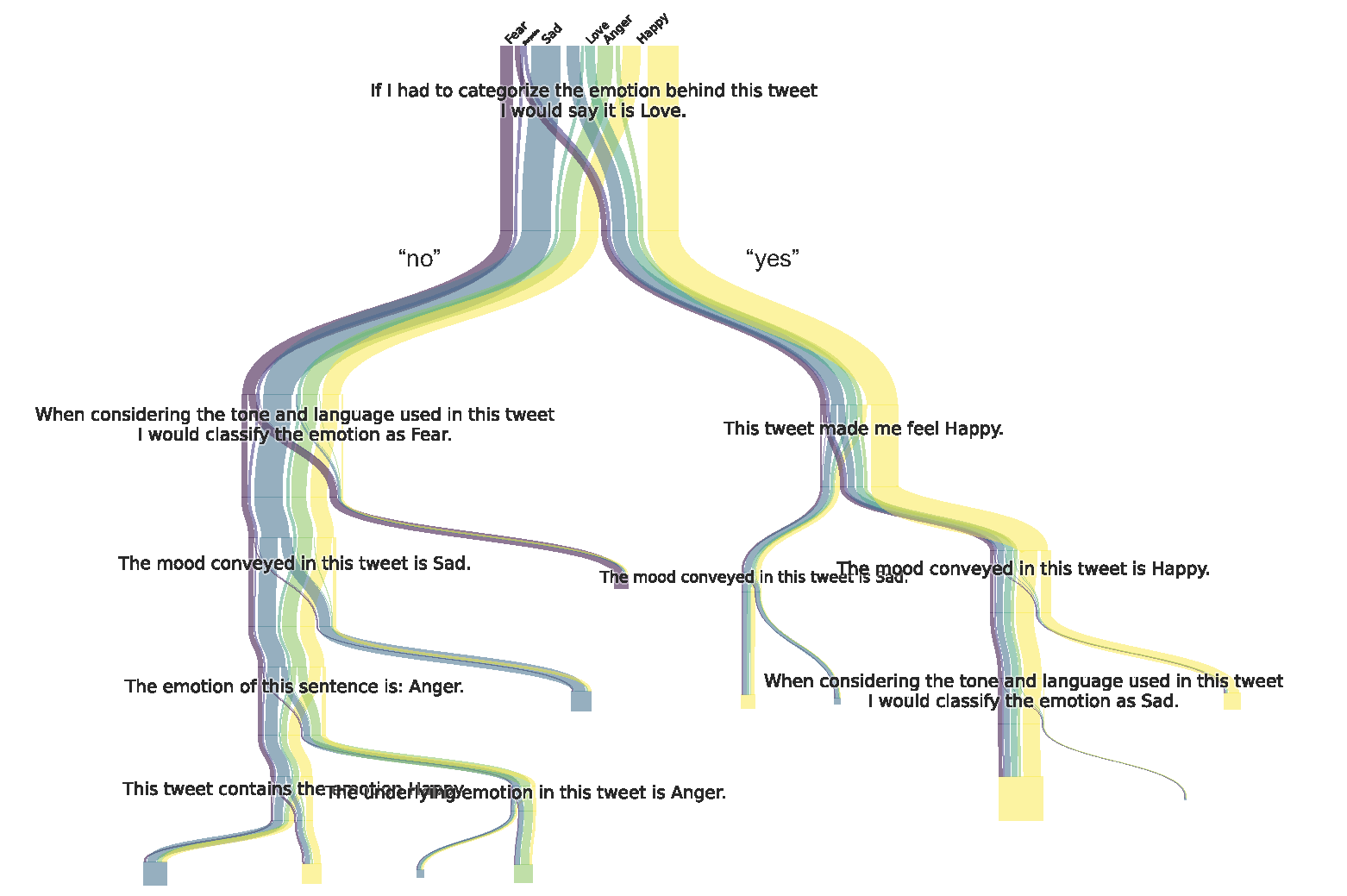
Yuntian Deng is an Assistant Professor at the University of Waterloo and a Visiting Professor at NVIDIA. He holds affiliations with Harvard SEAS as an Associate and the Vector Institute as a Faculty Affiliate. He completed his PhD in Computer Science at Harvard under Professors Alexander Rush and Stuart Shieber, followed by a postdoc under Yejin Choi. His research focuses on Natural Language Processing and Machine Learning, with notable contributions in chatbot interaction analysis (WildChat), implicit reasoning models, and markup-to-image generation. He has developed influential tools like OpenNMT and WildVis, and his work has been featured in outlets like the Washington Post and used by OpenAI and Anthropic. Education: PhD in CS (Harvard), Postdoctoral Research (University of Washington). Key achievements include the ACM Gordon Bell Prize for GenSLMs, Best Demo Runner-up at ACL 2017, and Best Paper at DAC 2020. His research emphasizes scalable datasets, efficient reasoning techniques, and real-world applications of AI models. Research interests span NLP, machine learning algorithms, and their applications in areas like dialogue systems, generative models, and ethical AI evaluation. Notable projects include WildChat (1M ChatGPT interactions), implicit chain-of-thought reasoning, and neural steganography for text-based information hiding. His articles explore topics ranging from knowledge distillation to diffusion models, with a focus on bridging theoretical advancements and practical implementations. He actively collaborates with industry partners like NVIDIA and maintains open-source tools to advance AI research accessibility.
Rich Shivener is an Associate Professor in the Writing Department at York University's Faculty of Liberal Arts & Professional Studies (LA&PS). He holds a PhD from the University of Cincinnati and an MA from Northern Kentucky University. His research focuses on digital media composing practices, emotions in rhetoric, and the intersections of technology and communication. He has served as a section editor for Kairos: A Journal of Rhetoric, Technology, and Pedagogy from 2016 to 2024. Before academia, he worked in journalism and technical writing, contributing to local newspapers, national magazines, and software documentation. Shivener's recent work explores virtual reality (VR) writing, remote collaboration in game development, and environmental rhetoric in digital infrastructure. His articles analyze topics such as affective labor in online spaces, infrastructural storytelling for environmental justice, and pandemic-era remote work adaptations. He teaches in the digital authoring stream, emphasizing multimodal and hybrid approaches to writing. His research trends highlight a focus on emerging technologies’ impact on communication practices, with particular attention to equity, emotion, and sustainability. He has contributed to discussions about digital authorship, technical communication ethics, and the rhetorical dimensions of webcomics and gaming communities. Shivener’s career reflects a commitment to bridging academic and applied contexts, leveraging his industry experience to inform teaching and research. He remains active in methodological innovations, such as discourse-based interviews and infrastructural narrative analysis, to explore tacit knowledge and systemic inequities in technical fields.
Andrea Bunt is a Full Professor and Associate Head (Graduate) in the Department of Computer Science at the University of Manitoba, where she co-directs the HCI lab. She has established herself as a leading researcher in human-computer interaction with significant contributions to software learnability, rural computing, and technologies for children and families. Her work bridges theoretical and practical aspects of HCI, with strong community engagement through student supervision and collaborative projects. Dr. Bunt completed her B.Sc. at Queen's University, followed by an M.Sc. in 2001 and Ph.D. in 2007 at the University of British Columbia. Prior to joining the University of Manitoba, she was a Postdoctoral Fellow at the University of Waterloo in the Human-Computer Interaction Lab. This educational trajectory has provided her with a strong foundation for her interdisciplinary research approach. Her research interests span multiple areas within human-computer interaction, with particular focus on software learnability for diverse user groups, improving computing experiences in rural and remote communities, and designing technologies specifically for children and families. Her work on explainable AI, gender inclusivity in technology, and collaborative learning dynamics represents cutting-edge contributions to the field. Recent projects include Stream Assistant for live streamers, digital interventions for adolescent tech disengagement, and gender-inclusive approaches to online question-and-answer platforms. Analysis of her recent publications reveals a strong emphasis on user-centered approaches to technology design, particularly focusing on vulnerable or underserved populations. Her work consistently bridges theoretical HCI principles with practical applications, demonstrating how technology can be made more accessible, inclusive, and effective for diverse user groups. There's a clear trajectory toward addressing societal challenges through HCI, with increasing focus on ethical considerations in AI systems. CS-Can | Info-Can Young Researcher Award (2018) NSERC Accelerator Supplement (2015-2018) Multiple Best Paper Awards at premier conferences including CHI, Graphics Interface, and FDG Consistent recognition for methodological innovation and impactful research contributions Dr. Bunt actively mentors a diverse group of students at all levels, from undergraduate research assistants to Ph.D. candidates. Her lab receives funding from NSERC Discovery Grants and other sources to support research on intelligent interactive systems. She has successfully guided numerous students through their academic journeys, with many going on to impactful careers in academia and industry. Her collaborative approach extends to interdisciplinary partnerships across computer science, education, and social sciences. The HCI lab she co-directs serves as a vibrant research hub focusing on real-world applications of human-computer interaction principles. Current projects address critical challenges including technology use in rural communities, digital wellbeing for adolescents, and inclusive design practices. The lab fosters a collaborative environment where students and researchers work together to develop innovative solutions to complex HCI problems.
Janette Hughes is a Professor and Canada Research Chair (Tier 2) in Technology and Pedagogy at the Mitch and Leslie Frazer Faculty of Education, Ontario Tech University. Her work focuses on transforming literacy practices through digital technologies and maker-oriented pedagogies. She holds a PhD in Curriculum (Language and Literacy) from the University of Western Ontario and has taught courses ranging from undergraduate programs to doctoral research methods. Education: PhD in Curriculum (Language and Literacy), University of Western Ontario, 2006 MA in Teaching (Curriculum/English), OISE/University of Toronto, 1995 BEd (Concurrent IS English/History), Queen’s University, 1988 Bachelor of Arts (Honours English Literature), Queen’s University, 1987 Research Interests: Digital literacies, maker pedagogies, STEAM education, critical making, social media and identity construction, and fostering global competencies through design thinking. Her work emphasizes how digital tools empower learners to critique, create, and drive social change. Awards & Recognition: Ontario Ministry of Research and Innovation’s Early Researcher Award Ontario Research Fund—Research Excellence Award UOIT Research Excellence Award Lab & Collaborations: Directs the STEAM-3D Maker Lab, exploring innovative learning spaces and technologies. Engages in collaborative research on topics like virtual professional learning and inclusive curriculum design.
Stephen Brooks is a Professor in the Faculty of Computer Science at Dalhousie University, actively contributing to research and education in computer graphics, visualization, and human-computer interaction. He is affiliated with the Human-Computer Interaction, Visualization & Graphics research cluster and currently supervises multiple graduate students on diverse projects. PhD in Computer Science, University of Cambridge (2004) MSc in Computer Science, University of British Columbia (2000) BSc, Brock University (1998) His research focuses on computer graphics and visualization, particularly non-photorealistic rendering, image editing, 3D geospatial systems, ocean visualization, and real-time rendering of natural phenomena. He has also worked in sound synthesis and motion editing. His recent publications show a strong emphasis on visual analytics, network flow visualization, and ocean science applications. His work spans interdisciplinary domains including environmental science, genomics, cybersecurity, and digital art. He has developed visualization tools for ocean science under a major CFREF-funded initiative and created novel methods for rendering stained glass, mixed media art, rivers, and ocean surfaces. His research integrates perception, automation, and user interaction to enhance visual analysis. Notable scientific contributions include work on tone mapping optimization, uncertainty visualization using chromatic aberration, semantic object clouds, and hybrid 2D/3D GIS. His publications appear in top venues such as IEEE TVCG, ACM Transactions, and SIGGRAPH. NSERC Discovery Grants Canada First Research Excellence Fund (CFREF) NSERC CREATE Mitacs Accelerate and Globalink CFI New Opportunities Grant Cyber Security Research and Development Grant He has supervised numerous PhD, Master’s, and undergraduate students in areas including ocean visualization, tone mapping, network security, VR, and geospatial analytics. He teaches courses in Game Design, Visualization, Computer Animation, and Network Computing, emphasizing project-based and interdisciplinary learning. He leads research in visual analytics for network data (FloVis), ocean science, and mixed reality collaboration. His lab develops interactive systems for data exploration in domains ranging from marine biology to cybersecurity. Future work includes expanding ocean-first climate visualization and enhancing mixed presence collaboration in immersive environments.
Nicholas Sammond is a Professor at Innis College, University of Toronto, with a cross-appointment at the Centre for the Study of the United States. He is a leading scholar in media and cultural studies, focusing on animation, race, childhood, and the political economy of popular media. His research integrates historical analysis with critical theory, and he is actively involved in digital humanities initiatives. Education: PhD, University of California, San Diego MPhil, University of California, San Diego BA, Wesleyan University Professor Sammond's research centers on the cultural history of American animation, particularly its entanglement with racial formations such as blackface minstrelsy, as explored in his acclaimed book Birth of an Industry . He also investigates media constructions of childhood, humor, and Cold War-era abjection in comics and animation. His work bridges film studies, cultural theory, and public engagement through digital archives. His publications reveal a consistent focus on how media shapes identity, ideology, and cultural memory. Themes across his articles include racial representation in cartoons, the politics of collecting comix, media pedagogy, and the spatial rhetoric of animation. His research often intersects with feminist media history, disability studies, and neoliberal critique. Scientific Awards: 2017 Katherine Singer Kovács Book Award of Distinction, Society for Cinema and Media Studies 2015 Richard Wall Memorial Award Finalist, Theatre Library Association 2006 Katherine Singer Kovács Book Award, Society for Cinema and Media Studies Professor Sammond has supervised graduate students and taught courses in film and media history, animation, media theory, and cultural studies at both undergraduate and graduate levels. He has received research support through academic appointments and institutional affiliations. He created the Early Animation Wiki in collaboration with ASIFA Hollywood and established an animation research station at Innis College Library, enhancing access to rare animation materials. He is currently on leave from July 2024 to September 2025. His upcoming research explores fluid abjection in Cold War comic books and animation, continuing his interdisciplinary approach to media history.
Christian Jacob is a Professor in the Department of Computer Science within the Faculty of Science at the University of Calgary . He holds a B.S. in Computer Science and a Doctor of Engineering Science from Erlangen University . His research focuses on nature-inspired algorithms, biocomputing, and agent-based simulations applied to biological systems and education. Key initiatives include the LINDSAY Virtual Human Project , which uses immersive virtual reality to explore human anatomy and physiology. He contributes to the university's strategic priorities in Digital Worlds and Health and Life initiatives. His work integrates evolutionary algorithms, cellular automata, and swarm intelligence into creative and medical applications. Notable achievements include the ASTech Award (2015) from Alberta Science and Technology. His projects emphasize interactive education through tools like LeukemiaSIM , Eukaryo , and the Giant Walkthrough Gut . Jacob also explores visualization techniques, such as evoVision3D and LifeBrush , to enhance scientific understanding. His research bridges computational methods with real-world applications in healthcare, architecture, and game design. Collaborative efforts include developing agent-based models for immune systems, nervous responses, and crowd behavior. Jacob's work spans interdisciplinary fields, blending computer science with biology, engineering, and the arts.
Coleman Nye is an Associate Professor in the Gender, Sexuality, and Women's Studies department at Simon Fraser University (SFU). She holds a Ph.D. in Theatre and Performance Studies from Brown University (2014), an M.A. in Anthropology from Brown (2010), and a B.A. in Anthropology and Gender & Sexuality Studies from New York University (2006). Her research bridges feminist science studies, graphic medicine, and performance studies, with a focus on bioethics, racial biocapital, and genetic equity. Notable works include the graphic novel Lissa (2017), co-authored with Sherine Hamdy, which won the 2018 PROSE Award. She is currently completing a monograph Biological Property: Race, Gender, Genetics , examining intersections between genetic inheritance and property frameworks. Her work appears in journals like Social Text , TDR: The Drama Review , and Global Public Health . Teaching includes undergraduate courses like GSWS 103 B100 (Body Talk) and graduate seminars (GSWS 822 G100). She has edited special issues on Science and Performance for Performance Matters and contributes to SFU's Gender, Sexuality, and Women's Studies Research Hub.
Dr. Minglun Gong is a Professor and Director of the School of Computer Science at the University of Guelph (since 2019). Previously, he served as Professor and Head of the Department of Computer Science at Memorial University of Newfoundland. He holds a Ph.D. from the University of Alberta (2003), M.Sc. from Tsinghua University (1997), and B.Engr. from Harbin Engineering University (1994). His research focuses on visual computing, including computer graphics, computer vision, visualization, image processing, and pattern recognition. He has authored over 150 referred papers and holds patents in the field. He is an Associate Editor for Pattern Recognition and IEEE Signal Processing Letters , and has received awards such as the Izaak Walton Killam Memorial Award and multiple best paper awards. Dr. Gong has advised numerous students, including Ph.D./M.Sc. candidates and visiting scholars. His lab's recent work includes UAV path planning for urban reconstruction, image stylization techniques, and 3D human pose estimation. He actively participates in academic service, including editorial roles, conference program committees, and administrative roles at multiple institutions. His teaching spans courses in image processing, computational photography, and technical communication. He is also involved in administrative committees, such as Graduate Studies and Promotion at Memorial University. Key research contributions include advancements in transparent object modeling, underwater 3D reconstruction, and image-to-image translation. His work emphasizes practical applications in fields like medical imaging, autonomous systems, and environmental modeling.
Shana Ye is an Associate Professor of Women and Gender Studies at the University of Toronto Scarborough and the Women and Gender Studies Institute at the University of Toronto. Her research focuses on transnational feminism, queer studies, post/socialist studies, feminist science and technology studies, and critical ethnography. She holds affiliations across multiple academic units within the University of Toronto system. Her current research projects include SILICON YELLOW: SOJOURNER COLONIALISM AND THE AESTHETICS OF TECHNO-CHIMERICA , exploring racialized Chineseness in technology and geopolitics; ARTIFICIAL NATIONS: IMMERSIVE TECHNOLOGIES AND THE ECONOMY OF MEANING , examining virtual reality and material memory; and DEATH, DATA, DIASPORA: PATHOETHNOGRAPHY OF THE UNSPEAKABLE , investigating queer experiences through embodied and digital lenses. Shana’s publications span peer-reviewed journals such as TSQ , Feminist Studies , Gender, Place & Culture , and Feminist Media Studies . Her work bridges academic inquiry with creative practices, including digital art and playwriting. Her research trends emphasize transnational frameworks, blending ethnography with speculative fiction to critique power structures. Key themes include queer labor dynamics, postsocialist geographies, and the intersection of technology with colonialist aesthetics. No scientific awards are explicitly listed in the provided materials. Shana’s advising and grant activities remain unreported in the current data. She is affiliated with interdisciplinary initiatives at U of T Scarborough and maintains creative artistic projects alongside her academic work.
Jeremy Stolow is a Professor in the Department of Communication Studies at Concordia University. He is on research leave until the Fall 2026 semester. Bachelor of Arts in Philosophy, University of Toronto (1989) Master of Arts in Social and Political Thought, York University (1993) Doctor of Philosophy in Social and Political Thought, York University (2000) Postdoctoral Research, University of Cambridge (2000–2002) His research focuses on interdisciplinary intersections of media history, material religion, technology and culture, history of photography, spiritualism, science and technology studies, and alternative medicine. His publications explore religious materiality, media theory, and post-secular frameworks. He co-edited special issues on topics like light mediations and transnational religio-politics. Stolow has received prestigious fellowships, including a Senior Fellowship at the Netherlands Institute for Advanced Study (2017–2018) and Visiting Fellowships at New York University (2003–2004) and the Paris Institute for Advanced Study (2025–2026). He has delivered keynote addresses at international conferences, including ETH Zürich and Humboldt University Berlin. Senior Fellow, Netherlands Institute for Advanced Study (2017–2018) Visiting Fellow, Center for Religion & Media, New York University (2003–2004) Visiting Fellow, Paris Institute for Advanced Study (2025–2026) Finalist, Nahum Sarna Award, National Jewish Book Council (2010)
Alla Sheffer is a Professor and Associate Head of Faculty Affairs in the Department of Computer Science at the University of British Columbia, Faculty of Science. She is affiliated with multiple research centers including CAIDA (Centre for Artificial Intelligence Decision-making and Action), the Institute of Applied Mathematics, and ICICS (Institute for Computing, Information and Cognitive Systems). B.Sc., Hebrew University, Jerusalem (1991) M.Sc., Hebrew University, Jerusalem (1995) Ph.D., Hebrew University, Jerusalem (1999) Postdoctoral Research Associate, University of Illinois, Urbana-Champaign (1999-2001) Assistant Professor, Technion, Israel (2001-2003) Assistant Professor, University of British Columbia (2003-2008) Associate Professor, University of British Columbia (2008-present) Professor Sheffer's research focuses on geometry processing, addressing algorithmic challenges in digital shape modeling and manipulation. Her work primarily deals with discrete geometry representations, specifically meshes (polygonal model representations), with applications in computer graphics and computer-aided engineering. She utilizes tools from computational and differential geometry, discrete mathematics, and graph theory to generate, manipulate, and edit discrete geometric models. Her research spans virtual and augmented reality, visual computing, and 3D modeling, with significant contributions to sketch-based modeling, mesh processing, and cloth simulation. The 15 most recent publications reveal a consistent research trajectory in geometry processing, with recent work focusing on vector sketch processing, VR drawing tools, and advanced mesh manipulation techniques. Her work demonstrates a strong connection between human perception and computational methods, particularly in the interpretation of freehand sketches and the generation of perceptually-accurate geometric representations. The recurring themes across her publications include flowlines, curve networks, mesh parameterization, and the application of perceptual studies to improve algorithmic outputs. Eurographics Fellow ACM Fellow IEEE Fellow Royal Society of Canada Fellow SIGGRAPH Academy Member UBC Killam Research Prize NSERC Discovery Accelerator Supplement IBM Faculty Award Professor Sheffer has supervised numerous doctoral and master's students, with recent theses focusing on geometric mesh processing, vector sketch interpretation, VR drawing tools, and garment modeling. Her research group maintains strong connections with industry through various partnerships and has received substantial grant funding to support their innovative work in geometry processing and computer graphics. She teaches courses in computer graphics, geometric modeling, and video game programming, contributing significantly to both undergraduate and graduate education in computer science.