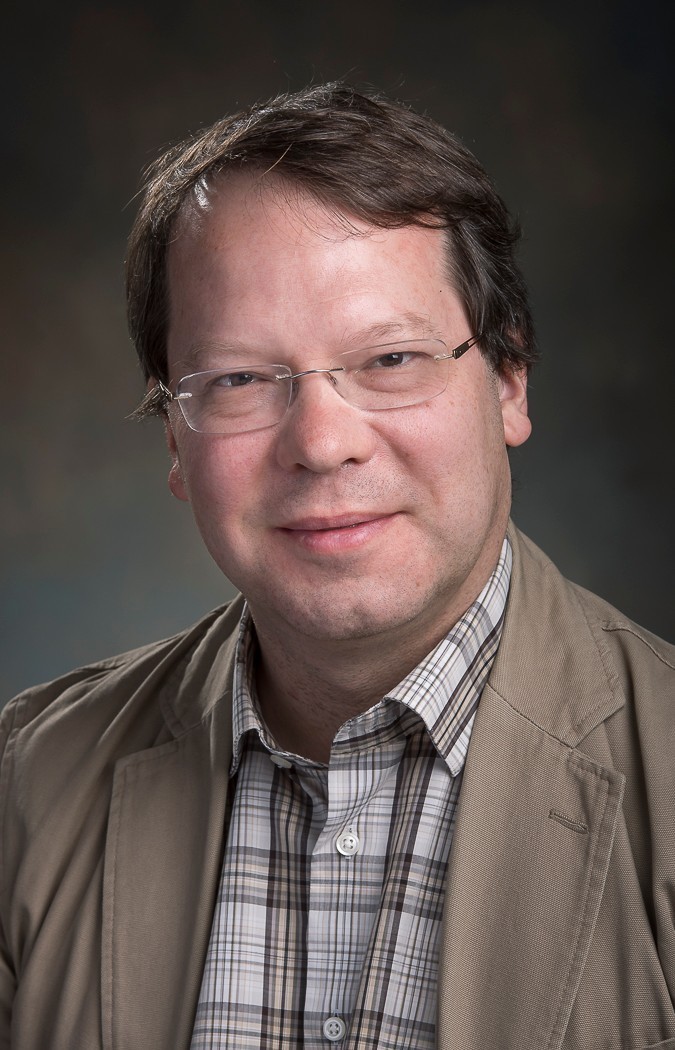
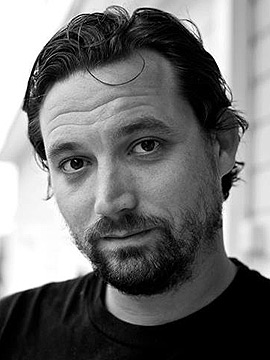
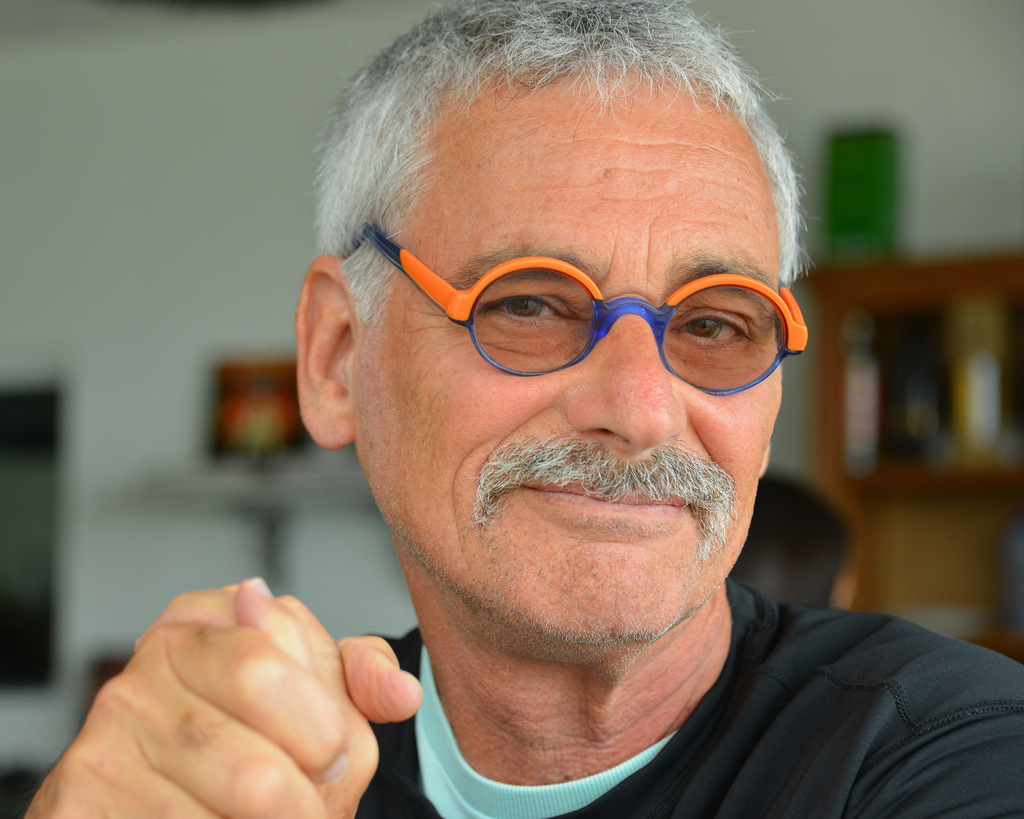
Sarah Green is an Assistant Professor in the Department of Illustration at Emily Carr University of Art + Design. Her work focuses on visual arts and illustration techniques, contributing to both academic and creative fields. She can be reached at sarahgreen@ecuad.ca . Her research interests emphasize the intersection of traditional illustration methods with modern digital tools, aiming to bridge educational practices and contemporary artistic expression. She actively explores pedagogical approaches in art education to enhance student creativity and technical skills.
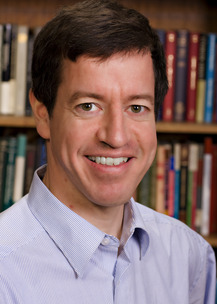
Hyein Lee is an Associate Professor in the Department of Illustration at Emily Carr University of Art + Design. She holds a faculty position focused on visual arts education and creative practice. Contactable via hyeinlee@ecuad.ca. Her research and teaching interests center on illustration techniques, visual storytelling, and contemporary art practices. While specific research projects are not detailed here, her work likely explores intersections of traditional and digital art methods. No academic awards or publications are listed in the provided information. She may contribute to university initiatives in art education and creative industry collaborations.
Bonne Zabolotney is a Professor at Emily Carr University of Art and Design, focusing on design education, anti-oppressive pedagogy, and critical design history. Their work interrogates marginalized narratives in design practices and develops equitable curriculum frameworks. Research interests span anti-oppressive action frameworks, decolonizing design history, competency-based assessments, and Canadian design practices. Notable projects include analyzing Eaton's impact on packaging design and exploring Andrew King's contributions to Prairie design culture. Recent publications (2020-2024) emphasize reimagining design education through critical pedagogy and practice-based research methods. Earlier works (2008-2017) explore typographic storytelling and design's philosophical underpinnings. Though no specific awards are noted, their contributions to design theory and education reflect sustained scholarly impact. Contact via bzabolot@ecuad.ca or 604-844-3800 for collaboration inquiries.
John C. Bowman is a Professor in the Department of Mathematical and Statistical Sciences at the University of Alberta. He has maintained an active teaching career with courses spanning undergraduate to graduate levels, including Honours Calculus (Math 117/118), Real Variables (Math 417), Coding Theory (Math 422), Linear Algebra II (Math 225), and Statistical Theories of Turbulence (Math 655). His office is located in CAB 521, and he has consistently provided regular office hours for student consultation across multiple courses. Dr. Bowman earned his BS in Engineering from the University of Alberta, followed by an MA and PhD from Princeton University. His educational background has informed his diverse research trajectory spanning mathematical physics, computational mathematics, and scientific visualization. His teaching philosophy emphasizes deep conceptual understanding, as evidenced by his development of comprehensive hyperlinked 3D lecture notes for Honours Calculus. His primary research focuses on statistical theories of turbulence, particularly his development of Spectral Reduction as a reduced statistical description of turbulence. His work shows remarkable agreement with full numerical simulations, even in flows containing long-lived coherent structures. Additional research interests include 3D vector graphics (notably the Asymptote language he developed), implicit dealiasing of convolutions, exponential integrators, and exactly conservative integrators for numerical simulations. He has been involved with the University of Alberta's Geophysical Fluid Dynamics Research Group, where his work bridges theoretical mathematics with practical computational applications. Dr. Bowman's publication record demonstrates consistent contributions to computational mathematics and fluid dynamics over several decades. His recent work (2015-2024) shows continued innovation in computational methods for turbulence simulation, with particular attention to dealiasing techniques, efficient convolution algorithms, and novel approaches to spectral methods. His research has practical applications in assessing dissipation mechanisms in large-eddy simulations and modeling high-Reynolds number turbulence. As an educator, Dr. Bowman has developed comprehensive teaching materials and maintains an active engagement with students through office hours and detailed course websites. His commitment to mathematical education extends to high school outreach through contributions to the "Pi in the Sky" mathematics magazine. His work on the Asymptote vector graphics language has created a valuable tool for mathematical visualization and scientific publishing that integrates seamlessly with TeX.
Christopher Batty is an Associate Professor and Director of Infrastructure at the University of Waterloo's Department of Computer Science. His research focuses on computer graphics and scientific computing, with an emphasis on physics-based numerical simulation of fluids and solids for applications in animation, visual effects, and interactive environments. He holds a Ph.D. from the University of British Columbia (2010) and a B.C.Sc. from the University of Manitoba (2004). His work spans fluid dynamics, solid mechanics, and geometry processing, addressing challenges like surface reconstruction, multi-scale simulations, and efficient solvers for complex fluid-solid interactions. Recent contributions include novel methods for divergence-free fluid editing, discrete elastic rod optimization, and Monte Carlo-based approaches for PDEs on surfaces. Batty’s research integrates computational geometry, numerical analysis, and optimization to create scalable and accurate tools for procedural fluid and solid simulation. His articles emphasize robustness in handling thin obstacles, narrow gaps, and intricate boundary conditions, often leveraging advanced techniques like closest point methods and monolithic solvers. No scientific awards are listed, though his extensive publication record reflects significant contributions to the field. He leads projects on adaptive liquid simulations, surface-only deformable models, and high-resolution embedded fluid surfaces.
Lila Kari is a Professor and Cheriton Faculty Fellow at the School of Computer Science , part of the University of Waterloo in Ontario, Canada. Her research focuses on Biodiversity informatics , data science , and machine learning applications in comparative genomics and metagenomics , particularly for analyzing genomic signatures through Chaos Game Representation (CGR) and alignment-free methods. 2023 : Environment and taxonomy shape genomic signatures of extremophiles 2020 : Machine learning for rapid pathogen classification during pandemics 2019 : Ultrafast DNA sequence classification with ML-DSP 2016 : Additive genomic signatures for enhanced taxonomic differentiation 2015 : Mapping genomic signature spaces for molecular distance analysis 2009-2005 : Foundational work in DNA language theory and computational biology Her work has been instrumental in developing composite DNA signatures that combine nuclear and organellar genomic data for improved species differentiation, and assembled DNA signatures that enable analysis from fragmented sequencing data. She contributes to global initiatives like BIOSCAN for biodiversity surveillance and has created tools such as MLDSP-GUI for accessible DNA sequence analysis.
Matthias Schonlau is a Professor in the Department of Statistics at the University of Waterloo. He previously worked as a statistician at the RAND Corporation (1999-2011), where he led the RAND Statistical Consulting Service. He holds a PhD from the University of Waterloo (1997) and a Master's from Queen's University (1993). His research focuses on survey methodology, natural language processing for open-ended questions, data visualization, and statistical software development. Key contributions include the Hammock Plot for mixed data visualization and automated classification algorithms for open-ended survey responses. His work spans algorithmic innovation (e.g., occupation coding, multi-label classification) and statistical software tools (e.g., HAMMOCK and RFOREST modules for Stata). Recent projects address semi-automated classification, one-shot learning, and text dataset distillation. He has held sabbaticals at the University of Auckland (2015-2016) and DIW Berlin (2009-2010), collaborating with the Max Planck Institute. Major awards include the Humboldt Research Prize (2022) and ASA Fellowship. His publications emphasize bridging statistical methods with practical applications, including books like Applied Statistical Learning (2023) and peer-reviewed articles in computational statistics and machine learning.
Richard Murray is a Full Professor in the Department of Biology at the Faculty of Science. His research focuses on visual perception, particularly lightness constancy, and explores how humans and AI models perceive lightness in varied environments such as virtual reality (VR), flat-panel displays, and real-world settings. He investigates the interplay between natural lighting cues, rendering artifacts, and perceptual mechanisms, employing deep learning models and psychophysical experiments. His work bridges computer vision and neuroscience, analyzing mid-level lightness illusions, intrinsic image decomposition, and decision spaces in complex scenes. Murray has developed novel visualization techniques like the 'noise prism' and contributed to VR display calibration methodologies. His research often addresses discrepancies between human perception and computational models, emphasizing the limitations of current AI in replicating human visual constancy. No scientific awards or grants are explicitly listed in the provided information. His advising activities and student collaborations are not detailed here. Laboratory or team affiliations are not specified, though his work suggests involvement with multidisciplinary teams in vision science and computational modeling.
Susan Brown is a Professor at the University of Guelph, holding a Canada Research Chair (Tier 1) in Collaborative Digital Scholarship. She is affiliated with the College of Arts and the School of Theatre, English, and Creative Writing. Her research focuses on digital humanities, critical infrastructure studies, Victorian literature, and feminist theory, particularly through her leadership of the Orlando Project, a pioneering interdisciplinary initiative. She has received significant grants from the Social Sciences and Humanities Research Council of Canada and the Canadian Foundation for Innovation. Her work bridges feminist literary history with digital innovation, emphasizing collaborative knowledge production and inclusive digital infrastructure. Brown has contributed to university administration, including roles on the Senate Awards Committee, Board of Governors, and editorial boards of journals like Victorian Review and KULA . She has also served on national and international advisory boards, including Compute Canada and the Digital Research Alliance of Canada. Research interests include feminist digital methodologies, semantic technologies, and the intersection of technology with literary studies. Awards include the Society for Digital Humanities Outstanding Achievement Award (2006) and the T-REX Best New Tool Prize (2008). She has taught extensively in Victorian studies, gender theory, and digital humanities, receiving a teaching award in 1999 for integrating digital methods. Brown founded the DH@Guelph Summer Workshops and co-created the Culture and Technology Studies program. Grants and projects include funding for the Humanities Interdisciplinary Collaboration Lab (THINC Lab) and the Canadian Writing Research Collaboratory (CWRC). Her recent work explores metadata ontologies, linked open data, and the ethical dimensions of digital cultural heritage.
Oliver Schulte is a Professor and School Director at the School of Computing Science, Simon Fraser University. His research focuses on Machine Learning, particularly in relational databases and computational game theory. He holds a Ph.D. from Carnegie Mellon University (1997) and has held academic roles since 1997, including Adjunct Professorships at the University of Alberta. His work includes foundational contributions to learning theory, generative graph models, and sports analytics. Awards include the NSERC Discovery Award and Best Paper Awards in AI conferences. He leads the Structured Machine Learning Lab and collaborates with institutions like SportLogiq. His teaching spans database systems, AI, and societal impacts of technology. Education: Ph.D. (Logic & Computation, CMU, 1997), M.Sc. (CMU, 1993), B.Sc. (Computing Science, U Toronto, 1992). Research Interests: Machine learning for relational data, Bayesian networks, reinforcement learning in sports, computational game theory, and formal epistemology. Recent work includes subgraph prediction, rule-enhanced graph learning, and privacy-aware graph generation. Awards & Grants: Over $500K NSERC Strategic Project Award (2020s), Best Paper Awards, and leadership in grants with industry partners like SportLogiq. His research bridges theory and applications, including hockey analytics and predictive analytics labs.
Wolfgang Stuerzlinger is a Professor and Director of the VVISE Lab at Simon Fraser University's School of Interactive Arts & Technology. His research focuses on 3D user interfaces, virtual/augmented reality (VR/AR), and human-computer interaction. He holds a Doctorate from the Vienna University of Technology and has held academic roles at York University and the University of North Carolina. **Education**: PhD (Dr. techn.) in Computer Science, Technical University of Vienna, Austria Dipl.-Ing. (Master's equivalent), Computer Science, Technical University of Vienna **Research Interests**: Specializes in VR/AR interaction techniques, 3D user interfaces, and visual/immersive analytics. Current projects address 3D interaction challenges, occasionally failing systems, and hardware/software innovations for extended reality. Notable contributions include studies on vergence-accommodation conflict, gaze-based text entry, and locomotion techniques in VR. **Awards**: Member of the IEEE VGTC Virtual Reality Academy (2023) and ACM SIGCHI Academy, recognizing leadership in VR and HCI research. **Grants & Labs**: Leads the VVISE Lab, collaborating on projects like RedirectedStepper and Depth3DSketch. Active in grant-funded research on immersive analytics and accessibility in XR navigation. **Teaching**: Teaches courses such as IAT 445 (Immersive Environments) and IAT 848 (Mediated Reality Systems).
Alison Halsall is an Associate Professor in the Department of Humanities at York University's Faculty of Liberal Arts & Professional Studies. She serves as Coordinator of CCY Studies and specializes in Victorian/modernist literatures, Visual Cultures, and interdisciplinary studies of comics and graphic narratives. Her research emphasizes LGBTQ+ representation, children's experiences in crisis, and transmedial storytelling, such as her work on Taylor Swift. Education: Ph.D., York University Master's in English, Carleton University Bachelor of Arts (Highest Honours), Carleton University Research Interests: She explores intersections of art, social justice, and youth narratives through comics and contemporary media. Recent projects include award-winning works on LGBTQ+ comics and children's graphic narratives. Awards: 2024 Children's Literature Association Honor Book Award 2022 Eisner Award (Best Academic Work) 2017 Department of Humanities Teaching Excellence Award Current Projects: Editing Taylor Swift and Transmedial Storytelling (Ohio State University Press, under contract). No grants or lab affiliations explicitly noted.
Michael Nixon is an Associate Professor (Teaching Stream) and Associate Director at the Institute of Communication, Culture, Information & Technology (ICCIT) at the University of Toronto. His work bridges artificial intelligence, human-computer interaction, and game studies, focusing on procedural literacy and immersive technologies. PhD in Interactive Arts & Technology from Simon Fraser University MSc in Interactive Arts & Technology from Simon Fraser University BSc in Computer Science from Vancouver Island University Diploma in Digital Media Technology from Vancouver Island University Research Areas: Believable Characters: Cognitive modeling, procedural animation, and AI-driven social interactions in games and simulations Extended Reality: Designing immersive AR/VR experiences with touch-responsive interfaces Procedural Literacy: Integrating coding skills into humanities and social sciences education Teaching Focus: CCT111 Critical Coding CCT261 Information Architecture and Usability CCT483 Play, Performance, and Community in Digital Games
Taylor Brown-Evans is a Lecturer at the University of British Columbia’s School of Creative Writing within the Faculty of Arts. He specializes in Graphic Forms, focusing on comics, manga, and illustrated storytelling. Currently on leave from January to April 2026, he teaches courses such as Introduction to Creative Writing and Writing for Graphic Forms . His creative work appears in journals like Geist , Matrix , and Ricepaper Magazine , and he collaborates on projects like Songs for a Lost Pod , a comic with songwriter Leah Abramson. His pedagogy emphasizes blending traditional lectures with online modules, fostering a supportive environment for student creativity. Research interests span graphic narrative techniques, character design, and interdisciplinary storytelling. Teaching spans multiple formats (in-person, online) and integrates guest speakers and hands-on workshops. His courses emphasize craft fundamentals, including panel composition, dialogue, and visual storytelling.
Uri M. Ascher is a Professor in the Department of Computer Science at the University of British Columbia's Faculty of Science. He has established himself as a leading researcher in numerical analysis, scientific computing, and computational methods for differential equations. His work bridges theoretical mathematics with practical applications in computer animation, computational finance, and inverse problems. Ascher's research interests focus on numerical methods for evolutionary differential equations, boundary value problems, differential-algebraic equations, and their applications. His work spans both theoretical developments in numerical analysis and practical implementations in scientific computing. He has made significant contributions to the fields of computer animation through numerical methods for simulating deformable objects and physics-based animation. His publication record shows a consistent trajectory of high-impact research spanning several decades, with recent work focusing on the intersection of numerical methods with machine learning, particularly neural differential equations and data-driven approaches to inverse problems. His research demonstrates a unique ability to connect classical numerical analysis with emerging computational challenges in visual computing and scientific simulation. Fellow of the Royal Society of Canada (FRSC), 2018 SIAM Fellow, 2010 CAIMS Research Prize, 2010 Ascher has supervised numerous graduate students and collaborated extensively with researchers across disciplines. His work on numerical methods for computer animation has led to practical implementations used in graphics applications. He maintains active collaborations with researchers in scientific computing, applied mathematics, and computer graphics. Ascher is also affiliated with the Scientific Computing Laboratory and the Institute for Applied Mathematics at UBC, reflecting the interdisciplinary nature of his work.