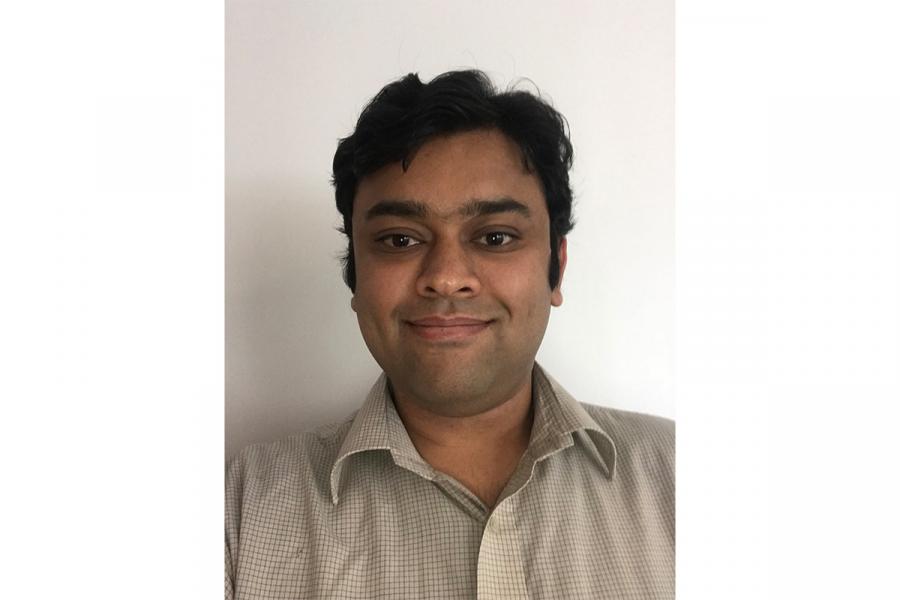
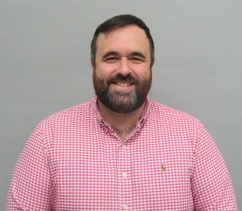
Niko Troje is a Professor at York University, affiliated with the Departments of Psychology, Biology, and Electrical Engineering & Computer Science. He holds cross-appointments and leadership roles, including Director of the BioMotion Lab. His research focuses on perceptual representations, biological motion, and vision science. Education: Ph.D. in Biology (1994) - Albert-Ludwigs Universität B.Sc. in Biology (1990), Physics & Mathematics (1987) - Albert-Ludwigs Universität Research Interests: Troje investigates how the brain processes biological motion, perception of human and animal movement, and applications in virtual reality. His work bridges neuroscience, psychology, and computer science. Key Contributions: Pioneered point-light displays for motion perception, explored gait analysis in mental health, and developed tools for motion capture and analysis (e.g., bmlTUX). Awards: Humboldt Research Prize (2014) NSERC Steacie Fellowship (2008-2009) Canada Research Chair (2003-2013) Grants & Labs: Led funded projects on movement perception, collaborated with institutions like the Max Planck Institute, and directs the BioMotion Lab at York University.
Manolis Savva is an Associate Professor in the School of Computing Science at Simon Fraser University and holds the Canada Research Chair in Computer Graphics. He specializes in 3D scene analysis, generative methods for 3D content, and computer graphics for AI. His research bridges computer graphics, vision, and robotics. Education: Ph.D. (Computer Science, Stanford University, 2016), MS (Computer Science, Stanford, 2012), B.A. (Physics & Computer Science, Cornell, 2009). Research Interests: Human-centric 3D scene analysis, generative 3D content creation, AI-driven rendering, and applications in robotics. Key projects include Habitat (Embodied AI platform), ScanNet , and ShapeNet datasets. Recent Articles: Focus on articulated object modeling, 3D scene synthesis, and AI-driven visualization. Notable work includes SceneMotifCoder (generating object arrangements) and R3DS (panoramic scene understanding). Awards: CHCCS Early Career Award (2022), ICLR 2023 Outstanding Paper Award, ICCV 2019 Best Paper Nomination, and SGP 2020 Dataset Award (ScanNet). Lab/Teams: Leads research groups in 3DLG (3D Learning and Graphics) and GrUVi (Graphics and Vision). Collaborates on projects like AI Habitat and HomeRobot .
Hamid Mansoor is an Assistant Professor in the Department of Computer Science at the University of Manitoba. He holds a PhD in Computer Science from Worcester Polytechnic Institute under Prof. Emmanuel Agu, and was part of the DARPA-funded WASH project. His research focuses on data visualization, digital health, and smartphone-based behavioral analysis. He previously served as a Postdoctoral Fellow at the VIXI Lab, University of Victoria, Canada, under Prof. Miguel Nacenta. Education: PhD in Computer Science, Worcester Polytechnic Institute Research Interests: Interactive data visualization frameworks for health monitoring Mobile and ubiquitous computing for behavioral analysis Smartphone-sensed human behavior and health informatics Visual representation of text-based and sensor data Publications highlight trends in visual analytics for healthcare, including tools like ARGUS and INPHOVIS for detecting bio-behavioral disruptions and smartphone-based phenotyping. His work integrates machine learning with visualization to address challenges in health data interpretation. Awards: Best short paper honorable mention (EuroVis 2020) His contributions span academic collaborations in health informatics and mobile computing, with a focus on bridging theory and practical applications in healthcare technology.
Charles Perin is an Assistant Professor of Computer Science at the University of Victoria, leading the UViz research group. He holds a PhD from Université Paris-Sud (2014) and has held roles including Post-doc at the University of Calgary and Lecturer at City, University of London. His research focuses on information visualization, personal visualization, human-computer interaction, and sports visualization. Education: PhD in Computer Science (2014), Université Paris-Sud; Post-doc at University of Calgary (InnoVis lab); MS and earlier studies in Computer Science and HCI in France. Research interests include designing interactive visualization tools for personal data reflection, health data communication, and sports analytics. He emphasizes authoring tools for non-experts and physical/tangible visualization systems. Recent work explores embedded data physicalizations and mobile visualization design. His articles span topics like data storytelling, patient-generated health visualizations, and soccer data analysis, often appearing in top venues like IEEE VIS, CHI, and Eurovis. He has advised over 20 students across PhD, MSc, and undergraduate levels. Teaching includes courses on Information Visualization and HCI at UVic, City, and other institutions. He co-organized workshops on topics like Personal Visualization and Sports Data at IEEE VIS. His UViz lab collaborates internationally with institutions like Monash University and the National Archives (UK).
Dongwook Yoon is an Associate Professor at the Department of Computer Science , University of British Columbia , and serves as Director of the SOCIUS Lab . He actively contributes to research in Human-Computer Interaction, Human-AI Interaction, and Virtual/Augmented Reality as a member of the Designing for People (DFP) and CAIDA research clusters. Education : PhD in Computer Science from Cornell University (2017), MS (2009) and BS (2007) in Computer Science from Seoul National University Research Focus : Designing socio-technical systems that bridge the gap between technology and human social processes, with innovations in AR/VR, multimodal interaction, and inclusive design Article Trends show his work spans: Temporal and bichronous learning environments AI self-clones and ethical implications Income inequality in virtual platforms Enhanced multimodal collaboration in VR Eyes-reduced interfaces for situational impairments Speculative participatory design for gig economy challenges Scientific Awards include: Google Academic Research Award (2024) Best Paper Award at CHI 2024 High Impact Award in Educational Technology (2024) CHCCS/SCDHM Graphics Interface Early Career Award (2023) Multiple Honorable Mentions at CHI, DIS, and CSCW Students & Collaborators range from active PhD candidates (Anika Sayara, Yuri Kim) to notable alumni (Thitaree Tanprasert, Ashish Chopra) across his SOCIUS Lab projects. His research receives funding from NSERC , KIST , Adobe , Microsoft , and Google grants.
Marie-Eve Carrier-Moisan holds the Joint Chair in Women’s Studies at Carleton University and the University of Ottawa (2023-2025). She is a faculty member in Carleton's Department of Sociology and Anthropology and cross-appointed with the Feminist Institute for Social Transformation and the Institute for Political Economy. Her work bridges feminist anthropology, visual ethnography, and critical studies of institutional power. Her research investigates institutional abandonment in Québec school systems for autistic students, analyzing transportation access crises through material ethnography of policies and lived experiences. Concurrently, she examines sex tourism in Brazil, particularly during the 2014 World Cup, revealing how anti-trafficking campaigns perpetuate urban exclusion. Carrier-Moisan pioneers multimodal knowledge translation, notably through the graphic novel Gringo Love: Stories of Sex Tourism in Brazil developed with illustrator Débora Santos. She supervises graduate students across anthropology, sociology, and political economy on topics including carceral harm reduction, Indigenous women's rights, and gender fluidity. Funded by SSHRC, her current work collaborates with Autisme-Québec and the Comité pour le droit à la scolarisation to address school exclusion. Key collaborators include Dr. Laurence Simard-Gagnon and narrative cartography initiatives exploring alternative research dissemination.
Elizabeth (Lisa) Alexandrin is an Associate Professor in the Department of Religion at the Faculty of Arts, University of Manitoba . Her academic work bridges Islamic Studies , Sufism , and gender theory , with a focus on visual and textual representations of mysticism. Education: PhD in Islamic Studies, McGill University (2006) MA in Anthropology, University of Toronto (1993) BA in Anthropology, Boston University (1993) Research Interests: Islamic intellectual history Sufism Ismaili thought Body histories Visual piety Key Themes in Publications: Apocalyptic narratives in Fāṭimid Ismāʿīlī thought Qurʾanic calligraphy as spiritual practice Symbolism of walāyah (sainthood) in Sufi texts Intersection of dreams and mystical exegesis Awards: SSHRC Insight Development Grant (2018-2022) Explore SSHRC/University of Manitoba grant (2021-2022) SSHRC standard research grant (2011-2012)
Anup Basu is a Professor in the Department of Computing Science at the University of Alberta. His research focuses on computer graphics, computer vision, and multimedia communications. He holds an B.S. in Math & Statistics from the Indian Statistical Institute (1980), an M.E. in Computer Science from the Indian Statistical Institute (1983), and a Ph.D. in Computing Science from the University of Maryland (1990). His work emphasizes Quality of Service (QoS) in multimedia delivery for e-commerce and telelearning, adaptive bandwidth monitoring, and 3D visualization tools. He pioneered foveated image compression and stereo visualization techniques, contributing to MPEG-4 coding standards. He leads major initiatives like the ASRA/TelePhotogenics/IBM 3D Medical Imaging project ($2M+ funding) and developed patented SHR Stereo/3D scanning technologies. Awards include the American Neurological Association Fellowship. He has held leadership roles as General Chair for IEEE International Conferences on SMC (2017), Multimedia & Expo (2013), and SMC (2014). His research integrates interdisciplinary collaborations across universities and industry partners, leveraging advanced equipment like the CAVE system for immersive visualization.
Wesley Willett is an Associate Professor in the Department of Computer Science at the University of Calgary, holding the NSERC CRC II Chair in Visual Analytics. His primary research focuses on information visualization, human-computer interaction, and new media applications. He leads the Data Experience Lab and Interactions Lab, exploring innovative methods for data representation and interaction in augmented/virtual reality environments. Education includes a B.S. in Computer Science from the University of Colorado (2006) and a Ph.D. in Computer Science from UC Berkeley (2012). His work bridges technical innovation with user-centered design principles, emphasizing ethical considerations in data visualization and inclusive representation. Key research contributions include: spatial visualization techniques for large environments, gesture-based interfaces for AR/VR, and physical data representations through projects like Cetonia (swarm robotics visualization) and Data Embroidery. His work has been recognized with Best Paper awards at CHI 2015 and Pervasive 2010. Current research emphasizes immersive analytics, wearable visualization systems, and demographically diverse anthropographics. He collaborates with urban designers, neurologists, and environmental scientists to apply visualization in diverse domains like epilepsy surgery planning and air quality monitoring.
Dr. Oscar Meruvia-Pastor is a faculty member in the Department of Computer Science at Memorial University of Newfoundland, within the Faculty of Science. He holds a B.Sc. from ITESM-Monterrey, Mexico, an M.Sc. from the University of Alberta, and a Ph.D. from Otto-von-Guericke Universität Magdeburg, Germany. His research focuses on interactive 3D graphics, non-photorealistic rendering, and biomedical visualization, with applications in telepresence systems, augmented reality (AR), and virtual reality (VR). He has developed tools like OMARC for respiratory condition training and GeNET for gene co-expression network analysis. Dr. Meruvia-Pastor has supervised numerous graduate students and contributed to over 50 publications. His work includes evaluating stereo correspondence methods in AR, robot arm manipulation via depth sensors, and smartphone integration in immersive VR. He has been recognized with awards such as the Best HCI Poster at Graphics Interface 2014 and a semi-finalist poster at SIGGRAPH 2015. He teaches courses in computer science, including computer graphics, multimedia development, and introductory science modules. His research lab focuses on 3D telepresence, medical visualization, and human-centered VR/AR solutions. His academic contributions span software tools for medical imaging analysis, interactive visualization systems, and educational technologies. He actively collaborates with health professionals to advance telemedicine and remote procedural training through AR platforms. His work bridges computer graphics with real-world applications in healthcare, education, and environmental advocacy.
Sophie McCall is a Professor in the Department of English at Simon Fraser University (SFU), specializing in Indigenous literatures. Her research focuses on decolonization, resurgence, and the ethics of collaborative authorship, particularly examining how Indigenous writers challenge settler colonialism through storytelling. She holds a BA from Queen’s University, an MA from UBC, and a PhD from York University. McCall is the author of First Person Plural: Aboriginal Storytelling and the Ethics of Collaborative Authorship (2011), which received critical acclaim, and editor of foundational texts like Devil in Deerskins: My Life with Grey Owl (2014). She co-edits Read, Listen, Tell: Indigenous Stories from Turtle Island (2017) and directs SFU’s Masters of Arts for Teachers of English (MATE) program. Her work bridges literary criticism and activism, addressing residential school narratives, Indigenous-Black solidarity, and the politics of reconciliation. She co-chairs the Indigenous Voices Awards and leads SSHRC-funded projects exploring Indigenous-led literary collaborations. Key themes in her scholarship include textualizing orality, ethical representation, and multidisciplinary Indigenous arts. Awards: Gabrielle Roy Prize finalist (2011), Canada Prize finalist (2011) Projects: SSHRC-funded collaboration with NunatuKavut scholar Kristina Bidwell Roles: Director of MATE, Co-chair Indigenous Voices Awards McCall’s publications span scholarly articles, edited collections, and anthologies, emphasizing Indigenous agency in storytelling. Her teaching and research prioritize decolonizing methodologies and amplifying Indigenous voices across disciplines.
Richard Evans is an Associate Professor in Digital Innovation at the Faculty of Computer Science, Dalhousie University, where he contributes to research and teaching in digital transformation, human-computer interaction, and information management. He is actively involved in the IEEE Technology and Engineering Management Society, currently co-chairing the Design and Engineering Technical Activity Committee and serving on the editorial board of IEEE Transactions on Engineering Management . His educational background includes a PhD in Knowledge Management for Collaborative Product Design from the University of Greenwich (2013), a PG Cert in Higher Education (2015), an MSc from the University of Wales (2010), and a BA (Hons.) from the University of Exeter (2008). Richard's research focuses on digital innovation and transformation, with strong emphasis on design and engineering management, information systems, and knowledge management in distributed environments. His work bridges academic research and industrial applications, particularly in aerospace and manufacturing sectors. He has published over 90 scientific papers and helped co-found the International Conference on Artificial Intelligence for Good , highlighting his commitment to socially beneficial technology. His research output spans topics such as collaborative systems, user-centered design, and knowledge modeling, indicating a consistent trajectory toward human-centric technological innovation and digital transformation strategies. University of Greenwich prize for Best PhD student in 2013 Richard has supervised and mentored students at various levels during his tenure at multiple institutions including Brunel University London, University of Westminster, and Dalhousie University. He has secured research funding through industrial partnerships such as BAE Systems and has built a global network of academic and industry collaborators. His work often involves interdisciplinary grants focused on engineering management, digital design, and AI for societal good. Richard is affiliated with key research clusters in HCI, Visualization & Graphics at Dalhousie and leads initiatives connecting design, engineering, and digital innovation. He collaborates with international teams through IEEE and co-founded a major conference promoting ethical AI, demonstrating strong leadership in building research communities.
Robert S. Allison is a Professor in the Department of Electrical Engineering & Computer Science at York University's Lassonde School of Engineering. His research focuses on human perceptual responses in virtual environments, stereoscopic vision, and eye movement analysis. He is affiliated with the York Centre for Vision Research, Sensorium (Digital Arts & Technology), and the Centre for Innovation in Computing at Lassonde. His research interests include depth perception in natural and virtual environments, human-computer interface design for VR, machine vision applications, and the measurement of human motion. He has supervised multiple graduate students and contributed to over 260 publications. His work spans topics like cybersickness mitigation, display lag effects, and perceptual adaptation in VR. Key grants include NSERC-funded projects on perception in virtual environments and collaborations with institutions like the Australian Research Council. His teaching includes courses on human perception in human-computer interaction and digital logic design. Recent articles highlight advancements in understanding motion perception, VR-induced sickness, and multisensory integration. He collaborates widely, with affiliations including the VISTA program and York's Connected Minds initiative.
Yingying Wang is an Assistant Professor in the Computing and Software department at McMaster University , where she joined in January 2022. Her research focuses on generating expressive animations for AR/VR applications and games through interdisciplinary approaches combining Computer Graphics , Artificial Intelligence , and Human Behavior Analysis . Education : Bachelor and Master degrees from Nanjing University , Ph.D. from University of California, Davis (2017) Her research explores: Generative models for human motion style transfer Physics-based motion simulation Audio-driven character synthesis Dance choreography for virtual characters Cartoon animation perception Conversational character gesture synthesis Markerless hand motion capture Recent publications focus on 3D hand pose estimation , motion style transfer , gesture-locomotion coordination , and personality perception in virtual agents . Key methodologies include deep learning , multimodal data analysis , and real-time animation systems . Scientific contributions recognized through: $240,000 Labarge Catalyst Grant in Mobility in Aging (interdisciplinary team award) US Patent 10,796,482 (3D hand pose estimation) US Patent 9,811,937 (gesture-locomotion coordination) Teaching includes graduate and undergraduate courses in Computer Animation (CAS 737), Computer Graphics (COMPSCI 3GC3/SFWRENG 3GC3), and Software Development (COMPSCI 2ME3). Research group actively recruits Ph.D. and Master's students in graphics + deep learning domains.
Mohamed Hefeeda is a Professor in the School of Computing Science at Simon Fraser University (SFU), Canada. He leads the Network and Multimedia Systems Lab (NMSL) and previously served as Director of the School from 2018 to 2023. His research focuses on multimedia networking, mobile computing, cloud systems, and hyperspectral imaging. He holds an ACM Distinguished Member designation and has received prestigious awards including the NSERC Discovery Accelerator Supplements (2011) and multiple best paper awards at top conferences like ACM MM and IEEE Infocom. Education: Ph.D., Purdue University, 2004 M.Sc., University of Connecticut, 2001 B.Sc., Mansoura University, Egypt, 1994 Research Interests: Design of efficient multimedia systems and protocols for wired/wireless networks Cloud gaming optimization and video encoding techniques Hyperspectral imaging for healthcare and mobile applications AI-driven multimedia systems and mobile computing innovations Grants & Industry Collaborations: Funded by NSERC, CFI, and companies like AMD, Huawei, and CBC Co-founded Video Semantics (acquired by tech firm) Partnered with CBC on peer-assisted content distribution systems Awards Highlights: 2025: ACM Distinguished Member 2019: Best Student Paper Award at ACM MMSys 2015: NSERC Discovery Accelerator Supplements Labs & Leadership: Network and Multimedia Systems Lab (NMSL) at SFU Contributed to creation of Qatar Computing Research Institute (QCRI)