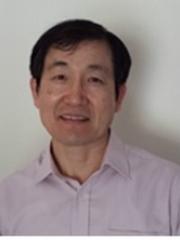
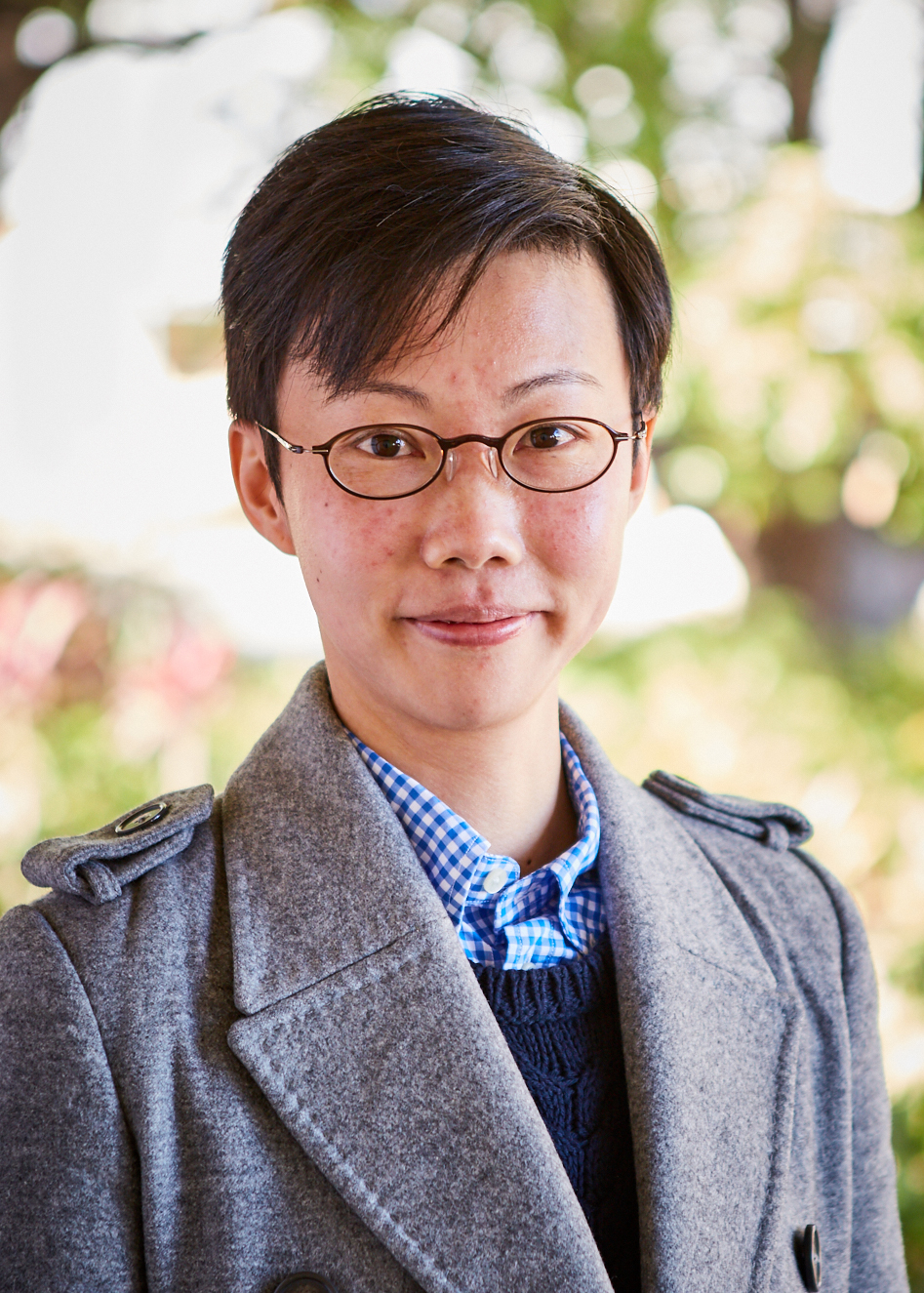
Dr. Erin Goddard is a Senior Lecturer at the School of Psychology, University of New South Wales (UNSW) , where she has been since 2020. Her research focuses on the mechanisms of the human visual system, particularly how attention, memory, and task demands influence visual processing. She integrates behavioral methods (psychophysics) with advanced neuroimaging techniques like fMRI and MEG to investigate phenomena such as feature binding , color constancy , and resolving visual ambiguity . Funded by the Australian Research Council, her work has significant implications for understanding brain dynamics in visual perception. PhD from the University of Sydney (2011) Postdoctoral positions at University of Sydney, Macquarie University, and McGill University Research Interests: Dr. Goddard’s work bridges visual perception , neuroimaging , and cognitive neuroscience . She investigates how the brain processes chromatic and achromatic signals , attentional modulation , and dynamic visual coding . Her recent studies focus on MEG-based temporal analysis , fMRI adaptation , and cross-modal interactions in visual cortex. Scientific Contributions: ARC Discovery Project (2022-2026): $554,463 for studying brain interactions in visual uncertainty ARC Discovery Early Career Researcher Award (2020-2023): $426,979 for neural dynamics of color constancy Teaching: Dr. Goddard teaches courses including Perception and Cognition (PSYC2071) , Vision and Brain (PSYC3221) , and Research Internship (PSYC3361) . Her lab website is goddardlab.psy.unsw.edu.au .
Professor Alexander Paz serves as the Transport and Main Roads Chair at Queensland University of Technology (QUT), where he leads research and academic initiatives in transportation engineering. Previously, he was an Associate Professor of Civil Engineering and Director of the Transportation Research Center at the University of Nevada, Las Vegas. His professional credentials include Chartered Professional Engineer and Fellow Engineer status in Australia, along with being a Registered Professional Engineer in Queensland and Licensed Professional Engineer in Nevada. PhD in Transportation and Infrastructure Systems Engineering from Purdue University Over 100 scholarly publications including books, book chapters, and journal articles More than $17 million in research funding securing over 60 research projects Supervision of more than 18 doctoral and research Masters students Professor Paz's research spans multiple critical areas of transportation engineering with a focus on practical applications. His work in traffic safety involves developing methods for crash data collection, advanced analytics for crash estimation, and field testing of safety devices. In congestion management, he develops large-scale dynamic traffic flow models and optimization frameworks. His infrastructure management research focuses on software systems for roadway infrastructure visualization and analytics, while his work in Intelligent Transportation Systems includes frameworks for real-time traveler information and evaluation of ITS technologies. His travel demand research employs statistics and econometric methods to study travel behavior and develop optimization frameworks for model estimation. Analysis of Professor Paz's recent publications reveals a strong trend toward integrating artificial intelligence and machine learning techniques into transportation engineering. His work increasingly combines traditional transportation engineering methods with cutting-edge data analytics, computer vision, and natural language processing approaches. There's a clear emphasis on practical applications with real-world impact, particularly in traffic safety analysis, urban mobility solutions, and sustainable transportation systems. His research demonstrates growing interdisciplinary connections with computer science, data science, and urban planning disciplines. Chartered Professional Engineer in Australia Fellow Engineer in Australia Registered Professional Engineer in Queensland Professional Engineer Licensed in Nevada Three inventions with patents (one granted, one under review, one licensed for commercialization) Professor Paz has successfully secured substantial research funding exceeding $17 million from diverse sources including government agencies and corporate partners. His sponsored research projects total over 60, with major funders including the National Science Foundation, Federal Highway Administration, Nevada Office of Traffic Safety, Queensland Department of Transport and Main Roads, and various transportation authorities. He has supervised more than 18 doctoral and research Masters students, demonstrating significant commitment to academic mentorship. His industry collaborations include partnerships with Verizon, Parsons, and the Nevada Department of Transportation, resulting in practical implementations of his research findings. Notably, one of his traffic safety inventions has been licensed to Rebel Roadway Systems LLC for commercialization. Professor Paz leads research initiatives through the Urban AI Hub at QUT and previously directed the Transportation Research Center at the University of Nevada. His work involves interdisciplinary teams combining expertise in transportation engineering, computer science, data analytics, and urban planning. Current projects include field testing of traffic safety devices, development of AI-powered transportation analytics systems, and smart city transportation solutions. His research group collaborates internationally with institutions in the United States, Australia, and globally through his involvement with the Transportation Research Board of the National Academies.
Sara Howard is a Senior Research Fellow (Human Factors) at Flinders University's College of Business, Government and Law, where she serves as Focus Area Lead for 'Optimising human and technology performance in small and medium-sized enterprises' within the Flinders Factory of the Future. With over 15 years of applied research experience and five years of consulting expertise, she applies socio-technical systems frameworks to facilitate digital technology adoption across multiple sectors including defense, finance, health, and manufacturing. Her research interests center on human-technology interaction, with particular expertise in workload and usability assessment, human factors, ergonomics, and change management. She frequently conducts site visits, manages technology trials in real-world environments, and provides recommendations for implementation strategies based on empirical evidence. Howard's recent publications demonstrate a strong focus on emerging workplace technologies, with significant contributions to understanding augmented reality applications in industrial settings, human-robot interaction safety, and addressing harmful workplace behaviors through evidence-based approaches. University Medal for Outstanding Academic Merit Throughout Undergraduate Studies As an experienced mentor, Howard formally and informally guides staff on research methodologies and stakeholder engagement while supervising placement students and PhD candidates. Her work spans both academic and industry contexts, with notable projects including the Manufacturing Growth Accelerator Program and research on chronic disease self-management. She maintains strong connections with diverse stakeholders across government, private, and not-for-profit sectors.
Dr. Jenny Davis Barnett is a Lecturer at the School of Languages and Cultures, University of Queensland. Her research intersects French literature, medieval and Renaissance studies, and gaze theory. Education : PhD in French from Emory University (2010). Her work explores medieval manuscript transmission , emblem book symbolism , and bestiary interpretations , with recent publications on flood resilience and postcolonial cultural critique. She contributes to academic journals such as Cerae and H-France Review . Research highlights include: 2024 study on women's libraries in medieval France 2023 flood resilience strategies in Australia 2021 critical review of emblem book structures
Dr Isaac Lee (University of Queensland) is an Associate Professor at the School of Languages and Cultures, with expertise in critical curriculum studies , language policy , and postcolonial analysis . His research spans Korean/English/Chinese language textbooks across East Asia, Southeast Asia, and the Middle East, examining intersections of nationalism , multiculturalism , and environmental literacy in education. PhD in Critical Curriculum Studies (UQ, 1999) MA in Applied Linguistics Bachelor of Arts, Pusan National University His work addresses: Overseas Korean identity in China/Australia/Central Asia; colonial/neocolonial impacts on language education; North Korean defector integration ; and green ideology in school curricula across Asia. Recent projects explore Australian missionary influences on Korean modernity (1899-1970s) and cultured meat R&D ethics. Supervision includes: Bethy Wang (cultural values in Chinese textbooks for ethnic Koreans), Haegyeong Hong (North Korean ELT textbooks), and Doctor Philosophy candidates analyzing environmental education in Korean-Chinese primary schools and Indonesian English textbooks. 2021-2028 : Academy of Korean Studies grant for Korean studies hub development 2014-2021 : Overseas Korean Studies Incubation Program
Miss Rebecca Moodie is an Adjunct Lecturer at the School of Psychology, The University of Queensland. Her research bridges cognitive psychology, clinical interventions, and neurodegenerative disorders, with a focus on Parkinson’s disease and dementia-related mental health challenges. Education: Professional Doctorate in Psychology (2021), The University of Queensland Her work explores top-down cognitive processes, self-reference effects, and technology-driven therapies like virtual reality for anxiety management. Recent publications highlight grief associated with driving cessation in dementia and caregiver burden in Parkinson’s disease. Thematic analysis of her peer-reviewed articles reveals interdisciplinary engagement spanning Cognitive Neuroscience , Clinical Psychology , and Geriatric Psychiatry . Key trends include leveraging Virtual Reality for behavioral interventions and applying Social Ecological Frameworks to understand dementia-related loss. As an adjunct academic, she contributes to research and teaching through collaborations within the School of Psychology and participates in international conferences such as the 33rd International Congress of Psychology (2024).
Sam Baron is an Associate Professor of Philosophy at the University of Melbourne , affiliated with the School of Historical and Philosophical Studies. His research focuses on the metaphysics of science, particularly the nature of time, spacetime emergence in quantum gravity, mathematical explanation, and the epistemological implications of explainable AI (XAI). He holds an ARC Discovery Early Career Fellowship (DE180100414) and leads the ARC Discovery Project DP180100105 . Baron actively contributes to public philosophy as a producer for the ABC's Philosopher's Zone . His recent work explores: Foundations of time and temporal passage Mathematical explanation and Platonism Spacetime emergence in quantum gravity Epistemology of AI and explainability Publications demonstrate methodological innovation at the intersection of metaphysics, philosophy of science, and empirical research. While no scientific awards are currently listed, his research program systematically challenges core assumptions in temporal ontology and mathematical realism.
Dr. Amy Griffin is a Senior Lecturer in the School of Science at RMIT University , specializing in Geospatial Sciences . As a broadly trained geographer and cartography expert, her research focuses on spatial information systems, user-centered map design, and fire response applications. She currently serves as Vice-President of the International Cartography Association . Academic Affiliation: School of Science, RMIT University Contact: amy.griffin@rmit.edu.au Supervision: Open to Masters/PhD student supervision Her research explores: Interactive cartography and user experience (UX) in mapping Uncertainty visualization in spatial information systems Historical GIS and time geography Health geography applications Innovative fire response mapping systems for Australia Recent publications demonstrate expertise in: 3D urban growth modeling Green space cooling effect analysis Accessible wayfinding map design Cultural landscape mapping
Ann Carrigan is a Senior Research Fellow at the Sydney School of Nursing, Faculty of Medicine and Health, University of Sydney. With over 25 years of experience in allied health, she specializes in applying human factors methodologies to digital health interventions, focusing on clinical decision support systems, medical simulation design, and telehealth implementation for aged care residents. Her interdisciplinary work bridges qualitative and quantitative research approaches to improve healthcare provider accuracy and system usability. Research Focus : Telehealth barriers/enablers, cognitive bias in radiology, medical simulation usability Teaching Roles : Lecturer in psychology and medical research foundations; supervisor for PhD, Honours, and Masters students Current Projects : Investigating telehealth integration in residential aged care through NHMRC and MRFF grants using mixed methods Collaborations : Digital Health Human Factors Research Group, Faculty of Medicine and Health Her publications highlight expertise in visual perceptual analysis and cognitive modeling within medical imaging contexts, with recent work addressing telehealth scalability challenges in vulnerable populations.
Dr. Michael Barham serves as an Associate Lecturer in the School of Psychology within Deakin University's Faculty of Health. He holds an active academic position since October 2019 and maintains research affiliations with the Cognitive Neuroscience Unit (CNU). His institutional contact details include office phone +61 3 924 45977 and email michael.barham@deakin.edu.au at Melbourne Burwood Campus. His educational background includes a PhD from Deakin University (2021) focused on sleep brain waves and memory, a Graduate Diploma of Psychology from Deakin, and a Bachelor of Science from the University of Melbourne. Barham's research centers on non-invasive brain stimulation techniques (TMS) and neuroimaging methods (EEG) to investigate cognitive processes in both clinical and non-clinical populations. His work frequently examines sleep-dependent memory consolidation, implicit learning mechanisms, and neural correlates of language processing. Current projects include the 'Big NIBS Data' initiative for brain stimulation data sharing. His publication analysis reveals dominant trends in cognitive neuroscience methodology , with significant contributions to TMS-EEG integration, sleep-memory relationships, and low-cost neuroimaging validation. Recent work (2024-2025) emphasizes open science infrastructure for brain stimulation research. Current doctoral supervision includes three students: Shelby Wan Ying Lim (language impairment and mental health), Chunnian Zeng, and Lucy Callan Wight (both researching ADHD neurophysiology including sleep-cognition relationships). Teaching responsibilities span core first-year subjects ( Introduction to Psychology HPS111/HPY711, Health Psychology: Behaviour Change HBS110) and advanced fourth-year courses ( Research Methods: Advanced HPS434).
Assoc Prof Robert Hales is an Associate Professor in the Department of Management at Griffith University's Griffith Business School. He serves as the Discipline Leader of Sustainable Business and previously led the Griffith Centre for Sustainable Enterprise (2015–2022). His roles include co-chairing Griffith University’s SDG Working Group and the PRME Australia New Zealand Chapter, fostering climate action education in business curricula. He is affiliated with several institutes: Cities Research Institute, Griffith Asia Institute, and the Centre for Work, Organisation and Wellbeing. Research focuses on climate governance, carbon markets, sustainable tourism, and Indigenous consent processes in climate initiatives. Key projects include DFAT-funded programs on climate finance and resilient development in Indonesia, South Asia, and Mongolia. He designs climate policy courses for institutions like PT PLN (Indonesia) and leads the Master of Global Development program. His work integrates UN SDGs into teaching and business strategies. Education & Professional Roles: Expertise in sustainable enterprise, climate policy, and international development. Grants & Projects: Oversees DFAT-funded climate resilience programs, EcoBiz advisory roles, and research on Indigenous adaptive capacity. Teaching & Advising: Supervises PhD students on governance, sustainability transitions, and climate adaptation. Teaches leadership for sustainable business and policy research methods. His work bridges academic research, policy, and industry, emphasizing equitable climate solutions and SDG implementation.
Dr Bonnie Pang is a Lecturer in Health and Physical Education at Western Sydney University's School of Health Sciences. As a Hong Kong born Chinese-Australian, she brings a unique perspective to her work focusing on diversity and inclusion of Chinese youth, family and community voices in health and physical culture. Her research spans critical socio-cultural aspects of Health/Physical Education, physical culture, Chinese youth experiences, diversity and critical pedagogy, and healthy and inclusive communities. Dr Pang's academic background includes a PhD in Health and Physical Education from the University of Queensland (2012), a Master of Cultural Studies from the University of Sydney (2016), a PGDip in Global Health from the University of Edinburgh (2014), and degrees from The Chinese University of Hong Kong. Her interdisciplinary training informs her research approach that bridges education, cultural studies, and global health perspectives. Her research has created new knowledge about young Chinese Australian students' needs and experiences in Health and Physical Education. She has developed a 'heuristic of difference' model that moves beyond Euro-American theoretical frameworks to better understand Chinese students in this context. Dr Pang's work challenges deficit discourses related to Chinese students and advocates for a strengths-based approach that recognizes students' assets, identities, and experiences within diverse socio-cultural environments. She specializes in qualitative research but also employs a synthesis of critical interpretive ethnographic methods, participatory visual methods, and integration of Chinese and western theoretical perspectives. Dr Pang is recognized for her contributions to the field, having received numerous scholarships and awards totaling approximately AUS $130,000 in funding. Her research aligns with Western Sydney University's strategic priorities and the Australian National Curriculum in Health and Physical Education, with potential to create regional, national, and global impact for diverse and Chinese young people in westernized countries. She specializes in teaching areas of 'Youth Health and Wellbeing' and 'Physical Cultural Studies,' with a focus on educating young people to become reflective, critical, and holistic healthy persons who can enact meaningful changes in sites of inequality. Scientific Awards and Recognition 2016 Leeds Beckett University Visiting Scholar 2016 University of Illinois Urbana-Champaign Visiting Scholar 2016 Western Sydney University Academic Development Program 2015 University of Western Sydney Early Career Researcher Grant 2014 University of Western Sydney Vice-Chancellor's Professional Development Scholarship 2011 AIESEP Young Scholar Award 2008-12 UQ Research Scholarship 2008 Sir Edward Youde Memorial Fellowship 2007 Thomas HC Cheung Postgraduate Scholarship 2005 Kunkle and Pommerenke Grand Scholarship Dr Pang's research has significant implications for policy and practice, aiming to inform local education and health policies as well as children's and women's rights frameworks. Her work impacts how we represent, position and research with Chinese students in Health and Physical Education contexts, thereby influencing how these students engage and perform their identities in westernized educational settings.
Associate Professor Claire Hooker is a leading academic in Health Humanities and Medical Ethics at the University of Sydney's Sydney Health Ethics. She is also President of the Arts Health Network NSW/ACT. Her research focuses on risk communication, particularly in infectious disease contexts, and the intersection of creative arts with healthcare practice. She holds affiliations with the Sydney Centre for Healthy Societies, Sydney Environment Institute, and Charles Perkins Centre. Her work combines critical humanities scholarship, cognitive psychology, and historical approaches to explore ethical communication in health. Notable projects include the Grace Under Pressure initiative using verbatim theatre to improve healthcare workplace training and culture. She has advised on pandemic response strategies, particularly during the 2020 COVID-19 crisis, emphasizing transparent risk communication and public trust. Research Interests: Arts-based interventions in healthcare Risk communication and public health messaging Medical humanities and ethics History of medicine and science Recent publications analyze pandemic communication strategies, workplace culture in healthcare, and the ethics of medical decision-making. Her work often bridges disciplines, integrating qualitative research, cultural studies, and clinical practice. Current projects include Grace Under Pressure workshops and pandemic preparedness research. She has secured grants from the National Health and Medical Research Council (NHMRC) and Sydney Policy Lab for projects addressing arts in healthcare and disaster management. Media engagements include commentary on coronavirus messaging and health policy debates. Her educational contributions focus on fostering empathy and ethical practice among healthcare professionals.
Laura Dondzilo is an Adjunct Research Fellow at the School of Psychological Science, The University of Western Australia, and Research Manager at the WA Child and Adolescent Mental Health Service (CAMHS). She holds a PhD from UWA (2018), focusing on cognitive processing in body image and eating disturbances. Her research spans child/adolescent mental health, cognitive biases in eating disorders, and the role of social media in mental health outcomes. Education: PhD in Psychology, School of Psychological Science, UWA (2018) Research Interests: Cognitive processes in eating disorders and body image disturbances Social media's impact on mental health Child and adolescent mental health service optimization Attentional biases and anxiety mechanisms Recent Research Trends: Her work increasingly integrates behavioral data with clinical outcomes, emphasizing real-world applications in mental health services. Recent studies explore the causal links between social media engagement and eating disorders, as well as the role of attentional biases in anxiety and body dissatisfaction. Awards: UWA Research Collaboration Award (2022) Cockell Research Collaboration Award (2020) Advising & Grants: Supervised research students during her UWA Research Fellow role (2019–2023). Secured grants including a UWA-funded project on anorexia nervosa's cognitive basis (2022) and a study on Body Dysmorphic Disorder interventions (2020). Labs/Teams: Collaborates with CAMHS and international researchers, including Swinburne University of Technology and University of Groningen.
Lucien Brown is the Korea Foundation Associate Professor in Korean Studies at Monash University's Faculty of Arts. He holds editorial roles at the Journal of Pragmatics and Korean Linguistics . Previously, he worked at the University of Oregon (2011–2017) and earned his MA and PhD in Korean Studies from SOAS University of London. His research focuses on socio-cultural linguistics and pragmatics, particularly Korean's multimodal communication of politeness/impoliteness through gestures, prosody, and embodied practices. He emphasizes practical applications in language pedagogy. Key research areas include: Politeness research and multimodal communication Socio-cultural aspects of second language learning Language and identity in Korean Embodied interaction and gesture studies Recognition includes the Commendation for Outstanding Contribution to Teaching and Learning (2020) and Professor Chung-Sok Suh Paper Award (2022) . His work contributes to UN SDGs related to quality education and reducing inequalities through language accessibility. Active projects include: Where Gesture Meets Grammar: Crosslinguistic Multimodal Communication (ARC-funded) 31st Japanese/Korean Linguistics Conference (international collaboration) Monash Korean Studies Beyond Borders (2023–2028) Teaching focuses on integrating multimodal approaches into Korean language education. He supervises PhD students in pragmatics, sociolinguistics, and Korean studies.