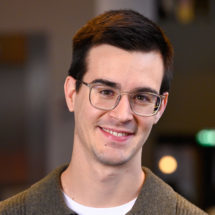
Berrak Burçak Della Fave is an Assistant Professor in the Department of History at Bilkent University. She holds a Ph.D. in Near Eastern Studies from Princeton University (2005) and specializes in the history of Ottoman-Turkish modernization and the political history of modern Turkey. Education : Ph.D., Near Eastern Studies, Princeton University, 2005 Her research intersects Ottoman history , gender studies , and science-society relations . Key themes include: Fashion and health as expressions of identity (e.g., ‘The question of the corset’ in late Ottoman history) Hygienic beauty standards in the Hamidian era Diplomatic history through the lens of the Ottoman embassy institution Urban symbolism in Ankara's political development Recent publications (2022–2023) explore global intellectual histories , including critiques of Orientalism at the 1893 World’s Columbian Exposition. She contributes to journals like British Journal of Middle Eastern Studies and Middle Eastern Studies .
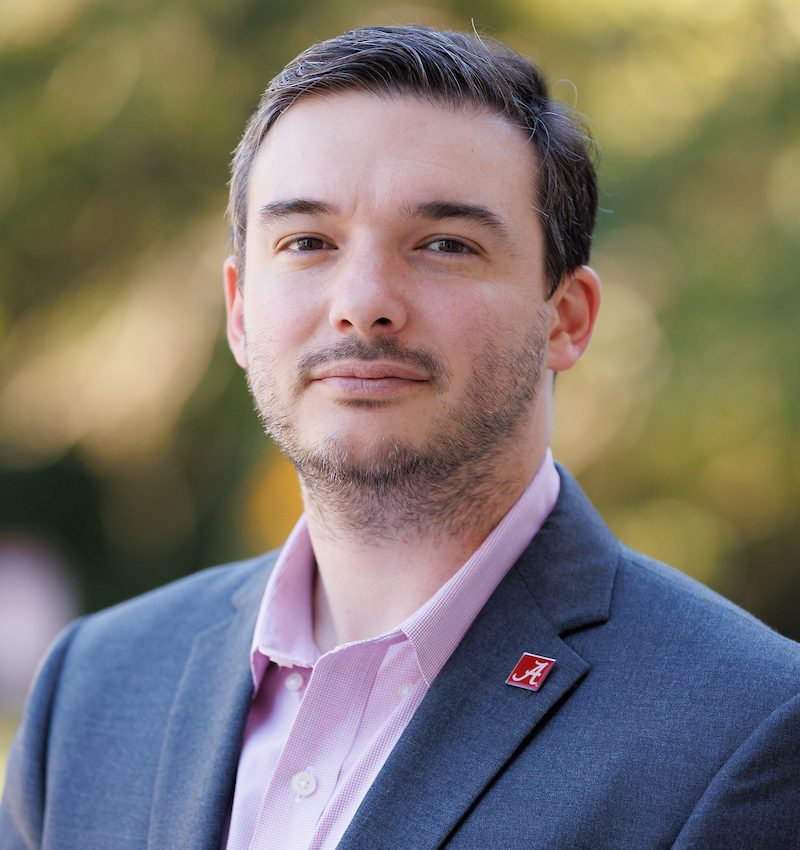
Dr. Patrick Shane Crawford serves as Assistant Professor in the Department of Civil, Construction and Environmental Engineering at the University of Alabama's College of Engineering. Affiliated with the Center for Sustainable Infrastructure and Alabama Water Institute, his research focuses on enhancing community resilience to tornadoes, floods, and hurricanes through interdisciplinary engineering approaches integrating social science and policy perspectives. His educational background includes: B.S. in Civil Engineering (2012, University of Alabama) M.S. in Civil Engineering (2014, University of Alabama) Ph.D. in Civil Engineering (2018, University of Alabama) Dr. Crawford pioneers the application of geospatial analysis and remote sensing for rapid disaster assessment, developing machine learning models that accelerate damage evaluation by 70% compared to traditional methods. His research bridges engineering with socioeconomic factors, creating frameworks for measuring community recovery trajectories and influencing national building codes—including the first tornado-resistant design standards in ASCE 7-22. Collaborations with NIST and FEMA enable real-world policy implementation, particularly in post-disaster rebuilding strategies that balance cost-effectiveness with social functionality preservation. Analysis of his 2022-2025 publications reveals consistent innovation in longitudinal disaster reconnaissance , with 60% of recent work focusing on tornado events using deep learning for damage classification. Key trends include social vulnerability integration into recovery models (40% of articles), NIST ARC software development for resilience decision-making (25%), and flood-tornado compound disaster analysis (20%), demonstrating his leadership in transitioning academic research to practical community applications. Active in federal partnerships, Dr. Crawford's 2025 feature Confident but Exposed: How Prepared Are U.S. Homeowners for Extreme Weather? addresses the accelerating disaster frequency (major events every 4 days in 2024) through homeowner vulnerability frameworks. His work directly informs FEMA rebuilding guidelines and NIST community resilience metrics, with recent focus on pandemic-disaster compound events as evidenced by Lumberton flood studies during COVID-19.
Associate Professor Paul Hogben serves as the Discipline Director of Architecture at the University of New South Wales within the Arts, Design & Architecture faculty and School of Built Environment. In this leadership role, he oversees three Architecture degree programs: Bachelor of Architectural Studies, Bachelor of Architectural Studies (Honours), and Master of Architecture, with a central aim of ensuring high-quality delivery of program courses that provide rich and rewarding learning experiences. Dr Hogben holds a PhD from UNSW and a Master of Architectural Studies from the University of Adelaide. His research examines various aspects of modern architectural history in Australia from the late nineteenth century until the present, with current focus on early American corporate imperialism exemplified by the foreign building program of the Equitable Life Assurance Society of the States in the 1880s and 1890s, and post-war architectural modernism in the Hunter region of New South Wales. A significant new research area explores the role of media within the Philippines in promoting visions of city reconstruction. His publication record demonstrates consistent scholarly output, with recent work showing particular emphasis on religious architecture, leisure spaces, and diplomatic buildings within Australian and regional contexts. The trend in his articles reveals strong focus on post-war architectural developments, media representation of architecture, and regional studies across Australia and Southeast Asia, often connecting architectural history with broader social, economic, and cultural contexts. Shortlisted for 2015 NSW Premier's History Awards in the Community and Regional History category (for 'Leisure Space: The Transformation of Sydney 1945-1970') Dr Hogben has been actively engaged in research supervision, having guided numerous PhD and Master's students to completion while currently supervising two PhD candidates. His grant history includes multiple internal faculty research grants and external funding from the City of Sydney. From 2011 to 2016, he convened the Urban Typologies Research Cluster at UNSW, which produced two edited books and hosted a major conference. From July 2019 to July 2023, he served as President of the Society of Architectural Historians, Australia and New Zealand (SAHANZ), an organization dedicated to promoting excellence in architectural history research with focus on Australia, New Zealand and the Asia-Pacific region.
Chang-kyu Kwon serves as an Assistant Professor in the Department of Education Policy, Organization & Leadership within the College of Education at the University of Illinois, Urbana-Champaign. His academic journey includes a Ph.D. in Learning, Leadership & Organization Development from the University of Georgia (2019), an M.A. in Organizational Behavior & Evaluation from Claremont Graduate University (2015), and a B.A. in Education from Korea University (2013). Professor Kwon's research is fundamentally informed by critical systems thinking with a focus on diversity, inclusion, and the role of learning in promoting whole-person inclusion. He investigates leadership and organizing principles that cultivate 'safe to be vulnerable' learning spaces where individuals across power divides can collaborate and develop as teams, organizations, and communities. His work critically examines ableism and disability inclusion in educational and workplace settings, with international recognition for his scholarship and advocacy in countries including South Korea, Japan, Peru, and Taiwan. Currently, he leads a U.S.-based project focused on promoting disability employment in small- and medium-sized manufacturing contexts. His scholarly output demonstrates a clear trajectory toward increasingly impactful work at the intersection of critical human resource development, disability studies, and transformative learning. The publications reveal a progression from foundational theoretical work to applied research with practical implications for organizational change, particularly in creating inclusive environments for people with disabilities. His recent work shows growing emphasis on generative pedagogy, dialogic organization development, and the practical application of critical HRD principles in real-world settings. Early Career Scholar Award, Academy of Human Resource Development (2025) Richard A. Swanson Research Excellence Award, Academy of Human Resource Development (2022) Cutting Edge Award, Academy of Human Resource Development (2019) Professor Kwon teaches courses in diversity, adult learning, leadership, and organization development, with a focus on helping students develop an adaptive learning mindset to strengthen relationships and lead inclusively. His EPOL 470 course covers principles of human resource education, while EPOL 474 examines diversity in workplace environments and strategies for harnessing the power of diversity and inclusion. His teaching philosophy emphasizes genuine humility and curiosity as essential components of effective leadership in global workforce contexts. His research is characterized by a strong commitment to bridging theory and practice, with particular attention to the practical implementation of critical ideas in organizational settings.
David H Laidlaw is a Professor of Computer Science at Brown University, specializing in virtual reality, scientific visualization, and medical imaging. His work spans interdisciplinary applications in neuroscience, biomedical research, and educational tools. Brown University Affiliation Department of Computer Science His research focuses on: Immersive visualization for complex data analysis Diffusion MRI and neuroimaging techniques Human-computer interaction in virtual environments 3D interaction methods for scientific exploration Collaborative visualization tools for multidisciplinary teams Recent trends in his publications highlight advancements in: Graph neural networks for biomedical data Memory-efficient segmentation algorithms Perceptual studies in VR environments Annotation and analysis of placental vasculature Technological innovations in foot dynamics research He teaches courses in virtual reality design and scientific visualization, including: CSCI 1370 - Virtual Reality Design for Science CSCI 1951S - Virtual Reality Software Review CSCI 1951T - Surveying VR Data Visualization Software CSCI 2370 - Interdisciplinary Scientific Visualization
María del Pilar Blanco is a Professor of Spanish American and Comparative Literature at the University of Oxford, where she is also a Fellow and Tutor at Trinity College and Associate Lecturer at Worcester College. Her research intersects Spanish American literature with comparative frameworks, focusing on literature and science, spectrality, landscape, and transnational literary exchanges. Research explores popular science writing in late 19th-early 20th century Spanish American periodicals Current book project: Modernist Laboratories: Science and the Poetics of Progress in Fin-de-Siècle Spanish America (Oxford University Press) Supervision interests: literature/science intersections, spectrality, comparative projects on hemispheric American literature Key awards include the British Academy Mid-Career Fellowship (2017-18) and the Ray and Pat Browne Award (2010). Her publications span spectral theory, modernist studies, Latinx literature, and scientific modernity in Latin America.
Dr. Katie Gaddini serves as Associate Professor in Sociology at University College London's Social Research Institute, where she leads research within the Thomas Coram Research Unit (TCRU). She maintains dual affiliations as Affiliate Researcher with UCL's Sarah Parker Remond Centre and Research Associate at the University of Johannesburg's Department of Sociology. Currently (2022-2026), she holds a prestigious UK Research and Innovation fellowship hosted jointly by UCL and Stanford University, investigating Christian women's engagement with conservative politics in the United States. Her academic foundation includes master's degrees from Boston College and the London School of Economics, culminating in a PhD in Sociology from the University of Cambridge. Her ethnographic expertise spans five years of immersive fieldwork with single evangelical women, documented in her critically acclaimed book The Struggle to Stay: Why Single Evangelical Women are Leaving the Church (2022). Gaddini's research program centers on the sociology of religion through four interconnected lenses: (1) Lived religion approaches to evangelical Christianity; (2) Intersectional analysis of race, class, and gender within religious belonging; (3) Comparative studies of Christianity and politics across the Americas; and (4) Identity theory examining the co-constitution of racial-religious-national identities. Her methodological preference for ethnography extends to previous work on gendered violence in Mumbai and Johannesburg. Her scholarly output reveals consistent thematic evolution toward analyzing Christian nationalism's digital transformation, gendered religious experiences during political upheavals (Brexit/Trump), and the crisis of evangelical identity in contemporary Western societies. The publications demonstrate methodological rigor in ethnographic data collection coupled with sophisticated theoretical engagement across sociology, gender studies, and political science. Awards: Betty Scharf Award for Research on Gender & Religion (London School of Economics) British Higher Education Academy Fellowship Gaddini's current UKRI-funded fellowship represents significant grant acquisition, focusing on longitudinal analysis of American Christian women's political engagement. While her mentorship activities aren't explicitly detailed, her position at TCRU suggests involvement in guiding doctoral candidates within UCL's graduate programs. Her research infrastructure includes collaborations through the Politics of Religion study (2020-2022), producing influential infographics and digital resources that bridge academic research and public discourse. She operates within UCL's Social Research Institute ecosystem, particularly through the Thomas Coram Research Unit's interdisciplinary framework and the Sarah Parker Remond Centre's focus on race and equality. Her Johannesburg affiliation indicates ongoing transnational research partnerships, while her active Twitter presence (@katiegaddini) demonstrates commitment to public scholarship and academic communication.
Prof. Dr. Eva Ehninger is a leading academic at the Institute for Art and Visual History at Humboldt University of Berlin , holding the Professorship for Modern Art History . Her research bridges photography theory, modernism, postcolonial studies, and transcultural methodologies , with a focus on visual media’s role in constructing social order. Education: Heidelberg, University of Michigan, Frankfurt/Main Doctoral thesis: Vom Farbfeld zur Land Art (2011, Benvenuto-Cellini Prize) Her research explores how photography, media, and art mediate social, political, and cultural dynamics. Current projects include the Käte Hamburger Kolleg inherit-heritage in transformation and Art Education Between Heritage Making and Critical Transregionality , analyzing entanglements between South Asian and European art education histories. Publications like The Modern Dream of Order (2025) and Ed Ruscha’s Streets of Los Angeles contributions examine Los Angeles as a site of visual critique and urban documentation. Her scholarly output spans 15 recent works addressing topics such as Victorian photography’s social imagination , biological metaphors in Smithson’s art , and dialogue in Nauman’s practice , reflecting interdisciplinary intersections of art history, media theory, and critical studies . She has received prestigious support from institutions like the Getty Research Institute and Terra Foundation for American Art . Scientific awards: Benvenuto-Cellini Prize (for dissertation) Grants: Studienstiftung des deutschen Volkes, Fulbright Commission, BMBF Ehninger supervises 10 ongoing PhD projects and co-edits journals like kritische berichte and Zeitschrift für Kunstgeschichte . She is a Vertrauensdozentin (Trusted Academic Advisor) for the Studienstiftung des deutschen Volkes, demonstrating her commitment to academic mentorship.
Prof. Dr. Julia Metag is Professor for Communication Science at the Department of Communication, University of Münster, where she heads the chair on 'Forms and Processes of Public Communication.' Her research focuses on political communication, science communication, media effects, and online communication. She is actively involved in major research initiatives such as the 'Hot SciComm Lab' (funded by the Volkswagen Foundation) and 'Global Warming’s Five Germanys,' and has led significant projects including the 'Science Barometer Switzerland.' Julia Metag's research interests include science communication, political communication, media use, public trust in science, science-related populism, climate change communication, and digital media. She investigates how audiences engage with scientific information, the role of visuals and AI in science communication, and the impact of misinformation and conspiracy theories. Her work often employs survey, experimental, and content analysis methods to understand public perceptions and media effects. Her recent publications reflect a strong focus on trust in science, audience segmentation, science literacy in digital environments, and the multimodal nature of science communication. She frequently collaborates with scholars across Europe, particularly with Mike S. Schäfer and other colleagues in Switzerland and Germany. Scientific Awards and Memberships: Member of the Academia Europaea (The Academy of Europe) Member of the German Society for Journalism and Communication Studies (DGPuK) Member of the International Communication Association (ICA) Member of the European Communication Research and Education Association (ECREA) Member of the Center for Higher Education and Science Studies (CHESS), University of Zurich Editorial Board Member of Studies in Communication Sciences , Media and Communication , and Environmental Communication Advisory Board Member of the German 'Wissenschaftsbarometer' Julia Metag supervises student theses and leads collaborative research projects, often involving interdisciplinary teams. She has previously held academic positions at the University of Zurich and the University of Fribourg, and her work is widely published in top journals such as Public Understanding of Science , Science Communication , and Communication Research . She is also involved in public engagement through projects like 'Frag Sophie!' and 'Nachgefragt bei Sophie & Co,' which use creative formats to bridge science and society. She leads the 'Hot SciComm Lab,' which investigates science communication in highly contested, multimodal environments shaped by social media, AI, and deepfakes. Her leadership in research networks such as 'Cultures of Compromise' further demonstrates her interdisciplinary reach and academic influence.
Taiwo Amoo is an Assistant Professor of Business and Quantitative Methods at Brooklyn College, CUNY , where he has been employed since 1999. His academic career spans institutions including Baruch College (substitute and adjunct roles, 1993-1999) and Kaduna Polytechnic, Nigeria (1987-1988). With a PhD in Operations Research (University of Exeter, 1992) and a BSc in Statistics (University of Ibadan, 1986), Amoo specializes in operations management, statistical analysis, and educational innovation. Current position: Assistant Professor (Brooklyn College, CUNY) Key expertise: Operations Management, Queueing Theory, Rating Scale Methodology Technological proficiency: SAS, SPSS, Oracle Database Systems His research focuses on optimizing rating scale design , integrating technology in education , and interdisciplinary approaches to business programs . Publications from 2000-2002 examine biases in survey construction, humor as an educational tool, and the relevance of traditional disciplinary structures in modern academia. Notable awards include PSC CUNY Grants and recognition as the Best Statistics Student at the University of Ibadan. Current affiliations: Brooklyn College (CUNY) Past affiliations: Baruch College (CUNY), University of Exeter, Kaduna Polytechnic
Janille Smith-Colin is the J. Lindsay Embrey Trustee Assistant Professor of Civil & Environmental Engineering at Southern Methodist University (SMU), where she leads the Smith-Colin Research Group. As a licensed Professional Engineer (P.E.) and Jr. Editor for the ASCE Journal of Infrastructure Systems, her work bridges infrastructure management with social equity. She serves on the Transportation Research Board Standing Committee on Transportation Planning Analysis and Application (AEP15). Her educational background includes: Ph.D. in Civil and Environmental Engineering from Georgia Institute of Technology Master of Science in Civil and Environmental Engineering from University of Wisconsin-Madison Bachelor of Arts in Engineering Studies from Lafayette College Smith-Colin's research centers on sociotechnical systems modeling to advance equity, sustainability, and resilience in transportation infrastructure. She employs system dynamics and spatial analysis to examine transportation as a social determinant of health, with emphasis on underserved communities. Her engineering education work integrates community-based participatory research and design thinking to develop inclusive pedagogical approaches. Recent publications reveal a strong trend toward data-driven equity assessment, utilizing social media mining, mobile trajectory data, and spatial analytics to investigate infrastructure deserts, micromobility access, and health impacts. She pioneers social return on investment (SROI) frameworks for transportation solutions, connecting civil engineering with public health and disaster resilience through interdisciplinary methodologies. Scientific recognition includes: Best Poster Award, International Conference on Transportation & Development (2023) Golden Mustang Teaching Award, SMU (2023) National Academies Gulf Coast Research Program Early Career Fellowship (2021) ASCE ExCEED Teaching Fellow (2019) Her research is funded by the National Academies of Sciences, Engineering and Medicine, with grants supporting equity-focused transportation projects. While student advisees aren't explicitly listed, her community-based research approach indicates active mentorship in solving civil engineering challenges for marginalized groups. She also contributes to transportation policy through regional collaborations. The Smith-Colin Research Group develops evidence-based tools for infrastructure equity, conducting spatial analysis of transportation systems and health outcomes. Current projects involve system dynamics modeling for social sustainability, Twitter-based crisis response monitoring, and partnerships with Dallas-area agencies to map infrastructure deficiencies and mobility barriers.
Lukas Engelmann is a Senior Lecturer at the University of Edinburgh , specifically within the Science, Technology and Innovation Studies department under the School of Social and Political Science . His research focuses on the history and sociology of biomedicine , with particular interest in epidemiological reasoning , visual cultures of disease , digital epidemiology , and decolonial approaches to medical history . The Epidemy Lab , which he founded, explores the historical development of epidemiology and its contemporary influence on data-driven public health and pandemic policy-making . Engelmann's work has been funded by prestigious grants including an ERC Starting Grant (2021-2025) for his research on the history of epidemiological reasoning, and support from the Wellcome Trust for projects examining the social dimensions of digital health . His book 'Mapping AIDS' (2018) established him as a leading scholar in medical visualization , while 'Sulphuric Utopias' (2020) with Christos Lynteris explores the technological history of maritime sanitation and its political implications. Recent publications emphasize the visual and data practices that have shaped epidemiology, including works on epidemic modeling during the COVID-19 pandemic , the history of plague mapping , and the ethical implications of digital phenotyping . He has also contributed to interdisciplinary discussions on syndemics , co-infection epistemology , and the commercialization of bacteriology in the early 20th century. His scientific contributions have earned recognition through editorial roles in journals like Big Data and Society , and collaborative projects such as 'Working with Diagrams' (2022) which investigates the epistemological role of visual tools in medical knowledge production. Scientific Awards and Funding: ERC Starting Grant (2021-2025) Wellcome Trust Institutional Support Fund British Academy/Leverhulme Small Research Grant Chancellor's Fellowship (University of Edinburgh) 'Sulphuric Utopias' listed in The Guardian's 30 Books to Understand the World (2020)
Jonathon L. Earle is an Associate Professor of African History at Centre College, where he has been a faculty member since 2012. He serves as Co-Chair of the Uganda Studies Group within the African Studies Association and as Senior Editor of the Oxford Research Encyclopedia of African History. His academic appointments span the History Department, International Studies Program, and African & African American Studies program. Dr. Earle specializes in the intellectual history of modern Africa, with particular expertise in Uganda and the Buganda Kingdom. His research focuses on decolonizing knowledge production, religious thought in colonial contexts, and political imagination during the end of empire. He has developed a creative pedagogy incorporating community-based learning and regularly leads study abroad programs to eastern Africa and the United Kingdom. His scholarly output demonstrates significant contributions to African intellectual history, with particular emphasis on how African thinkers navigated colonial epistemologies. His publications reveal a consistent exploration of how religious frameworks, historical consciousness, and political imagination shaped anti-colonial thought and postcolonial state formation in East Africa. Finalist for the Bethwell A. Ogot Book Prize (2018) Centre Scholar (2016, 2019) Stodghill Research Professorship (2017) Delta Delta Delta Professor of the Year (2016) Special Project Award of the Kentucky Historical Society (2020) Dr. Earle has maintained an active research agenda, presenting at or organizing at least 16 conferences or workshops since 2013, including events at Cambridge, Makerere, Yale, and Oxford universities. He has also supervised undergraduate research projects, notably a student-led podcast series on the assassination of Kentucky Governor William Goebel. His work with students extends to field research in Uganda and the United Kingdom, reflecting his commitment to experiential learning. His scholarly leadership includes co-organizing significant workshops such as 'Terrorism in Africa' at Oxford (2016) and 'Emerging Approaches in Uganda Studies' at University College London (2017). He is currently leading major editorial projects including the Cambridge History of African Political Thought and African Histories of the Holocaust.
Dai O'Brien is an Associate Professor of British Sign Language and Deaf Studies at York St John University, where he has worked since 2012. As a deaf academic who uses British Sign Language, he brings unique lived experience to his teaching and research in Deaf Studies. Dr O'Brien's educational background includes: BSc Hons in Biological Sciences from University of Bristol MSc in Deaf Studies from University of Bristol MRes in Sociology from University of Bristol PhD in Sociology from University of Bristol His research focuses on deaf space - how deaf people navigate and creatively transform environments not designed for them. His work explores deaf young people's transition to adulthood, responses to loss of deaf community spaces, and the experiences of deaf academics in higher education. He has a growing interest in deaf people's involvement in radical left politics and applies Bourdieu's and Lefebvre's theories to understand deaf spatial experiences. Recent publications reveal a clear trend toward examining the intersection of deaf identity with broader social and political movements, particularly through spatial theory. His work demonstrates increasing attention to deaf-led research methodologies and the application of visual methods in Deaf Studies. Dr O'Brien actively supervises postgraduate researchers and has contributed significantly to making higher education more accessible for deaf students and staff through initiatives like the LIdIA Position Statement on making higher education more Deaf-friendly. He serves on the Journal of Deaf Studies and Deaf Education Advisory Board and co-organizes the Bridging the Gap conference series, which strengthens connections between deaf communities and higher education institutions. His professional service includes peer reviewing for major journals and evaluating research grants for organizations like the European Research Council.
Dr. Asier Moneva is a Postdoctoral Researcher at the Netherlands Institute for the Study of Crime and Law Enforcement (NSCR) and The Hague University of Applied Sciences , specializing in cybercrime , environmental criminology , and situational crime prevention . His work focuses on offender decision-making in cyberspace, cybercrime victimization patterns, and the application of data science to crime analysis. Education : PhD in Criminology (2020), Master in Crime Analysis and Prevention (cum laude, 2017) from Miguel Hernández University. Current Role : Analyzing cybercrime patterns through environmental criminology frameworks and data science methodologies. Moneva's research examines longitudinal offending patterns in cybercrime, particularly through analyses of web defacement archives ( Zone-H data) and hacker behavior. His studies reveal extreme concentration of cybercrime among chronic offenders, with 2.9% of hackers responsible for 68.5% of defacements. He also investigates repeat victimization dynamics in digital environments and the effectiveness of warning banners as deterrents. Recent publications focus on ransomware payment decisions by SMEs, stolen data markets on Telegram, and the intersection of familial relationships with cybercrime involvement. His work combines quasi-experimental designs , crime scripting , and conjunctive analysis to develop prevention strategies.



.jpeg?h=700&iar=0&w=700&hash=ECBB86D790E7934E1AF1CA57FF156948)
/prod01/yorksjacuk/media/content-assets/safe-images/1600-x-1000/Dai-Obrien.jpg)