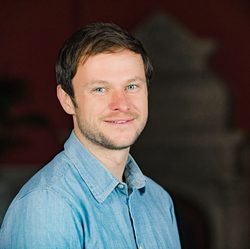
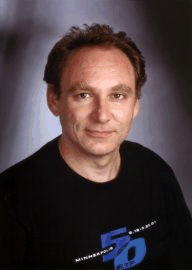
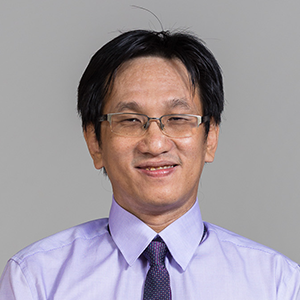
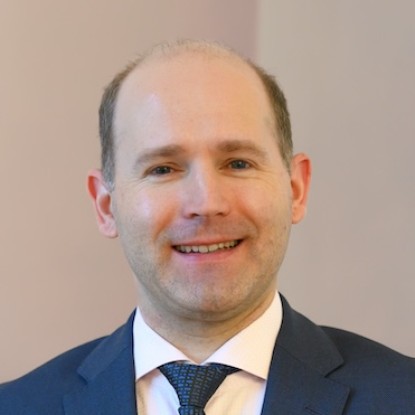
Max Roser is a Professor of Practice in Global Data Analytics at the Blavatnik School of Government , University of Oxford. He is the founder and director of Our World in Data , an award-winning open-access publication addressing global challenges like poverty, climate change, and inequality. Professor at Blavatnik School of Government, Oxford Director of Oxford Martin Programme on Global Development Founder of Our World in Data and SDG-Tracker Research Interests focus on empirical analysis of global development, economic inequality, health metrics, and policy-driven data infrastructure. His work bridges academic rigor with public accessibility, emphasizing long-term trends and solutions to existential risks. Scientific Awards include honorary doctorates from KU Leuven and UC Louvain, recognition as a "Future Perfect 50" thinker by Vox, and Prospect Magazine's "Top 50 Thinkers." Advisory Roles span the UNDP Statistical Advisory Panel, UK Government (health, education, tech), and World Bank. He secured grants from the Nuffield Foundation to expand Our World in Data’s team.
Jon Crowcroft is the Marconi Professor of Communications Systems in the Department of Computer Science and Technology at the University of Cambridge, and serves as the Chair of the Programme Committee at the Alan Turing Institute. He is also a Fellow of Wolfson College, Cambridge, and a visiting professor at the Department of Computing at Imperial College London. With a career spanning over three decades in computer networking research, Professor Crowcroft has made seminal contributions to the development of the Internet and continues to be highly active in cutting-edge research areas. His educational background includes: BA in Physics from Trinity College, University of Cambridge (1979) MSc in Computing from University College London (1981) PhD from University College London (1993) Professor Crowcroft's research spans multiple domains in computer networking and distributed systems. He has worked in Internet support for multimedia communications for over 30 years, with three main focus areas: scalable multicast routing, practical approaches to traffic management, and the design of deployable end-to-end protocols. His current research focuses on opportunistic communications, social networks, and techniques to scale infrastructure-free mobile systems. He is particularly known for his 'build and learn' paradigm for research and has recently been exploring decentralized digital identification systems, smart cities, and edge computing. His work often bridges theoretical foundations with practical implementations, emphasizing privacy-preserving approaches and sustainable network architectures. Professor Crowcroft has received numerous prestigious awards recognizing his contributions to the field, including: Election as Fellow of the Royal Society (2013) ACM SIGCOMM Award (2009) ACM Fellow (2002) Fellow of the Royal Academy of Engineering IEEE Fellow (2004) Chartered Fellow of the British Computer Society Throughout his career, Professor Crowcroft has advised numerous PhD students, including Mark Handley and Pan Hui, who have themselves become influential researchers in the networking community. He has authored several influential books that have been adopted internationally in academic courses, such as 'TCP/IP & Linux Protocol Implementation,' 'Internetworking Multimedia,' and 'Open Distributed Systems.' His research has been supported by various grants and collaborations with both academic institutions and industry partners, contributing to successful startup projects and influencing Internet standards. Professor Crowcroft is actively involved in several research initiatives, including serving on the Scientific Council of IMDEA Networks Institute since 2007 and the advisory board of the Max Planck Institute for Software Systems. He is also a director of the Matrix Foundation, which develops open network protocols. His current research group focuses on privacy-preserving analytics, decentralized systems, and the future of Internet architecture.
Dr. Lucie Kruse is a researcher at the Department of Informatics, University of Hamburg, specializing in Human-Computer Interaction (HCI) and Virtual Reality (VR). Her work focuses on immersive user interfaces for cognitive and physical training, particularly for older adults and those with dementia. She has been an active member of the University of Hamburg's HCI group since 2018 and served on the Ethics Commission since 2023. Her research interests include: Virtual Reality Exergames Serious Games Assistive Technologies Accessibility in VR Mental Health Applications Her publications from 2021-2025 demonstrate expertise in designing VR systems for healthcare, analyzing age-related interaction patterns, and developing inclusive interfaces. She has received multiple awards including the 2024 Honorable Mention for Best Poster at ACM SUI and the 2023 Honorable Mention at ACM CHI. Scientific Awards: Honorable Mention for Best Poster Award at ACM SUI (2024) Runner-Up Prize at Metaverse for the Good (2024) Honorable Mention at ACM CHI'23 Interactive Demo (2023) Honorable Mention at ACM VRST (2021) She has supervised multiple theses on topics like AI agents for mental health, accessibility of chatbots for seniors, and VR exergame design. Her work spans collaborations with institutions like HITLab NZ and Western Sydney University's MARCS Institute.
Michael J. Spivey is a Professor of Cognitive Science at the University of California, Merced, affiliated with the School of Social Sciences, Humanities and Arts. His research focuses on understanding human cognition through embodied and dynamic systems approaches, with particular expertise in eye-tracking methodologies and real-time language processing. As a faculty member in the Cognitive and Information Sciences department, he contributes to interdisciplinary research that bridges psychology, linguistics, and neuroscience. Dr. Spivey's educational background includes: Ph.D. in Brain and Cognitive Sciences from the University of Rochester (1996) M.A. in Brain and Cognitive Sciences from the University of Rochester (1995) B.A. from the University of California, Santa Cruz (1991) His research interests span psycholinguistics, visual perception, sensorimotor processing, embodied cognition, and dynamical systems theory. Dr. Spivey investigates how cognitive processes unfold in real-time through eye movements and other behavioral measures, challenging traditional modular views of cognition. His work emphasizes the continuous interaction between perception, action, and cognition, demonstrating how language processing is deeply embedded in our sensorimotor experiences. He has made significant contributions to understanding the time course of language comprehension, the role of visual context in linguistic processing, and the dynamic nature of cognitive representations. Analysis of Dr. Spivey's recent publications reveals a strong focus on embodied and dynamic approaches to cognition. His work spans diverse areas including eye-tracking and mouse-tracking methodologies, team cognition, creativity research, bilingual language processing, and the application of foraging theory to cognitive processes. A recurring theme across these publications is the investigation of real-time cognitive dynamics using continuous behavioral measures. His research increasingly incorporates ecological approaches, examining cognition in more naturalistic contexts while maintaining experimental rigor. The interdisciplinary nature of his work is evident in collaborations across psychology, linguistics, neuroscience, and even music cognition. Dr. Spivey is affiliated with the Center for Human Adaptive Systems and Environments and collaborates with researchers at Western University, Northwestern University, Brown University, and UCLA. His work with students likely focuses on training in advanced methodologies for measuring real-time cognitive processes.
Anthony TUNG Kum Hoe is a Professor in the Department of Computer Science at the National University of Singapore (NUS), where he has established himself as a leading researcher in database systems and data mining. He is also affiliated with the NUS Graduate School for Integrative Sciences and Engineering and serves as a SINGA supervisor. His educational background includes a Ph.D. in Computer Science from Simon Fraser University (2001), an M.Sc. in Information Systems & Computer Science from NUS (1998), and a B.Sc. with 2nd Class Upper Honours in Information Systems & Computer Science from NUS (1997). Professor Tung's research spans several interconnected areas within database systems and data mining. His primary focus is on developing efficient methods for indexing and searching complex data structures including time series, trajectories, trees, graphs, and high-dimensional objects. He has pioneered work in visual query processing, keyword search, and ranking systems. His GENIE (Generic Inverted Index) and LAMP (semi-Lazy Mining Paradigm) projects represent significant contributions to big data analytics, particularly in handling the 'variety' aspect of big data by providing unified frameworks for processing diverse data structures while preserving semantic meaning. His research bridges theoretical database concepts with practical applications in visual data mining, collaborative analytics, and just-in-time model construction. His recent publications reveal a clear evolution from traditional database research toward more complex analytics on diverse data types. While maintaining his core expertise in database indexing and query processing, his work has expanded to incorporate machine learning techniques, particularly in areas like nearest neighbor search, anomaly detection, and predictive analytics. There's a noticeable trend toward interdisciplinary applications, with publications spanning computer vision, natural language processing, transportation systems, and social computing. His research group consistently publishes in top-tier venues including SIGMOD, VLDB, ICDE, and KDD, demonstrating both theoretical rigor and practical relevance. 2005 Best Paper Award for 'Indexing DNA Sequences Using q-grams' 2007 Invited panel speaker on 'Advice for a successful database researcher career in Asia' at SIGMOD 2010 Guest Lecturer for VLDB Database School 2012 VLDB 2012 Research PC Co-chairs 2015 10 Years Best Paper Award, DASFAA 2015 Invited to SIGMOD 2008 and SIGKDD 2008 Program Committees Professor Tung has supervised numerous PhD students and research associates throughout his career, including notable researchers like Zhang Zhenjie (recipient of the 2007 President Graduate Fellowship) and Wang Nan (published in SIGMOD'08). His research group has been consistently productive, with students publishing in top conferences including SIGMOD, ICDE, and VLDB. His professional service is extensive, having served as PC Chair for COMAD'06, Research PC Co-chair for VLDB 2012, and on program committees for virtually all major database and data mining conferences over the past two decades. His research has been supported by various grants that have enabled significant contributions to database technology. His GENIE and LAMP projects represent a cohesive research direction focused on developing systematic approaches to big data analytics. GENIE provides a unified platform for storage and retrieval of big data with various structures, while LAMP introduces a novel paradigm for predictive analytics that combines the strengths of lazy and eager learning approaches. These projects have evolved to incorporate GPU acceleration and parallel processing capabilities, reflecting his commitment to addressing real-world scalability challenges in data-intensive applications.
Prof. Dr. sc. techn. ETH Oliver Staadt is Full Professor of Computer Science and Chair of Visual Computing at the University of Rostock , Germany. Since 2023 he also serves as Director of the Institute for Visual and Analytic Computing within the Faculty of Computer Science and Electrical Engineering . Previously he was Dean (2016–2018) and Vice Dean (2010–2016) of the same faculty. Education Ph.D. in Computer Science, ETH Zürich (2001) M.Sc. in Computer Science, TU Darmstadt (1994) Research Interests Prof. Staadt’s research spans virtual and augmented reality , computer graphics , visualization , telepresence , immersive analytics , and human–computer interaction . A particular focus lies on real-time rendering and display technologies for large high-resolution display systems, depth-image enhancement for RGB-D sensors, and interaction techniques that leverage spatial cognition and eye-tracking. His work is frequently applied to collaborative settings and microgravity environments, including experiments aboard parabolic flights and the International Space Station. Recent Publication Trends Between 2019 and 2021 his output centers on foveated rendering , AR viewpoint guidance , collaborative analytics on wall-sized displays , and embodied interaction metaphors . Earlier work addressed bandwidth-efficient telepresence, depth-image filtering, and physically-based animation. The corpus reveals a steady evolution from fundamental graphics algorithms toward applied immersive systems. Scientific Awards & Honors Fellow of the Eurographics Association Associate Editor, IEEE Transactions on Visualization and Computer Graphics (past) Associate Editor, Computers & Graphics (past) Associate Editor, Computer Animation and Virtual Worlds (past) Associate Editor, Frontiers in Virtual Reality (current) Chair, Expert Group on Virtual & Augmented Reality, German Informatics Society (2013–2020) Advising & Funding He has successfully supervised more than ten PhD graduates whose dissertations range from collision detection and physically-based animation to 3D interaction in microgravity and predictive user modeling. Current PhD researchers include Bipul Mohanto, Mana Takhsha, and Sven Kluge. His projects are supported by national and EU programs such as EVOCATION, SMOOTH, ARGuide, 3DPick, DIVA, and Telepresence. Labs & Teams Prof. Staadt leads the Visual Computing Group at Rostock, operating state-of-the-art facilities including large tiled display walls, VR/AR laboratories, and motion-capture systems. The institute hosts interdisciplinary collaborations with partners in visualization, computer vision, psychology, and aerospace engineering.
André Sant'Anna is an Assistant Professor of Philosophy at Underwood International College, Yonsei University in Seoul, South Korea. He earned his PhD from the University of Otago Department of Philosophy in 2018 and has held postdoctoral positions at the University of Geneva (Switzerland, 2023-2025), University of Cologne (Germany, 2022-2023), and Washington University in St. Louis (USA, 2020-2021). He currently serves as President of the Eurasian Memory Network (EMN) and is a member of the Steering Committee of the Philosophy of Memory Organization (PhOMO). Dr. Sant'Anna's research focuses on the philosophical intersections between memory, perception, imagination, and metacognition. His work examines the nature of episodic memory, particularly the phenomenology of remembering, the relationship between memory and imagination, and the role of metacognition in memory processes. He has made significant contributions to debates on the continuity versus discontinuity between memory and imagination, the nature of autonoetic consciousness, and the puzzle of alethic memory. His recent publications demonstrate a strong focus on developing metacognitive approaches to memory phenomena, challenging existing paradigms, and bridging philosophical analysis with empirical findings from cognitive science. His work has appeared in leading journals including Synthese , Philosophy and the Mind Sciences , and International Journal of Philosophical Studies . Dr. Sant'Anna has received recognition through editorial roles including PhilPapers Editorships on Theories of Memory. He has co-edited significant works like Current Controversies in Philosophy of Memory (2022) and is contributing to The Oxford Handbook of Philosophy of Memory (forthcoming). His collaborative research extends across international boundaries, with frequent co-authorship with prominent scholars including Kourken Michaelian, Denis Perrin, and César Schirmer dos Santos. His work has been translated into multiple languages, including Portuguese, making philosophical memory research accessible to broader academic communities.
Dr. Jacek Kudera is a post-doctoral researcher in the Department of Phonetics at the University of Trier, coordinator of the LODinG project at the Trier Center for Digital Humanities, and adjunct faculty at WSB Merito University in Wrocław. His work bridges phonetics, Slavic linguistics, digital humanities, and forensic speech science. Education 2022 – PhD, Department of Language Science and Technology, Saarland University, Germany 2019 – MA (Linguistics), Department of Linguistics, Cognitive Science and Semiotics, Aarhus University, Denmark 2015 – Magister (Slavic Philology), Institute of Slavic Studies, University of Wrocław, Poland Research Interests His research focuses on phonetic and prosodic aspects of Slavic languages , cross-linguistic speech perception , forensic automatic speaker recognition , and human-robot interaction . He employs experimental methods such as eye-tracking, articulatory measurements (EMA), and large-scale digital corpora to investigate how speakers of closely related languages understand one another and how machines can replicate or support this process. Publication Trends Across more than 25 peer-reviewed articles (2014-2025), Kudera has consistently explored Slavic intercomprehension , speech technology evaluation , and digital humanities infrastructure . Recent work (2024-2025) targets voice cloning security , linked open data for linguistics , and mismatch conditions in forensic speaker recognition . Scientific Awards & Fellowships Visegrad Fellowship, University of Presov (2025) Erasmus+ Fellowships (Ostrava 2025, Zagreb 2014, Rijeka 2012-2013) NAWA Fellowship, Polish Academy of Sciences (2022) Nordlys Fellowship, University of Eastern Finland (2018-2019) CEEPUS & additional Central-European mobility grants (2014-2018) Projects & Funding Coordinator : “Mismatch conditions in machine speaker identification” (University of Trier Research Fund, 2024-2025) Coordinator : LODinG – Linked Open Data in the Humanities (Trier Center for Digital Humanities, ongoing) Coordinator : “Patterns: Linguistic Creativity and Variation” (Trier Center for Language and Communication, 2022-2024) Member : SFB 1102 “Information Density and Linguistic Encoding” (Saarland University, DFG, 2019-2022) Member : Digital Atlas of Dialects of Bosnia and Herzegovina (2017-2018) Member : CLARIN-PL & European Roadmap for Research Infrastructures (2014-2017) Labs & Teams He conducts research within the Phonetics Team at the University of Trier , collaborates closely with the Trier Center for Digital Humanities , and maintains affiliations with the Phonetics Group at Saarland University and the WSB Merito University in Wrocław.
Baki Tezcan is Professor of History at the University of California, Davis, with a joint affiliation in Religious Studies until 2015. He is also affiliated with the Middle East/South Asia Studies Program (ME/SA), Medieval and Early Modern Studies, and has directed the ME/SA program from 2012 to 2015. He led the 'Last Empire of Islam' Summer Abroad Program in Istanbul in 2007, 2009, and 2011. Ph.D., Near Eastern Studies, Princeton University (2001) M.A., Near Eastern Studies, Princeton University (1996) B.S., International Relations, Bilkent University, Turkey (1994) Graduate, Istanbul Lisesi Tezcan's research centers on the intellectual and socio-political transformation of the Ottoman Empire, particularly the evolution of Islam in the public sphere from the late thirteenth to the early twentieth century. His work explores Islamic law, pre-modern racial and ethnic identities, Ottoman perceptions of others, and the interplay between politics, philosophy, and science in the Islamic tradition. He investigates early modernity through the lens of legal rationalization, secularism, and the disenchantment of Sufism. His recent publications reveal a consistent focus on Ottoman intellectual history, legal transformation, and identity formation. Themes include the rationalization of Sunni Islam, the role of the ulema, judicial administration in former Mamluk territories, and autobiographical writings of early modern preachers. His scholarship bridges Turkish and Anglophone academic traditions, with several of his works translated into Turkish and published in bilingual journals. Tezcan has received multiple prestigious awards and fellowships: UC Davis Outstanding Faculty Advisor Award (2005) National Endowment for the Humanities (NEH) Fellowship (2018–19) TÜBİTAK Fellowship (2011–12) Society for the Humanities Fellowship, Cornell University (2005–06) ARIT Postdoctoral Fellowship funded by NEH (2001–02) He has advised students across multiple departments and has been recognized for his mentorship. His current projects include finishing several articles and writing a book on the transformation of Islam in the Ottoman Empire from the late medieval to the modern period. He is actively engaged in editorial work, serving as President of the Ottoman and Turkish Studies Association (OTSA), and on the editorial boards of the Journal of Ottoman Studies and the Journal of the Ottoman and Turkish Studies Association . He co-founded the Western Ottomanists' Workshop (WOW) and GIT-North America, fostering scholarly dialogue in the field.
Dr. Nicole Hartnett is a Senior Marketing Scientist at the Ehrenberg-Bass Institute for Marketing Science, University of South Australia, where she conducts high-impact research on advertising effectiveness, brand performance, and consumer behavior. She serves as Associate Editor of the Journal of Advertising Research , contributing to the advancement of marketing science globally. Research Focus: Nicole's work centers on how advertising content influences sales, with particular emphasis on creative drivers, distinctive brand assets, and media planning. Her research integrates data analytics with behavioral insights to improve advertising measurement and strategic decision-making for consumer packaged goods companies. Her recent publications reveal a consistent focus on advertising effectiveness, brand health, and consumer response across digital and traditional media. She frequently investigates how brands perform when advertising is reduced or paused, the role of attention in video ads, and the validity of persuasion frameworks—demonstrating a strong commitment to evidence-based marketing. Scientific Recognition: Associate Editor, Journal of Advertising Research Prolific contributor to top-tier marketing journals including International Journal of Market Research , European Journal of Marketing , and Australasian Marketing Journal Advising & Grants: While no formal students are listed, Nicole collaborates extensively with global sponsors of the Ehrenberg-Bass Institute, managing brand health trackers and delivering strategic insights. Her work is applied in real-world contexts with major CPG firms, suggesting active engagement in funded research projects and industry partnerships. Labs & Teams: She is a core member of the Ehrenberg-Bass Institute, the world’s largest center for marketing science research, working within a team of over 60 marketing scientists focused on evidence-based brand growth.
Federico Becattini is a Tenure-Track Assistant Professor at the Department of Information Engineering and Mathematics (DIISM), University of Siena, Italy. He is an active member of the Siena Artificial Intelligence Lab (SAILab), where he contributes to cutting-edge research in computer vision, deep learning, and artificial intelligence. His work spans multiple interdisciplinary domains, including autonomous driving, human behavior understanding, cultural heritage, neuromorphic vision, and fashion recommendation. His research interests center on memory-based neural networks , which he has applied in numerous publications at top-tier venues such as CVPR, ECCV, IEEE TPAMI, and ACM TOMM. He has also delivered tutorials on this topic at international conferences including ICIAP 2022 and ACM MM 2022, and taught a Ph.D. course at the University of Florence. His recent work is aligned with the Collectionless AI paradigm, which emphasizes continual learning and interaction with dynamic environments. The recent publications highlight a strong trend in human-centric AI , focusing on understanding people through multimodal analysis of face, body, and clothing, as well as generating 3D virtual avatars. There is also a clear emphasis on memory-augmented architectures for temporal reasoning, explainability, and adaptive learning. His editorial role as Associate Editor of the International Journal of Multimedia Information Retrieval further underscores his standing in the research community. Associate Editor, International Journal of Multimedia Information Retrieval (IJMIR) Organizer, Workshop on Facial and Body Expressions (ICPR2020) Co-organizer, T-CAP Workshop (ICIAP2021, ICPR2022) Co-organizer, MCFR Workshop (ACM MM 2022) Co-organizer, WCPA Workshop and Challenge (ECCV 2022) Federico Becattini actively advises students and researchers within SAILab, particularly in the context of Ph.D. theses and research projects related to Collectionless AI and memory-based models. While specific grants are not mentioned, his extensive publication record and leadership in workshops and editorial roles suggest involvement in funded research initiatives. He collaborates with both academic and international research communities, serving as a reviewer for top-tier conferences and journals. He is a core member of the SAILab research group, which is pioneering the Collectionless AI initiative—a framework for continual learning over time, interacting with humans and agents without relying on pre-built static datasets. This lab serves as a hub for innovation in adaptive and sustainable AI systems.
Steven Vertovec is a leading scholar in migration studies, currently serving as Director of the Max Planck Institute for the Study of Religious and Ethnic Diversity and Honorary Joint Professor of Sociology and Ethnology at the University of Göttingen. Previously, he was Professor of Transnational Anthropology at the University of Oxford and Director of COMPAS (Centre on Migration, Policy and Society). Research Focus: Superdiversity, transnationalism, multiculturalism, and social complexity Key Roles: Editor of Global Networks , series editor of Routledge Transnationalism , consultant to global agencies (World Bank, UNESCO, European Commission) His work spans theoretical and empirical studies of diasporic communities, integration policies, and urban diversity. Recent publications emphasize superdiversity as a framework for understanding contemporary migration patterns and social transformations. Selected Contributions: Pioneering analysis of Hindu diaspora patterns, co-editor of major works on multiculturalism, and developer of data visualization tools for urban migration studies.
Seung Kyung Kim serves as an Assistant Professor (Lecturer) in the Department of Linguistics at the University of Utah, a position held continuously since July 2022. She actively teaches undergraduate courses including Language & Culture, Language Myths, Introduction to Phonetics and Phonology, and Introduction to Sociolinguistics across multiple semesters from 2023-2024, demonstrating consistent engagement in the university's academic mission within the linguistics discipline. Her research centers on psycholinguistics with specialized expertise in speech production and comprehension mechanisms, extending into second language acquisition, sociolinguistics, and phonetics. Kim investigates how social factors—particularly accent variation, emotional prosody, and ideological frameworks—impact real-time language processing through methodologies like eye-tracking and auditory-visual priming. Her work reveals critical insights into incremental processing in native and non-native speakers, especially regarding Korean case marking systems and cross-linguistic transfer effects. Analysis of Kim's publication trajectory from 2013-2024 shows evolving focus from foundational studies on emotional prosody in word recognition toward contemporary investigations of linguistic bias in veracity judgments and sociolinguistic variation. Her research consistently bridges cognitive processing with social representation, exemplified by the dual-route speech perception model integrating linguistic and social information. Recent work demonstrates methodological rigor through preregistered replication studies examining Polish-accented English comprehension. No scientific awards or major grants are documented in available records, though her scholarship appears in high-impact journals including Studies in Second Language Acquisition and The Journal of the Acoustical Society of America. While teaching records confirm active curriculum delivery across eight distinct courses with multiple sections annually, information regarding student advising, research laboratories, or collaborative teams remains unspecified in current materials.
Professor Roderich Groß is a faculty member at Technical University of Darmstadt, where he serves as Head of the RCPS Lab (Robotics, Control, and Physical Systems Laboratory). His extensive research career spans over two decades with publications dating back to 2006, establishing him as a leading figure in swarm robotics. His work appears in top-tier robotics journals including IEEE Transactions on Robotics, Nature Communications, and The International Journal of Robotics Research. Professor Groß's research focuses on swarm robotics, multi-robot systems, modular and reconfigurable robotics, and human-robot interaction. His work explores how groups of relatively simple robots can collectively perform complex tasks through decentralized control mechanisms. He investigates modular systems that can adapt their physical structure to different tasks and develops human-robot interaction paradigms that enable effective collaboration between humans and robot swarms. His research has practical applications in search and rescue, environmental monitoring, construction, and industrial automation. Analysis of Professor Groß's recent publications reveals a clear evolution from foundational swarm behaviors toward increasingly sophisticated applications. His work addresses critical challenges including energy management in robot swarms (CapBot), multi-operator control interfaces, heterogeneous systems for industrial applications, and bio-inspired collective behaviors. His research bridges theoretical swarm intelligence principles with practical implementation on physical robot platforms like Kilobots, with recent work integrating artificial intelligence techniques such as language models for swarm control. As Head of the RCPS Lab, Professor Groß leads a productive research group with extensive international collaborations. The lab works with various robot platforms focusing on both theoretical modeling and practical implementation of swarm behaviors, contributing significantly to advancing the field of swarm robotics from theoretical foundations to real-world applications.
Jan Theeuwes is a full Professor and current Head of Department at Vrije Universiteit Amsterdam's Department of Cognitive Psychology. With over 250 peer-reviewed publications, he leads research in visual attention, statistical learning, and distractor suppression mechanisms. His work bridges fundamental cognitive science with practical applications in road design and human factors. His educational background includes: BSc in Mechanical Engineering (1981) BSc and MSc in Experimental Psychology with highest honors (cum laude) from Tilburg University (1987) PhD from Vrije Universiteit with highest honors (1992) Theeuwes' research focuses on fundamental knowledge acquisition regarding perception, attention, memory, and emotion using diverse methodologies including behavioral measurements, eye tracking, fMRI, psychophysiological recordings, patient studies, and computational modeling. His specific contributions span attentional and oculomotor capture, working memory, multimodal integration, remapping, face perception, visual search, emotion processing, unconscious processing, the attentional blink, reward processing, and applied road design research. His recent work demonstrates how statistical learning shapes attentional selection by creating predictive models of where and when to expect relevant information. Analysis of his recent publications reveals a strong focus on the neural and behavioral mechanisms of learned distractor suppression, with particular emphasis on how statistical regularities in the environment shape attentional priority maps. His research increasingly integrates electrophysiological methods with behavioral paradigms to uncover the temporal dynamics of attentional selection and suppression processes. His notable scientific achievements include: Election to the Royal Dutch Academy of Science (KNAW) in 2010 Receiving the first Bertelson Award for outstanding psychological research from the European Society for Cognitive Psychology in 2001 Serving as president of ESCOP (European Society for Cognitive Psychology) from 2016 to 2018 Theeuwes serves as principal advisor to the Dutch Department of Transportation (Rijkswaterstaat) regarding road design and signing. In 2023, he co-founded Attention Architects with two former PhD students, a company applying eye-tracking research to practical settings. His work has received substantial research funding supporting his investigations into attentional mechanisms and their real-world applications. Theeuwes has established collaborations across multiple institutions and mentored numerous researchers who have gone on to establish their own careers in cognitive science. He leads the Cognition Team at Vrije Universiteit Amsterdam, which investigates fundamental attentional processes using cutting-edge methodologies. The team maintains strong connections with applied research settings through projects with government agencies and industry partners, particularly in transportation safety. Their current work focuses on how statistical learning dynamically shapes attentional selection in complex visual environments.