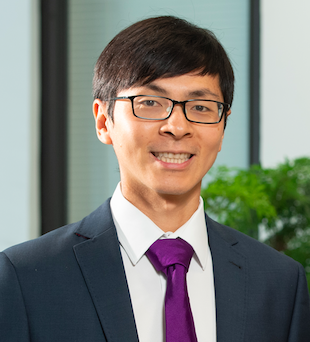
Dr. Yao-Tai Li is a Senior Lecturer in Sociology and Social Policy at UNSW's School of Social Sciences. He holds a PhD from UC San Diego, with prior roles including Assistant Professor at Hong Kong Baptist University (HKBU, 2017–2021). His research focuses on race/ethnicity, migration, contentious politics, and social media analysis, with a particular emphasis on East Asian diasporas and Hong Kong's sociopolitical dynamics. Education: PhD (UC San Diego), MA and BA (National Taiwan University). Awards include the Dean’s Award for Early Career Research (UNSW, 2024) and data journalism accolades for his Hong Kong Lennon Wall documentation. He advises PhD and master’s students on topics ranging from border regimes to queer activism. Key projects include tracking rhetorical shifts in Chinese-Australian community responses to racism since 1973, and analyzing Hong Kong's protest movements through urban sociology and data activism lenses. Active in 45+ journals as a reviewer/editor, and holds leadership roles in migration studies (ISA RC31) and policy initiatives. Grants include UNSW's ADA Seed Funding (2024), National Library of Australia grants (2023), and Hong Kong RGC Early Career support (2020–21). His forthcoming book *Protest Walls* (CUP, 2025) examines physical/digital protest spaces in transnational contexts.
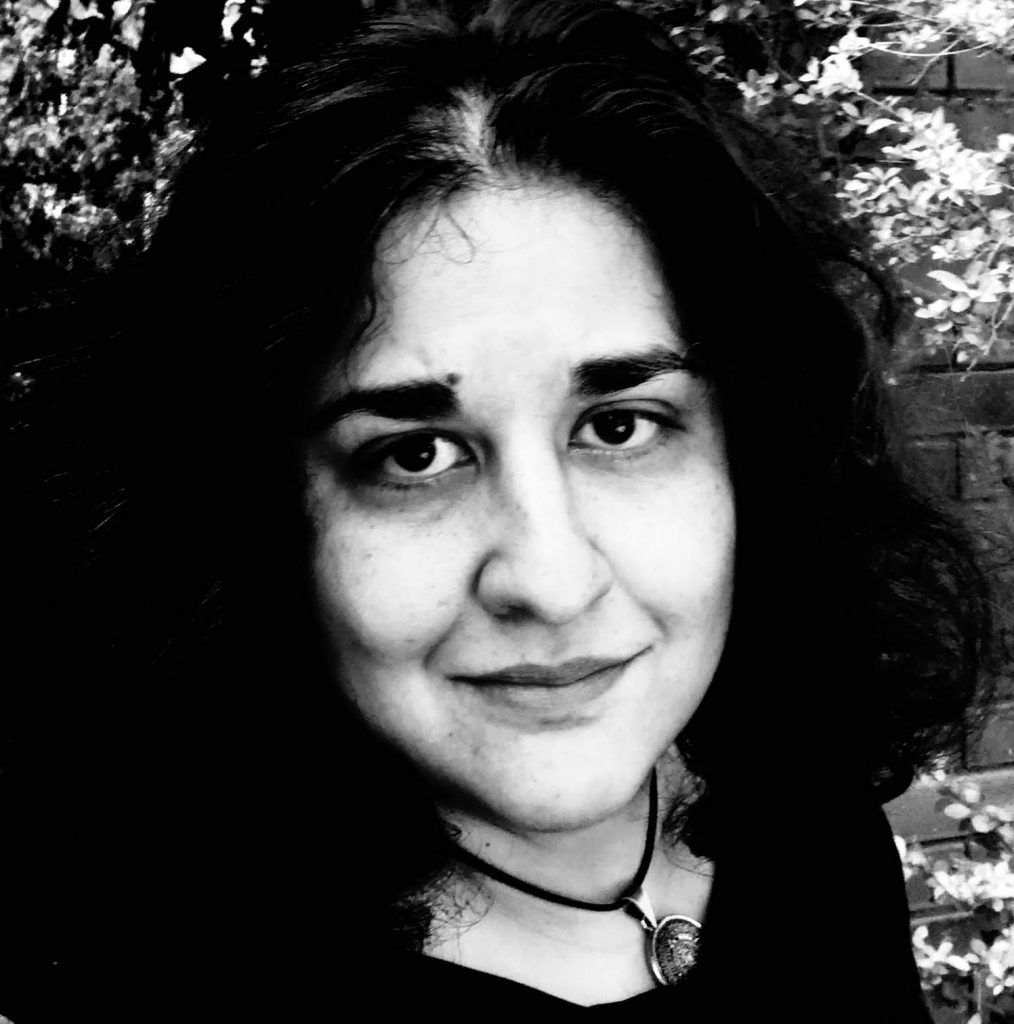
Taymiya R. Zaman is a Professor of History at the University of San Francisco, serving as Chair of the Department of History, and Director of Asian and Middle Eastern Studies. She joined USF in 2007 and has held visiting professorships at the Institute of Business Administration and Lahore University of Management Sciences in Pakistan. Her research focuses on Mughal India, historical memory, and the intersection of autobiography and history. Education: PhD in History, University of Michigan (2007); B.A. in Philosophy, Smith College (2001) Her work explores historical memory in South Asia, the interconnectedness of life writing and history, and the transition from subjects to citizens in the Islamicate world. She has designed the History Department's 'Islamic World' emphasis and teaches courses on the Ottoman, Safavid, and Mughal Empires, alongside modern South Asia and the Middle East. Her publications span scholarly articles, narrative non-fiction, and fiction, including a Pushcart Prize-winning short story. She also engages in visual storytelling through art, illustrating Mughal-era texts to highlight marginalized historical figures like Gulbadan Begum. Awards: Distinguished Teaching Award (2022), Arthur I. Karshmer Award for Distinguished Service to Disability Issues (2023) Her research and teaching reflect a commitment to interdisciplinary approaches, blending history with literature, art, and cultural studies.
Anne Kelly Knowles is the McBride Professor of History at the University of Maine, Department of History. Previously, she taught at Middlebury College (2002–2015) and the University of Wales, Aberystwyth (1993–1997). Her research focuses on historical geography, GIS applications in history, the Holocaust, and 19th-century U.S. economic landscapes. She holds a PhD in Geography from the University of Wisconsin-Madison (1993). Her work bridges historical inquiry with digital tools, notably through projects like the Holocaust Geographies Collaborative. Key contributions include Geographies of the Holocaust (2014) and Mastering Iron: The Struggle to Modernize an American Industry, 1800–1868 (2013). She has pioneered methods in Historical GIS (HGIS), emphasizing spatial analysis for understanding historical patterns and events. Awarded the Smithsonian American Ingenuity Award (2012) and the Distinguished Historical Geographer honor (2014), Knowles has led major grants including a National Endowment for the Humanities (NEH) Digital Humanities Advancement Grant for the Holocaust Ghettos Project (2018–2022). Her TED-Ed talk on reimagining Gettysburg highlights her ability to make complex spatial history accessible. Grants: NEH Digital Humanities grants (2016, 2018–2022), Guggenheim Fellowship (2017), NSF Collaborative Research (2008–2011). Labs/Teams: Co-founder of the Holocaust Geographies Collaborative; collaborator on the Holocaust Ghettos Project.
Dr. Anil Ufuk Batmaz is an Assistant Professor in the Department of Computer Science and Software Engineering at Concordia University. His research focuses on Virtual Reality (VR), Augmented Reality (AR), and Human-Computer Interaction, with emphasis on interaction techniques, immersive analytics, and motor skill training systems. He holds a BSc in Electrical and Electronics Engineering (2007-2011), an MSc in the same field (2011-2013), and a PhD in Biomedical Engineering (2015-2018). His work bridges engineering and cognitive science, investigating how visual and haptic feedback impact user performance in immersive environments. Research interests include: 3D interaction techniques for mid-air tasks Effects of display technologies on motor coordination Hybrid UI design for mixed reality systems Training systems for precision tasks using VR Recent publications emphasize evaluation of AR/VR interfaces in healthcare, sports training, and collaborative environments. His work has appeared in venues like IEEE TVCG, ACM CHI, and ISMAR, addressing challenges in spatial navigation, error feedback, and system reliability.
Dr. Olivia Vázquez-Medina is an Associate Professor in Spanish at the University of Oxford's Faculty of Medieval and Modern Languages, and a Fellow of Wadham College. She holds a DPhil from Oxford and previously taught at Royal Holloway. Her research focuses on modern and contemporary Spanish American fiction, particularly examining how women writers address environmental, gender, and social issues through innovative narrative forms. She explores concepts like 'disquietude' in works by authors such as Cristina Rivera Garza and Samanta Schweblin, emphasizing intersections of aesthetics, gender, and politics. Her academic background includes a Licenciatura from Universidad Veracruzana (Mexico), an MSt, and DPhil from Oxford. She teaches undergraduate Spanish language and literature courses at Wadham and St Hugh’s colleges, as well as graduate supervision in topics like 'The Body in Spanish American Fiction.' Her monograph Cuerpo, historia y textualidad (2013) analyzes historical novels by Roa Bastos, del Paso, and García Márquez, while recent work addresses eco-critical and gendered themes in contemporary narratives. Dr. Vázquez-Medina’s research themes include ecocriticism, environmental humanities, gender studies, and global south literature. She has received the LS Dembo Prize for her 2022 article analyzing Samanta Schweblin’s Fever Dream . Her work bridges literary analysis with critical theory, offering fresh perspectives on how literature engages with societal crises and epistemological challenges.
Amelia Acker is an Associate Professor and Graduate Advisor/Director of Masters Studies at the University of Texas at Austin's School of Information. Her work focuses on the emergence of new information objects in wireless networks, digital preservation, and cultural memory. She holds a PhD with award-winning research on SMS standardization and mobile communication infrastructure. Prior to UT Austin, she served as an Assistant Professor at the University of Pittsburgh's iSchool and worked as an archivist/librarian in Southern California. Her research is funded by NSF and IMLS grants, and has been published in journals like JASIST and Archival Science. She teaches courses on metadata, information studies, and cultural heritage informatics. Her current projects address digital traces in mobile computing and data justice issues. She previously worked with artist John Baldessari as an arts cataloger and has extensive experience in library preservation practices. Key contributions include analyses of Venmo social payments, Palantir's surveillance systems, and API-driven social media archives. She emphasizes interdisciplinary approaches to sociotechnical systems and data ethics in emerging technologies.
Ricki O'Rawe is a Senior Lecturer at Queen's University Belfast's School of Arts, English and Languages. He specializes in Hispanic literature, art, and cultural studies, with a focus on Argentine literature, surrealism, and decolonial aesthetics. His research intersects themes of spirituality, political aesthetics, and identity in Latin American contexts. PhD Supervision Areas: Argentine Literature, The Fantastic in Art, Hispanic Surrealism, Religion & Art, Decolonial Approaches Current Research Project: 'Women and Religion in the Hispanic World' (2019–present) He actively engages in academic networks such as the International Society for the Study of Surrealism and organizes conferences like the Society for Latin American Studies Annual Conference (2023). His work has been recognized with the AHSS Faculty Research Initiatives Fund Award (2017). Key contributions include analyses of Samanta Schweblin's political narratives, Borges' poetry, and Remedios Varo's feminist surrealist art. He also explores coloniality in contemporary art through writings on the Turner Prize and pandemic-era religious imagery in Hispanic art.
Robert Peaslee is an Associate Professor in the Journalism & Creative Media Industries program of the College of Media & Communication at Texas Tech University , where he also serves as Associate Dean of the Honors College . His scholarship bridges media anthropology, fan studies, and adaptation theory, with particular attention to the cultural politics of superheroes, screen tourism, and global media flows. Education Ph.D., University of Colorado, Boulder, 2007 Research Interests Peaslee’s work interrogates how media texts and industries shape social power relations. Employing ethnographic and textual methods, he has examined: fan cultures and participatory audiences the spatial politics of screen tourism destinations such as Hobbiton and Game of Thrones filming sites the global circulation of superhero narratives and their moral economies representations of place, memory, and identity in film and television Across these strands he explores how media producers and consumers co-create meaning, often through transnational and digital contexts. Publication Trajectory His recent publications display a consistent focus on adaptation and transmedia storytelling, especially where comic-book superheroes and cult texts intersect with tourism and fan labor. The 2020 co-edited volume The Supervillain Reader and the 2016 collection Marvel Comics into Film exemplify his leadership in consolidating critical discourse around comic-to-screen adaptation. Parallel articles on screen tourism investigate how locations such as New Zealand’s Hobbiton or Northern Ireland’s Game of Thrones sites become contested spaces of authenticity and commodification. Awards & Honors Member, TTU Teaching Academy TTU President’s Excellence in Teaching Award Professing Excellence Award, Research Chair, Visual Communication Division, AEJMC (2011) 2nd Place, Top Faculty Papers Competition, AEJMC Visual Communications Division (2010) 2009–2010 Professing Excellence Award, Texas Tech University 2010 Nominee – Outstanding Faculty, Student Disability Services, Texas Tech University Teaching, Service & Leadership Peaslee teaches undergraduate and graduate courses that integrate critical theory with creative practice, including Visual Communication, Writing for Series Television, and Qualitative Research Methods. He has coordinated the TTU International Film Series and formerly served as Programming Chair for the Flatland Film Festival in Lubbock. His record of service includes editorial board membership for the American Communication Journal and leadership roles within AEJMC’s Visual Communication Division. Labs & Creative Spaces While no formal lab is listed, his ongoing longitudinal ethnographic projects on screen-tourism sites and his editorial collaborations function as de facto research collectives involving graduate students and international scholars.
Dr Michał Wolski is an Assistant Professor at the Department of Editing, University of Wrocław’s Faculty of Philology. Specializing in literature and film studies, he holds degrees in Polish Philology (editing), Journalism, and Typography. His research focuses on vampire imagery, pop culture, comic book theory, and text aesthetics. Education: M.A. in Polish Philology (editing spec.), Journalism & Creative Writing, Academic Typography. PhD (2017): The Imagination of the Vampire in the Face of Models of the Contemporary Antihero . Research Interests: Cultural analysis of vampires in media, typographic design in publishing, superhero narratives, adaptation strategies, and Polish popular culture history. Publications: Authored Sensitive Bloodsuckers (2020), edited Lexicon of (Less Known) Vampire Films (2018), and published over 40 articles in journals like Zeszyty Komiksowe and Journal of Adaptation in Film and Performance . Leadership: Founded the Trickster research association, organized 20+ conferences, and contributed to 13 monographs on pop culture. Co-manages the POPkultura–POPliteratura book series. Projects: Led CLARIN infrastructure work (2013–2015) and editorial projects on vampire films. Currently oversees Stanisław Vincenz Archive initiatives. Labs/Teams: Active in the Department of Editorial Studies and Wrocław’s pop culture research networks.
Professor Lucyna Przybylska is a social scientist affiliated with the University of Gdańsk's Faculty of Social Sciences, Department of Spatial Economy. Her work focuses on sacralization processes, public space dynamics, and the interplay between religion, tourism, and urban development. A graduate of geography and theology, she employs observational methods and digital tools to explore topics like roadside memorials, flag displays, and pilgrimage practices. Her research projects include long-term studies on 'Sacralization of Public Spaces in Poland' and 'Accident Crosses on Polish Roads,' with Gdynia frequently serving as a case study. She emphasizes critical source analysis and visual literacy in her pedagogy, guiding students through essay and photo-essay projects. Recent publications analyze the proliferation of roadside memorials and crosses in post-communist Poland, flag symbolism in urban landscapes, and the socio-spatial functions of maritime pilgrimages. Her work bridges cultural geography with sociology, offering insights into how communities negotiate meaning in shared spaces.
Çağlar Akçay is a Senior Lecturer in the School of Life Sciences at Anglia Ruskin University, part of the Faculty of Science and Engineering. He holds a PhD in Animal Behavior from the University of Washington, alongside an MA in Cognition and Perception and a BS in Biology and Psychology from Middle East Technical University. His research focuses on behavioral ecology, particularly the evolution of animal communication and social cognition in songbirds. He investigates how animals adapt to anthropogenic environments, including effects of urbanization on signaling and aggression. Key research areas include animal communication systems, social interactions mediated by vocal signals, and the impact of environmental changes on behavior. He leads the Bird Lab, studying the interplay between communication and social behavior in birds, with projects on Darwin’s finches and song sparrow territorial dynamics. His work emphasizes field studies combined with experimental approaches, such as acoustic manipulations and observational tracking. Member of the Behavioral Ecology Research Group Recipient of Turkish Science Academy Early Career Fellowship (2019-2021) Teaching responsibilities include BSc programs in Animal Behaviour and Zoology, and an MSc in Animal Behaviour Applications for Conservation Recent publications highlight topics like survival processing effects in memory, avian behavioral plasticity in urban settings, and the role of acoustic signals in territorial disputes. His interdisciplinary work bridges ecology, cognition, and conservation, with a focus on translating findings into wildlife management strategies.
Dr. Siobhan Magee is a Lecturer in Social Anthropology at the University of Edinburgh's School of Social and Political Science. She holds a PhD from Edinburgh and has held postdoctoral positions at the Institute for Advanced Studies in the Humanities and the Rijksuniversiteit Groningen. Her research focuses on kinship, marriage, gender, and material culture, with fieldwork conducted in Poland, the UK, and the US. She is currently completing a book on marriage in the US and exploring topics like children's biographies, philanthropy in higher education, and sun protection in Scotland. Teaching responsibilities include courses on the Anthropology of Sex and Reproduction, Kinship, and Ethnographies of the US. She coordinates the Kinship Hub and supervises undergraduate and postgraduate dissertations on themes like transnational relationships and inclusive education. Dr. Magee is a Fellow of the Higher Education Academy and has published extensively on topics ranging from Polish fur trade dynamics to graphic memoirs and legal marriage frameworks. Education: PhD, MSc, and BA in Social Anthropology from the University of Edinburgh. Research Themes: Kinship and relatedness, gender/sexuality, material culture, US political anthropology, and children's narratives. Current Projects: Philanthropy in universities, sun protection policies, and children's biographical literature. Her work bridges intimate relationships and broader socio-political contexts, emphasizing ethical and historical dimensions. She has contributed to academic journals like Cultural Anthropology and Current Anthropology , and her research has been featured in media including BBC Radio 4.
Bill Howe is an Associate Professor at the University of Washington's Information School, with adjunct appointments in Computer Science & Engineering and Electrical Engineering. He serves as Founding Program Director and Faculty Chair of the UW Data Science Masters Degree, Founding Associate Director and Senior Data Science Fellow at the UW eScience Institute, Director of the Urbanalytics Lab, and Co-Founding Director of the Center for Responsible AI Systems and Experiences. He also co-founded Urban@UW and created the first Data Science MOOC through Coursera. His research focuses on making data science accessible in public sector applications with emphasis on equity, privacy, and compliance. Current interests include: Algorithmic fairness in urban and social contexts Privacy-preserving synthetic data generation Machine learning for heterogeneous data Database systems and high-performance computing Human-computer interaction for data systems Responsible AI development and deployment Publication analysis reveals strong focus on responsible data science, with recent work emphasizing differential privacy, COVID-19 data equity, urban mobility fairness, and relational data systems. Earlier foundational work established contributions to scientific workflow systems and data pricing models. Awards and Honors: Runner-up Best Paper Award (VLDB 2023) Best Paper Award (SIGMOD 2019) Best Paper Award (VIs 2019) Best Paper Award (InfoVis 2018) He leads the Urbanalytics Lab and advises multiple students including An Yan (fairness in urban mobility), Sean Yang (machine learning embeddings), and Dominik Moritz (visualization systems). His projects span EZLearn for automatic claim validation, privacy-preserving synthetic data, and Myria middleware for polystores.
Anamarija Batista is an Assistant Professor in Art Education at the Department of Fine Arts & Design, Mozarteum University. Her work bridges art, architecture, and economics through interdisciplinary research and curation. She holds degrees in economics and art history from the University of Vienna, with additional studies in German as a foreign language. Affiliations: Mozarteum University (School of Music & Art Education) Roles: Academic researcher, curator, and educator Her research explores modern/contemporary art practices, architectural theory, and socio-economic frameworks. Notable projects include the long-term initiative Artist as spatial planner (since 2012) and exhibitions such as The Distance View (2023) and Productive Work - what is it supposed to be? (2018). She has co-edited influential volumes like Rethinking Density (2017) and authored works on urban typologies and temporalities in artistic practice. Her publications blend artistic critique with socio-economic analysis, addressing topics like urban transformation, labor relations, and cultural policy. Recent works include a 2024 monograph on obsolete architectural typologies and a collaborative study on wage labor history.
George Alvarez is a Professor of Psychology in the Faculty of Arts and Sciences at Harvard University, where he leads the Vision Sciences Laboratory. His research lies at the intersection of cognitive science, neuroscience, and computational modeling, focusing on how the human visual system efficiently encodes and processes information through mechanisms such as attention, memory, and statistical learning. His research interests center on the cognitive and computational foundations of visual intelligence. Specifically, he investigates attentional selection , visual and working memory storage , fluid resource allocation , and ensemble coding . A key focus is understanding how the brain extracts regularities from visual input to form efficient representations. He explores whether detailed visual memory recall involves reactivation in the primary visual cortex, how learning statistical covariances alters object representations in the ventral visual stream, and where in the visual hierarchy ensemble statistics first emerge. His lab combines behavioral studies , fMRI , neurostimulation , and deep neural network models to probe these questions and bridge human and machine vision. Alvarez is affiliated with Harvard’s Mind, Brain, and Behavior (MBB) consortium and actively contributes to interdisciplinary research. He mentors students and researchers in the Vision Sciences Laboratory, fostering innovation in cognitive and computational neuroscience. While no specific awards or grants are listed in the provided text, his work is supported through institutional and research funding mechanisms at Harvard. His lab collaborates across disciplines, leveraging AI advances to refine models of human visual cognition. The lab maintains active participation in public science through platforms like TestMyBrain.org and MechanicalTurk.com, enabling large-scale behavioral data collection. Future work aims to deepen the integration between artificial and biological vision systems, uncovering fundamental principles of perception and cognition.