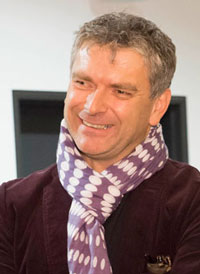
Professor Dorothy Monekosso holds a PhD in Spacecraft Engineering from the University of Surrey and is currently a Professor of Computer Science at Durham University. She also serves as Chief Technical Officer (CTO) at More Life UK Ltd, a health-focused company contracted with NHS England. Her research focuses on applying AI and machine learning to healthcare technologies, including assistive and rehabilitation systems. Notable projects include the Virtual Physiotherapist for stroke recovery and the Digital Health Hub. Education: PhD (2000) in Spacecraft Engineering (University of Surrey), Master’s in Satellite Engineering, Bachelor in Electronic Engineering. Research Interests: Behavior Analytics, Digital Twin Computing, Anomaly detection, Medical Image Analysis, Smart Environments, and Wearables. Her work bridges robotics, AI, and healthcare to improve independent living and clinical decision support. Awards: Royal Academy of Engineering Foresight Award (2000), Honorary Fellowship of the British Computer Society (2020). Grants/Projects: Innovate UK-funded weight management programs, MRC-funded Virtual Physiotherapist studies, collaborations with NHS and Assisted Living Leeds. Labs/Teams: Leads development of assistive technologies through Durham’s Computer Science department and industry partnerships. Current supervision includes Strahinja Klem.
Fajar Juang Ekaputra is a Tenure Track Assistant Professor at the Institute of Data, Process, and Knowledge Management (DPKM), WU Vienna and a part-time Postdoctoral Researcher at the Data Science research unit, TU Wien . With a focus on Semantic Web , Knowledge Graphs , and their integration with Machine Learning in Neurosymbolic AI systems, his work spans domains like Cyber-Physical Systems and Materials Engineering . Education: Dr.techn. (2018), TU Wien M.T. (2010) and S.T. (2008), Institute Teknologi Bandung (ITB) Research Interests center on hybrid AI systems combining Semantic Web and Machine Learning , with applications in Cyber-Physical Systems (e.g., smart grids, smart buildings), data privacy in smart cities, and materials engineering . His 102+ publications include frameworks like SWeMLS-KG and SHACL4Protege . Recent Articles (2024) address explainable AI in cyber-physical systems, privacy trust in data infrastructures, and neurosymbolic frameworks . Earlier works (2023–2022) explore ontology-based data management , auditable AI , and hybrid system architectures . Scientific Awards: Best Paper Awards (ICoDSE 2023, ICoDSE 2016) Best Poster Nomination (SEMANTiCS 2019) PhD Scholarship (Austria’s Agency for Education and Internationalisation, 2012) Advising includes supervising PhD students (e.g., Majlinda Llugiqi, Katrin Schreiberhuber) and master’s theses on topics like knowledge graph characteristics and data quality assessment . He leads projects such as FAIR-AI (FFG-funded, 2024–2026) and SENSE (Horizon Europe, 2023–2025).
Martin Lohse is a Professor for Pharmacology and Toxicology at the University of Würzburg since 1993. He currently serves as Vice President for Research (since 2009) and Executive Director for Graduate Schools (since 2003). His career includes leadership roles at the Rudolf-Virchow-Center for Experimental Biomedicine and foundational research at institutions like Duke University and the Max-Planck-Institute for Biochemistry. Research Focus: Lohse's work centers on receptor physiology and pharmacology, particularly the molecular biology of G-protein-coupled receptors (GPCRs), intracellular signaling, desensitization, and advanced fluorescence microscopy techniques. His studies explore receptor dynamics in cardiac systems and signaling persistence through internalized receptors. Scientific Awards: Gottfried Wilhelm Leibniz-Prize (1999) Ernst-Jung-Prize for Medicine (2000) ERC Advanced Investigator Grant (2008) Bavarian Order of Merit (2006) German Federal Cross of Merit (2002) Leadership & Grants: He initiated the Collaborative Research Center 478 on Regulatory Membrane Proteins and chairs the Rudolf-Virchow-Center funded by the German Research Foundation. His work has secured significant grants, including the 2008 ERC Advanced Investigator Grant.
Karl R. Gegenfurtner is a Professor of General Psychology at the Department of Psychology, Justus Liebig University Giessen. His research focuses on information processing in the visual system, particularly the interplay between low-level sensory processes, high-level visual cognition, and sensorimotor integration. He investigates how complex scenes are perceived, represented in the brain, and used to drive motor systems, with a specialization in color perception, material property recognition, and eye movement dynamics. Ph.D. in Experimental Psychology, New York University (1990) Diploma in Psychology, University of Regensburg (1986) Habilitation in Medical Psychology and Behavioral Neurobiology, University of Tübingen (1998) His work bridges visual neuroscience with computational modeling, examining color categorization in neural networks, cortical mechanisms of color vision, and dynamic recalibration of visual perception during eye movements. Recent projects include Color 3.0: An object-oriented approach to color (ERC Advanced Grant) and Dynamics in Vision and Touch (Marie Curie Actions). Publications highlight advancements in understanding saccadic suppression, predictive eye movements, and chromatic adaptation timelines. Scientific awards include the Wilhelm Wundt Medal (2016), Rank Prize Funds Lecture (2014), and ERC Advanced Grant (2020–2025). He has served on editorial boards of Journal of Vision , Vision Research , and Perception , and led initiatives like the Neuroscientific Workflow Assistance (NOWA) project. Collaborations span institutions in Germany, the U.S., Australia, and the U.K., with a focus on perception-action loops and neural mechanisms underlying visual stability.
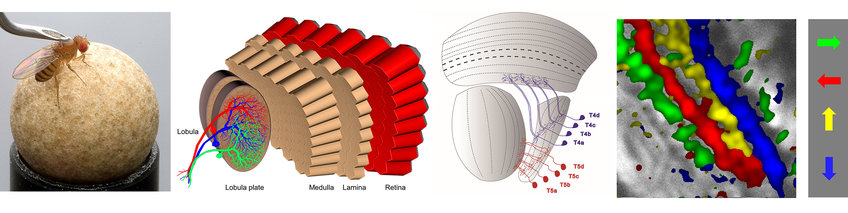
Prof. Dr. Alexander Borst is Director of the Department "Circuits - Information - Models" at the Max Planck Institute for Biological Intelligence in Martinsried, Germany. His research focuses on understanding neural computation in the visual system of Drosophila, particularly how direction-selective motion detection circuits process visual information to guide behavior. Education: Diploma in Biology, University of Würzburg (1981) Doctoral thesis with Martin Heisenberg, University of Würzburg (1984) Habilitation and private lecturer, University of Tübingen (1989) Prof. Borst's research employs a multidisciplinary approach to investigate neural information processing at the level of individual neurons and small circuits. His department uses the fruit fly Drosophila as a model system due to its computationally tractable visual system, with circuits containing fewer than 100 neurons that can be genetically manipulated and observed. The research integrates anatomical reconstructions, physiological characterization, behavioral analysis, and computational modeling to build a comprehensive understanding of visual processing. Analysis of Prof. Borst's recent publications reveals a consistent focus on motion vision mechanisms in Drosophila, with particular emphasis on directional selectivity, neural circuit organization, and the molecular basis of visual processing. His work demonstrates how specific subpopulations of T4 and T5 cells are directionally tuned to cardinal directions and how ON and OFF pathways segregate motion processing. The publications highlight the integration of experimental techniques like 2-photon calcium imaging with computational modeling to understand circuit function. Scientific Awards: Valentino Braitenberg Award in Computational Neurobiology (2014) FENS Award (2014) Member of the HHMI Scientific Advisory Board (2018) Member of the Bavarian Academy of Sciences (2012) EMBO Member (2011) Member of the German Academy of Sciences Leopoldina (2011) Human Frontier Science Program (HFSP) Prize (2006) Prof. Borst has led his department since 2001, first at the Max Planck Institute of Neurobiology and now at the Max Planck Institute for Biological Intelligence. His research has been supported by numerous grants from German and international funding agencies. He has mentored many students and postdoctoral researchers who have established successful careers in neuroscience. His department includes multiple research groups focusing on different aspects of neural computation in the Drosophila visual system. His laboratory comprises several specialized teams working on neurogenetics, molecular characterization, electrophysiology, 2-photon functional imaging, tethered and free behavior analysis, and computational modeling. These teams collaborate closely to investigate how visual information is processed from photoreceptors to behavioral output, with particular focus on motion detection circuits and their developmental and molecular underpinnings.
Dr. Mine Dogan serves as Assistant Professor of Environmental Geophysics in the Department of Geological and Environmental Sciences at Western Michigan University, with her office located in 1121 Rood Hall (Kalamazoo, MI). She holds a Ph.D. from Michigan State University (2013) and previously held research positions at Clemson University's Department of Environmental Engineering and Earth Sciences. Education: Ph.D., Michigan State University, 2013 Her research integrates geophysics, hydrology, and environmental engineering to investigate subsurface processes using advanced methodologies including drone-based electromagnetic surveys, time-lapse monitoring, and 4D X-ray computed tomography. Key focus areas include tree root hydrology, contaminant transport in groundwater, permafrost characterization, and macropore flow dynamics in heterogeneous soils. Analysis of her recent publications (2018-2024) reveals strong emphasis on unmanned aerial systems for geophysical data acquisition, visualization of fluid transport mechanisms in porous media, and forensic/environmental applications of electromagnetic methods. Recurring themes include the role of biological structures in hydrological processes and innovative approaches to subsurface imaging. Scientific Awards: No awards documented in source material While her advising activities and grant funding remain unspecified in available information, her publication record demonstrates active collaboration across geophysics, hydrology, and environmental engineering disciplines. Laboratory facilities and research team structures are not detailed in the provided texts.
Howard Nusbaum is a Professor in the Psychology Department within the Social Sciences Division at the University of Chicago. His research has focused since 1986 on perceptual learning, attention, and working memory, with significant contributions to understanding speech perception, auditory processing, and more recently, the science of wisdom. His laboratory employs a wide range of methods including high-density EEG, fMRI analysis, auditory brainstem recordings, and sophisticated speech analysis tools. Education: BA in Computer Science and Psychology from Brandeis University (1976) PhD in Cognitive Psychology from State University of New York at Buffalo (1981) Postdoctoral training in Speech, Hearing, and Sensory Communication from Indiana University (1984) Nusbaum's research investigates how humans learn and process speech and other auditory information, with particular emphasis on the role of attention, working memory, and sleep in perceptual learning. His laboratory has made groundbreaking contributions, including the first scientific evidence for sleep consolidation of generalized learning, the first behavioral evidence for functional effects of sleep consolidation in songbirds, and the discovery that adults can learn perfect pitch with this learning dependent on working memory capacity. His recent work has expanded to explore the cognitive neuroscience of wisdom, investigating how self-transcendent experiences contribute to wise reasoning. Nusbaum's publication record demonstrates consistent high-impact research across cognitive neuroscience, with recent work spanning from basic mechanisms of speech perception to broader questions about wisdom and decision-making. His research shows an evolving trajectory from foundational work on perceptual learning and speech processing toward more complex questions about higher cognitive functions and their neural underpinnings, with publications extending into 2025. Scientific Awards: 2018 Stella M. Rowley Professor of Psychology 2014 Fellow, The Psychonomic Society 2012 Llewellyn John and Harriet Manchester Quantrell Award for Excellence in Undergraduate Teaching 2009 Fellow, Association for Psychological Science 2007 Future Faculty Mentorship Award Nusbaum has successfully mentored numerous graduate students and postdoctoral trainees who have gone on to become tenured faculty at prestigious institutions worldwide. His NIH-funded research on 'Structure and Process in Speech Perception' has supported his work for many years. His laboratory provides comprehensive training in behavioral research methods, signal processing, statistical analysis, human electrophysiology, and computational modeling. The APEX (Attention, Perception, and Executive-function eXperience) lab at the University of Chicago, which Nusbaum directs, is equipped for high-density EEG measurements, fMRI data analysis, auditory brainstem recordings, and a wide range of speech analysis tools. The lab conducts research with human participants, including nap studies with polysomnography. Nusbaum also contributes to the UChicago Center for Practical Wisdom, reflecting his expanding research interests into the cognitive neuroscience of wisdom.
Clara Tattoni is a Professor at the University of Trento, specializing in geomatics, landscape ecology, and wildlife conservation. Her work integrates GIS and open-source tools to study human-wildlife interactions, ecosystem services, and forest dynamics. Doctoral Course: Agri-food and Environmental Sciences Email: clara.tattoni@unitn.it Her research interests include: Human-wildlife conflict resolution Landscape transformation analysis Conservation biology of apex predators like brown bears GIS and FOSS4G applications for environmental monitoring Cultural ecosystem services and public perception Recent publications focus on: Quantifying beta diversity in Alpine regions using historical data Modeling landscape metrics and cell neighborhood effects Stakeholder perceptions of wildlife management Impacts of anthropogenic risk on bear behavior Climate change and EU priority habitat conservation Wildlife crossing design with cost-benefit analysis No scientific awards or grants are explicitly mentioned in the provided texts. She has collaborated extensively with researchers like Marco Ciolli and Paolo Zatelli, often using open-source geospatial tools in ecological studies.
Dr. Carrie Weidner is a Senior Lecturer at the University of Bristol, affiliated with both the School of Physics and the School of Electrical, Electronic and Mechanical Engineering. Her research spans quantum control, atom interferometry, and quantum technology education, with a focus on robust control techniques in optical lattices and spin networks. Principal Investigator for Quantum Positioning, Navigation, and Timing Hub (2024-2029) Lead on EPSRC-funded project EP/Y004728/1 for trapped ultracold atom interferometry (2023-2025) Her recent work includes energy landscape shaping for quantum systems, deterministic generation of squeezed states, and innovative educational tools like the Quantum Composer. Publications analyze robustness metrics, control algorithms, and quantum-classical system comparisons. Collaborations span international institutions in quantum physics and engineering domains. She contributes to quantum outreach through gamification and interactive platforms, targeting improved education and community inclusivity. Current research trends emphasize precision measurement, error mitigation, and AI integration in quantum control systems.
Carlos Cifuentes is an Associate Professor in Human-Robot Interaction at the Bristol Robotics Laboratory (BRL) , part of the University of the West of England (UWE Bristol) . He also serves as the Deputy Director of the VIVO Hub , a £13.4M UK-funded research initiative (2024-2030) focused on robotics for rehabilitation and healthcare. His research spans Human-Robot Interaction , Rehabilitation Robotics , Healthcare Robotics , and Socially Assistive Robotics , with applications for conditions such as cardiac diseases , post-stroke recovery , spinal cord injuries , cerebral palsy , Parkinson's disease , musculoskeletal disorders , and autism spectrum disorder (ASD) . Carlos has over 15 years of experience and 200+ publications in robotics for rehabilitation and assistive technologies. His recent work explores smart walkers with multimodal feedback, soft prosthetics using polymeric optical fiber sensors , and machine learning models for fatigue and stress estimation. He also investigates inclusive design for social robots in global contexts , including a CASTOR Robot for ASD therapy and collaborative design processes with Colombian communities. Carlos serves as an Associate Editor for IEEE Robotics and Automation Magazine (since 2021), ICRA , and IROS (since 2023). He leads projects integrating wearable sensors , deep learning , and haptic feedback to enhance mobility, autonomy, and quality of life for individuals with disabilities. As Deputy Director of the VIVO Hub, he focuses on long-term deployment of robotic systems in real-world healthcare settings, emphasizing collaboration with clinicians , caregivers , and neurodiverse communities . His work bridges robotics , biomedical engineering , and human-centered design .
Nina Franz is a Researcher at the Institute of Media Studies, Braunschweig University of Fine Arts, specializing in the Theory and History of Technology. She holds a doctorate in Cultural Studies from Humboldt University of Berlin and has held research positions at Bauhaus University Weimar and Humboldt University Berlin. Her research spans military imaging technologies from early modern period to computer age, climate catastrophe narratives in humanities and contemporary art, history of automation, and critical analysis of technological destruction narratives. She examines how imaging systems mediate power relations in warfare, medicine, and colonial contexts, with particular focus on ultrasound, drone warfare, and military surveillance systems. Her recent publications reveal strong interdisciplinary trends across Media Studies, Cultural History, and Critical Military Studies, with recurring themes of visual epistemology, technological mediation, and the weaponization of perception. Key subfields include drone warfare protocols, medical imaging interfaces, algorithmic control systems, and climate catastrophe representations. Doctoral Scholarship, Gerda Henkel Foundation (2015-2018) As a curator and educator, Franz has organized international conferences including 'Remote Control. Scales of Mediated Intervention' (2017) and co-curated exhibitions like 'A Better Version of You' (2016-2018) with Goethe-Institut Seoul. Her current teaching includes courses on military imaging and rearmament discourses, with mandatory participation in the 'Fascism and Mediality' workshop (2025). She regularly presents at academic conferences on military imaging technologies, including upcoming lectures at Staatliche Hochschule für Gestaltung Karlsruhe and Johannes Gutenberg-Universität Mainz. Her work bridges academic research with contemporary art curation, examining how military technologies permeate civilian perception through screen media and imaging systems.
Saptarashmi Bandyopadhyay is a Tenure-Track Assistant Professor of Computer Science at the City College of New York and the Graduate Center at the City University of New York (CUNY). Her research focuses on Artificial Intelligence Agents and Autonomous Decision Making, with special emphasis on Multi-Agent Reinforcement Learning, Multi-Agent Imitation Learning, and related paradigms. She has established significant collaborations with leading institutions including Google DeepMind, Carnegie Mellon University, Oxford University, and MIT. Dr. Bandyopadhyay received her PhD from the University of Maryland, College Park, where she was advised by Professor John Dickerson and Professor Tom Goldstein. Prior to that, she graduated from Penn State in 2020 with a thesis on Multimodal Computer Vision in Medical Domain advised by Prof. William Evan Higgins. Her research expertise spans multiple domains of AI including Multi-Agent Systems, Reinforcement Learning, Imitation Learning, and Multimodal Perception. She specializes in developing AI agents for applications in climate conservation, economic systems, and AI safety. Her work integrates techniques from computer vision, natural language processing, and robotics to create more robust and explainable AI systems that can operate effectively in complex, real-world scenarios. Current work includes improving explainable AI, developing Multimodal LLM/VLM/Robotic Agents, and creating libraries to speed up Multi-Agent evolutionary training with JAXMARL. Analysis of Dr. Bandyopadhyay's publication record reveals a clear progression from foundational work in medical imaging and natural language processing toward increasingly sophisticated multi-agent AI systems. Her recent publications demonstrate a strong focus on Multi-Agent Reinforcement Learning frameworks like JAXMARL, with applications spanning from supply chain orchestration to climate conservation. The interdisciplinary nature of her work is evident in publications spanning computer vision, NLP, and multi-agent systems conferences including AAAI, NeurIPS, AAMAS, EMNLP, and ACL. DoGood Fellow (2022) UMD Dean's Summer Fellow (2021) Dr. Bandyopadhyay has been actively involved in securing research funding from major agencies including NSF, NIH, DoD, and ARL. She served as the lead PhD student RA in a DoD project for Multi-Agent Explainable AI to improve AI trustworthiness. Her service to the academic community includes membership on program committees for major conferences including IJCAI 2024, KDD 2024, ACL 2024, and AAMAS 2023-2024. She has also created the AI Agents Seminar Series at UMD in 2022 with over 1,000 participants from six continents. Currently, Dr. Bandyopadhyay leads research on improving explainable AI, developing Multimodal LLM/VLM/Robotic Agents, and creating libraries to speed up Multi-Agent evolutionary training with JAXMARL. Her lab collaborates prominently with researchers from Google DeepMind, Carnegie Mellon University, Oxford University, University of Sheffield, Waymo, Meta AI, and MIT, with special focus on Dr. Jakob Foerster's and Dr. Robert Loftin's groups.
Associate Professor Steven Wiederman holds the position of Associate Dean Research in the Faculty of Health and Medical Sciences at the University of Adelaide. He leads the Visual Physiology & Neurobotics Laboratory within the School of Biomedicine. His research focuses on understanding visual processing in insects, particularly dragonflies, and translating these insights into applications for autonomous robotics and neuro-inspired systems. Key areas include target detection, optic flow processing, and selective attention mechanisms in biological systems. His interdisciplinary work combines electrophysiological techniques, computational modeling, and robotics engineering. Current projects explore how dragonfly neurons enable precise tracking of moving targets amidst clutter, with applications in developing advanced vision systems for drones and robots. He has secured significant funding through ARC fellowships and industry partnerships, including projects on neuro-inspired deep learning for defense applications. Academic achievements include an ARC DECRA Fellowship (2011–2015) and an ARC Future Fellowship (2016–2020). He is a member of the ARC College of Experts and actively supervises PhD and Master’s students in neuroscience, robotics, and computational biology. His lab collaborates with engineers and computer scientists to bridge biological insights with technological innovation. Publications highlight breakthroughs in understanding neuronal mechanisms underlying predictive vision, selective attention, and adaptive processing in dragonfly visual systems. Media coverage includes features in Wall Street Journal , New York Times , and Science Daily , emphasizing the potential of insect-inspired solutions for future technologies.
Prof. Dirk Junker is a Professor at the Osnabrück University of Applied Sciences , Faculty of Agricultural Sciences and Landscape Architecture. He serves as Academic Coordinator for International Study Projects and Head of the Eye-Tracking Laboratory. Urban & Open Space Planning European City Morphology Perception-Based Design Research Focus: His work explores the intersection of urban design and public space through the lenses of European city patterns, modernist ideals, and sensory perception. Key themes include: City-body human spatial behavior Phenomenology of streets Intuitive planning methods Domestication of urban spaces Publications address topics like urban light rituals, post-war city transformations, and experimental housing models. He investigates the dual relationship between landscape and city, emphasizing the courtyard as a foundational urban element. Engagements: Co-founder of the Council for European Urbanism (Germany), Vice-Chair of the Friends of the Dominikanerkirche Art Hall, and advocate for alternative housing models through DAKSBAU cooperative in Dessau.
Prof. Dr.-Ing. Philipp Lensing serves as a Professor in the Faculty of Engineering and Computer Science at Osnabrück University of Applied Sciences. His academic work focuses on cutting-edge developments in virtual and augmented reality systems, computer graphics, and game programming. His research interests span Virtual Reality , Augmented Reality , Mixed Reality , Game Programming , Computer Graphics , and Natural User Interfaces . Prof. Lensing has pioneered work in real-time global illumination techniques, avatar calibration systems, and the integration of virtual content with real environments. His research has been applied across diverse domains including landscape planning, physics education, medical rehabilitation, and industrial engineering. Prof. Lensing's recent publications reveal a strong trend toward practical applications of VR/AR technologies in scientific, educational, and industrial contexts. His work increasingly focuses on multimodal interaction, haptic feedback systems, and the integration of VR with complex scientific instrumentation like scanning probe microscopy. He has supervised numerous student projects focused on VR/AR applications, game development, and 3D modeling. His teaching includes courses on Computer Graphics, 3D Game Programming, Virtual and Augmented Realities, and 3D Modeling and Animation. Prof. Lensing leads several research projects including GROWTH (funded by BMBF), VRnano (BMBF), VRFlow Suite, VR-Physio-BOX, and MoDal-MR, all exploring innovative applications of immersive technologies in various practical contexts.