Dr. Alex Black is an Associate Professor in the School of Optometry & Vision Science at Queensland University of Technology (QUT), Faculty of Health. He serves as Course Coordinator for the Master of Optometry program and leads the Vision and Everyday Function research group within QUT's Centre for Vision and Eye Research. His expertise spans vision science, ageing-related vision decline, falls prevention, and driving safety. Dr. Black holds dual qualifications: a PhD in Vision Science (QUT, 2010) and a Masters of Public Health (University of Queensland, 2012). Teaching roles: Coordinates OP85 Master of Optometry program Research focus: Vision impairment impacts on mobility, driving safety, and academic performance Awards: FAAO (Fellow of American Academy of Optometry), FHEA (Fellow of Higher Education Academy) Research highlights include AUD $3.2 million in grants, over 100 publications, and contributions to international journals like Clinical & Experimental Optometry . His work bridges clinical practice and research, addressing real-world issues through innovative studies such as night-time pedestrian safety clothing design and advanced driver assistance system (ADAS) usability for older adults. Key collaborations include NHMRC-funded projects on injury prevention and Vision and Driving research laboratory studies. Dr. Black also serves editorial roles for Clinical & Experimental Optometry and peer review activities.
Dr. Richard Gault is a Lecturer in the School of Electronics, Electrical Engineering and Computer Science at Queen's University Belfast. His research focuses on computer vision and deep learning applied to microscopy data, particularly in medicine, health, and life sciences. He leads a team developing novel methods for medical image analysis, including histopathology and digital pathology, with applications in cancer diagnosis and environmental science. He is actively involved in teaching, having received Excellence in Teaching awards from Queen's University Belfast in 2019 and 2022. His work bridges computational intelligence and healthcare, with notable contributions to AI-driven diagnostics, stain normalization in histopathology, and multimodal data fusion. Dr. Gault's research interests include ensemble learning, fuzzy systems, and generative models like diffusion networks. He supervises multiple PhD students and has mentored graduates now working in machine learning engineering and postdoctoral research. His team’s achievements include awards such as the 2023 Best Oral Presentation at the Pan Ireland Ophthalmology Day and a 2021 Best Paper Award from his school. Key contributions include the LymphoSight AI application for detecting lymphoid structures and HistoClean , open-source software for improving CNN development in histopathology. He has been recognized as a Senior Member of IEEE and a Fellow of the Higher Education Academy. His work is supported by grants such as the R5131ECI project on 3D quantifier approximation via 2D video analysis (2019–2025). He actively engages in academic activities, including conference organization and PhD external examinations across Europe.
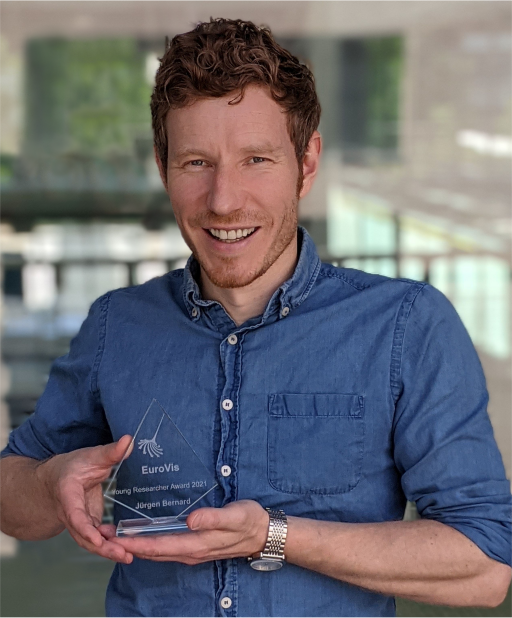
Jürgen Bernard is an Assistant Professor of Computer Science at the University of Zurich , leading the Interactive Visual Data Analysis (IVDA) Group . He is associated with the Digital Society Initiative (DSI) and holds a PhD in Computer Science from Technische Universität Darmstadt (2015) with a focus on time-oriented data analysis. His academic journey includes postdoctoral research at TU Darmstadt and the University of British Columbia. Education : Diploma in Computer Science (2009, TU Darmstadt) PhD in Computer Science (2015, TU Darmstadt) Research Interests : Dr. Bernard specializes in interactive visual data analysis , explainable machine learning , and human-centered AI . His work explores time series analysis , multivariate data exploration , and user-driven preference elicitation . He develops visual analytics systems for domains like healthcare , digital humanities , and industrial applications , with a particular focus on responsible AI and transparency in algorithmic systems . Research Trends : His publications emphasize interactive machine learning workflows , visual analytics for healthcare , and time-stamped event sequence analysis . Recent work includes LLM validation frameworks (Human-Data-Model Interaction Canvas) and personalized ranking systems funded by the Swiss National Science Foundation. He integrates temporal data with multivariate analysis across applications from medical manufacturing to chronic disease management . Scientific Recognition : EuroGraphics Young Researcher Award (2022) EuroVis Young Researcher Award (2021) Best Paper Awards at IEEE VIS (2021), EuroVA (2021, 2025) Dirk Bartz Prize (2017), Hugo-Geiger Preis (2016) Teaching & Grants : He teaches Interactive Visual Data Analysis (6 ECTS), Digital Health Seminars , and People-Oriented Computing . Currently leads a SNF Grant on Personalized Visual Analytics for multi-criteria decision support (2024-2028) with ETH Zurich's Prof. M. El-Assady.
Matthew Stephenson is a Lecturer at Flinders University's College of Science and Engineering, specializing in Artificial Intelligence applications for games. He leads the Data for Decisions initiative within the Factory of the Future Transdisciplinary Hub, focusing on AI-powered scenario generation for smart digital twins. Additionally, he is a member of IRL CROSSING, an international lab studying human-autonomous agent teaming dynamics. PhD in Computer Science (Australian National University, 2019) B.Sc.(Hons) in Computer Science (University of Canterbury, 2015) His research applies AI, Machine Learning, and Data Science to game domains, including intelligent agent development for physics-based environments, procedural content generation, and game analytics. He also investigates deceptive behaviors in multi-agent systems and leverages games as testbeds for real-world AI solutions. Recent publications focus on large language models for game benchmarking, physical reasoning challenges, and evolutionary game generation. Scientific awards include an honourable mention at Foundations of Digital Games (FDG'18). He supervises students in procedural generation, game AI, and physics-based task creation, with teaching roles in computational intelligence and neural networks courses.
Elliot J. Crowley is a Senior Lecturer (Associate Professor) at the School of Engineering, University of Edinburgh, where he co-leads the Bayesian and Neural Systems research group. He serves as Programme Manager for Electronics and Electrical Engineering and has developed a comprehensive machine learning course for 4th year electronic engineering students at the University of Edinburgh. Dr. Crowley's research focuses on simplifying machine learning systems with specific expertise in automated machine learning, low-resource deep learning, and engineering applications of machine learning. His work bridges theoretical advances with practical implementations, particularly in neural architecture search and computer vision applications, with emphasis on making complex ML systems more accessible and efficient. His recent publications demonstrate significant contributions to neural architecture search spaces, training-free instance segmentation, and state space models for visual recognition, appearing in top venues including NeurIPS 2024, BMVC 2024, and AutoML 2025. These works show a consistent focus on developing practical ML solutions that can operate effectively in resource-constrained environments. Selected awards and grants: EPSRC New Investigator Award Investigator on the dAIEdge Horizon Network Co-investigator on the EPSRC AI Hub for Causality in Healthcare AI Dr. Crowley currently supervises several researchers including Postdoc Linus Ericsson and PhD students Miguel Espinosa, Shiwen Qin (with Shay Cohen), and Cameron Barker (with Henry Gouk). His former students include Chenhongyi Yang (now a Research Scientist at Meta) and Jack Turner (now a Software Engineer at Qualcomm). He actively seeks new PhD students with strong research proposals and available funding for UK students through CDTs. His research group, the Bayesian and Neural Systems group, focuses on developing practical machine learning solutions that can be deployed in resource-constrained environments, with particular emphasis on making complex ML systems more accessible to engineers and practitioners.
Alison Baker is a Senior Lecturer at the University of East London within the School of Childhood and Social Care. She specializes in Education and teaches modules on inclusion, Primary English, children's literature, and reflective practice in Primary Teaching. PhD candidate researching white working-class children in children's fantasy fiction Areas of expertise: Social class representation, reading for pleasure, inclusive pedagogy Research Focus: Investigates how social class portrayal in fantasy literature impacts children's reading engagement, with particular attention to working-class disempowerment in fictional narratives. Her work bridges literary analysis with educational practice through projects like the UEL Goodreads discussion group. Key Publications: Contributions on social class in Harry Potter, children's comics, and critical reading pedagogy. Notable works include analyses of social capital in fantasy fiction and the use of social media for teacher development. External Roles: Served as Children's Programme Coordinator at Eastercon 2019 (Ytterbium) and currently sits on the Editorial Board of the Journal of Historical Fiction.
Katherine Swancutt is Reader in Social Anthropology at King's College London, where she serves as Director of the Religious and Ethnic Diversity in China and Asia Research Unit (REDCARU) and Project Lead for the ERC Synergy Grant 'Cosmological Visionaries: Shamans, Scientists, and Climate Change at the Ethnic Borderlands of China and Russia' (2020-2026). She has conducted anthropological fieldwork for over two decades across Asia, focusing on Southwest China (among the Nuosu), Mongolia, Inner Mongolia, and Buryat regions of Russia. Her research centers on the anthropology of religion, with particular emphasis on shamanism, animism, dreams, and the relationship between cosmology and the environment. Her fieldwork explores how religious innovations are used to manage conflict and shape everyday life among diverse ethnic communities. She has established herself as a leading scholar in indigenous knowledge systems and their relevance to contemporary environmental challenges. Dr. Swancutt's extensive publication record reveals consistent thematic focus on ritual practices, divination systems, and cosmological frameworks, particularly among the Nuosu people of Southwest China. Her recent work examines how spiritual practices intersect with environmental change, social renewal, and cultural memory, bridging anthropology, religious studies, and environmental humanities to create innovative frameworks for understanding indigenous cosmologies in the context of climate change. ERC Synergy Grant 'Cosmological Visionaries' (£6m project connecting shamans, scientists, and rural communities) Author of four major publications including 'Fortune and the Cursed' (2012) and 'Crafting Chinese Memories' (2021) Founder of REDCARU, now an international network with branches in Chinese universities Recipient of significant research funding including ERC Synergy Grant As an educator, Dr. Swancutt teaches anthropology of religion at all levels and supervises PhD students focusing on long-term ethnographic fieldwork among ethnic minorities in China, Mongolia, or Russia. She actively engages with public audiences through exhibitions like 'Vital Signs: Another World is Possible' at the Science Gallery London, which showcases indigenous visions of climate change.
Benjamin Eysenbach is an Assistant Professor in the Department of Computer Science at Princeton University's School of Engineering and Applied Science since 2023. His research focuses on developing principled reinforcement learning (RL) algorithms that improve simplicity, scalability, and robustness in state-of-the-art systems, particularly through probabilistic inference techniques. Ph.D., Machine Learning, Carnegie Mellon University (2023) B.S., Mathematics, Massachusetts Institute of Technology Research interests center on reinforcement learning with emphasis on long-horizon reasoning, exploration strategies, and robustness. He explores intersections with probabilistic inference and self-supervised learning to enhance RL capabilities. Recent publications highlight trends in contrastive learning for goal-conditioned RL, temporal distance modeling , and hierarchical control . Key themes include reward-free learning, scalable architectures, and uncertainty quantification in decision-making systems. 2025: Junior Faculty Award for Excellence in Research and Teaching, Princeton School of Engineering and Applied Science Eysenbach's work bridges theoretical foundations with practical implementations in AI training frameworks, emphasizing performance optimization and safety mechanisms.
Dr. Todd D. Murphey is a Professor of Mechanical Engineering at Northwestern University's Robert R. McCormick School of Engineering and Applied Science. He serves as Director of Transformative Research and Director of the Master of Science in Robotics Program at Northwestern, leading initiatives in computational dynamics, control systems, and robotics. His work bridges engineering, neuroscience, and biomedical applications, with a focus on developing systems that interact effectively with humans and their environments. Dr. Murphey received his Ph.D. in Control and Dynamical Systems from the California Institute of Technology in 2002, with a thesis titled "Control of Multiple Model Systems." Prior to that, he earned a B.S. in Mathematics, summa cum laude, from the University of Arizona in 1997. Dr. Murphey's research centers on computational methods in dynamics and control, with applications spanning neuroscience, health science, robotics, and automation. His work in the Interactive & Emergent Autonomy Lab focuses on computational models of embedded control, biomechanical simulation, dynamic exploration, and hybrid control. The group develops mathematical approaches that lead to orders of magnitude improvement in computational efficiency for real-time implementation. Key application areas include assistive exoskeleton control, stabilization of energy networks, bio-inspired active sensing, entertainment robots, robotic exploration, and software-enabled stroke rehabilitation. Analysis of Dr. Murphey's recent publications reveals a strong emphasis on human-swarm interaction, algorithmic matter, and control of cyber-physical systems in uncertain environments. His work increasingly integrates information theory with physical systems, exploring how both autonomous and biological systems interact with environments to learn and improve behaviors. Recent trends show growing applications in rehabilitation technology, with particular focus on human-machine interaction in biomedical devices and embodied intelligence. Dr. Murphey has received numerous honors and awards for his contributions to robotics and engineering: Named Director of Transformative Research at Northwestern University (2025) Appointed IEEE Robotics and Automation Society Vice President of Publication Activities (2022) Co-recipient of Best Paper Award for IEEE Transactions on Robotics (2020) Appointed to Air Force Scientific Advisory Board (2019) Recipient of ABB Best Student Paper Award for CPL-SLAM research (2019) Cole-Higgins Award from Northwestern Engineering (2015) Dr. Murphey has supervised numerous graduate students including Taosha Fan, Giorgos Mamakoukas, and Ian Abraham, with research spanning robotic exploration using electrosense and mechanical contact, human-in-the-loop control, and shared control for rehabilitation devices. His lab has secured significant funding from the National Science Foundation, DARPA, and industry partners including Siemens and Ekso Bionics, supporting research in algorithmic matter, emergent behavior, and human-swarm collaboration. The Interactive & Emergent Autonomy Lab, led by Dr. Murphey, investigates how both autonomous systems and biological systems interact with their environments to learn and improve behaviors. Current projects include active learning and data-driven control, active perception in human-swarm collaboration, algorithmic matter and emergent computation, control for nonlinear and hybrid systems, cyber physical systems in uncertain environments, harmonious navigation in human crowds, information maximizing clinical diagnostics, reactive learning in underwater exploration, robot-assisted rehabilitation, and software-enabled biomedical devices. The lab collaborates with researchers across Northwestern and institutions including Georgia Tech, MIT, and industry partners.
Christopher G. Healey is the Goodnight Distinguished Professor of Analytics in the Institute for Advanced Analytics and a Professor in the Department of Computer Science at North Carolina State University. His research spans visualization, data analytics, text analytics, sentiment analysis, machine learning, cognitive psychology, computer graphics, and social media analytics. He has graduated 15 Ph.D. and 26 master's students and secured over $6 million in research funding from agencies including the National Science Foundation, Department of Defense, National Security Agency, Army Research Office, and various industry partners. He has published over 100 peer-reviewed articles and is a senior member of both IEEE and ACM, as well as a member of the NC State Academy of Outstanding Teachers. His research focuses on developing visualization techniques that leverage visual perception to support rapid, accurate, and effective analysis of large, complex datasets. More recently, he has been investigating machine learning for natural language processing and text analytics. His work includes projects on visualizing election results, sentiment estimation for social media, and wildfire narratives using large-scale social media data. His publications demonstrate a strong trend toward integrating machine learning with visualization, particularly for text analytics and social media analysis. He has made significant contributions to visualizing deep neural networks, cyber situation awareness, and pandemic response analytics, showing how visualization can enhance understanding of complex systems and large datasets across multiple domains. IBM Faculty Award (2007, 2008, 2010, 2011, 2012) Senior member, Association of Computing Machinery (ACM) (2007) Senior member, Institute of Electrical and Electronics Engineers (IEEE) (2007) NC State Academy of Outstanding Teachers inductee (2003) National Science Foundation Faculty Early CAREER Award (2001) He has successfully mentored numerous graduate students and secured significant research funding across multiple projects. His work with the Laboratory for Analytic Sciences, National Science Foundation, and Department of Defense demonstrates strong industry and government partnerships. His recent projects focus on visualizing social media narratives, deep neural networks for text understanding, and predictive analytics for large document collections. He leads research groups focused on visualization and analytics, working with teams to develop innovative approaches for data exploration and analysis. His current work continues to push the boundaries of how visualization can be used to enhance understanding of complex data across domains including public health, cybersecurity, and social media analysis.
Milind Tiwari is a Senior Postdoctoral Research Fellow in Financial Crime at the Australian Graduate School of Policing and Security, Charles Sturt University. He holds a PhD in Money Laundering from Bond University, a Master of Science in Finance from the University of Manchester, and a Bachelor of Business Administration from Christ University. As a Certified Fraud Examiner (CFE) and Certified Anti-Money Laundering Specialist (CAMS), he brings extensive industry experience from working with Big 4 firms including KPMG, EY, and Deloitte in both India and Australia. Dr. Tiwari's research spans multiple dimensions of financial crime with particular expertise in money laundering detection mechanisms, trade-based money laundering (TBML), food crime as a money laundering typology, and emerging threats in digital spaces including cryptocurrency and the metaverse. His work integrates advanced data analytics, blockchain technology, and artificial intelligence to develop innovative approaches to financial crime detection and prevention. His recent publications demonstrate a clear trajectory focusing on increasingly complex intersections of technology and crime, with substantial contributions in 2024-2025 covering metacrime, cryptocurrency exchanges, food crime, and metaverse policing. These works appear in high-impact journals across criminology, finance, and technology disciplines. Dr. Tiwari has received significant recognition for his work, including the Emerald Literati Award and the Vice-chancellor's award for outstanding thesis. He is an active member of professional organizations including the Association of Certified Fraud Examiners (ACFE), Association of Certified Anti-money laundering specialists (ACAMS), and Australia and New Zealand Accounting and Finance Association (AFAANZ). As an educator, Dr. Tiwari teaches specialized courses including JST 545 – Money Laundering and JST 549 – White Collar Psychopaths, bringing his practical industry experience and cutting-edge research directly into the classroom. His current research projects focus on TBML (Trade-Based Money Laundering) and CTAS, addressing critical vulnerabilities in the global financial system.
Rob Patro is an Associate Professor in the Department of Computer Science at the University of Maryland, with an appointment at the University of Maryland Institute for Advanced Computer Studies. His work bridges computational biology and computer science, focusing on algorithm design and data structures for genomics applications. Education: Ph.D. in Computer Science, University of Maryland, College Park (2012) B.S. in Computer Science, University of Maryland, College Park (2006) with academic and departmental honors Patro’s research centers on developing computational methods for analyzing high-throughput genomics data, combining algorithmic innovation with statistical inference. His work extends to programming languages, parallel computing, and machine learning applications in biology. His publications at ISMB, RECOMB, and in journals like Nature Methods and Cell Systems highlight advancements in RNA-seq quantification, metagenomic analysis, and compressed genomic representations. These contributions emphasize efficiency and scalability in genomic data processing.
Jasmine Begeske serves as Clinical Assistant Professor of Special Education in Purdue University's Department of Educational Studies within the College of Education. She co-founded and directs CREATE: Center for Research and Equipment for Assistive Technology in Education, an AT library and makerspace providing hands-on opportunities for pre-service teachers to develop individualized solutions for students with disabilities using 3D printers, Cricut, and Glowforge equipment. Her educational background includes: PhD in Special Education with Cognate in Art Education from Purdue University MFA in Photography and Related Media from Purdue University MS in Secondary Education (Special Education specialization) from Indiana University Northwest BFA in Photography with Art History minor from Indiana University Dr. Begeske's research program examines inclusive access to arts education through program evaluation and creative assistive technology development. Her experimental printmaking practice integrates individuals with disabilities as co-creators , while her scholarly work validates instruments measuring preschool arts accessibility and develops multisensory adaptations for students with visual impairments. She bridges art education and special education through evidence-based AT interventions . Analysis of her publication history reveals consistent focus on arts/special education intersections with increasing emphasis on empirical validation of accessibility instruments and multisensory adaptations. Her 2023 work on teacher education in art classrooms and multisensory adaptations demonstrates practical applications of her CREATE center's mission, while her 2022 instrument validation study establishes methodological rigor in measuring arts accessibility. Her scientific recognition includes: 2023 USSEA Outstanding Dissertation Award 2023 Purdue Focus Award for equity initiatives 2022 AEAI President's Award for EDI service Multiple Purdue University teaching and discovery awards (2020-2023) With 15+ years of teacher preparation experience spanning 100+ course sections, Dr. Begeske mentors doctoral students while securing grant funding including $100K from Purdue's Instructional Equipment Grant for CREATE. Her professional service encompasses state-level program reviews, academic standards committees, and leadership roles in Indiana Division of Early Childhood and CEC-DARTS. The CREATE center operates as a dual-space AT innovation hub with fixed location in Beering Hall and mobile carts supporting field experiences. It empowers pre-service teachers to prototype solutions addressing specific student needs while advancing Dr. Begeske's mission of making education universally accessible through technology and creativity.
Ali Ramezani-Kebrya is an Associate Professor with tenure in the Department of Informatics at the University of Oslo (UiO), where he leads research in machine learning theory. He holds dual Principal Investigator roles at the Norwegian Center for Knowledge-driven Machine Learning (Integreat) and SFI Visual Intelligence, and is an active member of the European Laboratory for Learning and Intelligent Systems (ELLIS) Society. His service includes Area Chair positions for NeurIPS and AISTATS, and Action Editor for Transactions on Machine Learning Research. His research focuses on theoretical foundations of deep learning with emphasis on understanding input data distribution encoding in neural network layers. Key themes include minimizing statistical risk under resource constraints, addressing distribution shifts in distributed settings, and developing practical tools for robust federated learning. Current applications span emotion recognition, marine data analysis, and neuroscience, reflecting his commitment to real-world machine learning challenges as evidenced by his FRIPRO-funded Machine Learning in Real World (MLReal) project. Recent publication trends reveal three dominant threads: (1) label/covariate shift mitigation in distributed systems through entropy regularization and density ratio estimation; (2) communication-efficient optimization via layer-wise quantization and adaptive compression techniques achieving 150% speedups; and (3) robustness guarantees against tailored attacks and distribution shifts. These works consistently bridge theoretical bounds with empirical validation across domains from GAN training to federated settings. Scientific recognition includes: FRIPRO Grant for Early Career Scientists (2025) for MLReal project SFI Visual Intelligence Spotlight Publication award (2023) for federated learning work He actively mentors 11 graduate students across Oslo and Tromsø universities, with recent PhD placements at Apple and NVIDIA. Current grant portfolio features the FRIPRO Early Career award and leadership roles in two major Norwegian research centers. His lab maintains strong industry collaborations through Vector Institute and EPFL, with recent hiring for PhD and postdoc positions in physics-informed machine learning.
Prof. Dr. Roderick Lim is an Associate Professor at the Biozentrum, University of Basel , where he leads a research group since 2014. His work bridges biophysics, nanotechnology, and molecular biology , focusing on the nuclear pore complex (NPC) and mechanobiology of cells . He develops biomimetic systems for selective molecular transport and ARTIDIS , a nanomechanical tissue diagnostic platform commercialized for breast cancer prognosis . Education : BSc (UNC Chapel Hill), PhD (NUS/IMRE Singapore), Postdoc (Swiss Nanoscience Institute) Positions : Argovia Professor (2014–present), Tenure Track Asst. Prof. (2009–2013), Postdoc (2004–2008) His research on NPC transport selectivity reveals how karyopherins modulate the FG Nup barrier via multivalent interactions, with implications for viral entry and Alzheimer’s disease . His ARTIDIS platform uses atomic force microscopy to detect cancer via tissue softness, linking hypoxia to metastasis . Recent 2025 publications explore bacterial nanoharpoon defense mechanisms and DNA origami-based NPC mimics . Scientific Awards : Pierre-Gilles de Gennes Prize (2008), A*STAR Fellowship (2004) Collaborations : NCCR Molecular Systems Engineering, NanoTera, KTI He mentors PhD students in institutions across Switzerland, Singapore, Sweden, and the UK , with alumni working on polymersome delivery, mechanotransduction, and pathogen transport . His lab pioneered high-speed atomic force microscopy for real-time NPC dynamics and plasmonic nanopores for synthetic biology applications.