Akos Ledeczi is a Professor of Computer Science and Electrical and Computer Engineering at Vanderbilt University's School of Engineering. His research focuses on computer science education and wireless sensor networks (WSN) , with notable contributions to visual programming tools like NetsBlox and anti-poaching systems like WIPER. He holds a Ph.D. from Vanderbilt University and a Diploma from the Technical University of Budapest. His education initiatives include the NetsBlox platform for K-12 STEM education and a popular Coursera MOOC on introductory programming. In WSN, his team developed a countersniper system with real-time shooter localization and a wearable system for military applications. He is also a leader in Model Integrated Computing , creating tools like the Web-based Generic Modeling Environment. Recent work includes NSF-funded projects on cybersecurity education in middle schools and animal-borne acoustic monitoring. His awards include the ACM SenSys Test of Time Award (2014) and the Best Showpiece Award at IEEE VL/HCC (2021). Key grants and collaborations span NSF projects, Vodafone innovation programs, and the Cyber Makerspace initiative. His lab develops tools like DeepForge and RoboScape Online , emphasizing open-source and collaborative platforms. Students supervised include Devin Jean (K-12 tools), Gordon Stein (robotics simulations), and Brian Broll (NetsBlox extensions).
Prof. Tan Yap Peng is a Professor and Chair of the School of Electrical & Electronic Engineering at Nanyang Technological University (NTU), Singapore. He holds the President's Chair in Electrical and Electronic Engineering and serves as Associate Vice President (Lifelong Learning – Postgraduate Programmes by Coursework). His research focuses on multimedia analysis, computer vision, machine learning, and data analytics. He earned his B.S. from National Taiwan University and M.A./Ph.D. from Princeton University. He has led major initiatives including the INFINITUS Infocomm Research Centre and contributed to IEEE technical committees. His over 200 publications span image/video processing, neural network robustness, and cross-modal systems. Awards include IEEE Fellow status. Education: B.S. Electrical Engineering (NTU), M.A./Ph.D. (Princeton) Research interests emphasize interactive digital media, content-based analysis, and AI-driven solutions for visual and signal processing. His work addresses challenges in adversarial attacks, video generation, and low-light image enhancement. He has held editorial roles at IEEE Transactions and EURASIP journals. Conference leadership includes chairs for ICME and ICIP. His contributions bridge academia and industry through collaborative research networks.
Dr. Wenbin Li is a Senior Lecturer (Associate Professor) in Robotics at the University of Bath's Department of Computer Science. He leads the Pering Laboratory (Perceptual Intelligence Laboratory), affiliated with the AI & Machine Learning and Visual Computing groups. Previously, he held postdoctoral positions at Imperial College London (2016-2018) and UCL (2014-2016), and earned his PhD from the University of Bath in 2013, with earlier degrees from Imperial College London (MSc, 2009) and Xidian University (B.Eng, 2008). His research focuses on unified autonomous systems, including multi-sensory localization/mapping, dynamic motion capture, and uncontrolled scene understanding with applications in manufacturing and professional capture. Key areas include Robotics, Computer Vision, Graphics, and Machine Learning. He actively supervises doctoral students in these fields and has funded PhD openings. Dr. Li has been involved in major initiatives such as the My World - Strength in Places Fund (2021–2027), SLAM with Reinforcement Learning (2022–2023), and the CAMERA MC2 Award (2019–2023). His work aligns with UN Sustainable Development Goals, particularly in advancing technology for societal benefit. Recent publications emphasize aerial robotics, autonomous systems, and computer vision applications, including UAV package delivery reviews, Bayesian optimization for balloon station-keeping, and generative models for intrinsic image decomposition.
Prof. dr. Lambert Schomaker is a Full Professor of Artificial Intelligence at the University of Groningen, leading the Artificial Intelligence and Cognitive Engineering (ALICE) institute within the Faculty of Science and Engineering. His work spans perceptual intelligence, machine learning, and neuromorphic computing, with significant contributions to handwriting recognition, robotics, and historical document analysis. Affiliations: Bernoulli Institute, CogniGron (Cognitive Systems & Materials), and Data Science & Systems Complexity (DSSC) centers. Education: M.Sc. (1983) and Ph.D. (1991) in Psychophysiology/Psychology from Nijmegen University. Research Interests: AI, pattern recognition, neural networks, autonomous systems, and applications in cultural heritage (e.g., the MONK system for handwritten archive indexing). He has pioneered handwriting recognition methods used in modern devices like tablets and led the 30MEuro Target project for large-scale data mining. Grants & Projects: Includes NWO-funded initiatives (e.g., Catch, TriGraph) and EU projects (MANTIS, MANIC). Current focus areas include neuromorphic computing with electronic materials and AI-driven analysis of the Dead Sea Scrolls. Awards: IBM Faculty Awards (2011, 2012), IAPR Best Paper Award (2012), Ching Yee Suen Special Award (2012). Advising: Supervised over 20 PhD students in AI, robotics, and document analysis. Active in industry collaborations (e.g., HP, Microsoft). Labs/Teams: Director of ALICE, contributor to CogniGron, and leader of the MONK system team. Current research includes neuromorphic hardware development and AI applications in maintenance systems.
Dr. Yanliu Lin is an Associate Professor in Spatial Planning and Digitalization at Utrecht University's Department of Human Geography and Spatial Planning. His research focuses on digital planning technologies, urban governance, and collaborative planning processes, particularly in China and the Netherlands. He leads an ERC-funded team exploring social media's role in collaborative planning and co-leads an AI-driven Digital Twin Platform project with partners from TU Eindhoven and Wageningen University. Key research areas include: Planning Support Systems and Smart Urban Governance Social Media's Impact on Public Participation Digital Twin Applications for Sustainable Development Migration and Urban Integration Ethical Dimensions of AI in Urban Planning His 60+ publications appear in top journals like Computers, Environment and Urban Systems and Urban Studies . He edited two books on smart governance and co-organized major conferences like the 2025 CUPUM workshop on Digital Planning. Awards include an ERC Starting Grant (2021-2026) for collaborative planning research. Professional Contributions: Serves on editorial boards for Planning Practice & Research and Urban Governance , reviews for 40+ ISI journals, and advises the Swiss National Science Foundation.
Dr. Philippe Pasquier is a Professor at Simon Fraser University's School of Interactive Arts and Technology, where he directs the Metacreation Lab for Creative AI. His research-creation program integrates scientific research on generative AI and machine learning with artistic practice in computer music and interactive art. Research focuses on creative AI systems for artistic tasks, including multi-track music composition (Calliope), timbre synthesis, visual synthesis (Autolume), and cross-modal generation. Applications span creative software tools, interactive installations, and audiovisual performances studied through HCI methodologies. Publications demonstrate consistent innovation in generative systems, with recent work exploring controllable music generation (MIDI-GPT), GAN-based visual synthesis, and evaluation frameworks for creative AI. Artistic works have been exhibited globally at venues including Ars Electronica, Centre Pompidou, and ZKM. Secured research funding from NSERC, SSHRC, CFI, and international agencies. Founded key academic initiatives including the International Workshop on Musical Metacreation (MUME), Movement and Computation conference (MOCO), and chaired ISEA2015. Teaches creative AI, sound design, and interdisciplinary computing approaches.
Young Ji Kim is an Assistant Professor in the Department of Communication at the University of California, Santa Barbara (UCSB). Her research focuses on team collaboration, collective intelligence, human-machine teaming, and neurodiversity in workplace settings. She holds a Ph.D. in Communication from the University of Southern California (USC), an M.A. from USC, and a B.A. in Communication from Yonsei University. Prior to UCSB, she conducted postdoctoral research at the MIT Sloan School of Management's Center for Collective Intelligence. Her work examines how team diversity, communication processes, and emerging technologies influence team dynamics and performance. Key areas include digital nudges for enhancing collective intelligence, multicultural globally dispersed teams, and the integration of AI in collaborative environments. She has been awarded top paper honors from the International Communication Association, National Communication Association, and Academy of Management, as well as a prestigious MURI grant from the Department of Defense (2021-2024). Kim's research bridges communication science, organizational behavior, and technology, with applications in virtual teams, remote work, and the future of human-AI collaboration. She has published extensively on topics such as vocal synchrony in video conferencing, collective performance metrics, and the impact of visibility affordances on boundary work in teams.
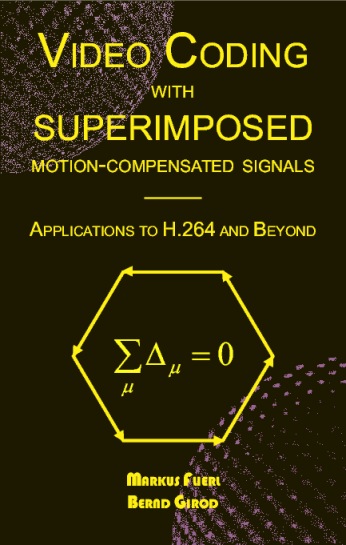
Markus H. Flierl is an Associate Professor at the School of Electrical Engineering and Computer Science, KTH Royal Institute of Technology in Stockholm. He holds a PhD in Engineering from Friedrich Alexander University (2003). His career includes senior research roles at École Polytechnique Fédérale de Lausanne (2003-2005), leadership of the Max Planck Center for Visual Computing and Communication (2005-2008), and a Visiting Assistant Professorship at Stanford University (2000-2002). He has served as Program Director of the EIT Digital Master School’s 'Visual Computing and Communication' program and as Associate Editor for the IEEE Transactions on Circuits and Systems for Video Technology. Education: PhD in Engineering, Friedrich Alexander University, 2003 Studies at Friedrich Alexander University (1999-2002), EPF Lausanne (2003-2005), and Stanford University (2005-2008) Research Interests: Focused on visual computing, machine learning, and information theory. Key areas include distributed coding of dynamic scenes, multiview video coding, motion-compensated transforms, and applications in video compression and multimedia systems. His work explores efficient signal processing techniques for video and 3D visual search, with recent contributions in drone-based environmental monitoring and adversarial training methods. Awards: SPIE VCIP Young Investigator Award (2007) Teaching & Grants: Teaches courses on image/video processing, information theory, and multimedia systems. His research is supported by Ericsson, the Swedish Research Council, the European Commission, and KTH’s Digitalization Platform. He advises PhD and master’s students in visual computing and communication. Labs & Teams: Leads the Visual Computing and Communication research group at KTH, collaborating with industry partners like Ericsson and Qamcom. Former members include researchers now at Tobii AB and the University of Iceland.
Dr. Abhishek Bhati is an Associate Professor of Political Science at Bowling Green State University (BGSU) and Director of the Asian Studies Program. He holds a B.A. in Business Economics from the University of Delhi, an M.A. in Social Entrepreneurship from the Tata Institute of Social Sciences, Mumbai, and a Ph.D. in Public Administration from the University of Nebraska at Omaha. His research focuses on nonprofit studies, international development, and public administration, with an emphasis on how nonprofits reduce social inequities and the role of government in regulating civil society. He serves on the Bowling Green City Planning Commission and as a Trustee of the Bowling Green Community Foundation, demonstrating his commitment to community engagement. Dr. Bhati teaches courses such as Introduction to Public Administration, Nonprofit Administration, and Politics & Issues of World Development. His research explores topics like the impact of social media on fundraising, diversity in nonprofit messaging, and postcolonial theory’s relevance to equity studies. Recent work includes analyses of pandemic-era government relief funds in Asia and implicit bias in charitable giving. His scholarly contributions span experimental fundraising studies, nonprofit governance, and the visual representation of beneficiaries in philanthropy. Dr. Bhati’s interdisciplinary approach bridges political science, public policy, and civil society dynamics, with a focus on both U.S. and comparative contexts. His service roles and academic leadership reflect a dedication to advancing public understanding of nonprofit ecosystems and societal equity.
Ola Wetterberg is a Professor and Chair in Conservation of Built Heritage at the Department of Conservation, University of Gothenburg. He is actively involved in advancing interdisciplinary and cross-professional education and research in heritage conservation. His research focuses on two main interconnected areas: urban heritage and the changing role of church buildings in contemporary society. His current projects explore the evolving cultural values and new functional uses of church heritage, particularly in the context of increasing secularization. He examines how religious buildings, especially churches, have transitioned into heritage sites and how their roles are being redefined. The analysis of his recent publications reveals a consistent focus on the intersection of heritage, urban development, and societal change. Key themes include the musealization of religious buildings, adaptive reuse of sacred spaces, community co-production in heritage, and the historical evolution of conservation professions. His work often takes a contextual and reflective approach, drawing on Swedish and international examples. Ola Wetterberg is actively engaged in the international academic community, participating in conferences on global heritage challenges. His contributions highlight the importance of understanding heritage within broader social, political, and cultural transformations. He has participated in sessions discussing collaborative heritage practices, the future of religious monuments in secular societies, and the reimagining of post-industrial landscapes. His work emphasizes the need for innovative and inclusive approaches to conservation in the 21st century.
Julian Charles Shillcock is a Lecturer and computational modeling specialist at École Polytechnique Fédérale de Lausanne (EPFL), affiliated with the School of Life Sciences and the Lashuel Lab. He also serves as a Scientist in the UPDALPE group (Prof. Dal Peraro Group) and teaches in EPFL’s SSV (Teaching) and EDNE (Doctoral Education) sections. His work bridges biophysics, computational modeling, and cellular dynamics. PhD in Physics from Simon Fraser University (1996) Group Leader at Max Planck Institute of Colloids and Interfaces (2000-2005) Associate Professor at University of Southern Denmark (2005-2011) Blue Brain Project member since 2011 Shillcock’s research focuses on biomolecular condensates , membrane dynamics , and computational cell biology . He develops mesoscale simulation methods like Dissipative Particle Dynamics to study vesicle fusion , neuronal morphology , and neurodegenerative disease mechanisms . Recent work includes POETS computing platforms for accelerating simulations and Shiga toxin clustering on membranes. His publications (2022-2024) reveal trends in soft matter physics , computational neuroscience , and biomolecular condensate structure . Key collaborations include Imperial College London and University of Southampton on the POETS project. Scientific recognition includes: 2021 Polysphère prize for Best Teacher in Life Sciences He has advised PhD student Lida Kanari in computational morphology and contributed to neocortical microcircuit reconstruction . His research spans computational biophysics , toxin entry mechanisms , and novel computational platforms for life sciences education.
Daniel Marlos is an Adjunct Associate Professor in the Department of Integrated Studies, where he teaches courses such as INT-101-01: Design 1 (Film). His academic role is affiliated with interdisciplinary education, focusing on design principles within a film context. His research and teaching interests center on film design and integrated, multidisciplinary learning approaches. These fields emphasize creative problem-solving and the synthesis of knowledge across domains, particularly in visual storytelling and media production. No publications or research trends are listed in the available information. No scientific awards have been mentioned. There is no available information regarding student advising, grants, laboratories, or research teams.
Justin Solomon is an Associate Professor in the Department of Electrical Engineering & Computer Science at Massachusetts Institute of Technology, where he serves as Principal Investigator of the Geometric Data Processing Group. He maintains dual affiliations with the Computer Science and Artificial Intelligence Laboratory (CSAIL) and the MIT Center for Computational Science and Engineering (CCSE), reflecting his interdisciplinary research bridging theoretical mathematics with practical applications in graphics and machine learning. His research interests center around geometric data processing, computational geometry, and optimal transport theory, with significant contributions to computer graphics, machine learning, and computer vision. Solomon's work spans fundamental mathematical theory to practical implementations, particularly in shape analysis, 3D reconstruction, and geometric deep learning. His research demonstrates consistent innovation in developing algorithms that bridge discrete and continuous geometry with applications in graphics, vision, and AI. The publication trends reveal Solomon's evolving research trajectory from foundational work in geometry processing toward increasing integration with modern machine learning techniques. His recent work shows strong emphasis on diffusion models, geometric deep learning, and applications of optimal transport in AI, with significant contributions to SIGGRAPH, NeurIPS, and ICML proceedings. The research demonstrates both mathematical rigor and practical impact, with applications spanning character animation, 3D reconstruction, and generative AI. Amazon Research Award (2017) for Large-Scale Geometrically-Structured Sampling Amazon Research Award (2023) for Lightweight Algorithms for Generative AI Ben Wegbreit Prize for Best Undergraduate Honors Thesis Firestone Medal for Excellence in Undergraduate Research Boothe Prize for Excellence in Writing 2nd place, SGP best paper awards (2010) Solomon has secured substantial research funding through awards like the Amazon Research Awards and maintains active collaborations across academia and industry. His group has produced numerous influential publications with students and collaborators, contributing significantly to both theoretical foundations and practical implementations in geometric data analysis. His textbook "Numerical Algorithms" demonstrates his commitment to education alongside research. As Principal Investigator of the Geometric Data Processing Group, Solomon leads a research team focused on developing mathematical foundations for analyzing and processing geometric data. The group maintains strong connections with both theoretical mathematics and practical applications, working at the intersection of computer graphics, machine learning, and computational geometry. Their work has significant implications for fields ranging from computer animation to medical imaging and scientific computing.
Philipp Slusallek is a Professor for Computer Graphics at Saarland University since 1999 and Scientific Director at the German Research Center for Artificial Intelligence (DFKI), leading the "Agents and Simulated Reality" research area since 2008. He has held leadership roles such as Director for Research at the Intel Visual Computing Institute (2009-2017) and Dean of the Faculty of Computer Science and Mathematics (2002-2004). His affiliations include being a Principal Investigator in the German Excellence Cluster "Multimodal Computing and Interaction" (2007-2019) and a Visiting Professor at NVIDIA Research (2007-2008). PhD in Computer Science from Erlangen University Diploma in Physics from Frankfurt and Tübingen University His research spans computer graphics, artificial intelligence, and high-performance computing, with contributions to real-time ray tracing, digital reality, motion synthesis, and domain-specific languages (DSLs). Recent work includes visual programming tools for image processing (2022), DSL frameworks for high-performance libraries (2018), and compiler optimizations for vectorized code (2018). Key themes include simulation technologies, programming models, and computational sciences. Scientific honors include Fellow of Eurographics, Associate Editor of Computer Graphics Forum , membership in acatech (German National Academy of Science and Engineering), and advisory roles in AI policy. He has led research groups at institutions like Stanford University (Visiting Assistant Professor, 1998-1999) and the University of Tübingen (Researcher, 1990-1992).
Dr. Xawery Stańczyk serves as an Assistant Professor in the Department of Sociology of Art at the Faculty of Economics and Sociology, University of Lodz. His academic work bridges sociology, visual culture, and post-communist memory studies, with particular focus on Polish contexts. Assistant Professor, Department of Sociology of Art Faculty of Economics and Sociology, University of Lodz ORCID: 0000-0003-0042-0016 His research explores visual activism , urban space politics , and cultural resistance through lenses of photography, sculpture, and music scenes. Publications examine topics like the Phantom Giraffe phenomenon, alternative cultural practices in the Polish People's Republic, and post-socialist urban redevelopment. Key article trends include analyses of authoritarian aesthetics , collective trauma , and artistic subversion across decades, with particular attention to the long 1980s. His work frequently engages with interdisciplinary methodologies combining sociology and art history.