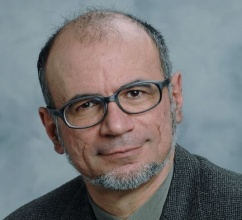
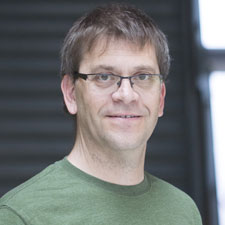
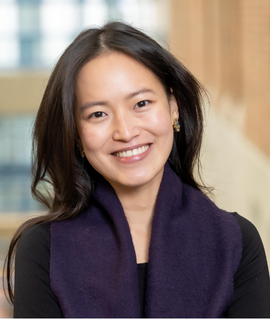
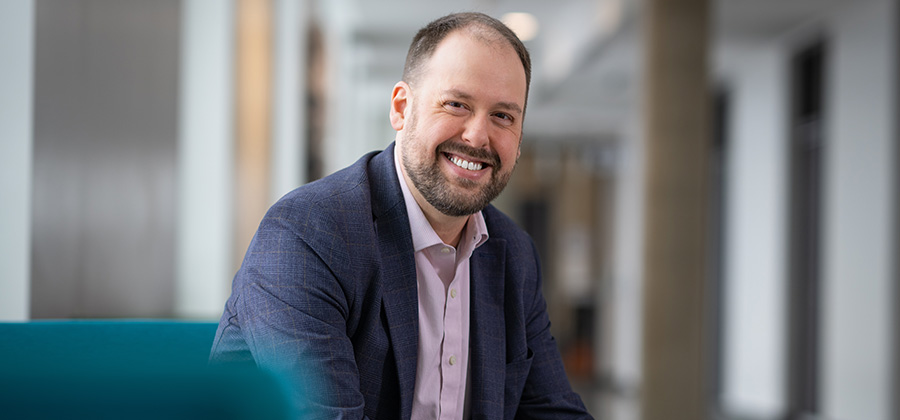
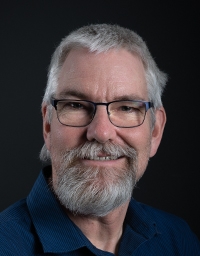
Vadim Bulitko is a Professor in the Faculty of Science at the University of Alberta, affiliated with the Department of Computing Science. He holds a Ph.D. in Computer Science from the University of Illinois at Urbana-Champaign. Research Interests: His work spans heuristic search, program synthesis, and deep learning applications for sound. Recent projects focus on AI-driven puzzle generation, pathfinding in dynamic game environments, and neural network classification. Publications: His 15 most recent articles explore AI advancements in puzzle design, video-game navigation, and bioacoustic classification, emphasizing heuristic optimization and explainable AI techniques.
James Miles, PhD, is an Assistant Professor in the Department of Elementary Education at the University of Alberta's Faculty of Education. His work focuses on history education, historical injustice, and curriculum reform. He teaches courses like EDEL 335 on social studies pedagogy and has been active in curriculum development initiatives addressing social and political pressures in Canadian education. His research explores topics such as reconciliation pedagogy, the use of digital media in classrooms, and decolonizing historical narratives. Dr. Miles holds a PhD and has conducted extensive research on difficult historical memory, including studies on Indigenous residential schools, historical bus tours, and museum pedagogies. His publications address themes like teleological history education, presentism critiques, and the ethical implications of teaching contentious historical topics. Recent works include co-authored books on historical justice and peer-reviewed articles in journals like History Education Research Journal and Memory Studies . His teaching emphasizes practical strategies for elementary educators, focusing on how social studies curricula can engage students with complex historical issues. Courses he teaches combine theoretical frameworks with hands-on planning for diverse classroom environments. Miles has also explored innovative teaching tools like YouTube videos and interdisciplinary approaches influenced by avant-garde movements such as Fluxus.
Patricia Marchand is a faculty member at the University of Sherbrooke's Faculty of Education, specializing in mathematics education and special needs education. She teaches graduate courses in school adaptation and mathematics education, and conducts research on learning difficulties, spatial reasoning, and teaching methodologies for students with special needs. Her work bridges theory and practice in educational settings, with particular focus on developing effective interventions for students experiencing mathematical learning challenges. Education Doctorate in Education (2005) - Université de Montréal Master's in Mathematics (1998) - Université du Québec à Montréal Bachelor's in Teaching Mathematics and Computer Science for Secondary School (1995) - Université du Québec à Montréal Research Interests Dr. Marchand's research focuses on mathematics education for students with learning difficulties, particularly in the areas of spatial reasoning, geometry teaching, and preventive support systems. She investigates how to develop mathematical understanding in primary school students, with special attention to fraction concepts, geometric constructions, and volume understanding. Her work emphasizes the integration of spatial reasoning across mathematics and science education, and she explores collaborative approaches between teachers, orthopedagogues, and mathematics didacticians to support students at risk of academic failure. Research Trends Her recent publications demonstrate a strong focus on spatial reasoning development in elementary mathematics education, with particular attention to geometry concepts. She has developed preventive support systems for students with learning difficulties, examining how to articulate pedagogical and orthopedagogical practices in mathematics. Her work increasingly incorporates interdisciplinary approaches, connecting mathematics with other subjects like science and language arts to create more comprehensive learning experiences for students at risk. The analysis of teaching sequences that promote spatial reasoning has become a central theme in her recent scholarship. Research Funding Dr. Marchand has secured significant research funding as principal investigator and co-researcher on multiple projects: Principal Investigator: "Comment développer le raisonnement spatial en classe de 6e année dans un contexte interdisciplinaire mathématiques et astronomie?" (SSHRC, $88,364, 2021-2026) Principal Investigator: "Transmettre le plaisir d'apprendre à lire et soutenir les élèves à risque de vivre des difficultés scolaires dès la maternelle" (TD Bank and University of Sherbrooke Foundation, $500,000, 2017-2022) Co-researcher: "Le centre RBC d'expertise universitaire en santé mentale destiné aux enfants, adolescents et adolescentes, et aux jeunes adultes" (Royal Bank of Canada, $1,000,000, 2016-2021) Multiple projects with the Quebec Ministry of Education focused on supporting students with learning difficulties in mathematics classrooms Teaching and Supervision Dr. Marchand teaches graduate courses in mathematics education, school adaptation, and special education at the University of Sherbrooke. Her regular courses include "Didactique de la géométrie et de la mesure" (Geometry and Measurement Teaching), "Intervention en mathématiques" (Mathematics Intervention), and "Potentiel mathématique de l'apprenant" (Student's Mathematical Potential). She provides clinical supervision for students in school adaptation programs, with particular attention to mathematics teaching for students with special needs, and has developed specialized training approaches using role-playing as a teaching methodology for prospective mathematics educators.
Mijung Kim is a Professor in the Faculty of Education at the University of Alberta. She holds a PhD from the same institution and has held academic roles at Seoul National University, National Institute of Education (Singapore), and the University of Victoria prior to joining Alberta in 2015. Her research focuses on science education as inquiry, children’s scientific reasoning, dialogical argumentation, socioscientific reasoning for sustainability, and teacher professional vision. Education: PhD in Education, University of Alberta Research Interests: Teaching science as inquiry-based learning Children’s scientific reasoning and collaborative problem-solving Socioscientific reasoning for sustainability education Teacher professional development in STEM education Curriculum analysis using Bloom’s Taxonomy Awards: Springer Best Paper Award (2018) Best Paper Award, International STEM Education Conference (2014) Springer Best Paper Award, Asian Science Education Conference (2008) Grants & Professional Work: SSHRC Insight Grant (2023–present) for reasoning and decision-making skills in socioscientific contexts Co-PI on a University of Alberta grant (2020) for STEM education professional development Extensive grants focused on argumentation, sustainability, and inquiry-based teaching Teaching: Courses include EDEL 330 (Elementary Science Pedagogy), EDEL 567 (Educational Research Methods), and EDES 509 (Science Teaching Strategies)
Evangelos E. Milios is a Professor in the Faculty of Computer Science at Dalhousie University , Halifax, Nova Scotia. He has been a faculty member since 1998 and leads the MALNIS (Machine Learning and Networked Information Spaces) research group. He is affiliated with the Institute of Big Data Analytics and served as Scientific Director of DeepSense , an innovation hub for ocean data analytics. Education: PhD in Electrical Engineering and Computer Science, MIT (1986) SM & EE, MIT (1983) Dipl. Eng. in Electrical Engineering, NTUA, Greece (1980) His research focuses on visual text analytics, text mining, graph mining, social network analysis, and machine learning . He has made significant contributions to modeling and mining of networked information spaces, with applications in data science and AI. The recent publications reflect a strong trend in data mining, robotics, pattern recognition, and semantic analysis , particularly in log analysis, pose estimation, and information retrieval. His work bridges theoretical algorithms with practical applications in robotics and web technologies. Scientific Awards and Honors: Distinguished Research Professor (2017–2022) Killam Chair in Computer Science (2006–2011) Senior Member, IEEE Professional Engineer, Ontario (1998–2024) He has served in key administrative roles including Associate Dean, Research (2008–2017) and Director of the Graduate Program (1999–2002) . He has supervised numerous graduate students and taught a wide range of courses in AI, machine learning, data science, and networking. His research is supported by major grants and collaborations, including NSERC and industry partnerships. Research Labs and Teams: MALNIS – Focuses on machine learning and networked information spaces. DeepSense – Ocean data analytics and AI innovation. Institute of Big Data Analytics – Cross-disciplinary big data research.
George Lamont is an Associate Professor in the Faculty of Arts at the University of Waterloo, specializing in teaching-focused roles. He holds a PhD and MA from the University of Toronto, and a BA and BEd from the University of British Columbia. His work bridges literature, rhetoric, and communication pedagogy across disciplines. PhD: University of Toronto MA: University of Toronto BA: University of British Columbia BEd: University of British Columbia His research spans three key projects: transforming dissertation work into a book on authorship attribution, analyzing Shakespeare's use of etymological sources for emotional shifts, and developing assessment frameworks for communication skill outcomes. Publications focus on engineering education, information literacy, and pedagogical innovations. Recent publications (2019-2022) reveal expertise in: technical writing pedagogy, information-seeking behavior analysis, problem-based learning frameworks, interdisciplinary communication models, and digital learning adaptation. Collaborative works with Kate Mercer, Kari Weaver, and colleagues demonstrate cross-disciplinary applications. President's Excellence in Teaching (2021) Faculty of Arts Teaching Excellence Award (2020) University of Toronto TATP Teaching Excellence Award Outstanding Teaching Assistant Award (University of Toronto English Department) Ontario Graduate Scholarship University of Toronto Fellowship As Director of the Undergraduate Communication Requirement Group, he oversees communication skill development across programs. His teaching experience spans English literature, language studies, and specialized communication training for business and STEM students. Office location HH 156 (University of Waterloo), extension 46875.
Michael Gruninger is a Professor in the Department of Mechanical and Industrial Engineering at the University of Toronto, serving as Associate Chair of Undergraduate Studies. He holds a PhD and MSc in Computer Science from the University of Toronto and a BSc in Computer Science from the University of Alberta. His research focuses on semantic integration, process modeling, and mathematical logic applications in manufacturing and enterprise engineering. He contributed to the ISO 18629 standard for Process Specification Language. Research interests include ontologies, semantic web technologies, knowledge representation, and formal methods. He leads the Semantic Technologies Laboratory, advancing theories in mereotopology, spatiotemporal ontologies, and ontology engineering. Recent work emphasizes automated spatial reasoning in robotics and standards-based ontology development. Publications span ontology validation, mereological foundations, and applied semantic technologies. His work bridges theoretical computer science with practical enterprise systems and smart city applications. No awards are explicitly listed, though his contributions to ISO standards reflect industry impact. Advising and grants: No specific students/grants detailed here. His lab focuses on semantic technologies with applications in manufacturing and urban systems. Collaborations include NIST and the Industrial Ontologies Foundry.
John K. Tsotsos is a Distinguished Research Professor at York University's Lassonde School of Engineering, holding positions in both the Department of Electrical Engineering & Computer Science and the Centre for Vision Research (CVR). His work bridges computer science, cognitive science, and neuroscience with a focus on visual attention and active vision systems. Dr. Tsotsos's research interests center on visual attention mechanisms, active visual search, and visuospatial reasoning. His work explores how humans and machines process visual information, with applications in autonomous driving, robotics, and human-computer interaction. He investigates the computational principles underlying visual attention, comparing biological systems with artificial implementations. His research has significant implications for developing more human-like computer vision systems that can effectively navigate and interpret complex visual environments. Analysis of his recent publications reveals a strong focus on active vision systems where observers dynamically control their viewpoints during visual search tasks. His work spans both theoretical foundations of visual attention and practical applications in autonomous vehicles. A significant portion of his recent research addresses driver attention modeling, gaze prediction, and the challenges of real-world visual processing where traditional computer vision approaches often fail. His work consistently bridges cognitive theory with practical engineering applications. Dr. Tsotsos has made substantial contributions to the field of computational vision through his theoretical work on attentional mechanisms and their implementation in artificial systems. His research has influenced both academic understanding of visual processing and practical applications in autonomous systems and human-machine interfaces. As a faculty member at York University, Dr. Tsotsos contributes to the vibrant research ecosystem of the Centre for Vision Research, where interdisciplinary teams work on cutting-edge problems in visual perception, cognitive modeling, and machine vision. His work exemplifies the integration of cognitive science principles with advanced computational techniques to solve complex visual processing challenges.
Deepthi Kamawar is a Professor in the Department of Psychology at Carleton University, affiliated with the Faculty of Arts and Social Sciences. She holds degrees including a B.Sc. in Cognitive Science (University of Toronto), B.Ed. (York University), M.A. and Ph.D. in Psychology (University of Toronto). Her research focuses on young children’s cognitive development, particularly future-oriented cognition, executive function skills, and theory of mind. She investigates how children develop abilities like saving, inhibition, cognitive flexibility, and understanding others’ mental states. Her lab examines symbolic representation, intentionality in moral evaluations, and developmental progression of cognitive skills. Research interests include children’s understanding of knowledge change over time, symbolic communication, and the role of executive functions in decision-making. Her work bridges developmental psychology and cognitive science, addressing topics like numerical cognition, language specificity in number processing, and task-based assessments of cognitive flexibility. Dr. Kamawar’s studies often involve innovative experimental designs, such as the Multidimensional Card Selection Task and token savings tasks. She has contributed to debates on scalar implicature interpretation in children and the role of working memory in symbolic reasoning. Her research emphasizes applied and theoretical insights into early childhood development.
Lauren Margulieux is an Associate Professor of Learning Technologies at Georgia State University in the Department of Learning Sciences within the College of Education & Human Development. She serves as the founding director of the Snap Inc. Center for Computing in Teacher Education, where she coordinates Georgia State University's teacher preparation programs to integrate computing into pre-service teacher training across all disciplines. Her research focuses on computer science education for computing and programming novices, with particular emphasis on promoting computational literacy for all learners. She investigates how to effectively integrate computing into teacher preparation and how to design instructional materials that support novice learners in programming and computational thinking. Her work spans the learning sciences, educational technology, and STEM education, with applications in K-12 teacher preparation and undergraduate computer science education. Margulieux's recent publications reveal a strong focus on instructional design principles for computing education, particularly subgoal labeling, worked examples, and other cognitive load-reducing strategies. Her research examines how these approaches impact learning across multiple STEM disciplines and how spatial skills relate to success in computing. She has also contributed significantly to measurement in computing education research and exploring how to effectively prepare teachers to integrate computing into their classrooms. NSF CAREER Award recipient Principal Investigator on multiple NSF grants totaling over $1.5 million Author of numerous influential publications in computer science education Active contributor to the learning sciences community through blog and professional development As an NSF panelist and CAREER award recipient, Dr. Margulieux actively mentors other researchers in grant writing and research design. She has developed extensive resources for education researchers, particularly those new to the learning sciences, through her blog and professional development activities. Her work bridges theory and practice, connecting foundational learning sciences principles with practical applications in computer science education.
Dr. Joan Danielle Ongchoco is an Assistant Professor in Cognitive Science and Director of the UBC Perception & Cognition Lab at the University of British Columbia. She holds a PhD from Yale University (2022) and a BA (Honors) from Yale-NUS College (2017). Her research focuses on how perception interacts with broader mental processes, including decision-making, memory, and event segmentation. Before joining UBC, she conducted postdoctoral research at Humboldt Universität zu Berlin under Martin Rolfs. **Education**: PhD in Psychology, Yale University, 2022 BA (Honors) in Philosophy, Politics, and Economics, Yale-NUS College, 2017 **Research Interests**: Exploring the interplay between perception and cognition, with emphasis on memory distortions (e.g., facial aging biases), visual event boundaries and their impact on memory/attention, and the cognitive mechanisms underlying decision-making. Her work integrates experimental psychology, computational modeling, and neuroscientific perspectives. **Key Contributions**: Her lab investigates how perceptual processes shape higher-order cognitive functions. Notable studies include investigations into 'forward/backward aging' effects in facial memory, the role of event segmentation in temporal perception, and the cognitive costs associated with decision-making timelines. **Grants & Labs**: Directs the UBC Perception & Cognition Lab. Research supported by UBC infrastructure and collaborations with institutions like Humboldt Universität.
Dr. Eric Legge is an Associate Professor in the Department of Psychology at MacEwan University since 2016. He holds a PhD and MSc from the University of Alberta and a BA (Honours) from Memorial University of Newfoundland. His research focuses on spatial cognition, navigation, and comparative animal behavior, with secondary interests in companion animal welfare and human-animal interaction. He teaches courses including Cognitive Psychology, Principles of Behaviour, and Comparative Cognition. Education: PhD (Alberta), MSc (Alberta), BA (Memorial University) His primary research investigates spatial memory mechanisms across species, including human navigation strategies, desert ant navigation systems, and the Method of Loci mnemonic technique. He also studies companion animal behavior, training ethics, and the therapeutic benefits of human-animal bonds. Dr. Legge has published extensively on spatial cognition, animal behavior, and mnemonic strategies, with recent work exploring empathy in pet owners and video game impacts on spatial tasks. He actively supervises student research projects in these areas. His publications span topics from pigeon cue integration to ant navigation algorithms, demonstrating cross-species applications of cognitive principles. While no specific awards are listed, his work contributes to foundational understanding of spatial and comparative cognition. His teaching and research emphasize bridging theoretical insights with practical applications in animal welfare and human cognition.
Timothy Sibbald is Professor of Education at Nipissing University's Schulich School of Education, teaching mathematics education in the Bachelor of Education program and supervising graduate students. Research examines mathematics education and higher education through quantitative and qualitative methodologies. Current work explores historical assessment practices, geometric education (tessellations), and academic career progression. Recent publications include analyses of standardized testing evolution and academic sabbatical experiences. Publications demonstrate consistent interest in mathematics curriculum development, teacher education, and research methodologies. Book reviews reflect engagement with educational resources and pedagogical developments in mathematics education. Professional contributions include interdisciplinary course development for preservice teachers and examinations of teacher mobility patterns within Ontario school systems.
Daniel Silver is a Professor of Sociology at the University of Toronto Scarborough, affiliated with the Department of Sociology. His research spans social theory, urban sociology, and cultural policy, with a focus on how cultural scenes shape social life, urban evolution, and political dynamics. He is available for supervising graduate students and maintains offices at UTSC (HL 480) and UTSG (17125-28, 700 University Ave). Education: Ph.D., University of Chicago Research Focus: Silver's work centers on Simmelian theory, pragmatism, and urban informatics. He pioneered the 'scenes' framework examining how cultural amenities shape neighborhood identities and political attitudes. Current projects analyze arts' role in city politics, urban evolution patterns, and cross-national variations in sociological theory pedagogy. His methodology increasingly integrates computational approaches with traditional theoretical analysis. Recent Publication Trends: Analysis of Silver's 2022-2025 publications reveals a sharp turn toward data-intensive urban studies. He combines Google Places data, graph neural networks, and temporal clustering algorithms to quantify cultural signatures across cities. This work bridges Simmel's formal sociology with contemporary data science, examining policy diffusion networks, neighborhood change dynamics, and uncivil discourse in digital public spheres. Scientific Awards: 2013 Theory Prize (American Sociological Association) 2017 Distinguished Scholarly Publication Award in Sociology of Consumers and Consumption (with Kristie O’Neill) 2015 Honorable Mention for Junior Theorist Award (ASA) Advising and Research Leadership: As an active graduate supervisor, Silver leads major collaborative projects including Toronto's Culture Plan outcomes framework and Chicago Music City analysis. His grant-funded work produces actionable policy tools like the Urban Genome Project's cultural signature metrics. He frequently partners with municipal governments and arts organizations on community-based studies such as Community Voices, which documents inner-suburb experiences through participatory research. Laboratories and Collaboratives: Silver co-directs The Scenes Project (scenescapes.weebly.com) and the Urban Genome Project (academic.daniels.utoronto.ca/urbangenome), interdisciplinary hubs combining sociologists, data scientists, and urban planners. These initiatives develop open-source tools like tscluster for temporal urban analysis while maintaining strong community engagement through public workshops and policy briefings.
Derek Rayside is an Associate Professor in the Department of Electrical and Computer Engineering at the University of Waterloo, and serves as Associate Dean for Co-operative Education and Professional Affairs. His research spans autonomous systems, software engineering, formal methods, and construction project management. He holds a faculty position in a top-tier engineering program with affiliations to both academic and administrative roles at the university. Research interests include advancing autonomous vehicle decision-making through reinforcement learning and computer vision techniques, improving software development methodologies via formal verification and collaborative platforms, and enhancing project management practices in complex construction environments. His work integrates interdisciplinary approaches combining control theory, machine learning, and social network analysis. Recent publications focus on autonomous driving challenges (action recognition, intersection navigation), software engineering education (game-based learning), and formal methods for system validation. His contributions bridge theoretical advancements with practical applications in safety-critical systems and industrial workflows. Teaching responsibilities include the ECE351 course on signals and systems. He has led curriculum development efforts and maintains a personal research website at the University of Waterloo's ECE department.