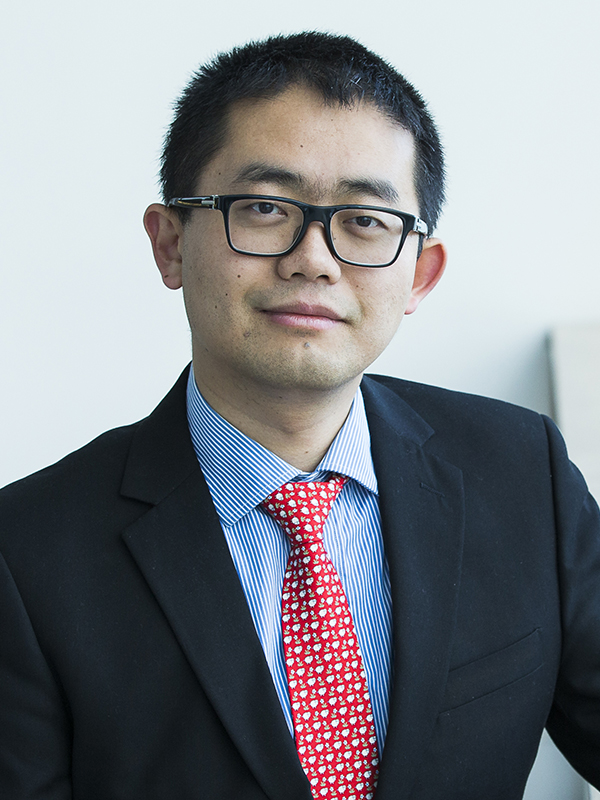
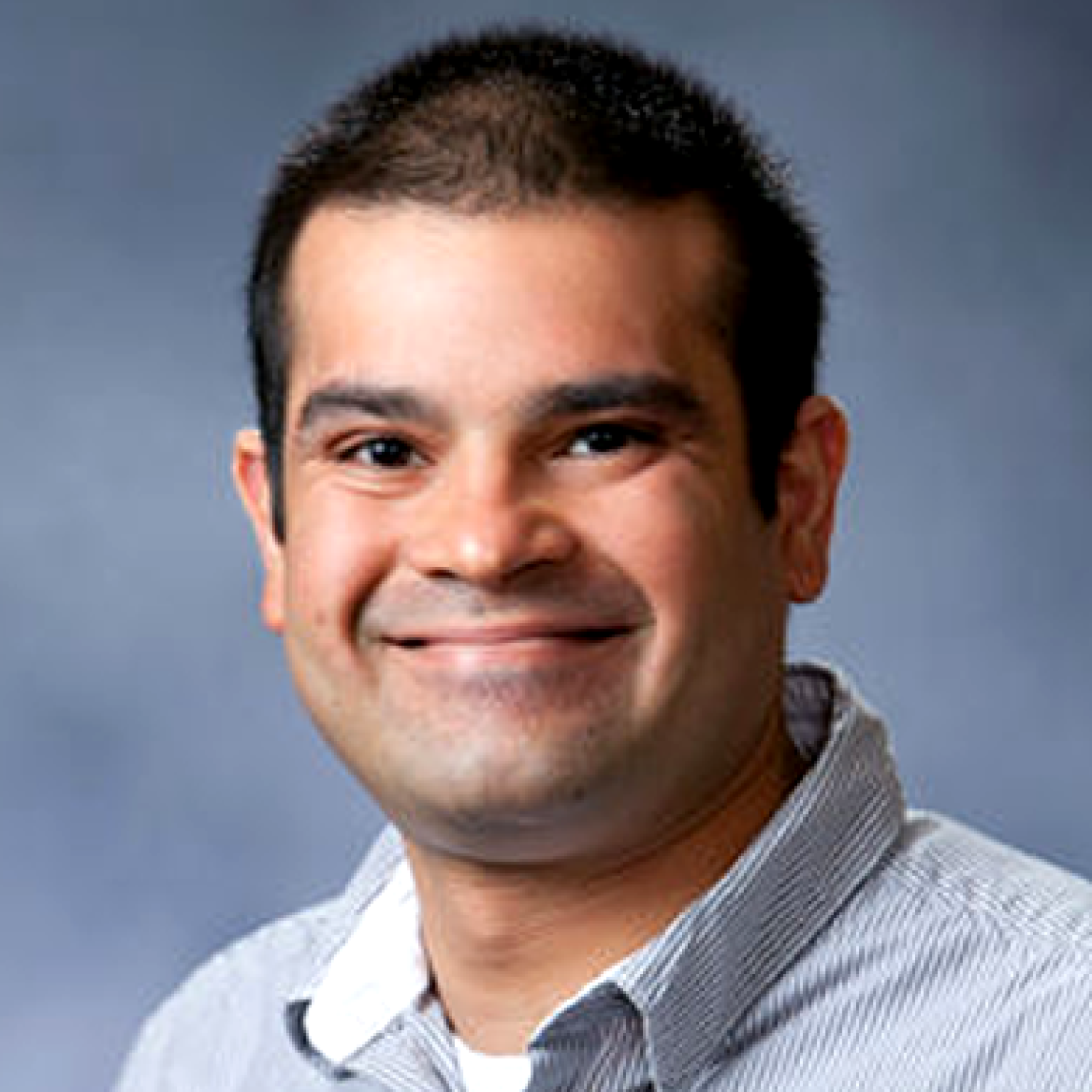
Lili Dai is an Associate Professor in Accounting at the University of New South Wales (UNSW) , serving as Chair of the School Research Committee at the School of Accounting, Auditing & Taxation. She holds a PhD from Nanyang Technological University, an MA from Humboldt University of Berlin, and a BSc from Shanghai Jiao Tong University. Research focuses on capital markets-based accounting, auditing, and financial issues , with publications in top-tier journals like The Accounting Review and Journal of Accounting Research. Current editorial leadership includes Editor of Corporate Governance: An International Review and Deputy Editor of Accounting and Finance. Recognized through awards such as the UNSW Business School Dean’s Research Fellowship (twice) and multiple Best Paper Awards at AFAANZ Conferences. Education innovator behind UNSW’s Accounting Data Analytics Module , integrating programming skills into postgraduate accounting courses. Recent research trends span Fintech, political economy, and corporate governance , with grants from institutions like the National Natural Science Foundation of China. Her work bridges academic rigor with practical applications in auditing, financial reporting, and sustainability .
Oliver Mortensen is a PhD Fellow (Research Fellow) at the Machine Learning Section , Department of Computer Science (DIKU) , University of Copenhagen , Denmark. He is affiliated with the university’s Faculty of Science and participates in the cross-faculty SCIENCE AI Centre , a strategic initiative to advance artificial intelligence research and applications. Research Interests Mortensen’s research lies at the intersection of machine learning , quantum computing , and neuro-symbolic AI . His work spans both theoretical foundations—such as entropic risk optimization in reinforcement learning and Riemannian generative models—and highly applied domains including medical AI, recommender-system fairness, and brain-computer interfaces. A recurring theme is trustworthy AI , where he investigates explainability, fairness, and sustainability across large language models and clinical decision-support systems. Scientific Contributions & Trends Across more than 60 peer-reviewed contributions (2024-2025), Mortensen demonstrates a clear trajectory toward hybrid quantum-classical algorithms , energy-efficient AI , and human-centric evaluation . His publications integrate rigorous theoretical guarantees with empirical validation on real-world data from electronic health records, satellite imagery, and conversational corpora. Collaborations & Resources He carries out his doctoral research under the supervision of Professor Yevgeny Seldin within DIKU’s vibrant Machine Learning Section. The group offers access to a dedicated high-performance compute cluster, the SCIENCE AI Centre ’s GPU/TPU pools, and interdisciplinary ties to life-science, geoscience, and humanities researchers across the university.
Rasmus Mikelsons serves as a Lecturer at the Department of Computer Science , University of Copenhagen . His email contact is rami@di.ku.dk . He is affiliated with the Machine Learning section and participates in the SCIENCE AI Centre, focusing on both theoretical and applied machine learning research. Research Interests Machine Learning Natural Language Processing Medical Data Analysis Remote Sensing Sustainability Computational Biology The Machine Learning section conducts research ranging from theoretical foundations to applications in domains such as information retrieval, medical imaging, and biological data modeling. Recent publications highlight trends in quantum machine learning, sustainable AI, and multimodal applications. Labs and Teams He is part of the Machine Learning section at the Department of Computer Science, which has access to a dedicated compute cluster and participates in initiatives like TreeSense, a center for remote sensing and deep learning of global tree resources.
Krista Lagus is a Professor at the Faculty of Social Sciences of the University of Helsinki, where she leads the Centre for Social Data Science (CSDS). Her work bridges artificial intelligence, natural language processing, and social sciences to analyze digital communication, societal trends, and cognitive modeling. PhD in Computer and Information Sciences, Aalto University (2000) Co-founder and Director of CSDS (2019) Academy Research Fellow at Finnish Academy of Sciences (2006-2012) Key projects: WEBSOM, Citizen Mindscapes, Morfessor Her research spans digital social science , machine learning , and cognitive modeling , with recent focus on sentiment analysis, survey data wrangling, and emotional dynamics in social media. Publications appear in journals like IEEE Transactions on Neural Networks , Cognitive Science , and Human Brain Mapping . She has received awards such as the Best paper award at DHN 2020 and serves as a reviewer for grants and academic appointments, including the ERC Cog SH3 panel (2021). Lagus supervises doctoral students and teaches in the Contemporary Societies Master's Programme .
Dr. Carmela Bosangit is a Senior Lecturer in Marketing at Cardiff Business School, Cardiff University. She holds a PhD in Business and Management from the University of Nottingham and an MSc in Leisure, Tourism and Environment from Wageningen University. Her academic career includes positions as Lecturer in Management Systems at Swansea University and Researcher at Coventry University before joining Cardiff Business School. She currently serves as Chair of the School Research Ethics Committee and is an Editorial Board Member for both Annals of Tourism Research and Annals of Tourism Research Empirical Insights. PhD in Business and Management, University of Nottingham MSc in Leisure, Tourism and Environment, Wageningen University, Netherlands Diploma in Urban and Regional Planning, University of the Philippines BSc in Tourism, University of the Philippines (Laude) Dr. Bosangit's research centers on sustainable consumption and ethical business practices within tourism and marketing contexts. She investigates how consumers engage with access-based consumption models, the barriers to ethical consumption in different cultural contexts, and how tourism businesses can implement responsible practices that benefit both communities and the environment. Her work often applies practice theory to understand sustainable consumer behavior and examines the intersection between digital media, consumer narratives, and tourism experiences. She has conducted significant research on circular economy principles within tourism and the implementation of sustainable development goals in business education. Her recent publications demonstrate a clear trajectory toward examining sustainable tourism systems, circular economy principles, and ethical consumption patterns across diverse cultural contexts. The research shows increasing focus on practical applications of sustainability principles in tourism marketing, with particular attention to consumer psychology, cross-cultural differences, and the role of digital platforms in shaping sustainable consumption behaviors. Her work bridges academic theory with practical business applications, often focusing on how businesses can implement sustainable practices while maintaining profitability. University of Nottingham Graduate School Travel Prize (July 2010) Nottingham University Business School Scholarship (September 2007 - September 2010) NUFFIC Fellowship - Academic Fellowship Program (September 2003 - March 2005) Dr. Bosangit has successfully supervised multiple PhD students including Abdulrahman Almuajel and Yinan Li, with research topics spanning tourism, sustainable consumption, responsible businesses, sharing economy, and social media. Her research has been supported by significant funding including UKRI's £200,000 grant on Maya Food Systems and tourism development, multiple CARBS Marketing and Strategy SIF funding awards, ESRC Impact Acceleration grants, and British Academy/Leverhulme funding. She has co-organized public engagement events through the ESRC Festival of Social Science on topics like sustainable consumption in a post-COVID world.
Nazan Colmekcioglu is a Senior Lecturer in Marketing and Strategy at Cardiff Business School , with prior roles at Nottingham Trent University and the University of Hull. She holds a PhD in Marketing from the University of Hull (2017) and is a Fellow of the Higher Education Academy (2019). Nazan serves as an external examiner at Nottingham Trent University and a visiting professor at the University of International Business and Economics in Beijing. Education: PhD in Marketing, University of Hull (2017) MA in Marketing, University of Sunderland (2013) BSc (Hons) in International Trade, Baskent University (2012) Research Interests: Nazan explores how ethical ideology, culture, religion, and emotions shape consumer behavior in hospitality and tourism. Her work spans online and offline environments , focusing on anti-consumption attitudes , sustainability , and negative online reviews . She uses mixed methodologies, including agent-based modeling and cross-cultural analysis. Publications & Contributions: She has published in top journals such as Journal of Business Research , Psychology & Marketing , and International Journal of Contemporary Hospitality Management . Her recent work includes co-authored books on consumer behavior in hospitality and emerging service sector trends . Scientific Awards: Best Conference Paper Award, Academy of Marketing Conference, Hull (2017) Teaching & Leadership: Nazan directs the MSc Business Strategy and Entrepreneurship program and teaches International Marketing and Dissertation Project modules. She is an active reviewer and Associate Editor for the International Journal of Contemporary Hospitality Management .
Yolanda Iglesias is an Associate Professor at the University of Toronto, jointly appointed in the Department of Spanish and Portuguese and the Centre for Medieval Studies. She holds a PhD from Boston University (2007) and an MA from the University of Western Ontario. Her research focuses on medieval Iberian literature, legal texts, and social history, particularly exploring themes like prostitution, matrimony, violence, and law in works such as La Celestina and Alfonso X’s Siete Partidas and Cantigas de Santa María. She has authored books and numerous articles on medieval legal discourses, literary adaptations, and historical-critical analysis of medieval texts. Notably, her work has received the John K Walsh Award (2020). She has held administrative roles including Associate Chair of Undergraduate Studies (2018–2021) and President of the Canadian Association of Hispanists (2020). Her educational background includes a B.A. in Spanish Literature and further postgraduate studies. Her research bridges legal history with literary analysis, examining how medieval texts reflect socio-legal realities and monarchic strategies. She regularly presents at international conferences and has reviewed scholarly works in her field. Her publications often emphasize interdisciplinary approaches, combining legal, historical, and literary methodologies to uncover new insights into medieval Iberian culture and governance.
Erik Golen is a Senior Lecturer in the School of Information at the Golisano College of Computing and Information Sciences, Rochester Institute of Technology. He holds both a BS and Ph.D. from RIT. His research focuses on data science education, information systems curriculum design, and interdisciplinary applications of data analytics. Current teaching responsibilities include courses such as Foundations of Data Science and Analytics, Principles of Data Science, and Visual Analytics. Dr. Golen's scholarly work emphasizes educational technology innovations, including web-based learning platforms for non-technical audiences and curriculum modernization to address emerging industry needs. His publications span data science pedagogy, social media analysis, disaster response informatics, and networking architecture. He actively contributes to conferences like DataEd, IEEE Frontiers in Education, and SIGITE. His research trends show strong focus on bridging technical and non-technical domains through data-driven solutions, with recent emphasis on scalable educational frameworks and real-world data application scenarios. Teaching and research synergize in exploring how advanced analytics can be effectively integrated into diverse academic and professional contexts. No scientific awards are explicitly listed in the provided materials. Advising records and lab affiliations are not detailed here. Office location is GOL-2671.
Sidney D'Mello is a Professor at the University of Colorado Boulder's Institute of Cognitive Science and Department of Computer Science. Previously, he held roles as an Associate Professor at the University of Notre Dame and a visiting scholar at the University of Pennsylvania. His research focuses on the interplay between cognition and emotion in complex tasks, developing AI systems to enhance learning and collaboration. He directs the NSF-funded Institute for Student-Agent Teaming (iSAT) and the Hybrid Human-Agent Tutoring (HAT) Platform project. Education: PhD in Computer Science (2009), University of Memphis M.S. in Mathematical Sciences (2004), University of Memphis B.S. in Electrical Engineering (2002), Christian Brothers University Research Interests: Multimodal interaction, affective computing, AI in education, collaborative learning, and human-agent teaming. His work integrates eye tracking, speech analysis, and machine learning to design intelligent systems. Recent Achievements: Recipient of the 2018 Young Investigator Award (Society for Text & Discourse) Lead PI on multiple NSF grants, including the $20M iSAT Institute Editorial roles at Discourse Processes , International Journal of Artificial Intelligence in Education , and others Grants & Projects: Includes NSF AI Institute funding, NIH studies on chronic pain, and partnerships with Saga Education for scalable math tutoring. His lab (iSAT) collaborates with ~70 researchers and students nationwide. Labs/Teams: Directs the iSAT Institute, focuses on AI-enhanced learning environments and human-agent collaboration. Active in developing tools like CPSCoach for collaborative problem-solving feedback.
Dr. Chris Roast is a资深 researcher and knowledge transfer practitioner affiliated with Sheffield Hallam University. He leads the Interaction Design Team and oversees the European regional development project 'Innovation Futures,' focusing on innovation for SMEs. He co-founded the university's Games Studio 'Steel Minors.' His expertise spans HCI, augmented reality, and human factors, with over twenty years of involvement in the HCI community. He has contributed to HCI conferences, editorial roles (e.g., Interaction with Computers ), and IFIP working groups on user interface engineering. Research focuses include the psychology of programming, visualization techniques, and interaction design methodologies. Notable projects involve digital skill assessment, heritage archive object detection, and healthcare pathway digitalization. His work emphasizes practical applications of technology in education, healthcare, and SME innovation. He has secured funding from UK bodies like the Technology Strategy Board and IP Office. His grants support interdisciplinary projects addressing regional development and digital transformation. Active in academic service, he has organized conferences and contributed to editorial boards, reflecting his commitment to advancing HCI practices and standards. Labs/Teams: Interaction Design Team (leading), Steel Minors (co-founder), and involvement in C3RI (Centre for Computational Research).
Guillaume Cleuziou is a Full Professor at the Université d'Orléans, France, and a member of the Constraints and Machine Learning (CA) team at the LIFO laboratory (Laboratoire d'Informatique Fondamentale d'Orléans). His research focuses on machine learning, data mining, and text mining, particularly in unsupervised and semi-supervised learning methodologies for knowledge extraction from texts. He holds a master's degree in Mathematics (2000) and a MSC in Computer Science (2001), both from Université d'Orléans, where he also completed his PhD in Computer Science in 2004. Education: PhD in Computer Science, Université d'Orléans, 2004 MSC (DEA) in Computer Science, Université d'Orléans, 2001 Master's Degree in Mathematics, Université d'Orléans, 2000 Research Interests: His work emphasizes developing algorithms for text mining, including unsupervised learning techniques, semantic analysis, and the application of pretopological spaces for lexical taxonomy construction. He explores multimodal data analysis, crisis tweet categorization, and embeddings for programming education. His contributions span theoretical advancements and practical applications in data clustering, community detection, and educational technologies. Labs/Teams: He is affiliated with the LIFO laboratory and leads research within the CA team, collaborating on interdisciplinary projects involving natural language processing, machine learning, and computational linguistics. His work bridges theoretical computer science with real-world applications in disaster management, educational tools, and semantic web technologies.
Prof. Aoju Chen is a Professor of English Linguistics: Language Development at Utrecht University's Faculty of Humanities, Department of Languages, Literature and Communication. She holds a VICI Grant (2021-2026) investigating prosodic development in early childhood and leads the NWO-funded VIDI project (2011-2016) on prosodic focus marking in children. Her research focuses on prosody's role in first and second language acquisition, with interdisciplinary projects in the Dynamics of Youth strategic theme exploring prosody's link to children's sense of belonging. Her expertise spans Information Structure, Language Comprehension, and Phonology, with a strong emphasis on cross-linguistic studies. Key projects include prenatal prosody acquisition and robot-assisted language learning. She has published extensively on prosodic focus marking, intonation, and bilingualism, with over 50 peer-reviewed articles since 2004. Awards include prestigious NWO grants and contributions to Oxford Handbook of Language Prosody (2020). Her research integrates experimental methods with computational prosody analysis, addressing both theoretical and applied questions in developmental linguistics. She leads the English Linguistics: Language Development chair and collaborates with robotics teams to apply prosody insights in educational technology. Her work bridges phonetics, psychology, and education, emphasizing real-world applications for language learning and child development.
Ellis van den Hende is an Assistant Professor of Innovation Acceptance and Consumer Research at the Faculty of Industrial Design Engineering, TU Delft. Previously, she held an Assistant Professor position at the Amsterdam Business School. She earned both her MSc (cum laude) and PhD (cum laude) in Industrial Design Engineering. Her research focuses on consumer adoption of innovations, sustainable product-service systems, narrative transportation, and cross-cultural consumer behavior. Education: PhD (2010): 'Really New Stories: The Effect of Early Concept Narratives on Consumer Understanding and Attitudes' MSc (cum laude): Industrial Design Engineering Research Interests: Ellis explores how narratives and storytelling influence consumer perception of radical innovations, barriers to eco-innovation adoption, and the role of digitalization in product-service systems. Her work bridges design, marketing, and consumer psychology to address sustainability challenges and improve innovation strategies. Key Contributions: Her research has been published in top journals like Journal of Consumer Research , Psychological Science , and Journal of Product Innovation Management . She has also collaborated with industry on projects exploring sustainable business models and young venture collaborations. Teaching: Ellis teaches courses on research methods, strategic design, and innovation management at undergraduate and graduate levels. She supervises master’s and PhD theses related to innovation acceptance and sustainable design. Labs/Teams: Affiliated with TU Delft's Design for Sustainability group and the Responsible Marketing research cluster.
Rey Chow is the Andrew W. Mellon Distinguished Professor in the Humanities and Professor of Literature at Duke University, affiliated with Trinity College of Arts & Sciences. She holds a Ph.D. from Stanford University (1986), an M.A. from Stanford (1982), and a B.A. from the University of Hong Kong (1979). Her research focuses on cultural theory, film studies, postcolonialism, and literary criticism, with a particular emphasis on East Asia, Europe, and North America. Chow’s work interrogates intersections of modernity, postcoloniality, ethnicity, and sexuality through interdisciplinary analyses. Notable publications include Entanglements (2012), Sentimental Fabulations (2007), and The Protestant Ethnic (2002). She has taught courses on Hitchcock, Chinese cinema, and comparative theory. Her awards include membership in the American Academy of Arts & Sciences (2016), Guggenheim Fellowship (1992), and Radcliffe Institute Fellowship (2005). She has held leadership roles, including Director of Duke’s Program in Literature (2014–2020) and interim leadership in Gender, Sexuality & Feminist Studies. Key Themes: Cultural critique, media studies, Foucault, poststructuralism Recent Work: Focus on liberal democracy, sound studies, and global cultural politics
Ravi Shekhar is a Lecturer (Teaching & Research) at the University of Essex’s School of Computer Science and Electronic Engineering (CSEE). Previously, he was a Post-Doctoral Researcher at Queen Mary University of London (2019–2023), working on projects like EMBEDDIA and SoDeStream. He holds a Ph.D. from the University of Trento (2015–2019), focusing on language and vision models, and an M.S. from IIIT Hyderabad. His research spans Conversational AI, Cross-Lingual NLP, and Social Media Analysis, with a focus on ethical AI and low-resource language challenges. Education Ph.D., Language, Interaction and Computation Laboratory, University of Trento (2015–2019) M.S. (Research), Computer Science, IIIT Hyderabad (2010–2013) B.Sc. (Hons) Computer Science, Delhi University (2001–2005) Research Interests : Dr. Shekhar’s work addresses challenges in NLP and multi-modal systems, including abusive language detection, cross-lingual models, and conversational AI. He emphasizes practical applications in social media moderation and ethical AI, with contributions to datasets like CoRAL and LEDA. Key Contributions : His 2024 work on ‘Power and Vulnerability in Organisational Communication’ explores language dynamics in hierarchies, while ‘Denoising Labeled Data for Comment Moderation’ advances active learning techniques. He leads grants from Innovate UK and the EU, focusing on dialogue systems for safety-critical applications. Awards Outstanding Reviewer (EMNLP 2019) Graduate Research Assistantship (University of Trento) Institute Fellowship (IIIT Hyderabad) Advising & Grants : Supervised 8 graduate students (Master’s/PhD) and secured grants totaling £1.2M, including Innovate UK projects on commodities trading AI and harm mitigation in data systems. Active in mentoring underrepresented groups and promoting collaborative research networks. Labs & Teams : Leads the NLP research group at Essex, collaborating with institutions like UvA Amsterdam and Queen Mary. Engages in open-source projects and dataset development, emphasizing reproducibility and code sharing.