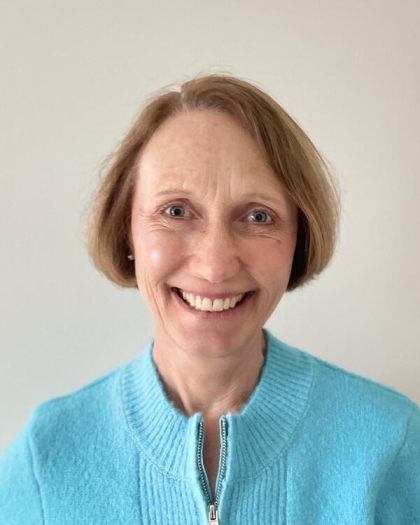
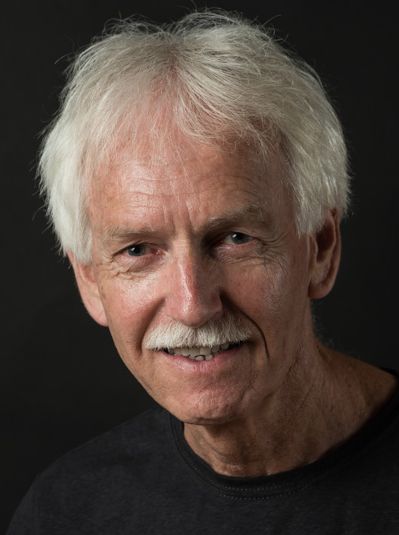
Thomas Michael Sattich is an Associate Professor at the University of Stavanger , affiliated with the Faculty of Social Sciences and Department of Media and Social Studies . His research focuses on geopolitical implications of sustainability transitions, particularly energy policy interdependence and EU-China relations. PhD in Political Science and Economics Expertise in qualitative methods, mixed methods (cluster analysis), and data visualization Lead researcher on EU-funded digital climate negotiation simulation projects His recent publications examine renewable energy geopolitics, industrial policy competition, and sustainability education frameworks. Methodologically, he specializes in Qualitative Comparative Analysis (QCA) and network analysis, contributing to debates on energy security and regional cooperation.
Jørgen Bakke is an Associate Professor in History of Art at the Department of Linguistic, Literary and Aesthetic Studies, University of Bergen. His academic work spans classical archaeology, Byzantine studies, and visual culture with a particular focus on ancient Greek art, landscape archaeology, and the cultural history of the Mediterranean region. Bakke has been actively involved in archaeological research in Greece, particularly in the Tegea region of Arcadia. His research interests encompass a broad range of topics in art history and classical studies. Bakke specializes in visual culture of ancient Greece, Byzantine garden traditions, landscape archaeology, and the intersection of art with memory and knowledge representation. His work often bridges disciplines, connecting classical literature with visual analysis and exploring how ancient visual culture functioned within historical and religious contexts. Bakke's research demonstrates particular expertise in the interpretation of ancient texts related to art (ekphrasis), the visual poetics of ancient Greek culture, and the reception of classical themes in later periods. Bakke's scholarly output reveals a consistent focus on Mediterranean cultural landscapes, particularly examining the Tegea region through multiple historical periods from classical antiquity through the Byzantine era and into the Ottoman period. His work shows a progression from early studies on ancient Greek visual culture toward more specialized research on Byzantine visual traditions and garden culture. A notable thread throughout his publications is the examination of how visual culture functions within religious and devotional contexts across different historical periods. His recent work increasingly engages with digital humanities approaches to art historical analysis. Bakke is actively involved in multiple research groups at the University of Bergen, including the Images of Knowledge Research Group, the Antiquity and the Classical Tradition Research Group, and the Literature & Religion Research Group. These affiliations reflect the interdisciplinary nature of his work, which bridges art history, classical studies, religious studies, and literary analysis. His research demonstrates how visual culture serves as a critical lens for understanding historical, religious, and philosophical developments across different eras.
Scott Rettberg is a Professor of Digital Culture at the University of Bergen's Department of Linguistic, Literary and Aesthetic Studies. He leads the Center for Digital Narrative and has directed major projects like ELMCIP, funded by the Ford and Rockefeller Foundations. Contact: scott.rettberg@uib.no. Research Focus: Electronic literature, AI-generated narratives, digital humanities infrastructure. Recent Work: Explores AI writing practices, pandemic-themed digital art, and cyborg authorship models. His publications analyze intersections between generative algorithms and literary form, with a strong emphasis on digital ethics and pedagogy. Awards include the Robert Coover Award (2016) and N. Katherine Hayles Award (2019). Key Contributions: Co-founder, Electronic Literature Organization Director, ELMCIP Electronic Literature Knowledge Base Author, Electronic Literature (Polity, 2018)
Jenny Edkins is a Professor of Politics at the University of Manchester, specializing in critical international relations, postcolonial politics, and the intersection of performance and politics. She holds a physics degree from the University of Oxford, a social sciences degree from the Open University, and a PhD from Aberystwyth University (1997), supported by a Leverhulme Special Research Fellowship. Her research explores trauma, humanitarian aid, and political uncertainty through interdisciplinary lenses. Notable works include Change and the Politics of Certainty (2019) and After Grenfell (2019). She co-founded the Performance and Politics international research centre and leads initiatives like the Gregynog Ideas Lab. Edkins’ collaborative projects bridge academia and activism, addressing famine policy, missing persons, and urban disaster responses. Her creative works include poetry and narrative politics, exemplified by her poem As it turned out (2019). Leverhulme Fellowship (1997) Her advisory roles include contributions to UK government and NGO policies on humanitarian crises. She has authored over twelve books, including foundational texts in poststructuralist IR and narrative politics.
Erlend Lavik is Professor at the Department of Information Science and Media Studies, University of Bergen, Norway. Specialising in television studies, film history, and digital criticism, he leads research on cinematic television, narrative complexity, and the scholarly video essay. He is a key figure in the study of HBO’s The Wire , which he frames as emblematic of the medium’s “third golden age.” Education 2008 – PhD, Changing Narratives. Five Essays on Hollywood History , University of Bergen 2001 – MA (hovedoppgave), Kjærlighet i seriemonogamiets tidsalder. Romantiske komedier i Hollywood , University of Bergen Research Interests Lavik’s work interrogates the intersection of aesthetics, narrative theory, and media policy. Core themes include: Serial television and long-form storytelling Film and television authorship (showrunner model, copyright aesthetics) Digital criticism and the video essay as scholarly genre Hollywood historiography from classical to post-classical cinema Documentary ethics and truth claims in factual media Publication Trends Across more than 60 publications, Lavik moves fluidly between peer-reviewed journals, academic monographs, trade-press essays, and experimental video essays. Recurrent case studies include The Wire , The Sopranos , Succession , and blockbuster cinema, examined through lenses of narrative complexity, intertextuality, and cultural memory. Selected Public Engagement & Service Chairman of the jury, Best Norwegian Documentary, Bergen International Film Festival 2012 Keynote speaker, Nordic Media Conference, Akureiri 2011; NTNU seminar on video essays 2012 Public lectures at NRK Drama, University of Tromsø, Bergen Public Library, and numerous film clubs Labs, Teams, Collaborations Lavik is affiliated with the research group Film, Television, and Visual Culture at the University of Bergen, where he collaborates on projects concerning production studies, visual aesthetics, and digital distribution. While specific grant numbers are not listed, his sustained output and conference presence indicate ongoing funded research within Norwegian and European media-studies networks.
Erik Tonning serves as Professor of English within the Faculty of Teacher Education at NLA University College, Bergen. His academic profile bridges teacher education, English literature, and theological studies, with extensive expertise spanning Biblical scholarship, religious education, and modernist literary analysis. The institution's Norwegian context informs his cross-disciplinary approach to pedagogy and cultural studies. Tonning's research centers on the intersection of modernism and Christianity, particularly through the lens of Samuel Beckett's works. His scholarship examines theological concepts within modernist literature—including nominalism, hidden divinity, and apocalyptic themes—while engaging deeply with archival methodologies. He investigates how Christian frameworks influence modernist aesthetics, tragedy, and historical consciousness across transatlantic contexts. Analysis of his 15 most recent publications (2014-2024) reveals consistent thematic threads: the theological dimensions of modernist writers (Ezra Pound, T.S. Eliot, David Jones), the material history of modernist archives, and the mediation of modernism through radio and mass communication. His work demonstrates increasing focus on archival theory and the re-evaluation of modernist correspondences since 2021. No scientific awards are documented in the source materials. Information regarding student supervision, research grants, laboratory facilities, or collaborative teams remains unspecified in the provided texts.
Xénia Farkas serves as a Research Fellow in the Department for Political Behavior at Eötvös Loránd University's Faculty of Social Sciences, with primary affiliation to the Centre for Social Sciences (a research hub of the Hungarian Academy of Sciences). Her scholarly focus centers on: Visual political communication dynamics Social media's role in political discourse Populist rhetoric mechanisms Disinformation dissemination patterns Dr. Farkas actively contributes to major research initiatives including REPROSOC, MILAB, and MORES, examining how digital platforms reshape political behavior and public opinion formation in contemporary democracies. Contact: farkas.xenia@tk.elte.hu | Phone: +36 1 224 6700 / 5230 | Office: Building T, Room 2.28
Sigrid Johanna Håheim Ørevik is an Associate Professor at the Department of Foreign Languages , University of Bergen. Her work focuses on multimodal text analysis in English education, genre theory, and assessment frameworks. Position: Associate Professor Email: sigrid.orevik@uib.no Research Groups: POTENT – Post-Truth English Teaching Research interests include: Multimodal pedagogies Genre patterns in EAL materials Assessment of student multimodal texts Digital learning resources Vocational English teaching Recent publications (2021–2025) explore: Multimodal design principles Agency in semiotic work Curriculum coherence challenges Remediation of digital resources Long-term genre stability in exams She contributes to the POTENT research group and collaborates internationally on multimodal English learning projects.
Anne Birgitta Nilsen is a full Professor at Oslo Metropolitan University's Faculty of Teacher Education and International Studies, Department of International Studies and Interpreting Education. Her work bridges discourse analysis , interpreting studies , and extremism research , focusing on hate speech , multimodal communication , and public sector translation . She leads interdisciplinary research projects including "Touching and being touched: Communication and interaction in physiotherapy practice" and has participated in major initiatives like the DARE (Dialogue on Radicalization and Equality) project. Her research interests span: Discourse Analysis (power, hate rhetoric, intercultural communication) Translation Studies (public sector interpreting, children's communication, text-to-speech interpretation) Extremism Research (right-wing extremism, Islamist extremism, social media radicalization) Language Technology (big data analysis, multimodal discourse) Recent publications examine: Combating hate speech through critical linguistic awareness Comparative analysis of far-right and Islamist extremism on Twitter Communication dynamics in physiotherapy practices Challenges in interpreter-mediated healthcare for children Visual rhetoric in Islamic State supporters' social media She contributes to both academic and public discourse, addressing topics from gestalt therapy communication to classroom language use . Her work emphasizes practical applications of linguistics in social justice and professional contexts.
Eir-Anne Edgar serves as Associate Professor of Literature in English within the Department of Teacher Education at the Norwegian University of Science and Technology (NTNU), Faculty of Education. She holds leadership positions as 2022-2026 Vice President of the American Studies Association in Norway (ASANOR) and founder of NTNU's North American Studies research group. Her institutional affiliations extend to the International Research Society for Children’s Literature, ILU's Forum for Equity/Diversity/Inclusion, and editorial roles including Currents at the University of Michigan. Her educational background includes a PhD in English with focus on Critical Theory and 20th Century American Literature from the University of Kentucky (2016), preceded by faculty positions teaching grades 9-12 at Interlochen Arts Academy. Key research interests span: Gender, sexuality, and race representation in 20th/21st century American literature and film Feminist critical dystopian fiction (exemplified by her monograph Women in the Wastelands ) Global citizenship education through literature ( Developing Global Citizens in the Classroom project) Pedagogical approaches to empathy development and ethical skill-building Reproductive justice frameworks in dystopian narratives Her publication trends reveal sustained interdisciplinary engagement across American Studies, Gender Studies, and Pedagogy. Recent works increasingly integrate UNESCO's global citizenship framework with literary analysis while maintaining core commitments to feminist and queer theoretical lenses. The 2020-2025 output demonstrates strategic expansion into children's literature, graphic novels, and electoral politics while deepening dystopian fiction analyses. Notable scientific awards include: NeMLA Summer Fellowship (2024) Robert Mikkelsen Research Grant (ASANOR) Emerging Diversity Scholar designation (University of Michigan, 2016) Women’s Club Fellowship Award (University of Kentucky, 2013-2014) Edgar actively mentors student research collaborations and has secured ILU funding for her global citizenship education project. Her sabbatical year (2023-24) served as Research Associate at the Five College Consortium Women's Studies Research Center. She participates in grant-funded initiatives including the British Library/University of Edinburgh-sponsored US Politics and Gender research group and ILU's Equity/Diversity/Inclusion Forum. She leads the NTNU North American Studies research group and contributes to the International Research Society for Children’s Literature working group on Climate Change and Climate Literacy. Her collaborative projects frequently bridge Norwegian educational contexts with global literary frameworks, particularly through UNESCO-aligned pedagogical approaches.
Ljiljana Saric is a Professor of South Slavic linguistics at the Department of Literature, Area Studies, and European Languages (ILOS) at the University of Oslo. Her academic work bridges linguistic theory with practical applications in understanding cultural and political discourse in the Balkan region, with particular expertise in cognitive linguistics, semantics, and pragmatics. She maintains an active research profile with numerous publications and leads significant research initiatives focused on South Slavic languages and discourse. Professor Saric's research interests span cognitive linguistics, semantics, pragmatics, discourse analysis, and multimodality, with a specific focus on South Slavic languages. Her work examines verbal prefixes, metaphors, metonymies, and symbols in political discourse, multimodal presentation of migration in South Slavic media, and impoliteness in online communication. She investigates how language shapes and reflects cultural identity, particularly in the context of Central Europe and the Balkans. Her research demonstrates how linguistic structures reveal deeper cognitive patterns and social dynamics, especially regarding emotion representation, national identity construction, and discursive othering processes. Analysis of her recent publications reveals a consistent focus on metaphorical conceptualization of emotions (particularly hope and despair in Croatian), impoliteness strategies in online communication, and visual representation of migration in Balkan media. Her work demonstrates sophisticated integration of cognitive linguistic theory with discourse analysis, often employing corpus-based methodologies. A strong theme across her research is the examination of how language constructs national and cultural identities, particularly in post-conflict societies of the former Yugoslavia. Her publications frequently employ multimodal analysis, recognizing the interplay between verbal and visual communication in contemporary media environments. Professor Saric is actively involved in several significant research initiatives, including leading the project 'Spatial Constructions in South Slavic: Semantics of Prefixes and Cognate Prepositions,' which brings together international scholars studying conceptualization of space in Slavic languages. She participates in multiple research groups including Area Studies, Figurative Communication, Migration and borders identity in discourses, Multilingualism and Multiculturalism in Central Europe and the Balkans, and Pragmatics: Theory & Experiments. Her editorial work extends across numerous international journals including Languages in Contrast, Linguistics Applied, Oslo Studies in Language, and Croatian Studies Review. Her academic contributions include co-editing the volume 'Metaphor, Nation and Discourse' (John Benjamins, 2019) and authoring 'Slike jezika: Temeljne kognitivnolingvisticke teme / Key Topics in Cognitive Linguistics' (Naklada Jesenski i Turk, 2019). Her publications consistently demonstrate rigorous methodology and theoretical sophistication, making significant contributions to understanding how language functions in political discourse, identity formation, and emotional representation within South Slavic contexts.
Elin Strand Larsen serves as an Associate Professor in the Department of Information Technology and Communication at Østfold University College, where she is Deputy Head of the Area Studies Research Group (AreaS) and contributes to the Digital Communication (DIGICOM) research group. Based in Halden, she teaches core courses in the Bachelor in International Communication and Bachelor in Digital Media and Design programs, including spring 2024 coordination of Media Studies (SFB50316) and supervision of bachelor theses (SFB58022). Her academic foundation stems from a 2014 PhD in media and journalism from the University of Oslo, where her dissertation When a woman has to apologize... Mediated scandals, female politicians and rhetorical defense strategies analyzed rhetorical defenses by eight female politicians and trade union leaders during political scandals. This work established her expertise in gendered political communication and apology rhetoric. Dr. Larsen's research centers on media integrity in digital environments, with key interests spanning fake news and fact-checking mechanisms, political scandal dynamics, female politicians' rhetorical strategies (apologia), and crisis communication frameworks. Her work critically examines how misinformation spreads during conflicts like the Israel-Hamas war, how female politicians navigate media scandals, and how trust erodes in polarized digital societies—often revealing gendered double standards in political accountability. Analysis of her 15 most recent publications (2015-2024) shows persistent engagement with misinformation combat through fact-checking initiatives (e.g., CrossCheck), rhetorical analysis of political crises, and interdisciplinary explorations of borders/trust in digital societies. Her scholarship frequently appears in edited volumes on trust, alliances, and border studies, demonstrating strong collaborative patterns with researchers like Franck Orban and Sondre Lindahl. As an educator, she integrates research into bachelor-level teaching on media systems and digital design, emphasizing real-world applications of crisis communication theory. Her leadership in AreaS and DIGICOM facilitates cross-disciplinary projects examining digital society challenges, though specific lab structures or grant funding isn't detailed in available texts.
Ildar Garipzanov is a Professor of Early Medieval History at the University of Oslo , Department of Archaeology, Conservation and History. His research focuses on Late Antiquity , European Early Middle Ages (c. 300–1000) , and Scandinavia in the Viking Age , with specific expertise in manuscript culture , numismatics , and political/religious symbolism in the Carolingian and post-Roman world. PhD in Medieval History, Fordham University (2004) MA in Medieval Studies, Central European University (1998) Kandidat in Classical History and MA in History, Kazan State University (1991, 1988) His scholarly work examines graphic devices as tools of cultural and political expression, spanning monograms , charms , and manuscript ornamentation . Recent publications analyze marginal texts and symbolic authority in Carolingian coinage and manuscripts. He leads the MINiTEXTS project on marginalized voices in early medieval Latin culture and has received prestigious grants including the ERC Advanced Grant 2020 and FRIPRO Stipend . Dr. Günther Findel-Stiftung Fellowship (2002–2003) Clare Hall Visiting Fellowship (2015–16) Life Member of Clare Hall College, Cambridge (2016–) Visiting Membership, Institute for Advanced Study, Princeton (2016) FRIPRO Stipend (2021–2027) Garipzanov teaches courses on the Carolingian World , Viking Age identities , and medieval manuscript culture . He serves on the editorial board of Medieval Identities: Socio-Cultural Spaces (Brepols) and contributes to interdisciplinary dialogues in medieval studies through publications and collaborative projects.
Anna Grasskamp is a Professor of Art History at the University of Oslo, specializing in early modern to contemporary art, material culture, and transcultural exchange between Europe and Asia. She holds a PhD from Leiden University (2013) and previously taught at the University of St Andrews and Hong Kong Baptist University. Her research emphasizes ecological and material dimensions of art, focusing on objects, craftsmanship, and global networks. Grasskamp leads the ERC-funded project 'An Ecological History of Eurasian Art' and has curated exhibitions on upcycling and maritime material culture in Hong Kong and Leipzig. She is editor for journals like SEHEPUNKTE and Nuncius . Research Interests: Her work bridges art history, ecology, and material studies, exploring how natural resources and aesthetic practices shaped early modern globalization. Key themes include maritime objects, coral artifacts, transcultural collecting, and sustainable design strategies in Asian crafts. Her 2021 book Art and Ocean Objects of Early Modern Eurasia analyzes shells, bodies, and materiality in transcontinental contexts. Publications & Awards: Recent articles engage with Sino-Japanese woodcut print relations, Ming Dynasty coral symbolism, and European re-framings of Chinese ceramics. Awards include the 2022 Golden Dandelion Seed Award for innovative curriculum design and the 2020 Hong Kong Baptist University Performance Award. Her work has been supported by institutions like the Max Planck Institute and Leiden University. Grants & Projects: Co-led Hong Kong Research Grants Council projects on upcycling in Pearl River Delta jewelry design (2020–2022) and maritime material culture (2018–2020). Current ERC project investigates ecological dimensions of Eurasian art through natural resource flows and material practices. Teaching & Mentorship: Develops courses like 'Art and Ecology' and co-teaches the PhD seminar 'De-Centering as Method.' Supervises doctoral students at Oslo and previously mentored researchers at St Andrews and Hong Kong Baptist University.
Professor Jakob Lothe is a distinguished scholar in English literature and narrative theory. He held the position of Professor of English Literature at the University of Oslo from 1993 to 2020 and previously served as Associate Professor of Comparative Literature at the University of Bergen (1987–1992). He has been a visiting scholar at institutions including St. John’s College, Oxford (1996–1997), Harvard University (2005), and the University of Cape Town (2010). His research focuses on narrative theory, ethics of storytelling, and Holocaust studies. Education and academic milestones include a Dr.philos. from the University of Bergen (1986) and fellowships at the Norwegian Academy of Science and Letters (1999) and the American Philosophical Society (2018). He has authored and edited over 50 books, including Narrative in Fiction and Film (Oxford UP, 2000) and Time’s Witnesses: Women’s Voices from the Holocaust (2017). His work explores narrative ethics, memory studies, and the intersection of literature and human rights. His research projects include the Nordic Network of Narrative Studies and Interpreting Violence: Narrative, Ethics and Hermeneutics. Notable publications address topics like Conrad’s narrative methods, Kafka’s ethical frameworks, and the role of literature in addressing historical trauma.