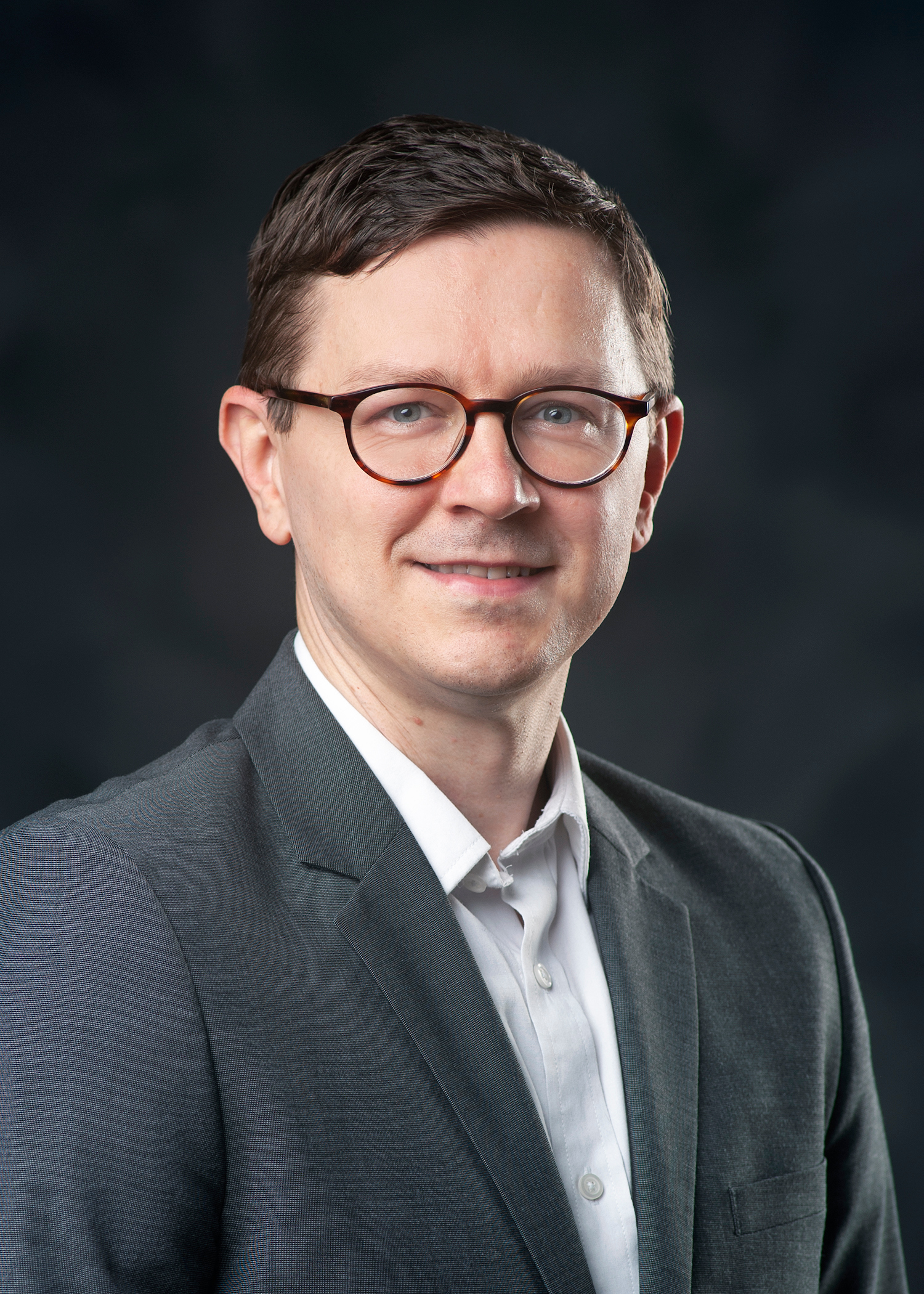
Carlos Jáuregui is Professor of Spanish at the University of Notre Dame, with concurrent appointments in Anthropology and faculty fellowships at the Kellogg Institute for International Studies and Institute of Latino Studies. His research focuses on colonial Latin American cultural studies, biopolitics, and visual culture, bridging literary analysis with historical anthropology. Education includes: Ph.D. Hispanic Languages and Literatures, University of Pittsburgh (2001) Graduate Certificate in Latin American Studies, University of Pittsburgh (2000) M.A. Spanish American Literature, West Virginia University (1997) Law Degree, Universidad Externado de Colombia (1993) Research explores colonial power dynamics through frameworks like biopolitics and postcolonial theory, examining how historical narratives conceal violence while invoking spectral 'returns' of suppressed alterity. Recent work analyzes visual sovereignty in revolutionary iconography (e.g., Emiliano Zapata) and theological justifications of Spanish colonialism. Publications consistently engage with paradoxes of memory, resistance, and representation across 500 years of Latin American cultural production. Awards highlight transnational recognition: 2024 Emiliano Zapata Catedra distinction 2023 Dolores Huerta Book Award Premio Casa de las Américas (2005) Multiple Fulbright and NEH fellowships Advising includes doctoral students now faculty at University of Florida, Concordia College, Carleton College, and Furman University. Current book projects examine colonial renegades in Yucatán and monumental forgetting of Hernán Cortés in Mexico (1524-2024).
Patrice Faure is a University Professor of Roman History at the University of Lyon 3 since 2022, with a career spanning roles at multiple French universities. His research focuses on the Roman army, political and cultural history of Roman provinces, Latin epigraphy, and prosopography. He holds a Habilitation à Diriger des Recherches in Roman History (2021) and a Doctorate (2006) from the University of Grenoble 2. Roman History, University of Lyon 3 (2022-present) Lecturer in Roman History, University of Lyon 3 (2010-2022) Lecturer in Ancient History, University of Le Havre (2007-2010) His research examines the Roman military's social and political impact, provincial integration of elites, and epigraphic documentation. He collaborates on digital epigraphic databases (Epigraphica Romana, EpiCherchell) and contributes to exhibition curation, notably at the Musée Lugdunum. Awarded the SOPHAU Thesis Prize (2007) and multiple scholarships (Thiers Foundation, IFAO, EFR), his publications include co-edited volumes on Roman military culture and monographs on Severan-era centurions. Current projects include publishing his HDR thesis Grandir pour l'empire and expanding the Inscriptions antiques de Césarée de Maurétanie corpus.
Dr. John McAleer is an Associate Professor of History at the University of Southampton. He specializes in British imperial and maritime history, focusing on the 18th and 19th centuries, the East India Company, and the role of islands in empire. His research explores global maritime networks, colonial encounters, and the representation of empire through material culture and museums. He currently teaches courses on British imperialism, maritime history, and museum studies. Previously Curator of Imperial and Maritime History at the National Maritime Museum, McAleer maintains roles with the Hakluyt Society, SS Great Britain Trust, and Bristol Archives. He has held fellowships from the Royal Historical Society and the Royal Asiatic Society. His major publications include works on Atlantic voyages, East India Company history, and the interplay between exploration and collecting practices. McAleer supervises PhD students in imperial history and collaborates on research projects funded by the Arts & Humanities Research Council and the British Academy. He has received awards for teaching excellence and scholarly contributions, including the Caird Medal and Muriel McCarthy Fellowship.
Pedro Sangro Colón serves as both Vice-Rector of Research and Degrees and Titular Professor of Language and Audiovisual Narrative at the Pontifical University of Salamanca's Faculty of Communication since 2008. His academic home is firmly rooted in the Audiovisual Communication and Advertising department where he has established himself as a leading scholar in film theory and audiovisual narrative. Dr. Sangro Colón earned his doctorate from Universidad Complutense de Madrid with his thesis "El concepto de 'montaje cinematográfico': una revisión de su formulación teórica" (2000), supervised by Dr. Manuel Alonso Erausquin. His research interests span cinematic montage theory, Spanish cinema history (particularly during the Francoist period and democratic transition), audiovisual narrative structures, documentary film analysis, and the intersection of cinema with psychoanalysis. His work demonstrates a consistent focus on how film constructs meaning through editing techniques and narrative frameworks. An analysis of his 15 most recent publications reveals a scholarly trajectory deeply engaged with Spanish cinematic history and theoretical film studies. His work frequently examines how film represents historical memory, particularly regarding Spain's transition from dictatorship to democracy, with special attention to montage techniques as tools for constructing historical narratives. More recently, he has expanded his scope to include contemporary media phenomena like the Marvel Cinematic Universe, analyzing how superhero films represent national security apparatuses and historical trauma. His extensive publication record includes numerous books, articles, and book chapters, with notable works such as "Escenas de cine, Guión y análisis" (2017), "La estética televisiva en las series contemporáneas" (2018), and "El clasicismo en el cine Una mirada Intergeneracional" (2015). His research demonstrates both theoretical sophistication and practical application to screenwriting and television production. As Vice-Rector of Research and Degrees, Dr. Sangro Colón oversees academic programs and research initiatives at the university. His leadership role complements his scholarly work by providing institutional perspective on academic innovation and research management. His recent publication "Introducción: la innovación en la Universidad Pontificia de Salamanca" (2021) reflects his engagement with contemporary challenges in higher education. His academic collaborations are extensive, with frequent co-authorship with colleagues like Juan Medina-Contreras and Miguel Ángel Huerta. His work appears in both Spanish and international journals, demonstrating his ability to engage with global film scholarship while maintaining a strong focus on Spanish and Latin American cinematic traditions.
David Kazanjian is a Professor of English and Comparative Literature at the University of Pennsylvania's School of Arts & Sciences. He serves as Graduate Chair for the Comparative Literature and Literary Theory program (2024-25, 2026-2028), and has held prestigious fellowships including the Institute for Advanced Study (Princeton, 2026), Vartan Gregorian Center (NYPL, 2025), and Berlin Prize. His scholarship bridges transnational American studies, Armenian diaspora studies, political philosophy, and postcolonial theory. PhD in Rhetoric, University of California, Berkeley M.A. in Critical Theory, University of Sussex B.A. in Modern Thought and Literature, Stanford University Kazanjian's research examines dispossession through legal archives, transnational Armenian cultural politics, and 19th-century social movements. His work spans early American literature, Latin American colonialism, trauma theory, and Marxist analysis of freedom discourses. Recent publications address dispossession in colonial New England/Yucatán, Armenian diaspora representation, and improvisational freedom practices in the Atlantic world. His editorial roles include co-editing NYU Press's America and the Long 19th Century series and Social Text journal. 2022 Penn Provost's Award for Outstanding Mentorship of Ph.D. Students Berlin Prize, American Academy of Berlin As co-director of the Tepoztlán Institute for Transnational History of the Americas (2017-19) and affiliations with Penn's Gender & Sexuality Studies, Latin American Studies, and Middle East Center, Kazanjian fosters interdisciplinary scholarship. He teaches courses on capitalism theories, early American literature, and critical theory. His lab and collective work includes the Tepoztlán Institute and Social Text editorial collective, focusing on transnational historical methods and diasporic cultural analysis.
Thomas F. Strasser is Professor of Art History at Providence College, specializing in Greek archaeology with expertise in Minoan Crete. He earned his PhD in Classical Archaeology from Indiana University and has conducted fieldwork in Greece, Cyprus, and Turkey for over two decades. Strasser's research reinterprets Bronze Age frescoes and investigates early Mediterranean seafaring through his Plakias Stone Age Project. His courses explore the art and archaeology of ancient Iraq, Egypt, and classical civilizations. Strasser received the 2021 Outstanding Faculty Scholar Award and leads student excavations on Crete. Recent publications examine Paleolithic tool assemblages challenging conventional timelines of Mediterranean colonization and geological elements in Theran wall paintings. His fieldwork continues to uncover evidence of Mesolithic habitation in southern Crete.
Alessandra Russo is Professor and Chair of the Department of Latin American and Iberian Cultures and Director of the Hispanic Institute at Columbia University. She specializes in the theory, practice, and display of early modern arts with a special emphasis on artistic dynamics within the context of Iberian colonization. Her work bridges art history, historical anthropology, and global studies, exploring how artifacts encountered and collected during Iberian expansion influenced the development of modern art concepts. Professor Russo received her training in art history and historical anthropology at the Universitá di Bologna, the Universiteit Leiden, and the École des Hautes Études en Sciences Sociales in Paris. She has been a fellow at the Wissenschaftskolleg-Institute for Advanced Study in Berlin and has held visiting positions at ESBA of Genève, the Institut National d'Histoire de l'Art, and the École des Hautes Études en Sciences Sociales where she is an associate member of the Centre de recherches sur les mondes Américains (CERMA). Her research focuses on the intersection of art, knowledge, and power in the early modern period, particularly examining how the encounter between European and Indigenous artistic practices transformed understandings of art globally. Russo investigates how artifacts from the Americas, Africa, and Asia collected during Iberian expansion contributed to reshaping European artistic concepts, challenging traditional narratives of art history that position Europe as the sole origin of modern art. She explores the role of multilingual dialogues, material exchanges, and visual translations in creating new artistic universes that were neither purely European nor Indigenous but emerged from their encounter. Professor Russo's publications reveal consistent engagement with global art history, transcultural studies, and the materiality of artistic production. Her work spans diverse topics including feather art, cartography, museum studies, and the theoretical frameworks that shaped artistic production across the Iberian world. A recurring theme is the examination of how objects and images traveled across continents, acquiring new meanings while retaining connections to their places of origin. Her research demonstrates how early modern artistic practices were fundamentally shaped by global encounters rather than developing in isolated national or regional contexts. Eleanor Tufts Award of the Society of Iberian and Latin American Art (SIGA) for A New Antiquity: Art and Humanity as Universal (1400-1600) Best book award in "theory of art" for Images Take Flight Grand Prix du Jury at FILAF for Images Take Flight ALAA Book Award Honorable Mention for Images Take Flight Professor Russo has advised numerous doctoral students at Columbia University whose work explores global art history, colonial Latin America, and Indigenous artistic practices. She leads the research group "Spanish Italy and Iberian Americas," which has received funding from the Getty Foundation for its work on artistic interactions between Spanish Italy and the Iberian Americas in the 16th century. This project has brought together scholars from Italy and Latin America to study artistic connections between these regions, resulting in workshops, symposia, and digital publications that document objects, monuments, maps, and prints. As a member of the Museum Advisory Committee at the Metropolitan Museum of Art, Professor Russo contributes to the reinstallation of galleries including the Gallery of Central Europe and the Gallery of Northern Renaissance. Her curatorial work includes the exhibition "El vuelo de las imágenes. Arte plumario en México y Europa. 1300-1700" at the Museo Nacional de Arte and collaboration on "Planète Métisse" at the Musée du Quai Branly in Paris. She is currently developing an exhibition project "Sebastiano, il Custode del Mondo. Universi artistici a Bologna nel Seicento" alongside her book manuscript on Sebastiano Biavati, the custodian of Ferdinando Cospi's art collections in seventeenth-century Bologna.
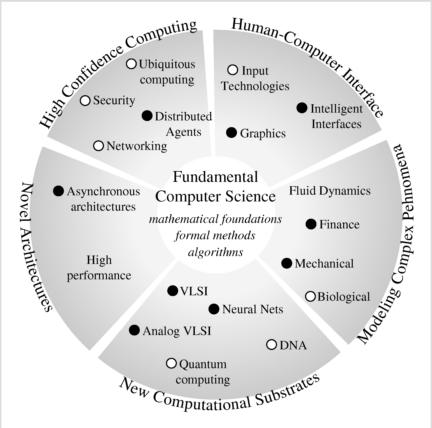
Alan H. Barr is a Professor of Computer Science at the California Institute of Technology (Caltech), affiliated with the Division of Engineering and Applied Science and the Computation & Neural Systems (CNS) department. He is a founding member of the Caltech Computer Graphics Group and a leader in developing mathematically rigorous methods for computer graphics and predictive modeling. His research focuses on enhancing computational modeling accuracy through approaches like interval analysis and constraint-based systems. Notable contributions include deformable models, quaternion interpolation, and cellular simulation frameworks. He has advised over 20 graduate students, many of whom became industry leaders at Pixar, Microsoft Research, and academic institutions like NYU and Brown University. Awards include the ACM SIGGRAPH Achievement Award (1988) and ACM Fellow (1995). Research Interests: Predictive modeling with error bounds Scientific visualization and MRI data analysis Biophysical systems simulation (e.g., cellular organelles) Self-assembling robotic structures for space colonization Mathematically robust computer graphics techniques Key Collaborations: Caltech Biological Imaging Center (Beckman Institute) JPL (Jet Propulsion Laboratory) New computational substrates research (quantum/DNA computing) Recent Work: Expanding into computational biology, medical imaging optimization, and high-confidence systems for managing complex computational interactions. Active in interdisciplinary projects across Caltech divisions.
Dr. Borna Izadpanah is a Lecturer in Typography & Graphic Communication at the University of Reading. His research focuses on the history of printing and type design, particularly in Persian and Urdu languages using the Arabic script. He emphasizes decolonizing curricula and promoting inclusivity through interdisciplinary collaborations and open access initiatives. Education: PhD in Typography (2021), University of Reading MA in Typeface Design (2015), University of Reading MA in Graphic Design (2010), London College of Communication BA in Graphic Design (2006), Soore University Research Interests: Decolonizing typography, preservation of endangered archival materials, digital humanities, and the historical development of Arabic-script typography. His work bridges print history, art history, and Islamic studies, using non-European language sources. Articles Trends: Recent publications explore Urdu typography’s colonial influences, Persian printing in Qajar Iran, and the global history of Arabic-script type design. His research highlights underrepresented communities and historical gaps in type design practices. Awards: Type Directors Club Awards (2024, 2023, 2017) Granshan Typeface Design Competition (2015–2017) Advising & Grants: Supervises doctoral research in Persian and Asian typography, with a focus on underrepresented communities. Collaborates on projects like the Typodiversity exhibition and workshops on non-Latin type design. Labs/Teams: Involved in the Type Design intensive (TDi) program and co-leads courses at the British Library. Active in the Royal Asiatic Society and Google Fonts collaborations.
Christoph Witzenrath is a Professor for Premodern Slavery and Strong Asymmetrical Dependencies at the University of Bonn's Bonn Center for Dependency and Slavery Studies (BCDSS). His research spans Eurasian history, focusing on nomadic-settled relations, slave trade, and state-dependent group dynamics. Education: Ph.D. in History, King’s College, University of London (1999–2005) M.A. in History and Political Science, University of Freiburg, Humboldt University, and Free University Berlin (1991–1998) Witzenrath's work interrogates the structural gaps between premodern states and dependent populations, comparing Eurasian systems to community-oriented African models. His transdisciplinary approach integrates legal, cultural, and political frameworks, emphasizing liberation narratives and asymmetrical dependencies. Key article themes include Muscovite-Ottoman interactions, Siberian expansion, and transcultural legitimacy. His award-winning monograph Cossacks and the Russian Empire (2009) explores frontier governance and rebellion dynamics. Scientific Awards & Funding: DFG Priority Program funding (2017–2020) King’s College London research studentship (1998–2001) Leverhulme Early Career Fellowship (2007–2009) Shklar Fellowship at Harvard (2010) He has supervised 40 national/international lectures and mentored researchers like Turkana Allahverdiyeva and Stanislav Mohylnyi. As founding member of the Transottomanica project (2017–2020), he advanced mobility studies across Eurasia.
Associate Professor Diana Young is an academic, curator, educator, and designer at The University of Queensland (UQ), affiliated with the School of Social Science. Her research bridges cultural anthropology, material and visual culture, and museum studies, with a focus on Indigenous Australian art, museum practices, and the role of color in social life. She holds a Master's and PhD from University College London. Her work includes curating exhibitions such as the 50th anniversary of Ernabella Arts and leading the UQ Anthropology Museum’s transformation into a public institution. She directed the Master of Museum Studies program and raised over AUS$1.1 million for museum initiatives. Her research explores color as material and cultural substance, Australian Indigenous art markets, and digital heritage. Recent articles highlight her focus on Indigenous land management (e.g., Water as Country), museum curation practices, and material culture studies. She collaborates with institutions like QAGOMA on learning-focused courses and has authored/co-authored numerous books and chapters, including Solomon Islands: Re-Enchantment and the Colonial Shadow (2017).
Mona Kasra is an Iranian-American Associate Professor of Digital Media Design in the Department of Art at the University of Virginia. Her work bridges new media art, projection design, and immersive theatre, exploring political and theoretical implications of visual media technologies across cultural contexts. Ph.D. in Arts & Technology from University of Texas-Dallas M.F.A. in Video/Digital Art from California State University Northridge B.A. in Graphic Design from Art University of Tehran Her research focuses on hybrid practices integrating digital technologies with live performance, emphasizing audience immersion and narrative reconfiguration. Key areas include: Projection mapping for theatrical spaces Interactive media installations Cross-cultural digital storytelling Immersive audience experiences Time-space manipulation in performance Recent creative works demonstrate trends in: Site-specific installations (abandoned buildings, warehouses) Collaborative design with choreographers/musicians Exploration of identity in hyper-mediated environments Integration of indigenous rituals with modern technology Academic leadership roles include: Faculty co-lead, Karsh Institute’s Digital Technology for Democracy Lab Chair of ACM SIGGRAPH (2023-2024) Board member, New Media Caucus Executive Committee member (2019-2025), UVA Scientific awards: Helen Hayes Award nominations for media design (2022) United Scenic Artists Local 829 membership Her transdisciplinary approach has been supported by grants including the Arts Enhancement Grant and collaborations with institutions like the Smithsonian's Lemelson Center.
Aaron White serves as an Assistant Professor in the School of Architecture at Mississippi State University, where he contributes to both architectural education and research in architectural history. His work bridges historical scholarship with contemporary critical examinations of race, empire, and cultural identity in the built environment. White's educational background provides a strong foundation for his interdisciplinary approach: PhD in Architectural History and Theory from Columbia University MA in Architecture from Pratt Institute BA in Architecture from the University of Idaho His research focuses on the complex relations between classicism and colonization in late-sixteenth and early-seventeenth century English architecture. White examines how architectural forms and practices functioned within imperial frameworks, particularly exploring connections between built environments and racial constructions. His work on whiteness in early modern architecture represents a significant contribution to expanding architectural history to address racial formations in premodern contexts, as evidenced by his 2025 edited volume "Early Modern Architecture and Whiteness" published by Routledge. White's publication record reveals an evolving scholarly trajectory that increasingly engages with critical race theory while maintaining connections to his foundational interests in classicism and colonialism. His most recent works demonstrate sophisticated analysis of how architectural spaces participated in the construction of racial identities, particularly whiteness, in early modern England. The 2025 Routledge volume represents a major scholarly intervention that reframes architectural history through the lens of race studies, examining how premodern architecture contributed to racial hierarchies and power structures. White has presented his research extensively at major academic conferences including the Society of Architectural Historians annual meetings, Association of Collegiate Schools of Architecture conferences, and specialized forums such as the Southeast Society of Architectural Historians. His presentations demonstrate engagement with both architectural history specialists and broader scholarly communities interested in race, empire, and cultural studies. As an educator, White has developed innovative approaches to architectural history pedagogy, as evidenced by his 2025 work on integrating AI into architectural history courses. His teaching likely emphasizes critical perspectives that connect historical architectural practices to contemporary issues of race, representation, and social justice in the built environment. He is affiliated with research centers at Mississippi State University including the Fred Carl, Jr. Small Town Center and the Gulf Coast Community Design Studio, suggesting connections between his historical scholarship and community-focused architectural practice.
Hans Harder serves as Professor of Modern South Asian Languages and Literatures at Heidelberg University's South Asia Institute, where he has held his position since 2007. His academic career spans institutions including the universities of Hamburg, Heidelberg, and Martin Luther University in Halle-Wittenberg, where he completed both his PhD and postdoctoral work. Research Interests: Professor Harder's scholarly focus encompasses modern South Asian literatures (particularly Bengali), religious movements from the nineteenth and twentieth centuries , colonial and postcolonial intellectual history , and popular literature and film across South Asia. His work consistently examines the intersections of language, culture, and power in colonial and postcolonial contexts, with special attention to vernacular expressions of identity and resistance. His recent publications reveal a deepening engagement with language ideologies and vernacular conceptualizations in South Asia, particularly evident in his 2024 co-authored work The Vernacular: Three Essays on an Ambivalent Concept and Its Uses in South Asia . Earlier works demonstrate his longstanding interest in religious movements (particularly Sufism in Bangladesh), literary satires from colonial Calcutta, and cross-cultural perceptions between colonized and colonizing societies. His scholarship bridges literary analysis, religious studies, and cultural history through meticulous textual examination and theoretical sophistication. Professor Harder has established himself as a leading scholar through numerous monographs and edited volumes that have significantly shaped South Asian literary and intellectual studies. His collaborative work with scholars like Nishat Zaidi, Torsten Tschacher, Barbara Mittler, and Charu Gupta demonstrates his commitment to interdisciplinary and international scholarly exchange. Based at Heidelberg University's South Asia Institute, Professor Harder continues to advance research on South Asian cultural production while mentoring students and contributing to the global academic community through his extensive publications and editorial work.
Prof. Dr. Michaela Schäuble is a media anthropologist and documentary filmmaker at the University of Bern , where she serves as a professor and co-director of EMB-Ethnographic Mediaspace Bern . Her work bridges sensory ethnography, religious studies, and ecological critique through experimental methodologies. MA Comparative Literature (Tübingen University) MA Visual Anthropology (University of Manchester) PhD Social Anthropology (University of Halle-Wittenberg) with European Doctorate (Ca' Foscari Venezia) Her research examines media as belief apparatuses , focusing on sensory embodiment in religious rituals, ecological perception, and subaltern representation. Recent work explores digital surveillance through Big Data Lives (SNSF 184862) and climate change visual politics via Mediating the Ecological Imperative (SNSF 193842). Scientific awards include prestigious fellowships at Harvard, Bologna, UCL, Yale, and Vienna. She curates film programs at institutions like Grassi Museum and Zentrum Paul Klee , while co-hosting the RAI Film Festival Conference and leading the network VANEASA . As a supervisor, she has guided doctoral research on topics spanning Vodun ethnography, post-war memory, and more-than-human ecologies. Her film Tarantism Revisited (2024) premiered at DokLeipzig, reflecting her interest in trance practices and corporeal cinematography.