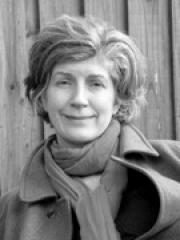
Associate Professor Diana Young is an academic, curator, educator, and designer at The University of Queensland (UQ), affiliated with the School of Social Science. Her research bridges cultural anthropology, material and visual culture, and museum studies, with a focus on Indigenous Australian art, museum practices, and the role of color in social life. She holds a Master's and PhD from University College London. Her work includes curating exhibitions such as the 50th anniversary of Ernabella Arts and leading the UQ Anthropology Museum’s transformation into a public institution. She directed the Master of Museum Studies program and raised over AUS$1.1 million for museum initiatives. Her research explores color as material and cultural substance, Australian Indigenous art markets, and digital heritage. Recent articles highlight her focus on Indigenous land management (e.g., Water as Country), museum curation practices, and material culture studies. She collaborates with institutions like QAGOMA on learning-focused courses and has authored/co-authored numerous books and chapters, including Solomon Islands: Re-Enchantment and the Colonial Shadow (2017).
Hongping Cai is a Lecturer in the Department of Computer Science at the University of Bath, contributing to the Visual Computing research group. Their work focuses on advancing computer vision techniques for analyzing artistic depictions and cross-domain object recognition. Research interests include computer vision applications in artwork analysis, cross-depiction problem modeling, object recognition across media, and spatial relation modeling. Recent work emphasizes leveraging CNNs for detecting people in artwork, benchmarking cross-depiction systems, and developing graph-based models for visual object analysis. Publications highlight contributions to cross-media recognition challenges, synthesis techniques, and domain adaptation methods. No specific awards or grants are listed, though their research has garnered significant citations and downloads. Advising activities are not documented in the provided materials. Active in the Visual Computing group at the University of Bath, Dr. Cai's work bridges traditional computer vision with artistic depiction analysis, addressing challenges in multi-modal data fusion and cross-domain visual understanding.
Christoph T. Koch is a Professor of Physics at Humboldt-Universität zu Berlin, where he has held the W3 Chair since 2015. Previously, he held a similar position at Ulm University (2011–2015), supported by the Carl Zeiss Foundation. His research focuses on advanced electron microscopy techniques, including quantitative transmission electron microscopy (TEM), electron holography, and strain mapping. He leads the AG Strukturforschung/Elektronenmikroskopie group, advancing materials science through innovations in imaging and spectroscopy. Education: B.Sc./M.Sc. in Physics at Heidelberg University (1996–1998), followed by an exchange at Arizona State University (1997–1998). PhD in Physics from Arizona State University (2002, advisor: Prof. John C.H. Spence). Postdoctoral research at the Max Planck Institute for Metals Research, Stuttgart (2002–2011). Research interests include: Electron diffraction and phase retrieval Nanometer-scale strain and defect analysis Electron energy-loss spectroscopy (EELS) for plasmonics and bandgap mapping Development of FAIR data infrastructure for materials science Leadership: Managed the Department of Physics at Humboldt University (2020–2024). Collaborates widely, with key co-authors including P.A. van Aken, W. Sigle, and C. Felser. His work bridges experimental microscopy and computational modeling, addressing challenges in semiconductors, ceramics, and 2D materials. Notable contributions include pioneering methods for 3D reconstruction via electron ptychography, dynamic electron diffraction analysis, and strain mapping in advanced CMOS technologies. Current efforts emphasize real-time imaging and AI-driven data analysis in materials research.
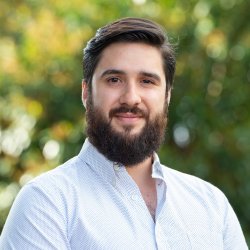
Oscar Mendez Maldonado is a Lecturer in Robotics and Artificial Intelligence at the University of Surrey's School of Computer Science and Electronic Engineering, affiliated with the Robotics Department and CVSSP Centre. He holds a PhD (2018) and BEng (2013) from the University of Surrey. His research focuses on Machine Learning, Computer Vision, and Robotics, with emphasis on autonomous systems, localisation, and SLAM applications. Key projects include the Autonomous Valet Parking (AVP) system for indoor navigation and the SMILE project for sign language assessment using AI. He has supervised students like James Ross (Autonomous Vehicles), Xihan Bian (Reinforcement Learning), and Nimet Kaygusuz (Visual Odometry). Notable achievements include the Sullivan Thesis Prize (2018) and impactful publications in IEEE conferences (e.g., ICRA, CVPR, IROS). Research spans topics like 3D hand pose estimation via diffusion models, graph-based visual odometry fusion, and Raman spectroscopy for localisation. He contributes to open-source tools (e.g., RaSpectLoc GitHub) and collaborates with industry partners like Parkopedia. His work bridges theoretical advances with real-world applications in autonomous systems and healthcare.
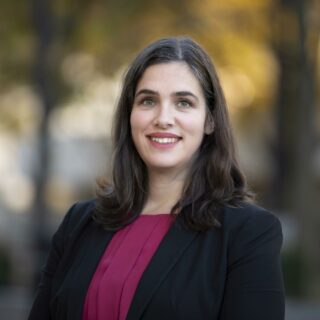
Dr. Katrina Bartow Jacobs is an Associate Professor in the Department of Teaching, Learning, and Leading at the University of Pittsburgh's School of Education. Her work focuses on sociocultural perspectives of literacy, critical pedagogy, and early childhood education. She holds a Ph.D. from the University of Pennsylvania and previously taught elementary education in California. Research Interests: Jacobs examines how literacy educators define their profession and classroom practices within urban contexts, particularly through sociocultural frameworks. She investigates children’s gender identity development through picture books and early career teachers’ adoption of critical literacy pedagogies. Her work bridges theory, practice, and policy in teacher preparation. Publications: Her recent scholarship includes studies on pre-service teachers’ emotional engagement with narratives (2022), gender representation in children’s literature (2020), and culturally relevant pedagogy in urban field experiences (2019). Notably, she received the Alan C. Purves Award in 2017 for her contributions to literacy research. Awards: Jacobs is the recipient of the 2017 Alan C. Purves Award, recognizing her impactful work in literacy education. Her research emphasizes equity and solidarity in literacy assessment and teacher preparation practices. Grants & Advising: While specific grant details are not listed, her CV indicates sustained engagement with educational equity initiatives. She mentors teacher candidates in critical literacy methodologies and urban education contexts. Labs/Teams: Collaborates with the Falk School on research partnerships enhancing teacher education through community engagement and critical inquiry.
Desmond Upton Patton is the Brian and Randi Schwartz University Professor at the University of Pennsylvania, with joint appointments in the School of Social Policy & Practice and Annenberg School for Communication, and a secondary appointment in the Department of Psychiatry at the Perelman School of Medicine. His work bridges social work, data science, and digital sociology to address issues like social media's impact on marginalized communities, AI bias, and violence prevention. Education: B.A., University of North Carolina at Greensboro (2004); M.S.W., University of Michigan (2006); Ph.D., University of Chicago (2012). Research focuses on social media's role in trauma, grief, and violence among Black and Hispanic youth. He developed the Contextual Analysis of Social Media (CASM) methodology to address cultural biases in AI. Key projects include studying grief pathways on Twitter, digital mourning practices, and algorithmic equity in child welfare systems. Notable awards include the Deborah K. Padgett Early Career Achievement Award (2018) and fellowships at Harvard's Berkman Klein Center and the Harvard Kennedy School. He advises platforms like Twitter and Spotify on safety and bias. Grants include an NSF-funded program supporting STEM researchers from underrepresented backgrounds. He directs SAFELab, which explores digital safety and equity. Courses taught include 'Advocacy in Emergent Technology' and 'Journey to Joy: Designing a Happier Life.' Future work emphasizes AI ethics, inclusive tech policy, and leveraging community insights to shape equitable digital tools.
Chen Xu is an Associate Professor in the Department of Mathematics and Statistics at the University of Ottawa. He holds an M.A. from York University and a PhD from the University of British Columbia. His research focuses on sparse modeling, statistical learning, and big data processing, with an emphasis on both theoretical and computational advancements. Dr. Xu is affiliated with the Faculty of Science and contributes to editorial roles for journals such as the Journal of the American Statistical Association and Electronic Journal of Statistics. Education: M.A., York University PhD, University of British Columbia Research interests include feature selection, regularization methods, kernel methods, and high-dimensional regression. His work addresses computational challenges in big data, proposing efficient algorithms for tasks like singular value decomposition, clustering, and distributed feature screening. Recent publications highlight advancements in multiview PCA, low-tubal-rank tensor recovery, and model-free regression techniques. Publications span prestigious journals like the Journal of the American Statistical Association and IEEE Transactions series, focusing on statistical methodology, machine learning applications, and scalable computational solutions for complex data problems. Editorial Service: Associate Editor, Journal of American Statistical Association-T&M (2023–present) Associate Editor, Electronic Journal of Statistics (2023–present) Former Associate Editor, The Canadian Journal of Statistics (2019–2021) His research groups are Statistics and Biostatistics, and Data Science, Machine Learning, and Artificial Intelligence. He has no listed awards but maintains active editorial and academic collaborations in computational statistics and machine learning.
Xavier Alameda-Pineda is a Research Director at Inria Grenoble Rhône-Alpes, where he leads the RobotLearn Team. He is affiliated with Université Grenoble Alpes and has been a key member of the Perception team. His work integrates machine learning, computer vision, and audio processing for scene understanding and human-robot interaction. Research Interests: His research lies at the intersection of multimodal machine learning and social behavior analysis. He focuses on developing algorithms for understanding human behavior in natural settings using audio-visual signals, with applications in robotics and AI companions. His work emphasizes real-world challenges such as noisy data, missing modalities, and dynamic environments. Publication Trends: His recent publications reflect a consistent focus on multimodal fusion, particularly combining vision and audio for social scene analysis. Themes include group behavior recognition, sound source separation, and cross-modal learning, often applied in robotics contexts. Scientific Awards: SIGMM Rising Star Award 2018 IEEE TMM Outstanding Associate Editor Award 2022 ACM TOMM Best Paper Award 2020 Best Paper Award, ACM MM 2015 Best Scientific Paper Award, ICPR 2016 Best Student Paper Award, IEEE WASPAA 2015 Outstanding Paper Award, ICMI 2011 Novel Technology Paper Award Finalist, IROS 2017 Advising and Grants: Xavier has mentored students and early-career researchers, evidenced by co-authored student papers. He coordinated the H2020 SPRING project on socially pertinent robots in gerontological healthcare and co-leads an AI chair on audio-visual perception for companion robots, indicating leadership in funded research initiatives. Labs and Teams: He is the leader of the RobotLearn Team at Inria and was previously part of the Perception team. He has also collaborated with the Multimodal and Human Understanding Group at the University of Trento.
Abdulkadir Çelikkanat is an Assistant Professor in the Department of Computer Science at Aalborg University, Denmark, where he is part of the DKW (Data Science and Knowledge) research group. His research focuses on genome representation learning, graph representation learning, and machine learning applications in bioinformatics and network science. Research Interests: His work lies at the intersection of artificial intelligence and biological data analysis, with a strong emphasis on scalable methods for genome and metagenome representation using k-mer profiles, as well as modeling dynamic and complex networks. He develops novel machine learning models to capture the structure and evolution of graphs over time. Recent Research Trends: His recent publications, appearing in top-tier venues like NeurIPS, AAAI, and AISTATS, demonstrate a consistent focus on improving scalability and effectiveness in representation learning. Key themes include revisiting traditional k-mer methods for modern deep learning, modeling citation dynamics, and developing continuous-time node embedding techniques. His work bridges theoretical advances with practical applications in genomics and network analysis. Scientific Awards: Best Paper Award, TGL Workshop @ NeurIPS 2023 Top Reviewer, LoG 2024 Conference Advising and Grants: While current advisees are not listed, he is actively leading research projects as evidenced by his recent publications and project organization (e.g., Nordic ProbAI summer school). His work is supported through institutional affiliations and likely competitive research funding, given the high-impact venues of his publications. Labs and Teams: He is affiliated with the DKW group at Aalborg University. Previously, he was part of the Inria OPIS team and the Centre for Visual Computing during his Ph.D., and worked in the Section for Cognitive Systems at DTU Compute as a postdoctoral researcher.
Bernhard Jenny is an Associate Professor at Monash University's Faculty of Information Technology, specializing in immersive visualization and geospatial data. He holds a PhD in Cartography from ETH Zurich and has held previous roles at Oregon State University and RMIT University. His research focuses on virtual reality (VR), augmented reality (AR), and cartographic innovations for geospatial data representation. Education: Doctor of Sciences in Cartography, ETH Zurich (2010) Postgraduate Certificate in Computer Science, ETH Zurich (2005) Master of Science in Surveying, EPFL (2000) Research Interests: Combines cartography, computer graphics, and human-computer interaction to explore VR/AR applications for geospatial data. Current work includes immersive analytics, terrain visualization, adaptive map projections, and storytelling with geospatial data. Recent Articles: Focus on ambient occlusion for terrain shading, grammars for immersive visualization transitions, and AR/VR interfaces for spatial data. Awards: Henry Johns Award (2007, 2011, 2012) ETH Medal (2010) Best Paper Honorable Mentions (ACM CHI, DIS) Grants & Projects: Leads initiatives like the 'Immersive Analytics' extension and 'National Geographic Relief Shading' project. Collaborates on neural networks for cartographic relief shading and sustainable development goals (SDGs). Labs & Teams: Heads the Embodied Visualisation Lab at Monash, focusing on immersive analytics and geovisualization tools.
Christa Jones is a Professor in the Department of World Languages and Cultures at Utah State University, within the College of Humanities and Social Sciences. She has been a faculty member since 2008, advancing from Assistant to full Professor by 2019. Her academic background includes a PhD and MA in French Literature from Washington University in Saint Louis and a BA in French and English Literatures from Universität des Saarlandes. PhD, French Literature, Washington University in Saint Louis, 2006 M.A., French Literature, Washington University in Saint Louis, 1996 B.A., French and English Literatures, Universität des Saarlandes, 1994 Her research centers on colonial and postcolonial North African Francophone literature, film, and music, with a strong focus on Maghrebi cultural expression, fairy tales, and women's voices. She explores themes of identity, decolonization, and narrative form across genres. Her work bridges literary analysis with cultural and gender studies, often highlighting underrepresented voices in Francophone contexts. The 15 most recent scholarly outputs reflect a consistent engagement with Francophone North Africa, particularly Algeria and the Maghreb. Her publications span literary studies, film, music, folklore, and pedagogy, with recurring keywords including postcolonial studies, cultural identity, and Francophone literature. Subfields such as Maghrebi oral traditions, feminist narratives, and cinematic social critique demonstrate the interdisciplinary breadth of her scholarship. Her scientific contributions have been recognized through multiple honors: Researcher of the Year, Department of World Languages and Cultures, 2024 Researcher of the Year Award, LPSC, Utah State University (2017, 2011) Advisor of the Year Award, LPSC, 2009 GEM Seed Grant, $5,000, 2009 CARE Award, $1,902, 2017 Multiple travel and research grants from USU and affiliated centers Outstanding Professor Award, University of Nebraska, 2008 Christa Jones has been an active mentor and advisor, recognized with the Advisor of the Year Award in 2009. She has secured significant grant funding for research, including interviews with filmmaker Merzak Allouache and the development of study abroad programs. Her professional service includes editorial roles, participation in NEH seminars, and leadership as Associate Department Head (2015–2017). She continues to co-edit major scholarly volumes and is deeply involved in curriculum development, particularly in business French and cultural studies. While no formal lab or research team is mentioned, her editorial projects and collaborative research indicate leadership in scholarly communities focused on Francophone studies, folklore, and North African cultural production.
Hywel Dix is Professor in English at Bournemouth University, Faculty of Media and Communication, where he teaches across undergraduate and postgraduate programmes including BA English, BA Communication and Media, MA Creative Writing, and supervises doctoral research in English, Creative Writing, and History. He plays a significant leadership role in academic quality assurance as a leading member of the Quality Assurance and Enhancement Group (QAEG), chairing programme reviews across all faculties. He is also the Faculty Lead for TeachBU, supporting staff in achieving Fellowship of AdvanceHE. PhD in English, University of Glamorgan, 2006 MA in Literatures of Conflict, University of York, 2003 BA (Hons) in English, University of Cambridge, 2001 Hywel Dix’s research centers on autofiction, life writing, cultural memory, and the intersection of literature with social and political change . He is a leading international scholar in autofiction, particularly through his edited collection Autofiction in English (2018) and monograph The Late-Career Novelist (2017), which applies Career Construction Theory to literary careers. His recent work explores cultural identity in post-Brexit Britain, as seen in Compatriots or Competitors? (2022) and Autofiction and Cultural Memory (2023). He also investigates the therapeutic potential of creative writing for mental wellbeing. His recent publications (2020–2025) show a strong focus on autofiction, cultural memory, national identity, and narrative theory , with increasing interdisciplinary reach into psychology, education, and political discourse. Articles and books examine Welsh, Scottish, and Northern Irish writing in the context of Brexit, trauma and colonial memory, and the role of narrative in personal and professional development. Raymond Williams Research Fellowship (University of Glamorgan, 2003) Grant from Scientific and Technological Research Council of Türkiye (TUBITAK), 2025 (on Salman Rushdie’s memoirs) Hywel Dix has supervised numerous PhD students and is actively involved in staff development through Action Learning sets and TeachBU. He has secured competitive research grants and leads public engagement projects such as Write Your Future Self and Telling (My) Stories , which explore narrative and wellbeing. His work bridges academic research, pedagogical innovation, and community outreach. He is affiliated with the Centre for Journalism, Culture and Community at Bournemouth University and is a member of professional associations including MeCCSA, the Association for Welsh Writing in English, and the American Comparative Literature Association. He regularly delivers invited lectures and keynotes internationally, including at Goldsmiths, University of London, Bard College Berlin, and UNICAMP, Brazil.
Dr. Hamidreza Mohades Kasaei is an Associate Professor in the Department of Artificial Intelligence at the University of Groningen, Netherlands. He holds positions in both the Faculty of Science and Engineering and the Faculty of Medical Sciences/UMCG, focusing on Robotics and image-guided minimally-invasive surgery. His work bridges theoretical advances in machine learning with practical robotic applications. Dr. Kasaei's research focuses on developing algorithms for adaptive perception systems through interactive environment exploration and open-ended learning. His specific interests include 3D object perception, grasp affordance detection, object manipulation, and active perception. He has evaluated his research on various robotic platforms including PR2, UR5e, Kinova, Franka robotic arms, and humanoid robots. His work enables robots to learn from past experiences and intelligently interact with non-expert human users using data-efficient techniques. Analysis of his recent publications reveals strong trends toward increasingly sophisticated manipulation capabilities, particularly in dual-arm coordination and handling dense clutter. There's a clear progression toward integrating language models with robotic control systems, as seen in works like 'Lifelong Robot Library Learning' and 'Towards Open-World Grasping with Large Vision-Language Models.' His research consistently addresses real-world challenges in agricultural robotics, assistive technologies, and service robotics applications. Gratama Science Award (2022) Google Research Scholar Award in Machine Learning (2023) Outstanding Associate Editor for IEEE Robotics and Automation Letters (2023) Dr. Kasaei has successfully supervised multiple PhD students including Zhenxing Zhang (thesis on 'Generative Adversarial Networks for Diverse and Explainable Text-to-Image Generation') and Hamed Ayoobi (thesis on 'Explain What You See: Argumentation-Based Learning and Robotic Vision'). His research is supported by significant grants including the Google Research Scholar Award for 'Continual Robot Learning in Human-centered Environments' and various conference organization roles including workshops at RSS 2023 and NeurIPS 2022. He leads the Lifelong Interactive Robot Learning Lab (IRL-Lab), which focuses on six key research directions: Perception and Perceptual Learning, Object Grasping and Manipulation, Lifelong Interactive Robot Learning, Dual-Arm Manipulation, Dynamic Robot Motion Planning, and Exploiting Multimodality. The lab develops cutting-edge approaches for robots to learn in open-ended fashion through interaction with non-expert human users, with applications in assistive robotics for people with disabilities.
Tanja Blascheck is a PostDoc Researcher and Margarete von Wrangell Fellow at the Institute for Visualization and Interactive Systems (VIS) at the University of Stuttgart. Her work focuses on visual analytics , eye tracking , and microvisualizations for smartwatches and other wearable devices.
Joan Nogue i Font is a Professor at the Department of Geography of the University of Girona , and founder-director of the Cátedra del Bosque since 2022. He served as Dean of the Faculty of Arts (1996-2004) and former director of the Catalan Landscape Observatory (2005-2017). A specialist in Landscape and Human Geography , he has authored and edited numerous influential works, including Nacionalismo y territorio (1998) and Geopolítica, identidad y globalización (2001). Education: PhD in Geography (Universitat Autònoma de Barcelona), studies at University of Wisconsin-Madison under Yi-Fu Tuan Advisory roles: Member of Advisory Council for Sustainable Development (CADS), full member of Institute of Catalan Studies (IEC) Editorial work: Co-editor of Documents d'Anàlisi Geogràfica , co-director of Paisaje y Teoría book series International experience: Adjunct Professor at Western University (Canada), visiting scholar at Harvard University (2022) His research integrates Landscape Analysis with Societal and Environmental Studies , focusing on territorial identity, sustainability, and the interplay between culture and geography. He has pioneered methodologies for landscape cataloging and participatory management, emphasizing intangible values and citizen engagement. His work bridges European landscape policies with Catalan rural transformations. Recent publications like The other rural world (2022) and Paesaggio, territorio, società civile (2017) reflect his focus on civil society and contemporary spatial dynamics. His scientific awards include: 2009 Rei Jaume I Award for Urbanism, Landscape, and Sustainability 2010 Joan Fuster Essay Award 2022 Sylvester Baxter Lecturer at Harvard University He has served on editorial boards for journals such as Bolletino della Società Geografia Italiana and Punto Sur , and collaborates with La Vanguardia and Ara media supplements.