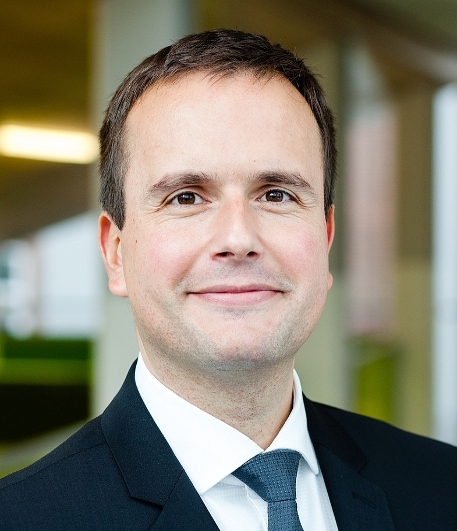
Tom Friese is a doctoral student and research associate at the International Center for Computational Logic (ICCL) within the Technische Universität Dresden . He is affiliated with the Knowledge-Based Systems research group led by Prof. Dr. Markus Krötzsch and the Machine Learning for Computer Vision research group led by Prof. Dr. Björn Andres . Education Doctoral Student in Computational Modeling and Simulation, Technische Universität Dresden (2024–present) M.Sc. in Computer Science, University of Leipzig (2020) B.A. in Philosophy, University of Leipzig (2010) Research Interests Tom’s research focuses on artificial intelligence , particularly non-monotonic reasoning and argumentation theory . He explores the integration of knowledge-based systems with machine learning , aiming to bridge symbolic AI and data-driven approaches. His current work centers on large language models and their application to the formalization of mathematics . Publications & Projects Tom has contributed to research on OWL ontologies , description logics , and explainable AI , with publications in venues like the International Conference on Principles of Knowledge Representation and Reasoning (KR) and Description Logics Workshops. His projects include the development of tools such as Evee and Evonne for ontology explanation and entailment tracing.
Dr. Gintautas Dzemyda is a leading research professor in data mining, machine learning, and multidimensional data visualization. With over 30 years of academic contributions, he has authored/co-authored 49+ publications and participated in 20+ conferences, including WorldCIST and Baltic DB&IS. His work spans medical imaging, financial security, and maritime decision support systems. Research Focus: Multidimensional Scaling (MDS), Neural Networks, Medical Image Analysis Key Collaborations: Olga Kurasova, Viktor Medvedev, Martynas Sabaliauskas Research Interests include: Advanced Data Visualization Techniques Machine Learning for Medical Diagnostics Fraud Detection in Financial Systems Decision Support Systems for Maritime Navigation Optimization of Neural Network Architectures Dimensionality Reduction Methods Scientific Awards (none explicitly mentioned).
Dr. Thomas Walther is a postdoctoral researcher at the Institute of Neuroinformatics (INI), Faculty of Computer Science, Ruhr University Bochum. His work centers on computational neuroscience with a focus on modeling cognitive processes in mammals, particularly spatial navigation, learning, and memory extinction through computational approaches. His educational background includes: Diploma in Electrical Engineering and Information Technology from the University of Dortmund, with thesis research on medical image interpretation, tumor tracking, and robot-assisted radiotherapy Ph.D. in Electrical Engineering and Information Technology from Ruhr University Bochum, dissertation on autonomous visual model learning based on Organic Computing principles Dr. Walther's research spans computational neuroscience, virtual reality systems, robotics, computer vision, computational auditory scene analysis, and Organic Computing. He investigates hippocampal circuit mechanisms underlying spatial cognition and memory processes, employing deep reinforcement learning and computational modeling to bridge neural mechanisms with behavioral outcomes. His work integrates biological plausibility with artificial intelligence techniques to unravel complex cognitive functions. His publication record shows consistent focus on applying reinforcement learning to neuroscience questions, particularly spatial navigation and extinction learning phenomena, while maintaining strong contributions to computer vision (human body modeling) and robotics (RatSLAM optimization). This interdisciplinary trajectory demonstrates evolving integration between machine learning methodologies and neurobiological inquiry. Scientific awards: None mentioned in available information. Dr. Walther has supervised multiple Master's theses including research on deep reinforcement learning algorithms across environments, virtual reality applications, context representation in learning systems, and transfer of learned associations. His advising emphasizes computational approaches to cognitive questions within the INI's collaborative framework. As a core member of the Computational Neuroscience group at INI, he contributes to the institute's mission of understanding natural cognitive systems through experimental psychology, neurophysiology, and AI to develop novel solutions for artificial cognitive systems within interdisciplinary collaborations.
Dr. Jakub Nowosad is an Associate Professor at Adam Mickiewicz University in Poznan, Poland, with a strong affiliation to the Institute of Landscape Ecology at the University of Münster, Germany. As a computational geographer, he specializes in spatial pattern analysis, remote sensing, and geospatial software development. Primary Affiliation: Adam Mickiewicz University, Poznan, Poland Secondary Affiliation: University of Münster, Faculty of Geosciences His research spans spatial data science , focusing on machine learning applications in geography, landscape metrics , and open-source geocomputation . He actively develops and maintains R packages for spatial analysis, including tools for landscape pattern quantification and colorblind-accessible visualization . Recent publications highlight his work on spatial autocorrelation , remote sensing data analysis , and computational ecology . He co-authored key resources such as Geocomputation with R and Geocomputation with Python , emphasizing reproducible workflows. Dr. Nowosad contributes to spatial data education as a co-author of open-source books and instructor at summer schools like OpenGeoHub and EON. He organizes workshops on spatial machine learning and thematic mapping , often involving collaborative R package development. Email: jakub.nowosad@uni-muenster.de
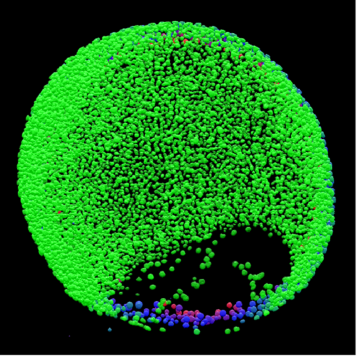
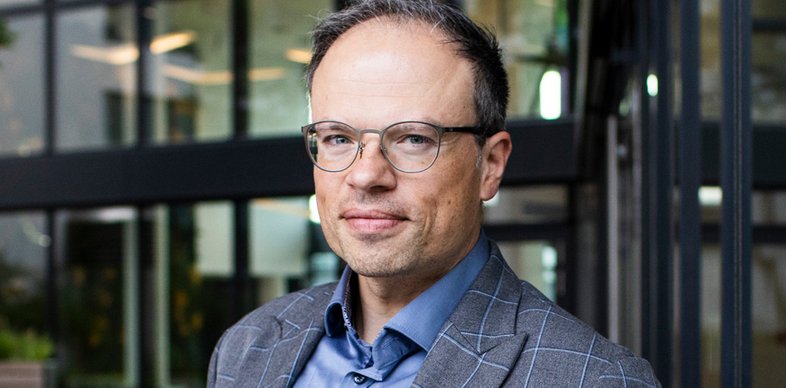
Johannes Stegmaier serves as Junior Professor for Biomedical Image Processing at the Institute of Imaging and Computer Vision at RWTH Aachen University, where he has been employed since April 2018. Previously, he held an Acting Professor (W3) position at the same institution from October 2022 to September 2024. His academic journey includes postdoctoral research at Caltech's Center for Advanced Methods in Biological Image Analysis (2016-2017) and at the Karlsruhe Institute of Technology (2015-2017). Stegmaier earned his Doctorate (Dr.-Ing.) from the Karlsruhe Institute of Technology in June 2016 with a dissertation titled 'New Methods to Improve Large-Scale Microscopy Image Analysis with Prior Knowledge and Uncertainty.' He completed his Master of Science in Bioinformatics and Systems Biology at the University of Freiburg (2009-2011) and his Bachelor of Science in Bioinformatics at the University of Tübingen (2006-2009). During his doctoral studies, he was a Short Term Scholar at the Janelia Research Campus (2014). His research focuses on developing advanced computational methods for biomedical image analysis, particularly in microscopy and medical imaging. Stegmaier's work bridges computer vision, machine learning, and biomedical applications, with significant contributions to diffusion models for image synthesis, 3D image analysis, and embryomics. His research has practical applications in cancer detection, retinal prosthetics, and developmental biology. Analysis of his recent publications reveals a strong trend toward applying diffusion models and transformer architectures to medical imaging challenges. His work spans from fundamental algorithm development to clinical applications, with particular emphasis on generating realistic medical image data, improving segmentation accuracy, and developing multimodal analysis frameworks that integrate imaging with clinical data. Stegmaier actively collaborates with researchers across multiple institutions, as evidenced by his extensive publication record in high-impact journals including Nature Neuroscience, Nature Communications, and PLOS Computational Biology. His work demonstrates a consistent focus on solving practical biomedical imaging challenges through innovative computational approaches.
Rehana Omardeen is a doctoral researcher at the Department of German Philology, University of Göttingen, and a member of the Research Training Group (RTG) 2070 'Understanding Social Relationships'. Her work focuses on gestures in spoken and signed languages, sign language typology, iconicity, and the interface between sign and gesture. Bachelor’s degree in Linguistics from Swarthmore College Master’s degree in Linguistics from Radboud University, Nijmegen Her research involves comparative studies of iconicity in sign languages, co-creation methodologies in sign language technology, and documentation of Providence Island Sign Language. She has conducted fieldwork funded by the Endangered Languages Documentation Programme (ELDP) on Providence Island and in Guyana. Her work intersects linguistics, computer science, and accessibility, with a focus on inclusive technology development. Rehana collaborates with the Sign Language team and uses methodologies in human-computer interaction, avatar design, and sociolinguistic analysis. She has contributed to European sign language policy frameworks and explores the typological variation of sign languages globally.
Jakob Abeßer is a tenure-track professor for Computational Humanities at the University of Bamberg (since 2025) and a Senior Scientist at Fraunhofer IDMT. He focuses on audio processing applications in digital humanities, particularly Music Information Retrieval , Soundscape Analysis , DCASE , Bioacoustics , and Ecoacoustics . His research integrates machine learning and deep learning with audio signal processing , targeting sound event detection, polyphony estimation, and acoustic scene classification. Research Trends : His recent work (2025) explores Large Language Audio Models for scene understanding and CNN-to-Reservoir Computing transitions in classification tasks. Earlier studies (2023-2022) address domain adaptation for robust embeddings, urban sound monitoring , and piano multipitch datasets . Applications span bioacoustic research , urban ecology , and music transcription . Scientific Awards : Best Paper Award at CMMR 2021
Matthias Kaschube is a Professor at the Department of Computer Science and Mathematics, Goethe University Frankfurt. He is affiliated with the Frankfurt Institute for Advanced Studies (FIAS), focusing on interdisciplinary research combining mathematics, computer science, and neuroscience. His work explores cortical circuit organization and development, neural population dynamics, and coding mechanisms. His research methodology integrates mathematical and computational modeling with machine learning and advanced statistical data analysis . Recent studies investigate universal architectural principles in cortical development, learning-induced neural biases, and distributed network interactions in the neocortex. Collaborative work also spans evolutionary biology, as evidenced by computational modeling of cuttlefish skin patterning. Selected publications reveal a strong emphasis on computational neuroscience , neural circuit development , and biological pattern formation . The research trajectory demonstrates consistent contributions to understanding brain architecture across species and developmental stages.
Karen Zentgraf is a Professor at the Goethe University Frankfurt within the Department of Psychology and Sports Sciences . Her research focuses on the intersection of motor cognition, human performance, and sports expertise, utilizing neuroimaging and kinematic analysis to explore action observation and execution. Research Interests Karen Zentgraf investigates the neural mechanisms underlying motor cognition and sports expertise. Her work emphasizes action observation , motor imagery , and perceptual-cognitive training in sports contexts. She employs advanced methods such as fMRI and kinematic tracking to study how vision and haptics interact in joint motor tasks. Publication Trends Her recent publications highlight interdisciplinary approaches combining neuroscience , motor learning , and sports psychology . Key themes include multisensory integration in dyadic balance tasks, neural similarities between imagined and executed actions, and the role of motor representations in cognitive processes. Laboratory & Affiliation Professor Zentgraf is affiliated with the Institute for Sports Sciences at Goethe University Frankfurt, where she leads research in movement science and applies neuroimaging techniques to sports-related cognitive-motor studies.
Nanne van Noord is an Assistant Professor in the Multimedia Analytics lab at the University of Amsterdam, focusing on Cultural Multimedia Analysis (CMA) at the intersection of AI, Computer Vision, and cultural studies. Her work emphasizes developing scalable methods for analyzing visual culture while addressing diversity in perspectives and meaning. Education : Not explicitly detailed in the text. Her research explores the integration of Multimedia Analytics and Cultural Analytics, with projects like the NWO-funded AI, Sustainability, and Film Archives initiative and the Visual Imaginaries of Gender project, which investigates GenAI's implications for gender representation. She co-founded the Cultural Analytics Lab (canal-lab.uva.nl), advancing AI-driven cultural research. Recent publications span computer vision applications in art analysis, hyperbolic image segmentation, and computational modeling of comics and iconic images. Her projects often involve interdisciplinary collaboration, such as with the EYE museum and Hybrid Intelligence Centre. She actively supervises PhD and Master’s students, including Tim Alphert and Sam Titarsolej, and mentors research on cultural bias in AI. Scientific Awards : NWO Grant NWA Art Route She contributes to conference organization (e.g., VISART VII at ECCV 2024) and engages in public discourse, such as her Folia interview on generative AI in art. Her work addresses both technical challenges (e.g., dataset comparison) and societal impacts (e.g., urban analytics, gender representation).
Stevan Rudinac is an Associate Professor of Artificial Intelligence for Business at the University of Amsterdam Business School, which is part of the Faculty of Economics and Business. He also serves as a guest researcher at the Informatics Institute of the University of Amsterdam. His academic career focuses on advancing multimedia analytics with applications to societal challenges. Rudinac's primary research interests include multimedia analytics, computer vision, information retrieval, machine learning, and artificial intelligence with specific applications in urban computing. His work aims at enabling large-scale multimedia analytics based on higher semantic level relevance criteria by jointly analyzing visual content with heterogeneous associated information including text, metadata, and social network data. What particularly fascinates him is the potential of artificial intelligence in addressing important societal challenges, such as liveability and security. His recent publication trends (2020-2025) demonstrate a strong focus on interactive multimedia systems, particularly the Exquisitor framework for interactive learning and search, hypergraph learning techniques, urban computing applications, and the integration of large language models with multimedia systems. His work spans both theoretical advancements in multimodal learning and practical applications addressing real-world challenges. Rudinac has been actively involved in academic service, particularly in organizing workshops and conferences in the Multimedia Modeling (MMM) series, and has contributed to advancing the field through his editorial work on special issues focused on content-based multimedia indexing. He currently advises multiple PhD students working on diverse topics including art market analysis, marketing applications of AI, urban computing, and multimedia forensics, demonstrating the breadth of his research impact across different domains.
Sebastian Becker-Genschow is a W2 Professor for Digital Education with a Focus on Artificial Intelligence at the University of Cologne, Faculty of Mathematics and Natural Sciences, Department of Mathematics and Science Education. Appointed as Professor for Digital Education in January 2022 and formally appointed as W2 Professor on July 15, 2023, he serves as Head of the Research Area Digital Education. Since April 2023, he has coordinated the BMBF joint project ComeMINT and is actively involved in advancing digital competencies in teacher training. University of Cologne, Faculty of Mathematics and Natural Sciences Department of Mathematics and Science Education Institute for Physics Education Coordinator of BMBF joint project ComeMINT (since 2023) Becker-Genschow's research focuses on the digitization of teaching and learning processes, particularly through learning process analysis using eye tracking and artificial intelligence. His work bridges physics education with digital innovation, exploring how AI can transform educational practices. He investigates video analysis in physics education, adaptive learning environments, and the development of digital competencies for teachers, with particular emphasis on AI integration in natural sciences education. His research has significant implications for modernizing teacher training programs and creating more effective learning environments that leverage cutting-edge technology. His publication record demonstrates a clear trajectory toward AI in education, with recent work focusing on AI custom chatbots, adaptive learning in bionics, and AI-supported data analysis. The research shows a strong emphasis on practical applications that boost student motivation while reducing cognitive stress. His work with the DiKoLAN and DiKoLANKI frameworks represents significant contributions to establishing competency models for teaching with and about AI in science education. His scientific recognition includes: Prize of the Society for Chemistry and Physics Education (GDCP) for an outstanding dissertation (2021) Award of the academic doctorate 'Dr. rer. nat.' with distinction (2020) Becker-Genschow actively collaborates with various researchers and institutions, particularly through the ComeMINT project. His work on digital competencies frameworks has led to significant publications and resources for teacher training in natural sciences. He has contributed to systematic reviews examining multiple external representations in STEM education and the application of eye-tracking technology in educational contexts. His team focuses on developing practical tools and frameworks for integrating AI into science education, with particular attention to creating sustainable models for teacher development. The DiKoLANKI framework represents a comprehensive approach to building competencies for teaching with and about AI in natural sciences, providing both theoretical foundations and practical implementation strategies.
PD Dr. Gregor Hardiess is a Senior Lecturer in Cognitive Neuroscience at the Faculty of Biology, University of Tübingen. His research explores the interplay between gaze behavior, working memory, and spatial cognition, with a focus on both healthy subjects and visually impaired patients. Supervises student theses (PhD, Master, Bachelor) in Visual Cognition, Spatial Cognition, and Neurobiology Conducts practical courses and seminars on topics like Visual Cognition, Spatial Cognition, and Working Memory His work investigates how eye and head movements support cognitive processes, particularly in dynamic environments. He studies trade-offs between sensory acquisition and memory usage, spatial working memory metrics, and compensation strategies for visual field defects in navigation tasks. Key publication themes include gaze control in collision avoidance, cross-modal integration in working memory, and language's role in spatial cognition. He has contributed to journals such as Journal of Vision , Vision Research , and Frontiers in Psychology , with a focus on experimental methodologies in virtual reality. Hardiess also engages in interdisciplinary collaborations, delivering invited talks on topics like gaze adaptation, visual exploration in hemianopic patients, and cognitive strategies in spatial tasks.
Professor Hanspeter A. Mallot is a distinguished academic in the Department of Biology within the Faculty of Mathematics and Natural Sciences at Eberhard Karls University Tübingen. Appointed Professor of Cognitive Neuroscience in 2000, he leads research in spatial cognition, computational neuroscience, and vision processing. His work bridges biological and artificial systems, exploring how humans and robots navigate and perceive spatial environments. Dr. Mallot received his PhD from the Faculty of Biology at the University of Mainz, Germany, in 1986. Following his doctoral studies, he held prestigious postdoctoral and research positions at the Massachusetts Institute of Technology, Ruhr-University Bochum, the Max Planck Institute for Biological Cybernetics in Tübingen, and the Institute for Advanced Study in Berlin. Professor Mallot's research primarily focuses on spatial cognition in humans and robots. His laboratory employs behavioral experiments in virtual reality, eye-movement recordings, and simulated agents in both hardware and software environments. His work spans computational neuroscience, cognitive science, and robotics, with particular emphasis on how visual information is processed for navigation and spatial orientation. His research has significant implications for both understanding human cognition and developing more sophisticated artificial navigation systems. His publication record demonstrates consistent contributions to the fields of spatial cognition and computational neuroscience. Over the past decade, his research has increasingly integrated neuroscientific approaches with computational modeling, exploring topics such as path integration, visual homing, spatial memory systems, and the neural basis of navigation. His work often bridges multiple disciplines, combining insights from psychology, neuroscience, computer science, and robotics to develop comprehensive models of spatial cognition. Professor Mallot serves on the editorial board of "Spatial Cognition and Computation" and the "Neuroscientific Society" (NWG). He has previously held leadership positions as president of the European Neural Network Society (ENNS) and the German Society for Cognitive Science (GK), and served on the Neuroscience review panel of the German Research Foundation. He currently leads several major research initiatives including EU Strep CURVACE, the DFG Research Training Group Bioethics, the Center for Integrative Neuroscience (CIN), and the Bernstein Center for Computational Neuroscience Tübingen (BCCN). These projects reflect his interdisciplinary approach, combining neuroscience, cognitive science, and computational modeling to address fundamental questions about spatial cognition. Professor Mallot has established several notable research laboratories and teams focused on spatial cognition and computational neuroscience. His work has been supported by prestigious funding bodies including the European Union and the German Research Foundation (DFG). His research group collaborates extensively with other institutions across Europe, particularly on projects related to robot navigation and spatial cognition in virtual environments.
Rinu Chacko is a researcher at the Institute for Chemical Technology and Polymer Chemistry, Karlsruhe Institute of Technology (KIT). She holds a Master of Technology in Chemical Engineering from the Indian Institute of Technology Madras (2016–2018) and a Bachelor of Technology in Chemical Engineering from the National Institute of Technology Calicut (2011–2015). Her research focuses on chemical recycling of polymers, catalysis optimization using digital tools, and data-driven modeling in materials science. Education: Master of Technology in Chemical Engineering, IIT Madras (2016–2018) Bachelor of Technology in Chemical Engineering, NIT Calicut (2011–2015) Research interests include sustainable polymer recycling techniques, computational catalyst design, odor perception modeling, and formulated product development. Her work emphasizes integrating digital solutions, such as electronic lab notebooks and LSTM-based neural networks, to enhance material science research. Publications highlight contributions to catalytic reaction modeling, digital tools for reaction engineering, and data management systems. She has also presented research on sustainable recycling of carbon fiber-reinforced polymers (CFRP) at conferences like RECYCLE 2018. As part of the Prof. Deutschmann group, she collaborates on interdisciplinary projects bridging catalysis and materials science. No specific grants or awards are listed, though her extensive publication record reflects active engagement in cutting-edge research areas.