Prof. Dr. Thomas Goll is a Professor at the Faculty of Social Sciences , Technical University of Dortmund , Germany. His work focuses on political education , social sciences didactics , and early childhood political literacy . He leads the Initiativzentrum für politische Bildung (IZBD) at TU Dortmund and contributes to empirical educational research and media in political education . Education: Studied at Julius-Maximilians-University of Würzburg; PhD in Political Science (2000). Research: Leads projects like CIVIC (DFG-funded), PoJoMeC (bpb-funded), and DeFaKi, exploring political literacy in children and intergenerational political socialization. Collaborations: Partners with institutions like Konrad Adenauer Stiftung, OeAD, and universities in Austria and Turkey. Publications: Over 50 peer-reviewed works on political education, media analysis, and curriculum design. Teaching: Offers courses in integrative didactics and political education at TU Dortmund. Scientific Affiliations: Member of Deutsche Gesellschaft für Politikwissenschaft (DGfP), Gesellschaft für Politikdidaktik (GPJE), and chair of Gesellschaft für Didaktik des Sachunterrichts (GDSU) since 2021.
Núria Agell Jané is a Full Professor at ESADE Business School , Universitat Ramon Llull, specializing in Artificial Intelligence and Decision-Making Systems. She leads the JUICE (Judgements and Decisions in the Market Place) research group and the ESADE D3 - Institute for Data-Driven Decisions . Doctorate in Applied Mathematics (Qualitative Reasoning Modelling), UPC-BarcelonaTech Bachelor's in Mathematics, University of Barcelona Her research focuses on Artificial Intelligence , Decision-Making Systems , and Fuzzy Logic , with applications in Business, Marketing, and Sustainability. Recent publications emphasize Hesitant Fuzzy Linguistic Term Sets , Consensus Modeling , and AI in Sustainable Development . She coordinates multiple publicly and privately funded projects applying AI to Business and Marketing challenges. As PhD Programme Director (2005-2013) and current Department Director of Operations, Innovation and Data Sciences , she has shaped academic and research strategies at ESADE. Her work spans collaborations with institutions like LAAS-CNRS (France) and University of Edinburgh Business School , with over 40 journal publications and 50 conference contributions. She has directly supervised 11 PhD students in AI and Decision Sciences.
Marina L. Gavrilova is a Professor at the University of Calgary, Canada. Her research focuses on biometric systems, computer vision, and machine learning with an emphasis on multimodal recognition and security applications. She has authored numerous publications in top journals and conferences, contributing to advancements in fields like emotion-aware de-identification, generative adversarial networks, and ethical AI frameworks in healthcare. Her work spans social behavioral biometrics, gait recognition, masked face recognition, and aesthetic-based person identification. Key contributions include frameworks for ethical AI in care systems, fusion algorithms for multi-biometric systems, and innovations in visual and audio signal processing. Collaborations with experts like Osvaldo Gervasi, Jon G. Rokne, and Padma Polash Paul highlight her interdisciplinary approach. Publications emphasize practical applications such as privacy-preserved biometrics, emotion detection from social media, and adaptive systems for template aging. Despite no explicit mention of grants or labs, her extensive co-author network and frequent citations indicate significant academic influence.
Oliver Deussen is a Professor of Visual Computing at the University of Konstanz, recognized by the German Informatics Society (GSI) as a Fellow for his contributions to computer science. His research focuses on visualization, robotics, and environmental modeling, particularly in plant and landscape representation. He has pioneered methods in image manipulation and robotic painting, emphasizing digitalization's societal impacts. His work spans computational biology (e.g., schooling fish behavior) and AI-driven creative technologies. Research Interests: Visualization techniques, swarm behavior analysis, robotic creativity, and interdisciplinary applications of computer science. He explores how computational methods can model natural systems and enhance human-machine interaction. Awards: Fellow of the German Informatics Society (GSI) His research often bridges theory and practice, with contributions to SLAM frameworks, style transfer algorithms, and uncertainty visualization tools. Collaborations in robotics and biology reflect his commitment to applied computational research.
Christoph T. Koch is a Professor of Physics at Humboldt-Universität zu Berlin, where he has held the W3 Chair since 2015. Previously, he held a similar position at Ulm University (2011–2015), supported by the Carl Zeiss Foundation. His research focuses on advanced electron microscopy techniques, including quantitative transmission electron microscopy (TEM), electron holography, and strain mapping. He leads the AG Strukturforschung/Elektronenmikroskopie group, advancing materials science through innovations in imaging and spectroscopy. Education: B.Sc./M.Sc. in Physics at Heidelberg University (1996–1998), followed by an exchange at Arizona State University (1997–1998). PhD in Physics from Arizona State University (2002, advisor: Prof. John C.H. Spence). Postdoctoral research at the Max Planck Institute for Metals Research, Stuttgart (2002–2011). Research interests include: Electron diffraction and phase retrieval Nanometer-scale strain and defect analysis Electron energy-loss spectroscopy (EELS) for plasmonics and bandgap mapping Development of FAIR data infrastructure for materials science Leadership: Managed the Department of Physics at Humboldt University (2020–2024). Collaborates widely, with key co-authors including P.A. van Aken, W. Sigle, and C. Felser. His work bridges experimental microscopy and computational modeling, addressing challenges in semiconductors, ceramics, and 2D materials. Notable contributions include pioneering methods for 3D reconstruction via electron ptychography, dynamic electron diffraction analysis, and strain mapping in advanced CMOS technologies. Current efforts emphasize real-time imaging and AI-driven data analysis in materials research.
Tanja Blascheck is a PostDoc Researcher and Margarete von Wrangell Fellow at the Institute for Visualization and Interactive Systems (VIS) at the University of Stuttgart. Her work focuses on visual analytics , eye tracking , and microvisualizations for smartwatches and other wearable devices.
Jilles Vreeken is a Professor of Computer Science at Saarland University and tenured faculty at the CISPA Helmholtz Center for Information Security, where he leads the Exploratory Data Analysis research group. He is also an ELLIS Fellow and Faculty of the Saarbrücken Unit on AI and ML. His work bridges theoretical foundations with practical applications in causal inference, unsupervised learning, and exploratory data analysis. Dr. Vreeken's research focuses on developing theory and algorithms for answering fundamentally exploratory questions about data: "what is going on in my data?", "what causes what and how?", and "what can we learn from this model?" without making unnecessary or unjustified assumptions. He takes a principled approach based on information theory to identify what is worth knowing, then develops efficient algorithms for extracting useful interpretable results. His work spans causal inference under realistic conditions (including hidden confounding, selection bias, and non-i.i.d. data), summarizing complex data and models in understandable terms, and combining these threads to create more robust and useful models across diverse data types. His recent publications demonstrate a strong trend toward causal discovery in increasingly realistic settings, including non-stationary time series, event sequences, and scenarios with hidden confounders. He has made significant contributions to federated learning, interpretable machine learning, and pattern mining. His work consistently applies information-theoretic principles to develop methods that are both theoretically sound and practically useful for extracting insights from complex data. Dr. Vreeken has received numerous prestigious awards including: IEEE ICDM'18 Tao Li Award for Excellence in Research IEEE ICDM'18 Best Paper Award UdS-CS'15 Busy Beaver Teaching Award ACM SIGKDD'11 Best Student Paper Award ACM SIGKDD'10 Doctoral Dissertation Runner-Up Award ECML PKDD'09 Best Student Paper Award As an advisor, Dr. Vreeken has mentored numerous doctoral researchers to completion, including Dr. Osman Ali Mian, Dr. David Kaltenpoth, Dr. Boris Wiegand, Dr. Sebastian Dalleiger, Dr. Janis Kalofolias, Dr. Jonas Fischer, Dr. Alexander Marx, Dr. Panagiotis Mandros, Dr. Kailash Budhathoki, Dr. Roel Bertens, Dr. Koen Smets, and Dr. Michael Mampaey. He has secured significant research funding as PI for multiple projects including "AI for Prediction and Therapy Guidance in Acute Stroke" (HAICU, 2025-2028), "Neuro-Explicit Models of Language, Vision and Action" (RTG, DFG, 2023-2028), and "Crushing Antimicrobial Resistance using Explainable AI" (HAICU, 2021-2024). Dr. Vreeken leads the Exploratory Data Analysis (EDA) research group at CISPA, which focuses on developing theory and algorithms for discovering novel insights from data, learning inherently interpretable models, and drawing reliable causal conclusions. The group has produced numerous influential algorithms and frameworks in causal inference, pattern mining, and exploratory data analysis, with applications spanning healthcare, materials science, and cybersecurity.
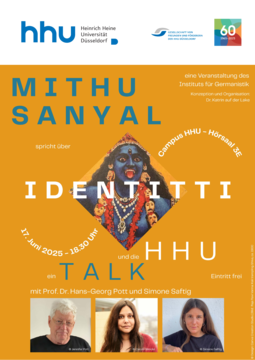
Univ.-Prof. Dr. Ricarda Bauschke-Hartung holds the Chair of Old German Literature and Language at the Heinrich Heine University Düsseldorf since 2008. She previously held professorships at Albert-Ludwigs-University Freiburg and the University of Fribourg, Switzerland, and served as Vice Rector for Academic Quality and Equality (2012-2014). Her research focuses on medieval poetry, narrative texts, and cultural transfer research, particularly exploring Romance-German relations in medieval literature. Key affiliations: Wolfram von Eschenbach Society (President since 2021, Board since 2012), Bavarian Academy of Sciences (Project Advisory Board since 2022), HHU University Council (since 2017) Research Interests : Spanning Middle High German love poetry, Walther von der Vogelweide studies, manuscript mediations, and cultural transfer mechanisms. Her work bridges editorial scholarship with theoretical approaches to intertextuality, narrative structures, and body semantics in medieval texts. She contributes to debates on historical semantics (e.g., concepts of 'arebeit', 'dienest'), poetic models, and institutional supports for young researchers. Publications highlight her expertise in textual editions, narrative theory, and comparative studies, including co-editorship of Wolfram-Studien and leadership in major colloquia series. Current projects include a new translation of Herbort von Fritzlar's Trojaroman and book projects on European medieval poetic networks. Honors : DFG Research Grant (2001-2003) FRIAS Fellowship (2008) Board member of Wolfram von Eschenbach Society (2012-) Academic Leadership : As HHU University Council member, she shapes institutional policies. Her pedagogical work includes digital resources development and supervision of student research projects, supported by a team of academic counselors and research assistants.
Dr. Almut Sophia Koepke is a junior research group leader and TUM Junior Fellow at the Technical University of Munich (TUM) and University of Tübingen. She leads the multi-modal learning research group focusing on video understanding through sound, vision, and text integration. University: Technical University of Munich School: TUM School of Computation, Information and Technology Department: Informatics 9 Academic Rank: Researcher Her research spans multi-modal learning, audio-visual foundation models, and cross-modal attention mechanisms. Key themes include: Advancing zero-shot learning through language-guided audio-visual models Developing explainable AI systems via attention pattern translation in VQA Exploring temporal understanding in video-adverb retrieval Building robust multi-modal representations for self-driving applications Recent publications analyze foundation model capabilities in audio-visual tasks (ICCV 2025), temporal reasoning (ACMMM 2024), and cross-modal attention frameworks (ECCV 2022). She co-organizes CVPR workshops on foundation model evaluations and serves as area chair/reviewer for major conferences.
Andreas Niekler is a research associate and lecturer in Computational Humanities at the Institute of Computer Science, Leipzig University, Faculty of Mathematics and Computer Science. He develops computational methods for semantic language analysis and applies them to computational social science and humanities research, with focus on machine learning and data management methodologies. His research interests span Natural Language Processing , Computational Social Science , Digital Humanities , Text Mining , Machine Learning , and Conversational AI . Niekler specializes in developing algorithms including Bayesian Models, Topic Models, Deep Learning, and Support Vector Machines for text analysis applications. He is actively involved in the development of the interactive Leipzig Corpus Miner platform and researches how semantic representations can be applied to literary studies and scientometrics. Niekler's recent publications demonstrate expertise across computational linguistics, social science methodology, and practical applications of text mining. His work shows strong interdisciplinary connections between computer science, linguistics, and social sciences, with particular emphasis on developing robust methodologies for automated content analysis. As an educator, Niekler has extensive teaching experience in computational methods for humanities and social sciences, offering courses on text mining, computational linguistics, and programming in R and Python. He serves as a scientific staff member in the Computational Humanities research group led by Prof. Dr. Manuel Burghardt and represents scientific staff in the Faculty Council of Mathematics and Computer Science at Leipzig University.
Prof. Margret Keuper is a Professor in the Department of Computer Vision and Machine Learning at the Max Planck Institute for Informatics. Her research focuses on advancing machine learning and computer vision techniques, with an emphasis on model fairness, adversarial robustness, and multimodal interactions. She leads interdisciplinary projects exploring topics such as dataset analysis, generative models, and climate action through visual narrative analysis. Research Interests: Her work bridges theoretical foundations and practical applications in domains like adversarial training, image classification robustness, and robotics perception. She explores how vision-language models can be steered to align with human biases and develops methods for data-efficient learning and interpretability. Recent Contributions: Recent work includes FAIR-TAT (model fairness via adversarial training), VSTAR (video synthesis), and TikZero (zero-shot graphics program generation). Her publications in top venues like CVPR, ICCV, and ICLR highlight contributions to both methodological innovation and real-world impact. Collaborations: Works closely with researchers across Max Planck and academic partners, focusing on projects such as sensor layout optimization, climate discourse analysis via social media imagery, and domain-aware foundation model fine-tuning.
Li Wei is a distinguished academic affiliated with Tsinghua University, with a focus on interdisciplinary research spanning artificial intelligence, machine learning, and computer vision. His work often intersects with medical informatics, remote sensing, and signal processing, demonstrating a commitment to advancing technological solutions in healthcare, environmental monitoring, and engineering systems. Research interests include deep learning applications in clinical diagnostics, satellite data analysis for climate modeling, and optimization of energy storage systems. He has contributed to innovative solutions in areas such as UAV-enabled edge computing, privacy-preserving blockchain protocols, and thermal-based surveillance systems. His collaborative projects often involve multidisciplinary teams across institutions. Publications reflect a strong emphasis on practical applications, such as mobile health tools for tumor recognition, transformer-based super-resolution techniques for oceanography, and AI-driven risk classification models for respiratory diseases. While no specific awards or grants are listed, his prolific output across top-tier journals indicates sustained research impact. Professional activities include contributions to conferences like RecSys, MICCAI, and AAAI, and editorial roles are implied through his extensive publication record. Collaborations with industry partners (e.g., in energy systems and medical imaging) suggest engagement with real-world problem-solving.
Maximilian Büttner is a Researcher at the Institute of Mathematics within the Faculty of Natural Sciences II at Martin-Luther-Universität Halle-Wittenberg. His work focuses on mathematics didactics for secondary education, specifically developing conceptual approaches to trigonometry through design-based research methodologies. Education: 2018–2022: Mathematics and Physics (Teaching Degree) at Martin-Luther-Universität Halle-Wittenberg 2016–2020: M.Sc. Mathematics (Thesis: Wong-Zakai approximations for fractional Brownian motion SDEs) 2013–2016: B.Sc. Mathematics (Thesis: Kolmogorov equations for fractional Ornstein-Uhlenbeck processes) Research Interests: Büttner specializes in mathematics education research with emphasis on trigonometry learning. His work examines how visual representations and designed learning sequences foster conceptual understanding, identifies cognitive barriers in trigonometric reasoning, and develops pedagogical frameworks for secondary mathematics education using iterative design-evaluation cycles. Publications: His recent articles consistently explore trigonometry education through the lenses of conceptual development, representation theory, and design research. Primary themes include the role of graphical representations in meaning-making, derivation of core trigonometric concepts, and analysis of learning obstacles in sine/tangent functions. Awards: 2025: Travel Grant (Stiftung Theoretische Physik/Mathematik) 2023: Georg-Cantor-Verein Research Award 2021: Ebert Beratung Innovations Prize Teaching & Service: Supervises school practical exercises for teaching candidates. Active conference participant with presentations at CERME (Europe) and GDM (Germany) conferences. Member of the Didactics of Mathematics for Secondary Levels research group.
Dr. Pascal Reuss is a Researcher at the Intelligent Information Systems (IIS) Division within the Institute of Computer Science , University of Hildesheim . His work focuses on Case-Based Reasoning (CBR) systems, Multi-Agent Systems , and Knowledge Management applications. Active in CBR framework development and game-based AI research Teaching Computer Science III (Databases) for winter 2025/26 Participating in university sustainability initiatives like Stadtradeln 2024/25 Reuss contributes to AI education through practical implementations in gaming environments and has developed visualization tools for CBR agent behavior. His research spans multi-agent collaboration , dynamic case bases , and domain-specific language implementations for knowledge maintenance. Notable contributions include: Co-developing the FEATURE-TAK framework for knowledge extraction Designing case factories for distributed CBR systems Implementing finite state machines for tactical game agents Creating CBR-based fitness planning systems His work appears in various CBR and Game Development publications from 2011-2024. The research demonstrates practical applications of CBR in aircraft maintenance diagnostics , training plan generation , and educational technology contexts.
Leif Kobbelt serves as a University Professor at RWTH Aachen University, leading the Computer Graphics Group within the Department of Computer Science (Informatik 8). His research focuses on advancing geometry processing, interactive visualization, and computer graphics through innovative algorithmic solutions and interdisciplinary collaborations. Professor Kobbelt's research program centers on geometry acquisition and processing, with significant contributions to mesh generation, surface reconstruction, and neural rendering techniques. His work bridges theoretical geometry with practical applications in computer vision, photo-realistic image synthesis, and multimedia data transmission, often involving collaborations with industry partners and international research teams funded by DFG and EU sources. Recent publications (2023-2025) reveal a strategic integration of deep learning with traditional geometry processing, particularly in Gaussian splatting for real-time rendering, NeRF-based 4D content generation, and robust mesh Boolean operations. His group maintains leadership in quad mesh optimization and surface mapping while expanding into immersive visualization techniques for complex data analysis. The group has earned recognition through prestigious awards: Günter Enderle Best Paper Award at Eurographics 2023 Best Paper Award (1st place) at Symposium on Geometry Processing 2022 Honorable Mention for Best Paper at ACM Symposium on Virtual Reality Software and Technology Funding from Deutsche Forschungsgemeinschaft and European Union programs supports the group's research infrastructure and international collaborations. The team actively supervises graduate theses while developing open-source software tools that translate theoretical advances into practical industry applications, particularly in digital fabrication and immersive visualization systems. The Computer Graphics Group operates as a central hub for visual computing research at RWTH Aachen, maintaining strong ties with both academic institutions and technology companies. Their recent work on virtual reality educational tools and high-fidelity 3D reconstruction systems demonstrates commitment to knowledge transfer and real-world impact beyond traditional publication venues.