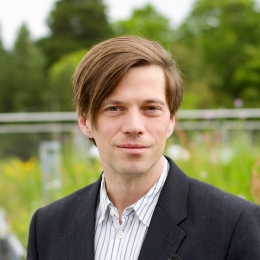
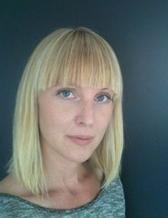
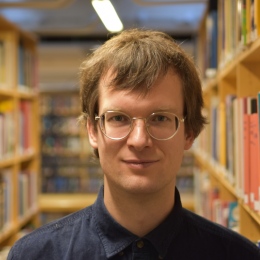
Linda Holmer is a Lecturer at HDK-Valand , a school within the University of Gothenburg . Her work bridges drawing, writing, and pedagogy, focusing on the tension between wanting and being willing in creative processes. She emphasizes collaborative workshop methods and the use of fools’ methods (dummerjönsmetoder) to foster awe, wonder, and joy as central elements in serious learning environments. University: University of Gothenburg School: HDK-Valand Role: Lecturer Research Interests Creative processes and artistic pedagogy Group dynamics in workshops Healing through drawing and storytelling Performativity in picture books Materiality and spatial design in art Psychological challenges in artistic creation Publications highlight her exploration of drawing as a therapeutic tool, feminist critique in children’s book illustration, and the interplay of space and narrative in artistic installations. She collaborates with institutions like the Tamer Institute of Community Learning (Palestine) and Open Window (HDK-Valand), and her works have been presented at symposia in Sweden and Palestine.
Morten Fjeld is a Professor at Chalmers University of Technology in the Department of Interaction Design and Software Engineering . His research focuses on Human-Computer Interaction (HCI) , Augmented Reality (AR) , and Virtual Reality (VR) , with applications in industrial tomography, drone interaction, and multimodal systems. He has co-authored 152 publications and leads projects connecting immersive technologies with user experience, robotics, and collaborative tools. His recent articles explore gaze cues in climate data visualization, emotion-aware voice assistants, and haptic feedback in VR door-opening techniques. Themes span AR/VR design , human-drone interaction , and multimodal feedback systems . He actively collaborates with researchers in Sweden, Germany, and Japan, focusing on user-centric technology development. Contact: fjeld@chalmers.se .
Patrik Hernvall serves as an Associate Professor at Stockholm University's Department of Computer and Systems Sciences, holding dual expertise in pedagogics and media technology. His academic work spans teaching Human Sciences within MDI, Scientific Methodology and Communication in Computer and Systems Sciences, and Empirical Research Methodology for Computer and Systems Sciences, while supervising Bachelor's and Master's level students. His research interests focus on children's conditions in technology-dense environments, technology-supported learning, and school development opportunities, with particular emphasis on norm-critical theory and children's perspectives in research. Hernvall actively contributes to two major research groups: the Learning Analytics and AI for Education Group, which investigates data-driven methods to strengthen education, and the ReVisE Research Group, which explores how emerging technologies like IoT, AI, VR, and MR can enhance educational practice. Hernvall's recent publications reveal significant trends in educational technology research, with particular focus on emergency remote teaching during the pandemic, work-life boundary experiences in technology-mediated workplaces, assessment of multimodal texts, and children's understanding of digital economics. His work consistently bridges theoretical frameworks with practical educational applications, often employing design-based research methodologies. National research school in visual pedagogy and craft pedagogy (FoBoS) [2020 ff] Teacher movement patterns project [2022] IoT Hub School project [2018-2021] Children and the Digital Economy (BoDE) project [2016-2018] His advisory work includes supervision at Bachelor's and Master's levels, with research collaborations spanning schools and industry partners across Sweden. Hernvall's lab work centers around the ReVisE group's exploration of emergent technologies in educational contexts, with particular focus on innovative visualizations and real-world applications that enhance teaching and learning experiences.
Andreas Gerhardsson is a Guest Researcher at the Department of Psychology, Stockholm University, affiliated with both the Division for Sleep and Alertness Research and The Fischer Lab. His work examines how sleep deprivation impacts emotional-cognitive processing across age groups. Department of Psychology Division for Sleep and Alertness Research The Fischer Lab Research interests include: Sleep deprivation effects on emotional processing Age-related cognitive resilience Interaction between affective bias and memory integration Neurophysiological responses to stress Positivity effect in aging populations His publications since 2015 include experimental studies on: Emotional working memory load Age-dependent stress responses Reinforcement learning under sleep restriction Perceptual constancy of facial expressions Task-unrelated thought mechanisms Since 2017, he has lectured on statistics and sleep-related topics while supervising cognition laboratory sessions. His methodological approach combines computational modeling with neuroimaging techniques like MEG to explore sleep-stress-recovery relationships.
Sara Van Meerbergen is an Associate Professor in Dutch Studies at Stockholm University , where she serves as Director of Studies. Her research bridges multimodal discourse analysis , translation studies , and children's literature , focusing on ideological representations in translated texts and semiotic interplay across media. She leads projects on transnational literary flows of Dutch authors and collaborates with institutions like the Astrid Lindgren Memorial Award . Key Research Themes : Multimodal communication, translation sociology, childhood ideologies, glocalization of media Notable Collaborations : Dr. Alexa Stoicescu (Bucharest), Charlotte Lindgren (Dalarna University), international Dutch studies networks Her recent work examines metamodern Dutch authors like Lukas Rijneveld, analyzing their 'born translated' phenomenon and social media's role in literary dissemination. She also investigates semiotic elements like hair symbolism in Kitty Crowther's picture books. Publications span multimodal analysis of Disney animations and spatial semiotics in airports , revealing how built environments shape traveler affect. While no student names are listed here, her pedagogical work intersects with transcultural literary studies and digital translation infrastructure development through the DLBT Digital Library project.
Kerstin Danckwardt-Lillieström is a researcher at the Department of Teaching and Learning at Stockholm University , Sweden. She leads the Drama for Learning research group, focusing on drama-based pedagogical methods in science education. Research Focus: Combines creative drama with chemistry education to enhance understanding of abstract concepts like electronegativity and chemical bonding. Investigates participatory methodologies, semiotic resource utilization, and ethical frameworks in teacher-researcher collaborations. Explores sustainable development teaching through interactive drama workshops. Key Publications: 2020 chapter on participatory research ethics; 2020 article on drama-based chemistry instruction; 2019 licentiate thesis on drama in chemistry classrooms; 2018 study on multimodal learning in NorDiNa journal. Projects: Leads the ongoing initiative Explorative Drama workshops for Sustainability in Higher Education , aiming to create interactive, values-based learning experiences.
Johan Lundin Kleberg is an Associate Professor in the Department of Psychology at Stockholm University, where he conducts research in clinical developmental psychology. His work focuses on understanding the mechanisms behind neurodevelopmental conditions including ADHD, autism spectrum disorder, and anxiety disorders, with particular emphasis on visual attention patterns and social cognition in affected individuals. Dr. Kleberg's research interests center on how developmental psychiatric conditions arise and manifest in everyday functioning. His work examines eye-tracking patterns, pupillary responses, and decision-making processes in children and adolescents with conditions such as ADHD and autism. He investigates how these individuals process social information, respond to emotional stimuli, and make decisions in various contexts, seeking to identify underlying cognitive and neural mechanisms that contribute to diagnostic symptoms. His publication record demonstrates consistent research activity examining visual attention deficits in neurodevelopmental disorders. The research shows particular interest in how gaze patterns, particularly toward eyes and faces, differ in individuals with autism and ADHD compared to neurotypical controls. His work also explores reward processing, emotional regulation, and the relationship between physiological responses (like pupil dilation) and clinical symptoms across various developmental disorders. Dr. Kleberg leads the AIDA research project (Attention and decision making children and adolescents with developmental psychiatric conditions), which examines decision-making and attention in children with developmental psychiatric conditions, particularly depression, autism, and ADHD. This project is part of a broader research program investigating altered reward processing across multiple developmental psychiatric disorders.
Jakob Evertsson is Senior Lecturer in Education at the Department of Education and Didactics, Stockholm University. He holds a Ph.D. from Åbo Akademi (Finland) and an M.St. from Oxford University (UK), with associate professorships in History (Uppsala University) and Church History (Åbo Akademi University). His research focuses on the historical sociology of education, particularly the evolution of educational systems through state intervention, professionalization processes, and curriculum transformations in Sweden from the 11th to 20th centuries. Ph.D., Åbo Akademi, Finland M.St., Oxford University, UK Associate Professor in History, Uppsala University His scholarly work examines school inspection mechanisms (1861-1930), the material history of educational tools like wallcharts, and the feminization of teaching professions during Sweden's elementary school expansion. Current projects analyze the university as a referential body (1968-2022), building on his Swedish Research Council-funded study about school inspections (2020-2023). He teaches courses spanning educational history, leadership, conflict management, and project organization at basic levels, with advanced responsibility for communicative leadership instruction. Through publications in journals like Paedagogica Historica and History of Education , Evertsson's scholarship reveals patterns in educational reform, visual pedagogy evolution, and institutional power dynamics between church and state. His work combines archival analysis of inspection reports with material culture studies of classroom artifacts to trace how physical and bureaucratic changes shaped teacher professionalization and curriculum implementation. Research Group Affiliation: History of Education and Sociology of Education
Hanna Björlin Avdic is a researcher affiliated with the Department of Clinical Neuroscience at Karolinska Institutet, Stockholm. She works in the child and adolescent psychiatry research group led by Jens Högström, focusing on neurodevelopmental and psychiatric disorders related to rare genetic syndromes. Her current employment spans 2025-2027, and she completed her PhD in 2023 with a thesis on Turner syndrome. Doctoral Thesis: Genetic, neurodevelopmental, and psychiatric studies of Turner syndrome (2023) Her research intersects medical genetics, psychiatry, and developmental neuroscience, particularly examining cognitive profiles and behavioral patterns in Turner syndrome and Williams syndrome. Studies include investigations into social feedback processing, attentional mechanisms, and psychiatric comorbidities. Her recent publications reveal trends in understanding how genetic syndromes influence neurocognitive development and emotional regulation, with methodological approaches spanning behavioral studies, pupillometry, and population-based analyses.
Jan Engvall is a Visiting Professor at Linköping University, working within the Department of Health, Medicine and Care and the Department of Diagnostics and Specialist Medicine. He divides his time between research in patient-based diagnostics and clinical work in cardiac imaging. His educational background includes a Medical degree from the University of Gothenburg (1979), a Dissertation from Linköping University (1993), and a Postdoctoral fellowship at Stanford University (2001). He achieved Associate Professor status in 2002 and was appointed Adjunct Professor in 2011. Dr. Engvall's research focuses on cardiovascular imaging, particularly using MRI techniques to develop more accurate and less stressful examination methods for patients. His work is closely tied to the Swedish Cardiopulmonary BioImage Study (SCAPIS), a large population-based study examining cardiovascular and pulmonary health in 30,000 individuals aged 50-65. He also contributes to the CARDIPP study, which investigates cardiovascular risk factors in patients with type 2 diabetes, and the Cardiovascular Imaging and Modeling (CIM) research cluster, which develops new image-based methods for assessing heart function and hemodynamics. Analysis of his recent publications reveals a strong focus on advanced cardiovascular imaging techniques, particularly 4D Flow MRI applications. His research spans multiple areas including valvular heart disease, atherosclerosis detection, cardiac remodeling, and the relationship between metabolic factors and cardiovascular health. Much of his work leverages data from the SCAPIS cohort, examining subclinical manifestations of cardiovascular disease in the general population. Dr. Engvall serves on the local steering group for SCAPIS in Linköping and acts as a technical assessor for Swedac regarding the quality standard ISO 17025. His educational contributions include teaching functional anatomy of thoracic organs in the medical program and pressure and flow courses in the Master of Science in Medical Technology program. He collaborates extensively with colleagues including Professor Tino Ebbers, Professor Carl-Johan Carlhäll, and Adjunct University Lecturer David Kylhammar within the Cardiovascular Sciences Unit at Linköping University.
Elin Nordenström is a Lecturer at the University of Gothenburg's Department of Education, Communication and Learning, where she also serves as Director of Studies. Her academic work focuses on the intersection of education, simulation-based learning, and professional development, particularly in healthcare contexts. Her research interests center on simulation-based education, with particular emphasis on debriefing techniques, video analysis in educational contexts, and professional development. Nordenström investigates how visual expertise develops in professional training settings, examining the use of eye-tracking data and video-stimulated reflection in fields ranging from healthcare to maritime piloting. Her work explores the social dimensions of learning, accountability in educational settings, and the pedagogical applications of technology in professional training environments. Analysis of Nordenström's publication record reveals a consistent focus on simulation-based learning across multiple professional domains. Her work demonstrates expertise in analyzing instructional practices through video methodology, with significant contributions to understanding debriefing techniques in healthcare simulation. A notable trend in her research involves examining visual expertise development in professional contexts, using innovative methods like eye-tracking to understand how professionals process visual information during training. Her publications span healthcare, maritime, and dental education, showing the transferability of her methodological approaches across different professional training environments. Nordenström has established productive collaborations with researchers across multiple institutions, frequently working with scholars like Hans Rystedt, Oskar Lindwall, and Madeleine Abrandt Dahlgren. Her research appears in both education-focused journals and interdisciplinary publications addressing professional training and simulation methodologies.
David Pallarès is a Professor at the Department of Energy Technology, Chalmers University of Technology. His research focuses on the application of fluidized bed technology in energy conversion processes contributing to sustainability and climate change mitigation. He synergizes the development and validation of fluidized bed models with experimental research mainly focused on the dedicated advanced measurement of fluid-dynamics. Since 2018, he has served as vice-Head of Department for doctoral studies, and since 2021, he represents Sweden in the International Energy Agency's work group for Fluidized Bed Conversion. Professor Pallarès' research interests span multiple areas of energy technology with a strong emphasis on fluidized bed systems. His work encompasses the fundamental understanding of fluid-dynamics in fluidized beds, development of advanced measurement techniques for solids flow, and application of these technologies to sustainable energy conversion processes. He has made significant contributions to the understanding of particle transport phenomena, solids mixing, and heat transfer in bubbling and circulating fluidized beds. His research also extends to carbon capture technologies, particularly sorbent-based direct air capture and calcium looping, as well as thermochemical energy storage systems that can integrate with district heating networks. With 132 publications and involvement in 16 research projects, Professor Pallarès has established himself as a leading expert in fluidized bed technology. His recent work shows a strong trend toward addressing climate change challenges through innovative energy technologies, with increasing focus on carbon capture, utilization and storage (CCUS) solutions and renewable energy integration. The interdisciplinary nature of his research bridges chemical engineering, energy technology, and environmental science to develop practical solutions for sustainable energy systems. As vice-Head of Department for doctoral studies since 2018, Professor Pallarès plays a key role in guiding and mentoring PhD students at Chalmers. His leadership extends internationally through his representation of Sweden in the International Energy Agency's work group for Fluidized Bed Conversion since 2021. His research portfolio includes diverse funding sources, with projects supported by the European Commission, Swedish Research Council, Swedish Energy Agency, and industry partners like Valmet.
Ingela Nyström is a Professor in Visualization at Uppsala University's Department of Information Technology. She serves as the node coordinator for InfraVis and as Director of Postgraduate Studies at the Department of Information Technology. Her interdisciplinary work bridges Uppsala University's three academic domains through collaborations with the Centre for Image Analysis (CBA), Centre for Women's Mental Health (WOMHER), Uppsala Centre for Digital Humanities (CDHU), and Medtech Science & Innovation (MTSI). Medical image analysis 3D visualization Haptics in surgery planning Interactive segmentation Digital geometry Biomedical engineering Her recent research focuses on rotation-equivariant neural networks for biomedical image classification, interactive segmentation tools for cranio-maxillofacial surgery planning, and precision evaluation of intraoral scanning technologies. Publications since 2023 demonstrate continued work on 3D imaging protocols for implant dentistry and surgical applications. 2024: Equivariant CNNs for rotation-invariant biomedical imaging 2023: In vivo precision studies of full-arch implant scans 2021: Virtual surgical planning with haptic assistance 2016-2017: Multimodal robotics perception and 3D segmentation tools 2014: Orbital morphology analysis in craniosynostoses 2005-2011: Foundational work in 3D skeletons and fuzzy object measurements
Elin Anna Topp is a Senior Lecturer in the Department of Computer Science at Lund University's Faculty of Engineering (LTH), holding the title of Excellent Teaching Practitioner (ETP) and serving as Head of Department. She manages projects including NEXTG2COM (a Vinnova Competence Centre) and contributes to Lund's Natural and Artificial Cognition and AI and Digitalization profile areas. Her research centers on establishing common ground between humans and machines through Artificial Intelligence, Cognitive Science, and Human-Robot Interaction. She develops robotic systems that communicate effectively with users in industrial/service robotics and autonomous system monitoring (e.g., drones, self-driving cars), focusing on resolving ambiguities from mismatched human-robot expectations. This work stems from her PhD research on Human Augmented Mapping and addresses critical needs for flexible, human-comprehensible interfaces in increasingly autonomous systems. Recent publications (2023-2025) reveal strong thematic cohesion in human-robot interaction for autonomous systems, with dominant trends in situational awareness assessment (UAV operations), conflict simulation (autonomous driving), and conversational interfaces. Her work consistently bridges cognitive theory with practical robotics applications, emphasizing human-centered design for safety-critical domains. Scientific recognition includes: Excellent Teaching Practitioner title from LTH's Pedagogical Academy (2022-present) She actively shapes graduate education as WASP Graduate School Management member (since 2019) and COMPUTE Graduate School Steering group member, coordinating specialized courses like WASP's Interaction, Collaboration, and Visualisation. Major research funding comes from AISA (AI-powered situational awareness, 2023-2026) and NextG2Com (2024-2028), supporting her work on shared autonomy and digital infrastructure. Her leadership extends to supervising PhD projects including 'Get a Grip - Accurate robot–human handovers'. Topp co-manages RobotLab LTH infrastructure and collaborates across Lund's robotics ecosystem through initiatives like Robotics Week for schools and the Natural and Artificial Cognition conference series, fostering interdisciplinary teams spanning computer science, engineering, and cognitive science.
Robert Mikael Östling is a Docent (Associate Professor) in Computational Linguistics at Stockholm University's Department of Linguistics. His research spans natural language processing with a multilingual perspective, computational typology, and applications of NLP to psycholinguistic investigations. Position: Docent (Associate Professor) Institution: Stockholm University Department: Linguistics Workplace: Room C 338, Universitetsvägen 10 C, plan 2-3 Östling's research focuses on natural language processing applications including part-of-speech tagging, machine translation, and word alignment from a multilingual perspective. He also utilizes NLP tools in computational typology to understand global language structures and to automate psycholinguistic investigations. His work bridges theoretical linguistics with practical NLP applications. His recent publications reveal consistent focus on multilingual language models, language representations, and cross-linguistic patterns. The research demonstrates strong connections between computational approaches and linguistic theory, with applications ranging from sign language analysis to machine translation systems. Östling serves as principal investigator for the Swedish Research Council funded project "Structured multilinguality for natural language processing" and is involved in the National Graduate School in Digital Philology (DigPhil) and Swe-CLARIN initiatives. His technical expertise spans neural language models, multilingual processing, and computational analysis of linguistic structures across diverse language families.