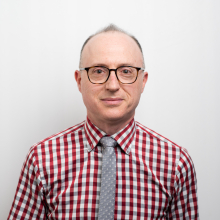
Laurent Mydlarski is a Professor in the Department of Mechanical Engineering at McGill University, affiliated with the Faculty of Engineering. His research focuses on experimental fluid mechanics, particularly turbulent flows and scalar mixing. He holds a Ph.D. from Cornell University and B.A.Sc. from the University of Waterloo. Research interests include turbulence statistics, scalar dispersion, differential diffusion, and industrial cooling applications such as hydroelectric generators and microelectronics. His work combines experimental methods like hot-wire anemometry, laser-induced fluorescence, and particle-tracking velocimetry. Key contributions include studies on multi-scalar mixing in jets, wall shear stress in turbulent flows, and thermal anemometry probe design. His Mydlarski Lab at McGill explores both fundamental fluid dynamics and practical engineering solutions. Recent publications (2023-2025) address multi-scalar mixing metrics, electronic cooling innovations, and drag reduction on porous cylinders. Collaborations with industry focus on applying fluid mechanics principles to real-world thermal management challenges.
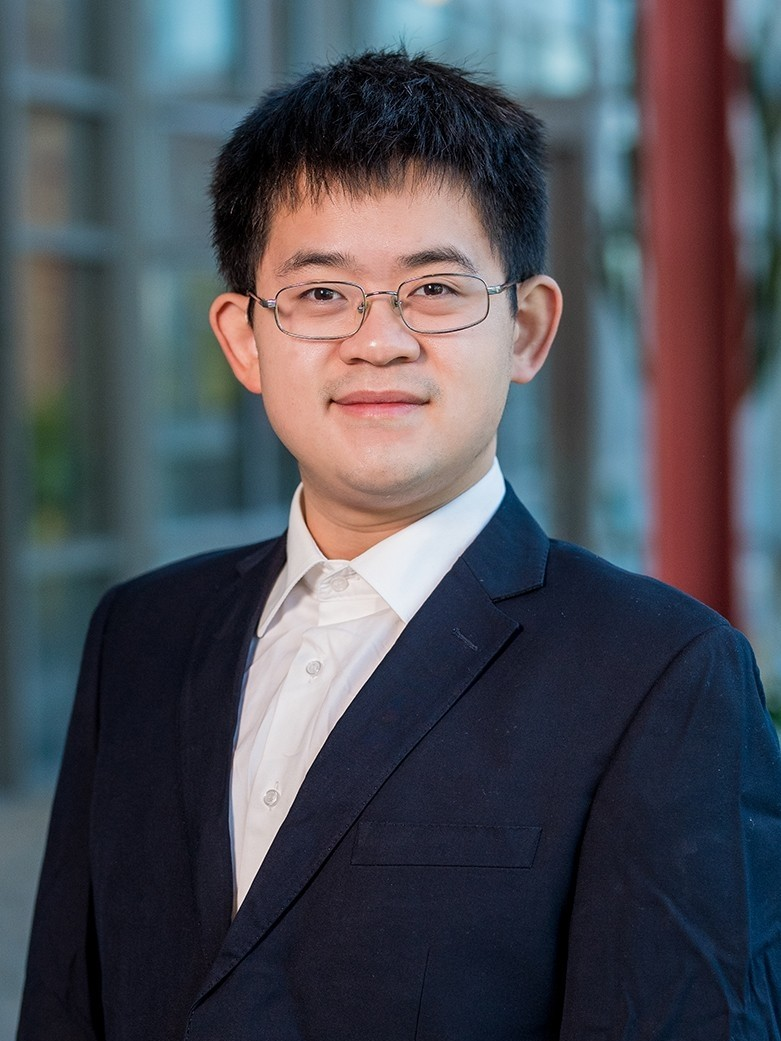
Wenhu Chen is an Assistant Professor at the University of Waterloo's Computer Science Department and a CIFAR AI Chair at the Vector Institute. He also holds a part-time role as a Senior Research Scientist at Google DeepMind (20% allocation). His research focuses on natural language processing, deep learning, and multimodal reasoning, with contributions to models like MAmmoTH, OpenCoderInterpreter, and VISTA. He received awards including the Canada CIFAR AI Chair (2022) and the UCSB CS Outstanding Dissertation Award (2021). Education: PhD in Computer Science from the University of California, Santa Barbara (under William Wang and Xifeng Yan). Research interests include complex reasoning, controllable GenAI, and multimodal benchmarks like MEGABench and MMMU. Grants include CIFAR AI Chair Funding (2022-2027), NSERC Discovery Fund (2023-2028), and multiple NRC Canada grants. He directs the TIGER Lab, advancing generative models in text, images, videos, and music. Recent talks include presentations on multimodal reasoning at Apple and NeurIPS workshops.
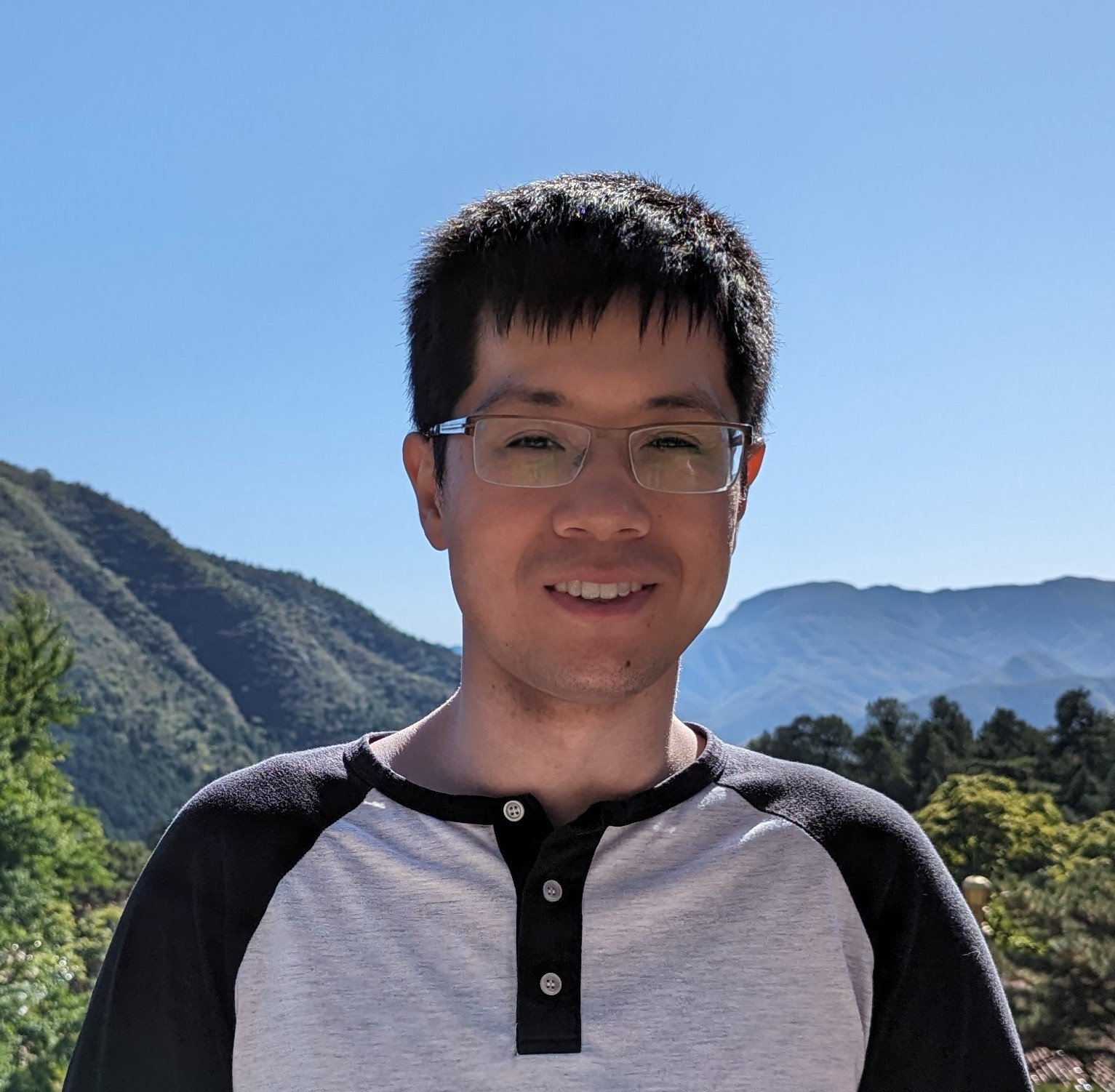
Linyi Li is an Assistant Professor in the School of Computing Science at Simon Fraser University (SFU), leading the Trustworthy Artificial Intelligence (TAI) Lab. His research focuses on certifiably trustworthy deep learning systems, combining machine learning and computer security. He holds a PhD from the University of Illinois Urbana-Champaign (UIUC) and a B.Eng. from Tsinghua University. Affiliations: Simon Fraser University, TAI Lab Education: PhD in Computer Science, UIUC, 2023 B.Eng (Cum Laude), Tsinghua University, 2018 His research interests include deep learning , trustworthy machine learning , large language models , and software engineering . He emphasizes rigorous certification of robustness, fairness, and numerical reliability in AI systems. Recent work includes the InfiBench benchmark for evaluating code LLMs and advancements in neural network verification. Recent Research Trends: His publications span certified robustness, fairness guarantees, and scalable verification techniques for deep learning models. He also explores scientific evaluation of foundation models and adversarial defense mechanisms. Awards: Rising Stars in Data Science AdvML Rising Star Award Wing Kai Cheng Fellowship Finalist: Qualcomm Innovation Fellowship (2022) Winner: VNN-COMP'23 Competition (Team α, β-CROWN) Advising & Grants: As a PI, he oversees the TAI Lab's research. Though no specific grants are listed, his work is funded through competitive awards and university resources. Labs/Teams: Leads the TAI Lab at SFU, focusing on foundational and applied research in trustworthy AI.
Arash Arami is an Associate Professor in the Department of Mechanical and Mechatronics Engineering at the University of Waterloo, cross-appointed in Systems Design Engineering. He directs the Neuromechanics and Assistive Robotics Laboratory and maintains affiliations with Waterloo Robohub, the Centre for Bioengineering and Biotechnology, Waterloo AI institute, and KITE institute at Toronto Rehab Institute. He earned his Doctorate in Electrical Engineering from EPFL (2014), Master of Science from University of Tehran (2009), and Bachelor of Science from University of Tabriz (2006), all in Control Engineering. His research in Assistive Robotics and Rehabilitation Engineering integrates Machine Learning with Neuromechanics to develop intelligent systems for human movement analysis. Key focus areas include exoskeleton control algorithms, wearable sensor systems, and neural control modeling for rehabilitation applications. Recent publications demonstrate interdisciplinary work spanning robotics, biomedical engineering, and materials science, with emphasis on real-time human locomotion prediction, exoskeleton-human interaction, and data-driven health monitoring solutions. Dr. Arami serves as Chair of the NSERC Scholarship Committee (2021-2023) and mentors graduate students through the Mechatronics Exchange Study program. His teaching includes core courses in control systems, robot manipulators, and biomechanical engineering. The Neuromechanics and Assistive Robotics Laboratory fosters collaborations with clinical partners at Toronto Rehab Institute, focusing on translating robotic innovations into practical rehabilitation tools through interdisciplinary teamwork.
Renée J. Miller is a Professor and Canada Excellence Research Chair in Data Intelligence at the Cheriton School of Computer Science, University of Waterloo. Her research focuses on data integration, data management, and open data systems. She holds a PhD in Computer Science from the University of Wisconsin-Madison and bachelor’s degrees in Mathematics and Cognitive Science from MIT. Her work addresses challenges in data preparation, integration, and curation, aiming to reduce the burden on data scientists. She co-authored foundational papers on data exchange and schema mapping, earning the ICDT Test-of-Time Award (2013) and the Alonzo Church Award (2020). Miller has led major initiatives like the NSERC Business Intelligence Network and the International Very Large Data Base Foundation. Her grants include NSERC Accelerator Awards and funding from IBM, SAP, and Microsoft. Notable students include Ariel Fuxman (SIGMOD Dissertation Award winner) and Oktie Hassanzadeh (IBM PhD Fellow). Her research group, the Miller Lab, develops tools like Clio for schema mapping and systems for data lake exploration (RONIN, JOSIE).
Qingguo Li is a Professor and Associate Head at the Department of Mechanical and Materials Engineering , Queen's University , and a member of the Ingenuity Labs Research Institute . He specializes in biomechanical system design, energy harvesting, wearable sensors, gait analysis, and load carriage systems. His research integrates robotics, biomedical engineering, and sensor technology to develop human-centric devices and mobility aids. Current Roles : Professor, Associate Head, Queen's University Research Institute : Ingenuity Labs Research Institute Lab : Bio-Mechatronics and Robotics Laboratory His work focuses on biomechanical energy harvesting , IMU-based motion analysis , and assistive device development . Key applications include stroke rehabilitation, gait monitoring, and wearable power generation systems. Articles span cable-driven robots , smart walkers , and 3D printing mechanisms , emphasizing human-robot interaction and dynamic modeling . The lab explores sensor calibration , adaptive control algorithms , and human movement optimization . Areas of impact include rehabilitation engineering , load carriage stability , wearable sensor accuracy , and assistive robotics . His team develops solutions for gait asymmetry detection , post-stroke mobility , and low-cost energy systems , leveraging machine learning and kinetic modeling .
Sarah Turnbull is an Associate Professor at the University of Waterloo, affiliated with the Balsillie School for International Affairs. Her work intersects criminology, sociolegal studies, and critical border/migration studies, focusing on immigration detention, deportation, punishment, and social justice through postcolonial, antiracist, and feminist lenses. Education: PhD and MA in Criminology and Socio-Legal Studies from the University of Toronto; BA from Simon Fraser University. Her current research includes: (1) a SSHRC-funded study on the National Immigration Detention Framework in Canada using Foucauldian genealogical methods; (2) the Prison Transparency Project , a comparative analysis of carceral transparency in Canada, Spain, and Argentina; and (3) a transatlantic study on pandemic impacts in prisons. She employs ethnographic and qualitative methods in her research. Selected Grants: 2023–2030: Co-Investigator, Prison Transparency Project (SSHRC Partnership Grant). 2022–2025: Principal Investigator, Reforming Detention (SSHRC Insight Grant). 2022–2023: Co-Principal Investigator, COVID-19 Justice as Penal Justice (Strathclyde-Waterloo Transatlantic Award). Turnbull’s publications and collaborations emphasize systemic inequalities, carceral mobilities, and ethical research practices. She co-founded the Prison Transparency Project and has contributed to dialogues on art as resistance in detention settings.
Martin Willis Monroe is an Assistant Professor in the Department of Classics and Ancient History at the University of New Brunswick. His research focuses on the ancient Middle East, particularly cuneiform cultures, with an emphasis on the history of scholarly knowledge in Babylonian and Assyrian societies. He specializes in Mesopotamian astronomy and astrology, as well as quantitative approaches to historical data. Dr. Monroe holds a PhD in Assyriology from Brown University (2016), an MPhil and BA in Ancient Near Eastern Studies from the School of Oriental and African Studies (2008, 2007). Previously, he served as a postdoctoral fellow and research associate at the University of British Columbia (2016–2023). His current projects include the publication of his Hellenistic astrology research under contract with Brill, titled Celestial Schemata: A Series of Astrological Tables from Seleucid Babylonia , and his role as associate director of the Database of Religious History , a global initiative to quantitatively analyze religious and cultural data. He has contributed to excavations at the Neo-Assyrian site of Tušhan in southeastern Turkey and advocates for responsible qualitative-to-quantitative data conversion in historical scholarship. Dr. Monroe’s research bridges traditional philological approaches with digital humanities, focusing on topics such as cuneiform astral diagrams, the intersection of ‘scientific’ and ‘religious’ texts in antiquity, and the application of computational methods to undeciphered scripts. He teaches courses on ancient civilizations, Near Eastern history, and archaeology.
John Zelek is an Associate Professor in the Department of Systems Design Engineering at the University of Waterloo. He co-directs the VIP (Vision & Image Processing) lab and previously served as Associate Graduate Chair (2013-2017). He co-founded two startups: Tactile Sight (haptic navigation for disabled individuals) and Sweep3D (3D modeling technology). His research focuses on autonomous robotics, 3D scene understanding, infrastructure assessment, medical imaging, and sports analytics using AI/deep learning techniques. Education includes a BASc from Waterloo (1985), MASc from Ottawa (1989), and PhD from McGill (1996). He teaches courses like SYDE 283 (Physics), SYDE 572 (Pattern Recognition), and SYDE 675 (Pattern Recognition). Research interests span robotics, computer vision, anomaly detection, and SLAM. His work applies to infrastructure monitoring, sports analytics (hockey/pitcher analysis), medical imaging (OCT/fundus), and assistive technologies. Recent publications emphasize 3D modeling, SLAM enhancements, and sports tracking algorithms. Zelek advises graduate students (SSPS status) and collaborates with companies like Intelligent Health Solutions and EyeCheck through advisory roles. Key innovations include hybrid SLAM systems, puck localization algorithms, and medical robotic swab systems demonstrated on moving phantoms.
Suresh Krishna is an Associate Professor in the Department of Physiology at McGill University's Faculty of Medicine. His research focuses on the neurophysiological and computational basis of sensory processing, attention, and eye movements, with applications to brain-machine interfaces and human health. He works with human subjects, non-human primates, and open datasets using in-vivo electrophysiology, eye-tracking, and computational modeling. Research interests include visual attention mechanisms, saccadic eye movement control, neural coding of motion perception, and the interplay between attention and decision-making. His work bridges basic neuroscience with translational applications such as improving neural prosthetics and understanding perceptual disorders. Recent work highlights how neural remapping processes during saccades underlie spatial perception, and how attention modulates neural activity patterns in visual cortex. The lab's publications reveal critical insights into the temporal dynamics of attentional shifts and their neural substrates, particularly in areas MT and MST. Dr. Krishna's team also investigates auditory temporal processing in the inferior colliculus, exploring correlations between neuronal responses to sound modulation. Their findings contribute to understanding how sensory systems encode temporal information across modalities. Research is conducted in the M2B3 Lab (http://m2b3.lab.mcgill.ca), which integrates experimental and computational approaches to study brain mechanisms underlying perception and action. No specific awards are listed, but ongoing work involves major contributions to primate neurophysiology and translational neuroscience.
Professor Dirk Bernhardt-Walther is an academic at the University of Toronto, serving as Program Director of the Cognitive Science Program and Department of Psychology . He investigates neural and computational mechanisms underlying high-level sensory perception, focusing on real-world scenes, mid-level vision, and visual aesthetics. Education: PhD in Computation and Neural Systems (Caltech, 2006), M.Phil (University of Cambridge) Research Focus: His lab employs fMRI, MEG, EEG , and GAN-generated stimuli to study scene categorization, perceptual organization, and aesthetic processing. Recent work explores curvature perception, emotion representation in scenes, and neural dissociations between computational and subjective visual metrics. Laboratory Members: The Bernhardt-Walther Lab includes PhD students like Gaeun Son (scene perception), Charlotte Leferink (scene representation), and Dela Farzanfar (aesthetic processing), alongside postdocs and collaborators. Advising: Supervises graduate students in projects combining computational modeling, psychophysics, and neuroimaging, particularly those with backgrounds in computer science or cognitive neuroscience.
Dr. Ian Stavness is a Professor and Department Head in the Department of Computer Science at the University of Saskatchewan. His research focuses on interdisciplinary applications of computer science, including deep learning in agriculture, biomedical computation, and 3D display technologies. He leads the Biological Imaging & Graphics (BIGLAB) laboratory, which develops tools for plant phenotyping and musculoskeletal modeling. Education: Ph.D. in Computer Engineering, University of British Columbia, 2010 M.A.Sc. in Computer Engineering, University of British Columbia, 2006 B.Sc. in Computer Science & B.Eng. in Electrical Engineering, University of Saskatchewan, 2004 Research Interests: Deep Learning for Plant Phenomics & Agriculture 3D Displays and VR/AR Technologies Musculoskeletal Biomechanical Simulation (OpenSim, ArtiSynth) Computer Vision and Image Analysis Awards: ACM CHI 2019 Honourable Mention ACM VRST 2018 Polyphony Digital Award Key Projects: Deep Plant Phenomics Platform Parametric Human Project (Digital Human Modeling) P2IRC (Plant Phenotyping & Imaging Research Center)
Kwang Moo Yi is an Assistant Professor in the Department of Computer Science at the University of British Columbia (UBC), where he conducts research in computer vision and machine learning. He is affiliated with the Computer Vision Lab, CAIDA (Centre for Artificial Intelligence Decision-making and Action), and ICICS (Institute for Computing, Information and Cognitive Systems) at UBC. Education: B.Sc. from Seoul National University Ph.D. from Seoul National University under Prof. Jin Young Choi Post-doctoral researcher at École Polytechnique Fédérale de Lausanne (EPFL) with Prof. Pascal Fua and Prof. Vincent Lepetit Dr. Yi's research focuses on Visual Geometry with the goal of understanding local environments, adapting to them, and acting within them. His work spans applications in autonomous vehicles, drones, robots, and Augmented/Mixed Reality systems. He employs machine learning, particularly deep learning, as the primary tool for advancing computer vision capabilities. His recent publications demonstrate a strong focus on neural rendering techniques, especially 3D Gaussian Splatting and Neural Radiance Fields (NeRF). The research trends show increasing sophistication in handling occlusions, improving rendering quality, and developing more efficient training methods for neural fields. There's also significant work connecting computer vision with practical applications in industrial settings and energy systems. Dr. Yi serves as an area chair for top computer vision and machine learning conferences including CVPR, ICCV, ECCV, NeurIPS, ICML, and AAAI. He was part of the organizing committee for CVPR 2023. He supervises graduate students including Eric (who recently completed his PhD), Gopal (now at Samsung Research), and Jeong-Gi (joining as a postdoctoral fellow). His teaching includes CPSC 425: Computer Vision and CPSC 533Y: 3D Computer Vision with Deep Learning. Dr. Yi is actively involved with the Computer Vision Lab at UBC, collaborating with researchers across CAIDA and ICICS. His work bridges theoretical computer vision with practical applications in various domains including astronomy, industrial automation, and energy systems.
Miao Zhengjie serves as an Assistant Professor in the School of Computing Science at Simon Fraser University (SFU), joining in October 2023 after a research scientist position at Megagon Labs. His work centers on enhancing data science pipelines through innovations in database systems and artificial intelligence. His academic foundation includes: Ph.D. in Computer Science from Duke University (2022) M.S. in Computer Science from Columbia University (2016) B.S. in Computer Science and Technology from Peking University (2015) Dr. Miao's research spans Database Systems , Data Management , Data Curation , and Data Provenance , with emphasis on AI-driven solutions for data pipeline efficiency. His methodology bridges theoretical database concepts with practical data science applications through novel algorithm development. Analysis of his 15 most recent publications reveals persistent focus areas: query explanation systems (35% of works), data augmentation frameworks (27%), and human-AI collaboration tools (20%). These contributions appear consistently in premier venues including SIGMOD, VLDB, and CHI, demonstrating methodological evolution from foundational query debugging (2019) to LLM-integrated annotation systems (2024). He actively participates in the SFU Data Science Research Group , contributing to interdisciplinary initiatives in large-scale data processing. Current information indicates no formal advisees or grant details are publicly documented in his institutional profile.
James T. Enns is a Professor and Distinguished University Scholar in the Department of Psychology within the Faculty of Arts at the University of British Columbia. His research primarily focuses on the role of attention in human vision, with secondary interests in developmental psychology and human-machine interaction. Dr. Enns' research interests span perception, attention, vision, cognition, development, and human-machine interaction. His work explores how the human mind selects information, with particular emphasis on visual attention mechanisms. His laboratory research investigates the fundamental processes of visual perception and how attention modulates these processes across different contexts and developmental stages. Analysis of Dr. Enns' publication record reveals consistent engagement with visual perception, attentional mechanisms, and cognitive processing. His research demonstrates expertise in both theoretical frameworks and experimental methodologies related to visual attention, with applications spanning basic cognitive science to potential implementations in human-computer interaction systems. His work often bridges theoretical cognitive psychology with practical applications. Canadian Society for Brain, Behaviour and Cognitive Science Donald O. Hebb Distinguished Contribution Award (2013) Distinguished University Scholar, UBC (2004) Robert E. Knox Master Teaching Award (2004) Royal Society of Canada Fellow (2002) Killam Faculty Research Prize (1994) Killam Faculty Research Fellowship (1993) Society of Experimental Psychology Fellow Dr. Enns has served as Editor for the Journal of Experimental Psychology: Human Perception and Performance, and as Associate Editor for Psychological Science, Consciousness and Cognition, and Visual Cognition. His research has been supported by grants from NSERC, the Canadian Foundation for Innovation, the Australian Research Council, BC Health, and Nissan. He has authored textbooks on perception, edited research volumes on the Development of Attention, and published numerous scientific articles on vision, attention, and cognitive science. Dr. Enns is currently accepting graduate students and continues to mentor the next generation of cognitive scientists. Dr. Enns leads the UBC Vision Lab, which focuses on how the human mind selects information. The lab conducts research on visual attention, perception, and cognitive processes using a variety of experimental methodologies.