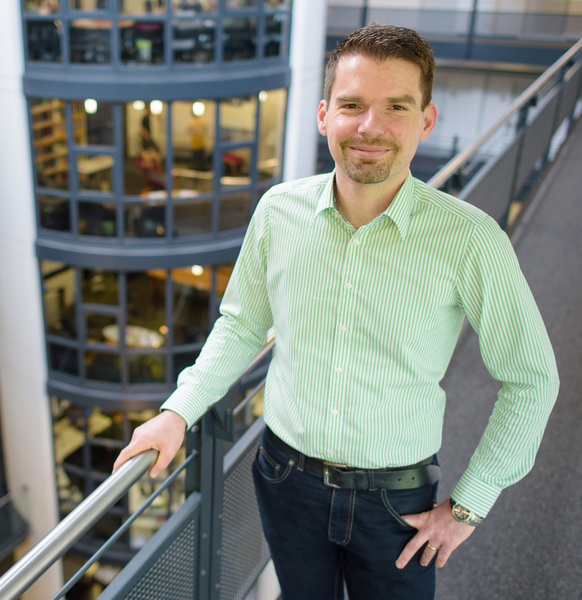
Dr. Chang Xu is an Associate Professor in Machine Learning and Computer Vision at the University of Sydney's School of Computer Science. He holds a Bachelor of Engineering from Tianjin University and a PhD from Peking University. His research focuses on machine learning, data mining, and their applications in AI and computer vision, including multi-view learning, visual search, and face recognition. He is an ARC Future Fellow and a member of the Sydney Southeast Asia Centre and The Net Zero Institute. Education: B.E. in Engineering (Tianjin University), Ph.D. in Computer Science (Peking University). His research interests emphasize handling heterogeneous data, exploring data variety, and developing algorithms for robust AI systems. His work includes adversarial robustness, neural architecture search, and efficient deep learning models. Research trends in his articles include adversarial robustness in neural architectures, efficient vision transformers, multimodal 3D style transfer, and underwater image restoration. Key contributions span image restoration, video super-resolution, and lightweight network design. He has advised multiple PhD and master's students on topics like diffusion models, radar image synthesis, and graph similarity. Awards: ARC Future Fellow. Collaborations focus on cross-domain data integration and AI applications. His labs and teams explore generative models, robust learning, and scalable robotics policies. Recent work includes diffusion models for action segmentation and robust vision-language systems.
Christian Theobalt is a Professor of Computer Science at Saarland University and Scientific Director of the Visual Computing and Artificial Intelligence Department at the Max Planck Institute for Informatics . He leads the Saarbruecken Center for Visual Computing as a strategic partnership between Google and MPI. PhD in Computer Science (2005) from MPI-INF/Saarland University Postdoctoral Researcher at MPI (2005-2007) Visiting Assistant Professor at Stanford (2007-2009) His research focuses on the intersection of Computer Graphics, Computer Vision, and Artificial Intelligence , with specializations in: 3D/4D Human Reconstruction Neural Rendering Performance Capture Geometric Deep Learning Volumetric Video Quantum Visual Computing Recent article trends show emphasis on: Quantum computing applications in visual reconstruction Neural rendering with radiance fields Human motion capture from egocentric views Gesture-language interaction modeling Multi-modal scene understanding Real-time free-viewpoint rendering Scientific Awards : Fellow of EUROGRAPHICS (2022) CVPR Best Student Paper Honorable Mention (2020) ERC Consolidator Grant (2017) Karl Heinz Beckurts Award (2017) Busy Beaver Teaching Award (2016) ERC Starting Grant (2013) Advising over 50 students and researchers including: Current researchers: Viktor Rudnev, Linjie Lyu, Mohit Mendiratta Postdocs: Kwang In Kim, Kiran Varanasi Alumni: Franziska Mueller (Google), Dushyant Mehta (Qualcomm), Ayush Tewari (MIT) Grants include ERC grants, Google Glass Research Award, and multiple industry partnerships. His lab maintains cutting-edge facilities with: Multi-camera capture systems Quantum annealing infrastructure HDR radiance field technology GPU clusters for AI research Time-of-flight imaging systems Event camera arrays
Swiss Federal Institute of Technology in LausanneSwitzerland
Lior Wolf is a Professor at the School of Computer Science, Tel Aviv University. Previously, he was a postdoctoral researcher at MIT's Center for Biological and Computational Learning (CBCL) under Prof. Tomaso Poggio and earned his PhD from Hebrew University of Jerusalem with Prof. Amnon Shashua. His educational background includes: PhD in Computer Science, Hebrew University of Jerusalem Postdoctoral Research, MIT CBCL Prof. Wolf's research centers on artificial intelligence with seminal contributions to deep learning, computer vision, and natural language processing. His work bridges theoretical foundations (e.g., attention mechanisms, transformer analysis) with practical applications in medical imaging, speech processing, and sign language technology. He pioneered methods for neural network interpretability, efficient sequence modeling, and multimodal fusion. Analysis of his 2023-2025 publications reveals dominant trends in large language model optimization (neuron pruning, attention analysis), efficient video generation, and cross-modal learning. His work increasingly integrates medical applications (fMRI/EEG analysis) while maintaining theoretical rigor in model architecture design. His scientific achievements include: Best paper award at EMNLP 2024 for 'Backward Lens: Projecting Language Model Gradients into the Vocabulary Space' Best paper award at SCIA 2023 for 'Gradient Adjusting Networks for Domain Inversion' Best paper award at FG 2021 for 'Generating Master Faces for Dictionary Attacks' Prof. Wolf mentors graduate students in the School of Computer Science and leads research at the ICRC building laboratory. His team collaborates with 'the friends of TAU' on projects spanning biometric security, medical imaging, and generative AI. Current work focuses on efficient transformers, neural network interpretability, and multimodal medical diagnostics.
Andreas Bulling is a Professor at the Institute for Visualisation and Interactive Systems , University of Stuttgart, Germany. His research focuses on Human-Computer Interaction , Eye Tracking , and Computer Vision , with applications in Machine Learning , Virtual Reality , and Information Visualization . 2025 Publications: HOIGaze (Extended Reality), ChartQC (Data Visualization), HAIFAI (Human-AI Interaction), SummAct (Behavioral Summarization), Chartist (Chart Reading). 2024 Contributions: HumanEYEze (Multimodal AI), HOIMotion (3D Object Detection), MultiMediate'24 (Engagement Estimation), Unified Model of Saliency (Scanpath Prediction). His recent work explores gaze estimation , interactive behavior modeling , and privacy-preserving eye-tracking systems . Key subfields include Extended Reality , Neural Networks , and Behavioral Biometrics . While no explicit scientific awards are mentioned, his research has been widely cited (8,003 total citations) and downloaded (132,740 times). Andreas leads projects in Interactive Systems and collaborates with institutions such as Aalto University , KU Leuven , and National University of Singapore . His lab focuses on eye movement analysis , human motion forecasting , and task-driven input modeling .
Maria Gorlatova is an Associate Professor of Electrical and Computer Engineering at Duke University's Pratt School of Engineering, where she leads the Intelligent Interactive Internet of Things (I3T) Lab. She also holds a secondary affiliation as Faculty Network Member of the Duke Institute for Brain Sciences and has previously served as Assistant Professor of Computer Science. Dr. Gorlatova earned her Ph.D. in Electrical Engineering from Columbia University (2013), following M.Sc. and B.Sc. (Summa Cum Laude) degrees in Electrical Engineering from University of Ottawa, Canada. Prior to joining Duke, she was an Associate Research Scholar in the Electrical Engineering Department and Associate Director of the Princeton EDGE Lab at Princeton University (2016-2018). She also has industry experience with Telcordia Technologies, IBM, and D. E. Shaw Research. Her research focuses on advancing intelligent behavior in Internet of Things systems and applications, particularly in mobile pervasive systems and the Internet of Things. Her work crosses traditional discipline boundaries, requiring thinking across multiple layers of system and protocol stacks. Current research themes include breaking barriers for technologies that enable fundamentally new deployments and experiences, such as energy harvesting, artificial intelligence adapted to IoT constraints, and augmented reality. Her lab specifically develops edge- and IoT-enabled intelligent augmented reality platforms, with applications in healthcare and human-robot collaboration. Analyzing her recent publications reveals a strong focus on augmented reality systems, particularly for medical applications. Her work spans computer vision for AR, spatial tracking, SLAM systems, vision-language models for AR security, and VR/AR applications in neurosurgery and rehabilitation. A significant portion of her recent work addresses challenges in mixed reality for medical procedures, demonstrating the translational impact of her research. Google Anita Borg USA Fellowship Canadian Graduate Scholar CGS NSERC Fellowships Columbia University Presidential Fellowship Columbia University Jury Award for Outstanding Achievement in Communications ACM SenSys Best Student Demonstration Award IEEE Communications Society Young Author Best Paper Award IEEE Communications Society Award for Advances in Communications Best Research Artifact Award, IEEE IPSN (2020) N2 Women Rising Star, Networking Networking Women (N2Women) (2019) Dr. Gorlatova's research has been supported by various funding sources that enable her work on edge computing for augmented reality, IoT systems, and medical applications. She actively mentors graduate students who frequently appear as first authors on her publications, indicating strong student involvement in her research. Her I3T Lab at Duke focuses on creating human-facing pervasive mobile computing platforms that enable transformative applications, with recent emphasis on creating advanced augmented reality platforms that integrate edge computing and IoT technologies. The I3T Lab is developing next-generation AR systems with capabilities in edge AI, collaborative spatial awareness, AR user cognitive context sensing, and AR QoS/QoE evaluation. Current projects include applications in healthcare (particularly neurosurgery guidance and rehabilitation) and human-robot collaboration scenarios, demonstrating the lab's focus on real-world impact of pervasive computing technologies.
David W. Jacobs is a Professor in the Department of Computer Science at the University of Maryland, with a joint appointment at the University of Maryland Institute for Advanced Computer Studies (UMIACS). He also served as the interim Director of the University of Maryland Center for Machine Learning starting in 2018. University: University of Maryland School: College of Computer, Mathematical, and Natural Sciences Department: Department of Computer Science Academic Rank: Professor Education: He received his B.A. from Yale University, and M.S. and Ph.D. in Computer Science from MIT. Research Interests: His research primarily focuses on computer vision and machine learning, particularly visual object recognition, lighting variation modeling, 3D reconstruction, perceptual organization, motion understanding, and the integration of vision with graphics and human-computer interaction. A major applied contribution is the development of Leafsnap , an electronic field guide app for plant identification, which has been downloaded over 1.5 million times and used in biodiversity and educational contexts. Publication Trends: His recent scholarly output centers on deep learning, convolutional networks, residual architectures, generative models (especially GANs), and interpretability. His work often bridges theoretical insights with practical applications in vision and AI. Scientific Awards: Honorable Mention, Best Paper Award, CVPR 2000 Best Student Paper Award, UIST 2003 Best Paper Award, Eurographics 2016 2011 Edward O. Wilson Biodiversity Technology Pioneer Award for Leafsnap Teaching and Advising: He has taught advanced courses such as CMSC 422 (Introduction to Machine Learning) and CMSC 828L (Deep Learning). He mentors students through course projects and research, though specific advisees are not listed. He has collaborated with institutions like Columbia University and the Smithsonian on impactful interdisciplinary projects. Labs and Teams: He is affiliated with UMIACS and leads research efforts in vision and learning, contributing to the University of Maryland Center for Machine Learning. His team has developed several mobile applications including Leafsnap, Birdsnap, and Dogsnap, demonstrating a strong focus on real-world deployment of vision technology.
Professor Winston Hsu is a distinguished faculty member in the Department of Computer Science and Information Engineering at National Taiwan University, where he has served as a full professor since 2015. He is the co-director of the Communications and Multimedia Laboratory (CMLab) and founder of the MiRA (Multimedia indexing, Retrieval, and Analysis) research group. Additionally, he serves as the Founding Director for NVIDIA AI Lab at NTU, the first such lab in Asia. Professor Hsu received his Ph.D. in Electrical Engineering from Columbia University in 2007 under the supervision of Professor Shih-Fu Chang. Prior to his academic career, he was a founding engineer and research manager at CyberLink Corp., now a public image/video software company. National Taiwan University (2007-Present): Professor (2015-Present), Assistant/Associate Professor (2007-2015) MobileDrive (2021-2024): CTO and Vice President (Joint Venture between Foxconn and Stellantis) IBM TJ Watson Research Center (2016-2017): Visiting Scientist Microsoft Research Redmond (2014): Visiting Researcher Columbia University (2007): Ph.D. in Electrical Engineering Professor Hsu's research focuses on machine learning, computer vision, large-scale image and video search and recognition, and embedded AI. His work spans from fundamental research in visual recognition to practical applications in automotive systems, medical imaging, and e-commerce. He has pioneered work in disguised face recognition, low-resolution face hallucination, 3D model search, and virtual try-on systems. His current research emphasizes Embodied AI, integrating perception, action, and learning technologies for applications in automotive and robotics domains. His research group has produced numerous influential publications, particularly in top computer vision and multimedia conferences like CVPR, where they won first place in the Disguised Face Recognition competition in 2018. Their work spans diverse application areas including security, medical diagnostics, automotive systems, and e-commerce solutions, demonstrating strong translation from academic research to real-world impact. IBM Research Pat Goldberg Memorial Best Paper Award (2018) First Place, IARPA Disguised Faces in the Wild Competition (CVPR 2018) Best Brave New Idea Paper Award, ACM Multimedia 2017 NVIDIA AI LAB Award (First in Asia, 2016) First Place, MSR-Bing Image Retrieval Challenge (2013) World's Top 2% Scientists (2023) Professor Hsu actively mentors students and researchers, with his group consistently recruiting PhD students, postdocs, and research assistants. He has successfully bridged academia and industry through multiple collaborations, including his role as CTO at MobileDrive (a joint venture between Foxconn and Stellantis) from 2021-2024. His research has been supported by significant industry partnerships with Microsoft, IBM, and NVIDIA, as well as government grants from Taiwan's Ministry of Science and Technology. His laboratory, the Communications and Multimedia Laboratory (CMLab), maintains strong industry connections and focuses on cutting-edge research in visual AI. The lab has produced numerous award-winning projects and maintains active collaborations with global technology companies, particularly in the automotive and consumer electronics sectors.
University of Maryland, Baltimore CountyUnited States
Sanjay Purushotham is an Assistant Professor in the Department of Information Systems at the University of Maryland Baltimore County (UMBC), with a PhD in Electrical Engineering from the University of Southern California (USC) and a postdoctoral background in Computer Science at USC's Integrated Media Systems Center (IMSC). His research focuses on machine learning, data mining, and their applications in biomedical informatics, social network analysis, and multimedia data mining. Key contributions include survival analysis models using pseudo values and federated learning frameworks for healthcare data. He has received awards including the Best Paper Award at SIGSPATIAL 2014 and a Best Poster Runnerup at SCMLS 2016. Education: PhD in Electrical Engineering (USC), Postdoc in Computer Science (USC) His work spans interdisciplinary areas such as domain adaptation for remote sensing, thermal face translation, and interpretable neural networks for medical applications. Recent projects include federated survival analysis models and climate-informatics frameworks for cloud property retrieval. He teaches courses in artificial intelligence, healthcare informatics, and statistical learning at UMBC. Research highlights include developing MedFuseNet for multimodal medical question answering and VDAM for multi-sensor cloud data analysis. His work on fair survival analysis models addresses algorithmic bias in healthcare predictions. Current grants include a NSF CAREER award for trustworthy federated learning in computational healthcare.
Zakia Hammal is an Assistant Research Professor with dual appointments at Carnegie Mellon University, holding positions in the Robotics Institute within the School of Computer Science and the Department of Biomedical Engineering in the College of Engineering. Her work bridges computer science, machine learning, artificial intelligence, and social/behavioral psychology to advance computational models for human behavior analysis. Dr. Hammal's educational background includes a PhD in Computer Science, a Master of Artificial Intelligence and Algorithmic with specialization in Image Processing, and an Engineer's degree in Computer Science with specialization in Computer Systems. Her academic journey has positioned her at the intersection of technical expertise and healthcare applications. Her research focuses on multimodal human behavior modeling in social interaction, with particular emphasis on health informatics and affective computing (Emotion AI). Dr. Hammal's work has pioneered computational models for multimodal assessment of psychiatric disorders, including depression severity evaluation, automatic pain intensity measurement, assessment of expressiveness in children with facial abnormalities, analysis of non-verbal communication in mother-infant interaction, and identification of behavioral markers in autism spectrum disorder. Her approach integrates computer vision, machine learning, and behavioral psychology to create systems that can objectively measure human behaviors that are often subjective in clinical settings. Analysis of her recent publications reveals a consistent trajectory toward more sophisticated multimodal approaches to healthcare challenges, particularly in pain assessment and mental health diagnostics. Her work increasingly emphasizes interpretable AI models that can translate complex behavioral patterns into clinically meaningful insights, with growing attention to applications for vulnerable populations including infants, elderly patients, and those with craniofacial abnormalities or autism spectrum disorder. Women in AI Awards North America 2023 – AI Researcher of the Year Award Outstanding Reviewer Award at FG 2015 Best Paper award at ACII 2015 Outstanding Paper award at ICMI 2012 Dr. Hammal has secured significant research funding, primarily from the U.S. National Institutes of Health, including an R01 grant for developing a Multimodal Behavioral AI platform for pain assessment and management, and additional grants for automatic pain assessment in older adults with dementia. Her leadership extends to mentoring through her involvement in organizing workshops and conferences that train the next generation of researchers in affective computing and health informatics. As an active leader in her field, Dr. Hammal serves as ACM ICMI Steering Board Committee Member, Associate Editor for IEEE Transactions on Affective Computing and IEEE Transactions on Multimedia, and has organized numerous influential workshops including the International Workshop on Automated Assessment of Pain and Face and Gesture Analysis for Health Informatics. She is set to serve as Program Chair for FG 2025, ACII 2025, and ICMI 2026, demonstrating her growing influence in shaping the future direction of research in multimodal interaction and affective computing.
Prof. Bernt Schiele is a Max Planck Director at the Max Planck Institute for Informatics and holds a Professorship at Saarland University. His research focuses on understanding multimodal sensor data, with key areas in computer vision, 3D object recognition, and machine learning. He leads the Computer Vision and Machine Learning group, addressing challenges in sensor fusion, scene understanding, and human activity recognition. Schiele has held academic roles at TU Darmstadt, ETH Zurich, and MIT, and contributes to top journals like IEEE Transactions on PAMI and conferences like ECCV. His work emphasizes robust models, interpretability, and domain adaptation for real-world applications. Education: PhD (1997, Grenoble), MSc (1994 Karlsruhe/1993 Grenoble) Key Positions: MIT (1997-2000), ETH Zurich (1999-2004), TU Darmstadt (2004-2010) Research interests span 3D scene understanding, multimodal sensor processing, and machine learning techniques for large-scale data. His recent work advances robust object detection, explainable AI, and domain-invariant training methods. He also chairs major conferences like ECCV 2018 and co-chairs ICCV 2011. Publications highlight innovations in interpretable vision transformers, certified explanations, and test-time adaptation. Despite no listed awards, his contributions shape foundational areas of computer vision and multimodal AI.
Elizabeth A. Simpson is an Associate Professor in the Department of Psychology at the University of Miami's College of Arts and Sciences. She serves as Associate Director of the Child Division and directs the Social Cognition Laboratory, focusing on infant social and cognitive development through interdisciplinary methodologies. Education: Ph.D. in Psychology (unspecified institution) Key Research Areas: Developmental Psychology, Autism, Social Cognition, Primate Studies, Visual Attention, Infant Behavior Her research investigates individual differences in infant visual attention, social motivation, and physiological markers like salivary oxytocin. Recent studies demonstrate: Stability of attentional patterns from newborn to 14 months Sex differences in early face detection Links between oxytocin levels and social affect in infants Neurophysiological markers in newborns later diagnosed with ASD Scientific awards include the NSF CAREER grant for neonatal imitation research. She contributes to open science initiatives through the ManyBabies consortium and develops remote eye-tracking methods for broader accessibility. Current lab work explores: Parent-infant affective interactions during still-face episodes Predictive power of early attentional biases Development of pathogen avoidance behaviors Cross-species comparisons of social cognition
Peter N. Belhumeur is a Professor in the Department of Computer Science at Columbia University and Director of the Laboratory for the Study of Visual Appearance (VAP LAB). He holds a Sc.B. from Brown University and a Ph.D. from Harvard University, followed by a postdoctoral fellowship at the University of Cambridge. His career includes roles at Yale University before joining Columbia in 2002. Education: Brown University (Sc.B., 1985), Harvard University (Ph.D., 1993) Postdoc: Isaac Newton Institute, University of Cambridge (1994) His research focuses on computer vision and machine learning, with applications in biodiversity and mobile technology. Notable projects include the Leafsnap, Birdsnap, and Dogsnap apps – pioneering species/breed identification tools using machine learning. He has received awards such as the PECASE, Helmholtz Prize, and EO Wilson Biodiversity Technology Pioneer Award. His work bridges academia and industry, demonstrated by collaborations with Dropbox and contributions to consumer-facing AI applications. The VAP LAB explores visual appearance modeling and computational photography.
Ron Fedkiw is the Canon Professor of Computer Science at Stanford University's School of Engineering. He holds a PhD in Applied Mathematics from UCLA. His research focuses on computational algorithms for applications in computational fluid dynamics, computer graphics, biomechanics, and machine learning. Fedkiw has pioneered techniques for simulating natural phenomena in film and video games, earning two Academy Awards for his contributions to visual effects. He leads the PhysBAM lab and collaborates with industry through consulting roles at Epic Games and former work with Industrial Light & Magic. Education: PhD in Applied Mathematics, UCLA (1996). Notable awards include the National Academy of Science Award, Packard Fellowship, and multiple teaching honors. His lab has graduated 40 PhD students, many of whom have made significant impacts in academia and industry. Research interests span fluid dynamics, cloth simulation, facial animation, and integrating machine learning with physical models. Key contributions include algorithms for two-way fluid-solid coupling, muscle-based facial modeling, and neural network approaches for cloth and deformable bodies. Current projects explore physics-informed machine learning and real-time interactive simulations. Scientific Awards include two Oscars, PECASE, and Okawa Foundation grants. His work bridges computational physics and visual effects, with over 140 research papers and a textbook on level set methods. Advising and grants: Supervised 40 PhD students, securing funding through NSF, ONR, and industrial partnerships. Lab collaborations include SAIL (Stanford AI Lab) and Epic Games. Future work focuses on AI-driven physical simulations and biomedical applications.
Ira Kemelmacher-Shlizerman is a Full Professor of Computer Science at the Paul G. Allen School of Computer Science & Engineering at the University of Washington and Director of the UW Reality Lab. She also serves as a Principal Scientist at Google, where she leads the Shopping Gen AI visuals teams focusing on Virtual Try-On, 3D, and product videos. Her research spans computer vision, computer graphics, and Generative AI, with particular contributions to virtual try-on technology, 3D modeling, and augmented reality applications. Professor Kemelmacher-Shlizerman's research interests focus on Generative AI applications in visual computing. Her work bridges the gap between theoretical computer vision and practical applications, particularly in e-commerce and virtual reality. She has made significant contributions to virtual try-on technology, 3D editing with generative models, and AI applications for shopping experiences. Her research combines deep learning with traditional computer vision techniques to solve challenging problems in image and video synthesis. Her recent publications demonstrate a strong trend toward Generative AI applications for visual shopping experiences, virtual try-on technology, and 3D content creation. The work spans multiple top conferences including CVPR, SIGGRAPH, and ICCV, with a focus on practical applications of computer vision and graphics. Her research has evolved from foundational work in face reconstruction and aging to current applications in virtual shopping and 3D content generation. Google faculty award Madrona prize GeekWire Innovation of the Year Award Covers of CACM and SIGGRAPH Best student paper honorable mention at CVPR'21 Best demo runner up MobiSys'22 Senior member of IEEE Distinguished Member of ACM Professor Kemelmacher-Shlizerman has successfully tech-transferred multiple research projects to industry. She founded Dreambit, a startup acquired by Meta, and previously built and launched the Face Movies feature at Google. She currently leads Google's Shopping Gen AI visuals teams, focusing on 10x improvements to shopping journeys. Her UW Reality Lab serves as a hub for AR/VR research with industry partnerships. She has mentored numerous PhD students who have become researchers in both academia and industry, with several publications featuring student co-authors receiving recognition at top conferences. Professor Kemelmacher-Shlizerman leads the Graphics and Imaging Laboratory (GRAIL) and the UW Reality Lab, which focuses on augmented and virtual reality research with industry partnerships including Google. The labs work on cutting-edge projects in virtual try-on, 3D modeling, and immersive experiences, bridging academic research with real-world applications.
Dr. Robin Laycock is a Senior Lecturer in the Department of Health and Biomedical Sciences at RMIT University. He leads the Social and Cognitive Neuroscience (SoCoNeuro) Lab, focusing on behavioral and neural mechanisms of social perception in neurotypical and neurodivergent populations, including autism spectrum disorders and the neurocognitive effects of concussion. His research integrates methodologies such as eye-tracking, EEG, and fNIRS to study visual perception, face processing, and the impact of stress/anxiety on cognition. Dr. Laycock holds a PhD from La Trobe University, where he investigated visual processing pathways. His work also includes the BabyFace study, exploring social perception in pre-term infants using fNIRS. He is affiliated with RMIT’s Healthy Foundations Research Group and supervises research projects on topics like concussion neurocognition and social media’s neurobiological effects. Research interests span visual neuroscience, social neuroscience, and clinical applications of neuroimaging. He teaches undergraduate courses in Biological Psychology and supervises postgraduate research in vision science, neuropsychology, and affective neuroscience. His lab’s recent studies examine sex differences in sports-related concussion neuroimaging and the role of deepfakes in emotion perception research. He actively collaborates on projects addressing autism traits, stress effects on visual processing, and neuroimaging advancements.