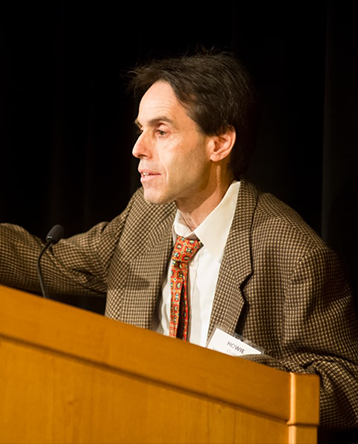
Russell Epstein is a Professor and Director of Graduate Studies in the Department of Psychology at the University of Pennsylvania. He is affiliated with the Center for Cognitive Neuroscience and Goddard Labs. His research focuses on neural mechanisms underlying visual scene perception, spatial navigation, and memory. Epstein holds a BA in Physics from the University of Chicago and a PhD in Applied Mathematics from Harvard University. Epstein’s research interests include high-level vision, spatial cognition, and the neural basis of environmental representations. His lab uses functional MRI and cognitive neuroscience techniques to study how scenes, objects, landmarks, and spaces are encoded in brain systems such as the parahippocampal place area and retrosplenial cortex. Recent work explores cognitive maps, grid-like neural representations, and the role of multisensory cues in navigation. His articles emphasize spatial navigation strategies, hierarchical cognitive maps, and the interplay between perception and memory. Notable contributions include investigations into hippocampal spatial metrics, olfactory navigation, and the neural underpinnings of environmental learning. Epstein teaches courses on cognitive neuroscience, including PSYC 149 and PSYC 600. He advises two graduate students in Psychology and has no listed scientific awards. His work is supported by grants (unspecified) and conducted within collaborative teams at the Center for Cognitive Neuroscience. Epstein’s research extends to labs focused on spatial cognition and neuroimaging, advancing understanding of how humans mentally map environments through visual and sensory integration.
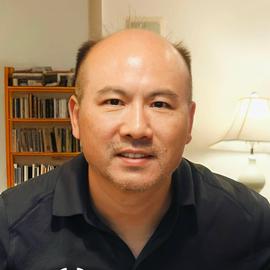
Shoudong Huang is a Professor at the School of Mechanical and Mechatronic Engineering , University of Technology Sydney, and Deputy Director of the UTS Robotics Institute. His research focuses on mobile robot navigation , SLAM , nonlinear state estimation , and surgical robotics . He has published over 200 papers and is recognized as one of the 100 Most Influential Scholars in Robotics (Aminer, 2018). PhD in Automatic Control, Northeastern University (China) Postdoctoral Research Fellow, University of Hong Kong (1998-2000) Research Fellow, Australian National University (2001-2003) Full-time academic roles at UTS since 2004 His work addresses challenges in robot localization across extreme environments (underwater, underground mining, surgical settings) and develops globally optimal SLAM algorithms with guaranteed performance. He has secured over $4 million AUD in external funding, including ARC Discovery grants and industry partnerships. Recent publications emphasize cross-modal calibration (camera-LiDAR), interval analysis for bounded noise , and template-based deformable surface reconstruction . These span applications in autonomous driving, surgical navigation, and UAV guidance. Chancellor’s Medal for Research Excellence (2020) Supervisor of the Year (2023) Best Paper Award (2016 ICARCV) Huang serves as Associate Editor for IEEE Transactions on Robotics and International Journal of Robotics Research , and has held leadership roles in top robotics conferences like IROS and RSS. His collaborations span MIT, USC, Zhejiang University, and industry partners including PMSW Research Pty Ltd and Multiplex Constructions Pty Ltd.
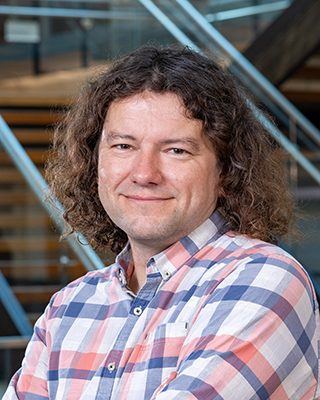
Sebastian Scherer is an Associate Research Professor at the Robotics Institute (RI), Carnegie Mellon University (CMU), where he leads cutting-edge research in autonomous aerial systems and robotics. His work focuses on enabling unmanned rotorcraft to operate safely and efficiently in cluttered, low-altitude, and extreme environments. Education: Ph.D. in Robotics, Carnegie Mellon University (2010) MS in Robotics, Carnegie Mellon University (2007) BS in Computer Science (Minor in Robotics), Carnegie Mellon University (2004) His research interests span robotics, artificial intelligence, autonomous navigation, obstacle avoidance, SLAM, visual-inertial odometry, energy infrastructure, and public policy . He has made seminal contributions to UAV autonomy, including the first obstacle avoidance for micro aerial vehicles in natural environments (2008) and the first automatic landing zone detection and landing on a full-size helicopter (2010). His recent publications (2023–2025) demonstrate a strong focus on resilient autonomy, multi-robot exploration, foundation models for robotics, and large-scale dataset development. His team has released key datasets like TartanGround , BETTY , and SubT-MRS , and simulation tools like Pegasus Simulator , indicating a systems-level approach to advancing real-world autonomy. The research trends emphasize self-supervised learning, robust perception, risk-aware planning, and multi-modal fusion for off-road and urban environments. Scientific Awards: Popular Science Best of What's New 2010 Award AIAA@Infotech Best Paper Runner-up Award (2010) Siebel Scholar Dr. Scherer has advised numerous students and leads a vibrant research group focused on high-impact robotics applications. He has secured significant grants related to UAV autonomy, energy infrastructure, and urban air mobility. His lab develops experimental infrastructure such as AIrTonomy for testing next-generation autonomous aerial vehicles. He is actively involved in advancing SLAM and localization in extreme environments, notably through participation in the DARPA Subterranean Challenge. His team develops large-scale datasets and benchmarking frameworks to push the boundaries of robustness and generalization in mobile robotics.
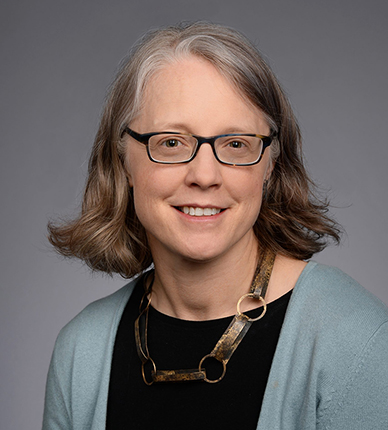
Barbara Caputo is a Full Professor at Politecnico di Torino, leading the VANDAL Laboratory and directing the AI@PoliTo Interdepartmental Lab. She holds a double affiliation with the Italian Institute of Technology (IIT) and has held roles at Idiap-EPFL and Sapienza University. Her research focuses on AI, computer vision, domain adaptation, and federated learning. She contributes to national AI policy, including the Italian Strategy on AI and the National PhD on AI for Industry 4.0. She is an ERC Laureate and ELLIS Fellow, co-founding ELLIS society. Her work spans visual place recognition, action recognition, and cross-domain learning. Education: PhD in Computer Science from KTH Royal Institute of Technology (2005). Major roles include Rector’s Advisor on AI at PoliTo, Board Member of ELLIS, and coordinator of the AI & Industry 4.0 vertical in the National PhD program. Awards include ERC Laureate (2017), ELLIS Fellow (2019), and Inspiring Fifty Italy (2018). Her research emphasizes federated learning, domain adaptation, and AI ethics. Recent articles explore domain generalization, resource-efficient federated models, and AI-environment interactions. She collaborates with institutions like MUR, CNR, and the European Commission on AI policy and tech initiatives.
Verena Zimmermann serves as Assistant Professor (Tenure Track) for Security, Privacy and Society at ETH Zurich within the Department of Humanities, Social and Political Sciences. She leads the Security, Privacy and Society research group, focusing on human-centered approaches to safety, IT security, and privacy challenges in emerging technologies. Her academic foundation includes a PhD in Usable Security from TU Darmstadt, where her dissertation From the Quest to Replace Passwords towards Supporting Secure and Usable Password Creation earned dual awards from the German Association for Data Protection and Data Security (GDD) and the Ernst-Ludwigs-Hochschulgesellschaft. Zimmermann's research pioneers the shift from viewing humans as security vulnerabilities to recognizing them as integral solutions. Her work spans password security, phishing interventions, smart home privacy, and cybersecurity education, consistently applying human factors principles to design systems that align with natural user behavior. Current projects explore emotional dimensions of security engagement, quantum governance frameworks, and LLM-related privacy concerns through interdisciplinary lenses combining computer science, psychology, and safety science. Recent publications reveal strong thematic trends toward understanding user motivations in security behavior, developing personalized training through augmented reality and adaptive systems, and translating safety science principles to cybersecurity incident management. Her work increasingly addresses societal implications of emerging technologies like quantum computing and generative AI. Her distinguished recognitions include: GDD Dissertation Award for Usable Security research Ernst-Ludwigs-Hochschulgesellschaft Dissertation Award IANUS Award (2nd place) for Moving from a 'Human-as-Problem' to a 'Human-as-Solution' Cybersecurity Mindset Zimmermann actively mentors through ETH's Human-Centered Security and Privacy Lab while collaborating internationally with institutions including ATHENE (German National Center for Applied Cybersecurity), Abertay University's Cybersecurity Division, and the Safety Science Innovation Lab. Her research receives support from Swiss and European funding bodies focused on privacy-preserving technologies and organizational security behavior. At ETH Zurich, she directs the Security, Privacy and Society group which employs design thinking, LEGO Serious Play, and mixed-methods research to tackle real-world security challenges. The team partners with industry stakeholders to develop practical solutions for phishing resistance, smart home privacy, and cybersecurity education while maintaining strong ties to the Research Training Group 2050 Privacy and Trust for Mobile Users.
Professor Winston Hsu is a distinguished faculty member in the Department of Computer Science and Information Engineering at National Taiwan University, where he has served as a full professor since 2015. He is the co-director of the Communications and Multimedia Laboratory (CMLab) and founder of the MiRA (Multimedia indexing, Retrieval, and Analysis) research group. Additionally, he serves as the Founding Director for NVIDIA AI Lab at NTU, the first such lab in Asia. Professor Hsu received his Ph.D. in Electrical Engineering from Columbia University in 2007 under the supervision of Professor Shih-Fu Chang. Prior to his academic career, he was a founding engineer and research manager at CyberLink Corp., now a public image/video software company. National Taiwan University (2007-Present): Professor (2015-Present), Assistant/Associate Professor (2007-2015) MobileDrive (2021-2024): CTO and Vice President (Joint Venture between Foxconn and Stellantis) IBM TJ Watson Research Center (2016-2017): Visiting Scientist Microsoft Research Redmond (2014): Visiting Researcher Columbia University (2007): Ph.D. in Electrical Engineering Professor Hsu's research focuses on machine learning, computer vision, large-scale image and video search and recognition, and embedded AI. His work spans from fundamental research in visual recognition to practical applications in automotive systems, medical imaging, and e-commerce. He has pioneered work in disguised face recognition, low-resolution face hallucination, 3D model search, and virtual try-on systems. His current research emphasizes Embodied AI, integrating perception, action, and learning technologies for applications in automotive and robotics domains. His research group has produced numerous influential publications, particularly in top computer vision and multimedia conferences like CVPR, where they won first place in the Disguised Face Recognition competition in 2018. Their work spans diverse application areas including security, medical diagnostics, automotive systems, and e-commerce solutions, demonstrating strong translation from academic research to real-world impact. IBM Research Pat Goldberg Memorial Best Paper Award (2018) First Place, IARPA Disguised Faces in the Wild Competition (CVPR 2018) Best Brave New Idea Paper Award, ACM Multimedia 2017 NVIDIA AI LAB Award (First in Asia, 2016) First Place, MSR-Bing Image Retrieval Challenge (2013) World's Top 2% Scientists (2023) Professor Hsu actively mentors students and researchers, with his group consistently recruiting PhD students, postdocs, and research assistants. He has successfully bridged academia and industry through multiple collaborations, including his role as CTO at MobileDrive (a joint venture between Foxconn and Stellantis) from 2021-2024. His research has been supported by significant industry partnerships with Microsoft, IBM, and NVIDIA, as well as government grants from Taiwan's Ministry of Science and Technology. His laboratory, the Communications and Multimedia Laboratory (CMLab), maintains strong industry connections and focuses on cutting-edge research in visual AI. The lab has produced numerous award-winning projects and maintains active collaborations with global technology companies, particularly in the automotive and consumer electronics sectors.
Laura Vaughan is Professor of Urban Form and Society and Director of the Space Syntax Lab at The Bartlett School of Architecture, University College London. Her research examines the relationship between urban form and society using space syntax methodologies, addressing critical urban challenges including spatial inequalities, health disparities, poverty, housing, and socioeconomic vitality. She maintains active policy engagement through memberships in the West Yorkshire Scientific Advisory Group and as Chair of the International Space Syntax Executive Committee. Education includes: Doctor of Philosophy, University of London (1995-1999) Master of Science, University of London (1992-1994) Bachelor of Design, Bezalel Academy of Arts and Design (1985-1989) Her research integrates space syntax methodology with urban geography and architecture to analyze how spatial configurations influence social patterns. Key interests include the historical evolution of urban segregation mechanisms, morphological predictors of community vitality, and geospatial determinants of public health outcomes. She maintains cross-disciplinary collaborations spanning public health, history, anthropology, and urban planning. Publication trends show consistent focus on urban morphology's societal impacts, with recent work emphasizing longitudinal health studies, historical cartography, and high street resilience. Methodological innovations include developing individual-level environmental exposure metrics and integrating geospatial analysis with cohort studies. Research consistently demonstrates how spatial configurations mediate social processes across temporal scales. Scientific recognition includes: Fellow of the Royal Geographical Society (elected 2005) Fellow of the Royal Historical Society (elected 2015) As Director of the Space Syntax Lab, she leads research on socio-spatial systems and advises PhD students. She teaches the 'Urban Form and Society' module in the MSc/MRes Space Syntax program, exploring urban design's relationship with crime, health, and inequality. Her pedagogical approach emphasizes integrating research with design practice and historical analysis.
Howie Choset is a Professor of Robotics at the Robotics Institute, Carnegie Mellon University. He directs the Undergraduate Robotics Minor and leads the Biorobotics Laboratory, where his research focuses on snake robots, motion planning, and medical robotics. He is also affiliated with the Manufacturing Futures Institute. Ph.D., Mechanical Engineering, California Institute of Technology (1996) M.S., Mechanical Engineering, California Institute of Technology (1995) B.S.E., Computer Science and Engineering, University of Pennsylvania (1990) B.S., Economics, The Wharton School of Business (1990) Choset's research centers on robotics for confined and complex environments, particularly through the development of snake robots. His work integrates mechanism design, path and motion planning, and estimation to enable applications in surgery, manufacturing, infrastructure inspection, and search and rescue. He is a pioneer in medical robotics and has co-founded Medrobotics to commercialize minimally invasive surgical robots. His recent publications highlight a strong focus on ergodic exploration, multi-agent systems, motion planning under uncertainty, and medical robotics. Themes include optimizing robot trajectories for information gathering, solving complex path planning problems with dynamic obstacles, and advancing autonomous systems for disaster response and space exploration (e.g., the EELS robot for Enceladus). MIT Technology Review Top 100 Innovators under 35 (2002) Best Paper Award, RIA (1999) Best Paper Award, ICRA (2003) Best Paper, IEEE Bio Rob (2006) Best Video, ICRA (2011) Nominations for best papers at ICRA, IROS, and CLAWAR Choset has advised numerous students, many of whom have won top awards. His lab has received significant funding for robotics research, including projects in surgical robotics, additive manufacturing, and autonomous exploration. He is the lead author of the textbook Principles of Robot Motion and is actively involved in educational innovation through custom robotics labs. He leads the Biorobotics Laboratory at CMU, which develops advanced robotic systems like snake robots and the EELS (Exobiology Extant Life Surveyor) robot for NASA missions. The lab collaborates with industry and government agencies on applications ranging from surgery to space exploration.
Giorgio Grisetti is a Full Professor at Sapienza University of Rome within the Department of Systems and Computer Science, maintaining active research roles in the RoCoCo lab at Sapienza since November 2010 and the Autonomous Intelligent Systems Lab at Freiburg University where he previously served as a Post Doc under Wolfram Burgard starting in 2006. His educational background includes a M.Sc. in Computer Engineering from the University of Rome (2001) and a Ph.D. from Sapienza University of Rome's Intelligent Systems Lab (2006), supervised by Daniele Nardi. His doctoral thesis focused on SLAM using Rao-Blackwellized particle filters. Dr. Grisetti's research centers on mobile robotics with emphasis on robust solutions for autonomous navigation systems. His work spans theoretical and practical advancements in Simultaneous Localization and Mapping (SLAM), robot localization, path planning, and sensor fusion, particularly leveraging LiDAR and multi-sensor configurations. Recent publications demonstrate strong focus on optimization techniques, sensor calibration, and real-time performance for autonomous systems operating in complex environments. His publication trends reveal deep specialization in LiDAR-based SLAM (7 of 15 recent articles), bundle adjustment methods (4 articles), and sensor calibration/perception (3 articles), with consistent contributions to top robotics venues like IEEE Robotics and Automation Letters and ICRA. Key recognitions include: Nomination for the best IROS paper award (2010) Open Source achievement award from Willow Garage (2010) Best paper award at the International Conference and Exhibition on Unmanned Areal Vehicles (2010) Best Paper award at ICRA 2009 (2009) His research is conducted through the RoCoCo lab at Sapienza University of Rome and the Autonomous Intelligent Systems Lab at Freiburg University, focusing on developing foundational algorithms for mobile robot autonomy. Current projects emphasize robust perception systems, optimization frameworks for sensor fusion, and practical implementations for real-world navigation challenges.
Dr. Baijian "Justin" Yang serves as the Associate Dean for Research at Purdue Polytechnic Institute and is a Professor in the Department of Computer and Information Technology at Purdue University. He earned his Ph.D. in Computer Science from Michigan State University, with Master's and Bachelor's degrees in Automation (EECS) from Tsinghua University. Dr. Yang has established himself as a leader in multiple interdisciplinary research domains. Dr. Yang's educational background includes: PhD in Computer Science, Michigan State University (2002) MS in Automation (EECS), Tsinghua University (1998) BS in Automation (EECS), Tsinghua University (1995) His research interests span multiple cutting-edge domains with practical applications: Cybersecurity : Developing novel approaches for threat intelligence, security education, and network defense Big Data : Creating innovative algorithms for dimension reduction, regression with categorical variables, and tensor decomposition Applied Machine Learning : Implementing AI solutions in healthcare, manufacturing, and forestry applications Digital Forestry : Using UAV imagery and remote sensing for forest management and tree species classification Dr. Yang's publication record demonstrates significant impact across multiple disciplines, with recent work focusing on spatial transcriptomics analysis (SiGra), delirium detection using limited-lead EEG, and visual localization technologies. His research bridges theoretical advances with practical applications in healthcare, manufacturing quality control, and environmental monitoring. The interdisciplinary nature of his work is evident in collaborations spanning computer science, healthcare, forestry, and manufacturing domains. His scientific achievements have been recognized with numerous awards: 2023 HRSA Building Bridges to Better Health Competition Winner (Phase 1) and 2nd place ($100,000 prize) in Phase 3 2023 Outstanding Faculty Award in Engagement, Department of Computer and Information Technology, Purdue University 2021 Leadership in Manufacturing Award, Manufacturing Times Digital (MxD) 2021 Good to Great Award, Purdue Polytechnic 2020 Outstanding Faculty Award in Discovery, Department of Computer and Information Technology 2019 University Faculty Scholars, Purdue University As an educator and mentor, Dr. Yang has advised numerous graduate students through their PhD and Master's research. His leadership extends to significant service roles including serving as Faculty Champion for the Holistic Safety and Security research impact area at Purdue Polytechnic from 2018 to 2021, board membership with ATMAE (2014-2016), and participation in the IEEE Cybersecurity Initiative Steering Committee (2015-2017). He holds valuable industry certifications including CISSP, MCSE, and Six Sigma Black Belt, demonstrating his commitment to bridging academic research with industry practice. Dr. Yang leads multiple research projects including "Digital Forestry" for developing tools to quantify forest function, "CHEESE" (Cyber Human Ecosystem of Engaged Security Education), and "CICI" (Supporting Controlled Unclassified Information with a Campus Awareness and Risk Management Framework). His work on "Applied Machine Learning" focuses on solving real-world problems, while his "Dimension Reduction and Memory Amnestic Big Data Regression" project innovates computational algorithms for large-scale data analysis.
James Fogarty is a Professor at the Paul G. Allen School of Computer Science & Engineering, University of Washington. He serves as a core member of the DUB Group (Design. Use. Build.), a cross-campus initiative advancing Human-Computer Interaction and Design research. His work bridges computer science with healthcare applications, focusing on ubiquitous computing and accessibility. Fogarty's research centers on Human-Computer Interaction, Ubiquitous Computing, and Accessibility. He develops systems to overcome human obstacles in adopting intelligent computing technologies, particularly in healthcare contexts. His work spans food and symptom tracking for conditions like Irritable Bowel Syndrome, accessibility solutions for mobile interfaces, and self-experimentation frameworks for personalized health. Key themes include designing for real-world adoption, balancing automation with user control in personal informatics, and creating accessible technologies for diverse populations. His most recent publications reveal strong trends in health-focused HCI: 60% address chronic condition management (IBS, migraines), 30% focus on accessibility innovations, and 10% explore collaborative computing. Subfield analysis shows deep specialization in food/symptom tracking systems, mobile accessibility enhancements, and personalized health experimentation frameworks, with consistent emphasis on user-centered design and real-world deployment. Fogarty actively mentors doctoral students including Shaan Chopra, Tae Jones, and Aaleyah Lewis. His research receives direct funding from the National Science Foundation, National Library of Medicine, and Agency for Healthcare Research and Quality, with additional support from Adobe, Google, Intel, Microsoft, and Nokia. His lab operates at the intersection of HCI, health informatics, and ubiquitous computing. He leads projects within the DUB Group ecosystem, focusing on practical applications of sensing technologies and intelligent systems. Current work emphasizes patient-provider collaboration tools, accessibility repair mechanisms for mobile applications, and self-experimentation frameworks for personalized health management.
John Zelek is an Associate Professor in the Department of Systems Design Engineering at the University of Waterloo. He co-directs the VIP (Vision & Image Processing) lab and previously served as Associate Graduate Chair (2013-2017). He co-founded two startups: Tactile Sight (haptic navigation for disabled individuals) and Sweep3D (3D modeling technology). His research focuses on autonomous robotics, 3D scene understanding, infrastructure assessment, medical imaging, and sports analytics using AI/deep learning techniques. Education includes a BASc from Waterloo (1985), MASc from Ottawa (1989), and PhD from McGill (1996). He teaches courses like SYDE 283 (Physics), SYDE 572 (Pattern Recognition), and SYDE 675 (Pattern Recognition). Research interests span robotics, computer vision, anomaly detection, and SLAM. His work applies to infrastructure monitoring, sports analytics (hockey/pitcher analysis), medical imaging (OCT/fundus), and assistive technologies. Recent publications emphasize 3D modeling, SLAM enhancements, and sports tracking algorithms. Zelek advises graduate students (SSPS status) and collaborates with companies like Intelligent Health Solutions and EyeCheck through advisory roles. Key innovations include hybrid SLAM systems, puck localization algorithms, and medical robotic swab systems demonstrated on moving phantoms.
Kristin Schwain is a Professor in the Department of Art History at the University of Missouri's School of Visual Studies. She holds a PhD in Art History and Humanities from Stanford University and a BA in Art History and Humanities from Valparaiso University. Her interdisciplinary research examines marginalized objects and practices in American art history, emphasizing their cultural significance through lived experience. Her educational background includes: PhD in Art History and Humanities, Stanford University BA in Art History and Humanities, Valparaiso University Dr. Schwain's research centers on American Material and Visual Culture, Art and Religion, Arts of the African Diaspora, and Public Humanities. She investigates overlooked artifacts to reveal their influence on everyday life, challenging assumptions about modernization's impact on religious expression. Her work bridges historical analysis with contemporary relevance through studies of traditional craft, artist books, photojournalism, and mass-produced objects as lenses into social practices. Her recent publications demonstrate consistent focus on art-religion intersections in American cultural history, from Henry Ossawa Tanner's biblical paintings to Afro-Cuban religious themes in Ediciones Vigía artist books. This body of work reveals evolving methodologies for uncovering marginalized narratives through interdisciplinary frameworks spanning visual culture, material studies, and diaspora scholarship. Her scholarly recognition includes: First Biennial National Basketry Association Book Award for Rooted, Revived, Reinvented: Basketry in America Dr. Schwain has secured major grants from the Smithsonian Institution, Luce/American Council of Learned Societies, Center for the Study of Religion and American Culture, and Georgia O’Keeffe Museum Research Center. Her collaborative public humanities projects with the Missouri School of Journalism's Pictures of the Year International and Scruggs-Vandervoort-Barney department store collection demonstrate institutional partnerships that translate academic research into community engagement. She actively collaborates with the Museum of Art and Archaeology at the University of Missouri on exhibitions like Rooted, Revived, Reinvented: Basketry in America and Juan Roberto Diago: Foraged Materials, Assembled Histories , fostering cross-generational dialogues through multi-venue traveling shows and digital initiatives including The iCatalog .
Professor Lionel Bently is the Emmanuel College Professor of Intellectual Property Law (Herchel Smith) at the University of Cambridge's Faculty of Law. He holds a B.A. in Law from Cambridge (1986) and has held academic positions at King's College London and visiting roles at institutions like Columbia University and the University of Toronto. His research focuses on intellectual property law, copyright, trademark law, and legal history, with particular emphasis on historical developments and European frameworks. He directs the Centre for Intellectual Property and Information Law (CIPIL) and co-founded the International Society for the History and Theory of Intellectual Property (ISHTIP). His publications include seminal works such as Intellectual Property Law (co-authored) and Between a Rock and a Hard Place: The Problems Facing Freelance Creators in the UK Media Market Place . He serves as Editor-in-Chief of the Cambridge Law Journal and contributes to multiple editorial boards, including the European Intellectual Property Review . Bently's work spans theoretical and practical dimensions of IP law, with a strong emphasis on historical analysis. His articles and book chapters address topics like the Berne Convention's签署, utility models in UK law, and pharmaceutical trademark limitations. He also leads initiatives such as the Primary Sources on Copyright project, digitizing historical IP materials. His professional network includes roles as Honorary Legal Advisor to the Royal Historical Society and advisory positions with UCL’s Institute of Brands and Innovation Law. Bently’s research has influenced both academic discourse and policy-making in intellectual property, reflecting his dual commitment to historical scholarship and contemporary legal challenges.
Andrew Mondschein is Associate Professor of Urban and Environmental Planning at University of Virginia School of Architecture, serving as Associate Dean of Research. His work focuses on equitable transportation systems, sustainable accessibility, and impacts of emerging technologies on urban mobility. Education includes: PhD, University of California, Los Angeles MA Urban Planning, University of California, Los Angeles BA Architecture, Yale University Research examines how transportation technologies affect social equity and urban form, with emphasis on pedestrian wellbeing, autonomous vehicle adoption, parking policy, and community-centered planning. Recent publications demonstrate strong focus on psychophysiological impacts of urban walking, cross-cultural mobility studies, and spatial analysis of transportation preferences. Articles show consistent themes: urban walkability (especially health impacts), autonomous vehicle integration, parking policy analysis using novel data sources, and community-centered planning approaches. Methodologically, employs mixed methods including biometric sensing, sentiment analysis of social media, geospatial modeling, and participatory design. No specific awards mentioned. Teaching covers transportation policy, land use, environmental impacts, and research methods with emphasis on ethical planning practices.