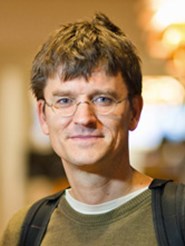
Karl Gustafsson is a Professor at Stockholm University within the Department of Economic History and International Relations. His work bridges security studies , collective memory , and digital research methods in international relations. Current Role: Professor of International Relations, Stockholm University Previous Positions: Post-Doc at Lund University, Researcher at Swedish Institute of International Affairs Visiting Appointments: University of Tokyo, Osaka University, Keio University, Academia Sinica, Nordic Institute of Asian Studies Research Focus: Karl specializes in memory politics , ontological security , and anxiety-driven international dynamics , particularly in Sino-Japanese relations and digital platforms . His studies explore how historical narratives and online memory construction influence state identity and policy. Awards & Grants: Recipient of the Wang Gungwu Prize (2014) and Stockholm University Association’s award (2011). Holds Swedish Research Council and Marianne & Marcus Wallenberg Foundation grants for projects on apologies in international politics and digital memory in East Asia . Publications: His work appears in journals such as International Studies Quarterly , European Journal of International Relations , and Memory Studies , addressing topics like narrative power in East Asia, anxiety’s role in policy change , and digital humanities applications in IR.
Jens Edlund is a Professor at KTH Royal Institute of Technology's Division of Speech, Music and Hearing. His research focuses on speech technology, dialogue systems, prosody, and evolutionary phonetics. He has contributed to foundational work on speech synthesis, conversational interaction, and multimodal corpora like the D64 corpus. Key projects include the MonAMI Reminder system and analysis of primate vocalizations to understand speech evolution. Edlund has collaborated extensively with global researchers, producing over 150 peer-reviewed works. His work integrates computational methods with linguistic and biological insights, emphasizing human-like dialogue systems and cross-species vocal analysis. Education: Ph.D. in Speech Technology (2011, KTH) Grants: Multiple EU and Swedish Research Council grants for speech technology and interdisciplinary studies Research labs include the KTH Speech, Music and Hearing Lab and collaborations with institutions like Max Planck Institute for Evolutionary Anthropology. Current work explores evolutionary origins of speech biomechanics and AI-driven speech synthesis evaluation.
Danica Kragic is a Professor of Computer Science at the School of Electrical Engineering and Computer Science at the Royal Institute of Technology (KTH) in Stockholm, Sweden. She serves as the Director of the Centre for Autonomous Systems and leads the Robotics, Perception and Learning Lab at KTH. Her research focuses on advancing robotics capabilities through computer vision and machine learning approaches. MSc in Mechanical Engineering from the Technical University of Rijeka, Croatia (1995) PhD in Computer Science from KTH (2001) Professor Kragic's research primarily centers on robotics, computer vision, and machine learning, with particular emphasis on robotic manipulation, grasp planning, and human-robot interaction. Her work bridges theoretical foundations with practical applications, exploring how robots can understand and interact with objects in complex environments. She investigates how visual and tactile sensing can be integrated to improve robotic perception and manipulation capabilities, with applications ranging from industrial automation to assistive robotics. Her recent publications demonstrate a strong focus on advanced grasp planning techniques, tactile sensing for manipulation, and mathematical representations for robotic control. Kragic's research shows increasing integration of machine learning approaches with traditional robotics frameworks, particularly in the areas of grasp synthesis, object recognition, and human-robot collaboration. Her work spans theoretical contributions in mathematical representations of grasps to practical implementations of robotic systems capable of adapting to novel objects and situations. 2007 IEEE Robotics and Automation Society Early Academic Career Award IEEE Fellow ERC Starting Grant (2012) Member of The Royal Swedish Academy of Sciences Member of The Royal Swedish Academy of Engineering Sciences Honorary Doctorate from Lappeenranta University of Technology Professor Kragic's research has been supported by major funding bodies including the EU, Knut and Alice Wallenberg Foundation, Swedish Foundation for Strategic Research, and Swedish Research Council. While specific student names aren't listed in the provided information, her publication record suggests extensive mentorship of PhD students and postdoctoral researchers in robotics and computer vision. Her lab, the Robotics, Perception and Learning Lab, serves as a hub for interdisciplinary research connecting computer science, engineering, and cognitive science perspectives on robotic systems. As Director of the Centre for Autonomous Systems at KTH, Kragic oversees a major research initiative focused on advancing autonomous technologies. Her Robotics, Perception and Learning Lab brings together researchers working on visual perception, machine learning, and robotic manipulation, with particular emphasis on developing systems that can understand and interact with objects in unstructured environments. The lab's work spans theoretical foundations of robotic manipulation to practical implementations of systems capable of learning from experience.
Nicholas Wiltsher is an Associate Professor at the Department of Philosophy; Aesthetics at Uppsala University since 2019. His research focuses on aesthetics, philosophy of mind, and race/gender studies, exploring topics like imagination's role in art, gender norms in aesthetics, and electronic dance music's philosophical dimensions. He holds a PhD from the University of Miami and has held academic roles at institutions including Antwerp, Auburn, Porto Alegre, and Leeds. Education: PhD in Philosophy from the University of Miami. Previous affiliations include universities in Antwerp, Auburn, Porto Alegre, and Leeds. Research interests include: the interplay between art and imagination, aesthetic norms and gender, expression theory, philosophy of race and gender, and electronic dance music aesthetics. He critiques traditional disciplinary boundaries in aesthetics and advocates for interdisciplinary approaches. His recent publications (2023–2025) emphasize imagination's epistemic role, the aesthetic constitution of gender identities, and critiques of additive imagination theories. Earlier work (2016–2019) addressed electronic dance music's cultural ontology and Collingwood's expression theory. Awards: No scientific awards explicitly listed. Grants and advising: No grants or student advisees explicitly mentioned in sources. Labs/Teams: No specific research groups or labs mentioned, though his work engages interdisciplinary collaborations in aesthetics and cultural philosophy.
Michael Felsberg is a Professor and Head of Division at the Department of Electrical Engineering (ISY) at Linköping University, leading the Computer Vision Laboratory (CVL). His research focuses on artificial visual systems (AVS), including 3D computer vision, computational imaging, object tracking, and autonomous systems. He emphasizes HVS-inspired approaches to bridge the gap between human and machine vision capabilities. Notable achievements include over 20,000 citations (h-index 47), leadership roles in the Wallenberg AI, Autonomous Systems and Software Program (WASP), and recognition as Sweden’s top AI researcher by Vinnova. His work spans academic contributions, industry collaborations, and interdisciplinary projects like climate science applications of machine learning. Positions : WASP Executive Committee Member, WASP Area Cluster Leader for Machine Learning, and Vice-Head of Department (Electrical Engineering). Education : Extensive academic background in electrical engineering and computer vision (details not explicitly stated). Research trends in his articles reflect advancements in autonomous systems, multimodal AI, and robust vision models. His teams address challenges like object tracking, generative models for 3D simulation, and culturally diverse AI systems. Awards : Tracking Challenge Winner (OpenCV, 2015) Best Paper Awards (ICPR 2016, VISAPP 2021) Vinnova’s Highest-Ranked Swedish AI Researcher (2018) He advises numerous PhD students and oversees grants in WASP-funded initiatives. CVL collaborates on projects like disaster-response robotics and Berzelius supercomputer utilization for AI.
Matteo Magnani is a Professor in the Division of Computing Science at the Department of Information Technology, Uppsala University. He leads the Uppsala University Information Laboratory and is a founding member of the Uppsala University Computational Social Science Lab. His research spans network science, artificial intelligence, data science, and computational social science, with a focus on social data mining and multilayer networks. PhD in Computer Science, University of Bologna, 2006 Graduated with honours in Information Sciences, University of Bologna, 2002 Studies in Computer Science at University of Marne la Vallée and Imperial College London Matteo Magnani's research interests include social network analysis, multilayer and probabilistic networks, community detection, visual analytics, and the application of AI to digital media and climate communication. His work bridges computer science and social sciences, particularly in analyzing online discourse and digital intermediaries. He has contributed significantly to the understanding of network structures, uncertainty in networks, and the ethical dimensions of algorithmic analysis. His recent publications highlight trends in fairness in community detection, visual saliency in network layouts, emotional reactions to climate visuals online, and deep learning applications in social media. Topics frequently involve YouTube, Twitter, and online public debates, using advanced network and machine learning methods. Rotary Prize for best student of the Science Faculty Best Paper Award Funniest Presentation Award Best Poster Award Pedagogical Prize from UTN Distinguished University Teacher (Sweden) Docent title (Sweden) Magnani has supervised numerous students and collaborated widely, particularly with Luca Rossi, Alexandra Segerberg, and Davide Vega. He has secured funding from major sources including VR, H2020, STINT, and MIUR. He leads active research labs focused on information systems and computational social science, fostering interdisciplinary collaboration and innovation in network-based research.
Majed Elwardy is a Lecturer at the Department of Computer Science , Blekinge Institute of Technology , focusing on Computer Science , Virtual Reality , and Quality Assessment . He works at the Human-Centered Intelligent Realities Laboratory in Karlskrona, Sweden. Email: majed.elwardy@bth.se Phone: 0455-385801 His research investigates 360° video quality assessment in immersive environments using head-mounted displays (HMDs) , analyzing user behavior , quality perception , and subjective testing methodologies . He explores differences in standing vs. seated viewing and consistency of user feedback over time. Majed contributes to the HINTS project (Human-Centered Intelligent Realities) and has published datasets like RQA360 to advance immersive media research. His work includes studies on simulator sickness , VR experience levels , and scene exploration patterns in 360° video evaluation.
Sven Bölte is a Professor at Karolinska Institutet where he leads the research group focused on Autism, ADHD and other developmental neurological conditions as part of the Center for Neurodevelopmental Disorders (KIND). His work bridges clinical research, education, and practical implementation of evidence-based approaches for neurodevelopmental conditions. Professor Bölte's research spans multiple domains within neurodevelopmental disorders, with particular emphasis on implementing the International Classification of Functioning, Disability and Health (ICF) Core Sets for autism and ADHD using digital solutions. His group has developed and evaluated social skills training programs (KONTAKT, SKOLKONTAKT, iKONTAKT) for autistic children and adolescents, conducted twin research through the Roots of Autism and ADHD Twin Study in Sweden (RATSS), and advanced diagnostic instruments for autism, ADHD, social cognition, and adaptive behavior. His recent publications reveal a strong focus on translating research into practice, with significant work on strengths-based approaches, social inclusion, neurodiversity-affirmative assessment, and the development of practical tools for clinicians and educators. The research demonstrates increasing attention to adult experiences of autism, cross-cultural validation of interventions, and the integration of digital technology in assessment and intervention. Bölte's group also delivers extensive educational components for professionals through KI-Utbildning (Assignment Education), making it one of the largest providers of training on diagnosis and support for individuals with developmental neurological conditions within Karolinska Institutet. His work frequently addresses policy implications, as evidenced by participation in Swedish parliamentary discussions about autism and ADHD.
Mikael Johansson is a Professor at Kungliga Tekniska Högskolan (KTH), specializing in Control Technology . He teaches and coordinates courses such as Distributed Optimization (FEL3311) and various advanced-level degree projects in computer science, electrical engineering, and systems engineering. His research spans Control Systems , Machine Learning , and Optimization , with a focus on asynchronous algorithms, federated learning, and applications in energy systems and construction. His work includes 15 recent publications on topics like neural networks, distributed optimization, and battery technology. Notable areas of contribution are in asynchronous learning, federated learning with privacy constraints, and quasi-Newton methods for optimization. His research bridges theoretical advancements with practical applications in urban design, healthcare, and autonomous systems.
Linda Ryan Bengtsson is an Associate Professor in the Department of Geography, Media and Communication at Karlstad University. She holds roles as a research advisor and collaborates with public/private entities, including Hagfors municipality, Visit Värmland, and Uddeholm. Her work focuses on geomedia studies, exploring the interplay between place, media practices, and digital culture within cultural industries and tourism. Education: She completed her doctoral dissertation on public art installations and interactive experience in 2012. Teaching includes undergraduate and advanced courses in visual culture, digital design, and design methodology. Research Interests: Her interdisciplinary research combines human geography, tourism studies, and business administration. Key projects include the 'Bruksort 2.0' ecosystem initiative (2024-2025) and the 'Music Ecosystems' EU project (2018-2021). She co-edits the book Geomedia Studies: Spaces and Mobilities in Mediatized Worlds (2017/2018). Collaborations: She serves on boards for the Baltic Sea Foundation and Visit Värmland, emphasizing strategic research environments and funding. Recent articles (2024) address geomedia futures in tourism, pandemic impacts on music industries, and virtual reality immersion. Awards: No specific prizes mentioned, though her work receives grants from Vinnova, EU, and regional agencies. Her research environment development focuses on co-creation with industry partners. Advising/Grants: As a research advisor, she strengthens funding opportunities and national/international collaborations. Projects like 'Experience Industry: Geomedia Technologies for Live Performance' highlight her focus on applied research. Labs/Teams: Central to the Geomedia Studies Research Group, she leads projects like 'Digital Place-Based Experiences' and 'Crisis Communication' initiatives in rural tourism sectors.
Mikael Johansson is a Professor in the Department of Psychology at Lund University, where he leads research on the cognitive and neural bases of memory and cognitive control. His academic appointments include membership in eSSENCE: The e-Science Collaboration, LAMiNATE (Language Acquisition, Multilingualism, and Teaching), LU Profile Area: Proactive Ageing, and LU Profile Area: Natural and Artificial Cognition. With 159 research outputs and leadership in 18 projects (8 active), he maintains a prominent position in cognitive neuroscience research. His research focuses on the neural mechanisms of memory using behavioral, electrophysiological (EEG/ERP), and functional magnetic resonance imaging (fMRI) methods. Key interests include interactions between memory systems, formation and retrieval of episodic memories, emotion regulation and emotional memory, mechanisms underlying incidental and intentional forgetting, and the relationship between eye-movements, mental imagery and memory. His work has significant implications for understanding memory functions in psychiatric conditions such as depression and post-traumatic stress disorder. Analyzing his extensive publication record spanning from 2012-2025 reveals a consistent focus on memory mechanisms with increasing integration of eye-tracking methodologies and clinical applications. His research demonstrates an evolving trajectory from basic memory processes toward understanding memory in real-world contexts and clinical populations, with recent work emphasizing the role of eye movements in memory construction and the neural dynamics of memory integration. Mikael Johansson serves as a member of The Swedish National Committee for Psychological Sciences at the Royal Swedish Academy of Sciences since 2011 and has received significant research funding including from The Bank of Sweden Tercentenary Foundation, Swedish Research Council, and Stiftelsen Marcus och Amalia Wallenbergs Minnesfond. His current major projects include TEAM: Transdisciplinary Approaches to Learning, Acquisition, Multilingualism (2024-2029), Tracking cognitive change as a function of normal ageing and different types of degenerative disease, and How the brain constructs the present and reconstructs the past via sequences of eye movements. He leads the Lund Memory Lab where his team investigates how the brain constructs and maintains coherent episodic memories through eye movements. His research group actively collaborates with international partners across multiple disciplines, bridging cognitive psychology, neuroscience, and clinical applications. The lab's work has gained significant attention, with several publications being highlighted in news outlets and academic discussions.
Kathrin Glüer-Pagin is a Professor of Theoretical Philosophy at Stockholm University's Department of Philosophy. Her academic work spans philosophy of mind, language, epistemology, and action theory, with a particular focus on meaning, content, normativity, and perception. She is recognized as a leading scholar of Donald Davidson's philosophical contributions. Glüer-Pagin's research interests center on the theory of meaning and content, including foundational and formal semantics, the normativity of meaning, content, belief, and reasons, as well as philosophy of perception and knowledge resistance. Her distinctive approach to perceptual experience, known as 'phenomenal intentionalism,' contends that experiences are a kind of belief with 'phenomenal' or 'looks-content' that ascribes properties to objects in a way that can account for both veridical and non-veridical experiences. She has made significant contributions to debates about meaning normativity, belief formation, and the relationship between language and thought. Her publication record reveals a consistent trajectory of influential work at the intersection of philosophy of language and philosophy of mind. The most recent fifteen publications demonstrate her sustained engagement with questions about perceptual experience, meaning determination, and normativity. Notably, she has developed a distinctive account of 'looks' as relational properties that has implications for understanding visual experience and perceptual justification. Her collaborative work with Peter Pagin on 'switcher semantics' for proper names has provided an alternative framework that accommodates Kripkean intuitions without requiring names to be rigid designators. Glüer-Pagin currently leads the cross-disciplinary research program 'Knowledge Resistance: Causes, Consequences and Cures,' which investigates the nature and causes of knowledge resistance—the tendency not to accept available knowledge. This ambitious program represents a concerted effort to provide a unified framework for investigating knowledge resistance beyond the current state of the art.
Franziska Klügl is a Professor in Computer Science at Örebro University's Faculty of Business, Science and Engineering, affiliated with the Center for Applied Autonomous Sensor Systems (AASS). She currently leads the KKS-funded TeamRob project on Human-Robot Teamwork and serves as Deputy Dean of the faculty since January 2023, chairing the academic appointment committee. Previously, she headed the Computer Science department (2020-2022) and served on the faculty board (2019-2022). Her research focuses on: Multi-agent systems : Development of languages, processes, and tools for agent-based simulation Interdisciplinary applications : Transportation, economics, epidemics, production, and mining simulations Simulation engineering : Integrating AI, machine learning, and formal methods to create accessible modeling tools for domain experts She created SeSAm , a visual programming tool for agent-based simulation that enables rapid prototyping of complex models. Analysis of her recent publications reveals three dominant themes: Human-robot collaboration frameworks and intention recognition systems Economic impacts of automation on labor markets and engineering services Advanced simulation methodologies using affordance theory and reinforcement learning She teaches software engineering, multi-agent systems, and agent-based modeling across multiple programs, including the WASP AI&ML PhD course. She leads research groups at the Machine Perception and Interaction Lab and oversees the TeamRob human-robot teamwork project.
Jonas Beskow is a Professor and Head of Division at the Division of Speech, Music and Hearing at KTH Royal Institute of Technology. His research focuses on multimodal interaction, speech synthesis, robotics, and human-robot interaction. He leads the Learning style variation in nonverbal behaviour for social robots and agents project as part of Digital Futures, a cross-disciplinary research center. His work involves developing social robots like the Furhat head and advancing technologies for gesture synthesis, audio-driven motion, and adaptive intelligent systems. He holds roles as Co-PI for the Advanced Adaptive Intelligent Systems (AAIS) and Adaptive Intelligent Homes (AIH) projects. His research spans robotics, computer graphics, and clinical applications such as dementia detection through multimodal patient behavior analysis. Beskow also contributes to educational initiatives, supervising courses in computer science and engineering, including degree projects in machine learning and systems engineering. Publications highlight innovations in gesture generation, speech-driven animation, and socially-aware robotics. Collaborations with institutions like Stockholm University and RISE Research Institutes drive interdisciplinary solutions. His work bridges artificial intelligence, human-computer interaction, and assistive technologies, emphasizing ethical and societal impacts of emerging digital systems.
Pär Sundström is a Professor in the Department of Historical, Philosophical and Religious Studies at Umeå University, Sweden, where he serves as head of the philosophy subject. He teaches courses for teacher candidates and students in philosophy and cognitive science programs from his office in Humanisthuset, HUM.J.111, Umeå. His research centers on philosophy of mind, exploring consciousness, perception (particularly color and secondary qualities), concepts and their acquisition, and cognitive development. Sundström argues sensory qualities are not constituents of consciousness, investigates cognition-perception interdependence, and critically assesses physicalist explanations of consciousness through works like 'Colour and consciousness' (2007) and 'How physicalists can—And cannot—Explain...' (2018). Analysis of his 2018-2022 publications reveals sustained engagement with transparency of experience, representationalism, and mind-body problem debates. His work consistently challenges established views like the phenomenal concept strategy while examining conceptual empiricism and sensory concept acquisition across diverse philosophical frameworks. Sundström secured research funding for 'How are we able to think about things?' (2020-2022) and 'Thought and experience: An investigation into concept empiricism' (2007-2010). He actively mentors students in philosophy and cognitive science, contributing to Umeå University's academic community through teaching and research leadership.