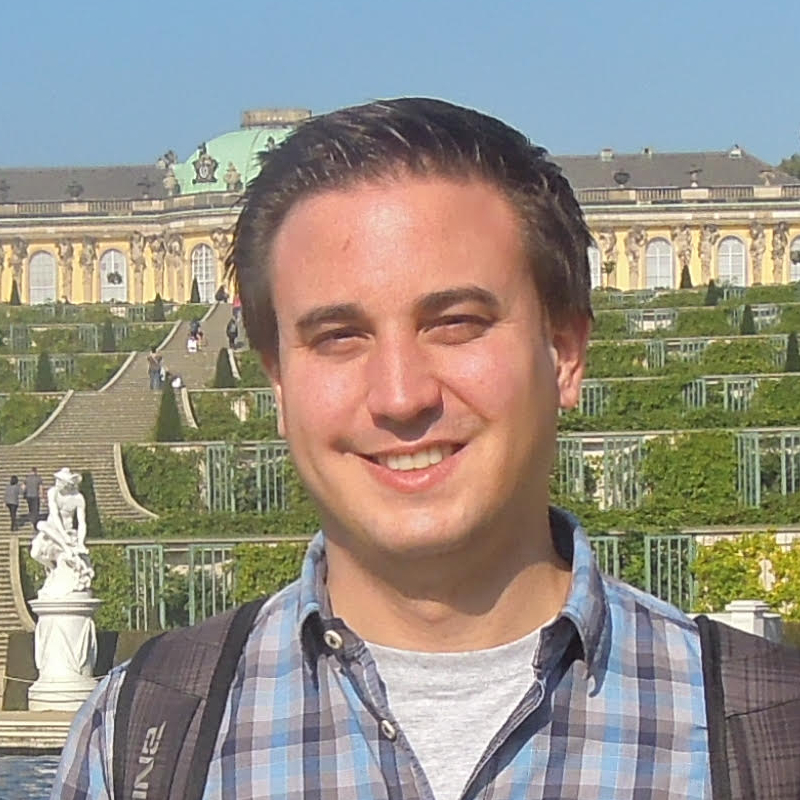
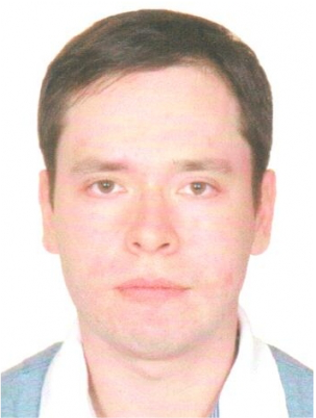
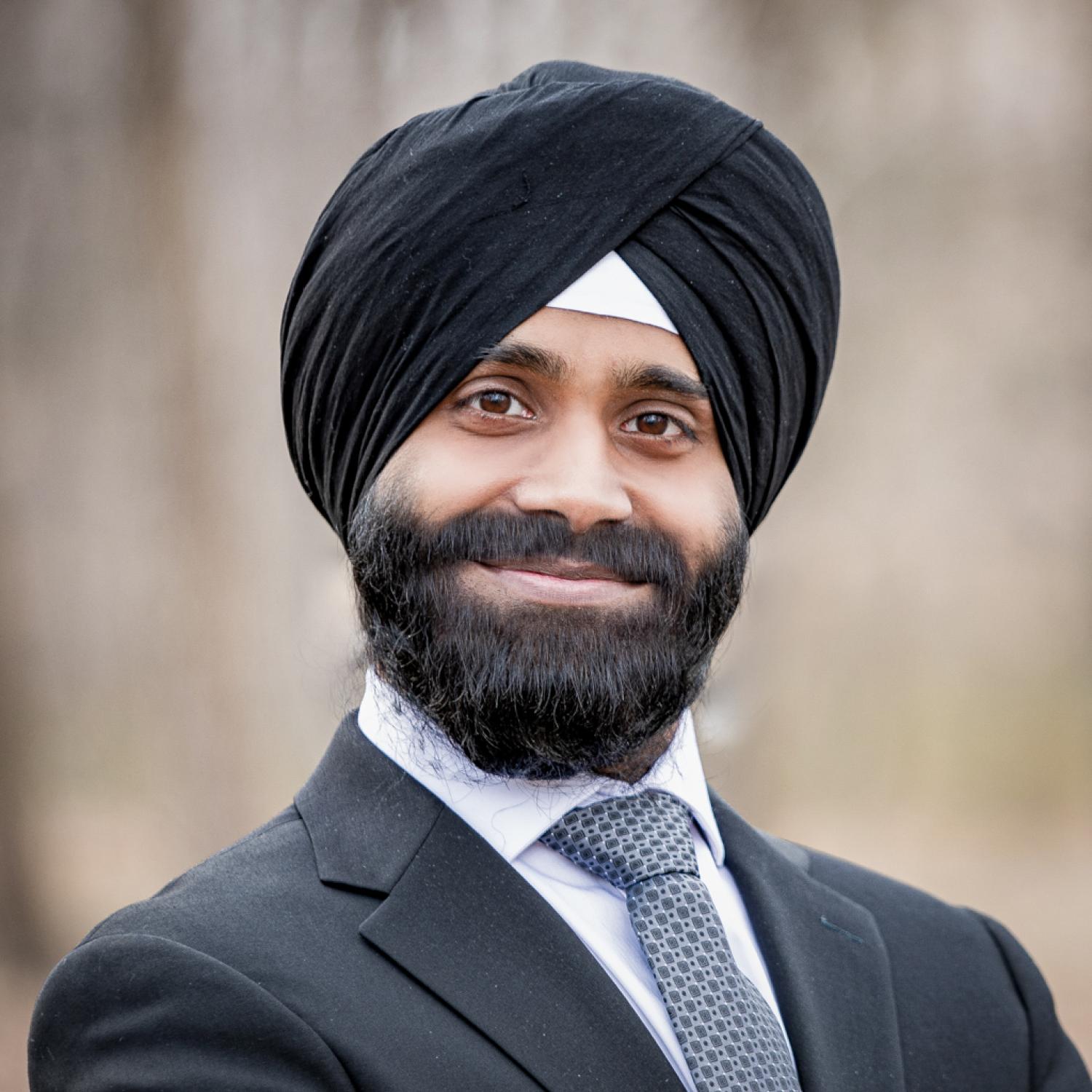
Johannes Schneider is a researcher at the University of Bonn, affiliated with the Institute of Geodesy and Geoinformation's Department of Photogrammetry. His role includes scientific research and academic contributions in the field of computer vision and robotics. He holds a Master's degree in Geodesy and Geoinformation from the University of Bonn (2011) and has been a PhD student since 2012, supervised by Wolfgang Förstner, focusing on visual SLAM and multi-camera systems. His research interests span bundle adjustment, visual odometry, multi-camera systems, and unmanned aerial vehicle (UAV) applications. He actively contributes to the 'Mapping on Demand' project (funded by DFG) and has developed software tools like BACS (Bundle Adjustment for Camera Systems). Teaching responsibilities include lectures on '3D Coordinate Systems' and project supervision for master students. Notable achievements include the Karl Kraus Young Scientist Award (2013). His work emphasizes real-time navigation, obstacle detection, and precise 3D reconstruction using UAVs, integrating sensors like RTK-GPS, IMUs, and fisheye cameras. Recent publications highlight advancements in dense stereo matching, SLAM algorithms, and system calibration.
Dr. Fernando Vanegas Alvarez is a Lecturer at the School of Electrical Engineering and Robotics at Queensland University of Technology (QUT). He holds a M.Sc. in Electrical Engineering from Halmstad University and a PhD in Aerial Robotics from QUT. His research focuses on Drone Autonomy, UAV navigation in GNSS-denied environments, and AI-assisted remote sensing. Education: M.Sc. in Electrical Engineering, Halmstad University PhD in Aerial Robotics, QUT Research Interests: Dr. Vanegas' work emphasizes motion planning for UAV exploration , POMDP , SLAM , Visual Odometry , and AI-driven remote sensing applications . His projects include UAV frameworks for planetary exploration, invasive species mapping, and multi-UAV coordination in challenging environments. Scientific Awards: Advanced Queensland Industry Research Fellowship Grant (2024) Supervision & Grants: Dr. Vanegas has supervised three postgraduate students, including topics like planetary exploration UAV systems and multi-agent UAV search algorithms. He actively accepts new students for Honours, Masters, and PhD programs. His research is supported by grants and collaborations with the QUT Centre for Robotics. Teams & Affiliations: He is a core member of the QUT Centre for Robotics and contributes to the School of Electrical Engineering & Robotics. His work bridges robotics, AI, and environmental science.
Haiyang Chao is an Associate Professor at the Department of Aerospace Engineering, College of Engineering, University of Kansas. His research focuses on Unmanned Aircraft Systems (UAS) with emphasis on control systems, wind estimation, remote sensing, and cooperative UAV operations. Recent work includes FireCrowdSensing for prescribed fire monitoring Wake vortex hazard estimation for airport UAS operations Thermal imaging for fire spread measurement Vertical wind velocity analysis in fire plumes System identification techniques for flying-wing UAVs Honors include the 2016 Summer Faculty Fellowship at Air Force Research Lab. He leads the Cooperative Unmanned Systems Lab (CUSL) and collaborates with NASA on gust sensing projects. Teaching interests include Avionics, Control Systems, and Autonomous Aerospace Vehicles.
Professor Andreas Geiger leads the Autonomous Vision Group (AVG) at the University of Tübingen , heading the Department of Computer Science and serving as core faculty at the Tübingen AI Center . He is Principal Investigator in the ML in Science cluster of excellence and CRC Robust Vision , while coordinating the ELLIS PhD program . Develops machine learning models for computer vision, NLP, and robotics Focus on 2D/3D representations, geometry/material reconstruction, and robust AI Applications in autonomous vehicles, VR/AR, and document analysis His research has produced hundreds of publications with significant impact, including multiple best paper awards at top venues. The Scholar Inbox platform he co-created revolutionizes academic paper discovery, winning business model awards at Tübingen AI Center spinoff events. Key research areas include: Neural rendering and 3D scene understanding Self-driving perception and planning systems Simulation frameworks for autonomous validation Efficient reinforcement learning architectures Recent awards include: CVPR 2024 Best Paper Sage 10-Year Impact Award 2024 IEEE PAMI Young Researcher Award 2018 Active in CyberValley and ELLIS Institute Tübingen , he maintains strong industry collaborations through initiatives like the ML ⇌ Science Colaboratory . His group's work appears in journals like TPAMI and conferences including SIGGRAPH 2025.
Dr. Daniele Cattaneo is a Junior Research Group Leader at the Robot Learning Lab (University of Freiburg, Germany). He specializes in autonomous robotics, deep learning for perception and localization, and sensor fusion. His research focuses on embodiment-agnostic and environment-agnostic systems for robots, with applications in autonomous driving and healthcare robotics. Education: Ph.D. in Computer Science, Università degli Studi di Milano-Bicocca (2016–2020) M.Sc. and B.Sc. in Computer Science, Università degli Studi di Milano-Bicocca (2013–2016, 2010–2013) Research Interests: His work addresses challenges in LiDAR-camera calibration, SLAM (Simultaneous Localization and Mapping), unsupervised domain adaptation, and multimodal fusion for robust perception. Key projects include CMRNext (LiDAR-camera matching), Syn-Mediverse (healthcare scene understanding), and Continual SLAM (long-term autonomy). Awards & Grants: He leads funded projects like AI-Drive (next-gen autonomous driving algorithms) and iSUOR (operating room video analysis). Collaborations include work with the AIS Group and Robotic Learning Lab . Students & Labs: Supervises 12+ students in topics like LiDAR localization, HD maps, and radar-based navigation. Active in the Robot Learning Lab at Freiburg, contributing to open-source datasets and tools for robotics research.
Graham Riley is a Lecturer in the School of Computer Science at the University of Manchester and holds a part-time position in the Scientific Computing Department (SCD) at STFC, Daresbury. His research focuses on high performance computing (HPC), software engineering for scientific computing, and performance modeling for parallel machines. Key areas include techniques for developing HPC applications, software architectures for coupled modeling, and performance control in distributed systems. His work emphasizes collaboration with computational scientists in domains such as Earth System Modelling (e.g., UK Met Office), computational chemistry, and biology. He has contributed to projects like the EuroExa architecture for exascale computing and the LFRic weather/climate model porting to FPGAs. Riley's research also explores energy efficiency in HPC systems and FPGA acceleration strategies for scientific workloads. Notable contributions include studies on parallelization strategies, FPGA-based acceleration of climate models, and optimizing OpenCL for heterogeneous architectures. His work aligns with UN Sustainable Development Goals, particularly through contributions to climate modeling and sustainable computing practices. Riley collaborates with institutions like the Met Office and the ESM community in Europe/US. His academic profile reflects a balance between theoretical research and practical application, with a strong focus on bridging computational science and engineering challenges.
Enrique Dunn is an Associate Professor in the Department of Computer Science at Stevens Institute of Technology. He holds an academic position within the Charles V. Schaefer, Jr. School of Engineering and Science. His research focuses on 3D Computer Vision, emphasizing geometric and semantic relationships in imaged environments. Dunn earned a B.S. in Computer Engineering from the Autonomous University of Baja California (1999), an M.S. in Computer Science from the Ensenada Center for Scientific Research (2001), and a Ph.D. in Electronics and Telecommunications (2006). He held postdoctoral roles at UNC Chapel Hill (2008–2012) before joining Stevens in 2016. His research interests include 3D reconstruction, visual odometry, and large-scale visual analytics. Dunn has authored over 40 papers in top conferences/journals such as CVPR and ICCV. He serves as an Associate Editor for Elsevier's Image and Vision Computing journal and has held roles in program committees for ECCV and 3DV. Key contributions include VOLDOR-SLAM (2021), NeuroCS (2023), and methods leveraging dense optical flow residuals for visual odometry. His team comprises Ph.D. students Juan Carlos Dibene and Siyuan Cao, with alumni Zhixiang Min (Apple) and Xiangyu Xu (InnoPeak). Dunn's work addresses challenges in crowd-sourced imagery and dynamic scene modeling.
Edmund Førland Brekke is a Professor at the Department of Technical Cybernetics, Norwegian University of Science and Technology (NTNU). He leads the Autosit and Autosight projects, and serves as a work package leader in the SFI Autoship center. His research focuses on target tracking, navigation, and SLAM, with applications in collision avoidance for unmanned vessels. He co-founded the company Zeabuz for marine surface autonomy solutions. PhD in Technical Cybernetics (NTNU, 2010) MSc in Industrial Mathematics (NTNU, 2005) Research Interests: Edmund specializes in theoretical foundations of multitarget tracking, integrating target tracking with navigation/SLAM, and applying these to autonomous maritime collision avoidance. His work addresses challenges in heavy-tailed clutter, sensor fusion, and situational awareness for autonomous ferries and river barges. Publications Trends: His recent work (2018–2022) emphasizes collision avoidance algorithms, sensor fusion, and SLAM for autonomous vessels. Key areas include maritime radar tracking, trajectory prediction using AIS data, and integration of visual/Lidar sensors for navigation. Guidance: He has supervised numerous PhD candidates on topics like digital twins, multi-sensor tracking, and risk assessment for autonomous ships, including graduates from 2014–2024. Projects: Active in Autoferry (autonomous ferries), Autobarge (river barges), and the ORCAS initiative. Collaborates with the SFI Autoship center.
Niklas Beuter is a Professor of Artificial Intelligence and Data Science at TH Lübeck, Germany, within the Department of Electrical Engineering and Computer Science. He has been in this position since 2023, contributing to both research and education in AI and computer vision. His educational background includes a Diplom in Computer Science with a focus on robotics from Universität Bielefeld, completed with distinction, followed by a Ph.D. from the same institution in 2011. His doctoral research centered on 3D human detection and tracking for mobile robotic platforms, supporting situation awareness in dynamic environments. Beuter's research is deeply rooted in artificial intelligence, computer vision, and robotics , with a focus on dynamic 3D scene analysis, human-robot interaction, and autonomous systems . His work bridges theoretical models with real-world applications, particularly in autonomous driving and intelligent robotic perception. He has led research teams in industry, demonstrating strong leadership in applied AI. The trend in his publications reflects a consistent focus on perception systems for robots and vehicles , evolving from foundational work in 3D reconstruction and gesture-based interaction to advanced topics like pedestrian intent forecasting using deep learning. His contributions span top conferences such as IEEE ICRA, CVPR, and Intelligent Vehicles, indicating sustained engagement with the core AI and robotics communities. While no formal scientific awards are listed in the provided text, his leadership roles and publication record reflect significant professional recognition. He actively supervises student theses and invites students to register for thesis topics via email, indicating an ongoing commitment to mentoring. Although no specific grants are mentioned, his industrial and academic research leadership suggests involvement in funded projects. He is a member of research groups including CoSA and serves as Deputy Head of ISy, showing active participation in institutional research organization. His research has been conducted in collaboration with teams at Universität Bielefeld, Daimler Research Center, and Robert Bosch GmbH, reflecting a strong interdisciplinary and industry-academia network. His work continues to influence both academic research and industrial applications in AI and autonomous systems.
Dr. Yulia Sandamirskaya is the Head of Research Center "Cognitive Computing in Life Sciences" at Zurich University of Applied Sciences (ZHAW), focusing on neuromorphic computing applications for embodied artificial intelligence. Her work bridges computational neuroscience and robotics, emphasizing neural-dynamic architectures for real-time decision-making, learning, and sensorimotor integration in autonomous agents. Key Research Areas: Neuromorphic hardware, dynamic neural fields, spiking neural networks, spatial language modeling, and autonomous sequence generation. Projects: Developed controllers for UAVs and robotic arms using event-based vision sensors, explored on-chip unsupervised learning, and designed models for spatial language interpretation in robots. Scientific Contributions: Her publications span robotics conferences and journals like Science Robotics and Frontiers in Neurorobotics , addressing topics such as path integration, obstacle avoidance, and cognitive architectures. Recent work (2024) includes visual odometry with resonator networks and hyperdimensional scene factorization on neuromorphic chips. Advising: Supervised multiple MSc theses at ETH Zurich and NSC/INI programs, mentoring students on neuromorphic navigation, spiking networks, and tactile learning. Collaborated with institutions like ETH Zurich, University of Queensland, and INI Bochum. Labs & Collaborations: Leads the "Neuromorphic Computing Applications: Embodied AI" group at ZHAW, partnering with INIvation (Zurich) and Jörg Conradt (KTH) on neuromorphic hardware implementations. Projects integrate cognitive models with robotic platforms, emphasizing energy efficiency and low-latency interaction.
Chahat Deep Singh is an Assistant Professor in the Paul M. Rady Department of Mechanical Engineering at the University of Colorado. His research focuses on minimal perception frameworks to enable autonomy in small robots, combining robotics, AI, and computational imaging. He leads the PRAISe Lab, pioneering bio-inspired perception algorithms and deploying them on robots for real-world applications. Education: PhD in Computer Science and Robotics, University of Maryland Master's in Computer Science and Robotics, University of Maryland Research Interests: Autonomous drones, neuromorphic perception, and computational imaging. His work emphasizes onboard autonomy for resource-constrained systems, with a focus on active perception and bio-inspired algorithms. Recent breakthroughs include the Minimal Perception framework, enabling credit-card-sized robots to navigate autonomously. Awards: Ann G. Wylie Fellowship (2022-2023) Future Faculty Fellowship (2022-2023) University of Maryland Dean Fellowship (2018-2020) Advising & Grants: Postdoctoral research funded by the Army Research Laboratory and Maryland Robotics Center (2023-2024). Currently advises students in robotics and AI at the University of Colorado. Labs & Teams: Director of the PRAISe Lab, collaborating with interdisciplinary teams to advance robotics solutions for environmental and societal challenges.
Steven Waslander is an Associate Professor at the University of Toronto Institute for Aerospace Studies and an Adjunct Professor in Mechanical and Mechatronics Engineering at the University of Waterloo. He previously directed the Waterloo Autonomous Vehicles Laboratory (WAVELab). Education: Doctorate in Aeronautics and Astronautics from Stanford University (2007) Master's in Aeronautics and Astronautics from Stanford University (2002) Bachelor's in Applied Mathematics and Mechanical Engineering from Queen's University (1998) His research focuses on autonomous vehicles , including aerial and ground systems, with an emphasis on Simultaneous Localization and Mapping (SLAM) , nonlinear estimation , multi-robot systems , and autonomous driving . He also explores convolutional and recurrent neural networks for motion planning and object detection . Recent articles highlight trends in 3D detection , LiDAR-based tracking , neural radiance fields for autonomous driving, and model-agnostic pretraining for motion prediction. These works span journals like IEEE Transactions on Robotics and conferences such as ICCV and NeurIPS . Professor Waslander has advised the University of Waterloo Robotics Team, mentored students like Evan Cook, Barza, and Marc, and collaborated with industry partners including Aeryon Labs and Clearpath Robotics. He is a member of the NSERC Canadian Field Robotics Network .
Ruiqi Ye is a Research Fellow at the Advanced Processor Technology group within the Department of Computer Science at the University of Manchester. Previously, they completed a PhD (2019-2024) and MSc (2018-2019) at the same institution, and a BEng in Software Engineering from Shandong University (2014-2018). Education: PhD in Computer Science, University of Manchester, 2019-2024 MSc in Advanced Computer Science, University of Manchester, 2018-2019 BEng in Software Engineering, Shandong University, 2014-2018 Ye's research centers on hardware acceleration for visual Simultaneous Localization and Mapping (SLAM) systems using High-Level Synthesis (HLS) on embedded System-on-Chip platforms, with emphasis on data transfer optimization for sparse kernels. They maintain broad expertise in domain-specific acceleration, heterogeneous computing (GPU/FPGA), and performance optimization using C++, CUDA, OpenCL, and HLS C++. Recent publications (2023-2024) demonstrate a clear trajectory toward efficient embedded robotics solutions, combining visual odometry acceleration with FPGA-based hardware design and radiation reliability analysis for MPSoC systems. Their work bridges computer vision, robotics, and hardware engineering disciplines. Scientific awards: None documented in source materials. Advising and grants: No student advising or grant management details provided in available records. Labs and teams: Active in the Soteria JVMs project and Advanced Processor Technology (APT) group, with affiliation to the University of Manchester's Centre for Robotics and Artificial Intelligence.
Chao Zhang is an Associate Professor at the Department of Chemistry-Ångström Laboratory, Uppsala University, specializing in computational electrochemistry and multi-scale modeling of electrolyte materials. His research bridges atomistic simulations with machine learning approaches to address challenges in energy storage and conversion systems. Education: Dr. rer. nat. from RWTH Aachen University (2013); Docent from Uppsala University (2020) Appointments: Postdoctoral researcher at the University of Cambridge (prior to joining Uppsala in 2017) His group develops finite-field methods for computational electrochemistry and investigates electrified solid-liquid interfaces. Recent research trends include neural rendering for underwater SLAM systems (2025), robust path-following control in marine robotics, and event-based localization in LiDAR-integrated environments. Scientific Awards: ERC Starting Grant (2020) Junior Research Fellowship, Wolfson College (2015) Jülich Excellence Prize for Young Scientists (2013)
Jin Woo Song is an Associate Professor in the Department of Artificial Intelligence and Robotics at Sejong University's School of Intelligent Mechatronics Engineering. He has held academic positions at Seoul National University and Hoseo University prior to joining Sejong University in 2017. His professional experience also includes serving as CTO/COO at Microinfinity Co., Ltd. from 2004-2014. Currently, he holds multiple leadership roles including Director of Sejong Enterprise Support Foundation, Director of SW-AI Convergence Center, and Provost of Sejong University. Dr. Song received his B.S., M.S., and Ph.D. in Control and Instrumentation Engineering/Electrical Engineering from Seoul National University. His educational background laid the foundation for his expertise in navigation systems and control theory. Dr. Song's research focuses on navigation and sensor systems, control theory, and estimation theory with applications in unmanned systems. His work spans MEMS inertial sensor technologies, Kalman filtering techniques, optimal and robust control theories, and fault detection algorithms. His research has significant applications in unmanned aircraft systems, autonomous vehicles, robotics, and military intelligence systems. His recent publications (2023-2025) demonstrate continued innovation in navigation systems, with emphasis on fault tolerance, sensor fusion, and improved positioning accuracy in challenging environments. His work shows strong trends toward integrating multiple sensor modalities and developing robust algorithms for real-world navigation challenges. Best student paper award, NAECON2000 (IEEE, National Aerospace and Electronics Conference), USA, 2000 Ministry Award, 'IT R&D Engineer of the Year', Ministry of Information and Communication, Republic of Korea, 2005 Best Presentation Award, ICASS 2015, 2015 Best Paper Award, KIEE Conference, 2019 Distinguished Teaching Award, Sejong University, 2021 Distinguished Research Award, Sejong University, 2022 Distinguished Professor, Sejong University, 2024 Dr. Song has served as Editor-in-Chief for ICROS journal and holds editorial positions for multiple prestigious journals including the International Journal of Aeronautical and Space Sciences. He has been actively involved in numerous research grants and industry collaborations, including a recent academic-industrial partnership with Hanwha Systems. As Vice-President of The Institute of Control, Robotics and Systems (ICROS) and various other professional organizations, he plays a significant role in shaping research directions in his field. He leads the Intelligent Navigation and Control Systems Lab at Sejong University, where his team develops cutting-edge navigation sensors and systems, optimal controllers for autonomous systems, and embedded systems for reliable navigation and control. The lab's work has direct applications in unmanned aircraft systems, autonomous vehicles, robotics, and military intelligence systems.