Giorgio C. Buttazzo is a Full Professor specializing in real-time systems, embedded computing, and AI integration. His research focuses on scheduling algorithms, cyber-physical systems, and security mechanisms for time-critical applications. He has contributed significantly to the IEEE community, including the 2023 IEEE TCCPS Early-Career Award. Research Interests: Real-Time Scheduling and Resource Management Embedded Systems and Energy Efficiency AI Security and Adversarial Robustness Cyber-Physical Systems and Robotics Key Publications (2023-2024) explore topics like memory integrity for unsafe languages, adversarial attack defenses, and dataset generation for autonomous systems. His work bridges theoretical foundations with practical implementations in FPGA-based hardware and heterogeneous platforms. Awards: Recipient of the IEEE TCCPS Early-Career Award 2023 for contributions to cyber-physical systems research. Advising/Grants: Extensive collaboration on EU-funded projects and industry partnerships, though specific grants/students are not explicitly listed in the provided data.
Dr. Zeeshan Rana MSc, PhD, FHEA, MIET, MPEC is a Research Fellow at Cranfield University with expertise spanning Computational Fluid Dynamics , Autonomous Systems , and Artificial Intelligence Applications . His research focuses on high-speed aerodynamics , drone tracking systems , and renewable energy fluid dynamics . Education : MSc in Mechanical Engineering PhD in Computational Fluid Dynamics & Aerodynamics (Cranfield University) His work bridges hypersonic flow analysis with practical applications in Formula One aerodynamics , planetary rover navigation , and textile wastewater treatment . Recent research integrates machine learning with CFD simulations to solve complex engineering problems. Scientific trends in his publications (2025–2013) reveal consistent focus on: Computational Aerodynamics (ILES, WENO schemes, SU2 validation) Autonomous Systems (drone tracking, visual SLAM, sign language modeling) Renewable Energy (VAWT turbines, microbial fuel cells) Scientific Contributions: Fellow of the Higher Education Academy (FHEA) Member of the Institution of Engineering and Technology (MIET) Member of the Professional Engineering Community (MPEC) Current affiliations include the Digital Aviation Research and Technology Centre (DARTeC) , contributing to reinforcement learning-based surveillance and multi-sensor fusion systems for drone tracking.
Shengkai Zhang is an active researcher with 26 publications and 444 citations spanning engineering, computer science, and environmental disciplines. His work demonstrates strong interdisciplinary collaboration through co-authorship with researchers like Kezhong Liu and Mozi Chen across multiple high-impact venues including IEEE conferences, arXiv, and specialized journals. His research interests center on Machine Learning applications in maritime systems , with significant contributions to Large Language Model integration for ship navigation, wireless sensing for bridge officer monitoring, and sensor fusion techniques. Additional expertise spans robotics perception (visual-inertial systems, mmWave radar enhancement), environmental modeling (urban energy systems, climate studies), and biomedical applications of traditional medicine. Recent work shows increasing focus on AI foundation models and their security implications. Zhang's publication trajectory reveals consistent output with accelerating impact since 2023, featuring 15+ papers in 2024 alone. His research clusters around three core themes: Maritime AI Systems (LLM navigation, track association, watchkeeping monitoring) Advanced Sensing Technologies (mmWave radar, Wi-Fi sensing, GNSS fusion) Environmental & Biomedical Applications (urban energy modeling, gut microbiome studies) These areas demonstrate both technical depth in signal processing/computer vision and practical focus on real-world engineering challenges.
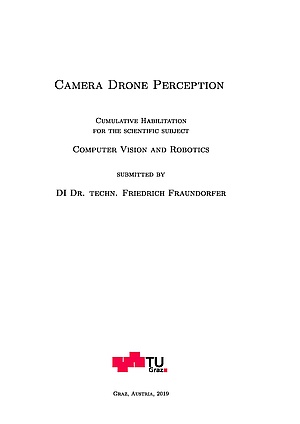
Friedrich Fraundorfer is a Professor at Graz University of Technology, specializing in 3D Computer Vision and Autonomous Systems at the Institute of Computer Graphics and Vision (ICG). He has held academic positions at institutions including ETH Zurich, University of North Carolina at Chapel Hill, and Technische Universität München, where he served as Deputy Director of the Chair of Remote Sensing Technology. Research : Focuses on Micro Aerial Vehicle (MAV) autonomy, Visual-Inertial Fusion, and Multi-View Geometry. Projects : Led EU-funded SFly (autonomous MAVs for search-and-rescue), SNF MAV (camera-only 3D mapping), and VCharge (vision-based self-driving cars). Teaching : Offers courses like 'Camera Drones' and 'Mathematical Principles in Vision.' His Pixhawk project created open-source MAV platforms adopted globally. Key Collaborations : With NVIDIA, Volkswagen AG, University of Zurich, and German Space and Aerospace Center (DLR). His students (e.g., Dominik Hirner, Rafael Weilharter) have published on lightweight CNNs for stereo vision and self-supervised 3D reconstruction.
Jesús Tordesillas Torres is an Assistant Professor in the Department of Electronics, Automation, and Communications at the School of Engineering, Comillas Pontifical University. He joined the institution in June 2024, bringing extensive experience from postdoctoral research at MIT and ETH Zurich, and prior academic training from MIT and the Polytechnic University of Madrid. Education: PhD in Aeronautics and Astronautics, Massachusetts Institute of Technology (MIT), 2022 MS in Aeronautics and Astronautics, MIT, 2019 MS in Industrial Engineering, Polytechnic University of Madrid, 2019 BS in Industrial Engineering, Polytechnic University of Madrid, 2016 His research focuses on robotics, particularly autonomous navigation, trajectory planning, and optimization under uncertainty. He integrates deep learning and control theory to develop systems capable of safe, fast, and perception-aware navigation in dynamic and unknown environments. His work spans aerial and ground robots, multiagent systems, and challenging terrains, with strong emphasis on real-world deployment and robustness. The recent publications highlight a consistent trend in trajectory optimization, perception-aware planning, and multiagent coordination. His work bridges theoretical advances in optimization and learning with practical robotic applications, especially in safety-critical and communication-constrained scenarios. Scientific Awards: Best Paper Award, IEEE ICRA 2023 1st Place, Urban Circuit, DARPA Subterranean Challenge (2020) 2nd Place, Tunnel Circuit, DARPA Subterranean Challenge (2021) Finalist, Best Paper, IEEE IROS 2019 Jesús Tordesillas Torres has been actively involved in research grants and projects, including the ADS FERRARI WP-2 Project funded by Airbus Defence and Space (2025–2025). He mentors students and collaborates with leading institutions such as MIT, ETH Zurich, and the University of Pennsylvania. He also serves as a reviewer for top-tier journals including IEEE Transactions on Robotics , International Journal of Robotics Research , and IEEE Robotics and Automation Letters , as well as major conferences like ICRA and IROS. He leads and participates in research teams focused on autonomous systems, with affiliations to the Institute for Research in Technology (IIT) at Comillas. His invited talks at ETH Robotics Summer School and University of Pennsylvania reflect his growing influence in the robotics community.
Armin Alaghi serves as a Research Scientist at Oculus Research (Redmond, WA) and holds an Affiliate Assistant Professor position at the University of Washington. His dual affiliation enables valuable knowledge transfer between cutting-edge industrial research and academic pursuits in computer systems engineering. Dr. Alaghi's research spans the intersection of embedded systems, digital circuits, and mathematics. His primary focus involves building low-power augmented reality (AR) and virtual reality (VR) systems while developing novel computation methods for unreliable beyond-CMOS technologies. His previous research contributions include significant work in stochastic computing (where he developed the STRAUSS synthesis methodology), reliable Network on chip (NoC) design, FPGA testing methodologies, NoC testing techniques, artificial neural networks implementations, asynchronous circuit design, and multi-valued logic systems. He has made his spectral-transform-based synthesis tool publicly available on GitHub, demonstrating commitment to open research. Analysis of Dr. Alaghi's publication record reveals a clear research trajectory from foundational circuit-level work toward practical applications in AR/VR systems. His publications from 2020-2025 demonstrate expertise spanning computer architecture, security for immersive technologies, neural network compression techniques, and homomorphic encryption methods. A recurring theme throughout his work is the exploration of quality-energy tradeoffs and error-resilient computing approaches, with increasing focus on security aspects of AR/VR systems in his most recent work. Dr. Alaghi maintains active connections with the broader research community, as evidenced by his Erdős number of 3 (Armin Alaghi John P. Hayes Frank Harary Paul Erdős) and his ongoing contributions to open-source research tools. His GitHub repository for stochastic computing synthesis shows community engagement with multiple contributors. At Oculus Research, Dr. Alaghi applies his theoretical expertise to practical challenges in next-generation AR/VR system development. His work bridges academic research with real-world product development, particularly in addressing energy efficiency challenges for wearable computing platforms through innovative circuit design approaches.
Jan-Matthias Braun is an Associate Professor at the Maersk Mc-Kinney Moller Institute, University of Southern Denmark, specializing in Applied AI and Data Science. His research bridges artificial intelligence, robotics, and medical device engineering. Current projects focus on explainable AI integration in colon capsule endoscopy Development of real-time FPGA-based systems for colorectal diagnostics Biomechanical modeling for adaptive orthotic devices His work emphasizes cross-disciplinary applications of machine learning in healthcare, particularly for gastrointestinal disease detection and assistive robotics. Publications demonstrate expertise in deep neural networks, hardware acceleration, and smart environment control systems. Teaching responsibilities include: Advanced cybersecurity courses Deep learning applications in epilepsy detection Mentorship in capsule endoscopy image analysis
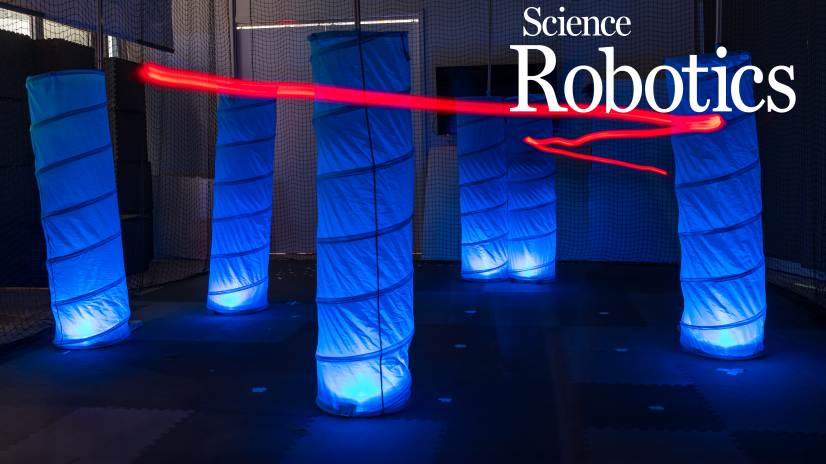
Nitin J Sanket is an Assistant Professor in the Robotics Engineering Department at Worcester Polytechnic Institute, where he leads the Perception and Autonomous Robotics Group (PeAR) founded in 2022. His research focuses on advancing autonomy for tiny mobile robots through bio-inspired approaches that enable on-board sensing and computation without external infrastructure. Ph.D. in Computer Science from University of Maryland, College Park (2021) M.S. in Robotics from University of Pennsylvania (2016) B.E. in Electronics and Communication from M. S. Ramaiah Institute of Technology, Bangalore, India (2013) Professor Sanket's research centers on four interconnected thrusts: Active perception (using movement to simplify perception problems), Interactive perception (selectively interacting with the environment), Novel perception (using data statistics like neural network uncertainty), and Novel sensing (employing sensors like event cameras). His work targets extreme resource-constrained robots, exemplified by the world's first RoboBeeHive prototype – hummingbird-sized nano-quadrotors capable of pollination with all sensing and computation performed on-board. His lab's 'Minimal-AI' philosophy emphasizes efficiency, using perception-action synergy to solve complex problems with minimal computational resources. His recent publications reveal a strong focus on efficient vision algorithms for tiny robots, with papers in Science Robotics (featured on the cover), IEEE ICRA, IROS, and CVPR. Key themes include uncertainty modeling for resource-constrained systems, event-based vision, and bio-inspired navigation. His work frequently bridges theoretical innovation with practical implementation on real hardware. Larry S. Davis Award for Best Computer Science PhD Thesis at University of Maryland (2021) MDPI Drones 2021 PhD Thesis Award Brin Family Prize (2018) Science Robotics cover feature (2023) Professor Sanket actively mentors 19 students (3 PhD, 6 Masters, 10 undergraduates) and recently secured a $705K NSF grant (September 2025) for bio-inspired sound navigation in tiny robots. His lab emphasizes hands-on experience with real hardware systems rather than pure simulation. His research on bat-inspired drones for search and rescue operations has received extensive media coverage from Associated Press, Washington Post, NPR, and other major outlets, demonstrating the real-world relevance of his work. The Perception and Autonomous Robotics Group (PeAR) provides students with opportunities to work on cutting-edge problems in nano-drone development, bio-inspired navigation, and minimal-AI approaches, preparing them for careers at the forefront of robotics innovation.
Dr. Chongfeng Wei is an Associate Professor (University Senior Lecturer) at the James Watt School of Engineering, University of Glasgow. Prior to joining the University of Glasgow, he was a lecturer at Queen's University Belfast. His research focuses on intelligent vehicles, autonomous systems, and human-robot interaction, with applications in transportation and robotics. Dr. Wei's research spans several key areas in autonomous systems and vehicle dynamics: Decision-making and Planning of Intelligent Vehicles Collective Autonomy: Perception and Planning Robotic System Design and Dynamical Control Dynamics and Control of Mechanical Systems Human Behaviour Study and Prediction His recent publications demonstrate a strong focus on human-vehicle interaction, with particular emphasis on pedestrian-vehicle interactions, decision-making frameworks, and control strategies for autonomous systems. His work often combines AI technologies, bio-designs, and first principles of dynamics and control to create smarter or human-acceptable autonomous systems. Dr. Wei serves as an Associate Editor for several prestigious journals including IEEE Transactions on Intelligent Transportation Systems (TITS), IEEE Transactions on Vehicular Technology (TVT), IEEE Transactions on Intelligent Vehicles (TIV), IEEE Open Journal of Intelligent Transportation Systems (OJ-ITS), and Frontiers on AI and Robotics. He actively supervises PhD students and postdoctoral researchers, with current projects focusing on vision-based 3D flow prediction, pedestrian interaction modeling, and multimodal interaction for behavior prediction in autonomous driving.
Myriam Servières is a Professor of Computer Science at Centrale Nantes, where she has taught since 2006. She currently serves as Director of AAU-CRENAU and Deputy Director of the AAU Laboratory. Her academic journey includes a PhD in Applied Computer Science from the University of Nantes (2002-2005) and an engineering diploma from École Centrale de Nantes (1999-2002). Her research explores the intersection of digital technology and urban environments, with key interests in: Geolocation : Developing advanced positioning systems for urban navigation Augmented/Virtual Reality : Creating multisensory urban simulations 3D Modeling : Reconstructing and analyzing urban spaces Citizen Sensing : Engaging communities in environmental monitoring Her recent publications demonstrate strong focus on VR-based urban perception analysis, pedestrian navigation systems, and geospatial data processing. Work frequently appears in premier journals like ISPRS and IEEE Transactions . She leads significant initiatives including the IRSTV 'Urban Tomography' research axis and the '3D geospatial data' prospective action. Her teaching spans core computer science courses and specialized programs in digital cities. At AAU-CRENAU, she directs research on computational urban analysis, collaborating across disciplines to develop new methods for understanding and designing urban spaces through digital mediation.
Torsten Sattler is a Senior Researcher at the Czech Institute of Informatics, Robotics and Cybernetics (CIIRC) at the Czech Technical University in Prague (CTU), where he heads the Spatial Intelligence group. Previously, he was a tenured Associate Professor at Chalmers University of Technology in Sweden and spent five years as a PostDoc and Senior Researcher at ETH Zurich in Switzerland. He received his PhD from RWTH Aachen University in Germany. His research focuses on the intersection of 3D computer vision and machine learning, with specific interests in image-based localization, 3D mapping and reconstruction, neural scene representations, and applications in robotics and AR/VR. He aims to make localization and mapping algorithms more robust by incorporating higher-level scene understanding. Dr. Sattler has published extensively at top computer vision conferences including CVPR, ICCV, and ECCV, with recent papers focusing on robust visual localization in changing environments, neural scene representations, and 3D reconstruction. His work has direct applications in autonomous systems and augmented reality. Best Paper Candidate at CVPR 2021 Best Paper Award at Photogrammetric Image Analysis 2019 Multiple Outstanding Reviewer Awards from 2015-2021 Ranked among top-10 computer scientists in Czech Republic by Research.com He currently supervises five PhD students and has served in various leadership roles including program chair for ECCV 2024, general chair for 3DV 2022, and area chair for multiple major conferences. His lab benefits from connections to the RICAIP Centre, one of the largest EU projects in AI and Industry 4.0, providing access to state-of-the-art infrastructure and industrial collaborations.
Mohamed Alimoussa is a Postdoctoral Researcher at the National Institute of Applied Sciences of Toulouse since June 2025, working in the MICS (Metrology, Identification, Control and Surveillance) group at Espace Clément Ader. His research focuses on multi-instrumentation methods for drone pose estimation to characterize deformations of kite-sails in maritime propulsion systems using sensor fusion and computer vision. He holds a PhD from the University of the Littoral Opal Coast (2020-2024) where he developed compact hybrid descriptors for texture classification in color and hyperspectral imaging. His educational background includes advanced work in feature selection, dimensionality reduction, and GPU-accelerated image processing algorithms. Dr. Alimoussa's research spans drone navigation, sensor fusion (visual odometry, RTK GPS, laser rangefinders), SLAM algorithms, and Digital Image Correlation for mechanical deformation measurement. His work bridges computer vision with mechanical engineering, emphasizing robust real-world applications in non-structured outdoor environments and industrial metrology. His publication record shows consistent innovation in texture analysis and feature engineering, evolving from foundational work on color texture descriptors to current applications in drone-based metrology. Recent publications demonstrate increasing focus on multi-sensor fusion systems and robustness against environmental variables like lighting changes and rapid motion. He actively co-supervises Master's students and interns in texture classification projects while participating in the ANR-funded ESKIF project (JCJC 2024). His experimental work involves collaborations with LMGC (University of Montpellier) and Beyond the Sea for coastal validation trials. As a core member of the MICS research group at Espace Clément Ader, he contributes to metrology systems development and participates in workshops on drone applications for mechanical measurement, maintaining strong industry-academia partnerships for experimental validation.
Thanh Nguyen Canh is a Lecturer at University of Engineering and Technology, Vietnam National University (UET VNU) and Teaching/Research Assistant at Japan Advanced Institute of Science and Technology (JAIST), School of Information Science. Primary affiliation is with the Robotics Lab at both institutions where he conducts research in SLAM systems and computer vision. PhD in Information Science at JAIST (2024.10-present) MS in Information Science at JAIST (2022.9-2024.9) BS in Robotics Engineering at UET VNU (2018.8-2022.8) Research focuses on advancing SLAM technologies through semantic understanding and active exploration. Key specialties include Visual-inertial odometry , probabilistic semantic mapping , and multi-sensor fusion for UAV navigation. Current projects integrate deep learning with traditional SLAM pipelines to create robust environmental representations. Publication activity centers on practical robotics applications, with the 2023 ICCAIS paper demonstrating object-oriented semantic mapping for UAV navigation. Research output emphasizes implementable solutions with active GitHub repositories showing continuous development in SLAM systems and reinforcement learning. Supervision involves teaching robotics curriculum at UET while mentoring research assistants at JAIST. Current projects provide hands-on experience with ROS, point cloud processing, and deep learning frameworks. Laboratory work occurs within the Robotics Lab environment at JAIST/UET, utilizing GitHub-hosted tools like probabilistic_semantic_mapping and S3M_SLAM for collaborative development. The lab maintains strong focus on real-world robotics applications with particular emphasis on aerial vehicle navigation systems.
Adriano Jorge Cardoso Moreira is an Associate Professor with Habilitation at the Department of Information Systems, School of Engineering, University of Minho, Portugal. He holds multiple leadership roles including Scientific Coordinator of Urban Computing at Centro de Computação Gráfica and Director of the MAP-tele PhD Program. His research is conducted primarily through the Urban Computing Lab , focusing on smart place technologies. Education: PhD in Electrical Engineering (1997) and Bachelor's in Electronic and Telecommunications Engineering (1989), both from University of Aveiro, Portugal. Research Focus: His work spans indoor positioning, mobile/context-aware systems, urban computing, and wireless network simulation. Key innovations include fingerprinting algorithms for localization, multi-sensor fusion techniques, and human mobility analysis. Research outputs consistently address real-world industrial challenges such as warehouse management, factory automation, and urban infrastructure. Research Output Trends: Recent publications (2021-2023) emphasize practical applications of Wi-Fi/LoRaWAN fingerprinting, machine learning for sensor calibration, and industrial vehicle tracking. Over 70% of recent works involve experimental validation in real environments, reflecting a strong applied research focus. Key thematic clusters include radio map optimization, multi-sensor datasets, and scalability of positioning systems. Awards & Recognition: First Prize, EvAAL-ETRI Indoor Localization Competition (Off-site track, 2015 & 2017) Second Prize, EvAAL-ETRI Indoor Localization Competition (2016) IEEE Senior Member status Patent in computational geometry Projects & Funding: He leads/participates in numerous EU/national projects including: ORIENTATE (2021-2023): Low-cost indoor positioning for factories Lab4U&Spaces (2021-2023): Urban space solutions AR WARE (2018-2022): AR for warehouse management SAMU (2015-2018): Smart autonomous mobile units Lab & Team: He established/leads the Urban Computing Lab developing technologies for smart environments. Previously headed the Computer Communications and Pervasive Media Group (until 2016). Current team includes PhD/Master students working on wireless positioning and mobility analysis.