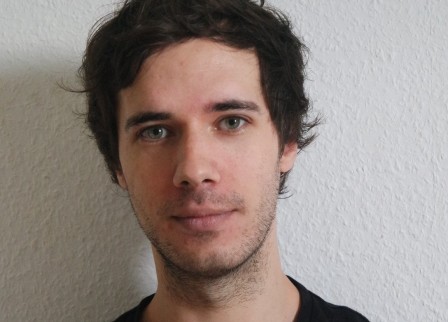
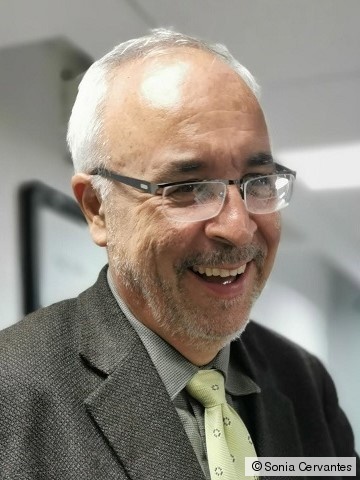
Prof. Dr. André Hinkenjann is the Founding Director of the Institute for Visual Computing and holds a Research Professorship in Computer Graphics and Interactive Systems at Bonn-Rhein-Sieg University of Applied Sciences. His research spans computer graphics, interactive environments, and visualization, with applications in VR/AR, digital twins, and scientific data analysis. He leads multidisciplinary projects funded by institutions like BMBF and Zukunftsfonds NRW. His research integrates: Computer Graphics : Real-time global illumination, foveated rendering, and GPU optimization Interactive Systems : Haptic interfaces, large-display collaboration, and spatial interaction techniques Applied VR/AR : From trauma therapy to industrial training and cultural heritage preservation Recent publications emphasize mixed-reality interaction, neural rendering, and perceptual optimization, reflecting a consistent focus on bridging theoretical graphics with human-centered applications. His lab frequently contributes to high-impact venues like ACM SIGGRAPH, IEEE VR, and Eurographics. Notable projects under his direction include: PInBiM: Gamified citizen science for museum-based insect research DT4MP: Digital twins for urban/industrial multiphysics simulations GTN: State-wide network advancing game technology in NRW Witality: VR for sensory wine analysis
Mohammad Hamdaqa is an Associate Professor at the Department of Computer Engineering and Software Engineering at Polytechnique Montréal (Canada), where he leads the Software and Emerging Technologies Lab. He received his PhD in Software Engineering from the University of Waterloo in Canada in 2016 and holds multiple advanced degrees including a Master of Applied Science in Software Engineering and an MBA with a minor in Management Information Systems. His educational background includes: Ph.D. in Electrical and Computer Engineering, University of Waterloo, Canada Master in Electrical and Computer Engineering, Concordia University, Canada Master in Business Administration, New York Institute of Technology, USA Bachelor in Computer Engineering, Jordan University of Science and Technology, Jordan Dr. Hamdaqa's research focuses on the intersection of software engineering and emerging technologies. His work explores how software engineering approaches can be tailored to address the complexities of architecting, building, and deploying applications for new platforms like Cloud Computing and Blockchain. He is particularly interested in how emerging technologies can advance software creation, evolution, and management practices. His research spans model-driven software engineering, cloud computing, blockchain, and the application of AI in software development processes. His recent publications demonstrate a strong focus on smart contract security, infrastructure as code, model-driven engineering, and the application of large language models in software engineering tasks. His work bridges theoretical software engineering concepts with practical applications in cutting-edge technology domains, with particular emphasis on addressing security, sustainability, and maintainability challenges in next-generation software systems. Dr. Hamdaqa has received recognition through service on program committees for major software engineering conferences including ASE, ICSE, MODELS, and SANER. He serves on the editorial board of Service Transactions on Internet of Things and is a Member of the IEEE Computer Society and the Association for Computing Machinery. He has supervised multiple Master's students to completion, with recent theses focusing on OCL generation, smart contract auditing, epidemiological modeling, and infrastructure as code security. His current research group continues to explore innovative approaches at the intersection of software engineering and emerging technologies. Dr. Hamdaqa leads the Software and Emerging Technologies Lab at Polytechnique Montréal, which brings together researchers and students to investigate cutting-edge challenges in software engineering for new technology platforms. The lab focuses on practical solutions that balance theoretical rigor with real-world applicability.
Prof. Dr.-Ing. Piotr Kuroczyński serves as Professor of Applied Computer Science and Visualization in Civil Engineering and Head of the Architecture Institute at Mainz University of Applied Sciences. His academic career spans multiple prestigious institutions including Technical University of Darmstadt where he researched and taught at the unit Information and Communication Technology in Architecture, and Warsaw University of Technology where he lectured in Computer Aided Design. His research interests focus on the intersection of digital technology and cultural heritage preservation. Kuroczyński specializes in Heritage Building Information Modeling (HBIM), digital 3D reconstruction of architectural monuments, and virtual research environments for object-based research. His work establishes documentation standards and semantic data modeling approaches for accurately representing historical structures, particularly focusing on Jewish cultural heritage sites including synagogues across Europe. He explores how digital methodologies can enhance our understanding of architectural history while preserving endangered cultural assets. Kuroczyński's publications reveal a consistent emphasis on 3D reconstruction as a scholarly research methodology rather than merely a visualization tool. His work addresses the challenges of creating FAIR (Findable, Accessible, Interoperable, Reusable) research data within digital humanities, with particular attention to historical accuracy, source documentation, and methodological transparency. His research bridges architectural history, computer science, and cultural heritage preservation through innovative digital approaches. His scientific recognition includes: The Werner Weber Award for Best Full Paper at EuroMed2016 Conference 3rd prize for German Pavilion at EXPO 2015 Milan 2nd place in ECB Visitor Center competition Winner of "Built on IT" competition Diploma with distinction from TU Darmstadt As editor-in-chief of the book series Computing in Art and Architecture at Heidelberg University Library and co-founder of the Digital 3D-Reconstruction Working Group, Kuroczyński has significantly shaped research infrastructure in digital heritage. He leads the DFG-funded 3D Viewer project creating infrastructure for digital 3D reconstructions and has received fellowships from Getty Foundation, National Endowment for the Humanities, and Volkswagen Foundation. His leadership extends to coordinating the CoVHer project on computer-based visualization of architectural cultural heritage and directing the Digital Urban History Lab for historical urban development research. Kuroczyński heads the Architecture Institute at Mainz which operates as a hub for interdisciplinary research connecting computer science, architecture, and cultural heritage preservation. The institute develops innovative methodologies for documenting historical structures, with particular focus on the 3R principle (Reduce, Reuse, Recycle) in architectural resource management and the development of standardized approaches for Heritage BIM. Current projects include the Mastering Heritage BIM workshop series and the CIPA Seoul 2025 initiative advancing documentation standards for cultural heritage.
David Tschirschwitz is a Lecturer at Bauhaus-Universität Weimar's Faculty of Media (Department of Media Informatics) with additional affiliations at the Faculty of Civil and Environmental Engineering's Geodesy Institute. His research spans computer vision, object detection, and document analysis, with leadership in projects like VarInsightAI. Research Focus: Specializes in human label variation, image retrieval systems, annotation noise handling, and AI evaluation methods. Key applications include construction industry datasets, historical document processing, and medical object detection. Teaching & Advising: Regularly teaches advanced courses in computer vision and deep learning. Currently advises 4 students on topics ranging from table recognition to image registration. Recent Publications: Published 6 peer-reviewed papers between 2022-2025, predominantly at top venues like WACV and GCPR. Work emphasizes practical datasets, annotation reliability, and evaluation frameworks for computer vision systems.
Dr. Carolin Liefke serves as Deputy Managing Scientist at the Haus der Astronomie (Center for Astronomy Education and Outreach) in Heidelberg and Deputy Director of the International Astronomical Union Office of Astronomy for Education. With over 20 years of experience in astronomy education and outreach, she has been a research associate at Haus der Astronomie since 2010 and became Germany's National Outreach Coordinator for the IAU in 2020. Dr. Liefke's work focuses on bridging professional astronomy with educational practice through multiple initiatives including astronomy courses for pre-service physics teachers at the University of Heidelberg, the 'Telescope Driver's Licence' teacher training program, the HdA partner school network, and the IASC Pan-STARRS asteroid search program that enables students to discover asteroids using telescope time in Hawaii. She also coordinates programs for gifted students, high school research opportunities, and public events at Haus der Astronomie. Her research background in stellar activity and X-ray astronomy informs her educational approach, though her current work emphasizes translating astronomical research into accessible educational content. The 15 most recent publications in her portfolio demonstrate a clear shift from refereed astronomy research papers to educational materials, reflecting her career transition toward specializing in astronomy education. National Outreach Coordinator for Germany of the International Astronomical Union (since 2020) Executive board member of Vereinigung der Sternfreunde (German amateur astronomy association) Regular contributor to astronomy education journals and publications Author of numerous educational materials for teachers and students Active science communicator through social media and public events Dr. Liefke teaches multiple seminars annually at the University of Heidelberg for pre-service physics teachers, covering topics from basic astronomy concepts to current research headlines. Her educational philosophy emphasizes hands-on experience with real astronomical data and equipment, as evidenced by her development of the 'Telescope Driver's Licence' program that trains teachers to use school telescopes effectively. At Haus der Astronomie, she works within the MPIA-Campus infrastructure to create educational experiences that connect students and teachers with cutting-edge astronomical research while making complex concepts accessible to diverse audiences.
Dr. Carolin Straßmann is a Lecturer for Special Tasks at the Institute of Computer Science, Ruhr West University of Applied Sciences. She holds a PhD from the University of Duisburg-Essen where she previously served as a Research Assistant at the Chair of Social Psychology: Media and Communication. Concurrently, she participates in an industry placement at celano GmbH via the state program ‘Career Paths FH Professorship’. Her research centers on optimizing human-technology interaction, with emphasis on: Social effects of virtual agents and social robots Long-term AI-based interactions Nonverbal behavior and appearance dynamics Persuasive and positive impacts of innovative technologies She received notable scientific recognition including: Best Poster Award, Media Psychology Conference (2019) Best Student Paper Award, International Communication Association (2018) At her Human Factors & Gender Studies lab, she utilizes AR/VR systems, social robots, and behavioral research tools. She teaches courses in Applied Statistics, Usability Engineering, and Media Psychology, while supervising student projects.
Prof. Dr. Thomas Kopinski is a Professor at the Faculty of Engineering and Economics, South Westphalia University of Applied Sciences in Meschede, Germany. He leads the AI Safety and Collective Intelligence Lab, focusing on cutting-edge research in machine learning applications for industrial and automotive systems. His work bridges academic research and industry collaborations, notably with BMW AG. Research Focus: His team explores: Deep learning architectures for real-time gesture recognition and automotive HMI AI safety protocols and collective intelligence frameworks Industrial applications including predictive maintenance and anomaly detection 3D programming and sensor fusion techniques Team & Students: Current advisees include PhD candidates working on: Bayesian deep learning for predictive maintenance (Felix Neubürger) Generative models for image synthesis (Yasser Saeid) Object recognition in crash test videos (Daniel Gierse) Key Projects: Actively directs WiTraPres and Core Transformer initiatives, with upcoming R&D in AI Safety launching in 2025. Industrial collaborations focus on automotive safety systems and manufacturing optimization.
Hamed Alavi is a tenured Assistant Professor at the University of Amsterdam and founding member of the Digital Interaction Lab. His work bridges computer science, architecture, and urban design to develop inclusive intelligent spaces that reflect human values across architectural and urban dimensions. His educational background includes a PhD in Computer Science from the Swiss Federal Institute of Technology (EPFL) and post-doctoral research at University College London (UCL). Prior to academia, he led an educational technology start-up for eight years with global impact. Alavi's research focuses on Human-Building Interaction (HBI), exploring how intelligent environments can co-create inclusive spaces through biophilic design, physiological sensing, and human-centered methodologies. His work emphasizes socio-technical integration in smart buildings and cities, addressing neurodiversity, environmental comfort, and ethical data practices. His recent publications reveal strong trends in multisensory interaction design, urban computing, and inclusive technology development. Key themes include physiological-environmental sensing integration, AI ethics in urban contexts, and human experience frameworks for smart buildings, with growing emphasis on neurodiverse populations and biophilic elements. Scientific recognition includes: Inclusive City-Making Grant (PI, €3.8M, NWO) Best Paper Award at CHI 2025 As Principal Investigator for the NWO-funded Inclusive City-Making project, Alavi leads large-scale interdisciplinary research translating academic insights into urban solutions. His entrepreneurial background informs practical technology deployment strategies and industry-academia collaboration models. The Digital Interaction Lab, which he co-founded, serves as a research hub for intelligent environment design, bringing together computer scientists, architects, and urban planners to prototype responsive built environments through living lab methodologies and wild deployment studies.
Professor Kristina Schädler is a faculty member at the West Coast University of Applied Sciences (FH Westküste), where she serves as Professor of Data Processing within the School of Technology. She has been with the university since 2005 and also served as Dean of the Department of Technology. Her academic background includes a PhD in machine learning from TU Berlin, where she was awarded the Chorafas Research Prize for young scientists. West Coast University of Applied Sciences (since 2005) TU Berlin, Institute of Computer Science (1994-1999) Martin Luther University Halle/Wittenberg (1990-1994) Professor Schädler's research focuses on artificial intelligence and machine learning applications, particularly in image processing and data analysis. Her work spans multiple domains including industrial automation, agricultural technology, renewable energy, and animal husbandry. She has led numerous research projects that bridge academic theory with practical industrial applications, with particular emphasis on developing robust image processing systems that can be deployed in real-world settings. Her research portfolio demonstrates a consistent pattern of applying advanced machine learning techniques to solve practical problems across diverse industries. The ANIMET project, which developed facial recognition for horses, and the MaviSeg system for multichannel image segmentation represent her innovative approach to adapting computer vision technologies for specialized applications. Her work often involves close collaboration with industry partners to ensure practical relevance and implementation. Chorafas Research Prize for young scientists Innovationspreis at Equitana (2013) for the ANIMET project Professor Schädler has supervised numerous student theses that have resulted in practical applications across various domains. Her research group has secured funding from multiple sources including the European Commission, BMBF, and regional development agencies. She has established the CICAD project as a sustainable competence center for industrial image processing, which has trained multiple doctoral students through cooperative programs with the University of Lübeck. Her work demonstrates strong industry connections with companies like HIT Hinrichs Innovation + Technik, MBJ Solutions, and Fischer und Tausche Kondensatoren. Her research laboratory focuses on industrial image processing applications, with specialized equipment for 2D/3D imaging, spectral analysis, and machine learning implementation. The CICAD project established a dedicated competence center that continues to develop new applications of image processing technology across multiple industries.
Héctor Solis serves as Professor for Product Development and Industrial Design at Frankfurt University of Applied Sciences' Department of Computer Science and Engineering, where he has been faculty since 1998. He currently leads the Design Laboratory for Virtual Human Interaction and Prototyping and contributes to the Future Aging Research Center. His academic credentials include a Diploma in Industrial Design from the University of Guadalajara (1980-1987), a DAAD-sponsored postgraduate degree in Automotive Design from FHG Pforzheim (1987-1990), and ongoing doctoral studies at HBK Braunschweig since 2008. Prof. Solis specializes in assistive robotics for elderly populations, with research spanning autonomous navigation in unstructured environments, intelligent object handling systems, human-robot interaction design, and machine learning for decision-making. His work focuses on developing mobile assistance robots that enable independent living through advanced sensor integration and user-centered design principles. His publication history demonstrates consistent interdisciplinary exploration at the intersection of design theory, semiotics, and engineering, with recent emphasis on robotics applications for aging societies and educational frameworks for product development. Key recognitions include: DAAD Scholarship for Automotive Design studies (1987-1990) ITESM Kredit-Stipendium for doctoral research (2007-2012) Multiple 'Best Design Student' awards from University of Guadalajara (1982, 1984) ConacyT award for design excellence (1982) Industrial Draftsman First Prize (1977) He actively supervises student design projects and leverages extensive industry experience from Volkswagen, Mercedes-Benz, and Mexican automotive firms to inform his academic work in product development and robotics education. His Design Laboratory for Virtual Human Interaction and Prototyping serves as the primary hub for developing and testing human-centered robotic systems within the Future Aging Research Center's mission.