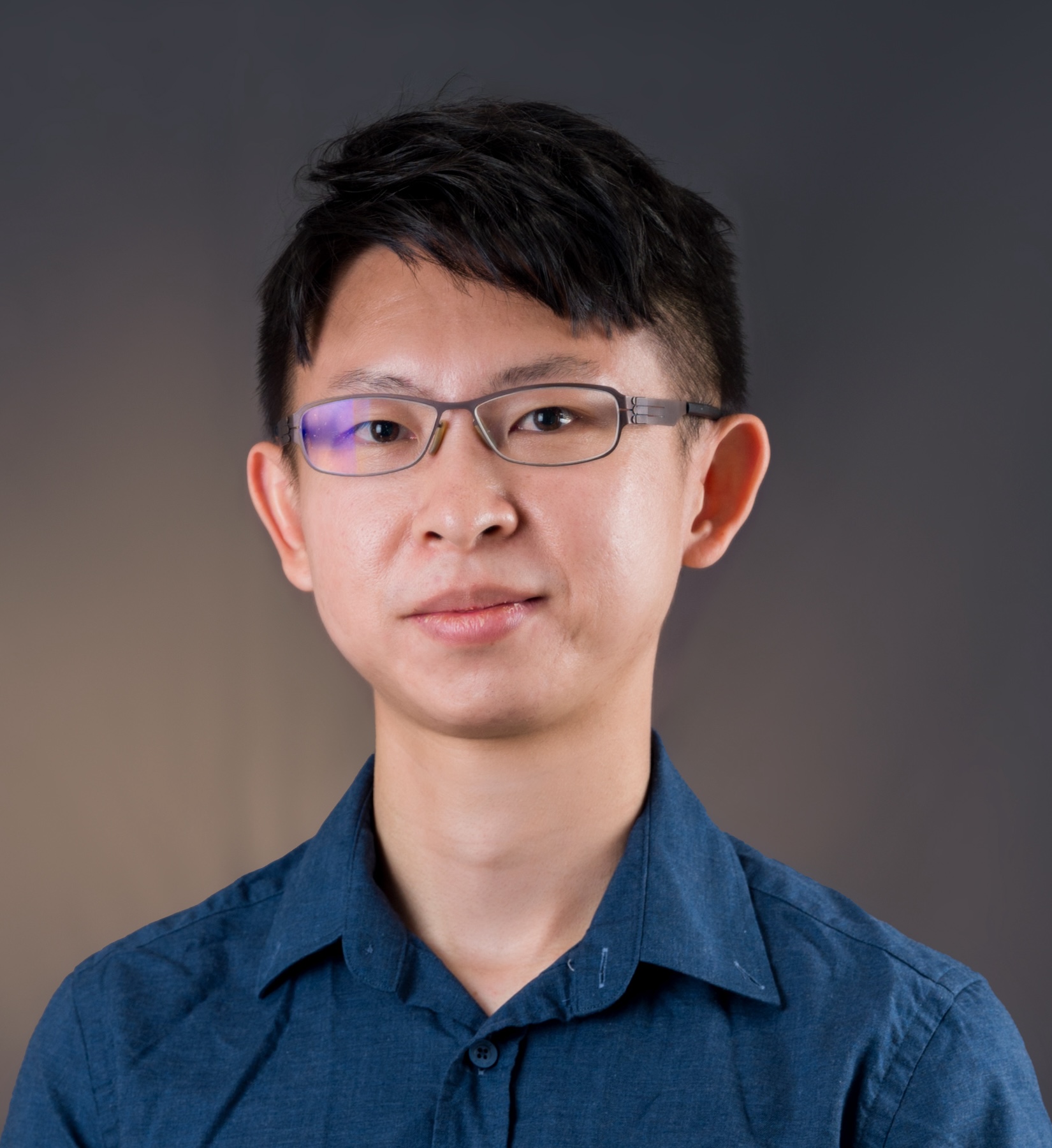
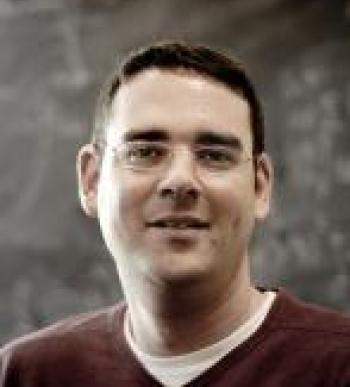
Shang-Tse Chen is an Associate Professor at the Department of Computer Science and Information Engineering and Graduate Institute of Networking and Multimedia , National Taiwan University . He leads the NTU AI Security Lab , focusing on applied and theoretical machine learning with emphasis on cybersecurity, adversarial ML, and ML privacy/fairness. Education: PhD in Computer Science (Georgia Tech, 2019), BSc in CSIE (NTU, 2010) Awards: K. T. Li Young Researcher Award (2025), IBM PhD Fellowship (2018), KDD Best Student Paper Runner-Up (2016), NSF SaTC Grant (2017-2021) His research spans adversarial ML, certified defenses, model inversion attacks, and intersection with differential privacy/fairness. Recent work includes physical adversarial attacks on object detectors and practical defenses using JPEG compression. He teaches courses like Security and Privacy of Machine Learning and Introduction to Medical Informatics . Key publication trends show focus on adversarial robustness (ICML/NeurIPS/ICLR), cybersecurity applications (ACSAC), and ML fairness (ACL/EMNLP). Collaborations include industry partnerships with Intel Labs and Symantec. Scientific Awards: K. T. Li Young Researcher Award (2025) ACM TiiS Best Paper Honorable Mention (2020) IBM PhD Fellowship (2018) KDD Audience Appreciation Award Runner-Up (2018) Symantec Fellowship Runner-Up (2016) KDD Best Student Paper Runner-Up (2016) NSF Grant (2017) He advises 13 current students (PhD/MS/Undergrad) and has mentored alumni now at CMU/UC Berkeley. The lab actively recruits postdocs and students across levels.
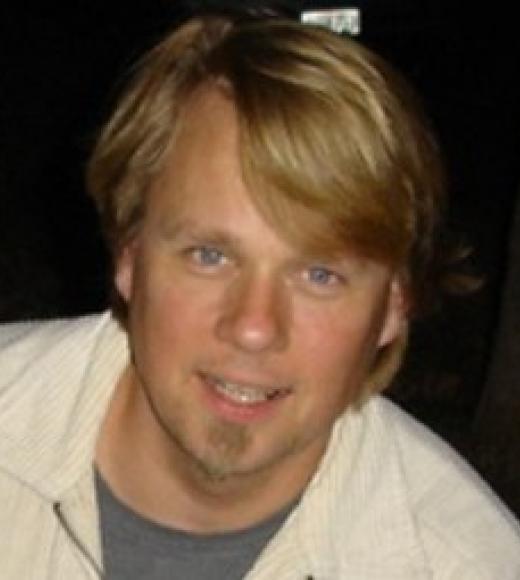
John Zelek is an Associate Professor in the Department of Systems Design Engineering at the University of Waterloo. He co-directs the VIP (Vision & Image Processing) lab and previously served as Associate Graduate Chair (2013-2017). He co-founded two startups: Tactile Sight (haptic navigation for disabled individuals) and Sweep3D (3D modeling technology). His research focuses on autonomous robotics, 3D scene understanding, infrastructure assessment, medical imaging, and sports analytics using AI/deep learning techniques. Education includes a BASc from Waterloo (1985), MASc from Ottawa (1989), and PhD from McGill (1996). He teaches courses like SYDE 283 (Physics), SYDE 572 (Pattern Recognition), and SYDE 675 (Pattern Recognition). Research interests span robotics, computer vision, anomaly detection, and SLAM. His work applies to infrastructure monitoring, sports analytics (hockey/pitcher analysis), medical imaging (OCT/fundus), and assistive technologies. Recent publications emphasize 3D modeling, SLAM enhancements, and sports tracking algorithms. Zelek advises graduate students (SSPS status) and collaborates with companies like Intelligent Health Solutions and EyeCheck through advisory roles. Key innovations include hybrid SLAM systems, puck localization algorithms, and medical robotic swab systems demonstrated on moving phantoms.
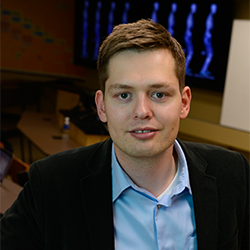
Kwang Moo Yi is an Assistant Professor in the Department of Computer Science at the University of British Columbia (UBC), where he conducts research in computer vision and machine learning. He is affiliated with the Computer Vision Lab, CAIDA (Centre for Artificial Intelligence Decision-making and Action), and ICICS (Institute for Computing, Information and Cognitive Systems) at UBC. Education: B.Sc. from Seoul National University Ph.D. from Seoul National University under Prof. Jin Young Choi Post-doctoral researcher at École Polytechnique Fédérale de Lausanne (EPFL) with Prof. Pascal Fua and Prof. Vincent Lepetit Dr. Yi's research focuses on Visual Geometry with the goal of understanding local environments, adapting to them, and acting within them. His work spans applications in autonomous vehicles, drones, robots, and Augmented/Mixed Reality systems. He employs machine learning, particularly deep learning, as the primary tool for advancing computer vision capabilities. His recent publications demonstrate a strong focus on neural rendering techniques, especially 3D Gaussian Splatting and Neural Radiance Fields (NeRF). The research trends show increasing sophistication in handling occlusions, improving rendering quality, and developing more efficient training methods for neural fields. There's also significant work connecting computer vision with practical applications in industrial settings and energy systems. Dr. Yi serves as an area chair for top computer vision and machine learning conferences including CVPR, ICCV, ECCV, NeurIPS, ICML, and AAAI. He was part of the organizing committee for CVPR 2023. He supervises graduate students including Eric (who recently completed his PhD), Gopal (now at Samsung Research), and Jeong-Gi (joining as a postdoctoral fellow). His teaching includes CPSC 425: Computer Vision and CPSC 533Y: 3D Computer Vision with Deep Learning. Dr. Yi is actively involved with the Computer Vision Lab at UBC, collaborating with researchers across CAIDA and ICICS. His work bridges theoretical computer vision with practical applications in various domains including astronomy, industrial automation, and energy systems.
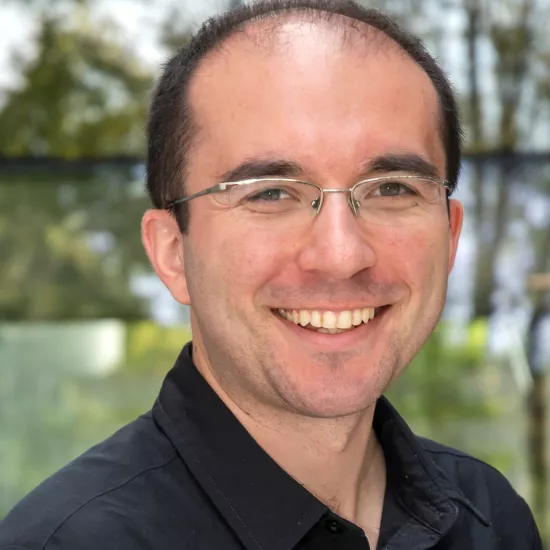
Habib Ullah is an Associate Professor in Data Science at the Norwegian University of Life Sciences (NMBU), Norway, where he conducts research at the intersection of computer vision and machine learning. He is affiliated with the Institute of Data Science under the Faculty of Science and Technology. He has previously held academic positions at COMSATS University Islamabad, Pakistan, and the University of Ha'il, Saudi Arabia, and served as a postdoctoral researcher at The Arctic University of Norway. Educational Background: PhD in Information and Communication Technology (Computer Vision), University of Trento, Italy (2011–2015) MSc in Electronics and Computer Engineering, Hanyang University, South Korea (2007–2009) BSc in Computer Systems Engineering, NWFP University of Engineering and Technology, Pakistan (2002–2006) Habib Ullah's research is primarily focused on computer vision and machine learning, with applications in aquaculture, agriculture, and human behavior analysis. He investigates underwater fish feeding sounds using audio classification, develops zero-shot learning models for recognizing unseen classes, and applies deep learning to detect stress in salmon via skin dot patterns. He also explores AI-driven controlled environment agriculture, leveraging sensors and automation for optimal crop growth. His work emphasizes practical AI solutions for real-world challenges in environmental and biological domains. The recent publications highlight a strong trend in leveraging deep learning for zero-shot and semi-supervised learning, particularly in computer vision tasks such as sea ice classification, crowd anomaly detection, and agricultural monitoring. His research spans remote sensing, biomedical signal processing, and human activity recognition, demonstrating interdisciplinary versatility. The keywords reflect a focus on robust feature representation, knowledge transfer, and model generalization. Scientific Awards and Funding: Industrial PhD grant 'Advancing Controlled Environment Agriculture AI' from The Research Council of Norway (Project number 354125, 2 million NOK, 2024) Team member (Coordinator-Participant) in the Battery Cell Assembly Twin (BatCAT) project funded by Horizon Europe (7 mEuro, 2023–2027) Development of an AI-Based Image Analysis System for Monitoring Plant Status (Funding: 1.8 mNOK, starting 2025) Habib Ullah actively supervises PhD projects and contributes to academic service through editorial and organizational roles. He has served as an Associate Editor for IEEE Access, Guest Editor for MDPI Remote Sensing, and Editor of the Springer book Machine Learning Techniques and Sensor Applications for Human Emotion, Activity Recognition, and Support (ML-SHEARS) . He has also been a Track Chair and Program Committee Member for several international conferences, reflecting his leadership in the academic community. His research is supported by significant grants and collaborative projects, indicating strong institutional and international engagement. He is involved in multiple research teams and projects, including the BatCAT project on battery manufacturing and AI applications in controlled environment agriculture with RIFT LABS AS. His lab work integrates deep learning, sensor fusion, and data analytics for environmental and biological monitoring systems.
Dr. Ian Stavness is a Professor and Department Head in the Department of Computer Science at the University of Saskatchewan. His research focuses on interdisciplinary applications of computer science, including deep learning in agriculture, biomedical computation, and 3D display technologies. He leads the Biological Imaging & Graphics (BIGLAB) laboratory, which develops tools for plant phenotyping and musculoskeletal modeling. Education: Ph.D. in Computer Engineering, University of British Columbia, 2010 M.A.Sc. in Computer Engineering, University of British Columbia, 2006 B.Sc. in Computer Science & B.Eng. in Electrical Engineering, University of Saskatchewan, 2004 Research Interests: Deep Learning for Plant Phenomics & Agriculture 3D Displays and VR/AR Technologies Musculoskeletal Biomechanical Simulation (OpenSim, ArtiSynth) Computer Vision and Image Analysis Awards: ACM CHI 2019 Honourable Mention ACM VRST 2018 Polyphony Digital Award Key Projects: Deep Plant Phenomics Platform Parametric Human Project (Digital Human Modeling) P2IRC (Plant Phenotyping & Imaging Research Center)
Florian Shkurti is an Assistant Professor in the Department of Computer Science at the University of Toronto Mississauga (UTM), affiliated with the UofT Robotics Institute, Vector Institute, and Acceleration Consortium. His research focuses on robotics, machine learning, and computer vision, emphasizing safe and effective autonomous systems in dynamic environments. He directs the Robot Vision and Learning (RVL) lab, exploring areas like environmental monitoring, autonomous navigation, and mobile manipulation. Research Interests: His work spans robotics, machine learning, and computer vision. Key areas include robot perception, planning under uncertainty, safe exploration, imitation learning, and applications in field robotics, autonomous vehicles, and chemistry lab automation. He develops methods enabling robots to perceive, reason, and act safely in collaboration with humans. Publications: Recent work includes advancements in safe multitask learning, interactive crowd navigation, and diffusion models for trajectory planning. His research bridges theoretical foundations with real-world applications in environmental science and autonomous systems. Affiliations: Faculty Member, UofT Robotics Institute; Faculty Affiliate, Vector Institute; Faculty Member, Acceleration Consortium. He also holds positions at UTM's Mathematical & Computational Sciences department. Teaching: Courses include Imitation Learning for Robotics, Neural Networks, and Mobile Robotics. He emphasizes hands-on experience with autonomous systems through projects involving RC cars and simulation tools. Labs & Teams: Leads the RVL lab, collaborating on projects like RoboCulture (automated biological experimentation) and SICNav (safe crowd navigation systems). The lab focuses on cross-disciplinary robotics solutions for real-world challenges.
Carme Torras Genís is a Research Professor at the Spanish National Research Council (CSIC), affiliated with the Institute of Robotics and Industrial Informatics (IRI) in Barcelona and the Technical University of Catalonia (UPC). Her career spans over three decades, focusing on robotics, neurocomputing, and artificial intelligence with applications in healthcare and deformable object manipulation. M.Sc. in Mathematics (University of Barcelona, 1978) M.Sc. in Computer Science (University of Massachusetts, 11981) Ph.D. in Computer Science (UPC, 1984) Research Interests : Robotic manipulation of deformable objects (especially textiles) Neurocomputing and machine learning for robotic control Human-robot interaction and assistive robotics Computational topology for cloth state representation Ethics in social robotics and AI Medical applications of robotics for neuromuscular disease assessment Scientific Leadership : ERC Advanced Grant recipient (2016) IEEE and EurAI Fellow Coordinator of Horizon Europe project SoftEnable and former ERC project CLOTHILDE Editorial leadership in IEEE Transactions on Robotics and multiple journals Active in ethics committees and AI policy advisory boards Advisory Committee of Ethics in AI (Catalan Government) Vice-President of CSIC Ethics Committee Member of Royal Academy of Engineering (Spain)
Thomas Bäck is a Professor at the Leiden Institute of Advanced Computer Science (LIACS) , Leiden University , Netherlands, and a member of the interdisciplinary programme Society, Artificial Intelligence and Life Sciences (SAILS) . His academic career spans roles at Leiden University (1996–present) and leadership positions at the Center for Applied Systems Analysis in Dortmund (1994–2000). Education : Diplom-Informatiker (Computer Science), Technische Universität Dortmund (1990) Dr. rer. nat. (Computer Science), Technische Universität Dortmund (1994) Research Interests : Dr. Bäck specializes in evolutionary computation , machine learning , and their applications in sustainable smart industry and healthcare . Recent work focuses on integrating large language models (LLMs) and quantum computing into optimization frameworks, with projects like CIMPLO (predictive maintenance), ECOLE (experience-based optimization), and SAPPAO (airline operations optimization). Scientific Contributions : His 526+ publications cover evolutionary algorithms, quantum optimization, and LLM-driven design, with recent trends including: Quantum computing (e.g., quantum approximate optimization, quantum advantage challenges) LLM integration (e.g., hyperparameter tuning, mutation control, code evolution graphs) Healthcare and industry (e.g., predictive maintenance, anomaly detection, melt quality prediction) Algorithm benchmarking (e.g., IOHprofiler, MA-BBOB, explainable benchmarking) Scientific Awards : IEEE Fellow (2022) Royal Netherlands Academy of Arts and Sciences (KNAW) member (2021) Academia Europaea member (2022) IEEE Computational Intelligence Society Evolutionary Computation Pioneer Award (2015) Fellow, International Society of Genetic and Evolutionary Computation (2003) Best Ph.D. thesis award, German Society of Computer Science (GI) (1995) Advising and Grants : He supervises Ph.D. candidates in evolutionary computation and machine learning and has secured 7 major grants from organizations like the Dutch Research Council , European Commission , and The Research Council of Norway . His editorial roles include Editor-in-Chief of the Evolutionary Computation Journal and associate editorships in leading AI journals.
Raquel Urtasun is a Full Professor in the Department of Computer Science at the University of Toronto and a co-founder of the Vector Institute for AI. She is also the Founder and CEO of Waabi, an autonomous vehicle company. Previously, she was Chief Scientist and Head of R&D at Uber ATG (2017–2021) and held faculty positions at the Toyota Technological Institute at Chicago (TTIC) and as a visiting professor at ETH Zurich. Her research spans machine learning, computer vision, robotics, and AI with a strong focus on autonomous driving and 3D perception. Education: Bachelor's degree, Universidad Pública de Navarra, 2000 Ph.D., Computer Science, École Polytechnique Fédérale de Lausanne (EPFL), 2006 Postdoctoral studies, MIT and UC Berkeley Raquel Urtasun's research focuses on developing AI systems for self-driving cars, emphasizing efficient perception using minimal sensors. Her work includes 3D scene understanding, stereo vision, optical flow, semantic segmentation, and object detection. She has developed the KITTI benchmark suite, widely used in autonomous driving research. Her lab is an NVIDIA NVAIL lab, reflecting its leadership in AI innovation. Her recent publications show a consistent trend in deep learning for visual perception, particularly in stereo matching, optical flow, 3D object detection, and semantic segmentation. These works integrate deep neural networks with structured models like CRFs and MRFs, pushing the boundaries of accuracy and efficiency in scene understanding for autonomous systems. Scientific Awards: NSERC E.W.R. Steacie Fellowship NVIDIA Pioneers of AI Award Google Faculty Research Awards (multiple) Amazon Faculty Research Award Connaught New Researcher Award Fallona Family Research Award Best Paper Runner Up at CVPR 2013 and 2017 UPNA Alumni Award Chatelaine 2018 Woman of the Year Adweek 2018 Toronto's Top Influencers Urtasun has advised numerous PhD and Master’s students, many of whom now hold faculty or research scientist positions at institutions like UIUC, NYU, UBC, MIT, and companies including Google, Amazon, NVIDIA, and Apple. She has secured significant research grants from NSERC, Google, Amazon, and NVIDIA. Her leadership extends to organizing workshops and serving as Area Chair and Program Chair at top conferences like CVPR, ICML, and NeurIPS. Labs and Teams: She leads a research group at the University of Toronto focused on AI for autonomous systems. Her team has been recognized as an NVIDIA NVAIL lab, and she continues to mentor students and postdocs working on cutting-edge problems in robotics and machine learning, both at UofT and through her company Waabi.
Amit Singer is a Professor of Mathematics at Princeton University, specializing in computational methods for structural biology and cryo-electron microscopy (cryo-EM). His work focuses on developing mathematical frameworks and algorithms for analyzing large-scale microscopy datasets, particularly in 3D reconstruction and heterogeneity analysis of molecular structures. He leads research in manifold learning, optimal transport, and harmonic analysis, with applications to cryo-EM, signal processing, and inverse problems. Research interests include: (1) Mathematical methods for cryo-EM, including particle alignment, density map analysis, and subspace-based reconstruction techniques; (2) Development of rotation-invariant representations for imaging problems; (3) Application of machine learning and optimization to biomedical imaging challenges. His contributions bridge pure mathematics (e.g., harmonic analysis, manifold theory) with applied computational techniques for real-world microscopy data. Key trends in his recent articles (2023–2025) include advancements in multi-reference alignment methods, Wasserstein distance-based image registration, and overcoming particle detection limitations in cryo-EM. He also explores sparsity constraints, autocorrelation analysis, and novel algorithms for handling heterogeneous datasets. These methods improve resolution and reduce computational costs in analyzing molecular structures at atomic scales. Notable contributions include the ASPiRE software package for steerable PCA, and foundational work on synchronization problems in cryo-EM orientation estimation. His research often addresses algorithmic scalability and robustness to noise in experimental setups.
Dr. Andrew Hines is a Researcher at the School of Computer Science, University College Dublin, specializing in machine learning applications for signal processing in speech, audio, and video domains. His work focuses on Quality of Experience (QoE) modeling, speech quality assessment, and immersive media analysis. He has held leadership roles in European COST Actions like Qualinet and CryptoAction, and previously worked in industry as a Director of Engineering. University: University College Dublin Role: Director of Research, Innovation and Impact Key Collaborations: IEEE (Senior Member), Audio Engineering Society (Ireland) Research interests center on machine learning for QoE optimization, audio-visual integration, and healthcare applications like heart sound classification and stroke rehabilitation. His recent publications explore self-supervised learning, neural speech codecs, and contextual factors in speech/audio quality assessment. Scientific contributions include awards like IEEE Senior Membership, and his work spans both academic research and industrial engineering in finance and aviation sectors. He leads the QxLab research team at UCD and develops open-source platforms such as WARP-Q and AQP for quality metrics.
Andrew Yonelinas is a Professor in the Department of Psychology at the University of California, Davis, where he directs the Human Memory Lab. He holds additional leadership roles as Associate Director of the Center for Mind and Brain and is an affiliated faculty member with the UC Davis Center for Neuroscience. His research bridges cognitive psychology and neuroscience to investigate fundamental memory mechanisms and their neural substrates. His educational background includes a Ph.D. in Experimental Psychology from McMaster University (1995) and a B.S. in Cognitive Science from the University of Toronto (1990). These foundational studies established his expertise in experimental methodologies and cognitive theory. Yonelinas specializes in dual-process models of memory, distinguishing between recollection (detailed contextual retrieval) and familiarity (vague recognition). His lab employs process dissociation, remember/know procedures, and ROC modeling alongside neuroimaging (fMRI, ERP) and clinical studies with amnesic and Alzheimer's patients. Recent work expands into auditory working memory, multisensory integration, and the impact of mental illness on cognitive processes, revealing hippocampal roles across memory systems. His research consistently addresses how memory fails in clinical conditions while developing unified theoretical frameworks. Analysis of his 2024-2025 publications shows a strong focus on memory mechanisms across sensory modalities, with increasing emphasis on clinical applications. Key trends include hippocampal contributions to visual/auditory working memory, EEG-based biomarkers for mental illness, and the interplay between schema knowledge and memory distortion in aging populations. His work demonstrates methodological innovation through model-based EEG phenotyping and multisite clinical collaborations. His scientific recognition includes: American Psychological Society’s Shahin Hashtroudi Memorial Award University of California Chancellor’s Fellow Award European Brain and Behavior Society International Lecture Award Yonelinas actively shapes his field through editorial roles at top journals including Proceedings of the National Academy of Sciences and Journal of Experimental Psychology, while serving as a grant reviewer for NIH, NSF, and international funding bodies. His Human Memory Lab trains next-generation researchers in memory theory and methodology, with recent projects examining stress effects on memory precision and neural mechanisms of action slips. The Human Memory Lab operates within UC Davis's neuroscience ecosystem, collaborating closely with the Center for Mind and Brain on projects involving clinical populations and neuroimaging. Current initiatives include the CNTRACS Consortium for EEG standardization in mental illness and investigations into how stress modulates memory binding through hippocampal mechanisms.
Amalia Foka is an Assistant Professor in Computer Science Applications for the Arts at the Department of Fine Arts & Art Sciences , School of Fine Arts , University of Ioannina , Greece. She has held academic positions at the University of Patras (2005-2013), University of Ioannina (2005-2008), and Computer Technology Institute & Press "Diophantus" (2014-2015). Her research bridges Artificial Intelligence with Digital Art , focusing on Generative AI , Social Media Mining , and Human-Computer Interaction within artistic contexts. Education: BEng in Computer Systems Engineering (1998) from the University of Manchester Institute of Science & Technology (UMIST) , UK MSc in Advanced Control (1999) from UMIST PhD in Robotics (2005) from the Department of Computer Science , University of Crete Her artistic research includes projects like Bushwalking (StyleGAN2 landscape generation), Breaking the Silence (NLP analysis of taboo topics), and The Invisible Structures of the Artworld (social media-driven network visualization). She leads the Multimedia Lab at the University of Ioannina, focusing on AI in Creative Processes and Digital Interaction methodologies.
Xiaohui Yu is a Professor and Graduate Program Director in the School of Information Technology at York University. He holds a BSc from Nanjing University, an MPhil from the Chinese University of Hong Kong, and a PhD from the University of Toronto. His research focuses on the intersection of data management and machine learning, including ML-based database systems, large-scale machine learning, and spatio-temporal data analysis in contexts like intelligent transportation systems and social networks. Supported by grants from NSERC and industry partners, his work has been published in top venues such as SIGMOD, VLDB, and TKDE. He serves as an Associate Editor for journals like IEEE TKDE and ACM TKDD, and actively participates in conference program committees. Education: BSc (Nanjing University), MPhil (Chinese University of Hong Kong), PhD (University of Toronto). Research Interests: Big data management, database systems, machine learning, spatio-temporal data analytics, and video query processing. Recent articles emphasize ML-driven database components, efficient video query optimization, and scalable algorithms for large-scale data. His work addresses challenges in query processing, indexing, and real-time systems. Service: Serves on editorial boards (e.g., Information Systems), and chairs/workshops (e.g., Symposium on Data Markets). Active in program committees for SIGMOD, ICDE, and other leading conferences. Advising & Grants: Directs graduate programs and leads research groups. Collaborates with industry on data marketplaces and AI model integration. No specific student names listed, but actively recruits PhD/Master’s candidates.
Jiro Katto is a Professor at Waseda University's School of Fundamental Science and Engineering, where he has been conducting research and teaching since 1999. He received his Ph.D. from the University of Tokyo and has established himself as a leading researcher in multimedia signal processing and computer networks. His academic journey includes positions as Associate Professor (1999-2004), Professor (2004-present), and Director at NEDO (2004-2008), along with research experience at NEC C&C Laboratories (1992-1999) and a Visiting Scholar position at Princeton University (1996-1997). Professor Katto's research interests focus on Multimedia Signal Processing and Computer Networks, with particular expertise in video compression, 5G network performance, and learned image compression techniques. His work bridges theoretical advancements with practical implementations, as evidenced by his extensive publications in top-tier conferences and journals. His research group has made significant contributions to point cloud compression, latency compensation in remote systems, and hardware-accelerated video encoding for UHD streaming. His publication record is impressive, with 276 papers cited 3,323 times in Scopus and 6,169 times in Google Scholar, reflecting his substantial impact in the field. His recent work shows a strong trend toward applying deep learning techniques to traditional signal processing problems, particularly in the areas of image and video compression, where his team has developed novel approaches to improve compression efficiency while reducing computational complexity. Electric Telecommunications Promotion Foundation Telecommunications System Technology Award (2023) Takayanagi Kenjiro Foundation Takayanagi Kenjiro Achievement Award (2020) Institute of Image Information and Television Engineers Fellow (2020) Institute of Electronics, Information and Communication Engineers Fellow (2015) IEICE Communications Society Activity Contribution Award (2006) IEICE Academic Encouragement Award (1995) SPIE VCIP 1991, Best Student Paper Award (1991) Professor Katto has served on numerous prestigious committees including IEEE ComSoC Tech News Editorial Board, IEEE Technical Program Committees for major conferences (Globecom, ICC, ICIP), and editorial boards for several academic journals. His leadership in the academic community extends to chairing conferences like IWAIT 2011 and serving as Editor-in-Chief for journals in his field. His research has practical applications in commercial 5G networks, video streaming services, and remote monitoring systems, demonstrating the real-world impact of his work.